10 Best 3 Player Board Games NOBODY IS TALKING ABOUT
Games in This Video
10 games are featured in this video — they unlock as you watch.


Transcript
Three players is the most underserved count in board gaming and we have got 10 games that prove the hobby has been hiding some of its best work right under our noses. Buckle up because most of these never got the spotlight they deserved and every single one is worth your table time. So, here is the thing about three players that we keep coming back to. Most games either treat it as an afterthought or they bury the magic of three under the chaos of four or five. But when a game actually clicks at three, there is nothing else like it. Every interaction is triangular, alliances are unstable, and you can never completely ignore either of the other people at the table.
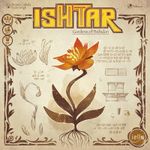
Yeah, and the power dynamic just keeps shifting. You think you're winning, then suddenly the other two have an unspoken thing going on against you. In our experience, we've put in serious table time with all 10 of these games and every single one either shines brightest at three or reveals a depth that other counts just do not unlock. We're starting at number 10 and counting down. Let's get into it. Number 10 is Ishtar: Gardens of Babylon from Iello. Came out in 2019, designed by Bruno Cathala and Evan Singh. It's a tile-laying game about restoring the Hanging Gardens of Babylon and the table presence on this one is legitimately something to talk about.
The board fills out as you play and by the midpoint of every session, the colors are blooming outward from the central ruins in patterns that nobody planned but everybody helped create. We've had non-gaming friends literally wander over to the table just to look at it. That basically never happens with a Eurogame. The mechanics are tighter than they look. You're laying tiles, growing flowers, but the engine is the skill upgrades. You spend gems on upgrades and choosing when to invest in upgrades versus when to spend gems on flowers is a constant push and pull. In our experience, we've had whole rounds where we were basically racing each other to lock in a key skill before the other two could get there. And blocking opponents on the garden never feels mean. There's always another good move available, which is rare for a game with this much spatial competition. At three players, the garden fills at exactly the right pace. There's room to execute your plan, but never enough that you can ignore what others are doing. The flower majorities are what swing the scores, and they stay contested right up until the final turn. We've had games where I thought I had a region locked, and then in the last two turns it flipped completely. That's the Cathala touch. If you've enjoyed Five Tribes or Kingdomino, this is one of his best from the era, and it just got buried under a crowded release window. It sits way below where it deserves to in the rankings. Number nine is Brew.
Pandasaurus published this in 2021, dice drafting and area control about forest mystics restoring balance to a forest where all four seasons are happening at the same time. Custom forage dice, gorgeous creature cards, and a really lush forest aesthetic. And it looks gentle. It looks pastel. It looks like a hug. Then you start playing, and it gets surprisingly mean, surprisingly fast. The element dice are the thing. They act as wilds, but they also let you cancel an opponent's die instead of just adding more of your own. So, you're not just trying to win majorities, you're stacking your die on top of theirs at the last second, negating the whole placement. That feeling, by the way, of doing the cancel right before scoring is one of the best little dopamine hits in modern gaming. In our experience, we've had moments where someone has clearly thought they had a region locked, and then you slap your element die down, and the whole thing collapses. It's delicious. At three players, the area control gets really tight. Every die placement gets scrutinized. Every forest card feels genuinely contested. There's a creature training and potion brewing layer on top, and the potions let you manipulate dice already placed in the forests, which adds this take-that energy that builds through the round.
I'll push back a little. The area control doesn't have the crunch of dedicated area control games like El Grande or Blood Rage. The potions sometimes feel secondary to the core forest competition. Sure, but at three players where every placement matters, it delivers a vibrant 60 to 90 minutes that I think deserves way more attention than it has gotten. Never underestimate a game that looks this pretty. Number eight is Verdant, Flatout Games, the same publisher behind Cascadia. And honestly, that comparison is the best and worst thing that ever happened to this game. Cascadia won Spiel des Jahres in 2022, became a global phenomenon, and Verdant has spent its entire existence being called the houseplant one, which is doing it a real disservice. You are drafting cards representing plants alongside pot tokens and placing them into a growing personal tableau. Scoring is all about adjacency and clusters.
Different plant species reward different spatial arrangements. You want certain colors next to each other, you want light levels to match, you want long rows of the same family. Managing all those overlapping goals while the card market shifts around you is a really satisfying puzzle. Where it works specifically at three is the drafting rhythm. With three players around the row, there is exactly enough competition to make every draft feel meaningful. You can see what the player after you wants. Taking a particular plant hurts them in a specific way you can feel. That kind of small-scale denial is at its most satisfying when there is exactly one person between you and the card coming back around. At four players, the denial gets murkier. At two, there's not enough pressure. At three, the market hums. There's also something genuinely soothing about it that most gateway games cannot replicate. We have successfully introduced this to people who claim they do not like board games, which is rare territory. People who own Cascadia look at Verdant and ask if they need both. The honest answer is yes.
Cascadia is about external landscape and wildlife and spatial patterns. Verdant is intimate, interior, all about color and care and botanical logic. Different emotional register, different game. Number seven is Raw. Now, the mechanics are not new. Reiner Knizia designed this in 1999, but the 2023 edition from 25th Century Games is what got it back in front of newer hobbyists. And at three players, in our experience, this might be the single best auction game in the modern hobby. Three epochs, you draw tiles representing pieces of Egyptian civilization, and you bid on lots using a fixed set of sun tokens. The push-your-luck part is the raw tiles. When one gets drawn, an auction triggers immediately, whether you want one or not. You see the value of the lot, you decide if your sun is worth spending.
And your suns are finite. You cannot just wait forever for the perfect lot. At three players, every auction is loaded. You can see exactly what your two opponents have, which suns they have spent, what they need. The decision of whether to force an auction yourself, try to win a contested lot, or let a mediocre collection slide past your rivals is genuinely agonizing every single time. The raw tile is always one draw away. That's the genius of it. The auction that triggers at exactly the wrong moment, when you've already spent your best sun, and the other two are circling, is this controlled anguish that great auction games are built on. And the whole thing wraps in under an hour. Almost nothing wasteful about it in our experience. The reason it belongs on an underrated list is purely generational. A lot of players under a certain age have never played it because the older editions were out of print for years. The 2023 edition fixes that. When we've introduced this to groups who have never seen it, the reaction is almost universally enthusiastic. Three players specifically gives you a 45-minute game with the tension of a 90-minute one, where every decision matters from the first tile drawn to the last sun token spent.
Number six is Ahoy. Leder Games, the studio behind Root, released this in 2022, designed by Greg Loring Albright with Kyle Ferrin's distinctive artwork. Three factions vie for fame across a chain of tropical islands. The Bluefin Squadron are sharks who use force and fast movement to dominate territory. The Molosk Union builds influence by planting comrades on islands and claiming regions through numbers. And the Smugglers run cargo between islands, earning fame from deliveries while raising the value of regions in ways that totally reshape what the other two are competing over. Three players is the sweet spot. One player per faction, you get the complete intended experience. Two factions actively contesting area control while one player shapes the economics of the whole map. Without the Smuggler, it's a straight two-faction duel. With four, a second Smuggler joins, each playing with their own identical player board and competing independently for their own score, which changes the balance of the table in interesting ways. Playing as the Smuggler is unlike anything else in asymmetric gaming. You're not fighting either faction directly. You're quietly raising the stakes of their war, placing bets on who will win each region, watching two empires restructure their priorities around your deliveries. It's the closest a board game has come to making me feel like a trickster in someone else's story. And teaching this is fast, maybe 15 minutes. The whole game runs 45 to 75 minutes. It's genuinely accessible. The reason it's underrated is mostly that anything Leder Games puts out gets compared to Root.
Ahoy is deliberately lighter and faster, which reads as a downgrade to some players. It shouldn't. It's a different beast, shorter, tighter, more welcoming for groups who aren't ready for Root complexity. Number five is The White Castle. Devir released this in 2023 and it became a favorite among Eurogamers who discovered it. That group, unfortunately, is smaller than it should be. Set in feudal Japan around Himeji Castle, players place workers across three areas of the castle grounds. The distinctive piece is how it uses dice, not as randomizers, as resources. At the start of each round, dice are rolled and placed in ascending order onto bridges on the castle board. You spend those dice to fund placements. A low die costs you coins when placed because the action space value is likely higher than the die itself. While a high die earns you coins because you are placing above the printed value of the space. But taking the low die from the left of the bridge triggers a lantern bonus that grows more valuable as the game develops. So you are not rolling to determine your fate, you're reading a shared market of pre-rolled values and making calculated trade-offs between coin economy and bonus income. It is deterministic in feel despite involving dice, which is a design trick that does not get the credit it deserves.
Under 75 minutes at three players, which is remarkable for the decision weight it is packing in, the scoring tracks are interconnected without being overwhelming. New players can grasp the basics in a single round and start making meaningful decisions almost immediately. In our experience, the first play moment on this is genuinely one of the best of any medium Euro from the last few years. Within one round, the dice trade-off thing clicks and you immediately understand both what you want to do and why it is going to be hard to do it.
Most games at this weight take two or three plays before they fully open up. The White Castle makes you feel competent from the start, which makes losing it all the more dramatic. It got buried by a really competitive year for Euros, ended up on shortlists, but rarely at the top, and never got the staying power in mainstream conversation that it earned.
Number three is Vagrant Song. Weird Miniatures published this in 2022, designed by Matt Carter, Justin Gibbs, and Kyle Rowan. Cooperative campaign for two to four players. You are hobos who have jumped onto a haunted train called the Silver Ferryman, full of ghosts called haints, and your goal is not to destroy them.
You're trying to restore their humanity so they can pass on peacefully. That premise alone makes it stand out from every other co-op on the shelf. Gameplay alternates between scenario phases where your party confronts a haint boss and complete specific rituals to break them, and camp phases where you develop characters between scenarios. Each haint has its own personality and unique rules for how it moves and attacks. The rituals are puzzle-like. You might need to gather a specific object, reach a particular location, survive for a set number of rounds.
Each scenario tells a small melancholy story about who the ghost was and why they got stuck. At three players, one round is each vagrant taking a turn followed by the haunt activating three times. The pacing is tight. Decisions feel weighted. You can't afford wasted actions.
The production is exceptional. Acrylic standees, a fabric bindle bag for drawing rummage tokens, atmospheric artwork by Nguyen My Dinh. The writing is sharp without being overrought.
What I love about this one is it makes you feel things that most board games are too afraid to try for. Finishing a scenario, successfully restoring a lost soul, then sitting in the camp phase quietly reading the aftermath narrative while we decide what to take into the next train car. Melancholy, hopeful, unlike anything else in cooperative gaming.
It is underrated almost entirely because of its publisher, Weird Giraffe, known for miniature wargames. Their existing audience was not the audience for this kind of narrative co-op experience. It launched quietly without the Kickstarter fanfare these games usually rely on. The hobby moved past it without a proper look. That is a genuine shame because the decision to frame ghosts as tragic figures who need healing rather than enemies to be destroyed gives the entire campaign a tone unlike anything else. Number three is Carnegie, designed by Xavier Georges, published by Quined Games. 19th century industrial tycoons building a corporate and philanthropic empire inspired by Andrew Carnegie himself. This is the meaty Euro recommendation we keep making to people who say nobody in their group has played it.
The hook is the simultaneous action selection. At the start of each round, one player triggers a department action, and here's the key part. All players then execute that same department action, but only the player who triggered it gets the full version of the benefit. Everyone else gets a lesser version.
That creates this beautiful tension between doing what's best for you and what hurts your opponents the least. You spend a lot of the game watching what your rivals are doing and making calculated decisions about whose plans to facilitate or starve.
The philanthropic track, where you donate to causes and fund philanthropic works across the country, adds a completely separate scoring race that intersects with the main game in unexpected ways. At three players, the round structure breathes. Turns are fast because of the simultaneous resolution. The philanthropic competition is tight enough to matter without dominating.
Carnegie is the kind of game that produces long silences. Not frustrated silence. The silence of three people simultaneously realizing that someone has just triggered the one action that sets everyone else back two turns, and there's nothing any of them can do about it. Those moments of collective resignation, then scrambling to adapt, are what great competitive Euro design looks like.
90 minutes to 2 hours at three players, which is exactly right for its depth. It ranks lower on BGG than it deserves. The theme puts some people off before they ever sit down. The production is functional, not flashy. None of that should matter because what's underneath is one of the most cleverly structured Euro designs of the early 2020s. Number two is Kutná Hora, the city of silver. The most conceptually ambitious game on this list. Czech Games Edition 2023, set in the medieval Bohemian city that became one of the wealthiest in Europe thanks to silver mines. You are developing workshops, advancing guild influence, and managing a living economic market that responds directly to your decisions. That last part is what sets it apart from almost everything else. When you build a workshop in Kutná Hora, you increase the supply of whatever good that workshop produces, which drives down the price of that good in the market. If two players invest heavily in smithing, you both suffer for it. If you can read the market and anticipate where prices will fall, you position yourself to profit while opponents watch their investments depreciate. This is not a flavor layer.
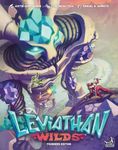
It is a genuine functional supply and demand engine. Copying what another player is doing is not just sub-optimal, it actively hurts you. Diversification is rewarded. Timing your investments to take advantage of temporarily inflated prices is the key to winning. At three players, the market manipulation is deliciously visible. You can watch someone build toward a goods type and decide whether to undercut them before they get there or find a different niche entirely. The economic warfare is quiet but relentless. Watching a goods category you've been developing suddenly crash in value because another player just built a second workshop there and knowing you saw it coming but could not stop it is brilliant game design. It produces the feeling of running a real business. Incomplete information, timing pressures, the constant awareness that someone else is one move from making your plan worthless. It got strong critical praise on release and was quickly forgotten in the noise of a busy year. Medieval economic theme, understated marketing, never built the profile it deserved. If you enjoy economic euros and have not played this, it is possibly the most interesting design in its category from the last few years in our view. Put it next to Brass Birmingham or Food Chain Magnet, it holds its own. It just never got the stage time. Number one is Leviathan Wilds, debut title from Moon Crab Games.
Founded by former Fantasy Flight and Z-Man employees, designed by Justin Kemppainen. Cooperative for one to four, you are a team of climbers ascending enormous creatures called Leviathans to remove the binding crystals that have corrupted them. You're not slaying the monsters, you're saving them. Each Leviathan occupies a double-page spread in a spiral-bound book that serves as the board and each one is a wildly different tactical puzzle. The creature body is a grid of spaces, many of which deal damage, reduce your grip, or trigger special effects when you move through them. Moving downward is fast and cheap. Climbing upward costs more action points. That asymmetry of movement makes even simple traversal feel adventurous. The character system has each player building a small deck by combining a character type with a class, then shuffling them together. That deck represents your grip on the Leviathan.
When you run out of cards to draw from, you lose your grip and fall. Managing your deck size while using cards for both action points and ability effects is this constantly engaging resource puzzle. At three players, the action economy is excellent. Each player has enough space to contribute meaningfully without turns feeling crowded or duplicated. There's a moment in almost every session where everything nearly falls apart. Someone loses their grip, starts falling down the creature body, and the other two have to immediately restructure their plan to compensate. Chaotic, urgent, deeply collaborative in a way most co-ops only achieve intermittently. The Leviathan threat deck escalates over the course of the game, adding rage to event cards, making the final push to remove the last crystals feel genuinely desperate. We've had close finishes on this game that I'm still thinking about months later. The gap between its quality and its profile is the greatest injustice on this list in our view. A BGG rating pushing towards 8.0 tells you how good it is.
Almost nobody owning it tells you how invisible it is. No licensed IP, no massive miniatures, no massive crowdfunding campaign to drive awareness. Moon Crab also released an expansion called Deep Vale that adds seven new Leviathans and additional character and class combinations. The consensus among people who have played it is that it improves the base game meaningfully. The base game is excellent. Both together are exceptional. The hobby needs to find this game. It deserves an audience 10 times its current size, and at three players, it's close to perfect.
So, there's our 10. Every one of these does something interesting. Several do something genuinely rare, and at three players, which is one of the most underserved counts in the hobby, in our experience, they either shine brightly or reveal a depth that other counts do not unlock.