Your Board Game needs to DELIVER *Board game design* * Product design*




Transcript
every product makes certain promises and every customer has certain expectations and in this video i'm going to discuss the implied assurances that board game purchasers might receive when they pick your game box up off the game store shelf i'm adam porter and i'm the designer of a number of tabletop games including picoco which was published by brain games in 2018. when i was pitching picoco to various companies one publisher was particularly enamored with the gameplay he said it was the most exciting new twist on trick taking that he had seen in years i was delighted of course i really wanted to hear that but he then went on to say that he wouldn't publish it and in fact he advised me that nobody would ever publish picoco because it required the use of card holders and card holders are expensive to manufacture which would push up the retail price of the game and a bigger price would necessitate a bigger box to ensure that the customers would perceive that they were paying the correct price for the product and regardless the card holders would not fit into a small box but the game experience as exciting as this publisher found it he considered to be a small box experience it's an observation i can relate to while brain games did a great job as the eventual publisher of picoco that critical publisher's comments were insightful and they've stayed with me over the years i've aimed the same criticism at several other games myself in wolfgang senka and ralph zur lin's animals on board players lay out a number of animal tiles onto the table and then take turns dividing them into
separate groups or taking a group of animals for their own collection it's a so called i split you choose game where the players are avoiding taking pairs of animals the game works really well it would make a brilliant simple card game yet the animals aren't represented on cards they're on thick tiles and each player's tiles are placed into a largely unnecessary cardboard rack the whole production necessitates a large box and a price point to match but a simple deck of cards would have sufficed antoine bowser's oceanos is an even more egregious example of this the game is a fun drafting exercise it feels a bit like sushi go but the box is the same size as ticket to ride with a price point to match so the outward presentation of our product sets expectations in the user a big box implies that the gameplay is going to be deep and immersive and the price point usually complements this games with a long duration would be expected to remain engaging throughout you might expect a degree of complexity and they should reward skillful play over chance games that advertise a younger age range are likely to be simple to learn and they might have more random elements in them and maybe more toyetic components the art style tells us something about the experience we can expect is it bright and breezy or is it dark and somber 20 years ago it was easier to look at a piece of art and tell if it was aimed at adults or children publishers utilize this in their board
games putting very serious looking historical paintings on the covers to make them acceptable to adult audiences in recent years though those lines have been blurred with animated films from companies like pixar appealing to adults and children alike and many cartoony looking video games are being played by adults games bought in a supermarket or a toy store at least in the uk carry the expectation of being easy to learn frivolous experiences maybe random pastimes for children or holiday party games for adults whereas customers purchasing games in a specialist store might reasonably expect more nuanced modern design with clever mechanisms and beautiful components board game players have a shorthand language based on their experience with other games in role and move games the central mechanism is so familiar that some mass market games don't even feel the need to explain how it works in their rule set in hobby games concepts like worker placement deck building and card drafting are widely understood by many gamers and this makes games in that genre easier for them to adopt these past experiences also set expectations for what a new product should be like feel like look like and what mechanisms should be employed subverting these expectations could create a great piece of art but it might also create barriers which only serve to alienate the players to return to my game picoco the game attracted the attention of major toy companies it was even nominated for a prestigious
toy award primarily because of its toy-like appearance the difficulty with the product is that the gameplay is not at all toy like it's tactical and deductive with an element of bluffing and pushing your luck customers become confused or dissatisfied when there is a disconnect between the apparent promise made by the product's presentation and the genuine experience of playing the game here's another example of such a disconnect in a game that i personally love if wishes were fishes is a medium weight economic game where players manipulate stock prices of various types of fish it's a buy low sell high sort of affair with a clever central card drafting mechanism i find the gameplay really rewarding and it's always gone over well with all the other gamers that i've introduced it to it is not however a game for children so why do the fish look like they've been copied straight out of a child's picture book with silly puns on their names and most weirdly of all why is the currency in the game represented by purple rubber worms the game ended up in bargain bins and discount stores after release and it never achieved the recognition it deserves i suspect because consumers were confused by it there is an analogy often quoted by marketing professionals regarding super mario and his fire flower it's so widely quoted i can't locate an original source but the analogy goes something like this imagine mario is our customer and we're trying to sell a product the fire flower the mistake many companies make
is that they focus on promoting the fire flower they focus on the appearance of it the features the way that it functions but here's where the focus of the marketing really should be to paraphrase customers don't purchase products they purchase a better version of themselves the promise established by the outward presentation of our product should make clear the incredible experience offered by that product the way it's going to make you feel the problems it's going to help you overcome mario doesn't care about the fire flower but he might care about what it could help him to achieve in commercial terms monopoly is one of the greatest board game products in existence its success is largely related to its long history and its wealth of familiar brand assets go to jail free parking do not pass go community chest etc etc these have all become part of our language but the game is extremely self-aware hasbro understands and values that brand when players recall their experiences with the game they'll tell anecdotes about stealing money from the bank or games that seem to go on forever take a look at these two recent editions of the game hasbro is in on the joke they're doubling down on your negative experiences and making them a selling point and take a look at the promise in that cheetah's edition it's signaling very clear how you are going to feel play in that game mr monopoly's clenched fist is overflowing with stolen banknotes he's shushing you inviting you to join him in the criminal underworld
the cover text asks what can you get away with the promise is that you're going to feel naughty playing this game without any real life consequences it's telling that the monopoly logo has changed over the years where once mr monopoly was looking into the middle distance with arms spread wide in recent years he's changed tack he's looking us straight in the eye and reaching out offering us a hand to welcome us into his world the assurance is clear if you play well you'll get to be like rich uncle penny bags with his bulging sacks of cash but how does this relate to the board game designer aren't all these decisions made by a publisher well firstly in the era of crowdfunding many designers publish their own games and even if you don't these factors should be a serious consideration for any board game designer who wants to achieve commercial success it was my choice to make the bulky expensive card holders in picoco they were central to the design it was my choice to fill my game thrown with 40 dice this has implications for the final product irrespective of any publisher decisions it dictates a certain price a certain box size and hence it sets expectations for the consumer about the gameplay the game designer also generally picks a theme for their game and familiar settings imply a certain style of gameplay if i see bloodthirsty orcs i'm expecting combat if i see ornate gardens i'm not expecting cutthroat competition of course a publisher will sometimes change a theme to fit their own catalogue but nobody understands the gameplay
better than the board game designer and nobody is better positioned to integrate a theme into the product to use throne again as an example it has a generic fantasy theme and as such sets an expectation of somewhat familiar gameplay experiences yet the gameplay is anything but generic it's a bit odd it's quite silly it's often funny and it's always chaotic the chosen theme might be perceived as a mismatch now i should be clear that the setting for throne was chosen by me rather than the publisher perhaps the game would have connected with players better if i had chosen a setting that was a little bit sillier look at this similarly weird uh trick taking game bucket king 3d nobody is looking at that box and expecting anything other than a wacky chaotic experience it delivers on its promise i'm going to take a look at some of the other board games on my shelf and determine what the promise is that they're making and do they deliver what does this say to you to me that says this is a serious game serious game for adults i know what it's all about i know what the theme is going to be but it looks boring now i believe that if this game had come out in 2021 with this cover it would not have been a success irrespective of the fact that it's a fantastic fun economic game the reason power grid is so successful is because it has a legacy of positive reviews and people talking about it online and holding it in the highest regard it has a great reputation
but the cover would not fly in 2021. okay let's look at abandon all artichokes this is a game i've recently picked up i've seen a lot of people quite confused about this game online it's clearly a massive hit it's doing really well lots of people are talking about it this is a my first deck builder okay that tin tells me what's going on here this is a silly game for children it's in a little wacky shaped tin with uh you know this is a raised surface on the front with the artichoke on there it's from game right you make that sort of game i know the brand okay i know what i'm getting with this game i'm getting something in the same line as sushi go and yet online i see a lot of people confused because they've seen all the buzz and they think this is going to be a deck builder which it is but they're expecting something like dominion or or something like ascension or or all of a million other deck builders out there and they're not getting that they're getting a child's game so even when you go to great lengths as game right have done here to to sell exactly it's clear this could go in a supermarket okay it it's obvious what it is but people still get confused because they see the buzz and they play it and they rate it with their preconceptions about what a deck building game should be what does this tell me it tells me what the theme is that it's all about nature uh the name itself explains exactly what the the what the central mechanisms of the game are going to be about survival of the fittest and
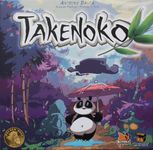
and evolving of animals this lovely beautiful watercolor artwork and it really is beautiful but it suggests quite a serene um sort of atmosphere to the game it suggests something quite quite zen quite low-key quite calm and actually the gameplay is quite aggressive okay it's quite bloodthirsty sort of game you're attacking each other quite a lot that's not everything that happens in the game but it is a large feature of it and so you can understand some players might play this game expecting something quite calm and relaxing and beautiful which it is but they're going to get upset when they get attacked i think a game that does it really well is takanoko i think it's really clear from this box uh exactly what takanoko's going to be like we've got a beautiful box the color palette is is different to virtually every other game that i've got these nice pastel images we can see the panda in the rain and all the beautiful bamboo growing around it um you know i i bought this game early in my uh in my sort of interest in modern board games and i didn't really know what i was getting you know i bought it because i liked the cover i liked the images on the back of the box which show all the gameplay and it lived up to all my expectations it was every bit as beautiful and and cartoony and fun and funny as i expected from the cover anyway i won't keep going through all this stuff on my shelves i may come back to this in future videos but if you enjoyed the video please watch some of my others please subscribe
to my channel and i'll see you on the next video