My top 10 favorite lightweight board games
Games in This Video
10 games are featured in this video — they unlock as you watch.





Transcript
Hello everyone. My name is Phil and I'm a doctor who likes to play and talk about board games. Oftentimes on this channel I feature heavier games, meaning games that are typically longer and have more complex rule sets. However, I do like lighter quicker games as well and sometimes I feel like they don't get a chance to shine as often. I reviewed my top 100 games of all time a few months ago and I noticed that I had more of the heavier games near the top of the list compared with the lighter ones. And there are various reasons for that. But ultimately, I've come to realize that the way that I think about and rate games differs completely from a heavier game compared to a lighter one. So that's why today I wanted to talk about my top 10 lighter games. The next thing to do before I start is to define what a light game would be to me.
After toying around with a few definitions, I'm going to say that for me to qualify for this list, the weight of the game, which is the rating given on BoardGameGeek based off of players giving their answers to a poll on the complexity of the game, that average weight should be below 2.4. Specifically 2.4 because just above that you get games like Wingspan, which is at 2.48, Stone Age 2.46. And there are many other games like that and I feel like they fit better with the medium weight category, the branch or the bridge between light and heavy. And so any game below 2.4 though, out of the majority of the ones that I've played, kind of fit that category that I was looking for.
There's one exception too. Dominion came in at a 2.34. I wouldn't consider it for this list because to me Dominion is inclusive of all of the expansions, which definitely up the complexity. But in any case, those are some possible honorable mentions or or things that didn't quite make the cut for this type of list that I'm doing today. My number 10 is Beer and Bread with a weight of 2.35. This is a two-player only card game about converting resources into beer and bread. What I really like about this game is that it's not only in it doesn't only include resource conversion and contract fulfillment, really, you know, nice mechanisms that really pair well with the theme, but it involves a deck of individualized cards that are multi-use in nature based off, you know, what resources you can acquire with the card, the contract you can fulfill.
The cards even have player powers that you can tuck underneath your tableau and give you some asymmetric abilities throughout the game. And they are drafted differently also. The cards themselves uh there are essentially two different rounds to the game or styles of rounds. And so there are two different ways that you can draft these cards. And so it really falls the theme of like having a really good year for harvest and a bad year. And so it it's just a really fun game that I think um the the design of the mechanism is really fit the theme and make it, you know, pretty cozy. It's it follows a harvest theme really well. I admit that over a few plays it does come to me become somewhat repetitive in what you're trying to accomplish, but I think I think if I dug a little bit deeper, I would continue to find this game interesting with the different combinations of player powers, which ones might be worth drafting for, which ones aren't.
And if, you know, continuing to to play this on Board Game Arena, uh which is available to play for free, I think it would really serve to give it a try, you know, if you haven't played this game, it's easy to try it. But I I think it's well worth the time that you invest into it cuz I think there is quite a bit into this game strategically that you can get out of it for its relative weight. So, that's Beer & Bread. My number nine is Arboretum at a weight of 2.11. This is a notorious card game that involves drafting different types of trees to add to your tableau. What makes this game interesting is that you must offer a card to the discard pile in front of you whenever you place another card from your hand onto your tableau, which this discarding allows for other players to draft the card that you put there.
There are other ways, or I should say there is, you know, the one major way that this game scores is is kind of complicated to understand and explain at first, but it involves, you know, counting how many of one type of tree you have in a row in front of you versus and the highest type of that card in your hand. If you have the highest card amongst all the other players, then you have the right to score whatever points that row may score you. And so, that added twist to how this game scores increases the tightness of this game, which cards to keep in your hand, which of these similar tree types to put on your board versus what to keep versus what else can I discard if you know that someone is going for a certain type of tree, and you have the really high card in your hand, you know, is it worth discarding to potentially give it to them to score or to add to their tableau, or do you want to hold on to it so that way they don't score? But it really, you know, it's it's so tight that you might need that that card, you know, you have they have to discard something, and so you might need to hold on to something and and really make some tough decisions. And so, this game for its relative weight and relative, you know, streamlined look to it, it doesn't look like it's much.
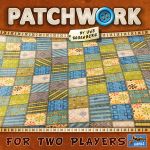
It's just a card game. But there are a lot of tight decisions and and meaningful tough, you know, even even aggressive decisions that you have to make against your opponents in order to play this game well. And that's why I love it so much. And so that's my number nine, Arboretum. My number eight is Patchwork. This comes in at a rating of or weight complexity of 1.6. This is probably Rosenberg's best lightweight game. It It is his best lightweight game if you ask BoardGameGeek. But for me, it is my second most favorite. And I'll get to the other one later. This one is a quintessential two-player game about fitting patch tiles onto your board in a style similar to Tetris and hoping to not have a lot of open spaces by the end of the game.
And while you're drafting these car or these tiles, you have to draft them with the resource or currency in the form of buttons. You have to have enough of them to purchase these tiles. There is the concept of time, too. So every time you purchase a tile, you move forward that many spaces depicted on the tile on the time track. And that if, you know, as soon as one person passes the threshold, that's the end of the game. Doesn't matter how many tiles are left to draft or what's on your board. And so finding that balance between having enough resources, you do generate an income of these resources throughout the game, as well as managing the timing aspect in order to get all the tiles that you can and need to score well in this game, creates a quite competitive game for how relatively easy this game is to learn. I know a lot of people who play more casual games that love Patchwork.
And And so Patchwork is just a perfect game for gamers and you know, hardcore gamers, lighter gamers, even non-gamers. I've, you know, I I've I've seen this game being played at like WSBG, the World Series of Board Gaming. It It was featured, I think, last year or 2 years ago as one of the, you know, games that people were competing in. But, people, you know, can just play this game for fun and still have a great time. And so, that is a testament to how how uh interesting this design is, how streamline it is, yet competitive and strategic this game can be. Which is why it is Rosenberg's top-rated um lightweight game. And it It has inspired a lot of his games and other games as well.
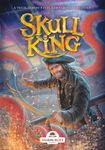
And so, yeah, Patchwork is definitely one to try. I think it's a little bit lower on my list because it's only a two-player game. But, otherwise, I I love Patchwork, my number eight. Number seven is Skull King. 1.74 is the weight. This game is relatively new to me, and I think it's my favorite trick-taking game. After your hand is drawn, you predict how many tricks you will win. And you place that bid, right? And you play 10 rounds, and each of those rounds uh the number of that round tells you how many cards are in your hand. And so, you place these bids every time, you know, you you bid and say, "I'm going to win this many tricks." And in addition to all of the numbers, you know, the the different different suits and number cards that you have, you have other cards like pirates, mermaids, etc.
that have their own special effects. You have cards that let you surrender and not uh win the the trick at all. And so, it's all about predicting, based off of your hand and what others might do, with, you know, how many tricks you might win, whether it's zero or more than that. And so, other trick-takers probably have reiterated on this game. It's a relatively older game. I think it's about 10 years old now. And so there there are probably some other innovative things that you've done with trick taking since then. There has been obviously, but to me the simple rule set has led to some really funny and amazing moments all with trick taking which has never been a a mechanism that I've been a fan of. I've not been really My my brain doesn't really compute trick taking very well.
And so this though created just such a fun atmosphere that I really been enamored with this game and wanted to play it and and and try it out some more. It's also on Board Game Arena and so yeah, if you haven't played this classic trick taker, I highly recommend Skull King, my number seven. Number six is Hey, That's My Fish. That comes in at a weight of 1.45. It helps that this game is abstract and simple enough that I can teach my five-year-old how to play. Uh maybe you know, she's obviously not playing it at the highest strategic level, but it's deep enough to be a strategic game as well and yet have a simple rule set. You move penguins across a board of tokens that depict different numbers of fish.
And what you want to do is have the most fish at the end of the game. You slide your penguin in a straight line, but always pick up the tile that you were previously on creating holes and limits to the board in which you cannot move your penguin's through. And so not only are you trying to target the most profitable tiles for fish, but you're also trying to pigeonhole and limit your opponent from getting to some of those spaces. And so there's kind of a a twofold thing in your mind when you're trying to approach it is how am I going to get more fish than my opponent and how am I going to block my opponent? Uh so I guess they're they're both really interrelated, but it's really cool how that decision whether to like uh how to block your opponent and how to get more fish really makes this game feel just really fun. It's It's probably my favorite abstract right now uh beating out even games like Santorini which have been in my uh top estimations for lighter games for a long time. So, I've really enjoyed Hey, That's My Fish.
Number five is Applejack. This is a straight 2.0 weight on BoardGameGeek and it is by far not one of Rosenberg's most popular games. I've heard scathing things about Applejack um out you know out of um Rosenberg's [clears throat] lighter games. But, this one holds more of a special part in my collection because it was one of those first games of Rosenberg's on Board Game Arena that I played a lot of and tried to really get good at. It's I think perfectly played on a digital format because you know as this game is it's a uh hex tile placing game. You try to create different groups of apples and and draft these these tiles and utilize an economy very similar to Patchwork and other Rosenberg games. There's a lot of DNA from Patchwork and other light you know tile drafting and tile placement games that Rosenberg had done in between Patchwork and Applejack.
However, there is the economy and math involved in or you you know involved in calculating your income every round and at certain parts during the game that it could be quite burdensome and really slow down the game if you're playing it in person. And so, having the bookkeeping done online makes this game a far better experience than what it how it plays on the table which most people would have played and how they would have reviewed this game. So, for me it's a perfect blend of strategic forward thinking, tactical reactions to drawn tiles, and this game continues to be my favorite Rosenberg lightweight game that I can play solo. I can play it two-player. I usually play it two-player. But, you can even do three or four players and still have a good time with it. And so, I think that's why it pushes Patchwork out a little bit. I do admit that I think Patchwork is a better game, but Applejack is more of my favorite because I've just really enjoyed the experiences that I've had slightly more than my experiences with Patchwork. But, that's my number five, Applejack.
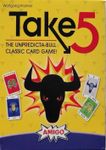
Number four is Take 5 or 6 Nimmt. This game is, I think, my lightest game on this list. It's 1.19. And it's a simple card game that feels like a lot of card games that you've might have seen recently, like Flip 7, or even older games that you, you know, you would play as a as kids or teenagers. Uh in fact, I think this game was uh created back in the '90s. And I think And And it's a game that I currently play with a lot of family members now, which really helps it uh stay high in my estimations. You simply in this game play a numbered card in ascending order in one of a few rows, four rows, right? Uh but if it's the fifth card that gets placed in row, and and, you know, everyone places their card face down and reveals it face up, and you play cards ascending in ascending order. If you play it in the fifth row, uh or the fifth spot in a row, you reset the row, and you take the amount of points or subtract the amount of points from, I think you start at 66.
And you lose those points. Whoever passes the threshold of zero triggers the end of the game at the end of the round. Whoever had lost the least amount of points, right, whoever has the most points remaining wins. And so, it's a very chaotic game. The nature of like flipping all of your cards face up and and just realizing the you know, people taking, you know, a few different rows is just uh it creates a a lot of chaos and and hilarity. Very similar to games like Flip Flip Seven that I mentioned before that I think has been doing this recently with Push Your Luck. Uh Six Nimmt doesn't really utilize that mechanism, but uh it's just a classic game of just, you know, let's uh You could try to be strategic in this game, too, as a matter of fact, like kind of predicting what cards might be the safest to play.
There's still a lot that is left to chance, but I I really do enjoy playing this game. It's it's always fun to play in person or even online asynchronously. And so, for those reasons, I have it placed at number four. So, that's Take Five or Six Nimmt. Number three is Castle Combo, which comes in at 1.73. Now, this has been a wonderful hit for me recently. It's a game of buying from a deck a couple of decks of individualized cards, similar to Bear & Bread that I mentioned before. Uh you have these cards that have their costs, so there's a currency in the game. You've got um ways to you know, you're drafting from two different rows, and so you've got ways to switch up between those two rows in the form of the another currency in keys.
And uh yeah, so these cards have immediate effects. They have game point awarding effects based off of where they're placed on the tableau, what else is on your tableau, what's next to them as well. And so, there is a bit of strategic planning in this game. Yes, there's a lot of chance when it comes to having the right cards be draftable in the in the market rows by the time it comes around to your turn again, but it's still an excellent game that I I feel like plays super quick as you're only building out a 3 by 3 tableau. You still have some interesting decisions to make on your turn even if those choices are quite different from what you were expecting them to be at first. It's still it still scratches an itch for me that I tend to see uh in heavier games, you know, it's it's a really light experience and quick and I've had a lot of success teaching this to gamers who weren't familiar with some of these mechanisms and so I think it's a a great hit. I look forward to playing more with the expansion as well.
And that's my number three, Castle Combo. My number two is Harmonies. It's a game with a weight of 2.01. I couldn't really believe that this game's weight was so low. It feels like a heavier game. And on reflection though, you know, this game is pretty straightforward with how it plays. Once again, I've had a lot of success teaching this game to non-gamers. Uh and what you do in this game is you draft tiles to place onto your tableau kind of in the style of Azul where you grab a trio of tokens or tiles and you place them on your uh tableau either, you know, next to each other. You can even stack some of them as well, which creates a three-dimensional experience and tableau building. But you also draft cards as well to uh fulfill objectives in placing your tiles in certain configurations. And there is there are ways to score based off of the configurations with or without cards for the tableau as well. And so you've got a duality of different objectives to try to chase both on the tableau and with the cards.
Obviously very similar to a game like Cascadia. I've mentioned this before, I prefer Harmonies to Cascadia because I feel like it plays quicker. The gameplay feels a little bit not it feels less restrictive I think compared to Cascadia. But I I I've just had a better experience with the way that this game handles the the tile drafting and and everything compared to Cascadia. So my recommend and Cascadia would be here if it wasn't for Harmonies and so I really do enjoy my number two game here which is Harmonies. And then my number one, if you're a fan of the channel you it's probably no surprise it's Age of Civilization. It's a rating of 2.3. Maybe this video is just an excuse to talk about this game again, but I'm okay with that. So this game really teeters that light to medium weight feel in in terms of game complexity. But it surprisingly falls into this category.
It is a quick worker placement game where you only have like six rounds to place workers out collect money and resources, use that to advance your civilization whether it's through the building of wonders or advancing up your technology track and utilizing the different powers that you combine by drafting from a multitude of different civilization cards. And a lot of these civilizations cards are created very thematically kind of represents what these ancient civilizations were known for which I think is really cool. And and yeah, the economy of this game is so tight like you only have like three to four workers if not less to mess around with, you know, you only get you know, a certain amount of money.
You only have a certain amount of actions that are very limited in this game and so you have to do a lot with just a little bit of time and and and actions and so this game just is just amazing, you know, I I think it's a brilliant design. Age of Galaxy would fit here, too, but Age of Civilization is thematically the game that I would rather play and it is the basis of Epochs: Course of Cultures, which is from the same designer, Jeffrey C. Chua, that utilizes a lot of the same mechanisms from this game and so huge fan of it. It's on BoardGameArena if you want to try it. And yeah, if if you're looking for a light game that provides a lot of tough decisions at this complexity level, then Age of Civilization might be a great game to try.
So, those are my top 10 games that are I would consider lightweight in terms of my definitions that I mentioned before. So, let me know what you think if you agree, disagree, and what games you would put on this list that you think I should try. Thank you for watching and I hope to catch you on the next video. Take care.