/pic7149798.jpg)
/pic7416519.jpg)
/pic7416525.jpg)
/pic7149798.jpg)













































7 Wonders Deep Dive
What the Community Thinks About 7 Wonders
Seven Wonders commands deep affection from the board gaming community nearly fifteen years after its 2010 release. Reviewers consistently praise it as a game that has aged remarkably well, offering a revolutionary approach to simultaneous drafting that influenced thousands of games. Yet this reverence is tempered by acknowledgment of a real teaching barrier. Most players agree the first play can feel opaque, as the iconography and card interactions demand learning before the game's brilliance becomes apparent. Those who push through that initial learning curve often discover a game worthy of repeated plays, one that scales beautifully from three to seven players without compromising depth or pace. The game occupies an unusual niche: it is simultaneously a gateway game for players seeking strategy without excessive complexity, and an underrated gem for those who have grown beyond it. Reviewers note that it works best as a repeated experience with the same group rather than a one-off encounter.
Core Mechanics That Define 7 Wonders
Simultaneous Card Drafting
Seven Wonders pioneered pick-and-pass drafting as a centerpiece mechanic. Each age, players receive a hand of cards, select one to keep, and pass the remainder to their neighbor in a coordinated moment of choice. This simultaneous action creates the game's signature rhythm: no downtime, constant engagement, and a perpetual puzzle of deciding what helps you versus what you deny your opponents. The mechanic scales effortlessly because everyone acts at once, making a seven-player game nearly identical in length to a three-player one. Reviewers highlight how this design choice delivers strategic depth without the glacial pacing that plagues many group games. The drafting also creates natural player interaction through resource denial and military posturing without requiring direct combat or negotiation.
Resource Management and Building
Players build their civilization through three ages by acquiring cards that produce resources, military strength, scientific knowledge, or victory points. Resource scarcity forces constant tradeoffs. You can purchase needed resources from neighbors for coins, but this requires planning ahead to afford those purchases. The game's elegant system allows multiple paths to victory: some players pursue scientific dominance through green cards, others accumulate blue victory points, and still others emphasize military or wonder construction. This mechanical flexibility means no single strategy dominates, rewarding adaptation to the cards you receive and the moves your neighbors make. The asymmetric wonders add another layer of replayability, as each player's unique wonder offers different bonuses and shapes their strategic options.
The 7 Wonders Experience
Fast and Focused Play
The defining experience of Seven Wonders is accomplishing meaningful decisions without waiting. Games play in roughly thirty to forty-five minutes regardless of player count because everyone acts simultaneously. Reviewers repeatedly marvel at how much game you receive in such a compact timeframe. Each age lasts only minutes, creating distinct strategic phases where the deck composition shifts and new opportunities emerge. The quick turn structure maintains table energy and momentum, preventing the downtime that undermines many heavier strategy games. This speed-to-depth ratio becomes Seven Wonders' strongest selling point for larger groups. When you have five, six, or seven players wanting to play something strategic, few games remain playable in under an hour.
Solitary Yet Social
Seven Wonders creates an interesting balance between multiplayer solitaire and genuine interaction. Each player builds their own civilization largely independently, pursuing their own engine and tableau. Yet constant attention to your neighbors' boards and strategies is essential. Knowing which resources your neighbors have access to shapes which cards you need and which you should block. Military threats from adjacent players demand defensive consideration. Scientific card dominance can trigger hate-drafting. While you are not directly competing for the same victory point pool, your strategies are deeply interconnected. This design allows for thoughtful play without requiring explicit negotiation or conflict resolution, creating a contemplative yet socially engaging atmosphere.
What Makes 7 Wonders Stand Out
Exceptional Player Count Flexibility
Seven Wonders works equally well at three players and seven players. Most games suffer at high player counts: downtime increases, turns drag, and game length balloons. Seven Wonders inverts this problem. The simultaneous drafting keeps everyone engaged on every turn, and the passing mechanic means each player interacts with every other player regardless of count. A seven-player game plays almost as fast as a three-player one, a remarkable achievement in design. This flexibility makes it invaluable for groups that fluctuate in size or anyone hosting larger gaming events. Reviewers praise this as the rare game that genuinely rewards gathering more friends rather than punishing you for attempting it.
Strategic Depth Achieved Through Card Variety and Neighbor Awareness
The game's recurring decision-making emerges from limited tactical information and countless meaningful choices. You see only the seven cards in your hand each turn, with no knowledge of what's coming next. Yet you must decide whether to take a card now or gamble that better options return later. Scientific engine-building, military aggression, wonder construction, and pure victory point accumulation all remain viable strategies, but none dominates through sheer power. Players must adapt their plans based on what the deck offers and what their neighbors are building. This constant adaptation to emerging board states and neighbor actions rewards long-term planning without making the early turns feel predetermined. The expanding card pool across three ages means the game evolves strategically, with resource cards giving way to specialized buildings and guilds.
Potential Drawbacks
Teaching Difficulty and Hidden Information
Seven Wonders presents a real teaching challenge despite its relatively simple rules. The game features extensive iconography across dozens of card types, complex prerequisites for building some cards, and interconnected systems that new players must grasp simultaneously. The hidden-hand nature of the draft means experienced players cannot easily guide newcomers without breaking the game's strategic flow. First-time players often finish their initial game confused about optimal play, requiring a second play to develop intuition. This creates a barrier to casual play, as many groups need players willing to invest multiple plays before the game feels rewarding. For gaming tables that prioritize immediate accessibility over depth, this teaching overhead can be prohibitive.
Limited Theme Integration and Replayability Concerns for Casual Players
The civilization theme, while present in the card names and wonder constructions, fades quickly into the background during play. The game becomes an abstract optimization puzzle driven by card symbols rather than a narrative experience of building a civilization. For some players, this mechanical orientation is precisely the appeal, but others seeking thematic immersion may find the disconnection between theme and mechanics underwhelming. Additionally, the base game's card pool, while varied, can feel repetitive after many plays. Some reviewers note that science-focused strategies begin to dominate once players internalize the system, potentially pushing play toward predictable patterns. The expansions address both concerns through additional card variety and new strategic axes, but the core game alone has natural limits to long-term replayability for certain playstyles.
If You Enjoy 7 Wonders
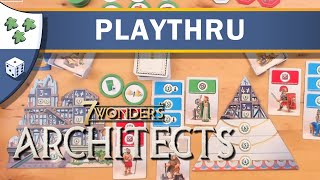
Players drawn to simultaneous card drafting will find natural satisfaction in Ticket to Ride, which pairs pick-and-pass mechanics with accessible route-building gameplay. Those seeking pure drafting without wonder-building might explore Ganz Schön Clever, a roll-and-write that captures the resource-juggling tension without the civilization overlay. For players who love Seven Wonders' asymmetric board powers, 7 Wonders Duel offers a tighter two-player experience with more aggressive interaction, while 7 Wonders Architects provides a lighter entry point to the universe. If you appreciate the resource-trading element and civilization theming, Splendor delivers accessible engine-building with a gem-trading economy. Seven Wonders plays well with groups seeking strategic depth in short plays, making it a touchstone for anyone building a collection around simultaneous action games that scale gracefully.
What Reviewers Are Saying
"It is really the combination of those interesting decisions and quick play time that give Seven Wonders an outstanding ratio of depth to game length for a larger group that is still looking for a more strategic experience."
— Rolls in the Family
"Seven Wonders is still phenomenal. It's so good still. And the last time I played this was actually at three, which is the minimum player count. It plays up to seven. And I've always said this about this game. This is a game that plays the same length of time regardless of number of players because it's just that quick."
— Board Games Unlocked
"This is probably our most played game out of our collection. We absolutely love Seven Wonders. We play this, Francis and I play it with his family, we play it with my family, we play with our friends. It's just one that we constantly go to."
— The Board Game Garden