/pic2776693.png)
/pic5408665.jpg)

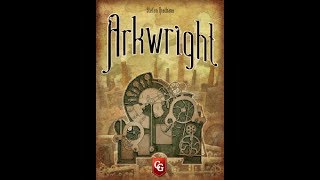
In Arkwright players run up to four factories in England during the late 18th Century. Your goal is to have the most valuable block of own shares. Thus, you must increase your share value and buy shares from the bank.
To run the factories, you need workers. When hiring Workers, demand is automatically created. But of course you want to replace your expensive workers (wage 2-5) by machines (1). To have more output from your factories you may employ new Workers or improve your factory to the next technical level.
You fix the price for your goods during an action round. To enhance your chances of selling goods, you improve your factories to higher levels, increase the quality and make some sales promotion. The higher these factors, the better are your chances of success - the higher the price, the lower.
Each player has an own set of "action tokens" like "build and modernize factories", "employ new workers", "improve quality" etc. On your turn you place one of those tokens on one of the free spaces in your line of the "Administration board" and pay the according administration costs, ranging from 2 to 10 (even numbers). Some actions depend on how much you paid, i.e. you may buy more machines with one single action, when you pay more (= use a higher space, which is then blocked for the rest of the round). During the game your actions become more and more effective by new tokens, i.e. allow you to buy 3 machines in a single turn instead of 2, increase quality 2 levels instead of only 1...).
After each round of actions one kind of factories is active and you have to pay for all your workers and machines there, then sell the manufactured products. The value of your shares increases for sold products and best quality.
Goods may also be traded to the colonies by ship - provided you have a contract with the monopoly of the East Indian Company.
After four turns each of the factories has produced and the round ends. Players remove the action tokens from the administration board and reveal an event token. After 5 rounds the player with the most valuable block of shares wins. Neither being to be the one with the most shares nor being the one with the highest share value guarantees victory.
Arkwright allows you to act in different ways. Run all four factories with most possible output, set the focus on only two factories and improve them more than the others can; use shipping to colony or focus on the home market. In any way you have to react to the opponents and their strategy. Enter markets with deficit in supply or give up business where the other players start to push you out. Buy shares when they are cheap and increase the value, or first make money and buy shares later.
To get familiar with the market mechanics you may start with a 120 minutes version "Spinning Jenny", but for those who like full strategy in economic themed games, the 240 minute "Waterframe"-Rules come with more options to improve your factory and use ships.
This page includes videos and mentions from the whole Arkwright family. Drill into a specific game below.
/pic2776693.png)


Learn to Play: Arkwright

Mechanics (from transcript analysis)
Video topics + discussion points
Quotes (from this video)
- i decided to stop doing it at this point
References (from this video)

- Terra Mystica
Mechanics (from transcript analysis)
Video topics + discussion points
Quotes (from this video)
- i would heavily recommend you start with the expansion right away
- oracle delphi is probably my favorite feld game overall
- i would love an expansion to Gaia Project that lowers the complexity
- i don't want an expansion to Gaia Project that dumbs it down
- Adventureland is incredibly simple to teach
- Consistency is key when building an audience
References (from this video)

- Engaging economic simulation
- Requires significant planning
- Has an easy and hard version with added complexity
- Can be very punishing if economics are mismanaged
- Player actions can disrupt plans and market prices
- Dry gameplay for some
- Economic
- Arkwright (card game)
- Food Chain Magnate
Mechanics (from transcript analysis)
- economic engine — Players manage money, set prices, and deal with market fluctuations. Involves planning to have enough money for actions.
- Set Collection — Attractiveness of goods is determined by player-set prices.
- Worker Placement — Players hire employees and potentially influence market prices.
Video topics + discussion points
Quotes (from this video)
- we are going to rank our top 20 heaviest games that we have played according to BGG rating whether we agree or not we'll tell you later
- delving into that ever controversial ever amorphous topic that is BGG heaviness ratings what do they mean no one knows no one can explain
- the fact that you can ruin your game very early on and this is is one of them
- it was hard to feel like you were achieving anything as well
- that's a real signal of how tough the entry point to this game is
- the bass rules are so dense and adding dog Arts Academy to it adds a whole extra thing to do
References (from this video)

- quintessential heavy game
- amazing game
- you do have some fun
- so many options of upgrading getting different abilities
- too much work
- too heavy
- horribleness
- economic
Mechanics (from transcript analysis)
- contract fulfillment — you take contracts from other countries and if you don't fulfill them they're going to be like that's fine just give us more next round
- economic engine building — you are building factories and then you sell things but then most of that money goes back to those workers who work there
- player interaction — if you are like not looking out for the other players someone going to be like Oh I'm just going to make the same Factory and sell things a little bit cheaper so you don't have to sell sell your things
- Worker Placement — you're trying to get Workers to work in those factories
Video topics + discussion points
Quotes (from this video)
- everything you do is horrible everything you do is very interactive
- if you are like not looking out for the other players someone going to be like Oh I'm just going to make the same Factory and sell things a little bit cheaper so you don't have to sell sell your things and then you're going to have a big problem because now you have to pay those workers and don't have money so they will stop working for you
- you have so many options of upgrading getting different abilities doing all these things to make your strategy the way that you want to make it and have a fantastic time
- I want to play it more
- it's too much work
- my brain hurts too much
- it was so much fun to do a top 10 list again we haven't done one in a while
- please let us know what is your favorite heavy games
- subscribe because you can it's very simple it's not that heavy we believe in you you just click that button and you are a subscriber
References (from this video)

- Host learned that the game's name is the last name of a person (Richard Arkwright)
- Player guessed the name correctly
- Industrial Revolution, manufacturing, and trade
- 17th and 18th centuries, England and its colonies
- Concordia
Mechanics (from transcript analysis)
- economic management — Focuses on manufacturing goods, building factories, and international trade.
- Historical — Set in the 17th and 18th centuries, concerning English merchantmen and Navigation Acts.
Video topics + discussion points
Quotes (from this video)
- hello young adventurers you have found the treasure hidden in the jungle
- this is the most important and most fun thing to watch so guessing the last number
- the designer root and John company
- the second word starts with the same twool letter as the first word
- Venice the city of bridges and and gondales
- the overcrowded Metropolis spread across the Earth Humanity has realized it's time to establish a new home on the ocean floor
- hey that's my fish
References (from this video)

- gorgeous new edition artwork
- enjoyed the original game
- industrialization
Mechanics (from transcript analysis)
Video topics + discussion points
Quotes (from this video)
- It was just a big scammy Mc Scammerton thing.
- Kickstarter did not complete a thorough review of the game before long on their platform.
- The established ones definitely have just such a strong foothold uh that it's it's hard to
- This sucks.
- It was an interesting idea, but poor execution.
- Birmingham is number one on BGG.
- It is a phenomenal game.
- I don't know. This isn't information on it. I just saw the thing and I was like, 'Okay.'
- The upcoming edition of Arkrite from Capstone is absolutely gorgeous.
- I liked Merlin.
- It's just like, 'Oh, we're going to sit down. we're going to create a narrative together and it and and and it sounds like I'm bashing on prep'
- Don't call me a criminal. Don't call me a liar.
- The reason why most stretch goals work is that they aren't they don't work like they used to
- If you don't like it, don't back it.
- Well, maybe you should have been uh on time.
- Just like, 'Oh, another TMG release. I wonder how late this one's going to be.'
- It's like the expectation. Well, you're not a month ahead of schedule, so therefore I consider you to be behind schedule, Andy, and I'm very disappointed in you.
- I I've thought since day one that that is a cool ass looking game.
- Why change the nice cover of the box?
- I wish all the artwork was like that cover then I would maybe potentially get it because I really do like Merlin.
- It's a story that allows you to take money upfront to make the thing that you want to sell people and make a little bit more money.
- Nearly impossible to win the game.
- Quantum was great.
References (from this video)

- Great game.
- Has many special powers and paths that change gameplay.
- A new version looks beautiful.
- Haven't played for years.
- Hard to get playing because it feels like too much work.
- Don't know if they will get the new version.
- The old one looks like a euro game.
- Running factories, producing goods, and managing resources.
- Industrial Revolution era (implied by factories and production)
Mechanics (from transcript analysis)
- contract fulfillment — Going for contracts but needing to deliver.
- Market manipulation — Undercutting prices to gain customers.
- production — Producing things and trying to sell them.
- Resource Management — Managing resources to produce and sell goods.
- Worker Placement — Hiring workers to work in factories.
Video topics + discussion points
Quotes (from this video)
- Marrakesh is a really good game.
- It's a fun game.
- Underwater Cities is really good.
- It's a fantastic game.
- Revive is a cool game.
- It does explode my mind and it does make your mind your brain go into a pulp.
- The original a modern crime board game has given us like an amazing experience.
- It's a classic and one that I will always enjoy to play.
- It's a brutal game where you are hiring workers to work in your factories to produce things and try to sell them.
- What I would really like to play more because it's a great game.
References (from this video)
- Having the most valuable portfolio wins the game.
- Can build or upgrade factories.
- Can hire and fire workers.
- Can produce and sell goods.
- Thematic setting of industrialists in 18th-century England.
- Components are well-detailed in the explanation.
- Emergency sell of shares if short on money.
- Workers are limited.
- Cannot build a factory and then close it in the same turn.
- Obsolete workers cannot be fired.
- If no workers in a production row with machinery, the machinery must be returned.
- Cannot sell particular goods if you do not own a factory of that good.
- If supply is greater than demand, not all goods may be sold.
- Higher quality is the tiebreaker for taking goods.
- Wages for machines and workers must be paid.
- Active good distribution reduces by one each production.
- Optionally ship active goods if a ship and goods are available.
- If you have any loans at the end of the game, you automatically lose.
- Subtracting value for unfilled contracts in final scoring.
- Losing value for workers on a factory marker in the final round.
- Stock holding investment economic game
- Eighteenth-century England
Mechanics (from transcript analysis)
- building — Players can build factories based on the development level for the decade or earlier, filling production rows with workers, setting a price, and calculating appeal.
- Closing factories — Players can close a factory, removing workers and machinery, with the appeal for that good going to zero. Goods remaining can only be sold in a warehouse sale.
- development tiles — Players can choose development tiles, placing them on their factory map. If a fifth tile is acquired, one must be discarded.
- Distribution improvement — Players can add or increase distribution, which adds appeal, paying a cost based on the admin fee. Distribution is reduced by one during each production of that particular factory.
- Hiring/Firing workers — Players can hire workers from the job market or fired workers location, placing them in production rows or the warehouse. Workers can also be fired from factories, but must be the farthest on the right.
- Loan management — Players can take out 10-pound loans, reducing their share value indicator. Loans must be repaid with interest before purchasing shares, and failure to repay by the end of the game results in a loss.
- Market share — The importer and job market adjust during the economy phase, with importer markers advancing on the market share table and workers returning to the job market.
- Modernization — Players can replace an existing factory with the next level of the same good, keeping workers, distribution, quality, and machinery markers.
- price adjustment — Players can adjust the price of factories affected by a main action, paying one pound per good.
- production — Players can manufacture goods in any one factory, with the number of production rows determining output. Stored goods can be sold, and wages for workers and machines are paid.
- Purchasing machinery — Players can purchase machines based on the price on the tile and the admin location, replacing workers who then go to the fired workers spot.
- Quality improvement — Players can increase sales opportunity by adding quality, placing a quality marker or increasing an existing one and updating their appeal.
- Set Collection — Players can acquire or increase contracts by placing or increasing contract markers on their harbor mat, needing enough ships for full delivery.
- Ship transport — Ships allow players to sell stored goods to the East India trade company for large profits. This involves having the ship, warehouse with goods, and a matching contract.
- Stock Holding — Players can buy or sell shares on the stock exchange, with buying not changing the share price and selling occurring at the share value indicator.
- Worker Placement — Players pick an action marker from their supply to place on their column of the administration chart, paying a cost to conduct the action and potentially take a corresponding additional action.
Video topics + discussion points
Quotes (from this video)
- The player with the highest company value has the most valuable portfolio and wins Arcright
References (from this video)

Mechanics (from transcript analysis)
Video topics + discussion points
Quotes (from this video)
- the board game is the heaviest complexity game in our collection
- it's a well-designed economy game
- it's easier to think through the auto development and you can set your price
- it's unmistakably accurate... it has a lot
- it's still a heavy experience
- it's going to appeal to some people
References (from this video)

- tight, crunchy engine-building
- deep strategy for long plays
- heavy for some players
- steep learning curve
- economic development, manufacturing
- industrial revolution resource/production
- heavy strategy
Mechanics (from transcript analysis)
- economic engine building — players manage resources, move workers, optimize production lines
- Engine Building — players manage resources, move workers, optimize production lines
- Tile Placement — placing workers to access actions and expand the engine
- tile/worker placement — placing workers to access actions and expand the engine
Video topics + discussion points
Quotes (from this video)
- it's a skin of a small little stacking game
- unplayable game because it's so small
- I like party games
- it's a great party game
- this is a very good party game
References (from this video)

- high interactivity and tension
- deep strategic planning with multiple viable paths
- very heavy and long if misplayed
- steep learning curve
- factory/production optimization with strategic collaboration
- Industrial Revolution textile production
- system-driven, heavy economic engine
- Linum
- Age of Steam
Mechanics (from transcript analysis)
- Action Following — choices by one player influence others’ available options
- block/interaction — choices by one player influence others’ available options
- complex action selection — players choose sequences of actions to optimize production lines
Video topics + discussion points
Quotes (from this video)
- it's back and forth because you bidding and taking out the others
- the timing is so important
- you can push other ships through so that you no need to pay more money for your ship than you thought you would
- there's so many things you can do to interact here
References (from this video)
- Deep economic game in a relatively small box
- Accessible depth compared to the original
- Excellent value for price
- High component count for a small box
- Broad appeal for 2-4 players
- Not as deep as the original Arkwright board game
- Can require careful analysis to optimize demand and pricing
- May feel less complex to players seeking deeper systems
- industrial production, stock value, and profit maximization
- Industrial Revolution factory economy
- economic simulation with strategic decision-making
- Arkwright (board game)
Mechanics (from transcript analysis)
- demand tracking — demand track affects how many goods you can sell and the appeal
- Development cards — draw and use development cards for bonuses and strategic edge
- distribution / shipping — distribute/sell and ship excess goods; hold capacity of ships
- price and appeal setting — on your turn you set price and appeal for the active good
- production and development — develop and upgrade factories to increase output
- production costs and wages — pay wages and production costs; manage costs
- stock market / stock ownership — owning more stock increases your net worth; can buy more shares to win
Video topics + discussion points
Quotes (from this video)
- a deep economic game that comes in a relatively small box
- the original is just a notch or two deeper than this new version
- meaning they made the original game and now took what they think is the best and taken out all the extra added complexity that is not really needed
- price tag is almost unbelievable for what you're getting
- fulfills its immersive nature being an economic game but still doing it in a way that more players can enjoy it without being too complex
- get your factories ready planning on how to maximize your net income in arkwright the card game
References (from this video)

- Strong thematic flavor with historical context
- Promotes economic decision making and strategic planning
- Contains dark historical context (slavery, exploitation) that can be uncomfortable
- Rules can be complex for casual players
- Factory capitalism, industrialization
- Late 18th-century Britain, Cromford, Derbyshire
- Historical-economic narrative
- Stevenson's Rocket
- Brass Birmingham
Mechanics (from transcript analysis)
- Economic decision making — Players weigh costs and pricing to maximize profits and control valuable shares.
- Factory/industrial development — Players manage capital to build factories and infrastructure, hire workers, and replace them with machines, then sell goods.
Video topics + discussion points
Quotes (from this video)
- you start the game with 50 pounds and two factories
- the cheaper you sell for the more appealing they are
- in this game you win by being the best at doing the trains
- like in stevenson's rocket you'll be transporting goods using tracks
- the board implies a grottiness that a lot of people felt at the time
- two sides of the board in brass a day and a night side
- the more beer you drink the more successful you'll be
References (from this video)

- Strong engine-building focus for players who enjoy supply chains
- Clear mechanical payoff for efficient play
- Feels less ‘alive’ and more mechanical and systemic
- Can be dry compared to more narrative-driven titles
- Mass production and supply chains
- Industrial revolution engine-building
- Mechanics-driven with minimal emergent storytelling
- Robinson Crusoe
- Above and Below
Mechanics (from transcript analysis)
- Engine Building — Wind the engine through production lines and resource management
- engine-building — Wind the engine through production lines and resource management
Video topics + discussion points
Quotes (from this video)
- when I'm in the game I want to feel like the game itself has a mind of its own and it is operating like its own organism
- experience is one of the most important things to me about any game no matter what it is
- these event cards don't poke you with a stick directly but what they do is they create some sort of event that is going on in the universe based on that planet
- the game feel alive
References (from this video)

- new addition acquired at flea market
- not enough detail in transcript to assess depth
- arc-based strategy
- card-driven fantasy world
- familiar euro mechanics approach
Mechanics (from transcript analysis)
- card-driven / engine-building — Sponsored tutorial; discussion focused on presentation rather than deep play analysis.
Video topics + discussion points
Quotes (from this video)
- it's a full-time successful job for me
- the newest macbook pro line is significantly faster
- i'm in a much better headspace about the numbers
- i'm not sitting there thinking that a three video per week plan is sustainable
- there's a lot of evidence to show that putting out more videos is not necessarily better for me
References (from this video)

- deep historical flavor
- strong mechanical depth
- offers long-term strategic planning
- high complexity for new players
- long play time
- steep setup
- economic development, capacity building, and production chains
- Industrial revolution era manufacturing and textile production
- historical economic simulation
- La Granja
- Captain's of the Gulf
- Colony
Mechanics (from transcript analysis)
- economic resource management — players balance costs, supply, and demand across a year-based cycle.
- production chain management — players optimize multiple interlinked production steps to maximize output.
- Worker Placement — players assign workers to production lines to generate goods.
Video topics + discussion points
Quotes (from this video)
- "There is a golden age of gaming for every taste; the challenge is standing out as a publisher."
- "A game needs a soul; polish should not erase character or narrative voice."
- "Gateway games can turn people away from the hobby if they imply other games are beyond reach."
- "Rulebooks are the first impression; getting them right matters more than most other components."
- "The journey matters more than simply harvesting victory points."