/pic4543193.jpg)
In the 1970s, the governments of the world faced unprecedented demand for energy, and polluting power plants were built everywhere in order to meet that demand. Year after year, the pollution they generate increases, and nobody has done anything to reduce it. Now, the impact of this pollution has become too great, and humanity is starting to realize that we must meet our energy demands through clean sources of energy. Companies with expertise in clean, sustainable energy are called in to propose projects that will provide the required energy without polluting the environment. Regional governments are eager to fund these projects and to invest in their implementation.
If the pollution isn't stopped, it's game over for all of us.
In the game CO₂, each player is the CEO of an energy company responding to government requests for new, green power plants. The goal is to stop the increase of pollution while meeting the rising demand for sustainable energy — and of course profiting from doing so. You will need enough expertise, money, and resources to build these clean power plants. Energy summits will promote global awareness, and allow companies to share a little of their expertise while learning still more from others.
In CO₂, each region starts with a certain number of carbon emissions permits (CEPs) at its disposal. These CEPs are granted by the United Nations, and they must be spent whenever the region needs to install the energy infrastructure for a project or to construct a fossil fuel power plant. CEPs can be bought and sold on a market, and their price fluctuates throughout the game. You will want to try to maintain control over the CEPs.
Money, CEPs, green power plants that you've built, UN goals you've completed, company goals you've met, and expertise you've gained all give you victory points (VPs), which represent your company's reputation — and having the best reputation is the goal of the game … in addition to saving the planet, of course.
This new totally re-designed edition of CO₂ features a completely new iconography, an entirely new rulebook with lots of 3D pictures for easy comprehension of the rules, more balanced gameplay, a new events deck, improved and streamlined mechanisms, and upgraded wooden components for the power plants instead of the cardboard tokens in a game with a shorter play length. This version also features a co-operative mode of play as well as solo play based on goals.
Cry Havoc - Game Play 3
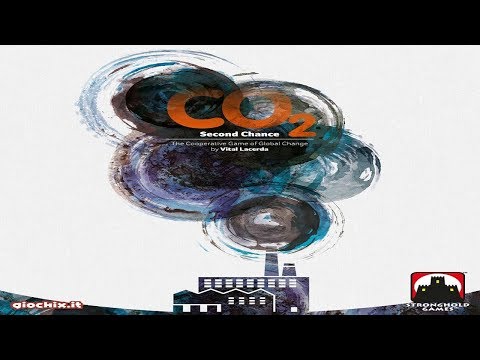
How to Play: CO2 - Second Chance

- Phenomenal theme integration.
- Plays well, with actions grounded in theme.
- Visually appealing design.
- Challenging and rewarding gameplay.
- Supports a clear environmental message.
- Strategic depth requiring long-term thinking.
- Some players may find the initial learning curve steep.
- The game's design implies that perfect play can still lead to a loss, which some find demotivating.
- Restrictions on sharing money and knowledge in cooperative mode can feel like unnecessary barriers.
- The 'control aspect' feels out of place in the cooperative mode.
- The randomness of fossil fuel tiles appearing at the end of the decade can feel unavoidable and lead to losses.
- The victory point system could be named differently (e.g., 'clean air points' or 'leaf symbol').
- Combating climate change and preventing environmental collapse.
- Pandemic
- Escape Plan
- The Gallerist
- Terraforming Mars
Mechanics (from transcript analysis)
- Area Control — Players gain control over regions, which impacts certain game mechanics like paying fines.
- Card Drafting — Players acquire cards that represent actions or objectives.
- cooperative play — Players work together to achieve common goals, though some restrictions prevent full cooperation.
- Resource Management — Managing money and knowledge is crucial for building plants and achieving objectives.
- Set Collection — Collecting specific types of power plants or achieving environmental goals.
- Worker Placement — Players move scientists to different locations to perform actions like gaining knowledge or building projects.
Video topics + discussion points
Quotes (from this video)
- Theme does not always equal good game mechanics.
- The real world scenario is that we already [__] ourselves enough with climate change that no matter how much effort we put into it we're still [__].
- The reason why people play games is not to be reminded of the [__] real world as the real world sucks.
- The game should be hard and it is very hard it's like you should be able to with the the scenario that you're given the toy the tiles and all that you're giving there sure be a chance of victory not a well tamanna CLE we already [__] ourselves.
- The biggest one I have is and this is only for the cooperative we haven't played competitive and I have no interest this game competitively because it's semi cooperative and I [__] hate semi co-op.
- It's like we need to focus on what the [__] environment is asking for us which we if we don't do that surprise surprise.
- The fossil fuel tiles I like that there in the game because that adds a little bit more element and theme to it I just don't like how random they are.
- The victory points are kind of like your way of buffering how bad you're doing.
- Because for me like it is a bit of a challenge but I I since I placed so many games all the time and I value my time quite a bit I still I want the challenge and I do very much like it but I don't like the idea of spending three and a half hours.
References (from this video)

- Cohesive and interconnected mechanics
- Strategic depth through knowledge management and action selection
- Preventing global warming and the catastrophic events caused by it.
Mechanics (from transcript analysis)
- Action Point Allowance — Players take one main action and up to three executive actions per turn.
- Area Control — Players can gain control over continents by having the most infrastructure in them, providing benefits like access to CEP tokens.
- Card Drafting — A variant rule for acquiring lobbyist cards.
- cooperative play — Players work together to achieve common goals, with shared victory and loss conditions.
- knowledge tracks — Players advance on tracks representing different renewable energy types, unlocking abilities and contributing to goals.
- Resource Management — Players manage money, technology cubes, and CEP tokens.
- Set Collection — Players aim to complete UN goal cards and private objectives which require specific conditions to be met.
- Worker Placement — Players place scientist meeples on various locations (projects, lobbyist cards, energy summits) to take actions or gain benefits.
Video topics + discussion points
Quotes (from this video)
- Everything in this game every little piece everything is basically very cohesive and it's like a gear and they all relate to one another
- The most important aspect of the game is building power plants because how are you gonna fight global warming if you actually don't have any power plants to do so
- The cooperative game of global change
- You lose the game is over that's that you failed you couldn't do anything for the environment you're depressed and that's that
References (from this video)

- Thematic integration of mechanics.
- Cooperative gameplay is preferred over competitive.
- High strategic depth and planning required.
- Can be difficult to achieve goals, especially environmental ones.
- Political maneuvering can be frustrating.
- Can feel like a 'waste of turn' if actions don't lead to clear progress.
- Environmentalism and climate change mitigation
Mechanics (from transcript analysis)
- Area Control — Players can gain control of regions by building plants there.
- cooperative play — Players work together to achieve common goals, though the game also had a competitive mode previously.
- Resource Management — Players manage money, knowledge, and cubes to perform actions.
- Set Collection — Players collect knowledge and cubes to build plants and achieve environmental goals.
- Worker Placement — Players move scientists to different project locations on the board.
Video topics + discussion points
Quotes (from this video)
- this game is like just grounded in theme and I'm like not even just mechanics like in just in reasoning
- I hate semi cooperative games but like yeah you go for the UN cards individually so that's what those points are so you get a victory it's if you have the most money you equate that into victory points as well I'm not sure I like that I don't think so either
- This game is like riddled with like politics yeah so it's like I could just piss everyone off no matter what joke I make because no one's ever happy it's true
- The environmental goals are probably the one that hurts the most
- we ignored like every ounce of data that came our way built no like actual relevant plans to fight the CO2 emissions but we kept building the CO you know the fossil fuel plants because that's the cheapest and easiest way to do it and I mean ultimately it's not really my problem but I thought we had it
- well it just turns out that we we just [expletive] ourselves
References (from this video)

- The game is thematically based on combating global warming.
- The theme is very modern and very real today.
- Players must build renewable energy plants to combat emissions.
- Can be very, very hard, and players might lose through no fault of their own due to rising emission levels.
- There might only be one or one other chance left to do anything about climate change.
- Combating global warming by developing renewable energy and reducing emissions from archaic plants.
- Global, projected into the near future (2020s-2050s).
- Players build infrastructure and implement strategies to mitigate climate change.
Mechanics (from transcript analysis)
- cooperative play — Players work together, but can also lose due to emission levels rising due to old-school methods used by countries.
- Resource Management — Managing resources to build renewable energy plants and combat global warming.
- Tile Placement — Placing tiles to represent different energy sources and infrastructure.
Video topics + discussion points
Quotes (from this video)
- I think that you can have fun with any theme because it's it's a game like you're not making fun of someone's personal situation you not making fun of things that have happened you can enjoy because you should as a as a logical and and rightful minded human being be able to distinguish you know a fictional board game setting from a real life scenario.
- The reason why I chose the others was because it centers around the seven deadly sins and you as one players is playing one of those seven deadly sins that has corrupted preachers or corrupted homeless and then you're you're playing one of the sins that are trying to destroy humanity and the opposing players are playing a group of ragtag not necessarily heroes but some are good and then others are just hey we're not as evil as that as that sin character they're trying to fight back.
- Because the game centers so much around death every step of the way and all these very grim messed up events that can happen the grotesque nature of the creatures that are like that you can just the way you can you know kill them and the ways that they can kill you can just get very disgusting and very gruesome personally I love all that just because it's a goo.
- The more with all these kinds of games it's not so much what you're doing it that's heavy it's just the the gravitas of the situation that you're in like a person was murdered and you're trying to figure out why and you have to talk to all these people and get some messed up stories.
- So the sheer nature of having Adolf Hitler in the board game it's already a heavy theme like no no doubt about that.
- This war of mine you play civilians in the house trying to survive and Nick you will try and get resources to better a better you know soup up the house to where is now now this cold or you have some some heating or you have some whatever a bed just sleep in this simple you know like things that that you all people take for granted.
- I personally believe global warming is a very much real thing I believe climate change is a very real thing and the way co2 second chance is depicted is every single thing is is the Matic based off of the types of buildings that you build to try and combat global warming.
References (from this video)

- Strong puzzle element and collaborative dynamic
- Clear pivot point at stage four that guides strategic decisions
- Cooperative play fosters communication and planning
- High dependency on coordination and shared information
- The puzzle focus can reduce perceived uncertainty and challenge if information is too exposed
- Pandemic
Mechanics (from transcript analysis)
- action_cards — There are action cards and other cards that players can use, with discussion about how they influence planning.
- board_as_mechanism — The game board effectively acts as an opposing force that players must navigate against.
- Cooperative Game — Players work together with shared information and coordinated actions.
- cooperative_play — Players work together with shared information and coordinated actions.
- deck_visibility_and_draw — Concentration of certain cards (e.g., fossil fuel plants) drawn from the deck affects strategy and risk assessment.
- hidden_vs_visible_information — Most information is available at the start; some information is hidden or revealed as the game progresses, with stage four highlighting strategic pivots.
- stage_based_effects — There are stage-based effects (e.g., stage four) that determine when and how to overbuild or discard, guiding decisions.
Video topics + discussion points
Quotes (from this video)
- it's a co-op game
- almost all the information at the start of the game
- we were collaborating on a big pseudocode with game mechanics
- the only time it matters is once you get to stage four
- Dominion ... almost multiplayer solitaire
- Spirit Island mm-hmm a cooperative games that we like to play
- outbreak no no no yeah it can hit you immediately
References (from this video)

- Engaging cooperative puzzle
- Appealing visual components
- Can be quite challenging to win as a cooperative game
- Escape Plan
- Mars
- Dwarf Winter
Mechanics (from transcript analysis)
- Cooperative Game — The game is designed to be played cooperatively, with shared objectives and some semi-cooperative dynamics.
- cooperative play with shared goals — The game is designed to be played cooperatively, with shared objectives and some semi-cooperative dynamics.
- scientist tracks and resource management — Resource tracks (scientist track) influence income and progress toward goals.
Video topics + discussion points
Quotes (from this video)
- it's the perfect entry game because it has the most familiar mechanics
- the bank mechanic it was something I've never seen before
- cooperative mode as well as the normal multiplayer against each other mode
- the Neapolitan maples in the middle
- it's puzzle cooperative… more puzzling than other co-ops
References (from this video)

- Asymmetric factions offer unique strategic depth.
- Strategic defense and resource management are key.
- Tense late-game scoring creates excitement.
- The game provides a challenging area control struggle.
- Falling behind can lead to a deep hole, making recovery difficult.
- Mistakes in rules application can occur and need correction.
- environmental crisis, corporate greed, sustainable energy
Mechanics (from transcript analysis)
- Area Control — Players vie for control of regions on the map, indicated by placing control tokens and figures.
- asymmetric factions — Different factions have unique strengths and weaknesses that players need to exploit.
- Card Play — Players use cards for actions, special abilities, and battle effects.
- combat/battle — Battles occur in regions, involving figures, tokens, and battle cards, with outcomes determining points and control.
- Objective Fulfillment — Players aim to achieve objectives like region control and attrition damage for points.
- Resource Management — Players manage construction points and crystals for various actions like building and activating structures.
- token placement — Various tokens are used to represent structures, power extraction, and exploration outcomes.
Video topics + discussion points
Quotes (from this video)
- You've really been steamrolling uh through this game.
- I've dug myself into a hole too deep.
- tokens representing figures like the power extraction or Luke's artillery battery, as another example, cannot be targeted by effects, killed, or taken prisoner.
- This is the absolute worst that I could have gotten in that region.
- Even when he's not attacking, he's just collecting points.
- tokens cannot be targeted by attrition.
- Luke currently controls a scary amount of crystals.
- It's going to be tricky because you've very wisely placed out these battery tokens which are going to give you extra help in the battles to come.
- I feel confident we might be able to hold on to all the regions we currently have and not allow him to spread out further.
References (from this video)

- Tough but rewarding cooperative experience
- Engaging with shared objectives and occasional secrecy
- Very heavy for some players
- Semi-coop variant can feel rough
- eco-strategy and cooperation
- Global climate policy and renewable energy development
- cooperative with secret objectives
- Vital Lacerda co-ops
- Cooperative heavy euros
Mechanics (from transcript analysis)
- Cooperative Game — Players work together to manage CO2 and energy research, with a mix of cooperative and competitive signals.
- Cooperative/semicooperative play — Players work together to manage CO2 and energy research, with a mix of cooperative and competitive signals.
- Executive actions and multi-stage building — Players perform actions in stages, unlocking higher-power moves as the game progresses.
Video topics + discussion points
Quotes (from this video)
- It's so good. This is a fun one to bring out.
- Two teams trying to figure out the words each other's words by using numerical codes.
References (from this video)

- tightly designed, challenging
- cooperative/co-op options enable diverse play
- difficulty curve
- some scenarios can be punishing
- cooperative/competitive variants
- pollution cleanup; environmental engineering
- grim but hopeful
- Pandemic
- Coal Baron
Mechanics (from transcript analysis)
- cooperative vs semi-cooperative modes — choose fully co-op or semi-co-op with hidden objectives
- Player Board | Main Board — manage pollution and production effects across a shared board
- Semi-Cooperative — choose fully co-op or semi-co-op with hidden objectives
- tile/board interaction — manage pollution and production effects across a shared board
Video topics + discussion points
Quotes (from this video)
- it's a really intense game
- this is the meanest tree game out there
- it's the best trick-taking game of all time
- the economy in this game is probably one of the most interesting parts