/pic2098412.jpg)
/pic4595026.jpg)
/pic3925506.png)
/pic2098412.jpg)









Monopoly Deal Deep Dive
What the Community Thinks About Monopoly Deal
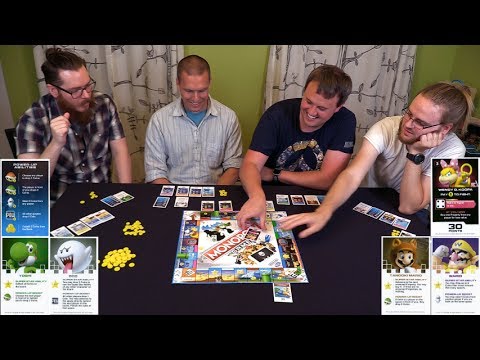
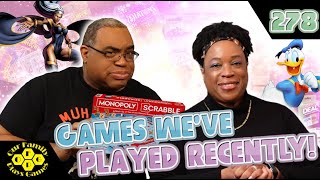
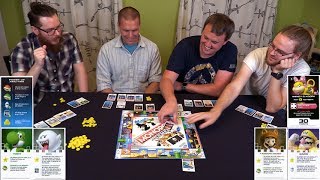
Reviewers who cover Monopoly Deal tend to agree on one point before anything else: it moves fast and gets out of the way of the fun. Board Game Sanctuary frames it as a genuine improvement on the original Monopoly, pointing to a game that trades dice and a board for cards and constant player interaction. Our Family Plays Games came into a session admitting the group had mostly quit playing Monopoly, then found themselves shocked by how much they enjoyed a round of Monopoly Deal, calling it a good game with a lot of player interaction. Grant Lyon frames Monopoly Deal as a version of Monopoly distilled down to just cards, one that plays in about twenty minutes and works as an entry point for people who already know the Monopoly name but have not gotten into card or board games.
Shelfside lands closer to the middle. The channel praises how accessible and quick the game is to teach but scores it only a four out of ten after cataloguing balance problems in the deck. That mixed take stands apart from the negative reaction from The Dice Tower, who rated the game a one and said flatly that they hate it, while acknowledging that Monopoly Deal is popular and that plenty of people like it. The split is less about what Monopoly Deal does than about how much its randomness and swinginess matter to a given table.
Core Mechanics That Define Monopoly Deal
Drawing, Playing, and Building Sets Without a Board
Board Game Sanctuary walks through the base structure: on a turn, players draw two cards from the deck and then play up to three cards from their hand. Property sets are not placed around a board, since Monopoly Deal has no board at all; instead property cards are scattered throughout the deck, and players race to gather full color sets from the cards they draw, steal, or force out of other hands. Shelfside adds that the goal is to complete three property sets, and once a player does, the game immediately ends.
Money, Properties, and Action Cards From One Hand
Shelfside details the three things a card in hand can become: money placed into a personal bank, a property placed into a personal collection, or an action card played into the center to trigger an effect. Several cards can be used as either money or an action, which Shelfside calls dual use, and that choice becomes a running decision about whether a card is worth more protecting a hand or attacking an opponent. Board Game Sanctuary highlights the wild property cards specifically, noting that they let a player fill a missing color in a set they are racing to complete.
The Monopoly Deal Experience
A Constant Back-and-Forth of Rent, Theft, and Defense
Shelfside describes a game that runs almost always in fifteen minutes because completed property sets never get discarded and every turn adds pressure through rent charges, forced deals, and outright property theft. A deal breaker card can lift an entire completed set from another player, and the only counter is a just say no card, which Shelfside frames as a simple, intuitive back-and-forth between a strong attack and its lone defense. Cards like it's your birthday or pass go add familiar Monopoly beats layered onto that constant exchange.
Property That Never Stays Put
Board Game Sanctuary centers the experience on how fluid ownership feels. Properties are described as a limited resource that everyone needs but that never stays with one player for long, creating what the channel calls a tug-of-war dynamic where players are constantly trying to protect what they have while scheming to take what others have built. That churn is credited with stopping any one player from running away with the game, since a leading position can be dismantled by a well-timed steal.
What Makes Monopoly Deal Stand Out
Faster and More Interactive Than the Original
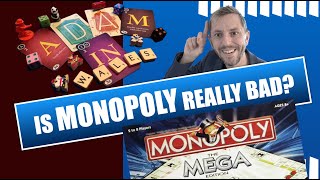
Both Board Game Sanctuary and Grant Lyon point to the same core appeal: Monopoly Deal keeps the property-collecting idea of Monopoly but strips out the dice-driven waiting. Board Game Sanctuary argues players have a greater sense of control since a bad string of draws is not the same dead end that a bad string of dice rolls is on the original board, and the whole game finishes in about twenty minutes rather than the hours the classic version can run. Grant Lyon calls Monopoly Deal a much more fun version of Monopoly precisely because it has been distilled down to just cards.
A Rulebook and Setup That Get Out of the Way
Shelfside singles out the rulebook and player aids for putting the object of the game right up front, and calls the setup and reset process blisteringly fast since a full game is just a shuffle and a deal of five cards each. Because the properties, cash, and Monopoly branding are already familiar to almost anyone, Shelfside notes a teacher barely has to explain anything beyond the basic turn structure before a table understands what it is chasing.
Potential Drawbacks
Card Balance and Swingy Draws
Shelfside spends real time on the deck's imbalance: the value of money cards is uneven, some property sets need far more cards to complete than others, and the deal breaker card can single-handedly swing a game by lifting a finished set with no cost attached. Shelfside also calls houses and hotels a noob trap, since they take a valuable action to place, are excluded from the utility set entirely, and put a target on a player without the payoff that Monopoly veterans might expect.
A Weak Fit for Two Players
Shelfside is direct that Monopoly Deal is not very good at two players, arguing that with only one target in the game, whoever draws the better hand simply wins, and the lack of a group dynamic removes the mind games and politics that make the game interesting at three or more. The Dice Tower's reaction to the game lands at the far end of that same skepticism, rating it a one and calling it a game they hate even while conceding that most people rank it well.
If You Enjoy Monopoly Deal
Shelfside groups Monopoly Deal with other fast, high-variance games that let a newer or younger player feel like they have a real shot against more experienced company, naming Uno alongside it as that same kind of quick, chaotic, anyone-can-win experience. Multiple channels also frame Monopoly Deal directly against the game it reworks, describing how it trims the waiting and the dice out of Monopoly in favor of constant, fast player interaction.
What Reviewers Are Saying
"Monopoly Deal is so darn accessible. This is one of the easiest pick up, learn, and play games I've ever seen. The cards are all self-explanatory, and since they're colors, it's not really confusing what board states are like."
— Shelfside
"Monopoly Deal is a real amended version of the original Monopoly board game where players had to monopolize the wealth of other players and force them into bankruptcy. Monopoly Deal, however, is a faster, more interactive card game version of the original Monopoly game."
— Board Game Sanctuary
"But to be honest with you, Monopoly Deal is a good game, y'all. It was good. It's a good game."
— Our Family Plays Games