








Mythic Battles: Pantheon Deep Dive
What the Community Thinks About Mythic Battles: Pantheon
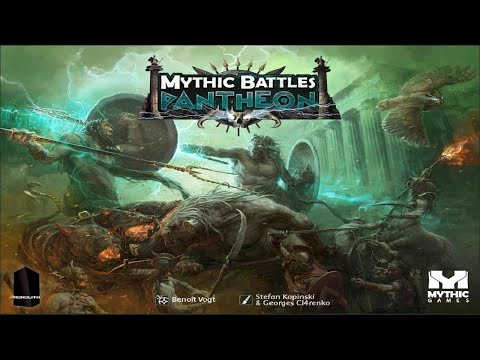
Reviewers agree that Mythic Battles: Pantheon, designed by Bruno Cathala and published by Monolith, is a large, dramatic game in which gods, heroes, and monsters from Greek, Norse, Roman, and Egyptian myth fight over sacred ground. The Board Games UnLocked review gives it a 9 or a 9.5 and praises its dice system, its open information, and its theme. The Dice Tower calls it a very demanding game with a great many modifiers, and says that although it is effort to play, it enjoys it once the modifiers it uses become familiar. Board Game Critique is more divided. It calls the game spectacular at the table, yet spends much of its review on a rulebook that it says was written for people who already know how to play. The shared view is that Pantheon rewards patience and repeat play, and that its biggest barrier is learning it rather than enjoying it.
Core Mechanics That Define Mythic Battles: Pantheon
Dice Spending and Re-rolls
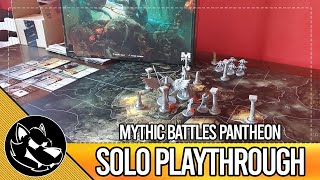
The combat system is the feature reviewers praise most often. Each attack rolls a pool of dice, and the player can set aside leftover dice to upgrade faces, turning a four into a five. TableTop Wolf, walking through the Nemesis solo variant, shows how spare dice can then be spent on wound rolls, and how a target with high defense can force a player to re-roll the dice accumulated during the hitting step. Board Games UnLocked describes the dice system as one of the game's real strengths, because the dice keep presenting choices about how to spend what is left over. Special powers such as Onslaught, Mighty Throw, and Block add further modifiers, and TableTop Wolf stresses that these have to be checked on every attack or they are easy to forget.
Omphalos Control and the Art of War Deck
Omphalos tokens are the center of the game's win conditions. TableTop Wolf explains that the game ends when one side claims more than half of the omphalos on the board, and that a unit holding one is the Nemesis bot's priority target. The Art of War deck adds a second layer. Each card can grant an extra activation, draw cards, or move a unit, and the deck is shared, so a player who tracks which cards have already been used can predict what the opponent may draw next. TableTop Wolf also notes that when the bot claims an omphalos, it receives a card that gives it extra activations, which is why the solo opponent has to be watched so closely.
The Mythic Battles: Pantheon Experience
Epic Swings and Tension
Reviewers describe Pantheon as a game of dramatic reversals. A single good roll can wipe out a unit line, and a single bad one can leave a hero stranded beside an omphalos they cannot hold. The host of the Board Games UnLocked top-10 combat systems video says that the feeling is "so epic" whenever a big clash works out. The tension comes from knowing that any attack might be the turning point, which keeps the table engaged even when the rules slow things down.
Effort, Rules, and the Feeling of Mastery
Reviewers repeatedly describe the game as effortful. The Dice Tower says that it is easy to feel you are missing something, and that the game is satisfying once you have learned the modifiers you actually use. Board Game Critique argues that the friction is structural, because definitions appear after the rules that depend on them, so a first game becomes a process of checking the book and community threads. The reward, according to these reviewers, arrives after a few sessions of getting comfortable with the modifiers and the card interactions.
What Makes Mythic Battles: Pantheon Stand Out
Miniatures and Theme
The miniatures are the first thing many reviewers notice. The Dice Tower says that Monolith is good at miniatures, even though it is less good at rules, and the game's gods and monsters give the table a sense of spectacle. The Board Games UnLocked review singles out the theme as one of the game's strengths.
Open Information and the Draft
Reviewers also praise the game's open information and drafting. The Board Games UnLocked review credits the open information with keeping play readable, so a player can see the opponent's position and plan around it. The draft lets each player build a warband that fits their strategy, and TableTop Wolf's walkthrough shows how the bot's choices follow a fixed priority order that a player can learn and exploit.
Potential Drawbacks
A Rulebook That Assumes Experience
The most consistent criticism is that the rulebook is hard to learn from. Board Game Critique says the book was written for people who already know how to play, that important definitions appear after the rules that depend on them, and that card-on-card power interactions can be ambiguous. Community FAQ threads end up functioning as a de facto rulebook. Board Games UnLocked's play session shows the same problem in practice, with confusion about how the activation limit applies and when a Leader or Leonidas can act. Board Game Critique also points to Kickstarter backers who had to learn the game without the clarity they expected, and the Board Games UnLocked top-10 combat systems video raises concerns about the Mythic Games Kickstarter and refunds.
Leaders, Turtling, and Limited Mobility
The Board Games UnLocked review singles out the Leader ability and Leonidas as the weakest parts of the design. A Leader action counts against the activation limit, and the unit must move into an enemy space before it can act again, which the reviewer finds weird. The same review notes that the game can come down to turtling in the middle, since mobility is limited and many units never need to flank or run around the board. The reviewer also argues that the Leader ability is not bad in itself, because it forces the player to plan movement rather than relying on an inherent ability that a unit has wherever it stands.
If You Enjoy Mythic Battles: Pantheon
Players who enjoy Pantheon's dice spending and push-your-luck combat will find similar satisfaction in Nemesis, which Board Game Critique describes as an atmospheric triumph with a strong solo experience. Players who like its demanding ruleset and its habit of rewarding careful planning will appreciate Mage Knight, which Board Game Critique calls one of the great solo experiences ever designed. Readers who enjoy the miniatures-heavy spectacle should keep in mind that The Dice Tower describes the game as kind of like Warhammer without the measuring, so the appeal leans toward large clashes and big armies rather than precise movement.
What Reviewers Are Saying
"The rule book was written for people who already know how to play. Important definitions appear after the rules that depend on them."
— Board Game Critique
"At the beginning of the game, it's kind of weird to leader and then have them go, and then you have to move in to activate them again."
— Board Games UnLocked
"Yeah, but there's like all these things you need to make sure you're not missing. This is like, oops, you forgot to power the board game."
— The Dice Tower