





Pandemic: Hot Zone – North America Deep Dive
What the Community Thinks About Pandemic: Hot Zone – North America
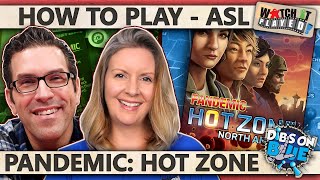
Reviewers largely agree that Pandemic: Hot Zone – North America is a faithful, compact version of the cooperative classic designed by Matt Leacock and published by Z-Man Games. The game keeps the core tension of Pandemic, with teammates racing to find cures while the infection rate climbs, but it shrinks the map to North America, reduces the number of diseases to three, and trims the play time. Watch It Played walks through the rules in detail and stresses that the differences from the original are important enough that even experienced Pandemic players should pay attention to the setup and turn structure.
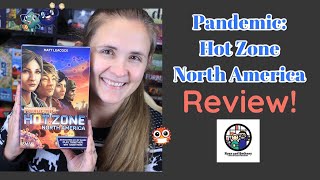
The most enthusiastic voices come from Ryan and Bethany Board Game Reviews, who describe the game as doing exactly what it set out to do: a condensed Pandemic that feels familiar from start to finish. Their hesitation is about preference rather than quality. They would still choose the full Pandemic box, especially with an expansion such as Pandemic: In the Lab, and they placed Hot Zone – North America near the bottom of their personal ranking of Pandemic games while stressing that a low spot on a list of strong games is still a strong game.
TheGameBoyGeek and AzureDeath | Solo Board Gaming view the game primarily as an entry point. TheGameBoyGeek compares it to the smaller Ticket to Ride releases that let a group sample a series before committing to the big box. AzureDeath includes it among introductory recommendations for newcomers to the hobby, describing it as a big board game experience delivered in a short amount of time. The community consensus, then, is that Hot Zone – North America is a strong game whose value depends on whether a player already owns the original.
Core Mechanics That Define Pandemic: Hot Zone – North America
Cooperative Game
Every player shares one outcome. Victory comes when the team discovers cures for all three diseases, and the group loses if the outbreak marker reaches the end of its track, if a disease cube is needed but none remain in the supply, or if a player must draw from an empty player deck. Ryan and Bethany Board Game Reviews emphasize that the game reads as a cooperative exercise in managing shared risk, with each player's role contributing to the team's goal. Matt Leacock's design gives each player one of four roll cards: the Generalist can take five actions instead of four, the Researcher can hand a card to any teammate in the same city, the Medic removes all cubes of one color when treating, and the Dispatcher can move other pawns. Those asymmetric abilities are what make the team plan together.
Watch It Played highlights the most important social change from the original. Because each player's cards are kept face up, the table can openly discuss strategy at any time, although the player taking the turn always has the final say. Publisher Z-Man Games has kept that dynamic intact in this smaller package, which is why reviewers describe the experience as collaborative rather than competitive.
Set Collection
The disease-fighting engine in Hot Zone – North America is a set collection system built on city cards. Atlanta is the only research station on the board, so a player standing there can discover a cure by discarding four city cards that all share the same disease color. Ryan and Bethany Board Game Reviews describe this as the core loop of the game, with players roaming the map, trading cards, and steering toward Atlanta. Once a cure is found, treating that color becomes far more efficient, because the treat disease action removes every cube of that color at once. The Share Knowledge action adds a trading layer, letting two players who share a city exchange the matching city card. Watch It Played explains that the trade is limited to the city both players currently occupy, which keeps the exchange tactical rather than automatic.
The Pandemic: Hot Zone – North America Experience
Foreboding Tension
Reviewers consistently describe a sense of mounting pressure. Each turn ends with infection cards placed on the board, and the infection rate marker sets how many cards are drawn. Epidemic cards push that rate higher and reshuffle the discard pile back on top of the infection deck, so a city that was just treated can flare up again. Ryan and Bethany Board Game Reviews call the epidemics bad news and note that players have to fight the same threats all over again. The outbreak track adds a second clock, because a fourth cube added to a city triggers an outbreak that spreads to neighboring cities. Players feel the board slowly filling with disease, and the question shifts from whether they can win to whether they can stabilize the map in time.
Quick and Compact Play
The game is designed to finish briskly, and reviewers respond to that pace. The box advertises about 30 minutes, but Ryan and Bethany reported that their two-player game ran closer to 15 minutes because they lost quickly. TheGameBoyGeek praises the same quality, observing that the game is quicker, faster, and easier to teach than the full Pandemic. A smaller board, fewer cards, and fewer actions mean that turns move along without the downtime that can slow a larger cooperative game. The result is a game that fits into a short evening or a lunch break, which many reviewers see as its main appeal.
What Makes Pandemic: Hot Zone – North America Stand Out
A Faithful Condensed Pandemic
The strongest praise concerns how much of the original survives the reduction. Ryan and Bethany Board Game Reviews say the designers boiled everything down while keeping the features that make Pandemic work, so the smaller play area and shorter session still feel like the same game. The same reviewers wish they had owned this version when they first taught Pandemic to new players, because the streamlined board is less overwhelming for a first table. That onboarding value is central to how TheGameBoyGeek frames the title, as a great way to introduce people to cooperative games.
Crisis Cards for Adjustable Difficulty
Reviewers single out the optional crisis cards as the most engaging addition. These negative event cards are shuffled into the player deck, and they can raise the infection rate, spread disease, or hamper a player's special ability. Ryan and Bethany Board Game Reviews call them the biggest difference from the original and say they added a fun challenge, and they recommend using them, particularly for players who know Pandemic well. Watch It Played presents the crisis cards as an optional layer that players can add for more difficulty, giving groups a clear way to scale the game as their skill grows.
Potential Drawbacks
Less Depth Than the Original
The most common reservation is that the game offers less of everything than the full Pandemic. TheGameBoyGeek notes that the board is smaller, there are fewer cards, and there are fewer actions, while still feeling like Pandemic in a miniature form. Ryan and Bethany Board Game Reviews are more direct: they would choose the regular box every time, in part because the larger game supports expansions that add new depth. Players who already own Pandemic may find that the smaller version reads as a lighter substitute rather than a fresh experience.
Short, Quickly Decided Games
The compact format also means games can end abruptly. Ryan and Bethany lost their first two-player session in roughly 15 minutes, a result they felt was far shorter than the box implies. A quick loss can be a learning moment, but groups looking for a long, involved campaign may find the session ends before the team builds much momentum. Reviewers who recommend the game generally frame it as a short, focused experience, which suits some tables better than others.
If You Enjoy Pandemic: Hot Zone – North America
Reviewers point to a clear path for players who enjoy this version. The most natural next step is the original game. Ryan and Bethany recommend Pandemic itself, along with Pandemic: In the Lab, which they consider a core expansion for the original. Watch It Played also covers Pandemic Hot Zone – Europe, which uses a new board and introduces mutation cards, and notes that the two Hot Zone sets can be combined for more variety. TheGameBoyGeek recommends Pandemic: Wrath of the Lich King for players who want the system in a different theme, and suggests it especially for fans of Warcraft. For players who want a similar stepping stone into a bigger game, TheGameBoyGeek's Ticket to Ride analogy captures the idea well: play the smaller version first, then move to the full experience if the group enjoys it.
What Reviewers Are Saying
"It was exactly like pandemic just in a smaller form."
— Ryan and Bethany Board Game Reviews
"It's quicker, it's faster, it's easier to teach. It's easier to get people to get into."
— TheGameBoyGeek
"One big change is that your cards are always kept face up in front of you so everyone can see them and this means that during the game you can always discuss strategies with the other players."
— Watch It Played