/pic5581457.jpg)
/pic1534148.jpg)
/pic2225998.jpg)
/pic2037506.png)
/pic2452831.png)
/pic2866737.png)
/pic3763549.jpg)
/pic3742452.jpg)
/pic8031112.jpg)
/pic4766250.jpg)
/pic5483300.png)
/pic5581457.jpg)
/pic5943803.png)
/pic6303509.jpg)
/pic8211893.jpg)


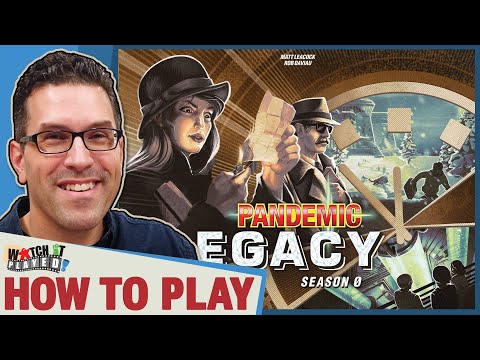

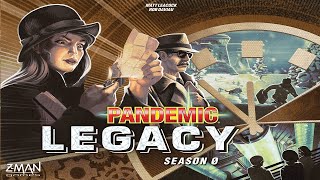
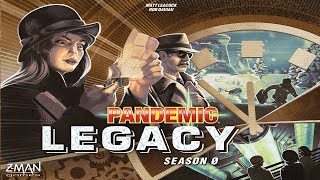
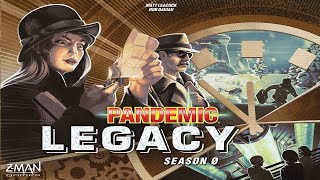
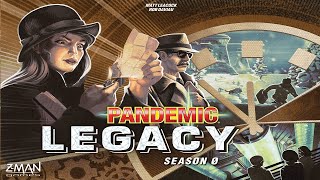
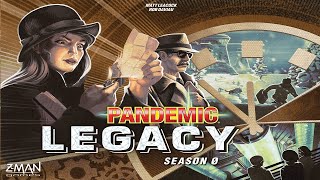
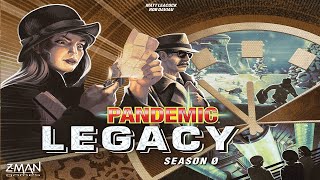
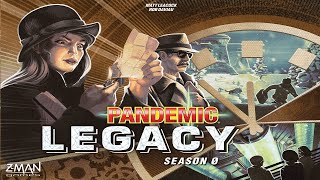
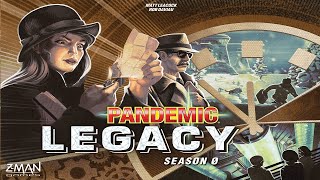
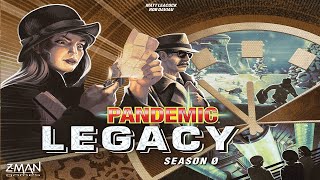

















Pandemic Legacy: Season 0 Deep Dive
What the Community Thinks About Pandemic Legacy: Season 0
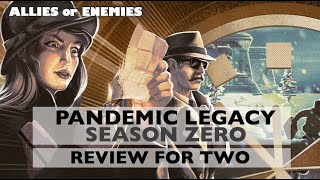
Pandemic Legacy: Season 0 stands as a prequel that reviewers consistently praise for recapturing the magic of the original while boldly carving its own path. The 1962 Cold War setting transforms the cooperative experience from disease management into espionage and covert operations, creating a thematic shift that feels both fresh and purposeful. Players who experienced the Pandemic Legacy series have found Season 0 striking a better balance than its predecessor, with Watch It Played calling it "an entirely stand-alone game" that does not require prior familiarity with earlier seasons, while Allies or Enemies noted it "really nailed it" compared to the mixed reception of Season 2.
Core Mechanics That Define Pandemic Legacy: Season 0
Team Assembly and Asset Management
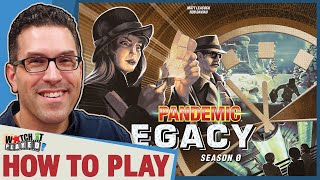
Unlike the original Pandemic's focus on treating diseases, Season 0 introduces a distinctive team-based system where players spend cards to create mobile units called teams that remove Soviet agents from the board throughout the game. These teams, represented as vehicle pieces, can be positioned by any player and provide the core action economy of the gameplay. Watch It Played detailed how teams must be built at safe houses by discarding five cards matching a city's affiliation, creating a real resource commitment that shapes strategic decisions. The system rewards coordination while allowing each player agency in directing these shared assets.
Legacy Transformation Through Discovery
The campaign structure unfolds through monthly scenarios where a legacy deck drip-feeds new rules, mechanics, and narrative elements across twelve sessions. Getting Games noted completing approximately five to twelve months into the campaign while still finding depth and variety in what has been revealed. The safe deposit boxes, dossiers, and operations cards create a structure of discovery that alternates between the prologue, monthly objectives, and persistent world changes. Watch It Played explained that new rules arrive as stickers placed into marked sections of the rulebook, ensuring players don't over-learn systems before they're needed.
The Pandemic Legacy: Season 0 Experience
Cold War Intrigue and Espionage Atmosphere
The thematic transition from disease control to Soviet bioweapon investigation creates a distinctly different emotional tone. No Rolls Barred described the game as operating "if John le Carre wrote Scooby-Doo," capturing the noir atmosphere of covert operation. The game emphasizes sneaking, spying, and building within a web of international intrigue rather than pandemic urgency. Allies or Enemies highlighted the sleek design as "part Twilight Struggle and part Mad Men," suggesting a visual sophistication that elevates the Cold War setting beyond generic espionage themes. Players become CIA recruits investigating Project MEDUSA, a deadly Soviet bioweapon, with every decision shadowed by uncertainty about what comes next.
Persistent Tension and Meaningful Failure
The monthly evaluation system creates stakes that persist across the entire campaign. Completing all objectives reduces funding (representing CIA confidence declining when you perform too well), while partial or total failure increases funding (reflecting concern about team capability). Allies or Enemies noted that "even if you had it higher than I had it, I still think it's a great game," suggesting the challenge level feels appropriately calibrated. The possibility of replaying months adds replayability while maintaining the cost-per-play value that legacy enthusiasts appreciate.
What Makes Pandemic Legacy: Season 0 Stand Out
Character Customization Through Passport Aliases
Each player builds a legitimate spy identity using layered stickers to create personalized character photos and operational covers. No Rolls Barred called this "one of my favorite components in gaming," praising how players can design unique CIA operatives with names, cover occupations, and even liabilities that persist across the campaign. The passport system tracks aliases with circles that scratch off when cover is blown, adding tactile consequences to player decisions. Watch It Played detailed the three possible affiliations (Allied, Neutral, Soviet) that shape how each character can operate, creating individual tactical constraints that reinforce theme.
Unexpected Thematic Substitutions
By replacing disease cubes with Soviet agents and scientific cure discovery with espionage objectives, Season 0 maintains Pandemic's mechanical skeleton while wearing entirely different clothes. Allies or Enemies specifically noted that "instead of cubes you've got little secret agents in like the little secret agent hats which is really fun," showing how minor component choices enhance thematic coherence. The shift from biological urgency to intelligence gathering does not feel like a reskin but rather a fundamental reconsideration of what pressure and failure mean in this universe.
Potential Drawbacks
Legacy Game Replayability Limitations
Once the campaign concludes, the game box contains permanently altered components and destroyed objectives. Allies or Enemies acknowledged the internal struggle: "I was being so on the fence about spending this money for being able to only play through a game once." While the cost-per-play calculation improves with longer campaigns (approximately 15 plays at roughly $3 per session), the experience remains one-time. The durability of enjoyment depends heavily on player group consistency and the quality of the revealed story.
Two-Player Scaling Adjustments
While Allies or Enemies confirmed Season 0 "works great" at two players with "a few little tweaks to try and even out the difficulty," some tuning may be required to maintain appropriate challenge. The game can feel a little easier with fewer players than the intended four, and players must consciously manage difficulty expectations rather than relying on automatic scaling. This requires table maturity to avoid the experience feeling either trivial or artificially constrained.
If You Enjoy Pandemic Legacy: Season 0
Players drawn to Season 0 likely appreciate cooperative games with evolving complexity, narrative-driven decision-making, and production quality that matches mechanical depth. Pandemic Legacy: Season 1 remains the natural starting point for those new to the series, while Pandemic Legacy: Season 2 offers a different post-pandemic angle. For the Cold War spy theme specifically, Twilight Struggle delivers intense two-player political maneuvering. Risk Legacy pioneered the legacy format and appeals to those who enjoy watching a game world transform through play. For cooperative campaign experiences beyond the Pandemic universe, Gloomhaven and The Crew offer evolving challenges with persistent progression systems.
What Reviewers Are Saying
"The theme's terrific, the art style is very cool, and the tweaks to the game mostly work. If you like the pandemic series this one's a no-brainer."
— Allies or Enemies
"Season zero really nailed it for us. The theme's different because it's cold war and everything like that, just a whole other kind of kettle of fish but still working within the pandemic system."
— Allies or Enemies
"If you've ever wanted to be Varys from Game of Thrones, this is the game for you. It's just such a joy jumping into this game to see what is going to come out of it."
— No Rolls Barred