/pic4766250.jpg)
/pic1534148.jpg)
/pic2225998.jpg)
/pic2037506.png)
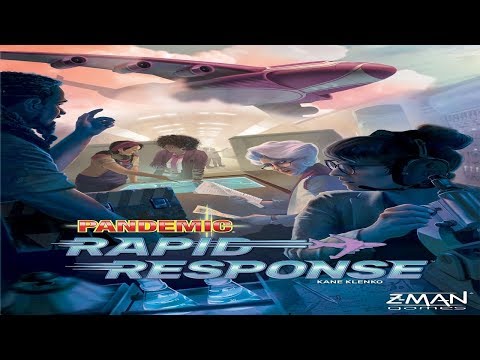
Disaster has struck! Cities around the world are in desperate need of food, water, vaccines, and other supplies. You and your team belong to the Crisis Response Unit (CRU), an elite team of doctors and specialists. With a specially equipped plane, you are uniquely capable of providing life-saving aid — anytime, anywhere.
Pandemic: Rapid Response is a race against time. Roll dice to create supplies, fly the plane, and make deliveries to cities in need. As the timer counts down, you must quickly coordinate and work together to react to new disasters. Will you and your team be able to respond in time?
The nations of the world have pooled their resources and assembled a diverse crew. Each of the seven unique role cards features its own ability. The Analyst, Adjoua Soro, is able to re-roll the dice up to two additional times. The Engineer, Soojin Sohn, can change any die result with a plane to a different symbol. Take turns as quickly as possible, using your role's unique ability and strategically allocating your dice to be as efficient as possible when creating supplies.
When you're ready for a new challenge, adjust the difficulty level or add crisis cards for a greater variety of obstacles to overcome. Now hurry — the timer is counting down and the world needs your help!
—description from the publisher
Part of the Pandemic family — see Pandemic for the combined view.
/pic2452831.png)
/pic2866737.png)
/pic3763549.jpg)
/pic3742452.jpg)
/pic8031112.jpg)
/pic4766250.jpg)
/pic5483300.png)
/pic5581457.jpg)
/pic5943803.png)
/pic6303509.jpg)
/pic8211893.jpg)



- Fantastic game, enjoyable and surprisingly good.
- The real-time aspect makes it innovative and smart.
- It's much more stressful than other Pandemic games, which is a positive for some.
- Player roles are well-balanced and make everyone feel valuable.
- The game mechanics are thematic and well-integrated.
- Offers a different experience from traditional Pandemic games, making it fresh.
- Higher difficulty levels provide a significant challenge.
- The cooperative nature encourages strong communication and problem-solving.
- Can encourage more quarterbacking than other Pandemic games.
- The timer can be easily forgotten or mismanaged in the heat of the moment.
- The lack of integrated atmospheric music or a dedicated timer app is a missed opportunity.
- Not for players who dislike real-time mechanics or high stress.
- Delivering equipment and supplies to countries in need.
- Pandemic
- Pandemic: The Cure
- Pandemic: Rising Tide
- Pandemic: Fall of Rome
- Pandemic: The Cure
- Escape: Curse of the Temple
- Captain Sonar
- Millennium Blades
Mechanics (from transcript analysis)
- cooperative play — Players work together as a team to achieve the game's objectives.
- Dice Rolling — Players roll dice to determine available actions and outcomes, with limitations on re-rolls.
- Real-Time — The game is played against a timer, requiring players to make decisions and take actions quickly.
- Resource Management — Players must manage and deliver necessary supplies to various cities.
- Set Collection — Players need to collect and deliver specific resources (cubes) to cities.
- Time management — Players must manage a shared timer and individual actions within limited timeframes.
- Variable player powers — Each player has a unique role with special abilities that aid the team.
Video topics + discussion points
Quotes (from this video)
- It doesn't feel like Pandemic, I think is like, but let you still have the Pandemic like staples.
- Soley on the basis it was far more stressful than the other one.
- You cannot play this like you can play other pandemics because there's not there's there's not enough time.
- It's a good game to build your communication skills.
- The biggest negative if you don't like real-time.
- It's rare that like other games I'll give nine so I'm like that I want to play but not immediately.
References (from this video)
- The cooperative nature and real-time element create excitement.
- Real-time pandemic response
Mechanics (from transcript analysis)
- cooperative play — All players work together to achieve a common goal, as evidenced by their collaborative planning and execution of actions.
- Dice allocation — Players assign dice to various actions and locations, and dice can be spent to perform actions like moving.
- Real-Time — The game is played with a timer, creating a sense of urgency and fast-paced gameplay.
- Set Collection — Players need to collect specific combinations of items (represented by dice results or cards) to complete objectives for different cities.
Video topics + discussion points
Quotes (from this video)
- viewer discretion is advised everyone
- I hope you enjoyed it click the I to go to the discussion other than that like how much share and subscribe and have a wonderful with every time of Davis for you
- if you want to support the channel you can definitely visit my patreon page the link is in the description below other than that like comment share and subscribe and have a wonderful with every time of day this for you
References (from this video)
- Potentially a neat twist on the Pandemic formula.
- Expected to be very stressful.
- Real-time pandemic game.
Mechanics (from transcript analysis)
- Real-Time — The game is played in real-time.
Video topics + discussion points
Quotes (from this video)
- It's it's the staple cooperative game.
- With all the expansions they just become more and more I know the dispatcher is one of the best it's just with all the expansions you everyone feels useless because you you can't do enough.
- The sticker shock is real but it's not like it's not so bad.
- I like the fact that you kind of know you're not just going through the entire deck of cards.
- I like the hinterlands by themself like nothing else you have bass pandemic and then you have the hinterlands when you throw in like the superb oh yeah yeah.
- I think either of you would like the superbug.
- I think the lab is is very neat but and that and I do like it I would I would play it right so I itself held no way in hell I would do it with the superbug.
- I would give regular pandemic an 8 I would say with all the expansions like all the ones that we put in I'd actually put that a 7.
- We literally in a game of pandemic legacy lost it where there's four players we lost before one round one three.
References (from this video)

- Guest found it to be a good real-time iteration of Pandemic
- Guest enjoyed the cooperative aspect and how it made players aware of others' actions
- Host dislikes real-time games
- Host dislikes Pandemic
- Timer issues
- Delivering supplies during a crisis
- Airplane
- Pandemic: The Cure
- Fall of Rome
- Cthulhu
Mechanics (from transcript analysis)
- action selection — Players manage their actions on their turn.
- Cooperative — Players work together to deliver supplies.
- Dice Rolling — Dice are used for actions and managing threats.
- Real-Time — The entire game is played in real-time against a timer.
Video topics + discussion points
Quotes (from this video)
- viewer discretion is advised
- I was like yeah like worst game those are worth talking about one that's fun to [expletive] about in bad game so I'm always I'm almost slightly more excited to talk about bad games and [expletive] lame to talk about the best games
- I think the delineation we mentioned cuz we've done they're just disappointing is that I would play disappointing if someone's like hey do you want to play and I'll be like sure if someone offered like I'd be like no like no and you're a bad human for even offering this to someone like why do you want to make someone so unhappy
- it's it's the same company that did this game that did the oh the Bob Ross the classy with my yeah yeah yeah deal I mean it's alright yeah whatever
- I'm gonna go on record I think that this is an unfair Pig because he that's like that's like if I want to go back to other end of the year but it's like oh yeah you know commits the worst game that year well I already know I don't like it so no
- if at least those are fun you know story driven games this one oh and the story was [expletive] weird
References (from this video)
- Great for those who love real-time, fast-paced, frantic games.
- Geared towards quick family games with good pacing.
- Easy to learn.
- Reviewer is not a huge fan of real-time games due to them getting frantic.
- Cheating (talking) is easy when the clock runs out.
- The reviewer is slowing down and doesn't enjoy yelling at each other.
- Can be frustrating when needing specific dice and not getting them.
- Rolling dice equal to the number of spots in certain rooms is challenging.
- The reviewer would prefer slower, turn-based games.
- Disaster relief
- Global crisis
- Pandemic
Mechanics (from transcript analysis)
- Action Point Allowance (limited by time) — Players spend dice to move, place supplies, or drop them off, all within the time limit.
- cooperative play — Players work together to deliver supplies to struggling cities.
- Dice Rolling — Players roll dice to determine actions, which can be rerolled up to two times.
- Real-Time — Players have a strict two-minute turn limit, creating a frantic pace.
- Resource Management — Players need to manage dice to produce goods and deliver them to cities, while also tracking waste.
- Time management — Losing time tokens when the clock runs out can lead to losing the game.
Video topics + discussion points
Quotes (from this video)
- Got me under pressure.
- I know you are dealing with a complete incompetent co-host.
- It's like when you get stuck into one genre of music to expand your horizons and listen to different things and realized there's a lot of good stuff out there.
- It's not like we're trashing the system we're just saying that if you've never played any RPGs you're gonna have a bit of a learning curve here if you have played there's still a little bit of a learning curve just causes a little bit of the confusion over I think it's I think is a decent beginner box.
- I'm kidding people getting no he's not actually I actually just want side note here we've had to do this a couple times where we've had things that we want to ship and we can only ship to the US and people who are outside the US I mean that stings I can't participate.
- The game can end very quickly because somebody just gets a spectacular turn where they complete reduced everybody to zero health which should give you four victory points and then complete all achievements which would potentially give the other five to win you the game.
References (from this video)

- Nice tower
- Has this pandemic feeling
- Pandemic feeling
- Cargo plane
Mechanics (from transcript analysis)
- Dice Rolling — You're trying to fulfill the orders by rolling the right dice quickly.
- real-time cooperative — Real time cooperative game.
Video topics + discussion points
Quotes (from this video)
- Academy deep water games really good to play a games yeah we freakin yeah this is one of our last ones against the table out of everything we purchased but it's a quick little jewel simple rules deep strategy and quick so I very much recommend this one yep I know that you want to play once you play it feels playing this terran wants to play against her away because I think he's that because I want the game know I was working fun because okay just let me have the last week okay yeah it is quick and fun but I was I got my bad thing I was a little bit late at night and we didn't end up playing good again but we'll definitely play again
- next is roughly guard position we have the other view for you of this one as well it's a social reduction game yep social reduction sedna Magic the Gathering universe yeah for me we haven't we haven't got a group of people around to play this one yet but I like its idea and I like that it is a biscuit now we've had it yeah because if you've watched a vlog from a couple of months ago I always struggle with the blank slate nature of a game like Avalon or werewolf this one structures things a bit better specific events are going to happen right you can respond to those that's that's what I prefer in a social reduction game and I think this puts it together pretty nicely we really need to get a group together that can play this with us because our normal gaming group is usually four because most games can be played with four so our gaming group is naturally for people
- next one if it's not you'll play a game trick-taking game called claim by deep water games yep I think like we don't play a lot of trick taking games I played a lot of 503 university but Stella didn't say yeah it's still fun though we'd see the twists with a special power of which sections trying to claim throne yep I think what I would say for this game I've seen a few modern trick-taking games out there and they all have these twists on gaining points in certain ways of trying to get certain cards I like this one because it's not too convoluted each suit has a relatively simple ability that you've got to manage it's not like you know this number does this and this suit gives you that sort of points it's like you know just trying to get suit majorities and each suit has a small ability that doesn't throw the the standards of trick-taking out and so I think this is one of the best design modern tricked design bicycle else hi Scott yep considering I haven't actually played a lot of trick-taking units this one's pretty easy
- so please a some pads here which is the welcome to expansions oh thank all of those outs away yep so this one's the Easter egg hunts Halloween the bomb shelters they do all change up the game changer game out quite a bit and I think the one that's stood out in my mind we played doomsday and it was the shortest game welcome to with a plague by far because the three the three objectives we were playing just you could complete them all in one street essentially and so we were done so quickly and I did not adjust my strategy I can't even thank you I can't remember we're playing for you this is one of our my favorite go-to when it just have two of us or there many people wanting to play
- and that's the the Roland rifle Copenhagen alright that's a really good quality Roland right it is currently a diploma filament is on Kickstarter yep yep yeah it's it plays very quickly it has some clear strategies you can go for with different types of colors you get I think they've put together a really good lead and follow Roland right there yeah there's another one as well that is steel prototype which is for plant so they're still in development and they're still changing up the rules changing up the card so it's a little bit like welcome to is this by the same publisher is welcome to which is support against so it we play it once it has got that similar sort of taste - welcome - when you put which one you're gonna do you know which one you're gonna solve face and so on that's very interesting
- yeah there's another one as well that is steel prototype which is for plant so they're still in development and they're still changing up the rules changing up the card so it's a little bit like welcome to is this by the same publisher is welcome to which is support against so it we play it once it has got that similar sort of taste - welcome - when you put which one you're gonna do you know which one you're gonna solve face and so on that's very interesting
References (from this video)
Mechanics (from transcript analysis)
Video topics + discussion points
Quotes (from this video)
- "Pandemic Rapid Response is Pandemic but it's different."
- "This is real-time."
- "It's going to be out on June 23rd."
- "Crisis cards add an extra level of challenge."
- "winning condition is delivering to all of the cities"
- "it's different like when you first open the play but like that looks different than pandemic"
References (from this video)
- Real-time cooperative play with quick 20-minute sessions.
- Unique plane-based setting and theme distinct from standard Pandemic.
- Flexible player count and single- or two-character options.
- Clear explanations of rules and multiple play styles.
- Disaster relief, crisis management
- Same world as regular Pandemic, aboard a cargo plane delivering emergency aid to cities worldwide
- Cooperative, time-sensitive logistics
- Pandemic
Mechanics (from transcript analysis)
- city card/difficulty scaling — City cards determine initial challenges and new cities; difficulty can ramp up with more cards and crisis cards.
- city delivery mechanic with time tokens — Deliveries require the plane in the correct city with required supplies; successful deliveries grant new time tokens and advance the game timer.
- crate production and delivery — Create crates in the cargo hold and deliver them to targeted cities; crates are removed from play during delivery.
- crisis cards (expert mode) — Crisis cards add extra tasks and raise difficulty, forming an expert mode.
- dice resource allocation — Each player has their own dice used for actions; dice can be rerolled, and players have character-specific abilities.
- Dice Rolling — Each player has their own dice used for actions; dice can be rerolled, and players have character-specific abilities.
- movement on a plane — Spend a die to move the plane to different cities; movement can go in either direction.
- Pick-Up and Deliver — Deliveries require the plane in the correct city with required supplies; successful deliveries grant new time tokens and advance the game timer.
- two-player variation — Players can play with one character each or both can control two characters, with the cooperative real-time flow maintained.
- waste track management — Machinery produces waste tracked on a separate track; players must manage waste via the recycling center and related actions.
Video topics + discussion points
Quotes (from this video)
- "Pandemic Rapid Response is Pandemic but it's different."
- "This is real-time."
- "It's going to be out on June 23rd."
- "Crisis cards add an extra level of challenge."
- "winning condition is delivering to all of the cities"
- "it's different like when you first open the play but like that looks different than pandemic"
References (from this video)

- Fast-paced gameplay due to the real-time element.
- Cooperative nature encourages teamwork.
- Crisis cards add challenge and replayability.
- Adjustable difficulty.
- Can lose if time runs out and no time tokens are left.
- May require multiple playthroughs to get accustomed to mechanics and difficulty.
- natural disasters and crisis response
- interior of the plane
Mechanics (from transcript analysis)
- Action Point Allowance — Each die can be used to perform an action, and players can repeat actions in any order, but dice used cannot be used again that turn.
- cooperative play — Players work together as a team to achieve the game's objectives.
- Dice Rolling — Players roll dice at the start of their turn and use them to perform actions. Rerolling dice is also a key part of the mechanic.
- Press Your Luck — Players might assign dice to tracks hoping for certain outcomes, or reroll dice, introducing an element of risk.
- Real-Time — The game is played with a sand timer that is always running, creating a sense of urgency and limiting strategic downtime.
- Set Collection — Players need to collect specific colored dice that match icons in rooms to assign to tracks, and later collect crates (supplies) to deliver.
- timer — A sand timer dictates the pace of the game and triggers events when it runs out, creating a lose condition if time tokens are depleted.
- Variable player powers — Players receive role cards with unique abilities that can be used during the game.
Video topics + discussion points
Quotes (from this video)
- The world's nations have united to create a Crisis Response Unit outfitted with an advanced plane and the necessary supplies it's now a race against time as you and your team work to be a first response unit to help save humanity
- all this is done in real time players will take their own turns but as they do the sand timer will be counting down and if time runs out before you deliver all the required supplies you lose
- when you activate any one of the supply rooms to move crates it also generates waste so after you move the crates to the cargo bay you then roll all of the dice in the just activated room even if you took fewer crates than what you were allowed to
- if the timer would ever run out and there are no time tokens left in your headquarters the players immediately lose no matter how many tokens might still be in your supply
- as soon as players have delivered supplies to all of the city cards so that none of remaining in this pile or along the flight path they immediately win
- these crisis cards certainly add more surprises and challenges to your games
References (from this video)

- pandemic-style crisis management in real time
- global disease response in real-time
Mechanics (from transcript analysis)
- real-time movement and task resolution — time-pressure actions to contain outbreaks and manage resources.
Video topics + discussion points
Quotes (from this video)
- I'm really into this now yeah so it's Catan but you know I had my top 50 games of all time list a long time ago a few months ago and I always kind of forget about cities and nights because I really loved that game.
- Catan star farers now this is the sort of a remake of star fares of Catan which is basically to be glib about at Catan in space but this carries with it a lot of the mechanics…
- it's basically that sort of more complex longer winded Catan that I really like but in space and I'm like super all into this now yeah so it's Catan but you know
- Combat Arena... it's set in the 40k universe and it's gonna deal a little bit more with the range combat
- Return to Dark Tower... I remember sitting in it and you know hitting the buttons and the stuff would talk and he'd move around the right moves
- Zombicide Green Horde I really enjoyed it I think it's a really good co-op idea
References (from this video)

- Real-time energy and teamwork
- Strong thematic alignment with Pandemic line
- Real-time pacing can be stressful for casual players
- Component complexity may impact setup time
- Pandemic resilience and crisis management in a fast-paced format
- Global cities facing spreading health crises, real-time response
- Cooperative, time-pressure driven gameplay
Mechanics (from transcript analysis)
- cooperative play — Players must coordinate actions to cover more cities and prevent outbreaks.
- Real-time dice resolution — Players roll and assign dice to actions under time pressure to mitigate outbreaks.
Video topics + discussion points
Quotes (from this video)
- this is like the Oscars of board games
- we have just one llama and we're words
- be careful what you support on Kickstarter and be cautious about what practice is that you want to put your money towards
- the components look fantastic especially those dice I love real-time games
- I'm actually getting a copy of this so stay tuned for a review on that
- we might sometimes not be able to manage to complete the project as promised and there are terms and conditions outside the Kickstarter page