/pic6303509.jpg)
/pic1534148.jpg)
/pic2225998.jpg)
/pic2037506.png)
In World of Warcraft: Wrath of the Lich King, players journey to the frozen continent of Northrend to face the armies of the Lich King. This "Pandemic System" game showcases familiar mechanisms and gameplay, now tweaked to embrace the setting of the Wrath of the Lich King. Forts, temples, battlegrounds, and more populate the game board as you and your fellow heroes journey across the cold landscape. Along the way, you'll set up strongholds, complete quests, and do battle with legions of undead.
In more detail, players team up as legendary heroes from across Azeroth, each with their own unique abilities to help in and out of combat. Heroes such as Thrall, Warchief of the Horde; Varian Wrynn, King of Stormwind; Sylvanas Windrunner, Banshee Queen of the Forsaken; and many more are at your fingertips. As the Scourge grows, more undead will populate the board. Throw dice as you enter into battle against the hordes of ghouls and ferocious abominations, using hero cards to add power to your attacks, block incoming assaults, heal wounds, take mounts to far off spaces, and so much more.
As you fight your way to the Lich King, all manner of dark magic and terrible creatures under his control need to be neutralized. This comes in the form of quests, a brand-new mechanism that can be completed as a team through a combination of dice rolls and the hero cards at your disposal. However, each quest comes with its own dangers and hindrances. Complete these quests to move closer to the final assault on Icecrown Citadel, where the Lich King himself resides.
—description from the publisher
Part of the Pandemic family — see Pandemic for the combined view.
/pic2452831.png)
/pic2866737.png)
/pic3763549.jpg)
/pic3742452.jpg)
/pic8031112.jpg)
/pic4766250.jpg)
/pic5483300.png)
/pic5581457.jpg)
/pic5943803.png)
/pic6303509.jpg)
/pic8211893.jpg)



- Took the pandemic concept to a video game
- Added a whole new element of battling
- Dealt with various plague elements
- Nailed the theme
- Solid mechanics
- Good alternative to Pandemic
- Battling plague elements
- Azeroth
- Pandemic
Mechanics (from transcript analysis)
- cooperative play — that took the pandemic concept to a video game...and added a whole new element of battling of having to deal deal with the various plague elements.
Video topics + discussion points
Quotes (from this video)
- Brian Boru High King of Ireland as soon as you put that on the on the table and as soon as I saw trick taking I was like uh oh I'm all in I I pushed all the chips in I was fully engaged in this game
- Clash of cultures Monumental Edition I'd like to commend the design development and Publishing team behind K C it's varied in strategy epic in scale and thankfully foot powder free
- man it's one of those games for me that just created an experience every time I played and I've played with four player I've played with three player I've played with two player and every single time I enjoyed what that game brought to the table
References (from this video)

- Excellent solo mode with a single hand of cards.
- Dual purpose of cards (questing and combat/defense) elevates the gameplay.
- Dice system provides helpful outcomes even on non-success rolls (e.g., shields preventing damage).
- Strong cooperative and thematic integration.
- Good balance of strategic depth and accessibility for families.
- Well-implemented difficulty scaling.
- Normal difficulty might be too easy for experienced Pandemic players.
- The Lich King's final quest is always the same, suggesting room for expansion.
- World of Warcraft universe during the Wrath of the Lich King expansion
- Pandemic
- Pandemic: Fall of Rome
- Pandemic: Reign of Cthulhu
- Defenders of the Realm
- Altar Quest
Mechanics (from transcript analysis)
- Card Play — Cards have a dual purpose: contributing to quest completion via icons and also being used for combat assistance, defense, or movement.
- character abilities — Each character has unique special abilities and health trackers.
- Combat — Players engage in dice-based combat against ghouls and abominations, with successes measured by fists and damage mitigated by shields.
- cooperative play — Players work together to achieve the game's objectives.
- Dice Rolling — Dice are used for combat and quest actions, with results providing successes, shields, or damage.
- questing — Players complete different quests on the board, which are color-coded and must be finished to progress.
- Set Collection — Collecting specific sets of cards might be implied for advancing quests, though not explicitly stated as a core mechanic name.
- threat management — Players must manage the spawning of ghouls and abominations, as well as the Lich King's influence, to avoid losing.
- variable difficulty — The game features multiple difficulty levels to adjust the challenge.
- Variable player powers — Different characters have unique abilities that influence gameplay.
Video topics + discussion points
Quotes (from this video)
- The dual purpose side is really neat and that really is kind of what sells the game for me.
- The dice system and then the new card system are really kind of the two mechanical things
- it strikes a perfect balance between traditional sort of pandemic thing going on with enough kind of variation stuff but also still like simple enough that like families could get into it and play it
- I think you could get some more variety in some of the different quests obviously some more characters
- it just really makes the game a lot more fun having the teamwork itself sort of physically manifest itself on the table
References (from this video)

- Pandemic-engine expansion example
Mechanics (from transcript analysis)
Video topics + discussion points
Quotes (from this video)
- Memories in the making.
- Gloomhaven. Dah! Nope.
- This is a delightful, story-focused, sticker-powered cooperative endeavor for one to six players who will use over 800 stickers to build a village that gradually shapes the countryside.
- Inis has long blended area control, card drafting, and tense negotiation with a very particular sense of mythos where timing and positioning matter just as much as brute force.
- It's fast, it's loud, it's easy to teach, and also a very good game at turning a roomful of otherwise sensible adults into reckless cackling gamblers.
- The base game already built a really nice reputation for packing sharp tableau-building decisions into a really compact package.
References (from this video)

- Rewards are powerful and central to the strategy, with the real prize being finishing the quests.
- Cooperative play with a structured quest system leading to a citadel unlock offers a clear win condition.
- cooperative quest-driven fight against undead to defeat the Lich King
- frozen lands of the Lich King; Azeroth
- cooperative fantasy adventure with quests leading to the lich king's lair
- Pandemic
Mechanics (from transcript analysis)
- Abominations and ghoul movement — Abominations move toward the closest hero and deal damage; multiple abominations in a space deal damage to the same hero unless blocked.
- Combat: Deck/Hand — Defend cards can be played to prevent up to two damage to a hero in a space.
- Defend cards — Defend cards can be played to prevent up to two damage to a hero in a space.
- Despair track and overflows — The despair marker moves forward with unresolved effects; reaching the final space causes an immediate loss. If you cannot draw from the hero deck, despair advances accordingly.
- Fight action — Roll two dice; each fist symbol deals one damage. Abominations require three damage in a single action to be defeated. Fight cards can add fists when played during a fight.
- Flight path — Flight path lets you travel directly to a space with a stronghold; strongholds are added later in the game.
- move action — On your turn you may move to an adjacent space; enemy pieces do not affect movement, but you cannot enter the ice crown citadel.
- Quest actions — On quest spaces you roll two dice; each fist advances the related quest progress marker. You can also discard a card with a matching icon to advance, and you can combine fists rolled with cards in hand to progress.
- Quest completion and citadel unlock — Completing all three quests unlocks the Ice Crown Citadel; the citadel becomes a new quest space and alters how damage is applied.
- rest and heal — Resting heals damage by rolling dice; you can also heal using heel cards. Healing moves the hero's health slider left.
- Scourge rises — When a scourge rises card is drawn, you advance the scourge marker, draw and resolve bottom cards, spawn ghouls/abominations, and possibly increase despair.
- Simultaneous Actions — On your turn you may move to an adjacent space; enemy pieces do not affect movement, but you cannot enter the ice crown citadel.
- Strongholds — Strongholds affect healing and allow certain actions (like flight path) when in play.
- Travel card (free action) — Travel cards provide a free action to move yourself or another player up to a specified number of spaces; there is no limit to the number of free actions per turn.
Video topics + discussion points
Quotes (from this video)
- Rewards are powerful but the real prize is finishing the quests
- ice crown citadel is unlocked and you win
- the players will be working together to beat back the growing hordes
References (from this video)

- Stunning artwork and thematic immersion
- Solo mode that can be played one-handed with adjustments
- Accessible gateway into a broader Atoma/World of Warcraft-inspired experience
- Can be pricey
- Miniatures and components can be overwhelming for new players
- Heroic missions with a looming final confrontation against the Lich King
- World of Warcraft universe; high-fantasy/pandemic-style co-op
- Cooperative progression with scalable difficulty
Mechanics (from transcript analysis)
- campaign_progression — Series of missions culminating in a final showdown
- cooperative_tasks — Players collaborate to complete missions and manage hordes
- Track Advancement — Series of missions culminating in a final showdown
Video topics + discussion points
Quotes (from this video)
- This video idea is actually inspired by Rolling solo so be sure to check out his channel
- This game is hard uh you may survive the tutorial you're probably gonna die most of the time on everything else but it's possible
- I adore this game I adore this game I adore this game
- it's rambunctious fun
- the solo mode is very good it's a little too easy so I had to tweak it to make it just a little more challenging
- the tutorial takes you through the basics a step at a time
References (from this video)

- Strong Warcraft/IP appeal
- Accessible co-op structure
- High UK price and regional pricing concerns
- The license/licensed game pricing debate
- pandemic-style infection and undead threats featuring the Lich King
- Warcraft universe
- cooperative strategy with theme-driven progression
- Pandemic
- Mage Knight
Mechanics (from transcript analysis)
- cooperative play with disease/infection engine — Infection spread mechanics and event-driven crises
- deck/loot style progression — Card-driven actions and upgrades across a campaign
Video topics + discussion points
Quotes (from this video)
- it's basically a big game of Among Us
- the board game, the way they've done it, looks amazing
- I just want the price to come down
- the wife will probably actually play this one with me
- this looks like the perfect Monster Hunter game
- I went all in on this
- I am super hyped for this game
References (from this video)
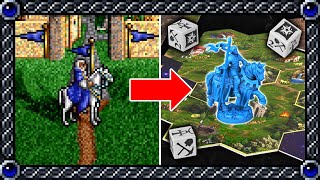
- Gorgeous IP presentation and accessible entry for WoW fans
- Easy learning curve for solo or small groups
- Not fully faithful to the MMO/ARPG experience
- Subject to IP expectations and fan service
- Adventure and hero-driven exploration with familiar IP characters
- World of Warcraft universe, Lich King arc
- Campaign-like scenarios with recognizable IP flavor
- Runebound
- Pandemic-style co-ops
Mechanics (from transcript analysis)
- Pandemic-like co-op vibe — Cooperative play with an emphasis on team strategy and scenario-driven objectives.
Video topics + discussion points
Quotes (from this video)
- it's such a bizarre game
- this is one of the best translations from video game IPs into board game form
- it's basically like Star Wars themed XCOM
- the closest thing you'll get to a first person shooter in board game form
References (from this video)
- IP integration
- streamlined card play
- rules heavy
- mission pacing can be tedious
- cooperative questing; threat management
- World of Warcraft: Wrath of the Lich King
- IP-driven campaign
- Pandemic
- Clone Wars
Mechanics (from transcript analysis)
- Combat: Deck/Hand — villains trigger events and influence the board.
- pandemic-inspired deck — draw and play to complete missions; manage threat.
- villain deck — villains trigger events and influence the board.
Video topics + discussion points
Quotes (from this video)
- Phil Collins should retire
- it's a sliding puzzle... it's a quick 20 minutes
- this is a totally different style of game when it comes to card play
- these games have made it better than the original pandemic
- it's not a 're-themed' pandemic; it's very different