


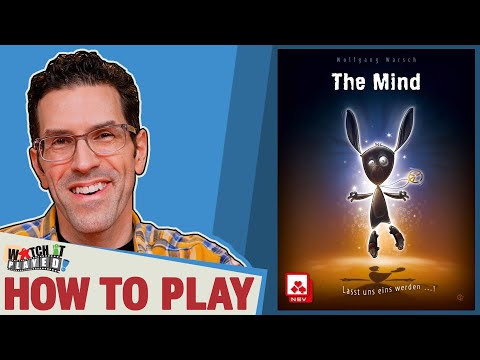







The Mind Deep Dive
What the Community Thinks About The Mind
Few board games spark as immediate and polarizing a reaction as The Mind. On one hand, reviewers describe it as one of the most original cooperative experiences to emerge in modern gaming. On the other hand, seasoned hobbyists sometimes dismiss it as too thin to sustain long-term interest. Both camps make valid points, and the gap between them reveals something genuinely interesting about what The Mind is and is not trying to be.
Actualol's John Perez captured the game's initial impact precisely: "There was just something so cool about the mind when it came out. It felt so original and different and the feel of it, the experience that you got playing the game, was different to any other game." Adam in Wales drew a striking parallel to an acting exercise from his drama student days, where a group would silently count to 100 together, each person calling out the next number without overlapping. That game of collective rhythm, he noted, is essentially what The Mind formalizes into a card game. Might I Suggest A Game's Alex went a step further, calling it "the purest form of communication" and describing giving it as a wedding gift to multiple couples.
Where reviewers diverge is on staying power. Rolls in the Family's Ryan acknowledged that The Mind "does not have great longevity," noting that a group may not return to it indefinitely, but also that its first few sessions deliver something genuinely unlike anything else. Adam in Wales was even more direct: "It's a game that I don't think sells itself. What sells it is playing it right."
Core Mechanics That Define The Mind
Playing Cards Without Words
The setup is almost absurdly simple. Players share a deck numbered 1 through 100. Each round, everyone receives a hand of cards equal to the current level number. The goal is for the group to play all their cards to a central pile in ascending order, from lowest to highest, without speaking. No discussing what numbers anyone holds. No counting out loud. No hand signals that reveal specific values.
What makes this deceptively difficult is that players have no idea what cards others are holding. Someone might sit with a 12 while another has a 14 and a third holds a 17. If no one speaks and no turns are formalized, how does the group decide who plays first and when? The answer, as Watch It Played's Rodney Smith explains, is that "each group will find the edges of what they consider to be acceptable nonverbal communication and follow that as their guideline." A player might lean back to suggest they have a high card and are in no hurry. Someone might slide their hand forward slowly to signal readiness. These micro-signals are unscripted and emerge organically across play.
Lives, Throwing Stars, and the Progression Structure
Mistakes cost the group lives, represented by bunny tokens. When a card lands out of order, every number that was skipped gets revealed and tucked under the pile, and one life is lost. The group keeps playing from the last card played rather than restarting the round entirely.
Throwing stars add a tactical layer. When a player thinks the group is in trouble, they can raise their hand. If everyone agrees, a throwing star is spent and each player reveals and discards their lowest card. This gives the group a brief window of information, letting everyone see the lowest values remaining before play continues. Stars can also be earned by completing certain levels, as can extra lives, creating a gentle risk-reward arc across the game's 12 levels (or fewer at higher player counts).
The Mind Experience
Getting Into the Rhythm
Every reviewer who described an actual play session came back to the same word: rhythm. Board Game Hangover put it plainly: "It's a game about like a feeling and you have to get into the Rhythm. You can't like count or cheat." Rolls in the Family's Ryan described the mental calculation involved: holding a 37, wondering how long someone else would wait, trying to calibrate timing against people whose natural pace differs from your own. The first session with any group is partly a process of discovering how fast or slow each person thinks.
Watch It Played noted that repeated losses become a feature rather than a frustration: "After losing, if you play again, you'll get further along as your group develops a sense of rhythm and timing, which can often surprise you with players playing cards in rapid succession without any mistakes simply because they're learning about the pace at which each of them play." That sense of a group clicking together, of suddenly finding a shared tempo, is the payoff the game promises and, when it delivers, the memory that sticks.
The Blame, the Cheers, and the Social Layer
Adam in Wales highlighted the social comedy that emerges when things go wrong: "What I find as hilarious is the blame that goes on. Somebody messes up and suddenly people are like 'well why did you play that?' And we're supposed to be cooperating, right guys?" That tension between cooperation and the completely human impulse to assign fault creates moments of laughter that many reviewers described as some of the game's best content.
Might I Suggest A Game described a particularly resonant framing: playing the game as a measure of relational attunement. Couples who finish the final level, Alex suggested, have demonstrated something real about their ability to operate on the same wavelength. Whether taken literally or as a bit of playful hyperbole, the framing captures something genuine about what the game feels like when it works.
What Makes The Mind Stand Out
A Mechanical Concept That Feels Entirely New
Designer Wolfgang Warsch built The Mind around a concept that had no prior template in board gaming: cooperative card play with no turns, no communication, and no information sharing beyond what the cards already on the table reveal. Actualol's comment that the game "felt so original and different" reflects a near-universal first reaction. Adam in Wales noted that Warsch's broader portfolio, which includes Illusion and Quacks of Quedlinburg, demonstrates a consistent instinct for unusual mechanisms, and that The Mind represents perhaps his purest distillation of that sensibility.
Rolls in the Family made a brief but telling comparison to Hanabi, another cooperative card game built around limited information. Where Hanabi restricts what players can say about their own cards while allowing structured clues, The Mind removes the clue structure entirely. The result is something more primal and less strategic, which some find liberating and others find thin.
Accessibility and Portability
Board Game Hangover ranked The Mind fourth on a list of the best travel games, and several reviewers touched on the same quality: the box is tiny, the rules fit in a single explanation, and the game works at a bar table as naturally as it does at a formal game night. Might I Suggest A Game noted it fits in any vacation bag. Adam in Wales called it a "tiny little package" and described it as "very very affordable."
This combination of low barrier and genuine novelty makes The Mind one of the stronger options for introducing people to cooperative gaming. There is no complex rulebook, no iconography to decode, and no engine to build. The question the game poses is immediately understandable and immediately interesting.
Potential Drawbacks
Limited Longevity with the Same Group
The most consistent criticism across the transcripts is not that The Mind is a bad game but that it has a ceiling. Rolls in the Family's Ryan put it directly: "It does not have great longevity. This isn't a game I don't think that you're going to play with the same group for forever." Adam in Wales echoed the point, noting that it works best "with the right group with people in the right mindset" and that mismatch in those conditions produces a flat experience.
Once a group has calibrated its shared rhythm and worked through the level progression a few times, subsequent plays offer less novelty. The numbers change; the fundamental experience does not. For groups that play games together regularly over months and years, The Mind functions more as a periodic special occasion than a fixture in the rotation.
The Game Does Not Sell Itself
Adam in Wales's observation that The Mind "doesn't sell itself" points to a real friction in how the game is often presented. Describing it to someone who has never played sounds underwhelming at best. A cooperative card game where you play numbers in order without talking? The description strips away exactly the thing that makes the experience work, which is the lived feeling of collective timing and shared tension.
This creates a practical challenge: the game benefits enormously from a host or teacher who can frame it correctly and get players into the experience without overselling it. Groups that come in with expectations shaped by heavier cooperative games may find it unsatisfying. Groups primed to enjoy a pure social experience tend to find it revelatory. Managing that expectation gap is the most important variable in whether any given session lands well.
If You Enjoy The Mind
Players who connect with The Mind's limited-communication cooperative structure tend to gravitate toward games that similarly demand nonverbal coordination or creative constraint. The Crew offers a richer mechanical framework built around the same foundation of cooperative card play with strict communication limits, and several reviewers placed it in direct comparison. Hanabi is the closest structural relative, adding a layer of strategic information management that appeals to players who want more to puzzle over between turns. Just One takes the social creativity angle in a different direction, making word association the medium for cooperative communication rather than silence.
For groups who responded most strongly to The Mind's stripped-down elegance, Warsch's own The Mind Extreme offers a variant that Might I Suggest A Game described as "a little bit more accessible than the original," splitting the deck into two colored streams and adding face-down rounds that produce a satisfying reveal when the group successfully navigates them blindly.
What Reviewers Are Saying
"There was just something so cool about the mind when it came out. It felt so original and different and the feel of it, the experience that you got playing the game, was different to any other game."
— Actualol
"It's a game that I don't think sells itself. What sells it is playing it right. You play it with the right group with people in the right mindset and it flies. It's unlike any other game."
— Adam in Wales - Board Game Design
"I've given this game as a wedding present to a bunch of people because I think this game is the purest form of communication. If you really know your partner and you're on the same page, that makes this game a lot easier and super fun to play."
— Might I Suggest A Game
DISCLOSURE: This overview was compiled by MindForge's AI from 31 community video discussions. Watch the featured videos above for the full human perspective.