











Village Attacks Deep Dive
What the Community Thinks About Village Attacks
Opinion on Village Attacks is divided, and the division shows up in the reviews of a single channel, Board Games UnLocked, rather than across a broad group of players. The host ranks the game in several of their lists and returns to it with real affection, yet the same reviews question whether the design lives up to its premise. The warmth centers on the theme. Playing the villains against a village of townsfolk and heroes is described as a fresh reversal of the usual fantasy setup, and the monsters are singled out as the strongest part of the box. The criticism centers on the dice, the rulebook, and the way a single bad roll can stall an entire turn.
Core Mechanics That Define Village Attacks
Castle Heart and Village Morale
Each game is a tower defense contest. Your monsters work to break into a castle whose heart must survive the attack, while the village pushes back through its own morale. The heart is the piece you are protecting, and the reviewer notes that it is grotesque in a way that suits the dark tone. Village events add pressure as the game progresses, and hunters and peasants arrive through those events. Villager passes are resolved with a coin flip for each villager, a step the reviewer found fiddly when the villagers split up.
Dice Allocation and Monster Upgrades
Players place dice on their monsters, and a filled set of dice triggers that monster's ability. The dice carry melee, range, claw, torch (magic), shield (defense), and retaliate faces. A reserve mechanic lets you hold dice back for later use. Monsters level up by earning experience, and each one gains three abilities as it advances, so a favorite creature grows more dangerous the longer it survives. Melee attacks summon hounds, which extends the reach of a strong turn.
The Village Attacks Experience
Playing the Bad Guys
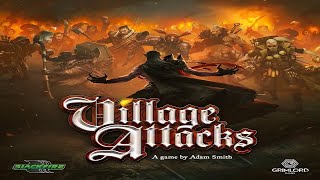
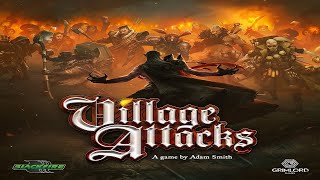
The central appeal is the perspective. Instead of leading a party into a dungeon, the player commands the creatures that lurk outside a settlement. The reviewer finds this inversion refreshing and compares the approach to Spirit Island, another game in which the player controls the opposing force. Solo play is singled out as a good fit. Running a couple of monsters and watching the board fill with your big creatures is described as the most enjoyable way to spend an evening with the box, and the combinations between abilities, such as shoving one character into the path of another, add a satisfying layer of planning.
Campaign and Scenario Flow
The base game is built as a campaign of connected scenarios. The opening scenarios work as tutorials that introduce the rules, and the reviewer notes that the richer challenges arrive only after those lessons are complete. One session with a partner left the reviewer feeling the early play was uneven, with the tutorial feel stretching further than expected before the real tension began. Even so, the scenarios are the most dependable way to learn how the monsters, traps, and village events interact.
What Makes Village Attacks Stand Out
The Monster Roster
The monsters are the clearest highlight. The roster draws on folklore and horror figures, including the Headless Horseman, Krampus, Spring-heeled Jack, the Wild Hunt, and the Banshee. Each creature plays differently, and the upgrade track rewards learning one favorite well. The art is praised as striking, and the reviewer returns to the cast repeatedly when discussing why the game stays on their shelf. The monsters also make the fantasy setting feel specific, which the reviewer contrasts favorably with more generic fantasy releases.
Traps and Town Heroes
Traps add a planning layer to the defense. Boulders, combs, treasure hordes, spike walls, and fire traps can be set to ambush attackers, and the FAQ confirms that traps are single use. On the other side, town heroes such as the Skald, Paladin, Pathfinder, and Gravedigger arrive as tougher versions of the townsfolk. Each one carries a nemesis, which turns the later fights into personal duels between the monster and the hero who threatens it.
Potential Drawbacks
Rulebook Clarity
The reviewer calls the rulebook a pretty horrendous read. The problem is less length than ambiguity. A Halloween playthrough surfaced questions that the text does not settle cleanly, including whether traps persist between turns, how unlucky results and ranged attacks resolve, and which villagers a monster can target. Groups who want to avoid stalled turns will need to agree on house rules or check the FAQ before the first session, and the reviewer suggests that the game's potential was undercut by how hard it is to learn from the text alone.
Dice Randomness
The sharpest criticism concerns the dice. One reviewer argues that difficulty depends less on the scenario than on how the dice fall, and that the game leaves little room for meaningful choice when the rolls go badly. In a separate session, a player found that an attack could fail to happen at all because no attack faces came up, which feels out of step with a game named for attacks. Supporters answer that the dice drive the tension, and the reviewer agrees that the monsters are fun enough to carry the game through, but the complaint recurs across the videos.
If You Enjoy Village Attacks
Players who enjoy asymmetric games where one side controls the threat will find the most natural fit here. The reviewer draws the closest comparison to Spirit Island, which shares the feeling of a single force working against a defended target. The following options may also appeal to readers who want more of what Village Attacks offers:
- Spirit Island for another asymmetric design in which you play the opposing force against a defended target.
- Vast: The Crystal Caverns for another asymmetric game in which one player commands a threat against a group of opponents, which matches the appeal of playing the monsters.
- Boss Monster for the same dungeon-builder-versus-invading-heroes premise in card form, where traps and room abilities do the work of fending off attackers.
Readers who prefer a lighter, more predictable tower defense experience may find the dice too unreliable for their taste, while readers who want a theme that reverses the usual fantasy story will find Village Attacks worth the effort.
What Reviewers Are Saying
"The overarching theme is really cool but the mechanics do not support it."
— Board Games UnLocked
"It's almost like Spirit Island only tower-defense, you're doing the bad thing."
— Board Games UnLocked
"It's cool to play the bad guys, it is different."
— Board Games UnLocked