
Game Info
Year
2025
Players
1-4
Age
12+
Playtime
90 min
Complexity
3.5/5
Collection
Ratings
Creator Score
Mechanic profile
Not enough video data yet
Vibe profile
Not enough video data yet
Description
Players embody 18th-century naturalists inspired by Carl Linnaeus exploring regions collecting specimens cultivating gardens and publishing works to build reputation through a lens-based action management system
Featured Videos


Ask a Rules Question
Images
GID0453796.jpg

GID0453796_thumb.jpg
All mentions
Browse transcript mentions, sentiments, pros/cons, mechanics, topics, quotes, and references.
Total mentions: 7
This page: 7
Sentiment:
pos 5 ·
mix 1 ·
neu 0 ·
neg 0
Showing 1–7 of 7
Video rv6XS5c2dUw
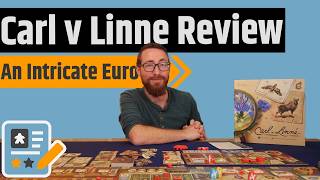
BoardGameCo Review at 0:02 sentiment: positive
video_pk 151222 · mention_pk 424772
Click to watch at 0:02 · YouTube ↗
Overall sentiment (raw)
positive
Pros
- Multiplying actions are a standout feature.
- Actions cascade into other actions and regions.
- Upgraded lenses provide small but impactful benefits.
- Asymmetric player powers add replayability and unique puzzles.
- The game offers a very tight and satisfying Euro experience.
- It's possible to always find a way to do what you want, often by paying for an extra action.
- Letters are a satisfying mechanic that can provide significant bonuses.
- The cascading nature of actions means you don't have to focus on all areas.
- Variable scoring from cultivating flowers can be very meaningful.
Cons
- Flowers can seem underpowered unless everyone focuses on them, making letters a safer choice.
- Scoring tracks capping out at five feels like an artificial limit, reducing satisfaction from leaning into a track.
- Variable scoring for general objectives is not as variable as desired, feeling too controlled.
- Randomness of available species and samples can lead to a frustrating luck of the draw aspect.
- Mitigation options for market randomness (converting types, refreshing markets) cost resources and can still be frustrating.
- Can get resource starved quickly if not planned well.
- Synergizing actions with other players' engines can lead to a less satisfying experience if not planned.
Thematic elements
- Intricate Euro game
Comparison games
- Encyclopedia
- Darwin's Journey
- Galactic Cruise
Mechanics (from transcript analysis)
- action selection — Players take three actions per round, with actions having escalating significance (level one, two, or three).
- Area Control — Planting flowers on a grid provides area control bonuses and points at the end of the game.
- Engine Building — Acquiring upgraded lenses, publishing books, and moving ships provide ongoing income and benefits that build up over time.
- Set Collection — Collecting letters of specific colors for points and collecting specimens for books.
- Track Advancement — Moving up various tracks provides scoring and multipliers.
- Variable player powers — The game includes asymmetric characters with basic and advanced sides, offering unique starting resources and ways to get more.
- Worker Placement — Placing a token onto the board to take a turn order bonus.
Video topics + discussion points
No key topics recorded for this video.
Quotes (from this video)
- Carl Vonlin is an intricate Euro game for one to four players in which players are doing a whole lot.
- The multiplying actions is one of the things that makes Carl Vanlin stand out.
- Everything you do in the game cascades into several other things.
- The flowers in the game do seem underpowered unless everyone goes for them.
- Also, the tracks capping out at five.
- The randomness of the available uh species and samples is definitely a factor.
- This is a very strong Euro game that does a great job with the multiplying actions, how everything cascades into every other region, how you always get benefits from one thing or another, how you have those uh the the one, two, and three multiplier, the upgraded lenses, the variable asymmetric player powers.
- It's a four out of five for me.
References (from this video)
No references stored for this video.
Video YbyTRcaZ4jw
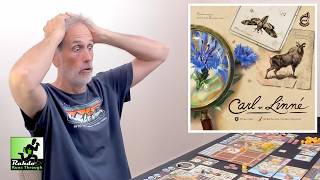
Rahdo Runs Through Rules Teach at 0:11 sentiment: positive
video_pk 128976 · mention_pk 366691
Click to watch at 0:11 · YouTube ↗
Overall sentiment (raw)
positive
Pros
- Strong thematic integration
- Smooth and elegant core gameplay
- High replayability due to variability
- Engaging mini-games
- Snappy playtime despite depth
- Excellent player aids
- Good for celebrating historical figures
- Unique take on worker placement
Cons
- Two-player scoring for objectives could be better balanced
- Advanced mode (with unique player powers) is recommended for the first play as it provides direction, making the 'basic' mode potentially harder for new players.
Thematic elements
- Taxonomy, scientific discovery, and the work of Carl Linnaeus
- 18th century Sweden
Comparison games
- Galileo Galilee
- Forestry
- Pilgrims: Curious Adventures
- Dirt and Glory
- Movie Fight
- Witchdom
- Lisboa
- Galaxy Trucker
- Galactic Cruise
Mechanics (from transcript analysis)
- action selection — Players choose actions, which can sometimes be performed multiple times (1x, 2x, or 3x) with increasing rewards or penalties.
- Area Majority — In some aspects, like gardening, contributing the most to an area can yield greater rewards.
- Engine Building — Players upgrade their 'lenses' and can gain ongoing income or bonuses through publishing books about voyages.
- Objective Fulfillment — Players race to complete shared objectives for points and can also pursue personal objectives or 'mini-games'.
- Resource Management — Players manage money, tools, containers, and knowledge to perform actions and acquire resources.
- Set Collection — Players collect samples and knowledge of different types (e.g., vertebrate, invertebrate) to achieve objectives and write books.
- Tableau Building — Players manage their lab and collections, arranging samples to gain knowledge and progress.
- Worker Placement — Players place 'lenses' (workers) to perform actions like exploring, researching, or working in the garden.
Video topics + discussion points
No key topics recorded for this video.
Quotes (from this video)
- This is going to be one of the hottest games at Essen Spiel this year, hands down, bar none.
- The core gameplay is so simple and smooth and elegant.
- The advanced version of the game is when you introduce unique player powers, and the beginning version of the game is when you don't have those player powers. That is wrong.
- Publishers, stop doing that. Normal people need a little bit of help.
- I feel bad for people who think that because they are clearly not experiencing games like this that really go the extra mile to make everything thematically bind together.
References (from this video)
No references stored for this video.
Video SwyYph8ZomQ
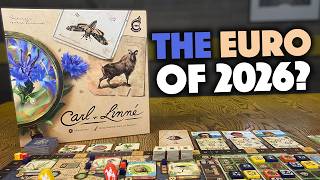
Man vs Meeple Review at 0:00 sentiment: positive
video_pk 128737 · mention_pk 366193
Click to watch at 0:00 · YouTube ↗
Overall sentiment (raw)
positive
Pros
- It's good. It's really good.
- Thematic similarity to Galileo Galilee, but mechanically different.
- More flexibility in action selection compared to Galileo.
- Ability to customize action tokens (lenses).
- Multiple ways to score points.
- Gorgeous Euro game with dual-layered player boards.
- Nice components and card quality.
- Unique and appealing artwork.
- Plays quickly despite its complexity.
- Interesting variable setup and player powers.
Cons
- Can feel like separate mini-games that don't immediately interconnect.
- Sticker application on player boards can take a while.
- Basic mode can feel less engaging than advanced mode.
Thematic elements
- Biology, taxonomy, studying animals, planting and growing flowers, writing letters to scholars, giving lectures
- Scandinavia
Comparison games
- Galileo Galilee
Mechanics (from transcript analysis)
- Action Modification — Throughout the game, you're going to actually get upgraded tokens. These lenses are going to give you a lot of the same actions that you start with, but better versions.
- action selection — On your turn, you're going to take an action. One of them is going to get locked, the one that you use to its greatest power. But you have way more flexibility. You have these action tokens that give you the various actions in the game. You're going to place them in one of these spots to do it to the power of one, two, or three.
- Area Control — This is area control. You've got all these little shapes in the garden and as you're placing your garden tiles out, you're placing a one, two, or three strength flower. And if you can complete one of the shapes, you get points based on who has the most flowers there.
- Route Building — There's a whole like movement system like a route system over here. And as you go through these routes, you can go straight to the bottom and get a bonus or you can kind of dillydally and get more rewards as you're moving through.
- Set Collection — Publishing books is definitely what you like that's the goal. You're collecting all of these things. You're collecting all of these different colored samples. You're collecting these different um sketches. Every book that you get has a requirement. It wants very, very specific types of samples.
- Variable player powers — This game has it. We've got these these character tiles just like in that game. One side is just like, 'Okay, play the regular base game,' But then you flip it over and it's just an insane, different ways that you can interact with these player powers that do crazy things for you.
- variable setup — The variable setup and the variable player powers. Like we said, it is feels like a distant cousin, if you will, but it is not at all the same game.
Video topics + discussion points
No key topics recorded for this video.
Quotes (from this video)
- This is probably going to be one of, if not the most sought-after Euros.
- It's going to be a joint release between Pink Trouidor and Capstone Games.
- If you're a Euro fan. It's good.
- It it it's really good.
- Thematically this is kind of the sequel they're saying to Galileo Galilee. It's in that it's in a line of games. It's sciency.
- Carl Vonet was a biologist. And he was actually like the the father of taxonomy. He created like the way that we name animals scientifically, which is a little tidbit, but you're spending a lot of it is a big part of the game.
- Very very different game, but some nods to that.
- The mechanical similarity that Ryan was just alluding to is the action system.
- The losing access of some actions is in this too. One of them is going to get locked, the one that you use to its greatest power. But you have way more flexibility.
- Throughout the game, you're going to actually get upgraded tokens. So now these are lenses, by the way.
- There are lots of that one things in this game for sure. You're going to be doing all these things. And I will say this, they all do tie together.
- They do kind of also feel like completely separate little things that you can do. Almost like little mini games.
- And at two players and our first game, and it was kind of a learning game, still went pretty fast.
- About an hour and a half.
- So, uh, we want to talk a little bit about the actions that you can take in this game because it kind of will navigate us through all of the different areas.
- The centerpiece thematically of the game is this area right here, which is sort of this map of Scandinavia. You're going to explore here.
- The research action. I think that's one of the most satisfying actions in the game, to be honest.
- Publishing books, which to me feels like the other big aspect of the game.
- Um publishing books is definitely what you like that's the goal. You're collecting all of these things. You're collecting all of these different colored samples. You're collecting these different um sketches. Every book that you get has a requirement. It wants very, very specific types of samples.
- We scored different ways.
- The variable setup and the variable player powers.
- I also love how colorful this game is.
- Uh but this thing is a gorgeous Euro. Like the player board is amazing. Uh the player board uh is dual layered.
- It's gorgeous.
- The components are really nice. The cards have a nice matte finish, and they're nice and thick, too.
- Uh but this thing is a gorgeous Euro. Like the player board is amazing. Uh the player board uh is dual layered. Uh I did have to do the whole sticker thing which took a while, but it is a beautiful, beautiful board.
- This is a big table space and it's got a lot of different things going on. So, it does look overwhelming, but honestly, it plays very quickly and the actions are what they are. That's like pretty easy to get an understanding of once you know what all of the actions do and how you can interact.
- It feels like a distant cousin, if you will, but it is not at all the same game.
References (from this video)
No references stored for this video.
Video Bj7V5nCvfi4
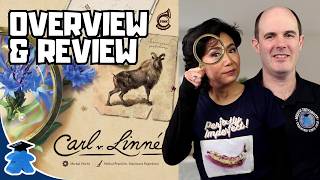
Meeple University Review at 0:06 sentiment: mixed
video_pk 127715 · mention_pk 363558
Click to watch at 0:06 · YouTube ↗
Overall sentiment (raw)
mixed
Pros
- Good level for a modern combo-astic euro
- Combos are small actions or extra resources, chaining well
- Finding little bonuses is interesting
- Contract fulfillment works well
- Tricky to find the optimum path
- High replayability due to many scoring paths
- Thematic integration
- Scandinavia setting
- Plentiful things to chase (upgraded lenses, action tiles)
- Good range of things to do with lenses
- Advanced version with character-specific mini-games
- Mechanisms are familiar
- Gaining resources is tricky and fun
- Above average puzzle
Cons
- Interaction is very low and too low for preferred type of game
- Don't have to look at opponent's actions much
- Interaction in garden majority is not highly consequential (small point difference)
- No urgency to take specific tiles/books/voyages as equally good ones likely appear
- No strong feeling of competitive itch
- Rule learning load is medium to heavy due to icons
- Gaining resources can be tricky, not always a direct action
Thematic elements
- Natural historian collecting specimens and growing botanical gardens
- 18th century, the age of enlightenment
Comparison games
- Forestry
Mechanics (from transcript analysis)
- action selection — Players use 'lenses' to select from five basic actions, with options to activate them once, twice, or three times in a turn, each with a bonus. A wild lens is also available.
- Area Majority — Scoring for having the most blooms within garden areas.
- contract fulfillment — Completing books by spending knowledge and sketches, and fulfilling exotic sample objectives.
- Set Collection — Collecting sets of different colored letters for end-of-game scoring.
- Track Advancement — Moving markers along lecture tracks to gain multipliers and advancing on a taxonomy track to upgrade lenses.
- Worker placement (implied) — Moving a researcher token around a grid to gain rewards and complete tiles.
Video topics + discussion points
No key topics recorded for this video.
Quotes (from this video)
- The rule learning load is medium to heavy, but once you actually get to know it, it's not difficult. It's just a lot of icons, but it's pretty straightforward.
References (from this video)
No references stored for this video.
Video l5fXozbLXJA
Board Gaming Ramblings Discussion at 14:38 sentiment: positive
video_pk 99484 · mention_pk 276607

Click to watch at 14:38 · YouTube ↗
Overall sentiment (raw)
positive
Pros
- Cool theme
- From Pink Troubadour, same designer as Forestry
Cons
none
Thematic elements
- Botany and classification
Comparison games
- Forestry
Mechanics (from transcript analysis)
Mechanics unknown.
Video topics + discussion points
No key topics recorded for this video.
Quotes (from this video)
- The board game hobby is very second half year focused.
- Which game do you want to take on a second date? Also known as impressed you most after a first play.
- Which game hit the table more than any other this year?
- What was your biggest surprise {question mark} and or disappointment?
- What games production or art has impressed you the most?
- Which is your most reliable introductory board game?
- Which cult of the old title, uh 10 plus years old, did you discover for the first time this year?
- What is currently at the top of your wish list?
- Shout-out hello to a creator, podcast, blog, or local game store that made your year better.
- What was a favorite piece of content that you made this year?
References (from this video)
No references stored for this video.
Video -XKzi3OyxCY
The Board Game Garden Discussion at 3:15
video_pk 81836 · mention_pk 204611

Click to watch at 3:15 · YouTube ↗
Pros
none
Cons
none
Thematic elements
Comparison games
none
Mechanics (from transcript analysis)
Mechanics unknown.
Video topics + discussion points
No key topics recorded for this video.
Quotes (from this video)
- Remember, you are somebody's reason to smile.
References (from this video)
No references stored for this video.
Video rFuEUzN2lR8
Before You Play Top List at 17:17 sentiment: positive
video_pk 81461 · mention_pk 202413

Click to watch at 17:17 · YouTube ↗
Overall sentiment (raw)
positive
Pros
- Same designer as Forestry, which was a favorite.
- Interesting that games are being made about historical figures in different fields.
- Playing a game about the scientific method could be fun.
Cons
- No other images of the game are available.
- The concept of the scientific method could be considered boring by some.
Thematic elements
- Natural history, natural historians, collecting specimens, scientific method, taxonomy.
- 18th century
Comparison games
- Forestry
- Darwin's Journey
Mechanics (from transcript analysis)
- Action Point Allowance — It's an action point allowance game.
- Specimen Collection — Players collect specimens.
- Taxonomy Contribution — The winner is the player who contributed the most to taxonomy.
Video topics + discussion points
No key topics recorded for this video.
Quotes (from this video)
- The Op for their new waterfall spilling card game called Frenzy Falls.
- Root is one of my favorite games of all time.
- It's like a word association party game I would say. Yeah. Deduction. Deduction style. style game with Dr. Seuss theme. Yes. Ridiculous.
- The Crew has become a very, very popular system of sorts because it does it really, really well.
- The original Bunny Kingdom, it's a drafting game through and through.
- The box art looks amazing. So, like instantly got me in there. Any Any game that has Prague, by the way, on it instantly gets me to play like what what what what is it? Like Really?
- You know I like my dry Euros and like art distribution in the Renaissance. I mean, come on.
- I really do enjoy the games of the three different designers that are part of this.
- It's really interesting that a lot of games are being made about these people in history Yeah. in different fields, right? It's like they're doing the scientific method can be considered boring, but playing the game about the scientific method could be fun.
- Scythe is Was it my number We're not going to spoil it. It's one of my favorite games of all time.
- This is a game that is going to be published by Stonemaier Games later on in the year. And it is a Scythe versus Expeditions dueling game.
References (from this video)
No references stored for this video.
Transcript Navigation
Showing 1–7 of 7