Are Points POINTLESS in Board Games?
Games in This Video
14 games are featured in this video — they unlock as you watch.






Transcript
Have you recently played a board game where at the end of the game you count up the points and then you compare your totals and go, "Oh, I got 137 and you got 139. Oh, you beat me by two points." And you think, "What do those points actually mean?" Well, the other day I had that very, very thought. And I guess that's the inspiration for this video today. What is the point of points and is it pointless? Hi, my name's Danny. I'm an avid modern board gamer from Australia who love sharing my passion for modern board gaming with you, my friends, and my family. Come and join me on this journey and don't forget to subscribe for more wholesome board game content.
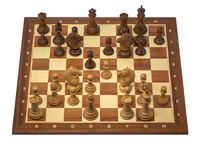
Today I want to talk about the value of points in our board games. They're often such a staple element of our games that we presume that there's going to be a victory point track or there are victory point chips and whoever gets the highest values determine the winner and thus has become the best at playing the game or found the best avenue to victory. But actually, if you think back, there are a lot of earlier abstract games that actually didn't use victory points at all. You've got games like chess, which is all about trying to get the opponent into a checkmate position, or games like checkers or even Ludo, where you're just going around and trying to get all your four pieces to the end. And yet, we kind of put such great big value on these numbers at the end of a game. And sometimes they can vary from like 10 points in Katan to like 255 points in Barcelona. So these ranges of points, it really got me thinking about what they actually represent and what they actually mean in a game. And the first thing I want to talk about is are points pointless? And what I want to say is when you look back on a game, what do those points represent in terms of the milestones that you achieved in the game? And often when I've played like, you know, a 3-hour game or heavy euro, I'll turn back and look to my friend or look to my hobby and go, you know what, where did I lose points along the way? How come you came up, you know, 10 points ahead of me? How did we, you know, calculate and get most of our value from the decisions that we made?
And I think there was one game that I played. It was like a Shem Phillips game, I think, called the Anarchy. uh where basically at the end of the game the person I was playing with and I was so close and this is like three hours and then we worked out like the the next day that you know what we miscalculated uh some of the points and you know what by then I was like oh yeah I didn't mind losing but then it turned out that I was the winner. I was like oh okay great but then it made me really think about you know potential errors that you can make when it comes to scoring victory points. I've made so many victory point calculation blunders over time, even using the BG stats app, missing certain conversions, and just there's so much to keep track of. It's like having like 10 tabs open in your mind as you're trying to work out, well, I could get three points from here, 10 points from here, five points from there. And so, at the end of the day, I think, what do these victory points represent thematically in a game? And so, you know, if I lay a tile, is that a point? If I happen to play this creature card from Wondrous Creatures, is that a point? And what does that point actually reward me for doing? And so in most games, points are usually used to reward the player with some level of action or achievement that they've been able to do. And so in games like Wondrous Creatures where you're playing different creature cards out into a tableau, it might be paying certain resources to have that creature out in your field and now its ability is active. And so that one or twopoint
reward is for doing that particular action. And so I think over time this concept of you do something, here's a reward, you do something, here's another reward, you do something, here's another reward. If you compare it overall in a board game mathematical sense, if everything rewards you a single point at least, then how is that different than just not giving points out at all? you know, just because I play a creature card, should I be rewarded for that point? Just because I convert three resources into two, shall I get rewarded for doing that? And so, it made me really think about all those little fringe aspects of games where you get two points if you go to this spot. And I think in Castles of Tuskany, if you choose, you know, the expansion tile storage expander, you get two points if you do that. And so I can see how victory points are a way of incentivizing players to pick certain things as well. It really my brain went down a rabbit hole. I've been pondering about this topic for about couple of weeks actually. Uh you know what is the value of having a single point? Like if you're going to give something one point, zero points, two points, three points, what are the different levels that are involved in allocating that?
Maybe uh one point um maybe one point will be given to actions that are like on the lower tier, two points for mid tier, three points for high tier and then in some games, you know, set collection games, you get one point for just dabbling in like two things that you've collected, but then if you get a third, fourth, and fifth, that kind of point scale can escalate. It's almost like you need to go back to like year 6 year7 maths and interpret XY tables when I see those like set collection conversion tables. Anyway, I digress. But basically, what is the value of getting a single point? Well, in games like Katan where you want to get up to 10 points as fast as you can, it might be converting those resources and getting that initial city or it might be doing something that's going to fulfill a particular contract or condition. And so, I think are points just ways of tracking how far along people are in a race. And I guess that's essentially what it is in Ticket to Ride. you're like, "Oo, you've laid out, you know, multiple tracks and, you know, you're like halfway around the board. Now I need to think about how do I maneuver my points to get close to you?" It's a great way of tracking the progress that you've made. But then I think, well, if we giving out, you know, a point for putting out a train or whatever, is giving out a single point even worth it in the end? Why not just save those big points for big mega milestone achievements? And so my point here is is that when designers are designing board
games or when we're thinking about who's progressed truly in the both the strategy and the strategic thinking, the decisions that you've made in a game that players should not be rewarded points for simply existing. Just because a game gives you two choices, if all those two choices give you points or a point for doing it, what is the point of doing those particular choices? Because it all equates at the end to being the same thing point value-wise, if you know what I mean. It's only where you see points of differentiation where you're going to get, you know, people who actually followed or build a combo to get those points. That's where the value is going to come in. And so in games like Wingspan, there are certain birds that come with points. And I'm often pondering, well, what do those points actually represent? Is it to counterbalance the power of that bird's ability card with other birds? Perhaps.
But is it more to go, well, you played that bird, it required, you know, three resources and it was a very specific condition, so we're going to give you more points for that. In in a mechanical sense and a mathematical sense, it all makes sense and it all keeps everything balanced. But from a thematic point of view, it's like, oh, okay, I got four feather points for playing this bird. Okay, what does that mean? What does that look like? Why why am I doing it? And so sometimes I feel like I'm a little bit detached from how points are used in certain games. And so a couple of things that really popped into my mind and that is well when you're playing euros it's all about point conversion, resource conversion and at the end trying to maximize the value that you're getting out of your actions.
And so if you only just dabble in, you know, very minor conversions or use base level conversions, you're going to get points that are of a lower tier. But then when you create a really cool combo, you might be able to, you know, transmute those resources into a higher value resource, which get you a higher building or whatever tile that you need to make your points flourish, that becomes more valuable. And there are lots of, you know, engine building games where cards trigger off. You know, for every card with a, you know, fish symbol on it, you're going to get 10 points. Those sort of card points feel more validated cuz you actually have to engage in the setup. You actually have to build the machine or build the engine and build all the components and then you can trigger them off or sometimes you trigger them off as you build it.
And I feel like that feels more rewarding points-wise cuz you're like, "Ah, I see the points here are acting more like a resource and you're getting those points back because of it." But then there there are games which, you know, just cuz you have x number of resources at the end, you know, that then gets converted into a single points. For every four resources, you get one point. And this occurs in a lot of Euro games, especially like farming style games. And I think the methodology behind this is that every resource that you've earned should count for something at the end of the game. Whilst they seem minimal, they are important for making sure that the overall arching game is balanced. So there is a point for converting resources into points. There is a sense that oh no action or choice is wasted. And so I guess that makes me realize, you know what, maybe the points are a really great mathematical way of breaking things down and making sure that everything is accounted for and so that the winner who gets this magical number at the end really truly deserves it. This has kind of brought me to an interesting junction point in this video where I think sometimes games are just taking the Mickey out of points. There are some games where literally they give you like a 100 victory point token, a 200 victory point token, and even sometimes a 300 victory point token.
Barcelona, I'm looking at you and I think, what is the difference between having 300 points and 200 points? like the amount of points you must be acrewing per turn in like a four, five, six round game must be like monumental. And I think maybe it's because they've included it because players should be able to see the range that they can reach or they're just giving you those components just in case someone finds a way of getting like 300 plus points. But really, when you're getting into that 300 victory point range, I just think, do those the meaning of the points actually become meaningless at that point? Because 350 points or 320 points, whatever it may be, how can you backtrack and go, how did I get here?
How is that different from saying, oh, I just got, you know, seven points for doing these two things throughout the game? the the value of victory and the sense of tension that you get when you know some Euro point salad games just bloat the point value right out of the water. You think it kind of actually detracts from the challenge that the game can provide. And I guess on the other end of the board game spectrum, Glass Road is a game where you're like really pushing to even break 18 victory points sometimes. And if you get over 20 victory points in Glass Road, that is a good game for you. I like Glass Road because it's so tense and cuz every single point counts and it matters. And by the end of the game, you're like, "Oh man, I almost made it to 20." But then you got games on this side where it's just like he's 50, he's 20, he's 10 points, 10 10. And you're like, "Oh, okay. Well, I've got about 330 points."
Okay. I was I I mean, I was satisfied the by the experience. I got enjoyment out of it. I got like a nice positive endorphin rush from getting so many points. I'm like, "Oh, look at these points." I'm just like kind of, you know, getting them left, right, and center. But then at the end, you're like, "Well, where was the challenge? Maybe there were too many points for too many things that I could just do easily." And so maybe I might go back to games like uh Glassro because you can really feel like there's a very high sense of pressure or I might not go back to games like Barcelona that just reward things for just you know purely existing sometimes or purely just doing like two simple things and you get rewarded with lots of things like that. And so, and I'm not saying every game of Barcelona has players ending with 300 points, you know, by all means, like most people, you know, 100 to 200 in that range. Are they different? Yes, they are pointswise, but thematically and choice-wise in a game, you know, there's a I feel like there's a big disparity between those two games in terms of the feeling that you get from getting those rewards. And so at the end of the day, I think I prefer games that really have low point scores overall. I think I really get a true sense of like I am working really tough for these points and I'm really thinking that I need to do these things in order to get the points that I need to fulfill these conditions in the game. I feel like that gives me greater long-term satisfaction
as well as that motivation to want to play that game again just because it has that grittiness and toughness to it. I think with those higher point value games, I think they're games where I feel like I want to play them when I'm in a bad mood. I'm like, you know what? No one's complimented me recently. Bing, get 10 points. Bing. Oh, I feel good now. But yeah, I just feel like there's different situations where I'll get either of those games. And you know, I love Barcelona, even though it, you know, the point salad nature of that game just is bloated, but I just love the theme and I love what you're doing in that game, and I love how you take the actions and you lay out and build out the city and the tram systems. Oh, I love all those little elements. I think games that have higher point scores at the end of the game are better um presented as race games where you've got like the race track around the edge of the victory point track around the edge and players are moving their markers in real time as the game is progressing. I feel like they work better with that sort of structure whereas these lower point value games are probably better where the total score that you've got is revealed at the end of the game. And I think points at the end of the day have a really strong psychological attachment. It keeps players buying in to the game up until the very last moment. So games where you get rewarded for points along the way and there are certain things that you can do in a game where you get points at the end of the
game. And so having that split kind of timing when it comes to scoring games really is important for pulling you into the game and keeping you invested until that very end moment. And so, you know, you might think, "Oh, I'm behind that player by 20 points, but wait until the endame scoring. You will see how I'll sweep the floor with you." There's a little bit of psychology that is infused with victory point systems. And I know games like Azul Queen's Garden, you score the little bits of points along the way, almost like breadcrumb level, but then at the end of the game, you're scoring massively and all of a sudden you're just getting big points. There's an exciting element to that unveiling of the curtain at the end. How did you do?
Did that work for you? How did that work for me? And when a game really strikes the right balance between actions, effort, and point scores, that's when it really hits the sweet spot. And I do like the psychology of trying to encourage players to feel like this in the game. They still got a chance to win. And those games where the points are really close at the end really are ones that I'm like, "Oh my goodness, it was two points." But then I step back sometimes and I think, m maybe everything is way too balanced. Maybe there should be a little bit more gap for moving forward or moving away, but not too far ahead. So, what I thought I'd do now is share with you uh some games that uses scoring in an interesting and slightly different way.
And I I you know, there's impossible to be able to cover the spectrum of all the board games. Yes, there's a lot of board games behind me right now uh that there are is out there, but I'm just basically cherrypicked a few to kind of share with you just to kind of talk about and dabble in a little bit. I think I might make a part B video about this uh later on if you're interested in seeing it. I guess the first one that I want to talk about is Carcassone. Carcassone is a game where you're pl picking a tile, placing it out, and you're building this like medieval landscape, and you're placing your work on like roads, in the castles as a knight, or in the fields. And so when you complete a feature, you then get to score it. And so the interesting part of Carcasson is that you are deciding which feature you are committing to and thus you are determining how you're going to be scoring for that feature. and other players can kind of also affect how quickly or how slowly you can score that feature. And so I always find that really really interesting when a game gives you the power to decide what type of scoring that you're going to get and what type of scoring condition you might decide to engage with. And that's brilliant because it feels like you're owning the points. You're owning how you reach that end goal and your success in the game, which I guess explains why Carcasson is such a longlasting evergreen game. The next game I want to talk about is Between Two Castles of Mad
King Lwig. And if you've played Between Two Cities, this is a game where you're building two different castles between the player on your left and the player on your right. And as you're taking your two tiles that have been passed to you, you're thinking, "Oh, this tile would work best in my left uh castle. This one would work best in my right." But you don't want to kind of go work on your right castle and make that really good and make your left one look really bad because at the end of the game, you're going to be scoring for the castle that has the lower point value out of the two. And so you're having to cooperate with the people on either side, your neighbors essentially, and go, "Actually, I might give you this bathroom that's probably not as good as the one on this side, just because this side is is getting a little bit too fancy for me." So, you're kind of it invites that really interesting negotiation. Each of the rooms of the castle scores differently and how you score them and where you place them and features that you put in. It's all quite elaborate the scoring, but the idea that you're trying to balance points on either side of you just makes for an interesting dynamic way of using points and thinking about how your end game is going to look. The next game I want to talk about is a game called At the Gates of Loy Yang, which is a Uve Rosenberg game about trading different vegetables at the market and kind of fulfilling customer orders. What's interesting about the game is how victory points are achieved. There's this little stone path on each player's board. And basically what players are doing is that they're
from the money that they've earned through selling goods or selling their vegetables, they're actually converting those dollars into victory points. So if I have a dollar, I can move up to the first spot on the victory point track. If I have $2, I can pay to move to the second spot. And so what happens is that you get this graded um effect of as you want more victory points, you have to pay more and earn more money. So it's like, oh, if I want to get to, you know, if I'm on the, you know, the ninth space on the victory point track and want to get to the 10th space, I need to make $10. And then the subsequent space is going to be one more dollar expensive. I need $11, then $12. It's like triangular numbers, basically. You're just like, wow. to get up, you need to make one extra more uh than you did before. And so it kind of really plays into the theme of making a profit, increasing your profit, but then that profit becomes the value of your point um at the end of the game. And so it's like ah there's this strong connection.
If if I trade really well and I build up my finances, then I can split my finances down, convert them into prestige. And the way that's converted is something that I probably haven't seen in many games. And yet it's such an important point in the game because uh you're not just, you know, trading to get cash, but that cash is going to fuel this very increasing price, which is your prestige. Another favorite of mine that's in my collection is a game called Aboria. It's a game where it's kind of like spirits in a wood and you're basically moving your little uh workers uh or elders down these little tracks and then I guess taking all the effects along the way. And the longer that you keep them on these little time tracks, the more benefits and the more powerful the benefits are going to be. The bit that I really like is the uh resource track. So you've got this shared community pool of resources that you use to play your habitat card. So rather than having your own private supply, everyone's dabbling in this public supply. So you're increasing different things based on the tracks you're going down, but then you're also spending different combinations. And so what I find interesting about this is that if you increase or you contribute to the pool, you push these markers up, which actually split into two pieces. And if you don't spend those resources and leave them for other people, you get whatever victory points there are between the bottom marker and the top marker. And that often is like compensation for contributing to this community of elders and spirits. And so
I find that really fascinating because it's like, you know what, I really need to place this habitat card out so this species or spirit can score, but if I don't have it, you know, I'm going to feel a little bit jipped. So now I'm just going to get these points for, you know, all these different resources that I didn't use. And then hopefully I can that's going to keep me in the game. And I find that really intriguing, just that way of using points as a way of going, you know what, you did the great you went for the greater good. You you got those resources, but there are certain turns where you can be like, ooh, I'm going to move these resource tracks up, but then push them all down so that no one can get points, no one can get resources, and then you're like, how dare you? And whilst I've talked a lot about the value of victory points and the value that they have in board games in my collection and your collection, at the end of the day, I do also want to mention the value of not having victory points in a game. And as I mentioned earlier, you know, chess and I play this like game with my friend on our mobile phones where you have like a move a day and chess and basically really really enjoy it. Lost every single game. We've played about 15 games all together and I've just not won. But the value of having games that don't actually have victory points is something that I want to explore more on this channel and in my next video. In fact, it's probably something that I want to see and, you know, discover if there are games that really work better if they didn't have victory points. And so games like chess
where the ultimate goal is to kind of get your opponent's king and put them into a position where they can't do anything, there's like elements of new different or different types of tension that are introduced in games where you know you don't have to calculate a number at the end. And so sometimes having a victory condition rather than victory points can sometimes be more beneficial for a game's theme overall. Especially if it's a game where you're just basically moving troops on a map or you're trying to achieve like a story goal. These are often games that work better with victory conditions and they often um flourish more because it's more about the collective win. It's about the satisfaction of completing two or three objectives together. Uh there are some games out there, there's actually quite a few games out there that actually don't use victory points um that are still competitive as well. And so whilst a lot of them are abstract, there are games where you know if you get your particular tiles in a certain position or there's a particular configuration or if you can uh manipulate the board in a way where you get um the upper hand and then the other player gets one chance to kind of counter that move. you know, games like uh Lord of the Rings Jewel, that's where you're trying to v for three different victory conditions.
Having that pursuit of three different avenues to win creates a different level of tension. Almost creates a sense of like, wow, I've got to really double in this, this, this, and you got to set up your two pillars or three pillars in the game and really gun for the end. So, what is your opinion on the value of points? Do you think they're worth including in our board games? Do you think they should be a staple way of determining who has won a game? Obviously, there are different circumstances where you might use victory points and you might not use victory points, for example, in a cooperative game. But generally speaking, what is your thoughts? Have you played a game where you thought maybe the points here are quite meaningless? Or you think, you know what, I was counting every single digit and everything that I did was really encapsulated by the representation of that number at the end. Thanks once again for joining me for another Board Game Sanctuary video. If you really found this video super helpful, please consider liking, subscribing, and heading over to my Patreon page and supporting me by buying me a coffee a month. I would truly appreciate to keep this channel growing. Otherwise, there are hundreds of other videos on my main YouTube page for you to check out, and I'll see you again soon. This is Danny signing out. Enjoy your next board game.