10 Great Games with Key Similarities to Namiji
Games in This Video
13 games are featured in this video — they unlock as you watch.




Transcript
I'm Jamey from Stonemaier Games, and today I'm going to talk about 10 games with key similarities to our version of the game Namiji. Namiji is the third game in the Tokaido series of games. There's Tokaido, Tokaido Duo, and Namiji. And or maybe it was the second one. For us, it's the third one. Uh at Stonemaier Games, we acquired the Tokaido brand of games, and we have slowly been releasing our versions of these games. Same designer, Antoine Bauza. Same art, Naïade. And same mechanism, same gameplay. Um with one small catch in Namiji. But the differences in our versions are mostly uh clarity, rewritten rules, and or re-revisited rules, and um accessibility upgrades. Like on the back of the special characters in Tokaido, for example, we have um we have descriptions of what the abilities mean. In Namiji, and Tokaido, Tokaido Duo, we have reference cards per player that explain what the different actions do. Things like that. The one difference I did want to mention is that for Namiji, we found that without increasing the price of the game, and or at least substantially, it might be a very small increase, uh and without really in- increasing the complexity of the game, we combined the expansion in with the core game. So, it's all just Namiji now. There is no separate expansion. It's just part of the game, streamlined, integrated into the game. Uh you you probably wouldn't even notice if you hadn't played Namiji
with or without the expansion before. So, today I'm going to talk about 10 games that if you enjoy these games, they have key similarities to Namiji, you might also enjoy Namiji. Or if you already know Namiji and enjoy Namiji, you might include uh you might enjoy these games as well. So, I'm going to first turn to our panelist for uh Dylan, our heavy gamer panelist, for a game that I have not played called Rocky Road a mode. Dylan says this is a neat travel size game that uses the mechanism of being able to move forward further along a road for better actions, but whoever is last of the road gets the next turn. It makes great use of multi-use cards and incremental upgrades for a quick pocket-size recipe fulfillment game. And I'm glad Dylan started off by mentioning this because a key mechanism in Tokaido and I'm sorry in Namiji and Tokaido is this one-way track. In Namiji the track is circular, but you aren't actually going around it multiple times. You were just deciding at the beginning of the game that everyone is going clockwise or everyone is going counterclockwise. And I also wanted to note in those regards one of the other big changes we made in our version of Namiji is we made the board smaller, much smaller so that the box is kind of a a normal-size box rather than the giant box that the original Namiji came in.
And we made the board double-sided. So if you're playing at the lower player counts, two and three player or one to one to three players, we added a solo mode, too. I keep remembering other things. One to three players you play on one side of the board and if you're playing four to five players you play on the other side of the board. It's the board sides are essentially the same except there are a few extra action spaces in on the four to five player side of the board. So that's Rocket Rocky Road a mode from Dylan. I haven't played that game so I didn't include it in the top 10, but the next game I have played I played at least a version of this game. This is Pokémon selected by Skyler our family gamer. I've played Pokémon Go the phone version. Skyler says one of my favorite things about Namiji is the animal panoramas and I actually don't have a good visual example of this here.
But Skyler says I love seeing the art stack together to create a whole scene. It is so satisfying. Another game that does this is Pokémon. The cards in the game that do this are called Legend cards or V Union cards. It is a triumphant feeling that to acquire all the necessary cards and see the artwork completed. It is wonderful for families as the art is fantastic and the reward of battling with the superpowered Pokémon is contagious. Recommended for ages 7 plus. I also I love panoramas in games and yeah, you there are two a couple different types of panoramas, three total I believe, and they are vertical panoramas because you're kind of diving down as you discover more about maybe a specific animal in Namiji. But you can tell probably that I love this panorama aspect because we included in um like our game Smitten, my game Smitten is designed around that idea that I got from collecting comic book cards as a kid. Uh this idea of putting together individual cards that look good on their own, but when they combine together they form a cohesive kind of action scene, which I really like.
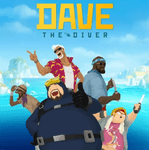
That is Pokémon at number 10 from Skyler. At number nine we have Dave the Diver from our digital panelist Garrett. Garrett says, "My favorite game with key similarities to Namiji is by combining ocean exploration, fishing, and collecting into a cozy but surprising deep adventure. It captures the joy of exploring the ocean, discovering sea life, and gathering treasures and resources as you travel through a vibrant underground world. It's mix of exploration and satisfying collection makes every dive feel like a small adventure." I love this. I've had a lot of fun playing this game and I'd add that there is a little bit of a push-your-luck element in Namiji and well, in both Namiji and Dave the Diver. In Dave the Diver it involves how long you stay underwater before how long you decide to go back up and what fish you decide to try to um fish for, including the shark in the this photo, that you may or may not be prepared to fish for. Um so yeah, I think this is a great example for one of for a couple different mechanisms and thematic elements of Namiji. That's Dave the Diver at number nine.
At number eight we have our last panelist pick, the Pirates of Maracaibo. Aaron, our solo gamer panelist, picked this one. Aaron says, "Now, this may seem far ashore, but hear me out. In Namiji, you are fishers and pirates. You're, well, pirates. Tomato, tomato, if you ask me. Okay, not convinced? Well, if in both games you're sailing along a one-way track. Sure, Pirates doesn't have a track, per se, but you can only sail forwards. It's these cards that line up and you're moving from left to right, always towards this island until you reach the island and then you go back to the beginning. And it says that as you And as you stop at each location, you get to do an action. Okay, Pirates isn't as cozy as Namiji, but Namiji can be vicious depending on who you play with. Every time I play Namiji against my mom, she always beats me to the spots I want to go to. But the last thing I'll say, they're both just a ton of fun. So, raise anchor, sail off into the horizon, riches or fishes await. I can definitely see the comparisons between these two games and I've enjoyed both of them. And I'm glad Aaron mentioned that Namiji does have a little bite to it. In a similar way that Tokaido does, but in Namiji, there are um I mean, there there are limited action spots along this one-way track that you really want to get to. And uh someone else goes to it, then you might just completely miss out on that spot until the next chance, and then maybe not then either. So, there is definitely a quite a bit of player interaction in Namiji. You're not taking things away from other players, but you're taking opportunities away. You're blocking opportunities from other players in Namiji.
That is Pirates of Maracaibo. Um thank you, Aaron, for mentioning this one. At number seven on the list, I put Sea Salt and Paper, both due to the ocean theme of this adorable card game, uh where the art is all the origami. I believe it's actual photographs, maybe digitally altered a little bit, but actual photographs of origami. And uh it's it's cozy, but it has a little bite to it. And there's also a push-your-luck element to the game. So, the core of Sea Salt and Paper is that you are drawing some cards and then deciding either to uh to play pairs of cards for special abilities, or just to hold on the cards and try to try to set collect. And every every turn when you whenever you draw a card, you're drawing two cards, you're picking one to keep in your hand and one to to discard. The push the push in your luck element of Sea Salt & Paper, which I keep going back to because that is one of the core things that's different about Namiji than Tokaido, the mini there are several mini games that involve pushing your luck. In Sea Salt & Paper, there's this thing where you can decide to declare uh the end of the round.
And uh even as part of that, you can say, "I'm going to let everyone else have one more turn, and I think I will still have a higher score this round than any of you." And if you say that, it's a bit of a brash statement to say, you're really pushing your luck. If you say that and everyone else takes another turn, and you pull it off, you have such a good score that is better than anyone else at that time, um you get some some extra points that that add up towards you potentially winning the game. So, I really like that about that that decision in Sea Salt & Paper. It it again adds a little bit of bite to this game. Um it puts pressure on other players. So, number seven, Sea Salt & Paper. And number six, I keep mentioning Tokaido, and I would be remiss not to actually put Tokaido on this list. Tokaido was another game that has a one-way action selection track, where the active player is the player who is furthest back. So, in this example, the player is moving left to right. You can in Tokaido move right to left, but they're moving left to right in this example, and the gray player is the active player. And they can move forward to any open action spot and gain that action. They can move as far forward as the inn, where everyone has to stop and have a meal before they continue on the next branch of the path. If you know this mechanism, if you know how this works, and it's essentially what I just described there, then you know probably 80% of the rules to Namiji, you just don't know the different mini games that are included in this game.
Uh Namiji just have different different uh and I say mini games, they're different actions that you take along the path in Namiji. Some are similar, like the panoramas, but some are also different. Uh so, that core action system in Tokaido and the panoramas that you're building are uh if you love Tokaido, I think you'll also enjoy Namiji and I believe that they are different enough that if you really enjoy one, you will feel at home having the other one on your shelf as well. That's Tokaido at number six. I didn't want to put this I mean that's obviously the best comparison to Namiji but I didn't want to put too high up on the list given that it is another Stonemaier game at this point. So number five, I have Sushi Go. Another I guess you're not really You might be eating a little bit of fish in Namiji. You are fishing. In Sushi Go, you are eating fish instead of fishing for it but it does have a light Japanese theme to it and there is a set collection element of Sushi Go. It's a drafting game which Namiji is not but Sushi Go has a draft where you are trying to collect sets of cards that do different things. Like you're trying to have as many dumplings as possible so you can score 15 points for the group or have three exactly three sashimi cuz then you get 10 points. You don't want two You don't really want four sashimi. You want exactly three of this type and so on.
Different goals for set collection for these different cards. There is set collection in Namiji as well. And I just really enjoy this game. I still have the original 2013 version of the Sushi Go. I haven't even actually upgraded it to the party version cuz it is such a small box that's very easy to get to the table. I really do love that love that version. That is Sushi Go at number five. At number four, I have another another one-way action selection game and this is uh Patchwork. Bunch of different versions of Patchwork Patchwork at this point. And it actually has two different things to Namiji. One thing which I haven't mentioned yet which is in Patchwork, the one-way action selection path there's actually kind of two of them. At the beginning of the game, you put the these all the tiles all these polyomino tiles in a big circle around the central board and on your turn, there's a token I believe it's up here. You are eligible to buy one of the three tokens that are clockwise to the left of that token. You can choose one of them.
Or you can move forward on the time track. So, not only do you have a tile selection track essentially abstracted, but you also have an actual track in the middle of the table that you were choosing to move you're either choosing to move forward ahead on or whenever you buy a tile, if the tile has a time cost, then you're moving ahead that much time. And the player who is further back on the time track is the active player in the game. But, there are reasons to spend more time at at times because you get to race forward and trigger income and even gain some one-time bonuses from this track. So, it actually uses two one-way tracks. Also, a big part of Patchwork is the spatial mini-game. Now, the spatial game in in Namiji isn't quite as involved as in Patchwork, but there is a spatial game involving where you put which fish you choose to keep and where you put them on your board. I'll hold this up real quick so you can see it. So, each player has a board that looks like this and you're choosing where to put fish so that you can have fish of the same color or the same shape in a row or column and that gives you bonus points. You can see those points printed on the board down here depending on where you put those fish. Only if you have all the same color or all the same shape in a row or column.
So, that spatial mini-game is a pretty big part of Namiji that was not a part of Tokaido. And that is also a big part of Patchwork. And number four. And number three is Deep Sea Adventure, another game with a fairly innovative in my opinion one-way track where you It's actually a one- or two-way track because in Deep Sea Adventure you are sharing oxygen with other players, even though it is a competitive game, to dive down this path of tokens these treasure tokens and you are deciding along the way if you want to pick up a token or not. And if you pick up a token, you actually permanently shorten the path and you use up more oxygen as you try to dive deeper or get back up to the surface. Um and that that permanently changes it.
The tokens are the treasure tokens. You don't know what's on the other on the other side of the token, but they get better the deeper you go. Um I love in this game over three rounds how that path evolves as you play. It also has a leapfrogging mechanism where you are jumping over other players as you dive down or more importantly as you try to get back up to the surface, you're leapfrogging over other players. You also do that in the Amici. You were jumping over them to get to the next available action. Uh this is a great game. It also has push your push your luck because you're deciding how deep do I want to go, how much do I want to grab, when do I want to pick up this treasure, and when do I want to turn around and come back up. Different decisions than in the Amici, but the Amici does have a push your luck mini game involving drawing crustaceans from this bag as well as uh the the actual fishing mini game. There's a little bit of luck there.
So yeah, that is Deep Sea Adventure at number three. Also thematically, it's set in the ocean just like Amici. At number two, we have First in Flight. Um I have I have a lot of games on this list that have one-way action tracks. This is another one. The final pick will also have that. So First in Flight, the action system involves you uh working on your ability to fly an airplane by uh gaining a permanent upgrades by by kind of repairing your ship or your your your uh not your ship. Ship would be Amici. This is your plane. Um and you're so you're on your turn you are moving around this one-way action selection track to take these bonus bonuses to get money um and sometimes to actually test your airplane, which I think is one of the coolest mechanisms in this game. It's a little deck-building mechanism where you are adding and removing different features from your airplane in the hopes of taking a longer flight. And so when you get to an action that said says take a test flight, you take your deck of cards, you shuffle them up, and you start to play them one by one indicating how the flight is going. Are you in the air? Have you run into issues? Is something breaking? And when you are ready to to end the flight, you're trying to go as far as possible, but you but you have to choose a certain point to end the flight unless you automatically crash. And when you choose to end the flight, you still have to play a few more cards. You still could crash on the way down.
Uh if you're successful, you get to mark on this other path, this other track really, how far you flew. And you're trying to get to a certain point on the track to end the game. I Uh this track says 36. That might be different in the final game. This might be an earlier prototype. But you're trying to get to a certain point threshold, which is really doesn't really feel like points in this game because it's so non-abstracted. It is your farthest flight is is what you're trying to get to there. And every round you're trying to have the a better flight than other players. It's a really cool one-way action selection game with the touch of deck building and with uh this push-your-luck mechanism. That's First in Flight at number two. It also, like I said, it uses a vessel, not a ship but a plane, but not Meiji. It gives each player a boat. And last at number one, we have a pick.
Uh this is San Juan Island from uh Wingspan designer Elizabeth Hargrave. San Juan Island is a cozy ocean-themed game, like Damiji, that involves collecting things. In this case, you're collecting shells. And you are putting them You're dropping them into your bag, which is a It's themed after a bag. It isn't an actual bag, but it's this this player mat right here. You're dropping the shells into the bag for a spatial game, similar to or akin to the spatial mini-game in Damiji. And on the one-way action path in um in San Juan Island, it's actually you you're walking along the beach to the right until you get to the end, and then you're turning around and going back. I really like this mechanism in in San Juan Island because it gives you opportunities to potentially pick up shells that you had to leave behind the first time that you move to the right when you go back to the left and because the ocean is often washing new shells ashore, you might get to the same section that you already have before and see some shells that you want that more than you than your previous visit to that section of the net. Really clever game. It does also have a little bit of push your luck in it because you are in terms of interacting with other players. You're you don't know which shells will will be there on your way back.
You also don't know which shells other players will pick up. Are they going to leave behind certain tiles or not? So it this has a lot of crossover with Namiji. If you enjoy Sanibel, I really think you'll enjoy Namiji. If you enjoy Namiji, I think you'll also really enjoy Sanibel. So those are my my top 10 picks plus one from an ambassador that I haven't played Rocky Road a la mode for games that great games that have key similar similarities to Namiji. And again, if you enjoy those games, I think you will enjoy this game as well. Yes, at the very end I'll show you what the the Namiji board looks like. Like I said, we did add or Automafactory added a solo mode in the game. This is what the board looks like in Namiji. It does look big right here, but I can assure you this is a regular size board instead of the giant board that was included in the original version and it is double-sided. You can see that here where it has a This is the This is the two to one to three player side and this with the extra action spaces is the four to five player side of the game.
I'm really excited for you to play this version or if you if you already have Namiji and you just want the solo mode, we will be selling the solo mode by itself. It is included in the game, but it'll be available by itself as well. Let me know if you have any picks for games that you think share a key similar similarity with Namiji or let me know your favorite mechanism in the Meiji if you like to. Thanks.