My Top 10 Most Anticipated Board Games of 2026 (from my collection)
Games in This Video
9 games are featured in this video — they unlock as you watch.


Transcript
Okay, I might just have a lot of board games. Hi, my name's Danny. I'm an avid modern board gamer from Australia. Love sharing my passion for modern board gaming with you, my friends, and my family. And today, we're going to be looking at my top 10 anticipated board games for 2026, except this list has a little bit of a twist. The top 10 games are going to come from my own board game collection, and they're games I already own. Let's get this video started, and don't forget to subscribe for more wholesome board game content.
So, I wanted to start this video by talking about the rationale behind my top 10 anticipated list. A lot of us own games that are left unplayed on our shelves, or they're games that we played, you know, 3 or 4 years ago and have not revisited them, or there are even games still in their shrink wrap. I often uh feel like these games have been overseen, neglected, or gathering dust in the corner of our board game rooms. And I think this is a video where I want to dedicate my top 10 list to games that just need a little bit more love. Uh so I'm anticipating this year to play these 10 games. Uh these are ranked in order want and need to play these games and table them this year and really just kind of make a value judgment for myself about whether they'll want to stay in my collection but also evoke that sense of enjoyment. I always find like a lot of new games that get announced uh people are often pursuing these new games especially when um you know the they're games where which have going to be like released at the end of 2026. And so whilst I guess it's fair to anticipate wanting to play those games, there are so many great games that are out now that are really literally open the lid, set it up, and you're ready to go.
Number 10 on my list is a game from Japan, and it's one that has a very steampunk like theme. It's probably a game that you may not have heard of if you know you haven't been delving deeply into games from Japan, but this is one that I actually got last year and I haven't quite tabled it as much as I would like to, but it has some really interesting mechanics and things that you can do that give you a lot of agency in the game and it really allows you to customize the way that you get your [clears throat] resources, take your actions, but also how you progress through the game, which I really like. There are three aspects to this game that I find super special. And the game I'm talking about is Gross Sky. So in Grow Sky, you're basically taking on the role of airship pilots and you're basically building these really cool engines and gaining knowledge and using it to craft cool engines. There are three things that I really like. First of all, there's this wheel where you put these little blue cubes in that act as books and knowledge. And as you move this little dial around, the cubes get pushed to the next quadrant and it increases the level of that cube. And then you can pull the cubes off when they get to level three and spend them on your machine. Uh, which is this really awesome Tetris polyomino puzzle.
So you basically got this grid. There's lots of little bonus icons scattered around. And as you build your engine, you're putting these pieces and trying to create complete rows just like in Tetris. And when you complete a row, you'll get a bonus on the side. And so you're completing these rows by using all these little different shaped tiles, using these little light bulb tiles, and you're also filling in the micro gaps using these books. And so the way you get these resources, you basically have this cool track that goes around the perimeter of your playerboard, kind of like in Monopoly where you move your little piece around and land on property. But here, every time you move your piece around, the corner pieces or the corner sections are basically places that you pass by and gain whenever you pass them. But there are spaces that you can, I guess, calculate and land on in order to get that bonus. It might be moving up the telescope track, might be gaining fire power or even bird movement power and or feathers that allow you to do different things in the game. And what's really cool is you can actually buy more tiles that can go over these basic level tiles. And those tiles can be upgraded, too. And there are two different types of tiles. The beige tiles are ones where you actually have to land on them in order to get their effect. But then you've got these blue tiles that you can add into your little circuit. That then means that whenever you go past the blue tiles, you get those bonuses in addition to passing the corner spaces, too. It's kind of like passing go in Monopoly four or five
times as you move around the circuit. So, you're kind of crafting this unique uh I guess worker placement rondelle on your board as well as trying to configure this cool little wheel and also the little Tetris puzzle. And the way that a lot of the actions work in this game is there's going to be a dice draft where you're going to pick a die and then you're going to place it on a particular spot on the main board. And you can use the die in two ways. Either gain the number of resources that are on the face up thing or use the number of that and use it to, I guess, power other things that you've got in your game area. Now, if you've been a longtime follower of my channel, you'll know that I'm a massive Stefan Feld G game fan. And I think there's quite a few Stefan Feld games on this list. And over the last couple of years, I've really wanted to try and play every single Stefan Feld game there is. And I know he designs like and releases two or three games a year, so it's going to be really hard to keep up with it. But this is an old Stefenfeld game that has a King Arthur theme. And it's called Merlin. And Merlin basically has you taking on the role of one of King Arthur's knights.
And there's this round little rondelle. And basically, you're taking a die off your player board and moving your knight in a clockwise direction around this board. You can also opt to use um one of your white dice to move Merlin either clockwise or anticlockwise. And all of the spaces that are on this rondelle give you different things that you can do. These include placing one of your four henchmen in one of the six regions depending on which region you land on to gain construction materials to gain shields which will stop uh I guess the invaders attacking your kingdom. You can gain little bonus flags or you can place influence markers in the little uh castle regions of uh the six different spaces. And so there are lots of micro branching decisions that really come into play here. Do you take a shield so that you can block one of the three incoming invaders that are going to be resolving at the end of the round? Or do you get a flag to give you a little bonus? Or do you place an influence marker so that you have majority in that kind of uh principality so that you can then I guess get more victory points than the other players. Some of the spaces even allow you to harness the power of Excalibur, which allows you to get rid of one of the three traders that are kind of heading towards your castle.
And you've also got the Grail, which allows you to gain apple resources that allow to manipulate the pit value of your dice. There is also a map that acts as a side mechanism to the game where players are going to be competing to build manners in different terrain spaces. And in order to build your mana, you need to look at the resource cubes that are boarded at the top and the bottom of the map. And that kind of line up uh in line of sight with the hexile that you want to build on cuz they're the resources that you'll need to pay, which I find quite an interesting way of determining the cost of things. And at the end of each round, whichever big region or whichever region you have dominance in with your manners, you score the size of that particular terrain type. So, if there are five forest tiles in your manners, the only one there, you'll score five points.
Next game on my list is by an Australian designer. In fact, I love a lot of these games because they're so simple. They're accessible, and they're really focused on one or two particular mechanics, but a variety of different scoring strategies and mechanisms that really add to the replay value. And a lot of the games that Phil Walker Harding Crates are familyfriendly. They all have this really cool kind of unique themes that really makes uh his games really easy to grapple and get into. Now, there's a Game of Kids that I've been looking for for a long time. And if you been watching this channel for a while, you'll know that I love Zman games because I just love how they come in these really cool rectangular boxes. Uh they fit on your shelves really snugly and there's not that many bloated pieces in there. In fact, there's rarely big plastic miniatures. And so, this game is a tile lane game that's quite reminiscent of a very popular game, Carason. I've nicknamed this game Cacao Cassone because it's all about harvesting cacao and then selling it at the market and moving your little mele up the river. It is a tile placement game that has a little bit of a twist.
And if you've never heard of cacao, basically in this game, you are placing these uh village tiles that are bordered by different numbers of colored meeples. And as you place them down, whatever the meeples touch, it triggers that particular tiles effect. So it might be gaining money from the gold mine. It might be harvesting cacao and placing it on your playerboard or even trading cacao in at the market. And what's really interesting is that everyone is building it on this shared map. And so at the beginning of the game, there's two action tiles. And then when you place your tile down, it triggers the ones that it touches. And then on future turns, if there are two village tiles either by the same player or different players, a new action tiles placed, and then it triggers the edge of those that the edge of those tiles triggers that new action tile that gets placed. And so you've got this cool checkerboard triggering effect that allows you to gain resources and try and gain as much money as possible. You've even got these little sun disc tokens that if you get them, you can place a tile on a previously placed tile that you've placed out to re-trigger the four tiles surrounding. And so your tiles will most likely end up with uh four different action tiles surrounding it. And so the best part of this game is working out the timing of what two jungle tiles are out there, which of the numerical kind of spread of tiles. Cuz some of your tiles have like one mele on each side.
Some have like two, one, one, and two. And it's trying to work out which of those is best to place. And when you when you get the opportunity to place a new action tile, you actually determine who's going to get the benefit of that tile. And if other players want to benefit from that tile, they'll need to place their village tile next to it and you can block other players off. It is a super simple yet very brilliant game. And the thing I really wanted to do was when I picked up this game secondhand or Facebook Marketplace, mind you, uh the person selling it, thank you very much for selling it to me. I really, really will look after and enjoy this game. It came with the chocolate expansion. And the chocolate expansion has these little hearts. It's got little uh little river tiles. You can actually harvest and sell chocolate uh which is another commodity in the game. And so I think I'm most looking forward to playing with the chocolate expansion. I've actually played cacao once before at PAX in Australia a couple years back. really enjoyed it but have not played the chocolate expansion and that's something I'm really really keen to explore because the chocolate expansion has like four different modules and you can kind of pick and choose which modules you want to incorporate or use or play with.
There's one that uses map tokens that gives you a choice to spend your map token to gain another set of jungle tiles to broadening I guess the scope of the choices cuz usually in the base game you can only pick one of two jungle action tiles. Uh, so yeah, I'm looking forward to seeing what deliciousness the chocolate uh modules offer to this game. The next game is a Euro game that I've actually been on the search for for a long time. And in fact, I actually found a secondhand copy of this game in pristine condition just a couple of months ago. And when I got this game, I was like, "Oh my goodness, this is a game that is super thinky." Because it's all about gift giving and gift exchanging. It is a point salad game.
And I do love point salad games just because there's a lot of different pies you can put your finger into and just try and like manipulate and lots of levers you can pull. And this was a game that I guess um I kind of hesitated on early on because the sense of progression or the arc probably at first didn't probably seem like a game that I would enjoy. But you know I've got you know some of my favorite games are Men Nefer and Bku which are fullon point salad games. And if you love Stefan Feld games, they're all point salad games. Um, so I figured this was probably one I really wanted to get to the table. Um, I kind of was tearing torn between the deluxe and non- deluxe version. I ended up going with the non- deluxe version just cuz it was a little bit more affordable. And just in case I didn't really, you know, I didn't warm to it, I'd probably be able to exchange it or sell it again. And the game I'm talking about is Gong. Gong is a game where you're going to be given a hand of gift cards with different values on them. And there are different regions of the board that you want to uh I guess trigger and resolve. And so what you're doing is you'll be playing a card with a value and placing it in a particular region.
And if your value is higher than the gift card that's already there, you get to take the action without further cost. If you play a card that's equal or lower value to the gift card that's already there, you need to pay two servants or there's a cost that's incurred in order to resolve that action there. And so someone can play like a high valued gift card in a particular region if they want to ward off the other players from using that particular area. And so in the different particular different areas, there's areas where you can collect jade. There's areas where you can kind of contribute servants to building the great wall. Uh there's ones where you can send your ships and do a little bit of trading. And there's even like a little map where you can send a little uh horsemen out and collect different travel tokens and spend those travel tokens. And there's even like an intrigue track where access a tiebreaker. And so whilst there's all of these different regions on the board, the heavenly palace section, which is the central part of the main game board, is the part that's probably the most important part of the game. And this is something I haven't actually seen in many other Euro games. If you do not get your emperor piece to the end of this temple heavenly track, then you cannot win the game regardless of how many points you have. So if you dabble too much in all of the other festivities and the gift giving and the socializing and the jade collecting and you neglect this one major path to being the emperor,
you're going to lose the game regardless of whether you got 100, 200, whatever points. And so it creates this really tense tug and pull and it makes players really feel like there's a sense of competition there. And this is a game that I think I was more intrigued by the mechanisms um and also the theme. The next game I want to talk about is another Stefenfeld title. And this is one that actually got released quite a long time ago and it was published by Tasty Minstal Games, which unfortunately is no longer around, but some of their games um have appeared on the secondhand market. Um and a lot of their titles are actually uh quite good. And so the game I'm talking about has a very Luna theme to it. It's called Luna in the domain of the Moon Priestess. This game has an interesting setup to it. You've got this main central temple board and then you've got seven holy aisles that kind of scattered around the perimeter and you can kind of put them in any order you like, but if you're playing the game for the first time, there's a particular setup that you want to do. And so each of those aisles has a different specialty and you commit uh little workers there and then you can take them off those aisles and place them in the water. Don't ask me how that works thematically. Maybe they go in a boat and they sit in the water and they look back at the aisle and then you can put them back on the aisle at the end of the Anyway, so and whilst you've got these actions happening, you've also got this moon priestess who's kind of moving around the aisle. You've got a builder
that moves around the aisle and the apostate who moves around the aisle, which is quite negative because you don't want to have any people on the aisle when the apostate reaches there. So, kind of has this movement factor to it where you're trying to move all your little people around and also try and put them in the right spot at the right time to score points. Now, the game also has this interesting central board that has like a pathway full of all these hexagonal numbered tiles that go in descending order. And the idea of the game and part of the strategy is to send your little people to this temple, put them on these tiles, and then make them kind of ascend. And when they ascend, you take the person on the tile and put them on the corresponding temple space on the central map. And that kind of creates an interesting hierarchy interactive element to the game because if you place your tile down with your worker on it and there's another tile that's adjacent to the one you're about to place and there's no book there, then if there's an opposing plays piece there, they get pinged to this little jetty at the end of the path and they've got to try and find their way back to the hol holy isles or even to go back to the temple. And so it creates this little interesting puzzle where you can kind of ping off other players workers making them try and find their way back to ascension. And so it is this weird weird theme of this Luna Priestess, but it's actually this cool rotational spatial puzzle that just really
intrigues me. There's something about these sort of Stefan Fel games. I almost feel like Luna thematic thematically is like a precursor to one of his other games, Bonfire. If you've never played it, look it up on BGG. But it's just one that has a really cool simple mechanical structure, but really just toils with how you going to solve this puzzle and approach this puzzle when everyone else is doing it, too. Because each of the aisles will give you these little tokens that you can spend. And so each of the aisles has its own specialty. So you got to think about which aisles you want to go to, when you want to go to it, what I get guess phase of the month you want to actually, you know, trigger your actions, but just really, really, really is intriguing. I can't wait to play this one. One of my favorite Euro games of all time is Grand Austria Hotel. I just really love the idea of catering for guests, meeting their needs, trying to house them in different rooms, and trying to maneuver that cool puzzle of enjoying your stay, maximizing a guest's experience. I really like that theme for some reason. This next game is a Japanese game that I did uh obtain last year from Amazon Japan. Uh Amazon Japan, as a side note, is a place where you can get a lot of Japanese games. Uh definitely worth checking out. And they do ship internationally. So if you're looking for some of the games on my list, definitely look at that website first. But this game called Snow Planner is all about running a cool hotel during the peak of ski season, and it has Grand
Austria Hotel vibes with a few interesting twists. This is a dice placement game where you're going to be placing dice on different parts of the main game board. And depending on the pip value of your die, it's going to give you a certain magnitude of the action that you can take. So it might be getting X number of croissants or X number of snow tokens and then you can spend those tokens to fulfill different cards. So event cards, they give you extra bonuses and cool one-off actions. Uh you've got this little hotel board where you're trying to put three different types of rooms in a particular pattern in order to attract VIP guests. And one of the coolest mechanisms uh that appears in Snow Planner is the idea that when you house your guests in your hotel, you can kind of keep their stay or extend their stay as long as you can by satisfying some of their conditions called an extended stay. And as you satisfy those guests conditions across the rounds, you'll be able to get escalating bonuses and they kind of shift up your board as they stay longer.
And there's little lines on your playboard that say day 1, day 2, day three. And each of the guest cards has like three different tiers of bonuses that they're going to give you based on how long they stay at your hotel for. And so you've got this cool dice acquisition because you get these little part-time worker dice that's kind of shared amongst all players, but then you can put all your dice out to fulfill contracts, take the actions that you want, uh get bonuses during the high season, and just the interplay of puzzle of getting and attracting these customers and in particular the VIP customers cuz they will really give you high valued victory points and getting them to stay for a long time is also a cool bonus. And so there's that puzzle of trying to get the right types of rooms in the right configuration, satisfying happiness, but also tending to the pip values of the dice that you've got in your dice pool, whilst also out competing the other players who are also competing for the same spaces and the value of the dice giving you the magnitude of those spaces in return. It is a very satisfying puzzle. It's one that I definitely want to table a lot more this year. Uh considering it's summer right now and I'm sweating like nothing. The air con is on full blast, but Snow Planner is definitely going to send a chill through my bones. Uh as I get my cup of coffee this winter and really enjoy this Euro. The next game on my list is one that I got secondhand and I think it just have been my lucky day
because I was like, "Oh my gosh, I got Cacao plus the chocolate expansion as well as this game all in the one go." And this is a game that I've actually been looking for for a while. And it's all about sword crafting. In fact, it's all about crafting a katana. And this is a game called Shogun No Katana. And what is really cool about this game, it's a worker placement style game, but what's really intriguing is the sword forging board mechanism. And so as you place your workers out on the main map, you'll acquire swords from one of the four different guilds. And your sword forge board basically has four rows, each corresponding to each of the four different basic resources and four columns. And each of the swords has particular materials that you need. And the funny thing about this game is that as you get the tile, you get paid for it first because then you're going to spend that money to buy those resources from the markets to then place it on your sword. And you might be thinking, well, how's that different from any other game? Well, this sword crafting is a spatial puzzle. Every time you place like a wood piece, you've got to move it to the wood row. Every time you place a like leather piece, you got to move it to the leather row. And so you've got like you can almost have like three or four different swords being crafted at the same time. And as the swords get mounted [clears throat] get crafted, they kind of get in each other's way. Kind of like a little bit of a traffic jam. And so this is kind of a weird slide puzzle that you have to manipulate to then finish your sword.
And as you finish your sword, you can also upgrade some of the materials and decorate them with these translucent cubes, which then give you more points based on the quality of the sword that you create. And so it has this very cool thematic nature to it where you're like making swords from scratch, decorating them, and then you place these finished swords in your playerboard area, which is like a room that kind of emulates this idea that you're putting these swords and mounting them on the wall. I don't know if anyone's ever been to like Chinatown markets and seen that you can buy these like decorative swords that people place up in their lounge rooms. I'm not sure how many people do that these days, but yeah, you've got this whole sword room, which then will allow you to unlock other workers that allow you to do other things. And even the worker placement part of the game is really cool because you've got this little area where you send some of your um some of your um people. And then depending on where those people are on the tiles, you can trigger these multiple bonuses. The more you go there, you've got these tracks you can move along that give you like bonuses [snorts] for decorating in certain ways.
And you've got monks that you can kind of pay off to get additional actions. And then you've also got the mega katana, which is like the emblematic katana that kind of represents your house. And every time you finish crafting a sword, you place one of your materials on this mega katana. And so at the end of the game, you get rewarded really significantly for crafting this mega katana using a variety of different materials. And so it has this really cool tiered effect of starting and blacksmithing from scratch and then creating this cool gallery of swords, manipulating them on this board and then I guess displaying and stepping back and going hm this this sword collection is pretty amazing. kind of like my board game collection behind me where you're like, "Oo, this board game. I've curated this one and I've curated the Stephen Feld games over there." And uh maybe this could be the katana piece of the board game collection. So yeah, it's just a game that just really intrigued me and but it was really hard to find and the fact that someone was um selling it because, you know, they didn't have time to table. I'm hoping that I can give Shogun No Katana the love it deserves this year. This next game is a familyfriendly game that is a theme that I think is starting to become quite common in the board gaming industry. Uh but it's one that really definitely speaks to me because I have a pond in my backyard, but also I have some fish tanks and apart from board gaming, I
love aquacaping and looking after fish. Uh my dad actually grew up on along the banks of the Mikong River and he used to go down there and collect fish and frogs and take them home and set up little tanks. And I think that's kind of um been something I've inherited in my life, this idea of this love for nature and love for biology and caring for things. Uh I also love bonsai and decorating and I guess sculpting plants so that they look really cool. And so this next game really spoke to me and it is called Koi. Look at the cover. Oh my goodness. I rarely talk about how amazing the art looks, but this just really pops. Koi is a game where you will be competing against other players to kind of craft your most zen koi pond.
And so in the game, you'll start with a character and they'll have five different hexagonal storage spaces. And then you'll be taking cards from a card market area and the card that you play will give you some resources or give you an action that you can take like move things around. And then depending on which position the card is on the market, you'll get the bonus uh that is associated with it. And so in this game, you're collecting water tiles, you're collecting uh little uh nature fl floral tiles which then allow you to put water liies on top. And then you're also purchasing koi of three different sizes, small, medium, and large, and placing them in your pond. And the koi are actually printed on these cool perspects tiles that can be mirrored when you flip them either way. And the idea of these koi is that you want to surround your koi with water by the end of the game.
And you want them to be adjacent to little uh floral lily ponds or lily uh you floral lily tiles because uh the floral lily tiles will add one extra point uh to that koi at the end of the game. And if the whole koi is surrounded by water, it's going to double its score as well. Then you've also got these other ornaments that kind of come into different games as you play them. You've got these little border statues that kind of go along the shoreline. You've got bridges. You've got cool trees, you've got little Buddha statues as well as waterfalls. And they all score in different ways. But in order to claim that scoring ability and that ornamental piece, you need to have satisfied its requirements. And then you also need to be able to place it in your pond. So I think one of the ornaments means uh one of the ornaments has you trying to ensure that the direct line of sight to it is clear so that it is the feature of your pond. There's one that wants all fish in a line. There's a whole range of them. There's little turtle statues in there that or there's little turtle rocks that score in different ways. And there's even like little branches that you can place onto uh your pond as well.
And so, whilst this game sounds expansive, the puzzle actually in this game is incredibly tight cuz not only do you have to get the resources on your storage, then you have to get it from your storage out onto your player. And that turn that takes to take the item from your storage to the player, another player could be using that turn to acquire something that you might need. And so there's an interplay of do I store things now? Do I have space on my board? Do I need to expand my storage area? And then when do I save enough to then be able to put all these things out and configure them? And the fact that you can configure your koi pond to your artistic design, that's just something that I really really enjoy in a game. And these are, I think, by the same people that made Bonsai, which is another kind of tile placement game that operates the same way, but you're creating bonsai trees that come out of a bonsai pot. Beautiful. The next game is a game that at first glance kind of reminds me of a rhino game called Quest for Elderorado, where players are kind of racing from one side of the board to the other side of the board in order to win the game. Except this one's a little bit heavier. This one is driven by a few more different mechanisms. uh in particular the use of different colored dice. And then uh there's actually quite a lot of different ways to score in this game. And the ultimate goal of this game is not to essentially reach the end.
Although if you do reach the end of this game, you do get awarded a lot of points. But it's what you kind of do along the way. It's the journey that you take. It is a point salad game. It is a Stefenfeld game. Yes, I know another one called Cathand Do. Basically in Kathmand do you've got a little yak and basically what you'll be doing is trying to move that yak from terrain type to terrain type and uh on your turn you'll be taking a dye. You can take the resource that matches the color of that dye. Black is like wild. So you can take any resource and then you can use or move your yak vertically or horizontally across the rectangular grid uh that number of spaces. And if you move in the direction of the red compass, you've got to pay or get an exhaustion marker. But if you've got a if you move across a mountain, you got to also get an exhaustion marker. There's different little things that you have to navigate as you play. So the puzzle itself comes down to how you move your yak. Now, there's quite a few things that you want to be doing. You've got these little offering tiles. And so if you can finish your movement on a particular terrain type as depicted on your yak tile, you get to flip it over and then reveal another terrain. And so if you kind of visit all 10 terrains or all so if you kind of visit all the different terrain types at the end of the game, you'll be awarded with 10 points. Otherwise, you actually lose some points along the way.
You'll be collecting little treasures. And so it's like a set collection element where the more diverse different types of treasures you collect, you'll get points. You're getting A and B map tiles, and you're also getting treasure cards that allow you to treasure and secure those map tiles to give you and strengthen your victory point scoring condition. You've also got animal cards and painting cards that they give you different abilities along the way. And then you've also got this storm or weather movement thing that kind of pushes everybody along. And so if the weather or the storm market catches up with you, depending how far your yak is behind, you're going to be exhausted. You're going to be tired. You're going to be weathered. And so it creates an interesting tension element that really drives everyone along the track. So you're not just going to stay in one space for the entire game. You are forced to kind of move along and progress closer and closer towards the end. If you do get to Kathmandu or any of the little city places, you can kind of take a rest and restore and replenish some of your supplies. And so the game has quite an interesting endgame scoring. It's almost like multiple sets and how you progress in those multiple sets will either advance your score or I guess ret not retract but reduce your score. So the further you are away from Katherine by the end of the game, you are going to take a penalty. the uh less um of the yak tiles that you've completed, you're going to take a
penalty. If you haven't collected enough or you've got lots of exhaustion markers board, you're going to take a penalty. There's a whole lot of things that kind of push and pull you in the right direction. And folks, there we have it. We have reached my number one anticipated game of 2026 and a play from my collection. Uh hopefully the games that you've seen so far have either piqu your interest or games that you're also willing to give it a go. Please let me know in the comments section below what games you are most excited to play this year. I can't wait to uh start a conversation with you. And don't forget if you really want to help this channel grow, please consider subscribing to my channel. Watch the hundreds of different videos I've already got on my main YouTube page. And now on to my number one most anticipated game of the year.
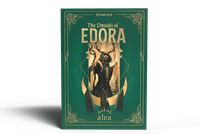
And if you've said it starts with Stefan and ends with Fell, then you would be correct because I didn't buy one but two copies of this game. One copy actually got lost. I bought it and then it kind of got stuck somewhere, not seen it. So then I reordered it and now I have it. It is called the Druids of Adora. And this belongs to the Aaliyah line of board games. And the thing I like about the AIA games is how thin the boxes are. Think of cast as a Burgundy size. And the fact that they compact everything into this box is actually nothing short of brilliant. And so what I really love about uh the idea of Druids of Adora is that you've got this giant square forest featuring light and dark areas and you roll dice at the beginning of the game and that is kind of the values that you'll get to use throughout the game.
And in each of the clearings, there's different icons where you place your dice and trigger an action. And you'll move your little marker along these paths, paying the cost. And then as you place your die, you've got to think about whether you use the lower value die or the higher value die in your dice pool. Cuz once you've used it, you've used that value up. If it's a high value diet, it's going to help you gain dominance in that clearing at the end of the game because you're going to get points there multiplied by the knowledge track and also the number of little monu monoliths and little uh pillars that are there in that clearing at the end of the game. So each clearing is going to get resolved in that way. You're also trying to use your dice to surround different fire pits that also give you bonuses. So, if you connect them all around, you get that fire little token, put it on top, and then you've got these dolman uh little stone bridges that kind of perimeter the edge of the main game map, and you're kind of connecting your colored dice to create pathways there.
What really excites me about this game is not really the theme. Even though the theme I think really gives it that window dressing that makes it m look at the carving of your little uh features and the use of reward in the dice and the components but the multi-layered puzzle that you're faced with. You're thinking which path shall I take? Do I have the resources? If I take this path to this claim, what bonuses can I get? If I get those bonuses, what can I do? and what options are going to branch off from that spot and then can I connect my dominance and so you can see that there's this kind of neuro connective pathway that occurs in your brain with every decision that you make and I think that's where Stephen has really evolved as a game designer is be being able to present players with that neural network or pathways that allow you to make really weighted decisions without having to take on a heavy amount of rules. The other thing I really like about this game is that you can unlock these little herbs from your player board. And those herbs, you have to choose one of the bonuses and sacrifice the other. And because there's 12 herbs on your playerboard, you've got to think, which herb am I going to use now? Which one am I going to completely get rid of for the game? And so it really makes you customize how you want to, I guess, earn the points through your journey in this game. And so I really really like the idea of it and how fun it will be to tinker. And I have
heard that this game will play a lot better at the three and four player count. So what did you think of my top 10 anticipated 2006 So what did you think of my top 10 anticipated 2006 board game list? Please let me know what your top 10 games are in the comment section below. I'm excited to have a little chat. Um otherwise don't forget to subscribe to my channel. Also, if you want to support me and buy me a coffee a month, head over to my Patreon page. Um, otherwise, I can't wait to see you in the next video in the near future. This is Danny Sa. I hope your next board game this year is an amazing one. See you soon.