Top 100 Board Games of All Time (#40–31) | Why These Games Endure
Games in This Video
10 games are featured in this video — they unlock as you watch.



Transcript
Welcome back to Beer City Board Games and to the next chunk of my top 100 board games of all time. If you're new here, this isn't necessarily a countdown of what I think are the best games ever made. It's a ranking of the games that I personally love. Uh the ones that I keep coming back to and the ones that still get me excited to pull them off the shelf. In this video, we are covering numbers 40 through 31, which is right around the point that things start to get a lot more personal. You'll see some modern classics, some brutally interactive euros, and I really think that all these designs do something genuinely special.
As always, I'll spend a little bit of time talking about how each game actually works and then why it earns its place on my list. All right, let's jump in.
40.
Kicking off this segment at number 40 is Hegemany. And this is one of those games that feels like it's doing something really different. This is another game that with more plays would likely skyrocket up my rankings. Hegemany is a deeply asymmetric card-driven political and economic simulation where each player represents a different class within a modern state. The working class, the middle class, and the capitalist class, and the state itself. Each role plays by its own rules, has its own incentives, and even interacts with the system in fundamentally different ways. You're not just competing for points. You are trying to shape an economy that benefits you, often at the expense of someone else. Mechanically, the game revolves around policy cards, action cards, and economic systems like employment, wages, taxation, and welfare. Players pass laws, respond to events, and influence elections, all while trying to keep the country from collapsing under unrest or debt.
What's fascinating about this is that cooperation is often necessary in the short term, even though long-term goals are completely misaligned. What really sells Hijgemony for me is how compelling it is as a model. The asymmetry isn't just there for variety, it reinforces the theme at every level. You feel the push and pull between classes, and you constantly have to wrestle with uncomfortable decisions. It's not subtle. It's not light and it's not always fair and that's exactly why it works.
39.
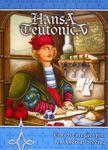
At number 39 is Hanza Tutonica. A game that proves just how much mileage you can get out of a clean, focused design. At its core, this is a route building euro where players are placing traders and merchants onto shared routes between cities, trying to complete connections before opponents block or displace them. Once a route is completed, you gain access to powerful upgrades, more actions, stronger pieces, or better scoring potential. The brilliance of Hanza Tutonica is how interactive it is without relying on randomness or direct attacks. You are constantly nudging, blocking, and pushing opponents out of position. And the game encourages that behavior. Being displaced isn't just expected. It's often beneficial, giving you resources or actions that can help fuel your next move. It can absolutely be cutthroat, but it never feels mean just for the sake of being mean. Every aggressive play has a purpose and the system supports it beautifully. This is one of those games where the rules are straightforward, but the skill ceiling is extremely high and every win feels earned.
38.
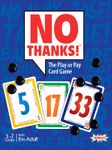
Number 38 is No Thanks. And this might be one of the smallest boxes on this list, especially this high on the list, but it absolutely earns its spot. This is a simple pusher luck card game where players are deciding whether to take a card along with its penalty points or to spend one of their limited chips to pass. The twist is that consecutive cards form runs and only the lowest card in each run scores against you. So sometimes taking a bad card is actually the best move. The genius here is how quickly the tension ramps up. Every decision is public, every chip spent matters, and the table talk is half the fun. Games are fast, but they almost never stop at just one play. I love how effortlessly No Thanks fits into almost any situation. It's easy to teach, easy to play, and consistently creates memorable moments. If this hits the table, it's getting played multiple times. No question.
37.
At number 37 is Barrage. A game that makes absolutely no attempt to be friendly. Barrage is a heavy euro focused on resource management, network building, and brutal competition over shared infrastructure. Players are constructing dams, conduits, and powerhouses to generate energy. But the catch is that the water is very limited, and your opponents can absolutely steal it before it ever reaches you. The action selection wheel is one of the standout mechanisms here. Every action you take locks resources onto the wheel, and they won't come back to you until that action cycles around again. That creates a constant tension between acting now and planning for future turns. What I love about Barrage is how sharp it feels. Timing is everything.
Interaction is unavoidable, and mistakes are punished quickly. It's heavy. It's mean. And it demands your full attention, which makes every successful play incredibly satisfying.
36.
Both versions of Dune Imperium land together at number 36 for me because they scratch the same itch in slightly different ways. At its heart, this is a hybrid of deck building and worker placement, where the cards in your deck determine where your agent can go on the board. Some turns are about what helps you right now, and others are about what you want your deck to look like later. And you're constantly switching between those two mindsets. Combat is a huge part of the experience, but what makes it interesting is that you never are forced to fight. You have to decide when committing resources to conflicts, is it worth it? And when it's better to walk away and let someone else spend themselves into exhaustion.
I really enjoy how the game rewards restraint just as much as aggression. Knowing when not to fight is often more important than winning every battle, and that decision space keeps the game engaging from start to finish. 35.
Number 35 is Marbo. One of several Alexander Fister designs that I absolutely love. Mechanically, Marrabo blends hand management, card play, and a rondelle style movement system where players sail through the Caribbean over multiple rounds. cards can be used in several different ways for actions, for upgrades, or for endgame scoring, and managing that flexibility is where a lot of the depth comes from. It often gets compared to Great Western Trail, and while I understand why, Marrabo feels meaningfully different. The card play drives much more of the experience, and the narrative campaign elements add a sense of progression that evolves over time. There's a lot going on here, but it all fits together in a way that rewards planning without locking you into a single strategy.
34.
Just one spot higher at number 34 is Great Western Trail. And [clears throat] choosing between this and Marrabo is genuinely difficult for me. Great Western Trail is often described as a very slow deck builder. And I think that's pretty accurate as a way to frame it. You'll be cycling through your deck, improving it over time, and deciding which paths to pursue. Cattle, buildings, trains, or a mix of everything. What I love most is the sense of momentum. Every trip along the trail feels productive, and even when your opponents interfere with your plans, it just forces you to pivot rather than shut down. It's a rich, replayable system that always feels interesting, no matter which direction you decide to go.
33.
At number 33 is Darwin's Journey. And this is a game that I was impressed with pretty much immediately. At a high level, it's a worker placement game, but it doesn't behave like a typical one. Your workers aren't all interchangeable. Instead, you can upgrade them with different seals that specialize them for certain actions. Some become better explorers, others better at research or correspondence. And over the course of the game, you are slowly shaping your team that fits the way you want to play. That customization changes how you approach the board. You're not just asking where you want to place a worker. You're asking which worker makes the most sense for that space and whether or not it's worth investing in an upgrade now to make future turns more efficient.
There's also a strong sense of momentum as your engine comes together. Early on, actions feel tight and constrained, but as your workers improve, you start to open up and chain together actions in really satisfying ways. What I love about Darwin's journey is just how clever it feels. There's a lot going on, but it all reinforces the same core idea. Build the right tools, and the game will reward you for it. It's thoughtful, flexible, and super engaging, which is why it lands comfortably this high on my list.
32.
Number 32 is Istanbul. And this is a game that has quietly stuck with me for a very long time. Istanbul is a movement driven efficiency puzzle. You are navigating a grid of locations, each of which offers a different way to convert time into resources. And the real constraint isn't what you can do, it's how efficiently you can get to where you need to go. On your turn, you will move your merchant and optionally drop off or pick up one of your assistants. Most locations require an assistant to activate, so planning your routes is critical. If you leave assistants scattered all over the board, you'll eventually need to spend turns retracing your steps just to gather them back up. That creates this constant tension between short-term gains and long-term efficiency. Because the goal is to collect rubies, and the game is essentially a race, there's very little room for wasted actions. You are always evaluating whether a detour is worth it or if it's better to push towards a Ruby now and trust that you can clean things up later. This was one of the first Euro games that we ever purchased and I still love the way it asks you to think. It's approachable.
It's pretty easy to teach and incredibly satisfying when your route planning finally clicks. Every time I play, I feel like I could have been just a little bit more efficient, and that's exactly what keeps me coming back.
31.
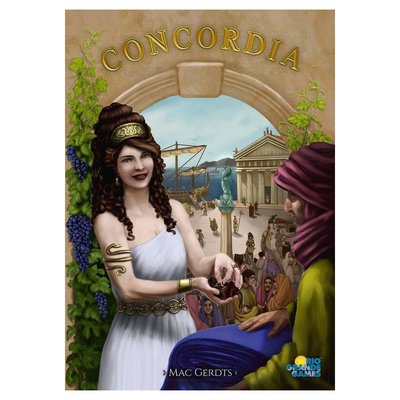
And closing out this segment at number 31 is Concordia, a game that I still think represents one of the cleanest designs in modern Euro gaming. On the surface, Concordia is remarkably simple. Players expand across the map, establishing trading houses, producing goods, and slowly building an economic network. But nearly every meaningful decision in the game is driven by your hand of action cards. And that is where the depth really lives. Instead of selecting actions from a board, you play a single card on your turn, triggering the special effect. Those cards stay out of your hand until you reclaim them using the tribune action, which forces you to carefully consider timing. Play too many powerful cards too quickly and you'll be left with very limited options. Wait too long to reset and you risk falling behind.
What makes this system especially clever is that the same cards you use to take the actions are also how you score at the end of the game. Each card rewards you for a different aspect of your engine, either production, expansion, resources, or diversity. So, every card you have added to your deck is both an immediate tool and a long-term scoring commitment. The result is a game that constantly asks you to plan ahead without locking you into a single strategy. You can pivot, adapt to the map, and respond to your opponents, all while keeping an eye on how your decisions will pay off later. I love how restrained Concordia feels. There's no unnecessary complexity, no wasted mechanisms, just a series of thoughtful choices that build on one another over time. It's elegant, strategic, and very replayable, which is exactly why it earns its place this high on my list.
And that's going to do it for my numbers 40 through 31 in my top 100. At this point in the list, these aren't just games I respect. These are games that I actively want to play, teach, and revisit whenever I get the chance. And from here on out, the gaps between spots get smaller, the decisions get harder, and the rankings get even more subjective. If you like this video, I'd love it if you would like, hype, subscribe, or leave a comment letting me know which of these games you love or which ones you think should be way higher or way lower. The next segment will cover 30 through 21, and it's just going to keep getting better. Thanks for watching. I will see you on the next one. And until then, let's get another round for the table.
Heat. Heat. N.