Most 6 Player Board Games Are Terrible (These 11 Aren't)




Transcript
Okay, so six players. Honestly, six is one of the harder counts to get right. A lot of games say they support it and then just don't. Either you're sitting around forever waiting for your turn or the whole thing turns into this chaotic mess where half the table isn't really playing anymore. So today, I want to walk through the ones that actually feel better when that six person sits down. Not the ones that merely tolerate six, the ones that kind of need it. We'll start lighter and build up from there. Jamaica, 2 to six players, and I'm telling you, 4 to 6 is where it actually wakes up. 30 to 60 minutes, usually closer to 45 once everyone knows what they're doing. It's a pirate race around an island. The captain rolls two dice every round and assigns them to the day and night positions. Everyone else is looking at their three cards and deciding which one to play. Those cards have two actions on them. Move forward, move backward, load food, load gold, or load cannons. You resolve both actions based on the dice. And then if you land on someone, you fight. You both spend gunpowder tokens and add a die roll. The winner takes cargo or treasure. There are treasure spaces on the board and some of them are cursed, which is always funny when someone grabs one without checking. When the first ship reaches
the finish, the current round finishes and everyone scores. You get points for the space your ship is on, plus all the gold in your holds, plus the value of any treasure cards, minus any cursed treasures. Highest total wins. It's not just about finishing first. What I like is how mean it gets at six without ever feeling slow. The simultaneous card selection keeps everything moving. The unique part for me is that constant choice between speed and being ready to fight. And at six, someone is always in your way. Dixit Odyssey 3 to 12 players, but six is my favorite. About 30 minutes. One person is the storyteller. Each turn they look at their hand of these surreal illustrated cards, pick one, and give a clue. A word, a phrase, a quote, whatever comes to mind. Everyone else secretly chooses a card from their own hand that they think matches that clue.
All the cards go into a central pile, get shuffled, and then you vote. In the bigger version, you get two votes when the player count is higher. Scoring is the clever bit. If everyone finds the storyteller's card or if nobody finds it, the storyteller scores zero and everyone else gets two points. If some people find it but not all, the storyteller and the people who guessed correctly each get three. You also score bonus points for every vote your own decoy card received, up to a maximum of three. First player to reach 30 points wins. I just love how it forces you to walk that line. Too clear and you score nothing. Too obscure and you also score nothing. At six, it feels like the perfect amount of noise and creativity.
Nothing else quite captures that feeling of knowing exactly what someone meant and still trying to mess with them. Deception. Murder in Hong Kong. four to 12 players, but six to eight is the sweet spot. 15 to 30 minutes per round, and you'll usually play a few in a row. One of you is the forensic scientist. One is the murderer. The rest are investigators, and at six, you can bring in the optional accomplice and witness roles. The murderer secretly chooses one of their clue cards as the key evidence and one of their means cards as the means of murder. The forensic scientist knows the solution, but can only communicate by placing scene tiles and little bullet markers. No talking about the solution, no helpful gestures.
Everyone else is discussing and trying to interpret the tiles while the actual killer is sitting right there pretending to help. The investigators and forensic scientists win if someone correctly identifies both the key evidence and the means of murder. The murderer and accomplice if in play win if the solution is never found after the structured rounds or in some cases if they correctly identify the witness after being caught. I really like that the forensic scientist stays fully engaged the whole time. A lot of deduction games leave one person sitting out. This doesn't. At six, the extra roles just make the discussion better. The unique part is that visual only communication from the scientist. It creates a completely different kind of tension. All right, now we start getting heavier.
Dune two to six players, but it is widely regarded as best at six. two to three hours if people know what they're doing, longer if they don't. Every faction is completely different. You're bidding for special cards, shipping forces onto a desert map, fighting over strongholds, collecting a vital resource, and making and breaking alliances. The powers are so asymmetric, it almost feels unfair until you realize everyone is broken in their own way. The main way to win is by controlling three strongholds at a specific phase of the turn. Alliances need more strongholds depending on how many players are in the alliance. There are also some faction specific default victories if nobody has won by the end of the game. The negotiation is the real game here. At six, the table is full of these weird unique powers and everyone has something to offer or threaten. The unique part is how the asymmetry forces actual diplomacy. You can't just ignore people or pure combat your way to victory.
A Game of Thrones the board game second edition. Three to six players, best at six, two to four hours. Each round has three phases. Global event cards come out. Then the planning phase. Everyone secretly places order tokens on the areas they control. March, support, defense, raid, or consolidate power. Then the action phase where those orders are revealed and resolved and battles happen. Combat uses special house cards that add strength and abilities. There are influence tracks that affect turn order and special powers. Outside threats periodically pressure the whole board. First player to control seven key locations at the end of a round wins. If nobody reaches seven by the end of the 10th round, whoever has the most wins.
I love the constant low-level paranoia. Nobody's promises mean anything and every planning phase is this quiet little moment of everyone trying to read the table. At six, the map is properly full and every side feels real pressure. The unique part is that simultaneous planning, the reveal every round is just perfect. Veiled Fate, two to eight players and six is really good. 60 to 90 minutes. There are nine special characters on the board. Each player is secretly assigned one as their own. On your turn, you take two actions. You can move any of the characters, not just your own, or use a special power. Quests appear on the board. When a quest fills up, players secretly vote on the outcome. Characters gain or lose points based on their positions. At six and higher, the game shifts into secret team mode. Two players share a character without knowing who their partner is. After three rounds, the character with the most points wins.
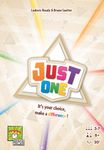
I enjoy how every move is both a strategic placement and a potential tell. You're trying to help your own character while trying not to look like you're helping them. The unique part is being able to move other people's characters on purpose. That creates some really interesting mind games. Just one, three to seven players, excellent at six, about 20 minutes. It's fully cooperative. 13 cards are drawn to form the deck. Each round, one player is the guesser. They draw a card without looking and announce a number from 1 to 5, selecting one of the five words on the card as the mystery word.
Everyone else simultaneously writes a single word clue. Identical or nearly identical clues are cancelled. The guesser then tries to name the word from whatever clues remain. A correct guess scores the card. A wrong guess discards the current card and the next one from the deck. At the end, you count how many of the 13 words you got right. It's so simple and somehow still stressful in the best way. At six, the chance of people writing the same obvious clue goes up and it gets funnier. The unique part is that cancellation rule, forcing everyone to think a little more originally.
Heat. Pedal to the metal. One to six players. Best at five or six. 30 to 60 minutes for a race. Racing with hand management. Each round. Everyone simultaneously chooses a gear, which tells you how many cards you must play. You play those cards face down. Then cars move in position order. You're managing special cards in your engine. You spend them to push harder, but they clog your hand later until you cool down. Corners have speed limits. Exceed them and you pay or risk spinning out. There are also ways to get extra movement from positioning. First to complete the required number of laps and cross the finish line wins. If multiple cars finish in the same round, the one furthest ahead takes the higher place.
I love the constant how hard do I push decisions. At six, the track feels properly crowded and the extra movement options actually matter. The unique part is that long-term resource management system instead of pure short-term racing decisions. Decryto 3 to eight players strong at six 15 to 45 minutes. two teams. Each team has four secret keywords hidden behind a screen. Each round, one player on each team is the clue giver. They draw a code card showing three numbers and must give three clues so their teammates can guess the correct sequence of keywords without making it too obvious to the other team.
After the first round, the opposing team also tries to intercept the code. A team wins by successfully intercepting twice. A team loses by failing to understand their own clues twice. If neither happens by the end of eight rounds, there is a tiebreaker. The information war just keeps escalating. Every clue you give helps your team and potentially the enemy at the same time. At six, you get real team discussion without the table getting too large. The unique part is that dual pressure of being clear to your side while remaining opaque to the other. Eclipse Second Dawn for the Galaxy. 2 to six players, 60 to 200 minutes, depending on player count and experience.
Classic exploration and empire building structure over eight rounds. Players take actions. Explore to place new map tiles. Claim systems, research technology, upgrade ship designs, build ships and structures, and move. Combat uses custom dice based on the modules installed on your ships. You manage three resources and have to keep your economy healthy. After eight rounds, the player with the most victory points wins. Points come from controlled sectors, research progress, combat results, discoveries, special structures, and diplomatic relations. I like how clean the modular ship building is, and how the map develops differently every game. At six, the galaxy fills up and borders become contested. The unique part is how approachable the core loop stays even while the technology and combat systems offer real depth.
And then the final one, Twilight Imperium fourth edition, 3 to six players, 4 to 8 hours, sometimes more. I've only played it once about 6 months ago. A full sixplayer game that took most of a day. Players build a modular galaxy around a central system. Each controls one of 17 unique factions. Each round, you choose a special strategy card that gives a powerful ability and determines turn order. Then you take turns activating systems to move fleets, produce units, or fight. There is trade, politics when someone controls the center, and constant negotiation.
Victory is reaching 10 victory points. Points come from public objectives that are revealed over the course of the game and from secret objectives each player holds. The first player to 10 wins. Even from a single play, I can say the scale is unlike anything else. Everything feels consequential. At six, the galaxy is fully populated and the political and military layers are at their richest. The unique part is simply the sheer scope. It is the sixplayer epic that every other long game gets compared to. So yeah, that's the list from quick mean little races and party games all the way up to the allday epics.
Six is hard. Most games either drag or fall apart under it. These 11 are the ones that actually reward having the extra players at the table. Choose according to how much time and how much table talk your group can handle.