Top 10 Games That Scale Well
Games in This Video
9 games are featured in this video — they unlock as you watch.




Transcript
Whoa, whoa, whoa. What's going on, man? Oh gosh. Oh god. We're scaling up and down. Oh, the video size is scaling up and down, but we're here to talk about what board games scale good. Oh gosh. That was a good intro. That was a great one. What's up everyone? I'm Nick. I'm Mike. We have the Brothers Murf. That's right. Today we're talking about games that scale well. So scaling well if you don't know is be games that play well at all the listed player counts. Let's be honest board game publishers be lying sometimes. Here's the thing you're doing marketing. I get it. You want to say it's a two to four player game when realistically it's a three to four player game. So a lot of times I would say more often than not. Most people would consider most games to not play really well at all of those player counts. Right. But they're Yeah. You're like okay yeah it plays two to five.
It's three to four player game. Let's be honest. We all know games like that. But nonetheless, these are games that we actually think do scale really well from two to five or two to eight or one to seven or whatever they play as. They scale really, really well. Absolutely. So, we're going to talk about some and this is something that you can actually mark on board game geek yourself. You're like, "Hey, I think this game works best at three player." That's something you can contribute to the site. We recommend you do that. And in the meantime, let's talk about some games that we think are great across the scales.
So, first up is going to be Seven Wonders Architects. You could also just say Seven Wonders for this. This is a uh card collection game. Seven Wonders Architects works a little bit different than standard Seven Wonders where now you are a specific uh nation and you are trying to build your kind of big monument to your people. This is going to unlock kind of your direction in the game, most of your scoring and things like that. What works really well is that for every player you have, you have your own kind of set of cards that are going to be slightly different and slightly scaled toward uh your people, but that's going to go to your side and that is something that you can draw from. And also your opponent uh your neighbor uh to your left, I believe, can also draw from. They can also draw from their deck or uh the neighbor to your right and you can also draw from the neighbor from your right. And there's also like a common deck in the middle.
So, one thing I like about this is if you get a big old, you know, play of this going with seven players, you're only ever dealing with the people to your left and right and maybe that central deck of cards. And having that central deck of cards is nice because if you don't see anything you like because you actually see the face up uh card on top of the deck, you're like, well, I'll take a chance on the on the the magic deck in the middle and see what happens. See if I get something I like. And I just think it works really really well. This is like a simplified kind of family, more family weight version of Seven Wonders that I think is just kind of like really awesome and just scales kind of really
smoothly. Number nine is going to be Great Western Trail. And actually really the whole Great Western Trail series, but nonetheless, Great Western Trail scales really, really well. I really like it solo. It's got a really good solo mode. At least the newer ones do. and they play really well at two, three, and four. I've played it a decent amount at all player counts and it's really, really great. With four players, you are going to definitely have more buildings out on the board as you're going and making your way to El Paso, Kansas City, or Wellington, I believe, is what you're trying to get to in New Zealand. Um, but you also have more movement in higher player count games. So, the game scales well in that way where if it was the same amount of movement, but you just had way more buildings in a higher play player count game, it would just really drag down the game. The game is of course longer with more people, but it doesn't necessarily slow down the pace of the game, at least in my opinion.
Again, this is a game where you are running cattle up to Kansas City, turning in a unique hand of cattle, and then getting points and delivering those out to various parts of the kind of different parts of the United States. You're going out to New York, going out to San Francisco, all different kind of stuff. And it's really, really good. Um, we've played this mostly at two and I really, really like it at two, but like I said, I played it at three and four and it just really, really works because although there's more stuff out there, you get more movement that kind of mitigates that and it's also got a really good solo
mode. Next up is Burning Banners. This is a kind of war skirmish type game set in a fantasy world where you're going to be different factions battling against each other. And one thing they did that's really cool, and I've seen a couple other examples recently of this happening is they have different scenarios, different maps, and ways to kind of configure your game based on your player count. They have specific twoplayer skirmishes and things, which Nick and I have played, and it's so cool to have a game that can accommodate like the large scale war with all these different factions coming together, a really kind of heads up battle between two players or three. and they're going to give you different maps, different factions, different scenarios, and things uh that are all going to be dialed in for that player count.
Something I want to see more of in the future. I know there's probably extra production cost that goes along with that, but I think it's a really cool thing where, you know, a game that maybe seems out of reach cuz like, ah, it's supposed to be for four players or whatever. It's like, no, we've thought about that. We've got games for your player count guaranteed right here. And I think that's something that's really cool.
Number seven is going to be space-based. There are a lot of games where if you really want to help out scaling and um bringing down the time of your game, have something that's kind of simultaneous or at least where you're getting stuff on other people's turns. And that is definitely Space Base. Space Base is a game where you are building out a little space dock. And on a player's turn, they will roll out the dice and they will get to activate ships that correspond to those pip values. But then everyone else gets to activate cards that are behind their space stock. So as you upgrade these ships, they will flip over, go behind your board, and then they will activate on other people's turns. So going from like two players all the way up to five players. Again, there's more stuff going on with the five player game, and it does add more time, but you have more ability to activate the back half of your cards.
But then at a lower player count game, you don't activate the back half of your cards quite as much, but you're getting a lot more turns because of the fact it's only a two-player game. So you're bouncing back and forth, back and forth, back and forth. So it's one of those games that like even though there's the game is longer with five players, you're getting to activate so much more stuff because by the time it gets back around to you, there have been four other players rolling and then you hopefully activating stuff. So by the time it gets back around to you, you have a pretty good coffer of money to then spend. And so it's really, really good. I love this game. We played this game again very recently, and I was kind of reminded of my love of space base being like, "Oh my gosh, that's right. I forgot how much I really, really enjoy this game." And it plays really, really good all player counts. We've played it a ton at all the different ones and it's just really fun.
Next up is going to be Heat Pedal to the Metal. This is a racing game where you are going to be zooming around a track playing cards from your hands to kind of uh manage your speed and how many cards you play will be what gear you're in. Uh you're trying to manage the heat in your engine to kind of rip around those turns as fast as you can without spinning out. And so one thing that we see a lot in racing games is ideally you have a lot of cars on the map. You want to be jockeying for position. you want it to feel kind of exciting where people are, you know, there's lead changes and things happening like that. And one thing that Heat does really, really well is they have these kind of AI racers, these legendary racers that are going to be in the mix. They can actually take place uh in the race and stuff and add more of that kind of contention and jockeying for position that you wouldn't necessarily get in a lower player count game. The AI on this is super easy to run and they are really competitive and difficult to beat frankly. And so I think it's something that's really awesome is you have this uh game that just in the base uh box you can play up to six players and it goes all the way down to solo. And it's a good solo because if you're playing solo or you're playing two players, you can add as many of these racers as you like to kind of create that kind of bigger race experience that you'd want out of that type of game. I think it's a really brilliant smooth move. I like that it's easy to manage uh so that every game can kind of be at its maximum level of like competition and
intrigue. Number five is my former number one and this is Viticulture. One of the main reasons why we got this game when we kind of first started out into like hobby modern board gaming is because we knew that it scaled well and we were always told that it scaled well from various reviewers that we had heard about heard talk about it. Um and it's true. I feel like worker placement games, which Vidiculture is, have a tendency to scale pretty well because a lot of times for higher player counts or lower player counts, you can block off certain spots and it kind of keeps the board um restricted and tighter, which is what you want in a worker placement game. You want to be fighting for different spots on the board. You want to be like, "I hope they don't go there. I hope they don't go there. Ah, darn. They went there. Now I can't go there. I have to go do something else." And vidic culture is very much one of those kinds of games where you're like having to prioritize what you do so hard. And if the game board didn't scale at all, that prioritization at lower player counts would be kind of a moot point. It wouldn't really be a big deal at all.
But because it does scale, it definitely becomes harder. This is a game you can play from one to six, and I have played it from one all the way up to six, and I've enjoyed it the entire time. Uh, it's really, really great. You're running a vineyard. you you know you're doing intuitive stuff. You're getting grapes. You're har you're growing those grapes. You're harvesting them. You're squishing them into juice. You're letting that juice rot. I don't know how to make wine but it seems like it rots. People say it fermentss. It's ferment not just rotting. Um it rots and then you put it in a seller. Um and then you sell it to people and it's really really fun. I absolutely love viticulture so so much. Um it's really great and one of the things I've always loved about it is from 1 to six I'll play it anywhere.
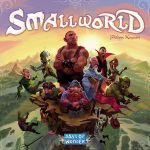
Next up is going to be Small World. And this is the first instance where we saw a game really go to extra lengths to um keep in mind player count. This is an area control game. It's all about putting your people out onto a map, uh holding territory as long as possible, and you have these different fantasy races. you're eventually going to go into decline, create a new race, and then go and repopulate the map once again. So, with area control games, sometimes it's harder to have a lower player count because it's going to be a little bit too open of a map. There's not enough competition. And Small World fixed that by having one simple idea of every player count has a different map, a different board that you play on that is for that player count. So, no matter if you're playing five player, if you're playing all the way down to two-player, which is how my brother and I primarily play this game, you have a map that's going to be contentious. It's going to be hard to take over and hold territories because there's going to be people in coming trying to take your space away. I think it's so brilliant.
Again, this was like early in our board gaming career. We got this game and I had never seen something that did that before. That was new to me uh at the time and I think was really cool and a probably a big piece of why this game has had so much success for so long. and so many expansions and things. You have a bunch of interest from the different mixes of the powers and the fantasy races and the way that gets generated and then every game is going to feel tight. It's going to feel, you know, competitive because that map will always stay small. The world is too small and so we got to fight over that
land. Number three was actually massively surprising. This is general a big surprise for me in many ways. One that I kind of went into this game not really thinking I was going to like that much and I actually really didn't. This is Veiled Fate. Uh and but also one of the things that really really surprised me about Veil Fate is how well it scales. We had been told by people who had played it that like oh Veiled Fate actually plays really really well at two because it's a two to eight player game. And this is also one of those games that's kind of it's kind of build as a social deduction game. Although in my opinion it actually really isn't because a social deduction game the point of that game is to figure out who people are and in this one there definitely is that but it's not like technically the point of the game but nonetheless uh this is a game where you know you it seems like a game where you want to have as many people playing it as possible.
You want that full eight player player count and people kept telling me no it's actually really really fun at two and we were like how how is that possible? So, the way this game works is there are these various demigods. There are, I believe, eight of them. Um, and or is it No, I think it's nine. Either way, it's eight or nine. Some somewhere in there. And, uh, basically, you are assigned a demigod at the beginning of the game. And you are basically trying to get your demigod to get the most points. Um, and you are doing that uh by going on these various quests around the board. And these quests will cause the various demigods to gain points or lose points. But again, people don't know who you are, who you're assigned to. And so, if you put your per the blue demigod on the spot that gets points, people are going to think that's you, and they might be sending your that demigod then to start losing points because you can manipulate and move around any of the demigods. So, the game is a lot about like bluffing and kind of trying to make it seem like, oh, I'm trying to get pink to go up really, really high when secretly I'm actually orange. And I've been kind of sneakily getting orange up as well. And that seems like a game where you want a lot of people there. But here's here's the thing.
Even in a five, six, eight player game, whatever it is, you're only ever using half of the demigods because when you get to six and eight players, you then start working on teams. So half the demigods are always not being used. And I think that's the really big key. And one of the things that makes it scale really well from two to eight is the fact that in every single game, no matter what the player count, half or over half the demigods are not being used, which means that that kind of manipulation and that kind of like um throw in like oo it might be this, it might be this really really works. Um and I love Veiled Fate. It's a game that I really didn't think I was going to like that much and I absolutely adore it and I actually think it's really really good in all player counts. The people were right.
Next up is going to be It's a Wonderful World. So, this is a great card drafting game. Uh, you know, a lot of these types of games can usually accommodate a lot of players well because you're kind of dealing with only your hand of cards at a time. A lot of the play is simultaneous and then you're passing cards around. And this game is no different. And this is a game where you are going to be drafting cards that are going to represent various construction projects, different things you can build for your society. Each card can also be recycled for a specific resource, a specific color resource to go toward the things you have in construction. And this game is all about kind of weighing those options. Which cards am I going to try to build? Which cards am I going to recycle for the resources? When you build buildings, oftentimes they will give you more production of the various resources. And after you kind of choose what you're going to do with your cards, recycling, uh building stuff, you go into a production phase where you're going to now produce uh resources in a specific order that might allow you to complete more cards mid round, which may even allow you to produce certain resources that they haven't already generated for that round in the current round. There's a lot of fun things to do with this one, but it's it's pretty much a you know, you're focused on your own world. You want to be paying attention to what other people are doing so you don't pass them cards that they are clearly going to uh you know love and get a bunch of points off of, but you're really kind of focused on your part of the world and what you are building. And so by having a bunch of players around, it just adds more cards into the mix of what you're going to see, but it doesn't necessarily change your experience from turn to turn. And because so much of the
play is simultaneous, the time the length of game does not really lengthen. So this game stays pretty short, pretty tight. You're trying to get a lot done in what feels like very little amount of time. And so that keeps me fully engaged the entire time I play. Number one is a game we actually just played at BGGcon. BG Spring we were just at and we actually just played this one and this is Ginkopoulos. Ginkopoulos is incredible and it scales super well. We played a full fiveplayer game of Ginkopoulos. And on the box it says 45 minutes. And I'll tell you right now, that game is about 45 minutes. It's so so good. This is a game where you are all building up this kind of like modern eco city is kind of what it is. Um, and it's this is a game that's got a ton going on. There's like drafting, there's like resource management, there is like area control, there's like tile placement, there's all this kind of stuff going on. It's got this, it's one of those games where they're like, let's put a little bit of everything in here.
There's engine building. It's just bonkers. But it really, really works this really elegant way where you're basically going to on your turn, you'll have a card. You'll be drafting out these cards as you play. And you'll have a card, you'll play it, you can kind of do a couple different things with those cards. You can activate various tiles on the board to give you points, more tiles or resources, or you can basically build in the city. There's one kind of card that essentially allows you to build the city out. And then there's other kinds of cars that will let you build the city up. And these cities are red, blue, or yellow. And at the end of the game, there's going to be blocks of color. So there's a bunch of yellow tiles next to each other. That's a big block of yellow. And then there's going to be area majority in that block. So whoever has the most of their pieces in there will get to score most of the points. And then as you build up, you put more and more pieces there. It's really, really good. But one of the best things about it is this game scales super, super well. We've played it a ton at two. We played it at three, four, and again, the other day we just played another game of it at five players. The full player count, it was still less than an hour and it was still so darn good. Giggopoulos is one of those games.
It's one of Mike's favorite games particularly. It's usually in his like top five in terms of games of all time. He loves Giggopoulos and one of the main reasons why the gameplay is just really, really elegant. It's actually pretty simple in terms of what you can do on your turn, but there's a lot of depth there and it just scales really, really well and we absolutely adore it. That was our top 10 games that scale well. I really really would play any of these games at any player counts. Um, yeah, we we really have. They're they're really really outstanding. So, know down in the comments below, let us know what games you think scale really really well. Some games that you think we missed. Let us know down there. Until next time, we think that's it. E that's it everybody. We'll see you in the next top 10. Bye everybody.