The Best Educational Board Games – Classical Conversations Cycle 1
Games in This Video
12 games are featured in this video — they unlock as you watch.




Transcript
this is board game dad and today I'm going to give you nine recommendations for some excellent educational board games now this was a very narrowly defined list of games after going through several dozen in order to get to games that satisfied two important criteria first of all they have to truly be educational that means they contain some amount of enriching content these aren't just games that have an educational or topical theme but rather games that have something to teach students secondly these games have to actually be fun and entertaining none of the games on this list would be games that you would only play with children or games that have a trivia Focus or games that would otherwise serve to only entertain because of their educational content but rather these are games for Gaming's own sake so these are fun these are games that you would play with your own group of friends a special note for those of you who are homeschooling your kids this may be the first video from my channel that you're ever watching and if it is you should know that I am a board game hobbyist and I play hundreds of board games all of the games that I play are a little bit more intense than your typical sorry or Checkers the kinds of things that you grew up with that being said I play all of the games on this list with my own
kids but if it's a little too much for your kids I have made videos about how to introduce your own children to games that are a little bit more strategic so if you'd like guidelines on how to get your kids and board gaming you can watch that video additionally I also homeschool my kids and I use a curriculum called classical conversations this is actually the second video that I've made in a series of videos for classical conversations they structure the curriculum using three cycles and this is for uh games that address themes from cycle one if you'd like to watch a video with recommendations from cycle 2 I will also leave a link to that video I've broken these eight games down into four topics so we're going to start with English and grammar then math then history and finally science beginning with English language the first game on my list is X excellent to motivate spelling it's called paperback and it's a deck builder game so this is a game where players start with a deck of cards and every card has a letter on it which they use to spell words now like the game Scrabble the letters in the word have a point value and when you've spelled a word you can use the total point value of your word to buy additional letters which you put to your deck so every turn
you're drawing cards that are getting progressively more and more valuable to spell more and more complex words what I really like about this game is that it really motivates players to spell the most difficult word that they can because if they use letters that have a higher point value and if they make longer words they can score more points so it's excellent because regardless of what your ability is you can spell easy words medium or hard and then as you challenge yourself you get more rewards for it the next game motivates spelling and grammar and this game is cooperative if you've never played a Cooperative game before that means all of the players are working together to overcome a challenge and this game is called illiterati and the idea of illiterati is that you are working together to stop the illiterati the villains from destroying all the books in the library and you do this by constructing words now this is a Speed game although there are variants of the game where you can remove a timer but if you've ever played Bananagrams or speed Scrabble it's a lot like that players are trying to make words in order to save all of their letters but what's interesting is that you're trying to make words that satisfy conditions and this is where some of the grammar comes in uh some of the vocabulary associated with uh structure of English so for example
uh this criteria is you want five letter words that have only one vowel in the exact middle of the word this one is eight letters or more that are antonyms this one is words that are both a noun and a verb eight letters or more so things like this you've got that vocabulary um this has been an excellent game my kids really enjoy it because uh because it's Cooperative you can actually share letters so if you are playing with kids of different skill levels this is a very helpful game because it kind of enables everybody to participate without feeling like they're being beat out by stronger competition from like an older sibling and that's the word the game illiterati the next subject is math and it's hard to select only a few games from math because in the world of board gaming so many maybe all games address math in some way either you're toing your score or you're figuring out how to spend resources in order to gain benefits or there's geometric reasoning as you place tiles onto a grid there's so many applications of math for now I just picked two games that have a very unique way of applying math so the first game is a little game called Nirvana now Nirvana is a role and right which which means uh the players are going to be rolling three Dice and
then the result of that roll is shared with all players who will write the values into colored spaces onto their card so they they might write the three values into this green space here and as they fill out this grid they add the columns and the sums of all of the columns become the value in cards so after the entire grid is filled up they're going to have several sums that they've counted and those sums become the cards that they play and the first to go out wins now a great strategy for this game is to have equal sums so you want to try to place the dice rolls in such a way that the columns will all sum to the same value but this is a very open-ended question there's a lot of ways that you can do it so there's a little bit of weighing probability in here it's really fun how a player can make their own problems as they sort of set an objective about what sum they're aiming for and then try to place the values from the dice in order to make those sums so math and adding just get tied in very easily into Nirvana the next game is called Mind map and this one was really interesting because it's the first game I've ever found that uses a coordinate plane in a game uh what you do in mind map is you use cards to give a definition for the two axes the X and the y axis
and you try to plot words according to how the axes are labeled and then you try to identify which plotted point it matches which word and players are competing in order to get points for finding correct matches it is a wildly fun game because it's one of those kind of word guessing games where people come into it with their own opinion and then people can kind of debate why they think it was you know it should be here instead of there but it gets the players thinking in a coordinate axis in a really fun way which is what I thought was so creative about mind map and it plays from two to 14 players you can play in uh up to seven players individually or two teams of seven if you play up to 14 the game mind map the next subject is history and in the classical conversations cycle one homeschool curriculum this year is all about world civilizations so I wanted to find a game that addressed that topic specifically and it's a challenge for a number of reasons one a lot of games like Civilization or Through the Ages are about building a civilization through history but you're building a fantasy civilization it's your own unique civilization ation that draws elements from other civilizations but doesn't actually replicate something that is historic other board games like
a brief history of the world do let you play through actual historic civilizations but either the game is too complex or it's too long and I find that when I'm playing with my own kids longboard games are a real challenge they test attention spans so I want something that is short and not too complex yet addresses history in a in a authentic way something that can actually be traced to actual civilizations so I went through a lot of games to get to this one and I don't think I could be any happier without compromising on either of those two restrictions the game is called age of civilization it's a tiny little box like this and plays in about 30 minutes this is a game where you are playing as civilizations that are drawn from a deck of cards and each civilization has its own unique strength which in many ways is representative of something that was characteristic of that actual civilization however this game is very stripped down and streamlined to the basics of building an economy sciences and culture so ultimately you're trying to to get money in order to uh build upon your civilization to grow your population and to buy monuments that are going to be worth victory points I've
played this game with my 10-year-old and she really enjoyed it I did not play it with my 8-year-old yet but I do think I can work it out with her the box does say 10 and up I think that if you're looking for a civilization game that you can play with kids this is just an excellent excellent choice so age of civilization and I'll put a link to this game and others in the description now I've got one more history game for you this game is more educational and it's something you will definitely play with your kids as you're teaching them about timelines but the nice thing is the game is free because I've created a file that you can download and print from your very own home uh this is my version of a game called timeline and I made these cards which I put into little sleeves and in Timeline it's very very simple uh you start with one card on the table and it has a year on it so this is the Trojan War as described by Homer and the year is 1,200 BC and then you deal out a hand of cards to every other player and what players try to do is they try to place one of their cards into the timeline so my card says the completion of the Great Pyramid of geiz and I've got to ask myself is that before or after the Trojan War well I think it's before so I place it down I flip it over I'm correct 2,600 BC but
now my timeline has two events on it so the next person has to play their card and they've got to figure out is it before the Pyramids of Giza in between the pyramids in the Trojan War or after and so every time a card is placed the the timeline gets longer and longer and longer so the game gets harder as you go this is a great one for memorizing dates it's called timeline and the reason I made my own copy of it is because I couldn't find it in stores so if you'd like to try timeline it's definitely much more of an educational focus more of that like trivia type gameplay but you can just download the file down in the description and I give that to you now the next game is the odd one out I put two games into every single subject except this one it's it's not history nor science it's geography so it's in a subject all of its own it's called Expeditions around the world this is one of my favorite games on the entire list because of its accessibility and because of how attractive it is and how fun it is to play very easy rule set no compromise needs to be made in order to get younger players playing this game it's a game where you're completing routes to get to destinations around the world so included in the game is a beautiful map and this is excellent for learning the World Geography that you need in the classical conversations curriculum now I will say that the
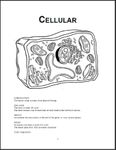
destinations in this map are actual sites archaeological sites and other areas of importance so it's not labeled with countries and cities some cities but not very many so it's kind of up to you to you know as the home school teacher to ask your child you know what continent is that in or do you know what country this is in and then all of the cards have text to give you more detail about it uh so I think there's a lot of space to have conversation around this game it's also a really fun game where every turn you're placing another arrow to extend an expedition and you get points every time you get to one of the objectives either in a a public destination or one of the cards in your hand so it's a simple simple game but a lot of fun it's got some great strategic depth and what a fantastic map Expeditions around the world so finally for the subject of science classical conversations addresses uh cellular biology a lot of plant sciences and geology now I couldn't find any games about geology but I have an excellent game for plant cell biology it's called cellulose and this is produced by a company genius games that only does uh enriching games and they're very well designed so that they're not just educational but actually a lot of fun so in cellulose
you are you are operating a plant cell you're responsible for all of its functions and you're trying to help the plant grow its roots and its stem and to get more light so you can um build the cell wall and make the plant bigger and stronger so this game is absolutely chock full of science content it has its own booklet full of how the scientific facts are built into the game's design and really it's a worker placement game so players are using their workers to send it to different areas of the cell to perform cell functions and it's got an engine building element to it because as the plant becomes bigger and stronger it collects more CO2 it collects more water and it becomes stronger as you go along I was able to play this with my 10 and my 8-year-old game cellulose the next game is also from genius games it's called genotype it's about mallion genetics and you are working with punet squares and dice in this game essentially what the game is about is you want to use your workers to perform actions that will build punet squares and then when dice get rolled those will dictate the uh characteristics of your pea plants and so you're trying to collect the the genes that will match pea plants that you're holding in cards in your hand in order to score victory
points and you can recruit the help of other scientists in order to speed your work along it is a more complex game and in order to play it with my kids I made a modification where I cut out the extra uh the extra workers and we focused more on just the punet squares and the dice rolling so I do think it's a challenging one in fact the Box even says 14 and up but if this is something that you're interested in teaching to your students or exposing your students to then again I do have some recommendations on how to work your way up to a game that has this degree of complexity in it so that is the game genotype so those are the eight or nine games that I wanted to share with you today if you're interested in more recommendations like this be sure to check out my other video that I made two years ago about a whole different set of curriculum thank you so much for watching and a special thanks to my Patron supporters who help make this channel possible I will see you next time bye-bye