Memory Board Games That are Actually Good
Games in This Video
15 games are featured in this video — they unlock as you watch.






Transcript
Hey everybody. Today I'm going to be talking about some board and card games that use memory as a key feature. Or not necessarily a key feature. Some of these do do that, but some of these also use memory as like a secondary or tertiary kind of theme in the game. Now, I understand that memory is probably one of the most polarizing and off-putting mechanisms, if you want to put it that way, to a lot of gamers because, you know, some people naturally have better memories than others. And I think the the burden of performance is quite high with memory games. And that can be quite off-putting because it feels like it's a bit maybe, I don't know, more mentally exhausting or more mentally laborious than other games that don't use memory.
And to be honest, I'm normally in that camp. If I hear a game is strongly relied on memory, I will probably react badly to that and be put off by that. Um, but these are all games that have kind of rewired my brain and actually made me enjoy a lot of memory uh in board games. So, we're not going to talk about these in any particular order. We're just going to rattle them off and have a brief chat about them, which is probably going to be a a running thing now on the channel rather than me doing strict top 10s. But before I get started on the games, I want to give a shout out to the show sponsor, kienda.co.uk, who are my go-to online retailer. And if you use the link in the show notes or the QR code, then you can get 5% off your first order. And I'm going to start with probably one of the games that's broken through in recent years in terms of memory. It really actually kind of reignite um memory as being a kind of a tangible mechanism and one that can actually succeed. And that game is called Trio. It was initially called Nana. And this is actually pretty um well very similar to a simple memory match game. We know those traditional games where you have face down cards and you're trying to flip two over and if they're the same, they stay up. If you flip two over and they're different, then you put them back down and you go again. This one uses that mechanism, but it does use it as a card game where each player has cards in their hand um and you are trying to find trios of cards.
So, for example, you want to find the the three ones or the three sevens, but you can only do that by asking for the highest and lowest cards in players hands as well as using cards in the central display, which is a nice way to tailor to different player counts. So, you know, fewer players, more cards in the middle. And I love the way this well, first off, the game is super fast and you can piggyback off other players efforts as they're revealing more and more cards, but you only really need to focus on those high and low numbers. So, you know, at the beginning of the game, you're looking for the twelves, you know, the 11s, the tens, the ones, twos, and threes, and you can worry about those mid numbers a bit later, and you've been dripfed that information as you go. So, and the pressure is slightly taken off, and you are a bit more tunnel visioned. It's super fun. I don't think I've ever played this game with anybody who hasn't enjoyed it, even if you do go into the game without with hating memory games. So, this has done a really good job of um proving that memory can be fun, and I highly recommend that one.
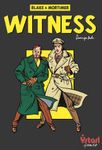
Um, some older traditional games like Witness used memory in quite an interesting way. I think this game is sadly very much out of print now, but this used it in more of a cooperative way where everybody would be given a small piece of information. You'd have to remember that, share it with your opponent, and then everybody has that small piece, and you got to come together and solve some kind of problem. So quite an interesting take there. Um, Wandering Towers did a great job of um, having kind of a family weight board game where you are trying to move your little wizards into this wizard tower by moving these towers around in this kind of rondelle and picking them up and stacking them on top of each other. But you your meeples would be covered up by these other towers. You'd have to kind of remember where all your meeples are.
And the actual lack of memory skills can actually make the game so much more fun as you are kind of piggybacking other players with your efforts and forgetting where your pieces are and so on. It's really good family weight game where the actual lack of well when you're worse at memory it actually makes the game better. Uh two games that I also considered were uh Strateggo and the more modern kind of iteration of that which is called Lord of the Rings the Confrontation which funnily enough is getting a reprint soon. Now I actually really do like the way that memory is used in this in these games and I'd say that the memory aspect is maybe a bit more intense in these games than the others I've mentioned so far because you know tracking where certain pieces are is pivotal to doing well in these games.
So basically they're they're more head-to-head style games where you have numbered pieces. You're sliding them around the map and once they come into contact with each other, those numbers are revealed and the stronger piece will kill the weaker piece, but then the stronger piece will revert back to its original position. So you're trying to move your particular stronger units to try and track that piece and kill it. So there's this good idea of trying to know shimmy units around to get the right places in the right pe well the right locations to ambush certain pieces and so on. So again strategu I think it's aged really well actually. I mean I like the idea of it and I think it's maybe doesn't get as much coverage or praise as it maybe could have. Maybe a a more streamlined and quicker version would do well in today's era. And again, the confrontation is just a much more boiled down version of that with the Lord of the Rings theme where, you know, the the shadow player is trying to get the um or trying to find the ring bearer and the ring bearer is trying to get the ring to Mount Doom, but everyone's got special powers and they all work in different ways and it's all about memorizing or laying traps on where certain pieces could be. Um, a recent one that I've played that I thoroughly enjoyed, and this is much more of a party um, vibe to it is Bis 20. So, this is actually a counting game where you're just simply counting from 1 to 20 in turn order. So, go 1 2 3. But every round there is a new rule introduced which will replace one
of the um, one of the numbers. So, for example, um, maybe the two and the 10 are swapped over. So it will go 1 10 3 4 5 6 7 8 9 2 and then it'll go to 11 and so on. Or silly rules or mannerisms can replace um existing numbers. And as the game goes on, more and more of these silly rules are introduced and you have to try and remember what each of these rules could be and try and eliminate the other players by making them not remember what the uh special rule would be. And a thing I really like about this game is that it it drip feeds the memory aspects into the game and you will find your comfort level naturally in the game because once you start introducing, you know, 5 6 7 8 9 10 special rules, you're going to start falling off that cliff and, you know, you're not going to get new rules introduced until you conquer a certain level, which is really nice. Um, staying on the party theme, games like Monstrosity use memory in a fresh fashion that I hadn't seen before where somebody is explaining a certain monster without the other players looking and then they're putting that card or sorry, they're actually looking at the card briefly. They're putting it down and then they have to remember what that monster looked like and explain it to the other players and whoever did the best kind of render of that monster will get given the points. So, a really cool twist on the uh the memory aspect there.
Um, other games. Picture Perfect was a a lovely memory game with a great theme. Actually, one that um I think is well, I think it did a really good job of bringing something fresh to the table. This one you are trying to arrange these different family members and friends into this perfect portrait. But every single person has their own wants and needs, who they want to be stood by, do they want to be stood in the front row, the back row, next to the table, next to certain people, and so on. And each round you're getting given a certain amount of information based on these different characters and then you're swapping them over in different ways. And the nice thing about this is that you can actually regain the information from the characters later in the game just to reaffirm um what your what the criteria was. So I really like this and you can just again you can kind of wing it but you can remember certain people and and so on. So a really nice memory game there. picture perfect.
And one that's been a consistent hit for me is Cabo. Uh so Cabo, really versatile game from young to to older players. Um where you are trying to have the lowest value of these cards that are face down in front of you. And you're going to be drawing cards and swapping them over or swapping cards with other players and so on. And once you're confident that you've got the lowest numbers, you're going to flip them over or you're going to declare that you're finished. Then everyone's going to get one more turn and whoever's got the lowest value will kind of score no points, but everybody who's scored higher will get obviously those points. But if you incorrectly declare that you're the lowest, you'll get some bonus points, too, which is a bad thing because this game is all about scoring as low as possible. Extremely charming and I think um very underrated actually. So that is Cabo. um some different games. Um again, another party game that uses memory, but you can use memory as more of a backup plan rather than the actual key feature in the game.
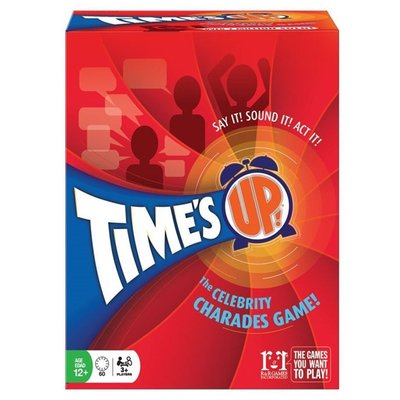
So, game I considered of the party genre is a times up. Um this is a a really cool game where you are kind of mining certain, you know, it's sherads basically and you're mining certain clues to give the clues to your teammates. But in the second round, you can only use gestures and in the third round, maybe I'm getting this wrong. I think it's you can explain what you want and then you can use like one word and then you can use like a gesture or something. So, it gets harder and harder as you go, but you can use your initial clues or remember the initial clues to help you with the later clues that you're giving. And this is a cool party game because even if your trivia knowledge isn't very good, you can still get the answers correct based on the previous clues given. And it all comes down to memory or even simple card games like Matrioska. This one used memory in quite a nice way where you could try and hold cards back that your opponents wants to leverage against them.
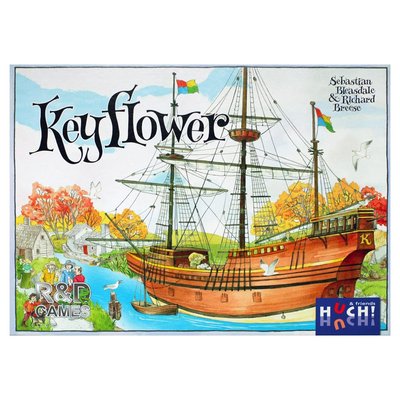
Um, and another party game that I did mention was When I Dream. This one again ruckus party game all about just um word association but at the end of the round you'll get some bonus points if you remember the clues that you gave. So kind of just like a bonus feature rather than being the key part of the game. So that's the kind of main games I want to talk about that might be worth a spot in your collection or a second look at even if you don't like memory or don't like the idea of memory. Of course, there are so many other games where memory can be useful rather than the actual game, the main mechanism. Games I considered, you know, my favorite game of all time, El Grande, just tracking how well the other players are doing, how many uh meeples they put in the Castillo, ready to be deployed later and get those bonus points. High society was a nice one as well which you can try and keep mental tabs on how the other players are spending because whoever spent the most will be disqualified from winning. So you want to just lowball them and you can maybe keep mental tabs on those which will certainly give you an advantage. The same goes for QE actually. And additionally, games like for sale, you know, if you've collected all the best properties or certain numbers of properties, if you remember the properties that your opponent's got, then you might be able to pitch your bid just right. And of course, the great keyflower um where you're trying to remember what meeples people might have to place bids later. So, auction games and memory seem to go quite well to with
each other. Um if you um or depending on the mechanisms involved, I suppose. So, uh that's it really. That's all I wanted to talk about. I think, you know, memory games are I think they unfairly get a bad reputation and the default position is that people don't like them. But hopefully there's some games here that can might be worth a second look. And you know, on paper, I don't like memory games. But when I look back at these games, think, you know, maybe I do like memory games because I do have quite a few of these in my collection. Um the standouts I think being um Trio, Wondering Towers, uh Abyss 20, Picture Perfect, uh and Cabo. I would say those ones are really worth looking at if you want a solid, well-rounded collection. And if you want a again, I like having a game of each genre in my collection as a go-to game, and these ones might be the ones uh for you. So, hopefully you've enjoyed the video. If you have, please be sure to hit like and subscribe to the channel and check out my other content, too. But for everybody else, I'll see you next time on Chairman of the Board.