Top 10 Favorite Games Featuring Ongoing Discounts
Games in This Video
10 games are featured in this video — they unlock as you watch.





Transcript
Hey, I'm Jamie from Stonemire Games and today I'm going to talk about my top 10 favorite games that use ongoing discounts as a way to give players some compelling decisions about when to buy resources or ongoing resources or things that give you ongoing resources versus just going ahead [clears throat] and buying the thing. I really really like this decision space in games and I I think of it as something that appears in a lot of games but while going through this list I found that it appears in maybe fewer games than I thought. So this includes games where uh they provide ongoing discounts for resources like I said and also currency. So depending on what you are using to pay for things in the game, whether it's, you know, stone, brick, wheat, things like that, versus coins, money, um there are various types of games that give you different types of resources. Also, skills are used in some of these games as well. So I asked ambassadors about this topic and they responded the following games, some of which will show up in my list as well.
They mentioned Seven Wonders. Seven Wonders Duel, Arc Nova, Brass Birmingham, Castle Combo, Cosmocaptopus, Duel for Middle Earth, Everdell, Gizmos, Hadara, Life of the Amazonia, Pirates of Marbo, Scythe, Splendor, Stone Age, Terraforming Mars, Veil of Eternity, and Zenith. viewers. Also, I I mentioned this topic on a live cast recently and some viewers mentioned Castle Combo, Terraforming Mars, River of Gold, Everdell, Earth, Cosmocaptopus, Deep Regrets, Magic the Gathering, Seven Wonders, Ascension, Space Base, and Hadara, and Magic. I I I thought Magic was an interesting pick. I didn't end up putting it on this list, even though I I do enjoy Magic the Gathering because Magic uses it does have some actual like specific cards that give you ongoing resources or ongoing discounts. Um, but it also had I think its core system is using lands for mana that aren't actually discounting anything on an ongoing basis. You are spending them temporarily and then using them again. Which I I even as I'm saying that I think there could be some overlap into this idea of discounts. Like is a land a discount on things that you might spend that land in the future on? Maybe.
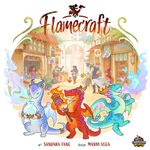
Um, but I didn't I didn't count it for this list. Also, some games that were mentioned by viewers that I haven't played are Propulolis, Point City, Minos, and Ganymede. Let's get to our panelists for number 10 on this list. This is Skyler, our family gamer picked the game Flamecraft. Skyler says about Flamecraft. My favorite game featuring ongoing discounts is Flamecraft. It is a game where players place adorable artisan dragons in town shops to boost their ongoing resource production. The discounts are the resource rewards, goods or coins that you gain by placing dragon cards into shops or by enchanting those shops, building a shared engine that benefits all players who visit that shop in the future. And I'm glad Skyler mentioned this because this is a special case on this list where the ongoing discount applies to all players, not just you.
So, there's some nice positive player interaction here. Skyler continues to say, "This creates a very low conflict environment where everyone helps to improve the town, making it awesome for families. The artwork is also a huge draw for my kids. They love looking at all the different shops and dragons. So, that is Skyler's family gamer pick for this list. Flamecraft at number 10. Um, I've put these roughly at the I put the panelist picks. I have played all of these. I put them in the order that that I like these games and I I think they are really good picks for this list. Next up, we have from our heavy gamer Dylan. We have Vic Counts of the West Kingdom. Dylan says this. This is my favorite of the West Kingdom trilogy, and managing ongoing discounts is a major key to success in the game. You can unlock a few permanent discounts by constructing buildings, but most of them come from cards on your player board.
The cards move across move across and off your board like a conveyor belt, so timing is everything. It is tough to decide when to pivot to a new action based on what discount icons are available on your board or waiting enhanced. They're kind of temporary discounts, temporary engine building, similar to the game London, I believe, does this as well. Um, however, it is really satisfying when you manage to pull off doing two or three of the primary actions well in the game. It feels like a reward for carefully planning out those ongoing discounts. So, I like that idea that they are ongoing, but a little bit temporary, but you can put them back into play and get them get those ongoing discounts back uh for a little while as well. That is our heavy gamer Dylan's pick for this list. At number nine, Vic Counts of the West Kingdom. At number eight, we have a game that I haven't played in a little while, but I'm glad that Aaron picked it. This is Starship Captains. I'm going to zoom in a little bit so we can see what it looks like. Here is the board for Starship Starship Captains, a game heavily inspired. Well, actually, I'll let Aaron talk about it. Aaron says about this. Um, Erin is our solar solo gamer panelist. Erin says, "Space the final frontier. These are the voyages of whatever you name your ship. It is in this not Star Trek Star Trek game.
You're the captain of a starship complete with a crew of mostly ensience enens and cadets. Over the course of the game, you'll be engaging with space pirates, repairing your ship, moving across the star ocean, upgrading your vessel with impressive tech and promoting your cadets to ensur out out loud. Ensigns. I think it's nsigns. We'll say nsigns to commanders. These last two are where the discounts really come in. Certain tech cards when installed on your starship. I don't know if I actually I have a tech card way down here. Here's where you would install something. Right there. Uh certain tech cards when installed in your starship will provide discounts to promote cadetses to ensign or or end signs to commanders depending on the card. Sometimes it makes promotion free.
Nothing beats free. And that is I I'm really glad that Aaron mentioned this. When you can pull this off, when you can get something not just at a discount, but completely free based on all the discounts that you've compiled, that does feel really good. And then once you have a commander, each commander can do two actions instead of one. And one of those actions is to order one of your enzymes back to the bridge so they can be used again this round instead of waiting to be able to use them the next round. This means you can potentially accomplish missions more frequently since they require crew to pay for them. It feels like cheating, which is probably the best compliment I can give to an engine builder. I love the way Aaron described this. Starship Captains number eight from Aaron, our solo gamer panelist. And last at number seven, one of my favorite games, Ark Nova. I didn't have a photo prepared for reasons that are entirely my entirely my own fault.
Here is Arknova. Uh, Caitlyn, our digital gamer gamer, picked Arc Nova. Caitlyn says, "My hus husband and I love playing Arknova. We play it at least once a week on board game arena. In Arnova, you can claim partner zoos in four of the five continents. And whenever you play an animal into your zoo that matches one of your partner zoos, you get a three credit discount on the animals cost. There are also a few sponsor cards that may give discounts on animals depending on their size. And thank you board gamer for calculating my discounts that I often miss when I play on the tabletop. And I love this. This is a little bit different than Starship captains because you're hardly ever getting anything for free in Ark Nova. But that order of operations puzzle even just for a $3 discount feels really good. Do I do I play it? changes like the the opportunity cost of the different animals that you're choosing to play. Do I play this lion now that I have the Africa discount for? Or do I play this other card that has a benefit that I want more that uh that I don't have the discount yet, but if I wait a couple more turns, I can get that discount so that I can play this other card from another continent for $3 less. I love those calculations and that order of operations puzzle in Ark Nova.
I want to give a quick shout out to the main game. So, I was thinking about this topic. I was like, surely there are multiple Stommyer games that use ongoing discounts. And Apiary came up. Apiary has it a little bit on a few of the tiles, but the only game I could think of that gives you ongoing discounts for the entire game after you gain them or for at least an extended period of time is Scythe. And Scythe does it with the uh the cost of the bottom row actions where at the beginning of the game, for example, on this player mat, if I want to upgrade, I need to pay three oil. But I can take the upgrade action to remove a cube from the top row, which makes a top row action benefit better. And I can put it on the bottom row in any of these slots, these available slots to make a bottom row action cheaper. So this is one of the reason one of my favorite things about scythe and I think a lot of people enjoy this element of scythe where you are making you're you're deciding the priority of when to take these actions and you're also making them potentially really cheap. So like early in the game I might really want a mech, but do I spend three metal on that mech or do I wait a few turns and focus on upgrading so that I can only pay pay one metal for a mech and then from now on I'm getting that mech, I'm getting two coins. That feels really good. So I I I love this idea of ongoing discounts with multiple options of what you are getting those discounts on inside.
However, I didn't count it for this list. Instead, I jump to number six, Hadara. Hadara does something that two games on this list do. Hadara is a card drafting game where each card has a different cost. You can see it at the bottom here. The this green card, for example, cost three. However, you get a discount, an ongoing discount for this green card for every other green card that you have. So, it encourages you to lean into certain colors. Um, but also there are other reasons in the game that the game encourages you to diversify your strategy and not just go after one or two specific colors. So, I I really like this mechanism. In fact, the next game on this list, number five in the list, uh, Zenith or Zenith. Someone told me how to pronounce it. It's Zenith or Zenith does nearly the exact same thing.
When you play a card in Zenith, um, you get a discount on the cards cost based on how many cards of that color that you already have. Zenith uses this mechanism, I think, in some really clever ways because uh there are certain times in the game where you get to remove your opponent's cards and it is it doesn't hurt them much because most of what that component that opponent has gained from that card, they've already gained it except for that ongoing discount. And so it is like a a way to uh push back at the opponent and to interact with the opponent a little bit without hurting them too much. But it does sting just a little bit for that opponent to have to pay that cost in some other some other way. If they want to pay like currently they have two purples out if they want to pay a two a five cost purple card. Currently it would only be three but if you take away one of those cards they have to pay a little bit extra. So I really like how Zenith does that. Number four, this is the so I I try to avoid games on my list where um it was very like card or tile specific for getting the ongoing discounts rather than having a game that is largely built around giving you ongoing discounts where it's not situational. It's not circumstantial.
But I did pick one game on the list. Veil of Eternity is a game that I really enjoy. And I think there are enough cards in this game that give you ongoing discounts for playing certain colors of cards or certain types of cards that I thought it was worth mentioning here. So, this is one way that you can give ongoing discounts. Don't give players a default way to do it. Just have a variety of cards that give them discounts on based on certain types of cards, certain tags, certain colors of cards. There are a bunch of ways where you can say it's this is an ongoing discount for this specific subset of cards. That is Veil of Eternity. And number four, at number three, we have space base. So, this is built into the core system of space base. So in space base on your turn you are often acquiring you're buying one card based on resources that you've accumulated since it's been your last turn because at the end of your turn after you buy that one card you have to reset your money down to zero. However, this is the ongoing discount. You also have you have these three tracks down here. You have the money that you currently have that you spend. You have victory points uh down at the bottom and in the middle you have it's like economy. I forget exactly what it's called, but what this does is that it says if you have economy of of five, instead of resetting your coins down to zero at the end of your turn, you reset it to five instead. And so it is essentially an ongoing discount for every card that you purchase um from then on. And if you focus on improving your economy, then that discount gets better and better over the course of the game. And there's only that one resource that you're spending. You're only ever
spending coins in space. So it unlike another game that I'll mention later on that has a lot of different types of resources which is viable too. I kind of like in space that you just have that one resource and you have this also one way to focus on um discounting every time you it's essentially a discount on every time that you spend that resource. That is space base at number three. Number two we have perhaps the originator for this game. I'm sure there were games before Splendor that had ongoing discounts, but I think Splender did it so well and so elegantly that it really got me at least and perhaps other designers thinking about this idea of ongoing discounts. So in Splendor, you are spending these temporary resources, these gems to acquire cards, but every card that you buy has an ongoing resource at the upper right of the card.
So, for example, if I somehow save up seven uh uh green gems and three red gems and I buy this card, it gives me from then on a red gem that I can spend on my turn. So, instead of spending a red gem token, I just have a red gem red gem to spend on my turn. Um, and that feels great. So, you could you could build your engine to focus on different cards or different colors. You can go wide, you can go tall. I I really like this constant sense of progression in Splendor and the choice of, you know, do I spend these tokens that I have now or do I wait till I get a card that I can discount it and not have to spend this gem? And crucially, I think one thing that Splender and a couple of these other games do is that it gives you a limit to the number of resource tokens that you can have because one of the things you can do on your turn in Splender is just to gain some some gem tokens. So by giving you that limit, it means that you can't just stockpile a huge amount and that would decrease the value of the ongoing discounts. Rather, uh there's a limit to those resources.
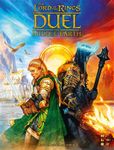
Of course, there are many different versions of Splender. Now, there's the core Splender that I'm showing you here. There's the Marvel Splender, there's the Pokemon Splender, there's Splender Duel. I think my favorite of the bunch is probably Marvel just because it has some fun uh endgame mechanisms based on the Infinity Stones, but I think all of them. I would play any of them. I I enjoy all versions of Splendor that I've played. But last at the top of the list, and this is the game that got me really thinking about this topic, is Lord of the Rings Duel for Middleear. And in the same neighborhood are Seven Wonders and Seven Wonders Duel. I said Splender was the originator of this mechanism. It might be Seven Wonders. Seven Wonders, I think, may have come before Splendor. Um, but Duel for Middle Earth, the Lord of the Rings version of Seven Wonders Duel, really got me thinking about this decision space of do I spend money on uh a card that I want now or do I wait to get the resource that a card provides so that I don't have to pay it in the future. And a great example is in this photo right here. So, I think the clever thing that dual for Middle Earth does is that it says for any anytime that you see a cost. So, here's a skill icon right here. And there are a couple different categories of icons, a bunch of different icons basically that you can you can have in your tableau to spend to get a card. So, I can either I if I have this fist icon, this fist skill, um I can gain this card for free.
Like it is it is a discount of of this resource to gain this card for free. Um, or I can so I I'm sorry. So I can I can gain that for free or I can pay a coin to replace this icon and gain the card. So coins are a wild resource, a wild expendable resource like the gems in Splendor that I can use for this purpose. Or I can gain this card right here that gives me that fist skill or that power skill. And on my next turn, I could try to get this card. But the reason the order of operations is so tense in this game is not only am I deciding the order of operations for the value of currency, but I am having to wonder will my opponent take this card before I even get another turn. So it really gives me a tough choice here like how much is this discount worth? How much are my coins worth? And how much is my my entire turn worth? Because the other my opponent might take the card that I want. Here's another one. and duel for Middleear does it just like seven wonders duel and seven wonders where it also uses tags to give you free options later. So if I have this card, I have this horse tag and later on if I see a card that has a a horse icon on it in another place on the card. Let's see if I have any examples here. No, no examples here. Then that means that I can just gain that card for free because I have the horse tag. That is another way that this gives you kind of it the feel of ongoing discounts even though it is just a free freely gained card thanks to you having that tag. So it does it in
multiple ways in dual Middle Earth in ways that I think are really clever. So that is going to be my top pick for games that offer ongoing discounts to players. I'd love to hear your examples or if you want to go deeper into any of the other games that I mentioned but didn't discuss in full. I'd love to hear your thoughts on when you think ongoing discounts feel really really good in games. And even just talking about this is a reminder to me that I want to put this in more of my games because this I this is really one of my favorite mechanisms that I don't think enough about and I love it when I have it in games. I love the puzzle of deciding do I try to get the the thing that is discounting or do I just get the thing that I want right now at the at full price. Um I love that decision space in in games that offer on discounts. So yeah, let me know your thoughts in the comments below. I'd love to hear your perspective. Thanks.