Top 25 Favorite Mechanisms of 2025 (Part II)
Games in This Video
10 games are featured in this video — they unlock as you watch.






Transcript
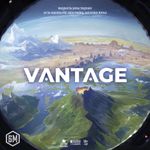
Hey, I'm Jamie from Stonemire Games and today I'm going to talk about my top 25 favorite mechanisms from the second half of 2025. Uh, in fact, I just noticed that's 2025 mechan 25 mechanisms from 2025, but it's actually more than that because this is the second half of the year. Um, I already did a video about the first half of the year, my favorite mechanisms from games that I played or talked about in that first half of the year. So, today I'm doing the second half of the year, and I've broken it down into a couple different segments. And let's jump right in. I'm I'm not going to show a an image from every game that I talk about because there's a lot of games on this list, and I'm going to go pretty rapid fire. But, uh, I'll start out with a section about Stonemer games. And the game that I'm going to highlight here is Vantage, but I will share the favorite mechanisms for the other games that we released in the second half of 2025. So, in Vantage, uh there's actually two things I want to mention. One is that actions always succeed in Vantage. If you start to take an action, if you say if you're at this location, you say, "I want to try to repair this uh this ship wreckage," you are going to succeed at doing that. Um the challenge is how much time, morale, and health that you lose along the way.
And you're trying to do various things in that action to mitigate not losing those the time, health, and morale while you're doing so. Um so I really like this style of uh of um action success in adventure games because when I make a ch a choice in an adventure game, I am invested in that choice. I don't want to invest in it and then just fail. I'd much rather know that I'm going to succeed but have to deal with the challenges I face along the way. The other part of this that I'd like to add is in Vantage a major core mechanism of the game is that you see your location from a first-person perspective. You're not looking at it from a top- down bird's eye view like in many many other games. Rather, you were seeing it from a first-person perspective and only you can see that location. And that's important for a number of reasons uh in terms of uh the fact that when I look at something, I see something differently than than what you see. It encourages table talk and communication because I'm actually talking about what I'm seeing to other players rather than just showing it to you. Um and that also takes time if we're passing that location around the table. There's a whole list of reasons that I have on our website about why this is really important, but I really like the idea of the limited information of I can see something that you can't see and how that encourages communication and cooperation uh rather than discouraging it by other all players being able to see that information. So, I really like that about Vantage. Um, origin story,
I'll pull this since I'm talking about a different game now. So, a couple different games released in the second half of uh of 2025 from Stommyer Games. There's origin story which is a tableau building uh trick taking game and the main thing I like here is the idea that there's tableau building and engine building in a um in a trick- taking game. It's very rare in trick- taking games to have a sense of progression. You actually get stronger from the end of the game from compared to the beginning of the game at the end of the game. You're much stronger. And also crucially, even though your tableau is getting stronger and stronger, you have uh a limited number of stamina tokens that you can use to activate those different powers. And what that does is it means that uh you have choices each round as to how you want to actually employ your engine, how you want to activate it. And it also gives you some room for for flexibility. It means that you might have some cards that are circumstantially good depending on like if you are going to try to be a hero or a villain that round. Um, and probably some cards that are circumstantially less good based on like the random hand of cards that you got. And so the stamina system paired with the engine building means that you're almost always powering up cards that are relevant to your current situation um and and not using the cards that are less relevant to to the current route. That's origin story in Tokaido Duo. Um, I really like in this game that there is a little dice draft in the game and each of the three dice that you're drafting uh relate to
the three different characters in the game and those characters are race to the end of the game. So, it means that you might try to focus on a specific character and race to complete their all their goals and trigger the end of the game and potentially win. Um, but your ability to activate that character is dependent on the other player's choice if they are going to draft that die or not. Because if they draft that character's die, you can't draft it that on that turn. You have to draft another die. So, there's a really nice built-in player interaction uh that's tied to a player's ability to progress specific characters or to go too deep into certain characters. Um, yeah. So, I really like that about Tokato Duo Duo. And last, we have Smitten 2. Two sequels to games here. and Smitten 2. Same mechanisms as Smitten one, but all new card abilities. Um, and I still I think my favorite mechanism in in Smitten is the idea it's a fully cooperative game.
And the key choice is who's essentially you're asking whose turn is it? Whose turn should it be right now? Because in Smitten, you are one player is playing a card and that card has instructions that the other player must follow or you lose the game. And you have limited information. I have cards in my hand that I can't tell you about. You have cards in your hand that you can't tell me about. All you can say is things like I I think I can play a card or uh or I can't play a card right now. Um or I don't want to play a card right now. So you're you're the core cooperation of the game is deciding whose turn it is based on limited information, which I really like. So those are the Stommyer games I'm going to discuss today. Let's shift over to digital games. There are a few digital games with mechanisms that I played in the second half of the year that I really really enjoyed and I'll pull that up on the screen here. Here we go. So, the one that I'm going to highlight is Inkborne. This is a game that I am involved with as a consultant.
Um, it's a deck a digital deck building roglike game and a lot of mechanisms in this game that I really enjoy. Um, but I think my favorite is how the enemies that you're fighting, especially the big bosses that you're fighting in the game, they can impact your deck. They can add these purple cards to your deck that uh that clog up your deck that um and in inorn you can only play a certain number of cards on your turn. Right now, this character has four energy. they have four uh uh they can essentially play four cards uh or four energy worth of cards. So they're four some cards that are cost four energy. Um so the purple cards oftentimes do something bad if they are left in your hand at the end of the of of your turn or they get just get stuck in your hand and clog up your hand. Um and when you play them they often do a bad thing but you can play them to get out of out of your hand.
that I think leads to enemies that feel unique and distinct and like they're act like they're actively engaging in you and your ability to progress uh rather than just dealing damage to you. I like that. But I also really like that they how they tie to vant to uh Inkorn's combo system because in Inkborn, you can see up here if you play certain combinations of cards based on icons on these cards, you can see like this icon is shown here. There's also an icon on the purple cards. if you play certain combinations of cards, you get a powerful ability that triggers when you complete that combo. Um, and so basically this is saying if I play two purple cards in a row, I get a special ability. So I really like that this combo system is um while it's typically played to the cards that you want to play, all these red cards, that it also applies to the purple cards. So, it's a reason another reason to kind of just suck it up and play the purple cards uh and get them out of your hand because you still get you might trigger a combo as a result of playing those purple cards. I think that's a really really neat system in Inkboard.
Two other uh digital games that I played in the second half of 2025 that I really enjoyed were Dispatch and Dredge. And in Dispatch, this is a game where you control a group of of uh superheroes that you're dispatching to different areas of the city. And I really really like this dispatching miniame that happens. Um there it's also a narrative game. That's a whole other system in the game. But in particular, I got excited when I whenever I had this dispatching game to play. Um because you're given limited information about what types of heroes that you need. Like an issue might pop up in the city that says there's a fire um on a on a on the top floor of a skyscraper. Who are you going to send to deal with this problem? and you have to decide, okay, well, which characters are good at dealing with this type of problem based on their stats.
But the problem given to you doesn't say you need someone with strength five and and intellect six. You have to kind of decide which of those traits are important for this type of challenge. Um, and there's also a timing portion of this where you're deciding, okay, which heroes are like h how deep into the time that I have to solve this problem do I choose to send heroes to go deal with it. Um, you can also group heroes together. You can so you can send a single hero and hope they deal with it. Or you can group mult multiple heroes together to deal with it and have a better chance of dealing with it, but then you can't use those heroes for other challenges. And you have heroes that are all of your heroes can be upgraded based on the experience they gain from completing completing these different dispatch challenges. And so you're also deciding, okay, which of these heroes are ready to upgrade? And so I do do I send them so I can they can upgrade in a second or do I need to focus on this hero that isn't ready to upgrade, but I want to get them ready to upgrade. Lots of great choices made in real time in this dispatching mini game.
There's also dredge. Dredge is a fishing game and the mechanism that I talked about in Dredge is I really like the idea of these soft and hard limits that the game gives you. Uh the game says uh you can if you want stay out and fish all night but bad things are going to happen at night. Uh and so you have this decision of do I come back at night and waste all that fishing time or do I stay out at night and see what happens at night, see these bad things that happen and see how I can deal with them, see how bad they really are. Um, I like those soft and hard exploration limits that the game gives you. So, let's jump over. So, those are the digital games. Let's talk about some older games that I played in the second half of 2025. And we will start out with the highlight that I'll mention, which is Transformers, the deck building game.
And the mechanism I'll focus here is the spatial deck building. The game doesn't actually come with all these giant beautiful Transformers miniatures. rather you have a little token, a little standandy that you move around and you can as you move around you can reveal cards and you can acquire or fight cards based on the location where you where you are at that time and location is the card itself. So if I am if I have a character here then I can interact with that specific card. I can I can gain it. I can fight it. I can reveal it. Well, first I I would need to reveal it, but I really like that the the tableau or or like the river of cards in this game has a spatial element to it. You're actually moving around kind of a sense of a world to reveal and explore and interact with the cards on the table. I think this is a nice addition to deck building. Uh a bunch of other older games played in the second half of 2020 uh five. There's Night of the Ninja, which is a large large group deduction style game, like hidden roll style game. But I think that the really nice twist to this game is uh you have dynamic teams. So each round, you are going to have different teams of players and you won't know who's on your team. So it's a little bit like the resistance, but where the team changes round to round, which makes this a cooperative a competitive game for an individual winner with teams that change throughout the game. I I thought there was a really neat twist, this dynamic teams concept in Night of the Ninja. In Kaly Malala, this is a worker placement
game where when you place a worker onto a stack of other workers, every worker in that stack gets to gain one of the adjacent benefits. Um, and uh, so I thought that was really, really clever. Just that's that's the full mechanism right there. in the game Loot, another worker placement game that uses spatial worker placement um in that you are placing workers adjacent to any other worker that has been placed on the map in loot. And uh and so based on my choice as to where I place a worker, that increases the range of possibilities as to where I and other players can place the next worker. So, it's this uh this feeling of kind of like branching out at this as as more and more players place workers. There's also a bunch of decisions going into like where you place workers. Not only are you gaining resources, but you're also trying there are spatial goals in the game. And so, not only are is my worker placement impacting my ability to achieve those goals and to get resources, but it also impacts my ability and other players abilities to reach some of those spatial goals.
Panda Royale is a dice rolling game where every round you're drafting a dieice and then rolling all dice that you have and scoring points from those dice that you roll. And I've I had a blast playing this at Geekway to the West. And I really really like this element of um rolling plus one die per round. It's something that we've seen in a couple other games, too. But it feels really good to start out rolling just one die and to have the sense of progression where the next time I gain a die, I'm rolling both of those dice and then I'm getting a third die. drafting the third die and rolling all three of those dice. It's all happening except for the draft, it's all happening simultaneous, this rolling part, and by the end of the game, you're rolling this big chunk of dice, this big handful of dice. I really, really like this sense of progression from adding die after die after die each round. In the game, Come Together. I love games with track advancement and Come Together did something really clever where one of the tracks in the game is a track that you are building through this music festival. Um, so I really like that mechanism, the idea of building a track and then advancing on that track and come together. In the game, Ancient Knowledge, I really like the the uh the central card display and how it turns over throughout the game. There are three rows of cards. Each row is three cards. Uh, so three rows, three cards each. Whenever you gain a card from one of those row rows, that leaves only one card left in that row. you wipe that card and put out three fresh new cards.
So, you're not constantly like sliding or shifting cards around. You also are not constantly refilling it. You are doing it just enough that it's not annoying. Um because I think sometimes card refilling and card refreshing can end up being a little bit annoying in games. So, I really like the way that Ancient Knowledge does that. And last in the slightly older games list, Fairy Ring. Fairy Ring is a drafting game with a spatial element as well. I I feel like I'm saying spatial a lot in this section. Um where you are drafting a card in in fairy ring. And when you play that card, not only do you play that card, but you also move your fairy around the ring. And the ring is all players cards around the table. You're moving them through all these all every card that every player has. and you when you land on a a stack of cards um that the player who controls that stack, they gain the benefit of that card type. And if you have that card type in your tableau, you gain the benefits of that type of card from your tableau. So, some nice um positive player interaction there and just a nice interaction space in a game of drafting, which normally the interaction in a game of drafting is just taking cards that other players can't gain. So, I really like this addition to that. Okay, let's get to new games and talk about some honorable mentions here uh before I get to the top five new mechanisms from 2025. So, uh at the top of the list of honorable mentions is Luier. So this is a a musical instrument
repairing game or building repairing game. Um where you have these people who come to you saying I need an instrument or multiple instruments to be built or repaired. I think it's mostly repaired. Um and what I really really like about this game, you can see in the cubes here is this sense of uh passive progression in the game. I have this in my game Vidiculture and I haven't seen it in many other games but I really like it here. So you you gain one of these cards and then you have a a token that corresponds to these four slots on the bottom of the card. And when your token progresses, so it will passively progress each round, it'll move forward each round and you'll gain the corresponding benefit. Um but there's also a negative because if you get to the end, you get to the end here and you haven't completed what this person has asked you to do, then you uh then they go away. They're they're disappointed in you and they disappear. And so, not only in addition to this, not only do you have this passive progression, but you also have ways to reset the token because if you repair one of their their instruments before it gets to the to the end of the track, you get to reset the token. I believe it's to the beginning of the track. U it kind of resets and you get the the possibility of that passive progression again. Um, so it's these lingering people who are kind of hanging out waiting for you to repair their instruments and as you do, you reset the token that gives you the benefits they give you along the way.
really really clever system of not just passive player, not just passive progression, but also manipulating that passive progression so that you get it for longer. Really clever system there in Luier. Uh the game Hot Streak. In Hot Streak, you are adding cards to a shared deck of cards and that shared deck determines how the different mascots that are racing in this game will uh will proceed, if they'll fall down, if they go left, right, if they'll move forward. And so it's a wacky game. You don't have full agency at all in this game, but I really like the combination of the betting in the game combined with the fact that you are influencing which characters are uh are which characters and how they are moving through the cards that you're putting in the shared deck. In the game Deep Regrets, this is a kind of a a creepy fishing game.
And I I I want more games that encourage encourage you to look at the art in the games and learn something from that art. Vantage, my game is full of this. Again, going back to that first person perspective that you're looking at. Um, but in Deep Regrets, I really like the game does this with the shadows of the fish because the shadows are different sizes and so if you pay attention to the shadows on the cards, you can know the size of the fish. And yes, they could have just put a number on the card to say, "Hey, this is a big fish." but I feel like it's more thematic and more mechanically sound to have it integrated into the art instead. So, I really like that about Deep Regrets. The Old King's Crown does something that I really like in games that have combat because I usually stay away from combat when I play games, but the Old King's Crown says that you must participate in combat in in the battles. And not only that, but you must participate in each battle that's happening each round. So, you must contribute a card to each of the uh what uh three different battle areas that are happening each round. I I like this concept in in a game that says we're you're going to be fighting, you're going to have to battle um and you must do it. You must contribute a card to each of these battles as as this as the game proceeds. It makes it a core part of the game instead of a choice that players may or may not interact with. In the game Mezos, I really really like the event system in this game. The event system in Mezos has uh so it's just one deck of cards that has a bunch of different things in it. Among them some event cards and when event when an
event card comes out into that card row, you don't really do anything with it yet. It's just a signal to say, "Hey, an event is coming up." At the end of the round, that event will still be there because you can't gain event cards. It will slide down into a second row. And it still doesn't trigger until the end of that round. And so you have some time to see these random events that are happening. Um time to prepare for them. And they are just integrated into the core deck. So you don't have like a separate event deck that you need to remember to use. In the game Venture Angels, this is an auction game where you are uh bidding on different projects that are happening. And I really like the little twist on this auction where if uh if an auction is too overfunded or if it's too underfunded, if it doesn't have enough funding on the auction, then uh then no one win, no one gains like the project doesn't happen. So no one can actually gain it. And if it is the most funded project, then um I can't actually remember the thematic reasoning behind it, but if it if there's too much funding behind that project, then uh then it also doesn't matter for the auction. So you you want this nice balance of you you want to win the auctions that are funded but are not uh are not too overfunded. Um in Venture Angels, in the game Thieftdom, I have two more here in this section of the video. In the game Thieftdom, this is a game about kind of stealing and pickpock pickpocketing. And I really like that there are pieces that are moving around the board that you can steal from as
long as they're not looking at you when you steal them. They have like little meuples with eyes. And so you're trying to steal from the side or the or the back of them as they're moving around. This dynamic ste uh theft system, heist system. And last uh the most recent game that I played, Jingle Bell Roll. This is a pusher luck game where you're gaining points over five rounds, but there is an instant win condition in the game where if you roll seven bells on your turn, you just instantly win. And so I like that this can lead to some memorable moments where someone wins the game much earlier wins and ends the game much earlier than it normally would. And it get keeps players in the game at the end of the game because even if you've fallen behind on points, you have a chance to still win the game on your final role. Finally, let's get to the top five. and I will show all of these on the video. Let's start out with Panda Spin. So, Panda Spin is a card shedding game where you're trying to get rid of cards in hand. And this game was a great reminder to me that the direction of the cards in your hand can matter.
Essentially, similar to like for shuffle in a way, um you can build two cards into each card even on one face of the card. So, in in Panda Spin, uh you have these the you start out with cards um in this standard orientation, but there's ways that you can level up cards to spin them around to be on this side where you can see there's kind of a bluish purple um color, and that indicates that you're on the the spun side of the card. It's more powerful now. So, not only does this give you two cards in one, but it also gives you a sense of progression in the game, uh, because your cards are getting more powerful as you play in Panda Spin. Really, really like that. At number five, at number four, this is the game Big Su. Um, this is a panorama building game and it does something I think really clever with the discard pile where the top card of your discard pile.
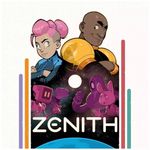
Basically, it's a game where you're you're spending cards as resources to play other cards, but the top card of your discard pile has a resource that you can use. So, the as long as that card is at the top of of your discard pile, you can use it to play other cards. So, if I have a car, I don't basically if I like if I have a card that requires three water, I only need to spend two water cards from my hand if the top card of my discard pile also has a water resource. I really like the use of that top card of the discard pile, especially in a game where you're spending cards as resources. Um it it feels like um less of a I don't want to say a waste, but uh less of a sacrifice because you're still getting to use that top card. That's big number four. At number three, we have Zenith or Zenith. Um, this is a tug-of-war game where crucially and so cleverly when you win a tugof-war, it doesn't lock into place. Rather, it gives you a point towards progressing the end of the game and then it resets.
And so, it means that you the tugof-war is continuous throughout the game. So, for example, if this uh this uh teal this teal category over here with one more move, this teal player is going to win this tugof-war. But when they do and when they do, they'll get a point, which is great. It's a points are huge in this game. You only need a few points to win the game. Um, but the token will reset which keeps both players in the game. And it means that the teal player or this player who's who's won that tug of war, they can still continue to try to win that tug of war again. They can win it multiple times, but it also gives the chance for the other player to have it have a chance at focusing on that tugof-war. So, it's this dynamic tugof-war mechanism in Zenith. And number three, Galactic Cruise has a lot of clever mechanisms in the game. My favorite is the card refresh system. You have these tech cards over here. I think they're called tech cards. And there's an action where you or one action where you can go and gain these tech cards, but there's another action where you can reset these cards. Um, so instead of the game automatically resetting the cards, you can you need to take an action to reset them, but the game encourages this by saying that for each exposed slot, you gain a resource. And so you could reset the cards a little bit early and gain two resources. Or you could wait until all four cards are taken and gain four resources for resetting. So it takes something that would normally be like upkeep or something to remember in a game. Got to reset the card row at a certain time. And it makes it a fun thing for players to do. They want to re they want to be the one to reset the cards because they get resources when they do. So that's Galactic Cruise. And
last, number one, Apostocracy. Uh this is a I don't know. It's there's a lot of things going on in this game, but the thing that I really like the most about it is that you are using essentially a standard deck of cards throughout the game in a mini deck building mechanism to gain access to different portions of the board. Kind of like worker placement. You're essentially worker placing gaining doing worker placement using these cards in hand to gain access to those different worker placement action spots. And some of those action spots give you better or different cards in your deck and in your hand. And then at the end of the game, you get to use seven of those cards in a game of wis, which is essentially very streamlined trick taking. Um, so it's just such a clever use of a of a deck of cards and notably here a standard deck of cards because you're using them during the game for the worker placement. You're gaining better cards throughout the game and then you're using those cards at the end of the game for an impactful game of of wis of trick taking. I think this is so clever in Apostocracy. I really really love this mechanism.
All right, those are my top 25 favorite mechanisms from the second half of 2025 for games that I played and talked about in the second half. I'd love to hear your thoughts on any of these games that you would like me to highlight more or that you would like to highlight more. And uh if you played a game in the second half of 2025 that had a mechanism that will really impact you as a player and or as a as a designer, I'd love to hear about it in the comments below. Thanks.