Top 10 Tableau Builder Games
Games in This Video
9 games are featured in this video — they unlock as you watch.



Transcript
Nick, I want 15 to 20 to 35 cards. I want them all on table. I want them spled out. I want them to combo with each other. Do you know what kind of games those might be? Maybe What's up everybody? I'm Mike. I'm Nick.
We are the brothers of Marath and we are talking about tableau building games. games where you are often, not always, going to have cards that are going to be played out in kind of this ever growing situation. Many a times the cards are going to interact with each other, combo, build synergies, build kind of an engine for yourself, activate those cards, exhaust those cards, do all different kinds of stuff with them. It's just a lot of fun stuff to do. This is one of our favorite game mechanics. I think it's a lot because it fits into so many different kinds of games, right? I think it can fit into stuff. So, we we tried to kind of find a a nice wide range of types of games that have Tableau building kind of at their core uh near their center, and we're going to talk about them right now.
Our number 10 is going to be Tales of Glory. This is a game that I really feel like no one talks about. Actually, no one really talked about it when it first came out either. This is one of those games that kind of was an evangelism game for us for a while because it kind of came out and then like seemingly no one ever talked about it. No one ever uh really played it, but it's a really fun game and it's a tableau building, but the tableau is these tiles that you are drafting. Uh it has kind of a common pool of tiles. I think numbered 1 through eight and it's a simultaneous selection game as well where everyone is choosing which tile they want to build out into their tableau of a kind of like a dungeon that you're going through. And so you are doing a simultaneous selection. This is one of those games where the the simultaneous selection is really really tense because of the fact that like if you choose the same tile as someone else, neither of you gets to choose right away and then basically everyone who chose a unique number gets to choose those and then the people who chose um the same number have to choose from whatever's left. And so it's really one of those things where it's like you really don't want to match with people.
But you can also use that to your advantage as well. But nonetheless, then you're getting these tiles and you're putting them down in your tableau and there's all these different kind of connection points. They're just square tiles and you're trying to connect them together. There are various like baddies in there that you need to put like heroes next to to defeat them. There are like chests that you need to get keys to unlock, but it's all about tableau building and connecting things together and like getting things kind of in the right space to score the most points. It's really really fun. Really enjoy this game. And this is one of those games again like we said that like kind of came and went like no one seemed to really talk about it. No one seemed to ever play it but we really liked it and so we kind of evangelized it for a while. Um and it's just a really solid tableau kind of simultaneous selection um game that's really really good. So if you ever see it out in the wild, give it a shot. I think it's really really fun.
You should try out Tales of Glory. Next up on the list is Wingspan. This is a fantastic tableau building game where you are bird watchers and you are trying to uh bring birds near you by feeding them the kind of foods they like and stuff. They're going onto your player board which has kind of three areas. You have kind of like the woods, the grasslands, and the wetlands. Certain birds are are going to want to be in certain areas and you are going to be building out this tableau of these birds, many of which have these kind of triggerable powers. and you are going to be activating the rows of your your kind of player board, which are going to be the kind of main actions you can take. One of them allows you to gather food. Another one allows you to lay eggs or draw more cards. And the more birds you have in each row, the stronger that action becomes. And then on top of that, again, many of these birds have a brown uh banner on them. And when you go and take that action, you will activate any of the birds on that row that have a brown banner. So now I'm getting a stronger version of the action and I'm triggering all of these different abilities. And so you really feel the kind of ramp up effect that you kind of hope to see in these tableau builders where things kind of chain together, kind of combo off of each other and kind of power up each action. So you're being more and more kind of efficient as you go. Uh, this is one that, you know, since it came out has kind of been one of the kind of quintessential Tableau builders with beautiful art and stuff
and has a great appeal of theme and there's been now several versions of these types of games. It's just been a uh big hit. Number eight is going to be one of our favorite games and specifically one of Mike's favorite games. This is Ginkopoulos. Ginkopoulos. Also Steph Hodge. Shout out to Steph Hodgej. This is Steph's favorite game and Steph is the one who evangelized us to this game. Um, we really really like Ginkopoulos. Skinopoulos uh it kind of tableau building again is is not the entire purpose of the game but tableau building is a very big part of it because this is a game where you're kind of building out this like kind of like futuristic eco city kind of thing and you're kind of building it all out together and there is like area control, there's tableau building, there's like resource management, there's a whole bunch of different stuff in this game but the tableau building is a big part of it because you are getting these cards and these cards are going to be kind of dictating what you're going to do and you can either kind of like expand the city, you can um or you can kind of build up in the city and kind of build it taller and that's going to take again various resource things like that. But a lot of times when you build up in the city, you then get to put cards down into your tableau and those are going to give you ongoing powers. And the ongoing powers are all related to the various things that you're doing in the game, which of course makes sense, right? But it's like, so one of the ongoing powers will be like every time you get to place you place a tile in the city, like a tile up in the city, not expanding it, you get to activate all the cards that have that symbol on them. Or if you're doing the thing where you're expanding the city, you get to activate all the
powers related to that action. And these really, really stack where it's like, oh man, every time I'm expanding the city, I'm getting to activate like five or six of these cards. and they all do just you're just getting more and more resources, more and more points, more and more tiles, all this different kind of stuff. It's really, really good. It's a really the epitome of like an elegant game. This game, like we said, has a lot going on, many different mechanics, many different kind of like things going on, but it just works. It's buttery smooth, and it just works so so well. It's very, very elegant. It's smooth. We love it to death. It's Gopouloolis.
Next up is going to be space base. Now, this is interesting because you actually start off with your tableau of cards on the table. You have these kind of uh ships that are making up your your fleet essentially. And what you're going to be doing throughout the game is you are going to be actually kind of upgrading and changing your tableau. Not so much building one, but kind of manipulating one that already exists. This is ultimately a game where you're going to be rolling dice. The uh two values of the dice can be combined or used individually to activate the different sectors. They have numbers 1 through 12. So if I roll a three uh via one and two, I can either activate my first and second sector or my third sector. So you can add them together. And as you buy uh more ships, they are going to replace other ships in your tableau. Those cards are then going to flip upside down.
You're going to tip them uh you know 180 them and tuck them behind your board. And now these are going to be things that you gain when other people on their turn roll those sectors for you. So you again are kind of getting this big ramp up of uh you know money and income and points and stuff that you might score when it's not even your turn. And that's something we always love about this game is you're dialed in and paying attention the whole time because there's things to be gained. Uh you can gain huge amounts of things when it's not even your turn. And then when it comes around to your turn, now I have all this money and I can buy maybe a level two or a level three uh ship card and kind of build up my tableau so that when I hit this specific number, I really get a lot out of it. Or, you know, I've built up the seventh uh ship I've replaced three or four times. So now if someone else rolls a seven, I'm getting all of these different uh kind of bonuses and stuff.
So it's really really satisfying. Number six, I think everyone knew was going to be here and this is going to be terraforming Mars or more specifically for us terraforming Mars Aries Expedition, but Terraforming Mars is a classic at this point, a modern day classic tableau building game. There is a board in base terraforming Mars, not so much in terform Mars Aries Expedition, but the board is very much secondary to the tableau that you're building. You are getting these cards. These cards like project cards. They're kind of like cards that you can kind of activate over and over and over again. blue cards. They're like one time use cards with like your red cards, your event cards or whatever. And you're building out this big tableau. And this is kind of the epitome of a tableau builder where all the cards have an ability. They all have tags. Many cards require certain tags for you to play those cards, things like that. They're going to allow you to manipulate the main board so you can like make cities and make forests and all this different kind of stuff. But it is the classic tableau builder. Got a lot going on. you really are building your strategy with the synergies of those cars inside your tableau. It's really really outstanding.
We again prefer areas expedition because there are certain parts of the game like the whole board part of the game. I don't really care about to be completely honest. I am here for the tableau in terraforming Mars and Terraforming Mars Aries Expedition just kind of simplifies that. It gets rid of a lot of the board. It gets rid of like the milestones and the awards, which I honestly don't like in the main game. And it has a nice kind of follow mechanism where one person chooses an action and kind of everyone else gets to follow them in that kind of Race for the Galaxy way, which is really, really fun that I really enjoy. So, it kind of keeps all the stuff that I really like in ter Mars, which is mostly the tableau building, and kind of gets rid of all the stuff that I either didn't care about or didn't really like that much. But, nonetheless, Terraforming Mars, Terraform Mars, Eric's Expedition, they're both outstanding. They're both great Tableau builders and kind of I think of one of the main games that people think of when they think of Tableau
builders. All right, next up is Pirates of Marbo. This is based on its parent game, Marbo. And this is a a little bit more of a shorter, simpler version of Marrabo where you are going to be sailing through this fleet. Uh this this you know the Caribbean is comprised of various cards. now and you're moving from card to card to interact with them many times purchasing cards to put into your tableau. There's basically three categories of cards. There's cards that have an instant effect. They kind of get played and they stay out in your tableau because there's other cards that might reference the type of card it is, whether it be a ship or a person or something like that. There are these kind of red banner cards that are going to be uh you know extra strength when uh doing a raiding action. you're looking for treasure, doing pirate stuff up, or you might be able to move further if you're using your explorer or get discounts on cards and things like that.
And then there's these kind of uh gray quest type cards that'll reward you for for having certain uh you know, collections of types of cards or treasures and things like that. So, you're kind of moving through and then stopping off of these islands uh to then go and do your raiding actions. Again, you're doing pirate stuff. You're trying to get treasure and bury it and all those types of things. And oftentimes the stuff that you've been purchasing and acquiring that tableau of cards is going to give you boosts and then also income at the end of the round. So this is something that I really enjoy and something I enjoy in Maricop as well is if you have a card that does, you know, a discount on future card purchases, for example, if I get multiple of those types of cards, their abilities all stack. So I, you know, could have it be where I'm now saving $5 on every card I purchase, which is pretty massive. And I always really enjoy the ability to kind of specialize. And now that the the cards that you're interacting with are all kind of down on the table and you're moving your ship through to kind of navigate. I feel like I can really chart a plan for myself. I'm going to get this card to boost up this thing. Then I'm going to go raid because now I get plus two strength when I'm going for gold or something like that. And I can really kind of cultivate a strategy both on what I see on the table in the center of the, you know, the center of the table where my ship is and then also with the cards that I've collected that I've been kind of building to kind of boost my
actions. You know what goes really well with tableau building? Drafting. And it's a Wonderful World is a great drafting tableau building game. This is a game where you are um it's funny because your tableau is is really just resource generation really. So this is a drafting game where you are going to be drafting out a hand I believe seven cards. So you have a hand of cards. You keep one, you pass to the left or the right depending on the round. Take one of those cards and you keep going around and around and around until you everyone has seven cards. Then you get to choose whether or not you are going to recycle those cards, which means chuck the card out of the game for its resource. And there's a couple different resources in the game. It's all like civilization kind of themed where it's like one of the blue resource is population. The green resource is science. Sure, theme, right? And so like you're chucking out this card to get a blue resource. When you get these resources, they are immediately going to go onto cards because every card that's in construction needs a certain amount of resources. So again, every card you get, you can either chuck for its recyclability, which again is just going to be a resource, or you can put it onto your table and start constructing that card. In the top left, there will be uh the different resources that you need, like materials or population, science, all that kind of stuff. And then once that's full, it'll move over into basically your production row because then after everyone is kind of simultaneously doing all of their construction and chucking all their cards, all that kind of stuff and allocating various resources, then we will go material by m not material by material. Okay, resource by res resource because the first resource is materials.
Resource by resource and you will generate all the resources you make of that one. So basically materials is first which is kind of like the gray one and you will gain all the resource you get from that because at the bottom of every card for the most part is going to be production. So like oh this card now gives me two resource and one science. This card gives me one population for every green card I have. Stuff like that. And then you will activate all of your cards that produce these resources in a very specific order. And the cool thing is is like let's say activate you activate materials first you then get those those cubes those resources and you can immediately put them onto cards which means if you then get to finish a card because of that well then guess what it then gets to go in your production row and again you do gray cubes first. So if that allows you to finish something that will produce like blue cubes the population you get to put it in there and then once population um like activates you will then get to get those resources. It's very very fun.
It's just a simple just smooth tableau builder drafting game. It's absolutely outstanding. I love the kind of ramp up of the production. It goes quick. It's just really, really, really good. All right, next up is going to be Wayfares of the South Tiger. This is my personal favorite game. Uh, and a large part of of why I like it is because you build this huge tableau of cards out in front of you as you are uh, exploring the lands, you know, exploring the seas, charting the night sky above you, you are, uh, in addition to many other things in the game, building out this cool tableau of cards. And a lot of these cards have these kind of tags. It might be a city or a vista. Uh, and other cards are going to uh, interact with and give you boosts and bonuses and stuff for certain tags you collect. like the vistas are sort of every time you get a harbor, you get this cool thing.
Uh the uh cities are going to give you new uh action spaces to go visit and stuff. And there's really seemingly an infinite amount of types of builds you can create uh with this t tableau of cards because again there's land cards, water cards, space cards, many of which will give you a kind of scoring condition based on those tags I mentioned. uh or you know planets which are uh you know almost like a set collection kind of thing. There's just so many fun things to kind of explore. And you're using dice placement, using worker placement, you're using resource management and all these different things and collecting these cards to kind of help fuel and drive that engine toward uh you know kind of scoring your points and stuff like that. This is a game that has a ton going on. It feels like a very much like a sandbox. Uh, largely in part due to that tableau. And there's some games you get where your tableau is just truly like it seems like it's never ending. And I really enjoy that because I feel like it helps kind of integrate that theme of of kind of exploration and the the gaining of knowledge. And it's just really fun to uh kind of see like the progression. And I can kind of picture people as they're on their journey working through this like massive tableau of cards that when you line them up all kind of look like a continuous scene, which is uh just extra
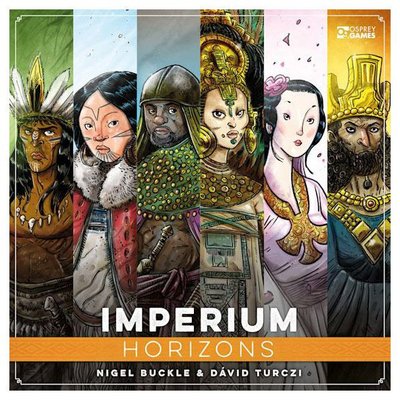
satisfying. Number two is a newer game for us. This is going to be the Imperium series, but well, I guess we'll choose Imperium Horizons because that's the one we actually have. Although we're probably be going out and buying Imperium Classics and Legends. the second we see them in a store, we will be buying them. We just haven't seen them in a store yet. Um, but nonetheless, Imperium, uh, the series, but Imperium Horizons, I guess specifically, is all about that tableau building. This is a really interesting game, uh, that is absolutely rocketing to the top of Mike's favorite games. I really like it, too. But Mike like it's like in his top five already. He loves it so much. But, nonetheless, Imperium Games, you are taking on a faction like the Macedonians, the Japanese, the Tino, uh, Tino. Um there's even like Martians and cultists and you know the Guptas, all these tons and tons of different civilizations. Each box is just full of different civilizations. You will take on the civilizations. All the different civilizations, the factions are all completely unique. They have unique cards. They do unique things. They work really in different ways, different synergies, different stuff you want to be doing. And you're basically going to be playing out your cards. It's a deck building game, but you're getting these cards and you're playing them out. A lot of the cards will go out into a big tableau. That's mostly going to be regions because again, you are a civilization and civilizations acquire new regions, right? That's what civilizations do. They expand, right?
So, as you're getting these regions, you'll be getting these regions, putting them out in your tableau. And then many of the cards that will end up in your tableau will be cards um that you can then exhaust. And you exhaust them by putting tokens on them. And I want to say a quick little like side note. I love the fact that you don't have to turn the card to exhaust. You just put a token on it. it just when you have a big tableau and you have to start moving cards. It just gets awkward. I think like put tokens on it. I think it's way way easier. Once you put tokens on, you then exhaust them. You're doing all these abilities. It's a card- driven game. So, the the rules of the game itself are relatively simple, but there are a ton of different keywords because there's a whole bunch of different keywords. There also are a bunch of common cards that you can get that everyone has access to. Those are kind of like general civilization cards. It's one of the ways you'll get region cards, things like that. But the game is really about learning and and really like utilizing your faction, figuring out what they're good at, what you want to do, and then utilizing that wealth. It's like the Macedonians, who Mike was playing somewhat recently, they're all about expansion, right? Because Alexander Great be out there conquering.
So, you're trying to get a bunch of regions, right? Because you're trying to expand as much as possible. There's other people who like don't really expand that much at all. There are a whole bunch of different factions, and again, they all work really differently. It's so much fun. It's so interesting and fascinating to us to sit there and learn what your faction does. Like, oh, this is what they're all about. Oh, okay. Interesting. And it's also really fun to play the same faction over and over again to really, really continue to learn them and figure out those synergies. It's a really, really great game. We want all of it. Like I said, we're going to go buy Imperium Classics and Legends the second we see them in a store cuz I want every single faction. I want to play every single faction as much as I possibly can because we are absolutely obsessed with this game right
now. Number one here is going to be Ark Nova. This is a obviously a very popular game right here on Board Game Geek in particular. It's always being talked about. Uh, and it's very much a game where you are going to be building out this tableau of cards, whether it be animals that you're putting into enclosures, there's sponsor cards, uh, there's conservation cards which go out into the middle of the table, uh, things like that. You are going to be building this kind of vast tableau of, uh, you know, certain animal types, uh, you know, animals that hail from different parts of the world. There's uh going to be focuses and things you're going to be wanting to go for based on, you know, what conservation projects start in the game, which conservation cards are collected, the appeal that the animals themselves bring as you're kind of racing to have your appeal track and your conservation track cross paths. Uh this is one that's just so cool because there's so many cards, uh kind of like a Terraforming Mars where in order to play this card, I have to have this certain tag. I need you to have played an herbivore before or play a North American animal before. Uh, and then they will often provide their own tags, whether it be like predator or an Asian animal or something like that. And you're really trying to get get kind of the most out of all of your actions.
Many sponsor cards will reward you for having focused on African animals or different things like that. So, it's like, well, I'm going to make sure I collect that card and play it down because I have a bunch of these African animals, which means I'll get some appeal straight away, maybe some income later. There's all sorts of ways to work with this tableau that you're building, which is representing your zoo kind of coming to life. Um, and it's just something I think is really fun. I think it's really cool the way it kind of integrates the tableau you build, the enclosures that are required, which you build onto your kind of main player board, uh, the sponsors you attract and things. it kind of really gives those feelings of all the types of things that you see with uh you know a really highlevel zoo. Um and I think that tableau and the kind of the tag building and stuff is something that is really satisfying for a lot of players and part of why I think Arc Nova in particular has this kind of evergreen ever popular quality. So that was our top 10 tableau building games. Down in the comments let us know your favorite tableau building games. Again this is a very wide mechanic. It can be a part of a lot of different games. Sometimes it's a small part, sometimes it's the entire thing.
So, let us know what your favorite tableau building games are down in the comments below, and we will see you all later. Bye bye.