/pic6428537.jpg)
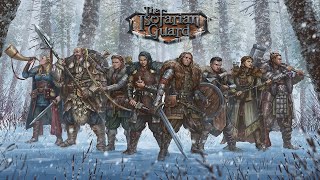
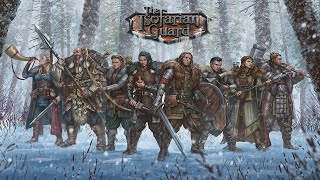
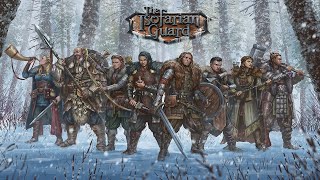
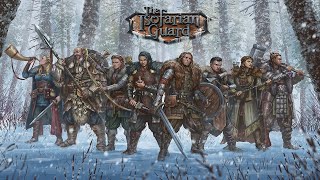
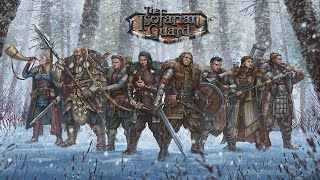
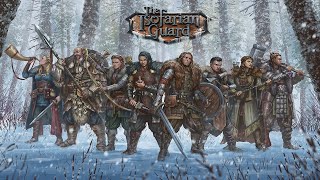
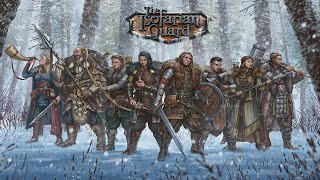
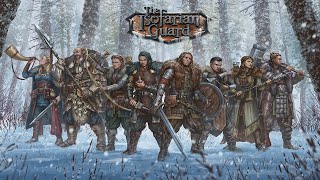
The Isofarian Guard is a solo/co-op narrative driven adventure board game for 1-2 players.
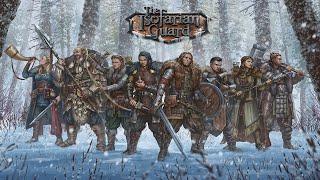
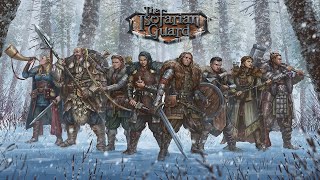
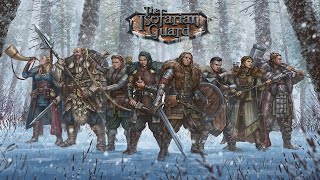
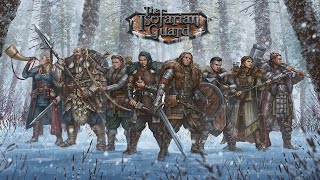
Welcome to Isofar, a wild land severe in its beauty. The Isofarian people take great pride in their ability to flourish among the hostile wildlife and cruel elements of their mountainous home. As a member of the Isofarian guard, life is never dull. You try to keep the peace among your fellow Isofarians (a never-ending job), as well as deal with constant threats from the aggressive Falmund Empire to the south.
But now, the old patterns are shifting. New forces are at work that will challenge the very underpinnings of reality. You will guide eight different Isofarian Guards throughout 5 interweaving campaigns as they deal with a power that threatens not only Isofar, but the entire world.
In The Isofarian Guard, you will travel throughout the cities and wildernesses of Isofar on a beautifully illustrated world map, fight off enemies using a unique and highly customizable battle system, and use your wits to talk your way out of sticky situations. As you forge important alliances, opportunities will arise for you to craft stronger gear, gain new powers, and step into the destiny you were called to.
—description from the publisher
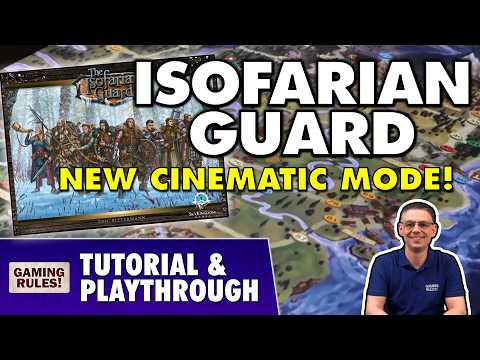
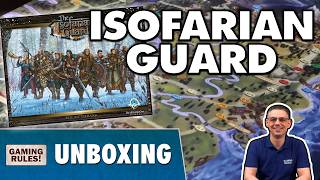
Isofarian Guard- Unboxing


Isofarian Guard- Unboxing
- The story is great.
- Campaign two was super cool.
- The progression of the world overall was interesting.
- Yuri was fine.
- The story is what keeps me around.
- Campaign three has been a very short railroad.
- Insufferable game.
- The gameplay is fun for a short amount of time, but gets tedious with back-to-back fights.
- The bag building and card play wears out its welcome fast.
- Cinematic mode doesn't eliminate the grind, just gives you weapons you could have gotten through grinding.
- By the end, everything becomes trivial.
- Boss fights are not creative.
- Last fight swapping bags felt bad.
- Campaign two was weaker than campaign one.
- Catherine is insufferable with the worst voice acting.
- AI voice acting was used.
- Character progression felt minimal and repetitive.
- There's no incentivized reason to play again.
- Cinematic mode isn't cinematic enough.
- The game is exhausting.
- Campaign two was not cared for.
- The game is unbalanced.
- The game's idea of challenge is just constantly having you whittled down without healing.
- The beginning is difficult, but halfway through it becomes insanely easy.
- The prestige system requires a grind.
- The progression of the world overall
- Madara
- Aon's End
- Dragon Eclipse
- Aridia
- Agamonia
- Baldur's Gate
Mechanics (from transcript analysis)
- AI Voice Acting — They did AI generate their voice actors. Forellers that we broke into the open. Fourth has been doing voice AI voice this entire time.
- Bag Building — The bag building and the card play wears out its welcome so fast. The swapping bags didn't upset me as much as deck building. They're generic chips and our base chips are pretty similar.
- Card Play — The bag building and the card play wears out its welcome so fast.
- character synergy — They almost feel like they can both do damage and somehow at some point I got to a point where I was doing a bunch of damage. If I can get plus attacks on that, which I can give you like. Now we can set up to a point where I'm going to do a bunch of attacks at plus three.
- Cinematic Mode — Cinematic mode is really just cut out the grind, here's your weapons, which you could do the grind and get the same weapon. It's not like it's giving you better weapons. It's giving you the weapons that you just don't have to grind for now.
- House Ruling — I don't think I've house ruled a game as much as I do this one just to do the story for sure.
- Prestige system — The prestige system while it sounded cool, it is effective if you do the grind.
Video topics + discussion points
Quotes (from this video)
- I'm going to be completely honest. I find this game insufferable.
- The bag building and the card play wears out its welcome so fast.
- So, it's not creative in any way.
- I'd rather go scuba diving.
- I don't think I've house ruled a game as much as I do this one just to do the story for sure.
- Catherine's insufferable. I I cannot stand her.
- They did AI generate their voice actors.
- It's like 25% of this game I really enjoy. Another 25% I tolerate and another 50 I despise.
- This gives me the way I feel about Balders's Gate. This just gives me exhaustion.
- I am dropping from my campaign one score of a nine to a 7.5.
- I'm going give it a seven, which to me it feels high. But a six feels too low.
References (from this video)
- Increased drop rate from gloves helps with the grind.
- Gaining better weapons and armor improves combat effectiveness.
- Finding a merchant and getting a reward after a trap.
- Completing a side quest provides a positive experience.
- Defeating enemies efficiently makes progress feel good.
- Progressive damage with no consistent healing is a problem.
- Difficulty in managing poison effects.
- Inventory management is a challenge due to limited space.
- Some encounters feel unavoidable or lead to taking damage without reward.
- The cost of resting at an inn feels like extortion.
- The inability to sell certain items can be frustrating.
Mechanics (from transcript analysis)
- Ambush — The players encounter ambush events while traveling.
- Card draw — The players discuss drawing cards and mulligans.
- Combat Actions — Players describe actions like attacking, guarding, advancing, and using abilities like faint and cross slash.
- crafting — Players discuss the need to craft better gear at locations like the blacksmith.
- Enemy AI — The players observe enemy behavior like targeting lowest defense or highest defense players.
- Equipment — Players equip weapons and armor which provide stat bonuses.
- Evasion — The host mentions evasion as a mechanic that can cause attacks to miss.
- poison — The host expresses frustration with accumulating poison with no easy way to get rid of it.
- progressive damage — The host mentions progressive damage as a key challenge that hurts them in combat.
- Resource Management — Players manage inventory space for items like rough leather and locks essence.
- resting at an inn — Players rest at an inn to remove negative effects.
- selling items — Players discuss selling items like rough leather and bear pelts.
- Side quests — Players discuss undertaking side quests like 'The Haunted Woods'.
- traps — Players encounter a trap on a path and decide how to handle it.
Video topics + discussion points
Quotes (from this video)
- so what really hurts us in just combat is the like we did well really well last time yeah in every fight but it's the progressive damage with no real consistent way to heal exactly
- yeah I sure love this poison with no way to really get rid of it that's fun
- it's like oh well yeah Captain it's on our way home so I guess uh just head back up yeah so hopefully get some silver uh yeah we probably have to go and investigate and come back
- I mean those are always there uh just did one shot us I know so I don't I don't think those are chapter specific
- that's my flaw yeah I can't fight Bears
- so you have the [ __ ] Invasion too
- yeah I mean they're going first right yep they are the names are red yep damn it I sure are
- I really want a shield
- that is not what I wanted
- I'm starting to notice that like a lot of this combat is really just like there's nothing you can do
- yeah that I hate I don't like that that I think is dumb
- I was hoping I could get around it by using this but it's specific
- he's dead okay
- it's a shame it doesn't uh your gloves don't double locks
- the cost of staying at an inn in Vuno is considered extortionate
References (from this video)
- Painted miniatures look badass.
- The Azure solution potion is good.
- The game offers a deep narrative experience with choices.
- The app integration for narrative is a cool feature.
- Encountered a tough enemy early on that 'wrecked' them.
- Running out of money is a recurring issue.
- Some mechanics are confusing (e.g., chip colors, how certain effects work).
- The cost of resting at inns can be prohibitive.
- Adventure and survival
- The land of Isofar
- Text-based events and choices
- Sleeping Gods
Mechanics (from transcript analysis)
- Combat — Players engage in turn-based combat against enemies, utilizing attack and defense actions, and managing enemy buffs/debuffs.
- crafting — Players gather resources like rough leather, metal fragments, and wolf pellets to craft armor and weapons.
- Dice/Chip System — Players draw and use chips (green, blue, purple, etc.) to perform actions and influence combat.
- exploration — Players move between nodes on a map, encountering narrative events and combat encounters.
- Narrative events — The game progresses through narrative events that require players to make choices, which then affect the story and gameplay.
- Resource Management — Players need to manage various resources such as money, 'Luxe Essence', and crafting materials.
- Skill Tree/Leveling — Players can spend 'Luxe Essence' to level up and unlock new skills or chips for their characters.
Video topics + discussion points
Quotes (from this video)
- we're basically we took two to walk two steps out and then just oh my God and then ran all the way back
- the land of ice so far is a dangerous place
- we're the good guys you know we're just really doing our best
- it's like okay well then don't tell me you have different economies when you don't have different economies
- we're murder hobos I don't have to yeah I don't have to be honorable if I'm not a guard anymore
References (from this video)
- Reduced grind in second edition
- Engaging combat and strategic card play
- Satisfying progression and character builds
- Challenging and persistent enemies that become manageable with progression
- Enemies can be very difficult and heal themselves
- Some mechanics can be confusing (e.g., how poison or freeze tokens work)
- The grind can still be present if resources are not managed well
- Defending against a demon army
- Isfar
Mechanics (from transcript analysis)
- Combat — Players engage in turn-based combat against enemies like the Corrupted Soldier and Dusk Stalker, using cards and managing stats.
- crafting — Players discuss the requirements to craft items like the Lapis Blade, Training Yard, and Blacksmith, suggesting a crafting system.
- Deck Building/Bag Building — Players draw chips/cards from their bag and discuss adding chips to their bag, indicating a deck or bag building element.
- Movement — Players discuss moving between locations like Fort EA, the lumber mill, and Ice Caves, using roads and boats.
- Narrative events — The game progresses through drawn narrative events, such as the encounter at the lumber mill and with the Zealot, which present choices and combat.
- Resource Management — Players discuss managing AP (Action Points), collected resources like Ancient Oak and Gold Ore, and items.
- Status Effects — Enemies apply negative chips like 'toxic blood' and 'corruption' to players' bags, and players can apply poison or freeze tokens.
Video topics + discussion points
Quotes (from this video)
- Mama didn't raise no [expletive]
- Gregory is like the most basic of basic out of everyone here
- The Dusk Stalker is just a dick
- I'll put it on my umbral ring
- Let's just say we have all that
- I'm going to be a really cool guy
References (from this video)
- Successfully completed a bounty ('Guild feud between guilds').
- Players are progressing their characters with new equipment and abilities.
- New rules regarding item swapping from the satchel are seen as a positive addition.
- Acquired useful ingredients like purifying seeds and ruinous seeds.
- Enemies have high attack values.
- One enemy healed itself, requiring the players to regain lost damage.
- Players initially made mistakes regarding item usage (e.g., smoke bomb affecting only one guard).
- Continuing an Isovarian Guard series, focusing on resting, leveling up, and completing bounties.
- Isofaria
Mechanics (from transcript analysis)
- Bounty hunting — The players are undertaking a specific bounty called 'Guild feud between guilds' in the location 'Mirror'.
- Character Leveling — Players discuss resting, leveling up, and spending resources to improve character stats and abilities.
- Combat Actions — Discussed actions include attacking, flanking, advancing, guarding, cross-slashing, critical strikes, and using special abilities like 'Rima Blade' and 'Faint'.
- Dialogue and Quests — The game involves interacting with NPCs, progressing through chapters, and completing quests, as seen in the interaction with Felix and Tabitha.
- Exploration phase — Mentioned in the context of adding items to the bag, like defense bonuses from 'Golden Potato', and available side quests.
- Item Management — Players manage items in their bags, such as swords, shields, potions, and equipment like the 'Argent Blade'.
- Status Effects — Poison chips are applied to enemies, and players can remove negative chips from their own bags.
Video topics + discussion points
Quotes (from this video)
- we did a bunch of resting and leveling up uh off camera but I rested in mirror so that is why that's there and spent some equipment
- the feud between Guild feud between gills uh the mirror our first Bounty
- I almost feel like like it's like man are we missing something but no no we're doing it dude we're doing it
- that's the end of uh campaign one that's one way to figure out your issues
- monsters wearing the uniform of the Guard
- they're not come to help Felix they're coming to destroy everything
References (from this video)
- Caravan Quests are fun and rewarding.
- Acquiring new gear and items like the Adamant Ring is beneficial.
- Progressing through the campaign provides a sense of accomplishment.
- The game offers engaging combat encounters.
- Encountering difficult enemies that can quickly defeat characters.
- Certain battles or events are described as 'obnoxious' or 'disgusting'.
- The need to backtrack or travel long distances can be time-consuming.
- Some mechanics, like poison, can be frustrating if not managed properly.
Mechanics (from transcript analysis)
- Aggro token — The concept of an 'aggro token' is discussed in relation to enemy targeting.
- Ambush Battle — The hosts encounter an ambush battle event where they are jumped by enemies.
- Campaign — The hosts are in Chapter 4, the final chapter for campaign one.
- Caravan Quests — The hosts undertake a 'Caravan Quest' which involves interacting with specific characters and progressing a narrative thread.
- Card Play — Specific card actions such as 'faint', 'chain attack', 'critical strike', 'flank', and 'Argent blade' are mentioned.
- Character Stats — Mentions of character stats like 'Health', 'Attack', and 'Defense' are frequent.
- Combat Actions — The transcript details specific combat actions like 'thrust attack', 'parry', 'repost', 'arrow volley', and 'leg shot'.
- Combat Healing — Characters can heal themselves or each other during combat.
- Crafting/Gathering — The gathering of 'Crystal ore' is mentioned.
- Evasion — Evasion is a defensive mechanic that can be gained and used.
- event cards — The game progresses through drawing and resolving event cards that trigger encounters or narrative elements.
- fishing — Fishing is mentioned as a mechanic that can provide useful items.
- Gear Acquisition — New gear like the 'Adamant Ring' is acquired as a reward.
- Item Management — The hosts discuss managing inventory space, acquiring items like 'leather gauntlets' and 'smoke bombs', and managing 'chips'.
- Map Navigation — The hosts navigate a map, referencing specific numbered locations and regions like 'Ice Caves', 'Frozen Waste', and 'Forest Region'.
- player interaction — The hosts coordinate their actions, providing buffs and support to each other.
- Poison Immunity — One host notes their character is now immune to poison, which is considered a significant benefit.
- resting — The option to rest at an inn is mentioned as a way to recover.
- Set Collection — The hosts are collecting 'song fragments' and 'parchment' as part of their objectives.
- Shopping and Upgrading — One host mentions having upgraded their gear, increasing defense and attack stats.
- Side quests — The hosts decide to engage in side narrative quests after progressing through the main campaign.
- Status Effects — Poison is a recurring status effect that characters can inflict or be afflicted by.
Video topics + discussion points
Quotes (from this video)
- we are now officially in chapter 4 chapter 4 which is the Final Chapter for campaign one
- dude it's an ambush means we're getting jumped
- oh my God now I feel old after doing all that
- well it's an ambush so they they get to go we don't get to do anything
- that was obnoxious
- nice now it's our turn
- nice see you later loser
- oh my God I lost so much blood Gregory I need to go to a doctor
- that was disgusting
- that bear just kicked your kicked your tight little ass
- wow that bear that that bear just kicked your kicked your tight little ass
- that was an ordeal
- the world needs me to hit things other than books
- T nebris is growing stronger by the day
- we gain an adamant ring accessory
References (from this video)
- Visually appealing character designs.
- Engaging combat encounters.
- Thematic elements add to the experience.
- Frustrating boss design with revival mechanics and tedious fights.
- Some mechanics can feel overly punishing or require extensive micromanagement.
- The game is perceived as brutal and difficult.
- Fighting soldiers, corruption, and betrayal
- Isfar
- Madara
Mechanics (from transcript analysis)
- Combat — The game involves tactical combat with enemies, including guards, corrupted guards, and bosses like Captain AEV.
- Defense Buffs/Debuffs — Players can gain defense and enemies can have their defense reduced.
- Evasion — A mechanic that allows players to avoid attacks.
- Item Management — Players manage items in their 'bag' and can buy items from a market.
- Leveling up — Players can spend resources to upgrade their character's stats and abilities.
- poison — A status effect that can be applied to players, which can be detrimental if not managed.
- Revival mechanic — A boss mechanic that allows enemies to be brought back to life, which the host finds frustrating.
Video topics + discussion points
Quotes (from this video)
- I'm going to go with Forell because that would just be insanely brutal.
- What the [ __ ] wrong with you man.
- All right begin the battle phase we're going to be his white whale.
- Oh my God so he [ __ ] brings them back which hopefully there's not any more of those but okay that could have been worse.
- It's like, okay that's not good boss design.
- I do really like their designs yeah their art super.
- I will say they're they're close on the bosses but like they just eat like they all have like this like the the first guy was like all just you fought the same enemies coming on on him.
- Yeah, it's like, why are we even do that all we had to do was kill her.
References (from this video)
- Rulebook is better structured, spiral-bound, and has a thicker cover.
- Quest book has a better quality cover and includes puzzle quest maps.
- Indexes are now split into three dedicated books (Enemy, City, Fort Eira/Save) for easier reference.
- Field events are completely restructured and much more intuitive, with more options and clearer mechanics.
- Prestige system provides a rewarding progression and incentives for engaging with cities.
- Commission system significantly reduces the grind for resources and speeds up progression.
- Player Aid is reformatted and includes new information and clearer iconography.
- New AI targeting system for enemies improves clarity.
- Campaign books now include warnings about upcoming narrative sequences to avoid interrupting player-planned activities.
- Voice acting for side quests and caravan quests is a welcome addition.
- The previous field event system was 'horrendously bad' and 'obnoxious'.
- Lack of a 'catch-up' mechanism for players transitioning from earlier campaigns to the updated rules can be a minor issue, requiring players to manually adjust their progress.
- The core grind of the game, while reduced, could potentially still be a factor depending on player choices and implementation.
- Gloomhaven
Mechanics (from transcript analysis)
- Action Points (AP) — Used for various actions, including a new ability to swap items from a satchel slot.
- Bag Building — Chips are drawn from a bag, with rules clarified on refilling and drawing limits.
- Commissions — A new system where players can send 'stonebound' (workers) to gather resources, reducing the grind and improving progression, especially for upgrading Fort Eira.
- Deck Building — Mentioned in comparison to Gloomhaven for character depth, implying card-based abilities.
- Field Events — Significantly restructured with new decks for different terrain types (including water) and clearer mechanics for triggering and resolving events, replacing a confusing previous system.
- Prestige system — A new system in the second edition where players gain renown in cities, unlocking access to puzzles, bounty quests, and providing bonuses like reduced costs or increased stats.
- Resource Management — Key to upgrading buildings and crafting items, with the commission system and prestige levels aiming to make resource acquisition less of a grind.
- Skill trees — Players gain 'lucks' (XP) to spend on skill trees, with costs and access varying by chapter.
Video topics + discussion points
Quotes (from this video)
- The update is so much better.
- The field events have been completely restructured but you lived in this now this is completely gone thank God.
- I am extremely excited to implement all of this because like by the end of chapter 1 or campaign one that grind was just so so obscene.
- It's like no one's doing that no one is no one is being like we need all these ingredients that take us you know all the way from point A to point B back and forth cuz we can't carry anything node by node by node for a potential 2hour fight to get four wood that's awful.
References (from this video)
- Character writing is good, even for NPCs and enemies.
- The game allows for modifications that make dialogue feel more natural.
- Field events are enjoyable.
- Fear of heights and water can be challenging in specific scenarios.
Mechanics (from transcript analysis)
- Chofar Blast — Provides more liquid effects.
- Commissions — Tasks that can be sent out to gather resources, with a base number and an increased number due to player count.
- Enemy Drops — Resources obtained from defeated enemies.
- Field Notes — Used to lower enemy defense.
- Guard Ability Card — Activating a guard ability card at no chip cost, but AP must still be paid.
- Harvesting and Mining — Nodes available for gathering resources.
- Narrative Chips — Used to advance the story or indicate progress on a map.
- Secondary Activation — Triggering a harmonized effect when an ally activates a secondary on their turn.
- Speaking Stones — Used for abilities and actions, can be moved between exhausted and ready states.
Video topics + discussion points
Quotes (from this video)
- I don't think he would understand what we're trying to do and he definitely wouldn't help us we're going to have to do this ourselves he's what you might call evil.
- Captain Theodore turns to leave and you leap to catch his arm no I think um speaking Stone we had to get a boat for the Caravan Quest did we yes cuz we had to go find like sunken treasure yeah that was in chapter one or campaign one great that's where the boat thing was I thought that was in this campaign I mean well I it it sounds so familiar though.
- Wow you Marvel at the Silvery trail of a river far below and the mountain peaks marching endlessly to The Horizon the crisp air invigorates your lungs and a smile forms on your lips sudden L you hear a rustling behind you a young man and woman stumble out of a bush where they were attempting to conceal themselves oh they were [__] for sure if you're going to kill us then be done with it the woman says we're just we're tired of running says the man they both drop speaking Stones onto the ground and suddenly you understand you pick up their speaking Stones placing them gently back into their hands and Reveal Your Own Stone mhm run no longer you say two new stonebound joined the C you may add two additional Stone bound to all commissions this card is persistent through all campaigns oh nice that is nice so I'll put that right right there right up front yeah cool hey I love events dude field events are the best they they are I do enjoy them.
- We are nearing the end of our journey says Captain Fodor standing next to you on the deck you admire how he unconsciously shifts his weight to match the pitching of the ship if we go much further north the sea becomes impassable ice.
- I changed my mind I don't want to live here anymore.
- You follow the tumani through endless fields of snow and ice you wonder at how they are able to navigate the what I was thinking to I just but eventually you reach a small village it's dope low buildings covered with snow blend into the environment hiding the village in plain sight The Village shows none of the usual signs of life and no one comes out to greet you why would they they're all here homes only travel if need we go in here the man opens the door to a Hut and motions you in inside the hut is surprisingly large and warm the other two Mani filter in behind you and close the door who have you brought me kulak an old woman asks the lead to Mani to Outsiders M asking of fool they wish to learn our ways actually we are seeking a holy Relic M raises her eyebrows toer us so bold no not plunder Seek help we need your Relic to fight a great Darkness M eyes you and motions you closer what do you know of Darkness she asks her voice low suddenly you feel uneasy you feel the taint of tenebrous in the air instinctively you grab hold of a speaking Stone and it flares to life m recoils in Surprise and the other two mon draw their weapons V the other two Moni stop moving but keep their weapons trained on you and Catherine you are cited once you wish to destroy uet we are we Doo fun way to know trial of combat stonebound have returned from their commissions oh sick uh so it says for Easter stash remove all cubes and we send out commission two if you want to pull up commission too baby but that gets us 88 was a mining spot so that that's I can pull it up on my phone I can also pull it up right here [__] that fine all right commission it was iron so that gets us what three iron three iron this is commission two yes okay three iron uh 29 I think is gold so we have one gold which puts us at three gold nice and then 34 I'm pretty sure 34 is silver baby nice it's a three silver yeah okay so how many do we get to send out uh 10 but because we got that thing we get 12 12 pretty hot yeah all right so what what what do we need what do we need my dude apparent like are we trying to get you those gloves are we trying to get better armor the thing is is like the as like we're close to having the gloves I don't think we should send someone to get stuff no no no I meant the second pair of gloves oh yes whichever ones the ones that every time you do a basic attack you heal you heal um okay let me pull that up cuz I would like cuz there's also special commissions that we can send out yeah.
- Honestly, it seems like we need diamond and crystal for a lot of stuff. Yeah, throw four on diamond and four on crystal. Yeah, that'll put us at 12.
References (from this video)
- Streamlined experience focusing on story.
- Reduced grind and simplified resource management.
- Increased accessibility for new players.
- Automatic gear progression at key scenes.
- Streamlined inventory management.
- More flexibility with Lux essence usage.
- Skipping already defeated battles is a plus.
- Still considered a victory when skipping battles.
- Crafting is still available and makes more sense.
- Gaining base weapons and armor makes progression feel more on par.
- Much-needed addition to the game.
- Limitation of two stonebound ability cards is puzzling.
- Penalty (HP loss) for skipping battles, even when allowed, feels a bit much.
- The bag mechanism for skipped battles still allows for punishing draws.
- The host plans to implement house rules for certain aspects of the cinematic mode.
- story progression
- Final Fantasy 3
- Final Fantasy 6
- Chrono Trigger
- Secret of Mana
- Seven Saga
- Dark Souls board game
- Sea of Stars
- Hoplamachus Victorium
Mechanics (from transcript analysis)
- Battle Skipping — Possible in cinematic mode during exploration if all enemies for a drawn chip have been defeated.
- Break Chip / Weakened Chip — Added to guard bags when skipping a battle phase.
- Cinematic Mode — A new optional mode designed to streamline gameplay, reduce grind, simplify resource management, and increase focus on story progression.
- crafting — Remains available but players no longer rely solely on it for upgrades in cinematic mode.
- Enemy Stats — Increased by +1 attack and +1 AP starting in chapter two in cinematic mode.
- Equipment cards — Gained at key scenes based on chapter number, including one weapon and one armor card per guard.
- Event Bag Draw — Triggered for each enemy with Tenebras in its name when skipping a battle, with potential for freeze, double, poison, or corruption.
- gear progression — Streamlined in cinematic mode through equipment cards gained at key scenes.
- Inventory management — Streamlined in cinematic mode, allowing free transfer of items between guards and stash when in a city.
- Lux Essence Usage — Can be used anytime in cinematic mode, not just during the exploration phase.
- Resource Management — Simplified in cinematic mode.
- Stonebound Ability Cards — Limited to two equipped at once in cinematic mode.
Video topics + discussion points
Quotes (from this video)
- This isn't really a review or a discussion over over anything. Uh, not yet anyway. Um, because um, Sky Kingdom Games just announced like their first major update for Veil Word. This is kind of like a breaking news of the uh, of the board game industry for a specific game.
- The vision of the game was to somewhat replicate the old school JRPG feel of video games like Final Fantasy 3 or 6, uh Chrono Trigger, Secret of Mana, Seven Saga, and others, and translate that experience to a tabletop game.
- JRPGs work in video games. Grinding works in video games. Even though a lot of people still don't like it whenever you have a short amount of time, it works because it's like that to fight the same enemy over and over. The amount of enemies I could fight in one hour of a video game versus one hour of a board game are vastly different.
- I think this is a much needed addition.
- But it is nice that there there is a basically validation of I'm not the only one complaining because the se the second edition stuff to in my mind was also supposed to fix the grind and as in practice as you start playing more it's like no it still didn't it's still awful fine.
References (from this video)
- Fun field events
- Interesting story elements
- Thematic elements can be engaging
- Character progression paths offer choices
- Repetitive and tedious combat
- Unbalanced mechanics
- Frustrating character gameplay
- Questionable design choices regarding grind and difficulty scaling
- Mechanics are not intuitive or well-explained (e.g., stun vs. freeze)
- The same world that we've been exploring
Mechanics (from transcript analysis)
- Card drawing — Players draw various chips and cards, discussing their effects and impact on gameplay.
- Character progression — Players discuss leveling up and choosing between different skill paths like 'leadership' and 'charge'.
- Cinematic Mode — This mode is discussed and criticized for not significantly reducing the grind.
- Combat — The players engage in combat with various enemies, including flesh-eating fish and brigand marauders, discussing their stats and abilities.
- Evasion — The mechanic of evasion is discussed and utilized during combat.
- Field Events — These are highlighted as a particularly fun aspect of the game.
- questing — The players discuss and undertake side quests in various locations like Stroa, Razdor, and Reba, and a main caravan quest.
- upkeep — The mechanic of upkeep is mentioned in relation to AP costs and its effect on actions.
Video topics + discussion points
Quotes (from this video)
- That field events, dude. They're the most fun.
- It's like, hey, here's gear. I'm still doing the same combats.
- I hate how she plays. It is so dull.
- I hate this game so much.
- I'd be more afraid of a saltwater crocodile than I would be a shark.
References (from this video)
- Engaging narrative
- Challenging boss fights (for some)
- Rewarding gameplay upon victory
- Long and tedious combat
- Aggravating mechanics (healing)
- Questionable game design in boss fights
- Confusing mechanics regarding bag building and deck interaction
- Campaign play, confronting ancient gods and conspiracies
- Tumani lands, mountains, circle of seers
- Story-driven campaign with evolving narrative
- Aon's End
Mechanics (from transcript analysis)
- Asset management — Players manage resources like AP (action points) and health throughout combat.
- Bag Building — Players add and remove chips from a bag, influencing the cards they draw and their available actions.
- boss fights — The game features challenging encounters against powerful enemies with unique mechanics, such as significant healing.
- Campaign play — The game is played over multiple sessions with an ongoing narrative and persistent character progression.
- Card-based combat — Players use cards with various actions and abilities to engage in combat against enemies.
- Dice Rolling — Dice are used for various game effects, including combat and chip draws.
Video topics + discussion points
Quotes (from this video)
- This game is so aggravating.
- This game is exhausting, dude.
- It's insufferable game design.
- I immediately want to cut my wrists.
- This is the worst game mechanism.
References (from this video)
- The game offers an engaging narrative with meaningful choices, even if some feel like illusions.
- Combat is a core element, with players strategizing and using various abilities to overcome challenges.
- The progression through a campaign provides a sense of ongoing adventure.
- Itemization and chip mechanics add strategic depth to gameplay.
- Some narrative choices can feel like an illusion of choice, leading to the same outcome.
- The repetition of certain encounters or mechanics can be perceived as boring.
- O Sworn
Mechanics (from transcript analysis)
- Campaign — The discussion centers around progressing through a campaign, with players noting they are nearing the end of campaign D.
- Chip System — Players refer to adding and removing chips from their bags, including negative chips that affect defense and attack.
- Combat — Players engage in combat against various creatures and bosses, discussing attack strategies, damage, defense, and the use of cards and abilities.
- exploration — Players navigate through various locations like archives, catacombs, caverns, and tunnels, making narrative chip placements to trigger exploration phases.
- Item Management — Players discuss equipping items like the vision stone, ring of shielding, Ailia's brush, and various gems, as well as managing inventory and stash.
- Narrative Choice — Players discuss the impact of choices, such as whether to smash or keep the vision stone, and how some choices feel like an illusion of choice, leading to the same outcome.
Video topics + discussion points
Quotes (from this video)
- It's like, how some video games give you the illusion of choice? That's what this basically is all the time.
- So, the Tumani version of Stonebound, the sighted ones, were corrupted by the vision stone.
- The ancient Tumani built this place, too. That means they used the pits to travel.
- They spent all that time erasing the Tumani from existence, only telling us what they wanted us to know.
References (from this video)
- Caravan quests are amazing.
Mechanics (from transcript analysis)
- Campaign play — The discussion revolves around continuing a campaign with new chapters and rules updates.
- Combat — Described as 'combat combat combat chapter is over'.
- cooperative play — The dialogue is between two players discussing their shared experience and turns.
- Deck Building — Mentioned in the context of using 'stonebound abilities' and 'cards'.
- Resource Management — Implied through discussion of AP (Action Points) and managing chips.
- Side quests — Discussed in the context of mapping out six side quests available.
Video topics + discussion points
Quotes (from this video)
- It's basically combat combat combat chapter is over.
- So, buckle up for some side quests.
- I don't know. I I like the way we're doing it.
- Yeah, man. You know what I dreamed last night?
- I don't know. I mean, I think if you're taking financial compensation for it, [ __ ] off.
- It's like, 'Help me help you. I'm trying to get my game out. You're trying to get your art out.'
References (from this video)
- The synergy between player characters and abilities is noted as strong.
- The game offers engaging narrative choices and events.
- The progression system provides satisfying character upgrades.
- Combat mechanics are engaging, with strategic depth.
- The game provides a good amount of loot and rewards.
- The game can be punishing if players lose progress due to technical issues (e.g., saving issues).
Mechanics (from transcript analysis)
- Character progression — Players discuss leveling up characters, gaining health, and acquiring new abilities like 'protector' which grants defense and punishes attackers. They also mention upgrading weapons like the 'sky spplitter'.
- Combat — A significant portion of the playthrough involves combat against enemies like corrupted soldiers, dusk stalkers, tumani raiders, and clay horns. Players discuss strategies, chip management, defense, and offense during combat.
- Dice Rolling / Bag Drawing — Mechanics involving drawing from a bag to determine outcomes, such as drawing a compass to avoid damage or skulls to take damage, are mentioned.
- Event Cards / Narrative Choices — Players encounter events with narrative choices, such as the hermit's 'delectables' where they choose to try the soup, or interacting with a scholar to obtain a song fragment, which involves making choices and facing consequences.
- Item Management — There is discussion about equipping items like 'speaking stones' and 'garnets', managing bag slots, and acquiring new items like adventurine.
- Looting / Reward System — Players discuss acquiring loot and rewards after combat and completing quests, such as lux, shards, and special items like rings ('ring of healing', 'ring of power') and speaking stones.
- Quest Completion Tracking — The use of a tracker to manage completed quests and progress through campaigns is mentioned.
- Side quests — The players discuss undertaking side quests, specifically a caravan quest, while progressing through the main story. They mention completing a specific caravan quest node (node 68) which leads to finding a song fragment.
- Synergy — The players comment on the synergy between their chosen characters and abilities, comparing it favorably to other character combinations.
Video topics + discussion points
Quotes (from this video)
- We just harassed him. We gave him food and robbed him.
- The mighty guards have saved the day.
- It was attacked by corrupted members of the guard as the town survived, but many lives were lost and the graineries were burned.
- Get ready to run. We'll distract the clay horns.
References (from this video)
- "We just fludged the travel, but we've been good on fights."
- It's for fun.
- These fights are fun.
- The voice actor sucks ass.
Mechanics (from transcript analysis)
- caravan quest — Caravan Quest 2 part one.
- narrative chip — narrative chip on node 101, which is Fort Straws
Video topics + discussion points
Quotes (from this video)
- Um, oh, dude, it reminded me of that bit from Game Grumps whenever it's like a kid who doesn't know that his father's about to kill him.
- No, everything is great. I'm pleased to see our comrades in arms march after battle.
- He's like, 'Yeah, there's a new way of doing things.' Ah, yeah, just I'm not used to it. I guess I'm going to turn coat.
- Um, so it says, 'Place a three star to guard in slot one and two.'
- All right. And then Yuri just becomes a [ __ ] cringe edge lord. There is a new way of doing things. Puts on his fedora. I'm a stonebound and I'm here to take you to jail. Citizens arrest.
- You know what you could do though? Like if you want your the one you had before that one, I mean, you could take away one of your guard. They're all just useful is the issue.
- Yeah. All of my abilities swords. I know. It's super cool. Regretfully.
- Oh, man. We talk about shields. Yeah, you got five of them.
- Oh, my god. [ __ ] shuffle. Jesus Christ.
- If you rely on yourselves, your own power, your own prison, you will surely fail.
- When was the last time you wiped your own minds long enough that you might hear a voice?
- We already have our orders. What are we waiting for?
References (from this video)
- Gear makes a huge difference
- Cinematic mode exists to give gear
- Positive feedback on new items obtained ('Victory', 'Nice', 'Hell yeah')
- Rewarding events, e.g., obtaining 20 lux instead of 10 for an action.
- Exhaustion of AP is crippling.
- Some event choices seem misleading.
- Some quests are long and not very good.
- The instrument maker quest is a five-parter.
- The Seir Temple events are loud.
Mechanics (from transcript analysis)
- Combat — The gameplay involves combat, with mentions of HP, damage, attack, defense, and shields.
- crafting — Players can craft items like 'Zoya's elixir' and 'barrier tonic' using collected components.
- Gear system — Players acquire and utilize gear that significantly impacts gameplay.
- Inventory/Chip Management — Players manage 'chips' in their bag, which are used for actions and can be discarded.
- Leveling — Players gain experience and level up, indicated by reaching level 77.
- questing — The players complete quests, referred to as 'side quest grind' and 'quest complete'.
- Speaking Stones — A mechanic where speaking stones are used to interact with the environment or gain effects, such as dispelling corruption or glowing.
Video topics + discussion points
Quotes (from this video)
- Gear gear makes a huge difference in this game.
- Oh, he's dead.
- This is such overkill on all the chips I have.
- The exhaustion of AP sucks.
- Victory.
- It wasn't very good.
- How does that make any sense?
- That sounds like the better option. So I'm going to choose that and it's the worst outcome.
References (from this video)

- Absolutely loved it
- Top two campaign game
- Amazing narrative part
- Really liked the writing
- Foreller app is fantastic
- Combat mechanism is enjoyable
- Production value is fantastic
- Grind was an issue in earlier printings
- Host prefers not to use cinematic rules initially due to enjoying the grind
- Fantasy cooperative adventure game with narrative
- Utilizes the Foreller app for narration, sound effects, and multiple voice actors, creating a radio drama-like experience.
- Lands of Evershade
Mechanics (from transcript analysis)
- Campaign play — The game is a campaign-based experience where player actions affect the ongoing story and world.
- Chips in a Bag (Combat) — Combat resolution involves drawing chips from a bag and allocating them to abilities, with potential for drawing wounds, boosts, or other effects.
- Cinematic Rules — Optional rules to speed up gameplay by skipping or fast-forwarding certain combat encounters.
- Narrative app integration — Uses the Foreller app for narrative delivery, featuring voice actors and sound effects.
Video topics + discussion points
Quotes (from this video)
- I had a doctor's appointment during which they use the words nervous breakdown and two months off work.
- It was it was far worse.
- If I had have stopped, I may not have been able to start again. it would have been too hard.
- I really enjoyed Emberart.
- It was a nice enjoyable experience for a Tuesday morning and I would definitely want to play Embahart again.
- Nova Roma seems to be a very much under the radar game that not a lot of people have known about.
- The action selection mechanism in the game. It's very clever.
- Pathfinder Adventure Card Game is a game which I love playing.
- Every single time I play it, I have an absolute blast.
- What do I think of Civolution? Love it. I mean I I've gone on record and said it's my second favorite game of 2024, I think. Or was it my number one game of 2024? I think it was my number one game of 2024.
- I just love the way that it plays, the micro actions, the quick play
- Blackstone Fortress from Games Workshop.
- Yes, it was a bit repetitive with just moving around and rolling dice and shooting bad guys, but yeah, it is what it is. I knew that going into it, but I enjoyed it anyway.
- So, right now, as of the time of me filming this video, there are 1,342 Patreon supporters
- all of my advertising revenue, not just from this video, but from every single one of my videos goes to charity.
- Kingdoms for Lawn. That's actually coming.
- This weekend, I'm off to Manacon. It's a UK convention that I've been going to for many years.
References (from this video)

- Successful crowdfunding
- Good following and critical acclaim
- Adds deck building
- Quality of life improvements
Mechanics (from transcript analysis)
- Bag Building — Bag building is still present in the expansion.
- Deck Building — The expansion adds a deck building element to the game.
- Positional Grid Play — Playing cards into a grid orientation where the enemy can mess with your grid or add negative cards to it.
Video topics + discussion points
Quotes (from this video)
- We are back with some board game news.
- Everything about this game feels 80s.
- It sounds like an organizational game where you're trying to basically collect these photos, maybe some other things, and put them in your yearbook to score as many points as you possibly can.
- The expansion adds a deck building element to the game.
- Anytime you're going to add deck building and deck building and bag building, it's a very interesting well to this to a game of this scope, right?
- I feel like I could finally enjoy Frost Haven instead of it being it takes all the tedium out of it for me.
- Until next time, make sure everyone has fun at the table and we'll see you then.
References (from this video)
- Amazing narrative
- Cinematic feel
- Engaging gameplay
- Fun chip management
- Challenging combat
- Good character progression
- Chip management can be tricky
- Some combat encounters are very difficult
- Bag building can be frustrating if you don't draw the right chips
- Guard duty, adventure
- Fantasy world
- Story-driven with narration via Foreller app or reading
- Nanolith
Mechanics (from transcript analysis)
- Bag Building — Players draw chips from their bag, and the contents of the bag can be managed and improved throughout the game. The goal is to draw specific chips to perform powerful actions.
- Card Play — Players use chips that they draw from a bag to activate abilities and perform actions. These chips represent different types of actions like attack, defense, or special abilities.
- character customization — Players can level up their characters and gain new abilities or equipment, such as adding swords, shields, or health chips to their bags.
- Resource Management — Players manage stamina and other resources to perform actions. Some abilities require spending stamina or specific chips to activate.
- Scenario-based progression — The game is played through a series of chapters and nodes, with players moving a miniature on a map to trigger events and encounters. The story unfolds as players progress through the game.
- Set Collection — Players collect metal fragments and other items that can be used for crafting or sold for resources. The limited capacity of the bag adds a strategic element to resource management.
- Storytelling — The game is narrated by Foreller, and they even wrote background music for it. Players can use the Foreller app or read the story aloud.
Video topics + discussion points
Quotes (from this video)
- The narrative for this game is knockdown gorgeous. Knockdown gorgeous.
- Cinematic mode means more fun.
- You know how I feel. All these are great. Now you know how I feel.
- My gosh, that guy was nuts. That was awesome. I love it. I was afraid we weren't going to make it cuz if you would have gone down, I can't do enough damage with any blue chips on that thing.
References (from this video)
- High production quality.
- Lots of content.
- Bag building combat is engaging.
- Cooperative play allows for player interaction and support.
- Detailed narrative and side stories.
- Good character progression system.
- Optional companion app enhances experience.
- Flexibility in choosing game modes (cinematic vs. standard).
- Expensive game.
- Cinematic mode can make bosses very difficult if not adjusted.
- Puzzle quests can be difficult to figure out without clear rules.
- Protecting the lands of Isopar from the Falundians and the dark force Tenebris
- Isopar
Mechanics (from transcript analysis)
- Action Points — Characters have action points to spend on various abilities, attacks, and movements during combat and exploration.
- Campaign play — The game is played through a series of campaigns, each divided into chapters with a narrative progression.
- Character progression — Characters can improve their stats and abilities by spending 'Lux essence', unlocking new chips and improving their effectiveness.
- Companion app — An optional paid companion app ('Foreller app') enhances the narrative experience with voice acting and music.
- crafting — Players gather resources to craft new items and weapons, such as upgrading a sword or tunic.
- Deck/Bag Building — Combat involves drawing chips from a bag, which can be modified through character progression and abilities.
- Narrative events — The game uses narrative chips and event cards to drive the story and present choices to the players.
- Resource Management — Players must manage their inventory capacity, stash items, and currency (sill) for various actions.
Video topics + discussion points
Quotes (from this video)
- This is not a cheap game, but the quality of production, these are really good poker chips.
- The amount of content in this game is scary.
- The Foreller app for this game is amazing.
- It's a huge game. There's a lot of content in there.
- So, the game has just given us four pine. So the natural assumption is that we should spend that four pine on rebuilding the lumber mill.
- It's not an ambush, we go first.
- You have to draw the poison because you haven't got enough blacks.
- This is going to be tough.
- My bag is just filled with green and red chips.
- My defense is minus one.
- If the attack deals damage, draw a card.
- My attack is six.
- My attack is minus one.
- This is going to be very tough.
- It's a tough fight.
- This is the round where there's going to be the win or lose round.
- This is the tip of the iceberg.
- It's a completely optional part of the game.
References (from this video)
- Significant amount of content and components
- High-quality production with extensive voice acting via app
- Cinematic rules improve pacing and reduce grind
- Cooperative gameplay that emphasizes player support
- Heavy and substantial physical product
- Amount of grind in earlier printings (addressed by cinematic rules)
- Heavy box difficult to handle
- rough northern
Mechanics (from transcript analysis)
- app integration — The game utilizes the Foreller app for narrative delivery, featuring extensive voice acting.
- Bag Building — Players place chips into bags, and drawing from these bags is a main part of the game, allowing for cooperative strategy by assisting allies.
- Campaign play — The game features multiple campaign books and is designed to be played over an extended period.
- Card Play — Numerous decks of cards are present for accessories, armor, harvesting, enemies, and abilities.
- cooperative play — The game is a one-to-two player cooperative campaign-style game where players actively help each other.
- Dice Replacement — Instead of dice, the game uses poker chips for randomization and progression.
- miniatures — The game includes miniatures for characters, though it's not described as miniatures-heavy.
Video topics + discussion points
Quotes (from this video)
- So bear with me a minute. I always forget one thing. The screen has gone blank. Don't worry about it. I will be back. I'm just changing the name of the game from Entropy to Isoparian Guard.
- So, yes, welcome to a live unboxing video where things go wrong of Isoparian Guard.
- this is physically one of the heaviest games uh that I've got.
- So, um, we will find out when we will look inside.
- the third printing of the game with the cinematic rules are going to be the best version of this game that there is.
- I will probably be playing cinematic mode when I play.
- This must have taken years to design.
- There are no dice in this game. We have chips.
- you can put chips in your um your allies bag. So you can support each other.
References (from this video)

- great campaign game
- we both really enjoy it
- campaign length makes scheduling difficult with other content creation
- cooperative campaign with ongoing story
- fantasy campaign world
- campaign-driven, narrative-rich
Mechanics (from transcript analysis)
- campaign_progression — Long-term progression across multiple sessions
- Cooperative Game — Players work together to tackle a campaign with evolving scenarios
- cooperative_play — Players work together to tackle a campaign with evolving scenarios
- Track Advancement — Long-term progression across multiple sessions
Video topics + discussion points
Quotes (from this video)
- it's just so enjoyable
- the puzzle with building the katanas and the weapons is really um puffly and cool
- I enjoy many parts of it
- this is my number one as well
- a game that we both really enjoy, yes like a great campaign game
- it's hard to combine with all the other games that we need to play with the videos and the reviews