






























The Manhattan Project Deep Dive
What the Community Thinks About The Manhattan Project
The Manhattan Project, published by Minion Games in 2012 for one to four players in roughly an hour, is remembered by reviewers as a sturdy worker placement game with a lot of room for planning. Board to Death TV gave it a 9/10 and argued that its components and rulebook match the quality of its design. Reviewers tend to agree that the game is strongest once it gets going, and they disagree mostly about the theme. The game also has a loyal following among players who regard it as one of the better worker placement titles of its era, a view that UndeadVikingVideos repeated in a 2023 livestream while discussing the secondary market.
Core Mechanics That Define The Manhattan Project
Worker Placement With Place and Retrieve Turns
Each turn offers only two options. A player can place workers, which means putting one worker on the main board and then as many more as the available spaces allow, or retrieve, which returns every permanent worker from the board and player boards to supply. Board to Death TV points out that a space shows its requirement or cost on the space itself, while the reward sits along the bottom. The construction space is the one place where several workers can share a space, and the design bond space is the only one that accepts two workers at once. Because retrieving frees up spots, reviewers stress watching rivals who are about to retrieve, since that is when a space opens for your own workers.
Engine Building Across Personal Boards
Board Stupid presents the game as a route into engine building for players who want more depth than theme. The central board adds a second layer of placement, while each player's own workers on their personal boards generate the output that drives production. Buildings bought in the construction space feed that engine, and the price of a building can drop when rivals buy from the market first. That decision, whether to pay now or wait, is one of the recurring tensions Board to Death TV describes. The bomb cards that finally score points are built from workers and fuel, so the engine ultimately converts into victory points through the bomb draft in the design bond space.
The Manhattan Project Experience
A Race That Accelerates
The most consistent feeling reviewers report is a slow start that quickens over the course of the game. Early turns are spent establishing buildings and fuel, but as more workers come online, each turn yields more actions and bomb production rises quickly. Board to Death TV describes the pacing as the feel of a race, and TheGameBoyGeek adds that the final turns are tense because players are racing to reach a point threshold that ends the game. That closing pressure is where the game earns much of its reputation.
Indirect Interaction and Restraint
Interaction comes mostly through blocking rather than direct attack. Taking a space a rival needs, using espionage to activate another player's building, or sending fighters and bombers into an air strike all shape the board, but each costs the player who uses them. TheGameBoyGeek notes that attacks are rare for exactly this reason, since they tend to hurt the attacker about as much as the target. Reviewers describe the result as a table of players watching each other closely while deciding when to strike and when to hold back.
What Makes The Manhattan Project Stand Out
Components, Art, and the Rulebook
Board to Death TV singles out the thick tokens and high-quality board as a strength, and says the atomic age artwork fits the subject. The rulebook also receives praise for its examples and its use of italic and bold text to emphasize key rules. The reviewers say the board itself is largely self-explanatory once the rulebook has been read, which makes the game easier to teach than its many tracks would suggest.
The Bomb Draft and Shifting Victory Goals
The most distinctive design choice is the bomb draft. In the design bond space the active player takes all revealed bomb cards, secretly keeps one, and passes the rest along, so each player gets a say in what the table builds. Board to Death TV also highlights the implosion test, which permanently raises the value of a player's plutonium bombs. Board Stupid describes the same layered structure as the source of the game's depth, and TheGameBoyGeek calls the mechanics fantastic, which reinforces the view that the bomb draft is the feature players remember.
Potential Drawbacks
The Theme
Watch It Played reports a viewer's objection that building bombs and bombing people is a message that should not be sent to children. The host finds the objection somewhat unfair given how many war games people play, and attributes the reaction to a wider era of negativity. The criticism is still a fair one for families who prefer lighter subject matter, and it is a reason the game can be a harder sell at the table than its mechanics alone would suggest.
The Air Strike Track and Abstraction
The Broken Meeple, hosted by Luke Hector, calls the original fine but says the bombers and fighters track feels like a waste of space. The same review says the game is slightly too abstracted, with too many tracks competing for attention, and that it seemed a little too basic for an experienced player. Reviewers who favor interaction may find that the air strike system is the weakest part of the design, even though it is the mechanism that gives the game its sense of direct conflict.
If You Enjoy The Manhattan Project
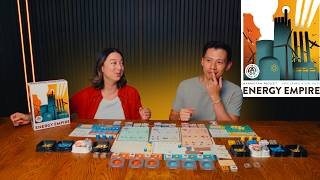
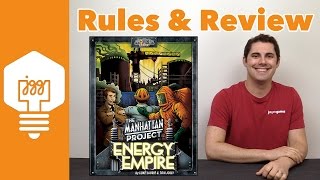
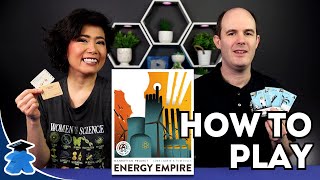
Players who enjoy the shared central board and personal engine will find similar satisfaction in Parks, which Board Stupid discusses alongside engine-focused titles. Players who want a tableau that grows from their own placements will find a similar payoff in Cascadia, which the same video compares directly against this game. Players who want to explore the trilogy further should start with Energy Empire, which The Broken Meeple names as its favorite of the three.
What Reviewers Are Saying
"The Manhattan Project is a very solid worker placement game, just like its components. Personally, we love the thick feel of the tokens and high quality board."
— Board to Death TV
"This game is just absolutely fantastic. This was one of the first worker placement games that came out with like different types of workers."
— TheGameBoyGeek
"So we're going wider here, where it adds another layer of worker placement as well on the central board, and then utilizing your own little workers on your main boards to generate that engine. So it's a tremendous game if you want more depth and you want to really lean into the mechanisms more than the theme."
— Board Stupid