




















Night at the Zoo Deep Dive
What the Community Thinks About Night at the Zoo
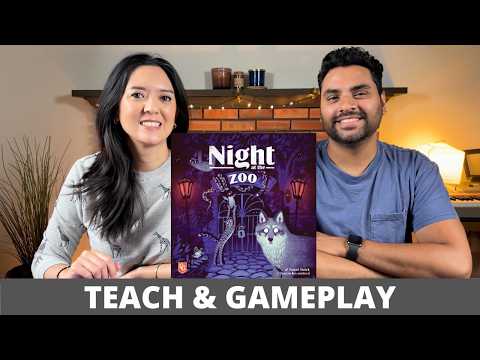
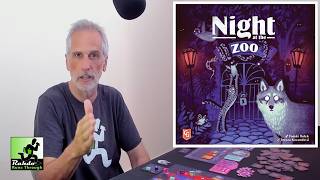
Night at the Zoo has captured the enthusiasm of board game reviewers across multiple channels, and the consensus is clear: this is a charming, mechanically clever tile placement puzzle that stands apart from designer Thomas Holik's previous heavier Euro titles. Meeple University praises the game's unique animal movement systems and calls the leftover tile mechanism a welcome extra layer of interaction for a drafting game. Tantrum House highlights that Holik, known for the much heavier Sagrada and Aquatica, has distilled his design sensibility into a lighter tiling game without losing what makes his work interesting. JestaThaRogue is drawn in by the bright colors and distinct animal meeples on first look. There is a sense of discovery in how each animal type behaves differently, turning what could have been a straightforward path-building game into something with surprising complexity and replayability.
Core Mechanics That Define Night at the Zoo
Tile Placement and Drafting
At its heart, Night at the Zoo is a tile drafting and placement game where players take turns selecting tiles from a rotating market to build paths for escaped zoo animals. Each turn, players choose a tile and must decide whether to place it on their personal board, store it in their limited warehouse (two spaces maximum), or discard it to trigger special actions. This trio of choices creates constant decision-making tension, especially as the game progresses and opportunities narrow. Meeple University singles out the leftover tile mechanism as the wrinkle that elevates the design: any tile not drafted by a player results in an action for everyone, so players cannot simply solve their own puzzle in isolation. Tantrum House frames the same system as a way the game layers patterns and efficient animal movement on top of straightforward tile laying. Players must think not just about their own puzzle but about what they are leaving available for opponents and what free movement bonus everyone will receive, adding welcome player interaction to what might otherwise feel like a multiplayer solitaire experience.
Animal Movement Systems
The true innovation of Night at the Zoo lies in how each animal type moves. This is not a game where all pieces follow the same rules. Penguins are slippery: once they start moving in a direction, they slide as far as the path allows until they hit the end of the line or reach the zoo entrance, making them efficient to move but risky to position incorrectly. Snakes move left and right along their current line, and turning them takes an entire movement action, making them slower but potentially powerful scorers if players commit the resources to guide them properly. Butterflies move normally one space at a time, but their real value comes from collecting pollen tokens, which requires discarding terrain tiles to trigger special movements. Sloths alternate between awake and asleep states, requiring extra movement actions just to keep them mobile, while the cheetah moves extra spaces because of its speed. Each animal feels like a distinct puzzle to solve, creating a layered strategic challenge where players must think about which animals to prioritize, how to build paths that accommodate their unique needs, and when special movements are most valuable.
The Night at the Zoo Experience
A Satisfying Puzzle
Night at the Zoo delivers the experience of an efficiency puzzle applied to path construction. The game's rounds create tight time pressure: players need to accomplish a lot with limited drafting opportunities. Meeple University highlights the satisfying moment when a carefully planned sequence of tile placements suddenly enables a penguin to slide its entire path home, or a butterfly finally collects enough pollen to be worth serious points, calling the whole system "really cute" once it clicks. This puzzle-solving satisfaction is the mechanical heart of the game, rewarding forward planning while allowing opportunistic play for those who read the draft correctly.
Charming and Whimsical Theme
The game's theme sounds light: animals have escaped the zoo and need to find their way home before the keepers discover them. This premise is the perfect wrapper for a solid abstract puzzle. JestaThaRogue is drawn to the bright, pretty colors and the distinct animal meeples on sight, noting that the cheetah moving extra spaces because it is fast, and the penguin sliding along the board, both look like a lot of fun before a single tile is even drafted. The theme never gets in the way of gameplay, but it adds welcome flavor to what could otherwise feel like a dry optimization puzzle. The short playtime ensures the theme stays fresh and the puzzle does not outstay its welcome, making it a game that works equally well in a family setting or a gamer's collection.
What Makes Night at the Zoo Stand Out
Each Animal Is Its Own Movement Puzzle
Meeple University and JestaThaRogue both single out the differentiated animal mechanics as the game's greatest innovation. Unlike most tile placement games where all pieces move identically, here each creature demands a different strategic approach: penguins slide through straight lines, snakes move left and right, sloths alternate between awake and asleep, and the cheetah gets extra movement for its speed. The penguin's slide creates one type of puzzle (building efficient straight-line paths), the snake's directional constraint creates another (planning multi-step turns), and the butterfly's pollen collection creates a third (balancing between movement efficiency and special-action economy). This mechanical variety within a single game elevates Night at the Zoo above simpler tile drafters.
Designer Pedigree with a Lighter Touch
Tantrum House points out that Thomas Holik is known for Sagrada and Aquatica, both heavier Euros that demand significant rule overhead and play time, and frames Night at the Zoo as proof Holik can distill his design sensibilities into a tighter, roughly thirty-minute package without sacrificing depth. In a short playtime, it delivers interesting decisions and meaningful complexity without the teach time or brain burn of his previous work. This accessibility is not dumbing down; it is elegant design constraint.
Potential Drawbacks
Path Planning Can Demand Real Forethought
While reviewers appreciate the puzzle, some note that the efficiency challenge can become mentally taxing if a player is trying to optimize every move. Unlike games where a player can meander casually, Night at the Zoo rewards careful sequencing of tile placements and animal movements. For players who prefer lighter decision-making or dislike analysis paralysis, the optimization pressure may be a friction point rather than a feature.
Asymmetric Movement Creates a Learning Curve
Because each animal moves differently, teaching the game requires explaining multiple movement rules. Reviewers note this is straightforward once explained, but the asymmetry means new players need a mental model for several distinct movement types. Players accustomed to simple "move one space" abstractions may need a moment to adjust to penguins sliding, snakes turning, and sloths sleeping.
If You Enjoy Night at the Zoo
Fans of Night at the Zoo should explore other works by Thomas Holik if they want more mechanical depth: Sagrada and Aquatica deliver similar spatial puzzle design with greater complexity. For lighter tile-placement alternatives, Pawnscape and Sushi Go offer drafting and collection with less fiddly movement systems. Ticket to Ride provides route-building satisfaction with a simpler mechanical framework, while Tea Garden brings similar spatial satisfaction with a different theme.
What Reviewers Are Saying
"Thematically all the zoo animals have escaped and you need to build their paths on a personal board to let them get home. The main puzzle that makes it look interesting is that each animal moves differently on the board. So the penguins will slide through straight lines, snakes move left and right, sloth will alternate between awake and asleep. That's really cute, right?"
— Meeple University
"The designer is the same person who did Sagrada and Aquatica, which are heavy Euro games, but this is a lighter tiling game."
— Tantrum House
"What caught my eye here is the bright pretty colors and the nice little looking meeples you get with this game, some different animal meeples there. All the different animals have different ways to move by the looks of it, which is pretty cool. The cheetah can move extra because it's fast obviously and the penguin slides along the round. That looks quite fun."
— JestaThaRogue