Top 10 Debut Designs
Games in This Video
10 games are featured in this video — they unlock as you watch.




Transcript
Some designers take a while to develop. Some designers never get there at all. But these designers absolutely crushed it on their first game.
What's up everybody? My name is Nick.
I'm Mike.
We are the brothers Murf. Today we're talking about designers who had the best debut.
Best debut.
Best debut. So basically what they're basically the games publishers designers rather who had games that hit the hardest right out of the gate. So some you're probably already thinking of. So again these are all going to be designers who their very first game was a massive hit like changed the hobby all this different kind of stuff. Um and as far as we can tell these are all these people's first design because there's a lot of people like oh their first game was huge and turns out they actually published a smaller game before that. So we believe that these are all firsttime designers. Wow. What debuts? Let's go and get into them.
Number 10 is going to be the Lost Ruins of Arnack. This has been a game from Min Elwin who uh this game has has absolutely dominated attention since 2020. It's been, you know, six on years now. They've done uh three major expansions, a big box, adventure chess. This is a game that you can like say has it all. It's got the amazing art uh thematic integration as you were archaeologists discovering these kind of ancient ruins uh and discovering, you know, kind of diving deeper and deeper in and then turning in resources up to ascend these research tracks as you are, you know, reporting your findings. There's like subtle things I really love about this game that are awesome. There's obviously the blend of worker placement and deck building, using cards for their actions or having to spend cards to uh kind of pay your travel costs for going to different dig sites and things like that. Couple things that are awesome is that you are going to be discovering more action spaces throughout the game. Those are you coming across sites and finding them that then everybody can use. I think that's really really cool. There's this uh track at the top that has item cards and artifact cards. And as you go deeper and deeper in the game, there are going to be fewer and fewer items available, more and more artifacts because you're getting further and further away from civilization. So there's less of those items, but you're finding more and more stuff as you kind of explore around. I think it's just like a really sweet way to kind of reinforce the thematics that are happening. Uh yeah, I mean for coming out with a, you know, your first kind of main title, uh and having it be something that, you know, was in the hotness for like two straight years when
it came out, awesome expansions, player powers, you know, solo and two-player campaigns, on and on and on. It's just really uh really, really fun, well supported, and I can't wait for more. The next one up is actually a debut co-design. This is going to be Vida Culture, which is by Jamie Stegmire and Allen Stone. Hence, Stone Meyer, right? Chick Allen Stone, you love to see it. Uh, Vida Culture is so so so good. It's previously my number one game in the whole world. It's not anymore, but I still absolutely adore it. They're still supporting it. They had the Bordeaux expansion come out this year, which is really, really good. I don't think I'd ever not play with the Bordeaux expansion. really enjoy it. But Vidiculture is a game about Vidiculture.
It's about um running a vineyard, running your own vineyard. And it's really nice because it's one of those very linear Euro games where like kind of everything you're doing makes sense and has like a very linear flow state. So again, you're making wine. You're going to have these wine orders that you're trying to fulfill and that's going to be one of your main ways of getting points. And so how do you make a wine order? Well, you probably need some wine. How do you get wine? Well, you need to go here and get some grapes cuz it's a worker placement game. Go there, get some grapes, and you can go to this other spot to plant those grapes in your field. You can go to another spot to harvest those grapes and put them on your crush pad. And you can go to another spot to take those grapes on your crush pad and put them into your seller as wine. And then you can go to the fulfill order spot to fulfill a wine order with that wine that you have in your seller. It's very, very linear. as like these all the lots of other games.
There's other stuff you can do, but the kind of through line is very very linear. It just makes a lot of intuit intuitive sense. You're like, "Oh yeah, of course. If I need to make fulfill this wine order, I probably need wine. If I need wine, I probably need grapes." And so it just kind of makes sense. And I really enjoy that because it makes the game easier to teach and easier to kind of new people to gro and kind of understand. And I really, really love it. I love vidic culture. It's one of those games I can play over and over and over again. I love it at solo. I love it at six players. It really just works so so well. I adore it and it's a heck of a debut for Jamie and Allan.
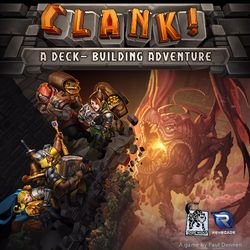
Next up is going to be Clank. This is uh this was my first ever favorite game of all time. uh Paul Denon uh uh designed a really fun dungeon delving game uh using deck building mechanisms. And the thing I really like about this is the deck building is kind of intuitive because you want to be getting around the dungeons. You want to get cards that give you move. There's monsters and things to fight. So, you want to get cards that have attack. You want cards that are going to produce uh your kind of skills to be able to buy better cards and things like that throughout the game. It's just a really fun um humorous kind of it's just got a great sense of humor to it. It's it's not, you know, uh, heavy and dreary and dark. It's cartoony and silly and fun. There's this dragon that's attacking you because the whole kind of thesis of the game is that as you're bumbling around in these dungeons, you are producing Clank.
You're making noise and that is going to make the dragon uh, pay attention to you and damage you. And this is represented by you putting cubes into a bag uh, every time you uh, produce Clank. And then when the dragon attacks, you're going to be pulling more and more cubes out of the bag. And obviously the more cubes you have in the bag, the more likely you are to get hit by the dragon. So you're trying to go as deeply as possible finding, you know, uh valuable relics, uh artifacts, uh you know, treasures and things like that, but you have to make it back out of the dungeon to be able to score. So if you get stuck underground and you die, you get nothing. If you get above the surface and you get to count your score, and if you fully escape, you'll get a bonus like 20 points. That can be very useful for you. It's just really fun. I just enjoy the deck building. I enjoy the kind of timing aspect, the risk management, all that kind of stuff. And there's been, you know, now Clank Catacombs, Clank in Space, two Clank Legacy games. It's been this beautiful, wonderful, silly, fun universe.
Number seven's going to be Cascadia by Randy Flynn. Man, what a design. Like your debut design wins the spiel is yours. That's a pretty darn good debut, man. Cascadia is a great game. Cascadia is a game set in the Cascadia area, which is like the Pacific Northwest, Washington, Oregon, Seattle, that that kind of area. That's Cascadia. Lots of mountains, lots of trees. It's very, very pretty. It's well known for being very, very pretty. So, this game is about that where you're building out habitats. Um, and you're getting these tiles, and these tiles are always going to be randomly paired up with one of the five animals in the game. There's like a fox, a salmon, a a brown bear or a grizzly bear, um an elk, and then a hawk. Those are the kind of different animals. And each of those animals is going to score in a different way. So, one of the scorings for like the bear could be like you want separate groups of bears. You want one group to be a single bear, one group to be two bears next to each other, and then one group to be three bears next to each other. If you do all that, you'll score a certain amount of points. And then the hawks want to be this kind of thing for scoring, and the fish want to be in this kind of thing for scoring. And so when you're drafting out these tiles, these tiles are going to have different landscapes on them, like, you know, lakes and rivers and mountains and fields and things like that. And they're also going to have um one or more animal types that that habitat tile can take.
And so you can then put animals on top of those to again make those groups for those scoring. It's really really good because one, every single animal has like four or five different scoring cards. So every game you can have them score in a different way and you can kind of just randomize them all. Put them out. Okay, this is how the animals are going to score for this game. And then you also want to make big groups of these areas because you'll get extra points for having like the biggest forest, for having the big biggest glacier, those kinds of things. And it's just really fun because you're constantly having to adapt to like what tiles are paired up with what animals because again, you always have to take a pair. The animal doesn't have to go on that tile, but it has to go somewhere where it's legal. And then you always have the different scoring. So it's just always different. It's always interesting. We have a really good friend named Dave Dave Luza who plays this game every single day. He's played this game probably hundreds and hundreds of times and is incredible. There's a lot of really deep strategy you can get with this game. And then it's really really gorgeous because it's got great Beth best soil art. It's wonderful. I love Cascadia. It's a great debut design. Again, if your debut design wins you the spiel is yours the biggest award in all of board gaming, that's a pretty good debut.
Next up is going to be Everdell. This has launched an entire series of games at this point from James A. Wilson and and uh now Clarissa A Wilson as well. Uh, and uh, this is like one of the best examples of like theming and art coming together to reinforce fun kind of tableau building worker placement gameplay uh, in a way that is just like has massive appeal. Andrew Bosley's art of course like really um, helped make this game have the splash that it did. Uh, it is a tableau building game where you are all, you know, living in the land of Everddale. You are, uh, building out constructions, inviting critters into your town, uh, that are going to have all sorts of effects. There's different types of cards that are going to have, you know, single time effects, worker placement spaces, endgame scoring. Uh there's these kind of production buildings that will trigger uh several times throughout the game to give you a bunch of resources and then cards that are going to give you various discounts and kind of rulebreaking uh things. The other thing that's really fun is that each type of construction, each type of, you know, building card uh has a critter that is that is paired with it. And if I have a building already built and a critter, you know, I have a critter available uh to put into my town, I can place them for free and then kind of have it be like they're living in their construction. Like that is, you know, they're a paired set. So, there's a really fun kind of interplay with that of trying to like build buildings, get your critters, resource management
stuff, which can be really tight because, you know, there's not a lot of resources out here in the forest. we're all having to share and and you know find our our meager amounts of resources to kind of build this beautiful uh forest uh town uh and and have the best one of them all and stuff. It's just got again fantastic art, cool kind of comboy gameplay with uh the tableau building and just like super production level with the tree and and all of that. Uh and then mixed with uh you know now uh various expansions for Everddale, various standalone games kind of in the Everddale world which kind of explore different uh parts of this world that we inhabit. So there's uh you know far shore and stuff which now you're on the coast and you're kind of coastal creatures and things. So we're just kind of like building out and exploring this ever growing world which is really fun to live in.
Number five is going to be the number three game on BG. This is by Matias VGA and this is going to be Ark Nova. Ark Nova is I don't know, one of the best games ever made. It's really, really, really good. It is such a good It's rocketed up the top 100. I personally think it is going to get to that number one spot. I think it's going to edge out Brass. Those two might fight for the number one spot for a while, but I really do think it's going to get there. Um gosh, it's so good. Ark Nova is wonderful. This is a game where you are making a zoo and uh it's got a lot of This is one of those games that kind of like it's a lot of little bits of other games put into a really great package. I'm a very firm believer that you do not need to come up with something new when you're inventing a game. I think coming up with a way that kind of like taking things from other games or things that already exist and then putting them into a new package that works really, really, really well is totally valid. And that's what Arcan Noa is. Arcanova is not inventing reinventing any wheels. It's just taking wheels that already exist and then putting them into a kicking car. That's what it is. It's absolutely outstanding. But this is a game where you're going to be getting out these zoo cards. These zoo cards are going to be various animals that can be in your zoo.
Sponsor cards which we kind of give you like usually ongoing powers. Um and then conservation cards which you can um essentially fulfill to do to get conservation points. There's two kinds of points in this game. There is appeal, which is going to basically going to be like how cool are your animals? Like if you have a big lion, that's going to give you a lot of appeal. If you have like a little bird, that's probably not going to give you that much appeal, but they all have virtues and stuff that that's worth to do. But you have your appeal, which is one track, and you have your conservation track, which is basically you doing conservation efforts. And what you want to do is cross those two tracks Raja the Ganji style. And that is what's going to trigger the endgame. So you can go super heavy appeal, you can go super heavy conservation. It's kind of up to you and what cards come out for you. So, you're building out your zoo. You're getting uh these animal cards into your hand and then you can build enclosures for them and then put them into those enclosures and just really build out your zoo that way. All of these animals are going to have tags on them. So, there's like bird tags and predator tags and herbivore tags and all these different kinds of things. And then there's lots of other cars that will deal with those tags.
certain things that will make certain kind of things cheaper, certain things that will score for like those conservation cards. Lots of different kind of stuff. Some Terraforming Mars kind of card play with that kind of thing. It's really, really great. I love Ark Nova. Again, I really do think it's going to make it to that number one spot. It's already at number three. Give it a couple more years, another year or two, I really think it's going to get there. It's absolutely outstanding. What a debut. Holy crap. It's so so good.
Next up is going to be Wingspan. How we not have Wingspan on this list? You got to have Elizabeth Hargrave absolutely kick the door down uh as they entered the scene uh with a uh you know very everenduring game. This is uh again we talk about a lot about like theme matters. This is a really cool kind of engine building action selection game that is centered around bird watching with amazing beautiful art uh and really cool kind of comboastic engine building uh aspects to it where you are going to be gathering resources uh gaining cards, laying eggs and stuff and playing birds. And what's really cool is as you play birds, they're going to go onto your player board, which has three rows for the three kind of main actions, uh, outside of playing birds itself. And as you play cards to each, you know, biome, the forest, the wetlands, and the grasslands, uh, it's going to make that associated action stronger. So the forest allows you to gain resources from, uh, dice, food. Uh, and the more cards you have in there, when you take that action, you're going to be able to get more food per action. So you're becoming more efficient. But then the next level thing is that most of the cards will have a brown uh banner that will trigger when you take that action.
So you'll take the main action, gather my food, and then you'll kind of go down card by card and every card that has a brown banner, you will trigger its effect. And these are going to have all sorts of different abilities. It might allow you to, you know, lay extra eggs, gain extra food, draw cards, uh tuck cards underneath uh the cards that you play, uh which will be worth points. Eggs are worth points. There's so many things you can do to generate these like really cool synergistic combos. And so every time you hit an action now, I'm getting a stronger version of the action. I'm getting all this bonus stuff. I'm kind of synergizing all of that. You're going for end of round uh bonuses and things like that. So, there's just a ton of like fun, wild, big, broken combos you can build. And it's with like the most appealing theme and art ever.
Number three is going to be Dominion. Dominion's still an enormous game. Donald X Vakarino made Dominion and this was I I believe this was the first deck building game or at the very very least this was the first game that had deck building in it that was very very big and popular. This is widely considered to be the game that put deck building on the map and really invented that entire mechanism. And so deck building of course is where you have a usually a a kind of basic deck of cards and you're playing out the things constantly getting new cards which go into your discard pile. Once your deck is empty, you will then shuffle your discard pile and bring it back through and start playing cards as they go through. Hence deck building. So you're constantly building it throughout the game and cycling through that deck. That's deck building. Um and Dominion is one of the first games, if not if not the first game that really does deck building and it's just a pure deck builder. That's what you're doing in the game. And this game is kind of like a it's just kind of themeless, but you're basically trying to get um these like prosperity cards which are going to give you points. But you basically going to have different cards in your hand. You're going to have a certain amount of buys. Usually one, but you have many other cards that will give you extra buys. And those buys will allow you to then gain more cards which will go into your discard pile and then again shuffle through. This is also one of those games that like if you're familiar with Dominion, particularly if you're familiar with the cards, you can play like lightning fast, which is actually really really fun. You be like boom boom. I'm buying this. Bup, your turn. Okay, your turn.Up your turn. And it's just like you can really play through it really quickly if you're familiar for it. Familiar with it rather. And then on top of that, Don
Xarino has made a ton of expansions for this game. There is so so much content for Dominion. And the cool thing is is Dominion is one of those games where you're going to have a certain amount of these cards that you can buy throughout the game. And those cards from game to game can switch out. And so you could really curate all these different kinds of games based off of the cards that are out there. It's really, really good. It's just a pure deck builder. There's nothing else to it. It's just really, really great. So sometimes you really want that kind of distilled experience. Deck building nowadays I feel like is much more a part of a bigger game like a lost room or something like that where you have deck building but it's part of this much bigger game. I still really enjoy just distilled kind of like stripped away just deck builders and Dominion is one of the best at that and a heck of a debut for Don X Back Aarino.
It's absolutely outstanding. Next up is going to be Carcassone. This is maybe the greatest gateway game of all time. I don't know. It certainly has been a part of most every single board gamer's journey at some point. Uh, Carcassone is a tile lane game, very simple tile lane game where you are going to draw a tile from one of the stacks on a turn. You have to play it out to this growing central board that we are all uh working on. Uh, and the main thesis is that you have to make the landscape make sense. You have things like roads, you have uh parts of cities, you have fields, you have uh monasteries and things and you have to make it make sense. And so I can't have road dead end in the grass. That doesn't really work.
You can't have cities uh crashing into churches and things. That doesn't work. Uh so you have to make it all make sense. And I think there's like a level of intuition with that that is really kind of magical and beautiful and something that everybody can understand. So uh it's very easy to get into and start going. Now to score points, you're going to have meeples and you're going to be able to claim various features uh on the various tiles you're placing. You can always place one on a turn to claim something. You can claim a road and then when that road completes, it has basically end points on uh you know two sides. Uh for every tile long that road is, you will get that many points. Cities when they complete and they're fully surrounded by walls, they'll be worth two points per tile. But you can have people kind of come in and build on separate things. And if those things ever connect in a future point, now we're going to have to share, you know, who gets the points for these things.
And so you're kind of jockeying for position to be able to make sure you have the most meeples on a certain feature when it ends, but you have to add a mele to something that isn't already part of a larger thing. So you're kind of like future planning. And that's what I really like about Carcasson. I think that has kept this game around. There's been a billion versions of it. It's that on its base level, it's very simple, very easy to understand. Place a tile, put a mele on it. You know, if you complete something, score that. Moving on. So anyone can play this, but if you want to play high level, there are deep, you know, deeper uh levels of strategy and and planning and stuff that you can put into play. So I really love the mix of light, but there's a lot to explore, and I think this keeps this game kind of evergreen.
Number one's Magic the Gathering. How could it not be? Richard Garfield first game was Magic the Gathering. Are you kidding me? The game that keeps game stores like in business for the most part. How can I What else is there to say other than Yeah, that was Richard Garfield's first game. Was it Magic the Gathering? So many other massive games have come out of Richard Garfield's brain, but Magic the Gathering was the first one. I mean, again, what else do you say? It's Magic the Gathering. It's the biggest tabletop game on the planet. Has been basically ever since it was invented. Like I said, it's not an exaggeration to say like Magic keeps board game shops in business. If you've ever been wondering why a board game shop starts out with a lot of board games and then slowly over the years kind of turns more and more and more towards Magic, it's because that's who's buying that's who's giving them money, you know? It's like I I never fault board game stores for getting more and more into TCGs and Magic because it's just how it is, you know? It's what makes them money. Magic is of course a a a two-player card dueling game where you are I don't even know where to start with Magic. There's so much of it.
Again, it's been around since the 80s, I believe. And so, it's just like where you go. Now, there's like all these different themes. I think that's the recent thing with like Magic is there's all these different IPs that are getting attached to it. There's like a Lord of the Rings one right now. There's like a Teenage Mutant Ninja Turtles one. There have been um Final Fantasy ones recently. There's all this different kind of stuff. It's magic. You can play lots of different ways. is you can have a big deck construction kind of like tournament play where you're constructing a specific deck that you will then play with. A lot of people like to do like booster pack kind of drafts where you'll basically um open up a bunch of booster packs and then just play with whatever you have and you kind of have to adapt. That's kind of how I think I would want to play because like I'm just not going to spend the time or like the effort or just have the knowhow to like build this really great deck. I kind of want to just like these are the cards I got. Let's see what we can do.
There's tons and tons of magic out there. It's a humongous world. It's a wonderful world. And it was Richard Garfield's first design. It absolutely has to be number one. I don't think it's really debatable.
It's magic. So, those are 10 designers who we think had the strongest debut that got published. I'm sure they've been working and noodling around on things ahead of that, of course. But yeah, when they finally said like, "All right, this is the one." Wow, did it go well for them.
Wow. Yeah, that's pretty darn good. But let's let us know some other great debut designs down in the comments below. That's going to be it for us. My name is Nick. I'm Mike.
We're the Brothers Smurf. And we'll see you later, everybody.
Bye.