My Top 10 Favorite Modular Games
Hey, I'm Jamie from Stonemire Games and I'm here today to talk about my top 10 favorite modular games. And I mean something very specifically when I talk about modular games. Um, for this I'm referring to games where the core experience, so the core game experience involves plugging in one or more modules that are part of the core game that have a significant impact on gameplay.
So, I'm not just talking about variable setups where maybe you have a few tokens or tiles that are slightly different than in a previous game. I'm also not talking about player asymmetry where each player is a different character or different faction, things like that. That is a different thing. It also it feels modular, but I'm I'm talking about core game modularity here.
I'm also not including expansion modules. So, I think a lot of the examples that might come to mind, and it's totally fair for discussion, just not for this top 10 list, are games where expansions have added modules that you can optionally plug into the game. For example, Scythe. Scythe has a bunch of expansions, including expansions with modules within those expansions where you can plug them into the game and change the shape of the game a little bit.
But I'm not including that. I'm talking about the where the core game is designed around the idea where modules shape the core game experience. Um, I had some great picks from ambassadors who are far more eloquent than I am in explaining how this modularity works for the games that they selected. And so I am going to jump into what they have recommended here.
Starting with Julio at number 10. So Julio has suggested I'll put this up on the other screen. There we go. Julio has two picks here. One, and I'm going to loop them into number 10 here. So, the first one he mentioned is Rally Man GT and Dirt. He says both dirt and GT are purely modular with the way the tracks are built.
Um, and this is a common theme that you'll see throughout this video a little bit, but sometimes the modularity is about the the map itself, the map changing and changing in a significant way that impacts gameplay in a significant way. He says it's purely with the m the way the tracks are built with a bo the base box including two types of cars to choose from.
This game is essentially infinitely modular. I haven't played Raleigh Man GT so I'm assuming that when he's talking about the cars that uh it's not player asymmetry that all players are using those cars um that are different that would be modular in the in this example. Also a game that I've heard a lot about that I'm actually very curious to play is Shackleton Bass.
This is Julio's other pick that is modular based the definition that I'm using here today. And in Shackleton base in every game you play with three out of the seven agencies. So there's like three different corporations that are uh that are funding or or or incentivizing you to to do stuff on the moon on Shackleton base.
That's what you can see here, here, and here. There are seven in the box. You're plugging three of them into the game. and from what I've heard, they have a significant impact on the way that you play out the game. So, I think this is really cool. And this is perhaps uh the the best example that I'll have on this entire list of a truly modular game where the core experience of Shackleton base depends on you plugging in these three modules that have a significant impact on the game.
So, that's one of the reasons that I really want to play Shackleton base so I can talk more informed about it. I I intend to do that in the near future. At number nine, I have a pick from Aaron. And this is a game that I have not played called The Elder Scrolls: Betrayal of the Second Era. Aaron says about this.
He says, "What which region of Tamriel beckons you? Is it Morowind, Skyrim, Black Marsh, or somewhere else? There are several options to choose from when setting up the game. Each one has its own map that you'll explore with its own unique system, its own conflict encounter cards that you'll shuffle with a small number of general conflict encounter cards, its own peaceful encounter cards that two will be shuffled with a small number of general peaceful encounter cards and unique enemy tokens that will be added to the general enemies pool.
As I'm reading this, I sounds like a lot of setup to do, but it sounds like it leads to a truly modular experience, which is what Aaron is talking about here. Aaron says, "To say this is a large game is an understatement, but with these different region modules comes a ton of variety. Black Marsh is the simplest region region mechanism having a simple weather system that affects how many spaces you can move on the map.
The Skyrim region has towns under tor turmoil which turns town encounters which typically are just a page in the book into a paddle field battlefield where you have to physically move your pawn to the various destinations in town to perform the physical town actions which are which also are dealing with enemy combatants.
I'm only scratching the surface of the modularity of this game. There's also the characters themselves. The skill lines you will choose that affect the core puzzle. The guild you accept your quest from even decides your overarching mission for this session. So, fellow adventurer, where in Tamreel would you like to go?
Um, as I'm reading this, I I Erin, I think, did a great job of explaining how many different elements are modular in this game. And I do want to differentiate this a little bit from scenario play. I think scenarios are very similar to modules. And again, there's a lot of overlap with these different definitions, but from the way Aaron describes it, you are plugging in different elements to create a new unique experience rather than a scenario where it says like this is the scenario that you're playing.
Here's what you need to add to make this happen. Um, it's more the game deciding what you're playing versus you saying, I'm going to plug in these different elements and play with them for this module. Dylan, another ambassador, recommends Empires of the Void 2. And this is another one that I really want to play.
This is from Ryan Lockett at Red Raven Games. Dylan says, "During setup, eight planets are chosen to be included in the game, which determine which which alien allies are available that game and how the power card deck gets built, which is has a huge impact on the flow of the game and the resources, opportunities, and semi-narrative events.
This has always been one of my favorite 4X style games because it's a little friendlier. Defeated units are just displaced, not destroyed, and planets can be taken over with strength or with diplomatic influence. But certain planets can incentivize you to go with the opposite strategy for different rewards.
The game feels like the perfect blend of 4x and a tight euro. The only downside is that all modular setup that all that all modular setup does take some work to put together and reset. Though there's a promo event deck available that streamlines it. And I'm glad Dylan mentioned that. I think that is one of the potential downsides of a heavily modular game where there is a lot of setup and takedown too.
I think the takedown is almost worse because you're like, "Oh, we finished playing the game. Now we get and you have to sort out all these different components." Um, but uh it looks like it's worth it in Empires of the Void 2. And last, at number seven, the last ambassador pick here and panelist pick, we have Skyler, who picked Fosillis.
And I should have mentioned that Aaron is a primarily a solo gamer, Dylan is a heavier gamer, and Skyler is a family gamer. She's our family gamer panelist. Skyler says that Fosillus is a fantastic game for families. My kids love the tactile fun of sliding the chunky terrain tiles to find out where dinosaur bones are hidden underneath.
And you can there's a big toy factor to this game, which I have played. I love completing the bone sets to claim a dinosaur card. It has modularity with various suggestions for adjustments to accommodate different levels of difficulty. I can easily customize the difficulty depending on the age that I'm playing with.
For example, if I'm playing with my 8-year-old, we we remove tool cards and the majority scoring as she prefers not to have any conflict. If I'm playing with my seven-year-old, we don't play with varying energy costs of the dig tile as she prefers a faster game. I love that there's a list of these changes and the reasons for choosing them included in the rule book.
I love that Skylar mentioned that because I I like that this the modularity in this game and some other games are not just focused on variability, but also focused on difficulty and player preferences and age ranges and things like that. I think that is a great space for modularity in uh in a game like this.
So, it makes me think a little bit of the video I filmed about difficulty scaling and how that can feel like a modular game as well. Some honorable mentions before I continue on to my the the top six are uh nature, which I haven't played, but I've heard it's highly modular, where you're plugging in different elements.
Smashup, which I also haven't different played, but the core concept of Smashup is that you're shuffling two different decks together, and that forms the deck that all players are using to gain cards from. Marvel United, which I've played once, uh, which does have a lot of modularity in terms of, um, the scenario you're trying to defeat and the space you're trying to defeat that in, as well as the player asymmetry, but we're not including that for this definition.
And Clank and Space has some different modules that you're plugging in. My number six pick, though, is Spirit Island. Spirit Island is a cooperative game where you're plugging in several different modules. And we have one other cooperative game on this list where you're doing something kind of similar where one of the modules are the colonists who are trying to come to this island to uh to colonize uh the the island and you're fighting against them.
And these colonists are I don't want to say vastly different, but they are definitely different in the way that they work. Um I would say fairly different like pretty pretty different in the in the way they they they have different objectives. They pursue different things. They come in with different levels of advancement that can be more more of a challenge or easier.
Of course, the game has asymmetry in terms of what the different player powers are, but the main modularity is the map and the colonist. Those are the two modular elements that are making the game different. And even though I I will talk about one game on this list that only has one modular element, but if you change something big enough, I think that counts as modularity.
When you're changing like one big thing um in in the setup of the game that persists throughout the game that changes the shape of the game, I think that counts for modularity. But in this game, we have two. We have the the map and we have the settlers, the colonists themselves, not the settlers. So that is Spirit Island.
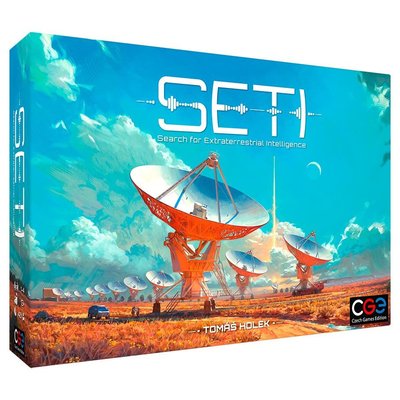
Number six. At number five, we have STI. SEI does something I think is really really cool with modularity, which is that you plug in two different alien species into the game, but you don't know what they are until you actually discover them. So, you get to discover the modularity as you actually play the game.
So, there's five different ones in the core game. You put two of them in. So it leads to some variability where you have two different two different combinations of things that do have a pretty big impact of the game from then on once you unlock once you discover those alien races um and alien species.
Uh I also think this is particularly clever in this game because the game is entirely science-based until you get to the aliens and then you add a little dose of sci-fi. So I love that this is one of these kind like there's a big range of nature themed games now. nature based games, but I love the idea of adding a little bit of uh of super superlative fiction uh to that those games.
A little bit of sci-fi, a little bit of fantasy that you unlock at a certain point in the game. Saidi does this with the two alien species modules. That is SEI at number five. At number four, we have Cthulhu Death May Die. And this in addition to shackled and base may be the best example of modularity in on this list because you're plugging in several different elements that have a significant impact of the game on the game.
You have and again you have the characters. I'm not counting character modularity here or character asymmetry but you have the monster itself the old the great old one and you also have the setting. You have where that old one is coming in uh you know this map that you're exploring. And I think that's a great way if you're thinking about doing a modular game I think that's a great way to think about it.
map plus some other element that is interacting on the map that you have to interact with. Spirit Island did the same thing. Map plus colonist. This is monster monsters plus map. Um, and uh, yeah, I think I think this accomplishes that pretty really really well with how the the shape of the map and the and what the monsters add to this particular combination, these two modules really changes how you might play in this scenario or in this uh, this modular combination in Cthulhu Death May Die and it leads to a lot of replay-ability as a result.
So that's Cthulhu Death May Die number four. At number three, I'm combining two games in one uh because they both are racing games that are fairly similar, different mech mechanically, but fairly similar in that the modularity, the core modularity comes from the maps themselves, the tracks. So, this is heat and downforce.
In both of these games, uh there's a lot of the decisions that you make in the game come from the tracks themselves, where the tight corners are, where the tight spaces are, like in the downforce track, where you're going to have cars get into into really tight spaces where only one can can fit by. Um some of the the tracks in Downforce have entirely different rules that you need to consider.
Um, and then heat in the included in the core game are a bunch of modules that you can plug and play with as you as you play the game. It almost it feels like they included a lot of expansions in the back box, but they're in the core box. So, there are modules instead that you're plugging in to decide like, okay, are we going to draft abilities this game?
Which map are we going to play in? Um, I I I haven't gone that deep in the heat, so I don't know how how vast those modules are, but I know the game is acclaimed for the number of modules that it has in the game. I think I prefer Downforce because it's so streamlined and I like the variability the maps add to it.
But um but I definitely wanted to give Heat a big shout out here for the modularity it offers to the racing game genre. So that's Heat and Downforce at number three. At number two, we have Lost Ruins of Arnack, which is what I was alluding to earlier when I say that sometimes there is one big chunky thing that you're adding to the game that makes uh that makes it modular.
And in Lost Runes of Arnack, it is the temple track. So in the core game, there's two different temple tracks. one on either side of the board. There's also more and expansions that you can add. But again, today I'm talking about the core game. In the core game of Lost Varak, the different side of the board and the different temple track on that side of the board makes the game feel significantly different.
Uh these paths that the designers Min and Elwin have lined out and the different benefits that you get along the way, the different obstacles that you encounter, some different rules also on the temple track really make for a different experience in this game. So, I really like that. I I like this idea that a game can feel significantly different based on one big thing that you are changing every time you play.
Um, and I also like that there's enough paths on this temple track that even playing the same tempo over and over again can feel very different. I think that's impressive too that it isn't just like, okay, we've played that module, let's move on to a different module. You could really play the same temple track over and over again in Lost Arms Vernac and get plenty of replayability out of it.
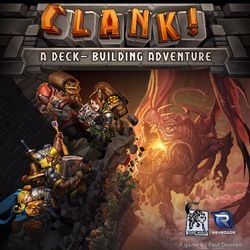
Lastly, at number one, this was almost a last minute addition because I had forgotten how modular Clank is, but I wanted to throw Clank in here. I love Clank. Clank is a a heisting dungeon crawl style game where you're diving into the dungeon, you're grabbing a bunch of different things that are worth different amounts, and you're trying to race back out of the dungeon using deck building the whole time.
Um, and a Clank is highly modular based on the side of the board, based on the map that you're using. In the core box of Clank, you have a double-sided board. So, you have two different maps that really do change the uh your considerations for how you are moving throughout the game. Again, I'm not officially counting the expansions for this uh for this list, but the expansion maps in Clank do really change the feel of the game.
They add new cards to the game. They add new maps, but even just the change in the map alone in the core game, similar to just the change in the temple track and lost Varnac core game, it really does make the game feel different and it kind of uh it opens up that design space for other maps to be added with deeper twist into the rules.
So, I think Clank I think is my favorite modular game where just with the map modularity uh just flipping over which side of the board you're going to play on um can add can really make each game feel quite different every time you play. I'd love to hear your thoughts on this modularity again as I defined it early on that we're not talking about expansions.
We're not talking about player asymmetry. We're not talking about a lot of little things that you're changing in setup. We are talking about big modules that you are plugging into the game in from that are built into the core experience and they are making the game feel different or unique or harder or easier um or shorter or longer.
I love that the these different options that a uh that a module can add to the game and I'd love to hear your examples. This was a tough thing to search for and so I'm sure you will think of some examples that I didn't think of. I look forward to hearing your thoughts in the comments below. Thanks.