The Ultimate Top 10 Board Games of All Time
Games in This Video
10 games are featured in this video — they unlock as you watch.





Transcript
Hey everybody and welcome to my top 10 board games of all time. Now this is the 2025 into 2026 edition of the list and you normally I do a or an entire top 100 series, but I thought, you know, let's keep it simple this year. Let's just do the top 10 and I'll do a follow-up video talking about the significant movers and shakers when it comes to the rest of the top at 100. it. And this is the absolute best of the best. You know, the top 1% of the top 1% of the games that I've played. So, apologies if I do gush over these games a little bit, but of course, they are my absolute favorites. Now, before I get started on these 10 games, I want to give a shout out to the show sponsor, kiender.co.uk, who are my go-to online retailer. And if you use the link in the show notes or the QR code, then you can get 5% off your first order. At number 10, I have Lorenzo Il Magnico. So, this is my favorite uh pure worker placement style game with a great degree of engine building and resource management. So, in this game, you are using your workers in order to claim different cards to add to your personal display of cards, which will make you much more efficient at gathering resources or doing different actions. But the twist with this game is that the strength of your workers vary from round to round because basically at
the start of each round uh three dice are rolled which will correspond in colors to your workers. Um and that will determine the strength. So are they all going to be really strong this round? Are you going to have one strong worker and you know maybe two weak workers and so on. Now that might sound a little bit chaotic and a little bit swingy, but the truth is that all players are singing from the same hymn sheet because that applies to all the players. Uh meaning that you might have to fall back on some kind of insurance policies when it comes to your engine as well as gaining these little helpers that will boost the strength of your workers. Now, there are a ton of resource management games out there. Uh, I think this game does such a great job of creating a kind of a new niche when it comes to gathering resources because you don't gather resources in the traditional way by going to this spot and getting, you know, a stone, whatever. You are acquiring these cards, adding them to your playerboard, and then going to a separate spot which will run that engine. And when you run that engine, depending on the strength of that die that you've used, um, you will start kind of, um, churning out resources at really high rates. um if you do it just right. At the same time, you are encouraged to climb tracks. If you don't climb the track, you'll get punished.
You are again um getting points in different ways by collecting different sets. Um you know, lots of different things you can go for here. But I do like the way you have to react to what the dice are giving you. Um a great expansion to this game as well if you want the variety when it comes to kind of different player powers that you can bid for at the start uh of the game. And for me, this game just pulls you in lots of different directions. I want to do everything, but there's not enough time. Each game is going to feel different because maybe the cards that were cheaper this game will be really expensive next game and so on. So, um, cannot speak of this game highly enough. I love that dice rolling twist. Um, people will find that polarizing, but it personally works for me and it makes you kind of feel and think on your toes a little bit more than usual. So that is Lorenzo Ilm Magnico up slightly from last year. You know it was at 12 last year, climbed a couple of spaces, but this one actually has ranked as high as number two, but just hanging in my top 10. Lorenzo or Magnico at number 10. At number nine, I have American
game uh the other day. Now, when it comes to Stephan Fel games, you know, I do love his designs. This one might have the highest fun factor out of any of them. So, this actually uses the cube tower in order to determine the actions you can take where you'll be chucking a bunch of these colored cubes into the cube tower and they'll all filter through. Some will get trapped, some will get knocked down from previous rounds, and what spits out at the bottom. Uh the different colors will determine the different actions you can take. Um but the kind of most numerous number that will come out if there's say you know four black cubes uh two yellow cubes and two red cubes then you can take any action of those three colors at strength four. Um and all these actions will kind of tie into a different miniame. Do you want to try and use the black cubes to fight off these pirates to avoid losing points at the end of the game? Do you want to use cubes to draft um tiles these tetromemino tiles which will use to populate on these islands?
Do you want to use your ship to travel around the board and kind of set up um little trade posts on these islands where you can start building these polyomino tiles? Uh do you want to focus on these little um resources in order to start kind of um scoring set collection bonuses and so on? I love the way this game it just kind of says these are the actions you can take. Is it worth doing it now? Is it worth holding on till later? Can you risk that cube not coming out again? Um, I love the sense of urgency when it comes to rushing to these islands and getting them populated as quickly as you can to get additional bonuses and I just think this game is an absolute blast. I love the special powers you can acquire throughout the game to specialize in different things. And for me, yeah, as I said, the the fun factor for me is off the charts here. I do believe this game is getting a reprint maybe this or next year with a new skin. But again, if you can find a copy of America, I would highly recommend you give it a go. Even if you don't normally like Stefan Feld games, I think this one could be a bit of an exception because it feels a little less maybe a little less mechanical or a little less stuffy than some of his other designs. It is just a pure funfest. So that is Americanstein.
So, this is actually the highest climber on my top 10. It was actually ranked at number 37 last year, and this is the highest that has ever uh placed. So, Wenstein, one of my favorite area control games, and this is like a true kind of war/yurogame hybrid with some of the most clever programming and combat mechanisms that you will ever see. So, what you're trying to do, as with a lot of other area control games, you are trying to control different regions and this map of Germany, you're trying to um establish kind of churches, houses, and so on to generate more points, but it's the way you do it, which is where the fun really lies. So, basically, at the start of each round, each player is going to program their board with different locations. So, as long as you are controlling a location, you will have a matching card matching that region. And you will place these cards face down on your little programming board, which will say that I want to bolster in this region. I want to tax this region. I need food from this region. I need to attack from this region and so on. And everyone is doing this at the same time. And of course, you are trying to think what your opponents might be doing. Now, do I really want to um move too many troops from here when I've got such a threat here which can just swoop in and grab um my prime location and so on. But there are so many kind of um variables that go
on in this game because each round the the order in which these actions are resolved are mixed up. Some of them are face up, some of them are face down. So, you do have to predict and maybe guess what's going to happen. Do you want to play super conservatively and just protect what you have? Do you want to venture out to prevent or to um be aggressive? And I haven't even mentioned the way that the combat is resolved, which is the probably the coolest combat resolve mechanism that I've seen, which again uses a cube tower. Whoever's in the battle will grab all those cubes, chuck them in the cube tower, and whoever's cubes come up more will win the fight, and the other ones will be removed. So, it's like a lightning fast battle um or to way to resolve battles. And it even has this kind of passive catch-up mechanism where if your cubes get stuck in the tower, they'll probably come out and support you later when you least expect it. Uh I love the other little intricacies of this game as well, where you need to fund your war efforts by feeding your troops and so on. And you do that, of course, by taxing or forcing them uh your different regions into labor. um the more labor they do, the more likely they are to revolt against you and attack and try to claim that that spot back from you. So, not only are you worrying about your opponents, you have to worry about the game itself if you do kind of um tax those locations too hard. So, I love everything about this game. When I first played it, I was certainly impressed by it. Um, but the more I play it or each time I've played it, it's climbed up and up and up and I can even see this
continuing on an upwards trend from a a super high level even at number eight. So again, one of the best war games out there. I could not recommend this one enough. It is just phenomenally well executed. That is Wenstein at number eight. At number seven, I have Civolution. So, this is actually a new entry to the list, and I can't actually recall a time where a a game has come straight in to my top 10. That's pretty much unheard of when it comes to um I think my previous lists, but this is the most grandiose and epic in scope uh Stephen Feld game out there. It's a game where you can pretty much do anything. You know, this game does uh track climbing, it does tableau building, it does exploration, resource management, kind of has a kitchen sink of mechanisms. Um, but surprisingly, despite how even daunting [clears throat] it looks, it's surprisingly easy to play. So, this game actually has a slight thread um of Feld's probably most famous game, The Castles of Burgundy, where you are using pairs of dice in order to resolve actions. In this one, um all these actions, there's a ton of actions. Um you can again, you can get resources, you can move your troops around, um you can draw more cards, you can play cards, uh and so on. But you do have a, you know, a good degree of mitigation if you do want to tinker with these dice rolls.
Now, a lot of people probably will say, and it's going to be his main criticism, that a game of this scope and this breadth shouldn't be so reliant on the rolling of dice. And I can completely appreciate and understand that. But from a personal perspective, I actually appreciate that. I actually love the way that the dice dictate what you can do because it means that you are not completely overwhelmed with decisions and you don't have that kind of paradox of choice. You know, you are kind kind of kept on the rails on what you can do. Yes, you can tinker a dice here or there to change your actions, but you can't just do whatever you want whenever you want. Meaning that it does have a slight degree of, you know, of tactical play and you can't just keep relying relying on the same strategy each time. But again, I love the way that you have options here, options there. Tons of ways to get points. Each game, you can focus on something completely different and just ignore some facets of the game. And something I tend to enjoy with games like this is that you can't get everything done. You know, there's just not enough time to get everything done. And you know, you you don't have that degree of over accomplishment, which normally for me is a kind of a red flag, and it means that I don't have the urge to come back to games. This one, whenever I play it and I finished it, I always feel like, you know, a great sense of accomplishment, but it feels like, well, I could I could have always done this, I could have done that, I could have done this, let's do that next time. This game has that in spades. Uh, it really does reward forward planning as you're building up to build these powerful cards. Tons of
cards to play with, which will give you amazing abilities and powers to differentiate you from the other players as the game goes on. Um, honestly, I could talk about this game all day because there is just so much to talk about that if you want a grand epic feeling game that has solid kind of mechanical foundations and isn't relying on, you know, fluff or, you know, kind of more Americanized mechanisms, then Civolution is just such a great option. And, you know, I couldn't believe that this game came out from failed really. He's not really done anything like this, so it's kind of out of the left field really. Um, but I'm so glad he did make this game because it is just incredible and I can't get enough of it and I just want to play it more and more. So, that is Civolution at number seven. At number six, I have Ra. So, not many videos go by where I don't mention Ra in some capacity. It's definitely kind of Kitia's most famous game. Um, this one actually ranked at number six last year.
Number six again, and this is the highest it has ever ranked. Um, but I love Ra so much. It's probably one of the most clever and delicately balanced um, auction games that you will ever play. It does really kind of blend some kind of party aspects with more meticulous euro mechanisms together so harmoniously. So, in this game, you are trying to um acquire these different tiles that will all score you points in different ways, but it's all about trying to get the most value from your bidding tokens because unlike most auction games, you can't just bid what you can afford. You can bid what is based on these tiles that you have acquired. So turn after turn you are going to be populating this board with new tiles which could be good, they could be bad, they could be they could be excellent, but you have to weight these lots of tiles just right to correspond with the bids that you are willing to put forward because if you overpop populate the the central display with great tiles and you don't have the best bidding tile, then you're not going to win it. But at the same time, you want to weight it just right so that you're getting good value, but your opponent who might have a much higher bidding token doesn't want to waste their bid token because it might not be the best value for that token. So again, you just want to just squeeze under what your opponents are willing to pay. And I love working what that out what what that value is out in my head and then just just catering those bids just right
for what I'm willing to pay. scoring mechanisms. Pretty straightforward stuff. You have the most of this endgame bonuses for these symbols and so on. But I love that kind that ongoing sense of tension. When you draw those RAW tokens out, it will um you know immediately trigger an auction. If you draw a certain amount of RAW tokens out, then it will end the round. You could be caught short because you might not have even spent your tokens yet. So again, another sudden death mechanism where do I want to make sure I get all my bids in and at least use my tokens or do I want to maybe wait until other other players spent all their tokens? I can have free reign of what I want, but that time might run out before I spend them, meaning that I've completely wasted my efforts. Again, so many layers to the onion here, and I just love that. And every time you play this, it just seems like something else just becomes apparent. And it's just great. And you know, the new version from 25th Century Game just added a whole new fresh lick of paint to the game as well. And I honestly feel if this game came out today and it wasn't released, you know, 25 years ago, it would still do extremely well because of the pure quality uh and the uniqueness of the design. So that is RAW at number six. At number five, I have The Oracle of Delelfi. So, for me, this is probably the most underrated Stefenfeld game, especially because it is so similar to his most famous game, The Castles of Burgundy, although the the premise is completely different. Uh, so this one
actually ranked at number 13 last year. I believe it's been in my top 10 before. Um, but this is a new best, ranking as high as number five. So, Oracle of Delelfi is actually a racing game, but it's not a game where you're just trying to get to the finish line before your opponents do. Uh, you are racing to get a number of these kind of heroic quests done and make it back to base before your opponents do. Now, these different things you're trying to do are are pretty straightforward. You're trying to drag a statue of this color to a a temple of this color. You're trying to fight monsters of this color and that color and so on. But it's all about efficiency. So you do not want to waste any movement in this game and there are so many things you need to consider in order to do that. So for example, you are basically moving around in this boat. Your boat has a capacity. So maybe I want to grab this statue, go this way, pick up this this token, I'll go down here, then I'll drop that token off.
Then I'll go here and drop that statue off. Then I'll slay this monster and so on. But of course, the the board is completely modular. Your opponents might have the same idea. They'll take the stature that you wanted before you did and then you have to think of plan B and go somewhere else. But at the same time, you are restricted by the dice that you've rolled. Again, some good mitigation tools here, but you know, you still do have to bear that in mind. Um, and you also have to consider that you have these amazing powers that you can charge up as the game goes on. And these powers are completely rulebreaking. For example, if you charge up the blue god, you can just teleport from one side of the board to the other. Or if you've got like the the uh the god of war, you can just slay a monster outright rather than having to roll for it. Um so it's all about not only trying to charge these powers up, you want to use them when it's the most efficient. And it's all about planning routes and being kind of a a logistics puzzle really. And I just think that works so well with that dice um manipulation mechanism. And I just think this game is just like tailor made for what I like in board games. It's just pure euro goodness and pure efficiency but with that random input element um of the dice rolling. So you know although most of the games I like are you know euro based um and I do actually love dice rolling in games I don't normally like roll to resolve games. I like games where you're randomly rolling input but you can manipulate and use those dice as you like. And and Oracle of Delelfy does that almost better than than any game
out there. So, I highly recommend you try this game if you do like games like the Councils of Burgundy. It kind of feels so different to a um to a a Euro game or a standard Euro game because there isn't actually resources. Again, it has that strong race element and sense of urgency of trying to get everything done. And you know, I've seen some photo finishes done in this game which is always um always a great thing. So, that is the Oracle of Delelfi at number five. At number four, I have Puerto Rico. So, one of the most iconic board games of all time for sure. It was considered, you know, by the masses to be the best game for quite a long time. And of course, I happen to agree with that. Um, so last year, this one ranked at number nine. And this is another new highest place for a game. So, uh, you know, the more and more I play, uh, games, you know, tons more games, the more I appreciate simplicity and elegance, but with a good degree of depth. And that pretty much personifies a game like Puerto Rico, where, you know, in essence, it's pretty straightforward. You're just populating your little colony, getting resources, selling those resources, and so on. But it's the action selection system which makes this game so, so special. It's been imitated so many times, but it's never been duplicated to as high of a standard. So, basically what I'm saying is that in this game, you will choose an action as the active player. Um, you will get kind of an improved version of
that action, but everybody else will get a a lesser version of it. Now, this can actually work in your advantage if you are not the active player. um because you can piggyback off other players efforts and you can actually work for you and you can be efficient by not having to waste your action on something that might be a great choice for you but not your greatest choice for you. And this game is so special because not only do you have to consider what's best for you, you have to consider who is getting the net gain out of each turn. So maybe um I want to choose the, you know, the load the boat action. I can load a couple of resources on it, which is fine, but my next my next opponent next in line might absolutely load that boat up and um completely um get the jump on me. So, I might want to wait until they take that action and then I can piggy back off them instead so I'm not wasting my whole turn. It's a super nuanced and intricately intricately made game. Um, and it just I find it so compelling that again, not only do you have to consider what you're doing, but you have to consider the broader consequences um of your action actions. I also love the um the forward progression in this game as you're getting better and better buildings and letting you break rules that you wouldn't normally be able to.
Um, this game has everything you'd want. Uh, I think it is just kind of every single thing that doesn't need to be there is removed from the game and the only stuff that is there is the stuff that's interesting, compelling, engaging, and just rich in terms of its strategy and depth. So, um, I can't say a bad thing about Puerto Rico. Some people might bounce off of it because I suppose if you are a super seasoned gamer, you might be able to manipulate the other players and get a jump on them without them realizing. But from what I've kind of ever heard other people talk about it and say those complaints, I think it's overstated really because, you know, anybody with a degree of common sense can see how this game works, but it doesn't take away from those consequences, which I really like.
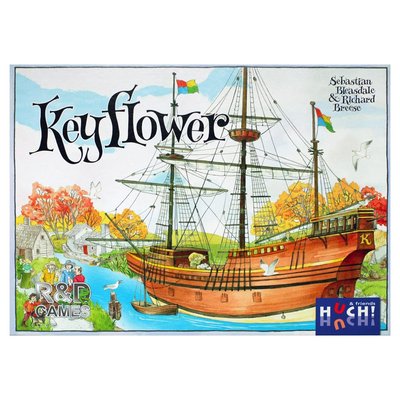
So, I actually think it's surprisingly easy to jump into, surprisingly easy to play, but much like a game like RAW, the layers will unravel and unravel and unravel the more you play it. And I think the more you play with the same people, the actual experience will elevate and elevate and elevate because it is just that rich of a design. So, that is Puerto Rico at number four. At number three, I have Keyflower. Keyflower for me is probably the prime example of how to use multiple mechanisms in one game and harmonize them together and kind of smooth over all of those rough edges. So, you know, a lot of the time in Euro design nowadays, it'll be a bit of a kitchen sink of mechanisms and they all feel somewhat isolated. In this one, every single component of the game is just like necessary. So you have tile placement, you have bidding, you have worker placement, but again all of those things are as important as the other in Keyflower. So in this game, you are essentially um building your own little village by bidding for these tiles and acquiring them, placing them as you like, gaining resources, shuffling resources around to get points, and so on. Um but the twist on this game is that the way you acquire the tiles is based on this bidding system. And unlike, you know, 99% of board games, you don't have your own player color.
You are bidding with meles of like red, blue, yellow, green, and so on. But as soon as you commit a color to a towel, all the other players have to use that color mele. And as more information starts to be spread in the game, you might be able to leverage that because maybe I know that I have the most blue meles. I can bid blue meeples here knowing that no one else can out bid me because they don't have any and I can get it for really good value at the same time. You can just jump straight onto those tiles and just use them as worker placement spots in order to maybe get resources and so on. Um, and you can even use other players previously acquired tiles on their village, but considering that you're placing workers on them at the end of the round, they are going to get those workers back and maybe use them against you. So, this game probably has the coolest passive um worker economy that I've ever seen in a board game. I love the logistics puzzle as well because unlike um again most other tar placement games, in this one you are actually physically shifting resources down the roads and moving them into different kind of locations and so on in order to upgrade the buildings and so on. So you are actually considering kind of efficient routes and so on that certain resources can go down. Um wonderful interaction probably one of the highest level of um you know not nasty interaction but kind of forced interaction a board game has ever displayed to me. Um it's so smooth, it's so elegant, it's rich. You'll never see
the same kind of play the same game twice. Different tiles will appear. Um, I just love again the shifting of those workers and how that economy shifts. It is just an absolute delight to play. Uh, and I, you know, obviously I can't speak highly enough of a game like Keyflower. They don't really make euros like this nowadays. It's just again top top tier. That is Keyflower at number three. At number two, I have Traan. Uh, the final Stephen Feld game on this list. Obviously, I I am a huge fan of his designs. Uh, this one was number two last year. The highest place it's ever ranked is number two. Uh, this one is definitely the most thinky fell game that I think you'll ever play as it uses the manala system where you have um a series of different actions. I think it's six bowls. And you know, at the beginning of the game, there's going to be these different tokens seeded in these bowls. And as an action, you can pick up one bunch of tokens from these bowls. Deposit them around in in um clockwise order. And the bowl you end in, as in the last token, will be the action that you take. Uh, all these actions will correspond to a a miniame, maybe a bit of a set collection or, you know, climb the Senate track to unlock endgame scoring, collecting cards, going on this bit of a military voyage, and so on. Um, but not only are you considering the actions uh that you're taking that turn, of course, you are uh setting up or planning for future actions based on
where you've deposited those tokens, but also each of these tokens has a color on them. And if you line certain colors up, you can trigger bonus actions to give you a much better degree of action efficiency. Uh, this game is all about efficiency. You don't want to waste any of your turns. Um, it's a game with tons of delayed gratifications as you again you can lay the groundwork of big actions later. Uh, super tense again, super sense of urgency for everything you want to do. as tiles are being grabbed up, you're fighting off these threats. Um, you are just doing so much uh in this game under very tight uh time constraints. Uh again, there's a lot of games out there that use this kind of um mini game or series of mini games um of concept. Uh none of them do it as well as Trajan do or does because um all those different mini games are super well harmonized and it gets held together through that compelling mana system. So I I've never had a bad game of this. Each time I play it, I just I just fall in love all over again. Uh it is genius. I love the way you can very very meticulously plan your turns. So, it's going to reward players who like to have a lot of control over their game, but at the same time, you know, you can kind of just roll with the punches and see how these different um tokens will lay out and you can still do, you know, reasonably well, but the best player will pretty much win all the time when
it comes to Trajan because it does reward that. Um, you know, close to perfect game. You know, one of the only games I rank a 10 out of 10 that is Trajan at number two. And finally, at number one, I have L Grande. Been my number one for quite a few years now, so I'm sure this isn't a shock to a lot of you, but this is still for me the Magnum Opus when it comes to area control uh designs. And to be honest, you know, area control is not something that normally gets me super excited, but Elrai is just in a league above most other designs. So, this one, I suppose at face value, it's very straightforward. You just want to have the most troops in the different regions when it comes to scoring in order to get more points. Um, but it's how you go about it and the amazing use of these different cards and actions that are available to you each turn. Uh this game also has a fascinating uh kind of um cash flow mechanism when it comes to having troops to put onto the board because if you play higher valued cards in terms of initiative order, um you will get access to the best actions and it will also allow you to deploy more troops onto the board.
But sometimes you need to take a backseat and know when you can do that in order to refill your coffers full of workers so that you can go forward and keep deploying troops onto the board because if you don't do that, you will very quickly run out and you'll just you'll just basically lose by attrition. Uh the actions themselves are are fascinating. You know, maybe you will um you know, spread troops around, you can kick people out of a region. um you can move the king around, which is kind of the kind of the central focus of the game because this king piece, um not only will the region the king is in be worth more points, you can only ever deploy new troops in the region surrounding uh the king, and of course, you can use that as leverage to move people away from your regions to infiltrate other regions and so on. even additional touches like the Castillo just add that little cherry on top of the cake when it comes to blind deployment into another separate area control. But if you have the the most troops inside the castle, then you'll score points, but you can also redeploy them secretly to another region in order to maybe steal a victory when it comes to majorities and so on. Um, an absolutely perfect design. I couldn't think of a single thing you could do to improve this game. Uh, I love how careful you need to be just to to move this troop there, move this troop there, shift this person over here in order to score as many points as you can. It can be pretty cutthroat. Um, but it's all in the nature of a game like this. You
know, if you have a remote interest in area control, this is kind of the the finest example you could show someone. Um, again, no true bells and whistles, although there are, you know, lots of quirky things going on. It doesn't try too hard, but at the same time, it just has that magical ingredient that makes it feel timeless for me. Now, I've not played the new version of this, but I'm still so glad that it has had a reprint. I've still got the original big box, and you despite the the big box having tons of um little modules and expansions you can add in, I never use them. The base game alone is perfection. Uh, that is Elgar Grande. Still my welldeserved number one. So, there we have it. That concludes my top 10 board games of all time for another year. Now, apologies if you were looking forward to an entire top 100. It's just a little bit too time consuming. But again, I will do a general recap on what has really changed in my top 100. So, um, hopefully that's something to look forward to. Now, if you have enjoyed the video, please be sure to hit like and subscribe to my channel. Also, I would really appreciate if you do support the channel via a Patreon if you want to take a look at that just to keep it going. But for everybody else, I'll see you next time on Chairman of the Board. Bye-bye.