These 11 Rulebooks Destroyed Iconic Board Games
Games in This Video
13 games are featured in this video — they unlock as you watch.





Transcript
You just spent $200 on a beautiful game. You crack open the box and an hour later you're still on page six of the rulebook with someone in your group already checking their phone. Welcome to the modern board game hobby. Ah, that hurts because it's so true. So today we want to talk about something that drives us both genuinely crazy, which is great games shipped with terrible rulebooks. And we're going to walk through some of the worst offenders we've personally wrestled with at the table.
Yeah, and I want to be clear right at the start. Every single game we're about to talk about is good. Some of them are masterpieces. The problem isn't the design, it's the documentation. The rulebook is supposed to be the gate that lets you into the experience. And when the gate is broken, it doesn't matter how amazing the garden behind it is. That's exactly the framing. And I think the most maddening thing is that this isn't getting better. We're not talking about ancient games from the early days of the hobby. We're talking about high production releases from the last few years that arrived with rulebooks that simply do not work. So let's start with one that broke our hearts a little, which is Oath. Ah, Oath. So Leder Games, the studio behind Root, had built this incredible reputation for clear rulebooks. Root was actually held up as a model of how to write rules well. Then Cole Wehrle delivered Oath, which is this asymmetric sandbox of political intrigue and shifting allegiances and emergent storytelling where each game writes the history that shapes the next one. It is genuinely a singular design.
And they tried to solve the rulebook problem in a creative way. They shipped two documents, a learn-to-play playbook that walks new players through their first session round by round, and a denser reference document called the Law of Oath for rules look up during play. The intent was good, the execution was rough. Yeah, we needed to read the playbook three times, the Law of Oath twice, and we were digging through community threads before we felt remotely confident playing our first game. That's not a learning curve, that is a wall. And the team at Leder admitted as much. The early feedback was almost entirely negative, and the core criticism that landed was that the rulebook tried as hard as it could to hide all the weird stuff. Right. And Oath is the kind of game that has many distinct win conditions, some available from the start, some unlocking mid-game, some that may never appear in a given session. The rulebook tried to soften that complexity, and in doing so, it obscured the very information players actually needed. To their credit, they iterated on it post-release, and a companion campaign aid was developed to help new players in. But the damage was done. A game this inventive deserved a first impression that matched its ambition. And instead, a lot of people got bounced before they ever saw what made it special. Now, let me bring up one that genuinely confuses me. Kemet: Blood and Sand. The original Kemet from 2012 was a beloved area control game set in ancient Egypt, fast and brutal and elegantly structured around a power tile progression system.
Blood and Sand was the 2021 reimagined re-release from Matagot with new art and improved miniatures and new content. Everyone was excited, and then we opened the rulebook. And here's what's wild. Kemet, at its core, is not a complicated game. The action economy is clean, combat is direct, the winning condition is clear. It is not a Lacerda design. There is no excuse for the rulebook to feel like an archaeology project. Critical rules scattered across non-intuitive sections. The structure does not follow the logical flow of a game round. So as a first-time reader, you cannot build a coherent mental model. Edge cases either buried or absent entirely. It felt slapped together as an afterthought. And the cruelty of it is the context. This is a re-release. The design team had years of community feedback about what was confusing in the original. A reprint is supposed to be your second bite at the apple, your chance to sand down every rough edge. And instead, the Blood and Sand rulebook arrived rougher than the original. The BGG threads at launch were just flooded with rules questions, and people were asking whether later retail copies shipped with a corrected version, which is the most damning signal a rulebook can possibly send. The game itself holds up. The power tile system is satisfying, combat is punchy.
It moves faster than its complexity suggests. But for a lot of people, the rulebook created a first impression that took multiple sessions to shake off. Now, if you want a litmus test for rulebook failure, here is the one. The publisher rewrites the rulebook and releases the new version as a paid product. That is what happened with Coffee Traders. Wait, walk me through that because every time I think about it, I get annoyed again. So, Coffee Traders is Capstone Games' complex economic Eurogame about the global coffee trade. It sits in that medium-heavy category, complex enough to be interesting, but not insane. There is no good reason for its rulebook to be as impenetrable as it was. And yet, the original was so confusing, errors throughout, inconsistent terminology used for the same concepts in different sections, diagrams that seemed to describe a different game entirely, that Capstone issued a full replacement, the V1.5 rulebook, about two years after release. That replacement is an admission. Publishers do not rewrite rulebooks unless the first version was genuinely broken. And this was a game priced at $100. The bar for acceptable at launch should have been a lot higher. And the kicker, accessing a physical copy of the corrected V1.5 required paying an additional shipping fee. So, the game about fair trade asked customers to pay extra to receive correct instructions.
The irony is doing some heavy lifting there. That's almost too perfect. Okay, let's pivot to one I have very strong feelings about, Robinson Crusoe. Oh, here we go. Robinson Crusoe: Adventures on the Cursed Island. Portal Games, Ignacy Trzewiczek. This is the entry that most frequently appears at the top of any community list of terrible rulebooks, and it has earned that reputation across multiple editions and many years. But underneath all that documentation chaos is a genuine masterpiece of cooperative design, generous narrative, inventive scenarios, emotionally resonant in ways few games manage. The rules are not just wrong in places, they are vague throughout in ways that invite wildly different interpretations. When and how certain actions can be taken is described with such ambiguity that player groups regularly discover mid-game that they have been playing by house rules they invented without realizing it. Second and third editions tried to fix the worst of it. The community produced extensive unofficial clarifications, but the reputation is fixed. It's the cautionary tale. It is the game teachers site when explaining what not to do, and players site when they want to validate that their rulebook experience was genuinely bad and not just a personal failing. I think that's what makes it sting. Players blame themselves first.
And that is the real damage of a bad rulebook. It makes people feel stupid. They sit there reading and rereading, and they assume the failure is theirs when it is the document failing them. And speaking of games with a rulebook fails its audience, Pax Renaissance second edition is one I want to flag because it's a different kind of failure. The Pax series by Phil Eklund occupies this deliberately challenging corner of the hobby. These are games that reward deep engagement and assume a certain appetite for complexity. So a demanding rulebook is somewhat expected within that context. Right. Pax games have rules that need to be dense because the systems they describe are genuinely dense. But there is a difference between density and dysfunction, and the second edition rulebook lands on the wrong side of that line in a way that frustrated even experienced Pax players. The BGG community threads after release described it bluntly as godawful, poorly organized and impenetrable in a way that the game's complexity does not excuse.
The information is present, the structure to navigate it is not. Part of the problem is that Pax Renaissance is a game about the Renaissance, and Phil Eklund's design philosophy embeds thematic and historical depth into every mechanical layer. That richness is part of the game's identity, but when the rulebook treats this depth as a reason to front-load you with context before you understand the basic flow of play, it inverts the learning process. You don't yet know what questions to ask. A good rulebook scaffolds complexity. It layers information in the order a player needs it. Pax Renaissance second edition does the opposite. It presents the complete picture before giving you the foundation to understand any of it. Speaking of legendary, we have to talk about Mage Knight. Ah, the big one. No list of bad rulebooks in this hobby is complete without it. Vlaada Chvátil's solo and cooperative adventure of exploration and conquest is one of the most acclaimed designs in the modern hobby. It is also one of the hardest games to learn from its own documentation. And what's interesting is that the Mage Knight rulebook is technically comprehensive. The rules are present, the information exists, but the structure is so dense and so poorly sequenced that you consistently have to read it multiple times across multiple sessions before anything coheres. The mana system, the day-night cycle, wound management, all of it is interleaved in ways that require you to hold multiple partially explained concepts in your head simultaneously before any of them
become clear. You cannot learn the game linearly because it's not written linearly. The community response has been extensive. There's an unofficial FAQ document compiled by players and hosted on BGG, running to many pages, addressing hundreds of specific rules questions that the official rulebook either got wrong, contradicted itself on, or failed to address. Community-built rule summaries became the standard learning tool, more reliable and more frequently consulted than the rulebook the game shipped with. The Ultimate Edition re-release offered a revised rulebook, and it is considered an improvement, but the original's reputation precedes Mage Knight everywhere it More than a decade after release, the standard recommendation for new players is still to skip the rule book and watch a video tutorial first, which is a clear signal that the official documentation never became trustworthy enough to stand on its own. And I want to flag something here about Awaken Realms because Nemesis is in the same conversation, the atmospheric survival horror game on the alien-infested ship. Phenomenal production, thematic coherence is air-tight. When it works, nothing in the hobby feels quite like it. But, the rule book is a disaster that community has been papering over for years. Awaken Realms even iterated on it during the Kickstarter, incorporating backer feedback into a revised version before production. Despite that, the shipped rule book contained confirmed factual errors. There is at least one illustration that the official FAQ
describes as simply wrong. There's a melee versus shooting injury rule that contradicts itself depending on which section you read.
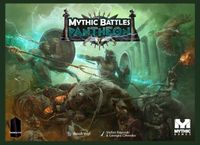
Right. And the official FAQ document had to annotate multiple rule book passages as errors rather than clarifications. That's not an FAQ, that is a corrective supplement to a deficient primary document. The community even produced a dedicated reference sheet for Nemesis that has gone through multiple versions precisely because the rule book left too many gaps for players to trust it standalone. That's what bad rule books generate, this cottage industry of third-party fixes that should never have been necessary. And the pattern continued with Lockdown, the standalone expansion set on Mars. Same studio, same problems. Another round of post-release community clarifications became necessary. At some point, a pattern is a policy. And there's another Kickstarter giant that fits the same pattern, Mythic Battles Pantheon. Greek gods, heroes, mythological creatures, tactical arena combat. The miniatures of figures like Medusa and Zeus and the Hydra are genuinely impressive. If funded to a vast sum on Kickstarter to enormous enthusiasm. And backers had to learn how to play it. The core problem with the Mythic Battles rule book is one that plagues a lot of miniatures heavy games.
The rule book was written for people who already know how to play. Important definitions appear after the rules that depend on them. The sequence of a game round is presented before the components that make up that round have been properly explained. Power interactions between units, which are central to the game's tactical decisions, are documented on individual cards in ways that create ambiguity when combined, and the rule book provides no resolution framework for these cases. Multiple community FAQ threads running into hundreds of posts became the de facto rule book for experienced players, which is both a testament to community dedication and an indictment of the official documentation. A game asking players to invest significantly in both time and money should not require that players outsource explanation to volunteer fans online. Yeah, that's a brutal truth. Let me bring up one that contrasts beautifully with all this heavy stuff, Space Base. Oh, interesting choice. So, Space Base sits at the opposite end of the weight spectrum from everything else we've talked about. This is a light to medium dice rolling engine builder, the kind of game you bring to a mixed group precisely because it should be easy to teach. Ships, dice, cards, income, 10-minute teach tops. And the rule book makes that impossible. 32 pages, only 16 of which contain actual rules. The other half is flavor text, background lore, ship classification information that has zero bearing on how you play. For a game that is mechanically simple, the decision to
bury the rules inside a document padded with irrelevant content is baffling. And there's no functional index, just a list of every card sorted by ship class, which is useless for resolving mid-game rules questions. Card interaction rules, where they exist, are not organized alphabetically, so any attempt to look something up devolves into a full page-by-page search. The charge cube mechanic, which is already the most counterintuitive part of the game, is explained in a section that assumes you already understand how it fits into the broader flow of turns. It does not. So, Space Base, a game specifically designed to be accessible, generates more rules questions per session than many genuinely complex games just because the rule book fails to do the most basic job a rule book can do. That's the thing, right? Simplicity is no protection. You'd think a light game would have a simple rule book by default. It doesn't because writing a clear rule book is a separate skill from designing a clear game. Which brings us to the patterns that connect all of this. Across every game we've talked about, the same handful of failure modes keep appearing. The first is what I'd call the Kickstarter miniatures game problem, and it is the most visible because it is the most expensive. Right.
When backers pledge $150 or more to fund games like Batman: Gotham City Chronicles or Mythic Battles Pantheon or Nemesis, they did so because the campaigns promised something extraordinary. The miniatures and production design delivered, the rule books did not. When you've spent that much money and waited that long, opening the box to find a document that cannot explain how to play feels like a betrayal of the implicit contract between publisher and backer. And Monolith is the studio that crystallizes this for me. Conan, Batman: Gotham City Chronicles. Their boxes are physically extraordinary. The miniatures are among the best produced for any board game. And then you try to learn how to play. The Batman rule book follows the same template that made Conan notorious, technically present, structurally inadequate. Critical interactions explained in different sections with no cross-referencing. The villain versus heroes asymmetry, which is central to how the game functions, is documented in a way that makes sense only after you already understand it. The Conan rule books were universally panned, and that experience cost Monolith both bad press and the additional expense of rewriting and posting replacement rule books to backers. That track record existed before Batman shipped. The same problem repeated itself anyway. The second pattern is the assumption that complexity justifies confusion. Oath, Pax Renaissance, Hegemony, Mage Knight, all genuinely complex games, but complexity is not an excuse for poor
structure. A well-written rule book for a complex game is harder to produce than a bad one. It demands the same kind of information architecture that good technical documentation in any field requires. Right. It requires someone to ask, "What does the reader know at this point, and what do they need to know next?" Game designers are not naturally positioned to ask that question because they already know everything. They need editors who do not.
Hegemony is a perfect example. Such an ambitious game, asymmetric class warfare, up to four players pursuing entirely different objectives in a shared simulated economy. Some rule book complexity is forgivable for that. What is less forgivable is shipping a rule book with enough structural problems that the publisher had to release two formal revisions, V1.1 and V1.2, each with a highlighted changes companion document. Two formal revisions with change logs is not a polish exercise. It is an admission that the first document had meaningful errors and gaps.
And the third pattern is the re-release failure, which we already saw with Kemet: Blood and Sand. Every advantage a design team could ask for, beloved game, years of feedback on what was confusing, mandate to improve, and the rule book arrived worse than what it replaced. That is a process failure, not an ambition failure.
And there's a fourth pattern worth naming, which is what bad rule books do to the community around a game, they poison it. When a bad rule book leaves enough gaps for players to fill in different ways, you get those endless online debates about how a card resolves or whether a particular interaction was intended. That energy could be directed towards strategy discussion or scenario design or expansion ideas. Instead, it goes into what should have been answered on page 12.
Right. And worse than that, you get copies gathering dust on shelves because nobody in the group has the will to suffer through learning it again. A bad rule book doesn't just inconvenience players, it permanently damages a game's reputation. It drives people away before the first session even happens, and every time a new player hears that a game is hard to learn, the next person becomes a little more reluctant to even try. What the best rule books have in common, games like Wingspan or Pandemic Legacy or Spirit Island at its clearest, is that they treat the reader as someone who has never seen the game before. They front-load the overview and delay the edge cases. They use examples liberally. They have indexes that work. They separate the learn-to-play from the rules reference. So, first-time readers and experienced returning players are served by different documents optimized for their different needs. None of that is mysterious. None of it requires revolutionary thinking. It requires time, professional editing, and the humility to recognize that writing a rule book is a separate craft from designing a game.
That's the line that should be tattooed on every studio's wall. A game designer understands their game completely and intuitively, which is exactly why they are poorly positioned to write the document that explains it to someone with zero context.
Professional technical writers exist. Rule book editors exist as a dedicated specialty within the hobby now. Until publishers treat rule book production as a non-negotiable line item rather than an afterthought squeezed into the final weeks of production, we will keep having this conversation, and players will keep arriving at what should have been a great first session armed with a document that sets them up to fail.
And here is the most painful part of all this. Every single game we've talked about today is worth playing. Oath is brilliant. Robinson Crusoe is a masterpiece. Mage Knight is one of the great solo experiences ever designed. Nemesis is an atmospheric triumph. Mythic Battles is spectacular at the table. The rulebook failures we've documented are a reason to seek out community tutorials and third-party summaries and how to play videos before your first session. They are not a reason to avoid the games entirely.