18 new games ranked & rated! ►►► Rahdo Rounds Up January 2026
Games in This Video
16 games are featured in this video — they unlock as you watch.




Transcript
Hey everybody. Today on Roto Runs Through, I am rounding up the month of January 2026. And oh boy, folks, uh, the year is not off to a very good start. I'm afraid to say, depending on where you live in the world, things are going very well here in Ireland. Things are on the up, so that's nice. But I'm not here to talk about geopolitics and the state of things on our planet. I'm here to tell you about board games. And I've got a whole bunch to talk about today in my normal roundup format where I do it as a countdown. I start out the list uh with my least favorite game of the month and I end up with a new game of the month, something to celebrate. But before we get to the countdown, folks, I want to do a quick shout out uh because in January, newsman Eric Martin, uh you know, he's been the head news honcho of Board GameGeeek, my favorite website in the world, Board Game Geek. I am a Board Game Geek. Um he's been doing their news for over a decade and he is now branching out to run his own independent board game news website. It is called Board Game Beat. There's a link for it down in the show notes. And I just wanted to say congrats to Eric and thank you to Eric for all the work he's done over the years. And I just wanted to give everybody an idea of what's here at W. Eric Martin's Boardamegeeek at boardgamegeeek.
No. Oh, that's going to be tough for me. Boardamebee. Boardamebee.com. Um, well, it's pretty much what we've come to expect from Eric over the years. Really, uh, in-depth, well-written, um, stories about all kinds of things going on in the board game world. Hey, uh, would you like to know about the new Code Games expansion pack? Well, let's see. He's already got an archive of stuff. Would you like to hear about his 60 minutes in Nerburgg where he's going to tell you, "Hey, this is the first place in the world you're going to hear about games like Mythologies and um Dragons Overload and the Dungeon Cube and whatnot." Have you heard about these elsewhere? No, you haven't. Eric has always got his finger on the pulse and he is the first place to stop to uh get information. And as I understand it, um, Eric is going to be giving us multiple reports every week about all the newest, latest stuff going on the board game industry. He's going to be having videos like he's, uh, been doing for years. And here's the important thing, folks. This is why I wanted to show you because Eric, if I could give you one bit of feedback, putting your subscribe button down here in the bottom right corner, which literally covers up important stuff like I can't see what's underneath here as I'm scrolling around to look at all the different topics. Um, maybe you should move the subscribe button up here to the top of the page, which is blank on every page. But anyway, it's an important button because you might be thinking, well, you know, it was great when I was getting my board game news on board gamegeeek because I subscribed and
it was just part of my board gamegeeek feed. Here's the deal, folks. Come to this page, subscribe, and all you got to do is type in your name and your email address. Um, and you can get all the news for free, totally for free, and they'll just show up in your inbox. You can either get them every time he posts one, you'll get an email about it or you can get a once a week uh month or a weekly summary of all the news and um you'll never miss a beat at board game beat. Uh and it doesn't cost you a penny. And knowing Eric, I am certain he is not intending to sell your data for big big cash. Um, instead the way he plans on making his living besides, you know, ads on the pages are, well, you can just get the basic news and be able to comment on his blogs if you're a basic subscriber and that costs you nada. But if you're willing to pay a little bit of scratch, you can start getting extra stuff. You can engage in polls. Uh, you can get audio versions read by Eric. So, you can uh turn this website into a podcast. You can get behind the scenes stuff. Uh, you can get all kinds of things. You can even get physical goodies um if you back at a high enough level. I am already a member, so I should just go on ahead and sign in. Okay, that's been taken care of. And now I've got my little profile thingy here in the bottom right corner instead of the big subscribe button.
Although, again, it's covering stuff up. Eric, why isn't it just up here in this empty space? I don't understand. Uh, you're a fantastic newsman, Eric. Uh, let me just say. But anyway, you can get a lot of value and you'll never miss anything if you subscribe. So, if you like keeping your finger on the pulse of board gaming, um, or if you just like Eric as much as I do, he's a great guy. He has been a pillar of the board game world for years, and I wish him all the success in the world. So, I just wanted to take a couple minutes to do a quick shout out to Board Game uh Beat, which honestly, I don't know if I'm going to come to this page very often to see the ads because I'm already getting all the great stuff in my inbox. But, um I don't know, maybe I'll back at one of the higher levels. And of course, he's also going to be putting videos up too and stuff like that. So, uh good luck on your brave new venture, Eric. I am excited uh to see what you come up with next. And with shout outs out of the way, folks, before we get to the countdown, I've got one more topic. All the exclusives that backers of the show, either at patreon.com/roto or here on YouTube as members got to see in the month of January. This is just my way of sponsoring myself, uh, letting you folks know that for for pennies a day, you can get all kinds of additional content. So, what did the backers get as exclusives? Oh, a whole bunch of full gameplay runthroughs from start to finish. We've got Moon Colony Bloodbath.
We've got Rew South America. We've got Twin Star Valley, Walking in Osaka, 108 Outlaws. We've got Jogi, Anime Studio Tycoon. Um, that's a lot of fun fun gameplay. But in addition to that, what else did I do? Oh, I did another Q&A. Took questions from uh backers of the show, and I had two really big topics I dive deep into. one was 2025 a drop in overall game quality, but even more so, I spent time um trollling through the um user reviews of games and basically getting into virtual arguments and it caused me to question my faith in humanity. Some of these things I saw and then I had to call into question and that was all to answer some one of your questions. Yikes. that was practically threw me into an existential crisis of confidence um in the state of the world uh by looking at what people say about board games. Oh, there are some silly people out there. Um what else? Oh, I did another ramble where I talked about 103 upcoming games and expansions that we should be able to get our hands on this year in 2026. This was an extension of my um yearly top anticipation list which I put up on New Year's Day. I did 26 games there and then I had 103 more to tell you about. Um, and let's see. Oh, and then of course I did my Jen jog with my wife, Jen, which is the companion piece to this. I'm going to tell you
what I think about all the games we played. She'll tell you about what she thought of all the games we played. She's got two potential year of the candidates she played uh this month in January. So, it was a very fun Jen jog as well. And as always, she surprised me mightily. Okay. Um, self-promotion out of the way, promotion of other people out of the way. It is time to let you folks know what I thought about 18 games uh that I played in January. Although some of these were played actually in December, and I'm only just now getting around to talking about them. So, let's get to it, folks. Let's start with number 18 on the list, Flamecraft DS. And now, I got to say, first of all, this game is drop deadad gorgeous. Um, this might be the best produced, most beautiful looking game that came out in 2025.
The quality of the components, the amazing art, the presentation, the board game box uh, is magnetically u, you know, or you know, it has this cool little metal clasp on it. And when it opens, it becomes the board, and then there's magnets that hold it all together, and you lift up the sides to get stuff out. It's it's stunning. It's stellar. Uh, it makes me want to play the game even though I clearly didn't like it very much because it's my least favorite game of the month. But what is it? This is an abstract um, you know, tile laying game. You reach into a bag every turn. You draw out a uh, you know, what do you call little bake light tiles that have cool little dragon art. Uh, it's one of six or maybe it was seven different dragons. They all have different powers that let you manipulate the board. You put it somewhere on the board and then you look to see you at any given time you have two secret goals where you're trying to get different combination of chips lined up in you know certain patterns and if you did that you score one or more cards then you draw a new one and then it's the other player's turn. This is a twoplayeronly game, a battle of wits where we're constantly putting out tiles, manipulating the board and um trying to get it to work for us. I kind of liken it to a very simple almost gateway level streamlined um um Tash Kalar if you remember that one from many many years ago. That was a great great game. And this is basically like Tash Kalar for um you know you know intro gateway gamers and I can't deny that it
is a solid design. Um but I personally don't like it because there's no two ways about it. When you play this game competitively, luck is going to play a huge factor or who wins or who loses. This is the ultimate tactical game. It's all but impossible to do any long-term planning because I don't know what you're going to do on your turn. I don't know how you're going to mess stuff up because I don't know what it is you're trying to achieve because everything is secret. Um, and then I don't know what tile I'm going to draw until it's my turn. I don't understand why at the very least they don't do the thing where, hey, after your turn is over, go into the bag, draw the tile, so you could be thinking about what you want to do while your opponent is taking their turn. Why wait until the start of my turn and then draw the tile and then have to puzzle it out? Because this game can get super puzzly. And yet, in spite of how much brain power you think, puzzling out what the ideal thing to do is to score something now or try to set yourself to score something later if you can score something now. Um, it still could all be for not because your opponent for reasons comp and totally impossible to predict might radically change the layout of the board. So, it's always forget about the two birds in the bush.
I'm just trying to use this one tile I've got to to score something right now because who knows what's going to happen next turn. So, there are definitely some things that could have made me like this game a lot more. Like I said, draw your knot tile um you know, at the end of your turn, so you could be thinking about it while your opponent is going. That would just help speed the game up overall. Although, to be fair, it's a pretty quick game anyway. It's the ultimate, you know, restaurant game. Hey, I've made my order. We've got our orders. Now, we can play a game, maybe even two before our food shows up, depending on the restaurant. Anyway, that would be a great um uh way to improve it. But here's the thing, folks. I said it was a two-player game. It also has a solo mode. And if I were evaluating this game as a solo experience, which by the way is what I'm showing on screen, I did a solo run through of the game um for backers of the show, right? Uh actually, it's in February. People will get to see my solo run through along with some other stuff.
Anyway, though, I did this solo run through and I was blown away by it. I think this is a phenomenal solo game because everything I just complained about how everything is just pure random luck and you can't really do any kind of strategizing, all of a sudden you can because there's nobody else messing up the board and the game actually puts you under a lot of pressure because you will lose if you can't score cards every single turn no matter what. And that can be tough to pull off. Uh and then you do have to start making okay well I'll put this over here. I'll use its power to move these things over here so I can score something right now, but I'm also potentially setting myself up to score something next round. Well, and yeah, I can even score a second thing this round, but I don't want to. I've got to save stuff because next round I might be stuck with cards I can't score. So, it's good to ensure that I set myself up so I can always be scoring something every round. It puts you under a lot of pressure. You really feel tension and it's an incredibly fun puzzy little game with amazing production values and all of a sudden I love it. I love it. If I were evaluating this as a soul game, this would probably be in my top five experiences of the month. It's that good. But the two-player experience I did not enjoy at all. My wife liked it.
She's a little bit more forgiving uh one of abstract games and two of just random luckfests. But the the luck factor, I mean, I'm not saying skill doesn't play a part, but if you and your opponent are even moderately at the same skill level, it's you might as well just do rock, paper, scissors um to spend the time because the outcome is that luck based. And here's why this game is heartbreaking for me, folks. That solo mode could so easily be transplanted into a two-player co-op mode. And then this would have been one of the 10 best games I played this month easily. That same rule of you lose if you can't score something every single turn. Just put that rule into the two-player game. And now we have to survive to the end. And I might make a move so I can score a thing on my turn. YOU SAY, "NO, DON'T DO THAT.
THEN I WON'T BE ABLE TO SCORE MY THING ON MY TURN." And okay, well, you know what? I can score this. What do you need? Oh, you you know, I've got this red. You know, if you could do that and then you and I could be puzzling out together how to optimize the game for both of us and suddenly it becomes a very crunchy puzzle that two people work on together, it would work so well. I cannot understand why the developers didn't throw into the rule book a by the way, here's how you can play the game co-op. And I guarantee you if they had everybody would choose to play this game cooperatively instead of competitively because it would instantly become an amazeball games that would stand toe-to-toe with Harmonies which was you know this game obviously I think takes some inspiration from Harmonies. It was a huge hit a couple of years ago. Did it get did it win the spiel shards or did it get nominated? I don't remember. But this game would beat Harmonies if they had done the simplest extra tiny bit of design work to transplant that solo pressure and strategy into a two-player co-op experience. This could be I mean this might have been my favorite game of the month. I don't know. here's hoping that the publishers and the designer Manny Vega who's a very talented designer here's my plea and gives it a little bit of thought and releases an official variant saying by the way here's how you can play Flamecraft DS as a co-op game because I think it would that point be something really really special at least I say that based on how much I enjoyed the solo mode for number
18 of the month Flamecast ah I'm Sorry, Flamecraft DS. Okay, folks. All right, now let's talk about number 17 of the month, Agent Avenue, which I have not done any kind of video coverage on myself. So, thanks very much to the board game channel Board Games Unboxed. They did a very nice looking video showing off this two-player battle of wits that's taken straight out of the Princess Bride. It's the whole Vini Poison Cup. Well, I I no I cannot take the cup that you you know that all mind game bluffing type thing. Uh it's a really clever design. I really respect it. How does it work? Well, at any given time, players have a hand of four cards um that represent making progress or setbacks on our chase of each other. Each player has a little mele and we're on this little circular board and we're trying to move clockwise faster than the other player can move clockwise on the board because if I can catch up with you and catch you, I win.
But if I don't move forward or maybe I start moving backwards and you move forward, then you'll catch up with me. And how do we move forward or occasionally backwards? Well, every turn we're going to get one card that says how far we're going to move forward or backward. And of course, you want to move forward as fast as you can. So, just always play those cards. It's not that simple because here's what happens. On my turn, I've got four cards. I look at them. I think long and hard. I try to get into your brain. And then what I ultimately do is I take two of those cards. I put one face up and the other one face down on the table. And then you pick which one you want. And then I get the other one. And then we resolve and we keep going till somebody catches the other person. And that's it. I mean, there's a few more rules, but it's so simple and elegant. and let the mind battle begin. Because of course, I put these two things down and I put something down face up that's very nice.
And you say, "Oh, well, I should totally take that." But if if if that is so nice, what must the other thing be? Am I bribing you to take this so that I can get the face down thing for myself because that one's even better? Maybe. So, maybe you think, "Well, you're not going to fool me. you'll take the face down one. But what if I know you're going to think that and I've put a basically a time bomb in there that's going to screw you over and then you'll end up taking it and you'll fall back and I'll end up catching you. Well, you can't afford to take that chance. So, do you take the obvious one, but that face up one is so good. There's no way I'd give that up. Who knows? Maybe they were both really good and so I had to put one face down and face up. You don't know. Good luck getting into my head and figuring out when I'm going to zigg instead of zag. That's the whole game right there. Well, I should say that's the whole game if you're playing the base game. Uh, one thing is the more players get of a certain card, if if you get the sentinel card, it does something the first time, but if you get a sentence sec a second sentinel card, it changes. It becomes more powerful. And so if I've only if I don't have any Sentinel cards and you've got one Sentinel card, me putting a face up Sentinel card is even more tricky because you know that card's not very good for me because it'd be my first.
But being your second, it's going to be even better for you. So you've got to take that into account when you're trying to figure out, am I bluffing? Am I hiding something really good? Or am I tricking you hoping you'll take something really bad? Maybe they're both really bad. If the one face up is a terrible card that you would never take in a million years, what must the other one be? If um I'm leaving that for myself, all that kind of fun stuff. So, that's all good. I like that. I like bluffing. I like taking chances. Um but I should say my wife does not. She actively I mean I I think um she said she would never want to play this game again because she just can't stand trying to get into the mind of somebody else. and and generally speaking, it's very very easy for me when we're playing a game like this together um to read her and she can't read me and it's very frustrating for her. So, this does not work for her and that's too bad cuz I do enjoy it. For myself, I would actually rank it quite a few steps higher. Um but considering my wife will never play this game with me again, there's no reason for me to keep it. So, that's why it comes in at the bottom or the next to the bottom of the list. The way I rank all these games is very simple, folks.
Would I keep this game? Would I keep game A or game B in my collection? And um this is being at number 17 means there were 16 games I'd rather have more. I would happily play Agent Avenue with anybody, anytime, anywhere, but since my wife doesn't want to play it, it's no good to me. Now, I should say all that said, everything I just described is very good and very sharp and very clever. But then there's something else. You can play in an advanced mode where there are three special power cards out that we're trying to grab that will, you know, give us one-time boosts or ongoing powers that like change the function of other cards. All kinds of things that really mix it up and take to the next level. How do we win these cards? This is the most brilliant thing about this game. At the at each of the four corners of the board that we're chasing each other around on, you know, whenever we play cards, there are these little agent spots. And if on a given turn you can move the exact number of steps to land exactly on one of those four spaces, you can grab one of those special powers.
And that is one of the greatest design tricks of all time. Rhino Kenitia came up with this mechanism a billion years ago with Carcassone the castle which by the way is the best version of Carcassone that ever existed because in that game um if you got the exact number of points like I can see oh there's one of these special spots on the victory point board if I COULD SCORE EXACTLY THREE POINTS and move exactly three to land on that spot I'll get that bonus. So even though I could be building up for this big 15p pointer I don't care about that right now I'm trying to figure out how to score three points so I can hit that spot again. maybe easily one of the top five most brilliant design mechanisms I've ever seen and it's almost never ever been replicated in the last whatever 15 years since Ryan Ornitia came up with that. So, any game that is designer, that is smart enough to do that, and like I said, there are very few. Um, Stephan Dora did one a few years ago, and maybe there's another one, but that elevates the game so much because now I put a card out face up that maybe it's not very good. Maybe it's only going to let you move one step, but looking where you are on the map, I know if you move one step, you'll get one of those special powers. And if I'm giving you that, what must be under the face down that I'm keeping for myself? It just elevates the experience to the stratosphere. This, you know, this is typically called I split, you choose because I'm picking, you know, I'm dividing things up and deciding that somebody else is going to take them.
This extra level of bluffing bluffing and mind games is brilliant. But the targeted scoring system is what's truly magnificent here. And every time I see it, and I very very rarely see it in games, but every time I see it, I just find myself wondering, why isn't this a mainstay of every game that ever existed that had a victory point track? Because it will instant designers, all designers out there, you will instantly make your Euro game better if you do this. And it's child's play to do. If you want to see how impactful it is, play some of my number 17 of the month, um, Agent Avenue, and I think you'll agree. But sadly for me, because my only gaming partner in the world hates this kind of stuff, Agent Avenue comes in at number 17 of the month. All righty then. And now, let's uh move on to number 16.
Joigi Anime Studio Tycoon. Joigi Anime Studio Tycoon, which is a mouthful. And uh, wow. First of all, I got to say this is an incredibly strong thematic worker placement game. Um, the the theme drives everything in this game, and it's a theme that I was very uh predestined to love. Although, I mean, I like anime, don't get me wrong. I'm not crazy about anime. I used to really dig it back in the day, back when I saw Akira in its original American theatrical run at the Neptune Theater in Seattle, Washington. For a brief moment, I fell in love with anime and I saw Laffy a Castle in the Sky in the same theater, but u you know over time I've my my enthusiasm for anime has cooled. I I think it's nice enough, but I'm just not into it the way I was when in my college years. But um even if I'm not the biggest anime fan in the world, I was really stoked for this because I do love euros that are about a group of people working together to make something creative. Uh, and that's in large part because I was a video game creative director myself for over two decades. Uh, that was my career before I became a board game media person. And uh while I don't think I could ever go back to that life, um yeah, I'm I'm too old for that belief, I do still kind of look back on it fondly, I tend to forget about all the stress and hardship and anguish and really just focus on, boy, yeah, I really loved working with a group of artists and programmers and producers and writers and all that stuff. It was it was a blast. It was so
fulfilling for all of us to come together and make something bigger than any of us could do on our own. Um, and me as, you know, like the lead designer, creative director type, setting the, uh, focus and the direction for everybody was incredibly fulfilling, even if all my games, you know, some of them were huge hits, some were not, but still. Um, so that's a subject matter I love and I think it's perfect for board games and we don't get very many of them. Like Paorter is one of the all-time greats. Uh, Roll Camera is in my top 10 games of all time in large part because I love, you know, not necessarily fashion making, although I do love movie making. I just love the idea of creatives working together. And so that's what we're doing here. We're trying to make, you know, featurelength anime films. And it's through worker placement, which I will admit is not my favorite mechanism of all time. It's fine, but you got to do something special. Now, this game does do some very nice stuff with the worker placement. One, you don't get frozen out of spaces. If somebody else goes there, you can still go to the space you want. You just got to pay a little bit of extra money. We've said that in a lot of games. Uh what's better is you can actually either hire more employees so you get to do more in a given year and you're going to play through four years, make up to four animes. Um you can hire more so you can do more stuff or you can train your existing staff so they become better at their job and get special powers and all kinds of things. That's really nicely done. Again, we've seen this in other games, but it's done really well here.
So, there's a lot to recommend. It's a tight fast worker placement game. um incredibly thematically strong and you know it's it's a subject matter that's near and dear to my heart. So why did it come in at number 16? I think more than anything else this has to do with scaling for two players because here's the deal. At any given time you've got um you know whatever's hot right now, a type of film, a genre of film that is hot right now. You've got an upcoming hotness and then you've got a a trend in you know in moviegoing preferences that is on the way out, right? And so when you are trying to have your artist, because you have workers that do art, you have workers that write, you have workers that produce, and you have workers that direct. And directors are wilds. They can do any of the other jobs. All the other jobs are limited to basically just doing what they do.
Artists, they're going to art. Writers, they're going to write. Producers, they're going to produce. Um, there's a little bit of flexibility with that because there's one action, strategize, that anybody could do. Um, but that action can get gobbled up really quick. It's the only one that you can get frozen out of. If there's if I really want to strategize with this, but somebody else does it first, I can't do it until next year. Everything, nothing else can be denied you, but there's that one thing that can be denied you. So, um, what it tends to mean is that, oh, most rounds, most games, your writers are just going to focus on writing. And there's two different spaces. They could do writing this way or they could do writing that way. There's two spaces for the artists. They could do writing this way or this way. There's two space for producers. They could do it this way or this way. And then there's that one extra space that anybody could do. But it means that um yeah, while there is lots of strategic maneuvering to do within the confines of this, you are still kind of in a very narrow bucket.
Your artists are going to be doing this. Your writers are going to be doing that. Your producers are going to be doing that. Your director's going to do various things as needed. Sometimes you'll strategize, but for the most part, you'll look at the state of the board and say, "Right, okay, that's the movie I'm going to make. I'm going to make it following that trend because I'm going to get those types of bonuses because there's these things available. And do we even have to take turns doing all this? Because really the only difference making turns does is who has to pay the extra buck because somebody else sent their artist there first. Now I should say money is important in this game. This is a game all about acrewing debt because at the end of every year you got to pay your staff. The um the more staff you have the more you got to pay and there's no getting around it. you will have to take loans that you have to pay off by the end of the game or you will lose points and the longer you take to pay them off the more it's going to cost to pay them off later because of rising interest. All this stuff is done great and it's all fine but the thing is as a two-player game um there are all there are an equal number of opportunities at two as there are with any other player count. And what Jen and I found is because money is tight and because our our workers are really kind of pigeonholed into doing very specific actions, which is incredibly thematic and it's a the thematic integration of this world it's trying to create into board game mechanisms is awesome. But it means right, okay, I'm going to make this movie. I'm going to combine these elements. I'm going to do this art and let's just go. In fact, I mean, at a
two-player game, this game would almost be chillax and relaxing and laid-back if it weren't for the fact that you're acrewing debt. Although, you know that as long as you do well, by the end of the game, you'll be making so much money. It's kind of laav, you know, laav u Rosenberg's classic. You know, you've got a, you know, the smartest move is to purposely take loans um so that you can uh you know, diversify early and then just pay them pay off your debt at the end. Same kind of vibe works here. And um you know it can be a little scary, but still if you're going to play smart, you're going to be able to pay off all your loans. Don't worry. And if you don't, chances are your opponents won't either. So you'll all lose roughly an equal amount of points. So the thing is, because Jen and I found with, you know, with money being tight and with our workers kind of almost being pre-programmed to do certain things because that's their job, um what we would quickly get into is right, oh, I can see what you've grabbed over there.
I can see that's what your writers are writing. That's the plot and the plot twist you're doing. Oh, then you're going to make a movie like that. I know that's what you're going to do. It's totally obvious. There's no hidden information here. I know that's exactly what you're going to do. So, I see no reason for me to commu com compete with you on that. Right. I'll just make this other movie over here. And you go your way, I go mine, and never the twain shall meet. We will not confound each other. We will not get in each other's way. Yeah, maybe you'll do the art first, but I'll just do it second and I'll pay an extra buck. That means I'm going to have to take an extra loan, but I'll pay them all off by the end of the game anyway. Don't worry about it. And it's just kind of I'm not saying it plays on autopilot, don't get me wrong, because there are some elements that can make you zigg instead of zag or you know if if zigging is the perfect thing, right? This is obviously what I should do because I've only got these many workers and I got to get this film in the can by the end of the year. So, this is what I'm going to do. Oh, but you can get these special cards that might incentivize you to do different things.
You can get workers that are incentivized to do certain things and not other things or maybe they can branch out a little bit. There's a little bit of that, a bit, a smidge, a smoosh. And maybe that stuff is enough if you play at a higher player count that Oh, well, I know I'm not the I'm playing a four player now, and I'm not the only one making a sci-fi. I'm not the only one making cowboy Bbop, as it turns out, because um you know, action and sci-fi are the are the hot upcoming genre. I can see you're doing it, too. Well, maybe now. Maybe I need to change my plans cuz um you're going to do better at that than I am. Um or you're going to get it done before I do. So, I'm not going to get the big bonus for, you know, nailing that genre before you do. Um you know, there's just too as a two-player game, there's too much at stake to directly compete with your opponent when there's so much wide open stuff and it's so easy to say, "Oh, you're making Cowboy Bebop. That's fine.
I'll make um a Miyazaki style fantasy film. That's what I'll do." or I'll make a sports comedy. Fine, you can make your thing. I'm not going to compete with you for that. I'm going to make my thing because it's there's no reason to risk losing the bonuses for beating you at that. If I were playing as a four-player game, there's going to be competition everywhere. And all of a sudden, all that stuff that's out there, oh, if there's somebody else trying to do the same thing as me, suddenly maybe I can't get that plot twist that I needed my writer to write, and I've got to change my plans, maybe even not make a film at all this year. But as a two-player game, just the world's your oyster. There's just infinite stuff. And it's not I'm not saying it's not a challenging game. I mean, it the game does make you make strong strategic decisions, but it just feels autopilot is too strong, but it just feels with between the con the thematic constraints that are brilliant, but are still constraints that say, "Oh, well, every turn my artist is just going to do art. Every time my writer is just going to do writers and because I know that's usually what they're going to do.
Um, usually not always, they might strategize instead, but usually that's what they're going to do. Um, and usually it's just a few bucks here or there depending on whether I do it first or second. Yeah, I'll just do my thing, you'll do your thing. And there just wasn't much tension, which is odd because I've heard other reviewers say, "Oh man, this is a tense tense game." And I can only assume that's because they're playing at higher player counts than two. I I can say what you're seeing on screen is I did an exclusive runthrough of it for backers of the channel which I mentioned right up front. Um and uh that that's me playing solo. And solo is interesting because solo comes up with I forget what it is. There's like six or eight different little missions you can play uh that give you extra things you have to do and to win the game. It's not that you just have to score more points than your opponent. You have to achieve this amount of stuff in the four years. Those get much more interesting. um you know having those you know live or die make you or break you challenges you have to do whereas just trying to score more points than my opponent well okay I'm going to do my thing you're going to do your thing at the end of the game we'll just come back together and we'll see how well it worked out. Um so I can definitely say it's stronger as a solo game. I suspect, not having played it that it's stronger when you have more competition at a higher player count game, but I'm only ever going to play this as a two-player game, which is why I thought, you know, both I thought, well, yes, this is drop deadad gorgeous.
It has a lot of I mean, my favorite design element of the game is probably the conveyor belt for bonuses that they kind of they start out valuable and if nobody does them, they get less valuable, but if people still don't do them, then later in the game, they'll come back and they'll become more valuable again. That's kind of cool, you know. I like the conveyor belt that tracks um you know audience trends. I mean there's a lot of wonderful ideas here. The thematics of this game are beautiful and strong. It's just that as a two-player game, I just did not feel the same level of tension that I would that a truly great worker placement game makes me feel where I'm just bouncing in my chair. Oh my god. I HOPE I GET THAT ACTION. I hope I get that. Oh. Oh no, I didn't. Now I got to change everything. I got to I got to totally pivot here. I never felt like I needed to pivot.
Right. You're making your movie, I'm making mine. Uh, may the best studio win. And it's for that reason that as a two-player game, Joi Anime Studio Tycoon comes in at number 16 of the month. Boy, it's so pretty though. Okay, let's move on. Okie dokie, let's move on to number 15. Uh, Nishi, which is a very, very pretty card game I have not covered. So, thank you to YouTube channel. They did a very very nice introduction to the game that looks great. Although, um, if you're not a Polish speaker, I believe you'll have to turn on the, you know, subtitles to follow along. But, um, again, thank you, uh, you know, the link for their video is down in the show notes if you'd like to go check it out.
What is this game about? Well, it's set in ancient Japan. Um, and there's a lot of really clever stuff here. As part of setup, there are a bunch of cards in stacks in the middle of the board that we are going to be grabbing to try to build the ideal 5x two grid of cards. You know, we got a row of five cards and another row of five cards below. At the end of the game, all the cards we put in these 10 spots will score points based on their position, based on what they're next to, based on how many of them you have or how few of them you have. All kinds of stuff. Every type of card. I think there's like nine different types of cards. They each have their own unique scoring about, you know, location or, you know, proximity or or, you know, set collection, all kinds of stuff. Now, at the beginning of the game, both of your rows are full of mountains and um mountains are going to lose you points.
You want to explore those mountains and populate them with characters so they will score points instead. So, at the end of the game, you're looking at 10 mountains, although you you do start with two uh cards that were given to you randomly that are something else. And uh those two will randomly be in your bottom row, but your top row is all mountains. And on your turn, usually what you're going to do is you're going to you know, you've got this row in front of you. That's called your line. And then you have your second row, but it's not in front of you. It's in your hand. You have a hand of five cards. And um you can't move the cards around in your hand. You know, once they're, you know, shuffled up and they're in your hand, that's where they are. At the end of the game, you're going to take your five cards in your hand. You're going to lay them out on the table so that you can pro you can create your 5 by two grid. So half of all your stuff is public knowledge. Your opponent, and this is a two-player only game, knows exactly what you got. The other half is kept secret. You'll only reveal it at the end of the game. And on your turn, um, you want to replace all these mountains other cards. So, if I see the perfect card, if I want that sentinel and it's in the fourth column in the central thing, I can grab that sentinel and I can either put it replace the thing that's in my main line on the board in the fourth spot. I took it from the fourth spot, you know, um then I've got to put it in the fourth spot or I can jettison a card from hand and put it in the fourth spot in my hand. So if I take it from the far left spot, it's that card goes into the far left spot in one of my two rows, my secret row or my public row. And um so that's the big trick of this game is that you are
restricted u because I want that card and I will have to put it in my far left space, but to get the most points out of it, I need to be in my middle space. So, I'm going to have to move it over. Which is why you have additional actions that you can do occasionally. Um, which is letting you manipulate cards, swap them from place to place or eliminate cards from the main row to get different ones drawn because you don't like see what you what you want isn't out there so you can eliminate a couple of cards and make and hopefully the ones you want come out so you can draft them because I need I desperately need in that top left corner another um guard tower. and I've just been looking for it. Uh because that's going to be perfect for me with my Sentinel and and the way they combine and all that. And that just keeps going back and forth, back and forth, uh until basically you've gone through all the cards with players for the most part. um you know, replacing cards either in their hand or in their line with cards from the supply and then also basically doing kind of like a little simple work replacement game where you can send out your little you have two little worker chips to u manipulate your line um or your hand or move a card back and forth from your line to your hand or manipulate the ones that are out on offer. You know, okay, I want that to be in this position. I'll use my worker to move it over there and then I'll put it into this slot and it'll be perfect and it's going to score maximum points. So, everything about this is awesome. I love the puzzle of I mean, I think the design of these cards that have to get, you know, jigsaw puzzle together is is fun.
It's not overwhelming. There aren't too many of them. The iconography is very clear how they will score and um and it's a really sharp idea. So, why is it coming in so low at number 15? Well, it comes back to those uh little workers that um you know, you can spend an action. you know, every time you are going to move a new card into your environment, you can also deploy one of your workers to the side actions. And the there's three actions you can choose from. The main one of just being able to manipulate things so I can get stuff into position. That's fine. That's great. That's good that that's there. Um the other one where you just blitz cards from the main um recruitment line. Uh you know, I said before, oh, you'll do that because you're looking for a card. Okay, I'm just going to dig through a deck so I can, you know, find the card I'm looking for. That's one reason you'll do it. There's another reason you'll do it because, like I said, I can see the um um five of the 10 cards my opponent has. And oh my gosh, you put a Nishi in that spot. That's a 12-point card for you right there. Right. Well, there's another action I can do. I can literally steal that card from you and put it in my spot. Um, uh, you know, or I could take a card out of my I I could see you just took a card I wanted really bad and I can see you put it in your second to the left. Um, you know, not the leftmost, but the second to the left in your hand. I'll use that power and I will force you to swap that card you just took with one that's in that spot for me that I don't care about. And this game, unfortunately, features a fair amount of, "Oh, I can see what you want
to do. I'm not going to let you do that." including Oh, that card right there is perfume. I bet you've been looking for that card the entire game. It's the other horse you need to go with your bannerman. That'll be huge if you could pick that up. Too bad. I'm just going to use my little worker here and I'm going to nuke it from orbit and just remove it from the game for no reason other than to spite you and ruin the thing you've been trying to do the whole game. Now, this is not a long game, but still there are enough opportunities for you to really mess with your opponent. And they just don't need to be here at all. The fundamental puzzle here was so fun and so sharp that if those aggressive actions were replaced with other things, um, I could have seen this game being in my top five because I love the puzzle of putting this stuff together, but I don't love strategizing to ruin your ability to make your best line and have your most fun. That is not fun for me or Jen. both of us, we could barely finish a game of this because we just felt miserable the whole time saying, "Oh, yep, there it is. I'm going to nuke that. Yep. Too bad you don't get that." And then, "Okay, well, I'm going to nuke your thing, too." Or, "Oh, that's the card you want. I bet you really want that. Well, I'm just going to take that from you and give you a card you don't care about." Just garbage.
Why is this stuff still Why do designers want to put this stuff in games? Why? It is so ancient and old-fashioned. Um, you know, sorry style mechanisms. that just don't belong. Um, there are much better ways to encourage interaction between players than just kicking down their sand castle and stealing their stuff. But this game wants you to engage in that. And that's a shame because otherwise, like I said, ni'd probably be in my top five of the month, if not my top 10, because the puzzle element is great. It's just the take that that ruined it for me and Jen. So, sadly, it comes in at number 15. Oh, that's a heartbreaker. Okay, next up we've got number 14 of the month for the gods. Um, which I'm not going to spend too much time on here today because I am going to be doing a sponsored runthrough of it uh when it goes live on crowdfunding in I think a couple of weeks from now. So, uh just to give you a uh quick flyby view of it, this is set in ancient Greece and or is it Rome? No, I'm pretty sure it's Greece. And we are basically bag building. We have a bag of chips. Every turn, we're going to pull five of them out. And these are multi-use chips. We can either use them, throw them back in the bag to move our ship around from port to port on the cool looking little map. Although, I should say, folks, what I'm showing you is my runthrough, which backers of the show get to see early.
And this is an early prototype. Uh, the final version looks much cooler. It already looks nice, but oh my gosh, it's gonna get such a huge makeover for the final version, which you'll see when it uh launches. I think you can actually see what it looks like on the pre-launch page right now. Um uh which I guess I'll put a link for that down in the show notes so you can go check out and get a better look at it. Anyway though um we are either taking those chips and and discarding them to sail from port to port to get where we need to go because our other use for them is every turn we want to be taking those chips and building temples to the various gods uh in the various regions around the board. And this is an area majority game. At the end of the game, whoever's got the tallest temple in each region scores big points. But the first player to build in a region generally tends to get these favor of the god chips that you can um you often throw into the bag with everything else. Although the every time you play, you're going to get a different combination of gods. I forget.
There's like like nine or 10 or maybe 12 different gods and you're going to get a different combo um that radically change the feel of the game. These gods will give you the ability to teleport around or um manipulate uh temples and make them taller than they would otherwise be or swap them from place to place. All kinds of cool things. At the end of the game, we're going to evaluate every region. Whoever has the tallest temple there is going to score the points. Whoever scores the most points wins. At its heart, it's a very simple, clean, elegant, fast playing game. Um which I think could be compared favorably to like an all-time classic like El Grande. But what's really special about this game is Jen and I enjoyed it. And I say that is too the ultimate Care Bear players. I mean, heck, you just heard me talking about the last game, how we do not want to mess with each other, but in this game, uh, I I wouldn't go so far to say it's a Care Bear game, but it feels much more Care Bear friendly than most area control games. Um, you never really mess with your opponent stuff. You never steal things or break things. Actually, that's not true. There is one god, I think it's Aries, the god of war, who will literally let you steal stuff from your opponent. we would just never play with that. Instead, all the gods just give you the opportunity to build bigger, better, faster. And that's all we're trying to do. This is effectively a race game where we are, you know, building up temples, but then going back and building them up when we get the right chips. Because once you've put a type of chip in a given area, you can only extend it with that type of chip.
And so, you might not have enough to make it taller. Somebody else might move into the same area as you. Now, I got to sail back over there and make it bigger because that's a bigger scoring area. Or I might not care about that. But I only went there just to um be able to get the god power and I don't care if you win cuz I'm trying to win in these other places. It's a great little game and both Jen and I were surprised how much we enjoy it. Now I will go into more depth about this when my actual run through goes up, you know, in time for the actual campaign, but suffice to say, I mean, it may not sound like we like it very much because it's coming in at number 14, but you got to understand this is an area control battle dominance game. And for car bears like me and Jen, it coming in where it did instead of being at the absolute bottom of the list is a huge win. So for people who actually like area control um you know tactical um you know deployment domination style stuff, this is a game you are definitely going to want to check out. But even if you would be presuppos predisposed not to enjoy this sort of thing like Jen and I tend not to, it might surprise you as well. And it's coming in at number 14 of the month for the gods. More info coming soon.
Okie do. Now, let's move on to number 13, Skybridge, which I have not covered, but I'm just grabbing a video from uh Click and Oband, who got a demo of it at Essence Spiel last year. It's where I picked it up and Jen I played it um since then. And I got to say, there's stuff I like and there's stuff I don't like. Well, no surprise since it came in number 13. Um first of all, the fantasy world of Skybridge is really cool. that you know the main planet is in a bad state. People are starving and angry and uh rebellion is fermenting amongst the people. And what as the leaders of this world do we decide we're going to do to solve this? Well, we can see up in the sky a beautiful glowing moon full of life and greenery and resources of plenty that will feed everyone. And all we have to do is build a sky bridge up there. We just literally in this of course across the uh um rounds of this game, we are trying to collect resources so we can um basically contribute to the building of the great sky bridge, this big tower that can literally reach this moon. And um you know, every round uh you know, when players have the chance to do it, if enough stuff gets done, another piece of the sky bridge gets flipped as we get closer and closer um you know, to our our humanity's ultimate salvation. So, um, yeah, it's a really cool theme because actually we are living that where we're living is on the inside of a gigantic sphere and as far as we know, the rest of the universe is nothing but stone that goes on forever,
but then there's this one moon in the center. It's this really neat high concept fantasy world and um, you know, and it's certainly satisfying to see the bridge being built over the course of the game. In fact, actually, there's a trick of gravity. Once you build close enough to the bridge, we can literally be, you know, on that precipice of where gravity shifts and the moon will pull you towards it and away from the surface. And so you build up so far, but then hey, we jump to the moon and start building the other direction and ultimately connected to and trigger the end of the game and all of that. So that's all really, really neat. And the mechanisms, for the most part, this is an engine building game, are nice as well. Um, on your turn, there are a bunch of there's it five or six stacks of cards out there. You're going to grab one of those cards and add it to your hand. You're going to pick a card based on the cards you want to add to your engine of stuff you can do. But also, um, the stack you take it from, each of those stacks has little bonuses next to them. So, it's kind of an entwined drafting thing. Hey, I want that card, but I need that bonus. Um, you know, the bridge is going to get if I can't contribute wood to this bridge right now, so I better come and grab that card because I'll get that little bonus I need right now to or whatever it might be. Um, you know, entwin drafting is always nice, but so first you grab a card and get some bonuses depending on where you took the card from. Then you're going to um take one of the cards from your hand and you're going to add it to your little engine. You've got this row of cards um that are in front of you and you get to activate them all every turn. And if you're smart, you'll set it up so you've got some cards that generate the stuff that other cards consume. So you can do big actions and whatnot. And every turn you get to run your engine. Sometimes your engine is small because you just got a few cards.
Sometimes it's big. One of the things is over time um you only have so many engine spots and as you grab more cards you'll start covering up existing cards and changing the function of your engine because you got to keep playing these cards. And the interesting thing is as you start to develop a stack of cards the cards are once they're covered up they're useless unless you can turn one of those stacks into a scoring stack and then uh certain types of cards in that stack will score. So, you might be putting cards out, you know, to try to make the ideal engine that will work well when you run it. But you're also thinking about, right, if this card eventually gets buried by another card, I want to put the same types of cards in the same stacks so that I can say, "Oh, that's the stack that scores for green cards, and that's where I've been putting most of my green cards, even if it wasn't the best thing for my engine." So, there's a lot of cool mechanisms.
And while the game is kind of a slow burn because you never really get a super power, well, actually sometimes depending on the, you know, the way the cards come out, you might have some turns that are really big and powerful, but for the most part, this is kind of a slow burn game. You know, it's modest engine building with modest rewards, but it doesn't take that much to actually build the tower. So, things just zip along at a good pace. So, all of this stuff I like. So, why is it ranked higher? Well, because of the one thing I don't like that really doesn't sit well with me. And um that is like I said, this is a barren, desolate planet we're living on and the people are revolting. Um to borrow is that Mel Brooks? I think the the peasants, they're revoling. Um the thing is if you do not take good care of the people of your land uh because you are the you know the the leader if they go hungry if you work them too hard um the the meuples that you need for various things will eventually kind of abandon you and join the resistance movement. Uh which is kind of this progress track um you know on the main board and or you know uh just off the off the main center where you draft all the cards from. And the more and more workers you lose you know it's not that big a deal. Well, hey, they're just off processing. That was fine. But one of the actions you can do in this game is invest in your military. And this is not like you would think to, oh, there's a war element. I've got to fight other people for their cards or area control.
No, the military in this game is used to pacify the protests. um as more and more there there's like a kind of a neutral uh you know um rebellion leader you know a monothma type who moves around on this border wherever she is if I'm losing workers or you're workingers they tend to conglomerate there and neutral um protesters will go to those spots as well and over time more and more of these spots will get filled up because you can't take care of no matter how hard you try um you know people are going to go hungry sometimes as you because you we got to build this sky bridge for a better future and all that Um, so, uh, this can start to cause problems and you can lose points and stuff, but you have an opportunity. If you invest in military and start moving the military towards where all those protesters are conglomerating, you can score points for keeping the protests under control and just kind of getting rid of them. Um, and heck, if I'm controlling your protesters, even better. Um, and as you might imagine, this is an element of the theme that doesn't really resonate with me and Jen.
We do not want to be authoritarian leaders squashing um, you know, protests under the boot of our military occupation of the land. That doesn't feel great. Now, if you don't if you a lot of players don't care about theme at all, and for them is it's just mechanisms. Hey, there's things acrewing based on choices players make. And that's another opportunity for me to score points by making investments that will basically harvest points from those meuples over there. If that's the way you look at it, you might not care. My wife Jen and I, we have a hard time looking at it that way. We just do. And so it kind of casts a Paul over I mean I mean I on some level you know there's actually interesting socopolitical um you know commentary going on in this game because we are working for a better future. We are having to make sacrifices. We are having to um you know the people of here and today suffer for you know so their children can live a better life and we're having to make those tough choices and people aren't um you know responding well to it and they are protesting and they are resisting and okay we can just you know live with that and lose points off it or we can squash that rebellion and gain points and yeah that's all I mean I don't know if that was the intent of the designers and the developers of this game to make a comment on our real world right now today, but it's there. And um yeah, my wife and I, we just couldn't find ourselves enjoying this game. I was worried about it going in. I talked to some people at Essence like, "Look, I'm
really worried about this." Oh, it's such a minor thing. Don't worry about it. You'll hardly even notice it's there. We notice it's there. I mean, granted, you can just kind of ignore all that and just let the, you know, and just, you know, suffer the penalties and not. But then you're not playing with peak efficiency. My wife and I always when we're playing a Euro want to play to peak efficiency and often in this game that means being an authoritarian um you know uh leader doing stuff that we'd rather not do. I'd rather play a game where I can just build things rather than crush dreams. And this game I get to build stuff and that stuff is fun and I get to run an engine and I get to modify it and there's a lot of really cool things to recommend here. And if it weren't for one thematic element, I think this would have ranked much higher for both me and Jen. But as it is, it's not something um we're going to be keeping, unfortunately. Uh it's not the mechanisms. I think uh the design is great. I think the world is very cool and an interesting one to explore. Just didn't work for me and Jen for the aforementioned reasons, which is why sadly Skybridge comes in at number 13 of the month. Okie do. Okay, let's talk about number 13. Oh, no. I'm sorry.
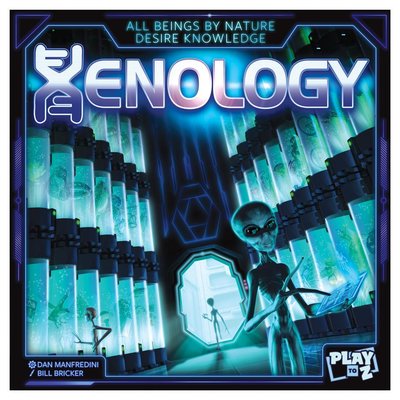
Number 12 of the month, Xenology. And this one kind of came out of nowhere and really surprised me. I picked it up at Essence Spiel. I I have to I like the idea of us being, you know, little green men, you know, gray aliens coming to a planet, which the game never mims, but I names I like to call it Earth just to study the local population. Um trying to ensure that they are never spotted. We're just try we're we basically have a prime directive. We do not want to meddle in the affairs of this um you know primitive alien species. We just want to study their ways and learn their culture and maybe take some specimens back home to score lots of victory points. That's a fun theme. Any theme that is all about the accumulation of knowledge instead of the accumulation of wealth or privilege or prestige. That's an A-OK theme in my book. more of that board game industry and less about just all the traditional, hey, let's be um greedy and get more stuff for ourselves.
Yay. And the gameplay is really great, too. It's a sharp worker placement game. Now, I've already done a full run through of it. You can follow the links down in the show notes. Go check out the run through. So, I'll just summarize very quickly. It's a worker placement game where we're moving our workers around on the mother ship to uh engage in different actions like prepare the database for the knowledge we're gathering or talking to the elders to get bonuses or prepping to send away missions down to the planet or sending the away missions down or beaming the away missions back up um and then ga cataloging all the data and getting bonuses and unlocking powers and scoring points. Um that's there's basically uh that's one half of the game. That's the main board. There's another board that is the planet. When we actually get them down on the planet, our little away teams can move around and explore and get bonuses for discovering stuff. But more importantly, when they find the right location that has the right combination of environment and population, we can beam them up and they bring the knowledge that we use to complete our research topics that the Council of Elders has assigned to us and we convert those into points and stuff.
Um, and and again, I I just love everything about the theme here. Uh, but also when we do that, we leave stuff behind on the planet that we have to clean up because we have to remove all evidence that we were ever on the planet. So, there's a lot of stuff going on in this worker placement and worker movement game. There's two things that I really love about it. One, or three things. One is the theme. I already said how much I love that. Two is the uh fact that there are a bunch of actions that um if I set myself up, my guys are in a queue. I get them into the flying saucer waiting to go down to the planet. But then I got to go do an action to send them down. If there's a bunch of people waiting the planet, another player might say, "Hey, even though I'm not going down the planet, I'll send all of you down because you get down where you need to go and I get a bunch of bonus for helping my fellow players out." Remember, we're a bunch of aliens on the same mother ship. We're all on the same team here. We're competing to be the best, but we're all working towards the greater good. And there are several things like that in the game, like, "Oh, you left evidence behind. That's going to lose you points at the game. Don't worry, I'll clean that evidence up for you because I happen to be, you know, in the right spot of the mother ship to do it and I'll help you, but I'll also help myself because the game rewards me for helping my opponents. There's a few different ways that works and it's awesome. I love that. Then the third thing I love, what is the third thing that I love? Love the theme. I love Oh my gosh.
I'm I'm I'm having a brain freeze. The third thing I love is the representation of you in this game. Because in most worker placement games, we're just middle managers. We don't exist. We just issue orders to our workers and they go do stuff and they're the star of the show and we just exist in a in an abstract form that has no real representation on the board. This game that's not the case. Over the course of the game, we are moving our workers around, getting to the right place at the right time, helping each other, all that stuff I just talked about, accumulating knowledge, converting them to points. Yay. But we have cubes. Cubes are the most important resource of the game because they represent my managerial ability to get the job done. Every time I do anything in this game, I spend cubes and generally I tend to leave them. I I lose them to upgrade my research capabilities. when I'm doing research, I lose them to represent the knowledge that I've acred that will ultimately go into the database archive. And if I've got a bunch of cubes, there's a bunch of stuff I can do. But if I'm really short on cubes, I'm really limited in what I can do. So cube management, which again just represents my ability as a manager to issue orders to everybody is ebbing and flowing constantly, which is why it's such a big deal. If I had to leave cubes on the planet that represents the evidence my um away team left behind and you clean that up for me, you give me my cubes BACK AND SUDDENLY, OH, I'M, YOU KNOW, I I'VE GOT MY managerial power again. I can go do other things. I can spread myself out. And if I don't have
any, I'm spread too thin and I can't do anything until it's kind of like I take another management course so I can get more cubes from the elders so I can do more stuff. I really like that, too. a worker placement game that makes me feel like I'm somehow part of the simulation as opposed to just a disembodied hand moving things around is always great. So, those are three wonderful things about the game. My only issue with the game is that um as a twoplayer experience though my my second favorite thing, the helping each other, it definitely happens. Make no mistake, uh, you know, just playing with my wife and I, you know, we we, you know, we look for opportunities to do it, but it doesn't happen as much as it would with more players. If you were to play this as a fourplayer game, players are constantly going to be helping each other, constantly putting themselves situations where they need help from each other, and there's just going to be a lot more that that second pillar of what makes the gra the game great is just less evident when you're playing with two players. And I find myself wishing I was playing at a higher player count. So that my second favorite thing would happen more often. The other stuff, the managerial um you know, presence on the board, the cubes, that's great. The theme of course is wonderful.
But um you know, I wish I'm not quite sure what could have been done to, you know, accelerate or incentivize the players helping each other even more because again, if you got twice as many people around on the board, it's just going to happen more often. And if it's the most fun thing you can do in the game, you know, getting receiving the benefits from other people or being the one to help other people, both of those just feel wonderful and I want it to happen more often. Don't get me wrong, this is a great game at two and there is still enough opportunities for that kind of synergy and interaction between players. I just want more because it's so good. And um so I just knock it down a few knocks from this, but this is a game I would happily play. We are now into the portion of my monthly countdown. There's always a portion where we switch from, yeah, I'm never playing that game again to boy, I would love to play that game anytime, anywhere. And we are now in that. In fact, actually, yeah, uh the previous one, uh we were I I've left now behind the Yeah. Not keeping these games, not interested in playing anymore into the Yeah, these are fun games I would happily play. And that includes number 12, Xenology. Okie do.
Okay, now we're getting into the good stuff, folks. Uh, that's interesting. It has always been the case. Um, and every round of I've done for years now that there is in my head a moment when I cross over from the, "Yeah, I don't care for these games, don't want them," into the, "Oh, these are games are nice. I would happily play them anytime." And then there's another transition into, "Oh, these are the games I must own." I've never articulated those before until I think just now. I've always thought about it in my head. Should I be saying that? Should I tell you every roundup when we we Okay, number 12. This is when we're getting into the I don't even know what we would call it. If anybody even hears me saying this, give me some feedback. Um I don't know if that's worth doing. I mean, I've been doing roundups the same way for so long. But anyway, I'm sorry. We are getting on to number 11, Flame and Forge. Now, this is one I've done a sponsored run through for. I believe you can already check out the run. I'm pretty sure it's live right now, right? Or is it? Has the campaign launched yet? I am not sure. Regardless, uh there's a link down in the show notes so you can go watch my run through and check it out because this is a very very cool cooperative game, fantasy adventure game uh from the same designer as Keep the Heroes Out, which is a hugely successful, very popular fantasy cooperative uh game. Um while this one is radically different than Keep the Heroes Out, which was kind of a reverse dungeon crawl where the monsters were trying to the player monsters were protecting the dungeon from the heroes.
Here we are hero dwarves trying to take down evil monsters and dragons that are rampaging and destroying an innocent village. Um, and I guess you'd call it a worker placement game. Uh, you can see it in action in my runthroughs. I won't go into this too much, but basically every round, um, depending on where you're where you previously placed a worker, you are moving deeper and deeper into a village that is on fire, trying to fight monsters, trying to forge weapons, and trying to defeat the evil dragon that must be beaten to win the game. Um, but the farther you go, the bigger the threat you have. Uh, every round you're only going to be able to go so far, and then you're going to pull all your workers back and then start again. And maybe you'll start from a different place and start working along different path. This is a game where you have a lot of long-term planning because okay, if I start over here, that means I have access to these these these and I've cut myself off from all of that.
Um, and oh my gosh, there's a huge fire over there. If somebody doesn't get over there and put that fire out, that section, that mine is going to be destroyed. And if too many sectors of the town get destroyed, we lose. So, you working in combination with other players have to um, you know, cooperatively figure out, right, who's going to take care of that fire? Who's going to go over there to the library and level themselves up? who's going to get on the catapult and shoot at the dragon because we've got to take this thing, you know, all that kind of stuff as we're plotting our different paths as we work our way up. That's oneird of the game is kind of this, you know, um, you know, worker movement and progression game. The second part is there is a deck builder. One of the things you can do as you're moving through the town is um, you know, convert the resources you're collecting into a bigger array of weapons and items that go into your deck of cards. And when you eventually move into fighting a monster, you've got this deck of cards full of basic crap cards and good cards you've put in and you play a push your luck game where you keep drawing cards hoping to draw ones that do damage to the monster you're fighting, but that don't do damage to you. These cards usually have, oh, well, I do two damage to the monster, but three damage to myself. That's a terrible card. I want to deck build and get that card out of the deck as fast as I can and replace it with ones that have a better return or cards that do other stuff like give me bonuses if I win the fight or just survive the fight. Um, and so you've got this cool little mini um um push your luck game that's tied to the worker placement. So, those are um you know the things that come together.
This really interesting worker placement progression system, this deck building system, and this push your luck miniame that all work in concert to make this a very unique cooperative fantasy experience. And if all that weren't enough, it comes with I forget like a dozen different campaign scenarios. Each one is playable on its own and changes the rules for the game and introduces all kinds of new fun stuff. If you liked Keep the Heroes Out, you got to check this out. It's a very different gameplay, although it looks very similar because it's the same artist um designer Lewis uh Bruh Brule. And uh yeah, this is another great one, but you know, don't take my word for it. Watch me play the game and decide for yourself if it looks like fun. My link is down in the show notes. Um but I'm here to tell you, but Jen and I both very much enjoyed number 11 of the month, Flame and Forge.
Okay, moving on to number 10. We have got Dust and Dirt which I'll be honest is not a game I should enjoy at all and yet I was really really surprised by it in a very pleasant way. Now I haven't covered it. Uh so instead I'm using a video um from uh Madior Gra which I think uh is Polish for uh you know Madora plays. Madora is playing the game right there. You can see on screen she's doing a nice job of showing off the uh components. But what is the gameplay? Well, this is all about rally racing. you know, those kinds of crazy multi-day, multi-night races where you've got the the driver and the navigator and um it just goes and goes and goes and goes forever. Um this is one of those types of races. And so this is a car racing game, a subject that neither my wife nor I would generally touch with a 10-ft pole. We just have zero interest in this subject matter. I mean, we're not the biggest fan of racing games to be honest, but uh if they're going to be racing, hey, let's have it be like a cool little Cubitoss in the game Cubitos or let's have it be the race to Mars or something. Just cars racing from point A to point B is just practically an active turnoff for us in terms of theme. But the gameplay here is so good. What is it? Well, first of all, if you just look at this on screen, you'll notice, hey, where's the track?
If this is a racing game, where's the track? There is no track over on the left. You can see a series of cards that represents different legs of this race. And um you know, you can see you know the one you're on at the bottom and the ones that are coming up down the down the road. And you know, the whole thing is going to slide down as you get closer and closer to them. So you are in this deck building game. Uh basically replicating the functions of both the driver and the navigator. Let's talk about the navigator first. You got a deck of cards. At the beginning of every round, you're going to have a hand of cards drawn through your deck. You're going to roll some dice, usually three, but you can get like temporary bonuses to roll more dice. And you are going to put them on your own little player board in spots numbered one through six. If you roll three sixes, three um sixes are going to go in the six slot. Or if you put a, you know, a one, a two, and a four. Well, every place you put a die is a place you can activate a card. So, after you've seen the dice and you know what columns are going to get activated, including maybe activated multiple times if you got multiple results of the same number, you are then going to take cards in your hand and you're going to play them to those different slots. And you're like, "Oh, the card I really want to play, well, I could put it over here on this four, but this is a card that won't be at its peak efficiency unless it's in the six slot. So, do I not play this and save it for later for when I roll a six? Or do I use my limited resources, my engineering, and my risk resources to manipulate the dice and force that four into a six so I can put this in the six slot and then activate
it? You know, that kind of stuff. Um, every round it's going to be a fun little puzzle of figuring out, right, the dice say where I should put these cards. And don't forget uh or I I didn't say don't forget, but bearing in mind that um you know at the end of a round you don't just take all the cards you played and put them in your discard pile. No, they stay on your board, but they slide conveyor belt style one space to the right. So if you put a really great card in the six slot, it's going to stick around for the next six rounds. It's going to go to the five, the four, the three, the two, and the one. And you'll have multiple opportunities to activate it. But that means it's also going to be taking up space that other cards could go into that you draw later on cuz maybe you're just playing this just to get something right now and now it's in the way of cards you draw in a future round. Um you know and all that kind of stuff. So um you know playing these cards and uh you know manipulating the dice to be able to activate the cards uh you know and and dealing with the realities of oh okay in a couple of turns this card will be in the perfect spot so I better get a two at that point. That's awesome. And the actions you get off those cards help you both for your navigation job and for your driver job. As the navigator, it's your job to um navigate how you are going to um go through figure out the twists and turns of upcoming legs. Um which means you can basically put your tokens on the upcoming legs, which means when you eventually get there, you'll be able to zip through without having to pay a lot.
If you did not pre-n because you're too busy doing other stuff, uh, or the cards didn't give you what you want, or you purposely say, "Okay, I'm not going to navigate right now. I'm going to focus on building up my deck and, you know, investing more in my car or, you know, all kinds of stuff you can do with these cards." When you eventually get to that space, you're going to have to pay a lot more to deal with it or suffer consequences as you keep moving further and further along the track. And then the end of every round, of course, you know, the uh you know that that whole group of cards on the left will slide down and you can see the next one and you can get prepped for them or you can do other stuff. Now, the other stuff you're doing has to do with the driver. If you can see on those boards in the middle of the screen, that's uh one player's board and the other player's board. Um it's kind of hard to see, but you've got a little car on them that moves around from column to column, and there's two different rows. This the position of the car in the middle of your board represents how much risk you're taking as a driver. How far are you pushing the car past its limits? How much are you going a little dangerously fast in a windy road, etc., etc. Um, and a big part of what you're doing in addition to prepping for roads and building up your deck to make your car better and um, you know, all kinds of stuff and mitigating risk is trying to get that little car on that little grid in the center of your board into the right place. Because sometimes your cards that you're activating with those dice, they fire off really strongly if you're driving risky. Sometimes they're useless unless you're driving safe and you get back towards the center instead of being on the outskirts. The reasons
it's risky to be on the outskirts, the far left or the far right columns of that risk grid is if you're on the far right and then a card makes you push even further to the right. It could be, you know, a turn that comes up. It could be an action you choose on your cards. If it makes you push further and you go into the red, you start um taking damage to your car and then the different functions of your car won't work as well. Your hand size will fall. Um you won't have as many dice to roll. Um, and worst of all, you'll take um risk dice, which means on the next round, not only are you going to roll the dice that um activate your cards, you're going to roll these risk dice that as long as you have them, they force you to suffer consequences until you can get rid of them by getting your car back under control and getting out of the risky area. There's a lot going on here. It is a very clever um I mean you know to be fair the reason we like it is um you know a lot of the racing stuff is abstracted down into you know resource management deck building stuff with really cool activation abilities with this dice system and the conveyor belt system. I mean, you know, there could have been actually I mean, this this could have been this could have been a a corporation manufacturing race cars and it would work and, you know, how hard are you going to push your assembly line and go into risk as opposed to, you know, just try to be efficient. Um, but it I I can imagine this working in a lot of different Euro uh circumstances and settings, but it does work really really well for this rally race thing. Every
time you play, you're going to get a different um lead racer who gives you special powers that makes you want to race in certain ways and uh you know, can really affect the overall feel of the game. And it's just really sharp. I mean, very, very impressive. It takes something really special to make me and Jen enjoy a game with a theme we dislike this much and yet we enjoy the game play this much. If it had been a theme we liked more, um, it probably would have been, you know, this would have been a top fiverr of the month, you know, in, um, you know, heavy in the must keep this game because the gameplay is so good. It drops a little bit because we just don't care about, well, I mean, I I I care even less about racing in circles. If you're going to race, rally racing is more interesting because at least you've got a destination you're going to as opposed to just infinitely going in circles. But either way, we're just not big into sports games in general, and that includes automotive racing. So, that drops it a few spots on the monthly ranking, but there is no denying the gameplay here is really special and deserves a lot more attention. It seems that the game is getting right now. I was very impressed, as was my wife, Jen. That is number 10 of the month, Dust and Dirt.
Now, let's talk about number nine, Cozy Stickerville, which I was definitely keen to check out because it's from designer Cory Kit. And while I don't always, you know, fall in love with all of Cory's designs, I always think every game I've ever played of his is so clever and so full of just brilliant new twists on established genres, established mechanisms that I'm always keen to see what he's got going on. And this time it's um Corey uh taking on legacy games. I and my wife love like we both are just big fans of legacy games because we love a game where every choice we make has real lasting permanent consequence. I mean heck I was the lead designer or the co-lead designer on Fable 2. So, every choice of consequence. That's a big deal for me and Jen loves it as well that um you know, you get this permanent lasting legacy of the choices you made that can't change because this is a game where from start to finish, you are going to be stickering up the uh board like you've never stickered before. Put a lot of stickers on a lot of boards, played a lot of legacy games. I've never done as much stickering as here. And um it is lovely. It is delightful. And it's uh truth in advertising. This is a crazy cozy game. So much so that there would be plenty of folks who would argue this isn't even a game because you can't lose. This is more of a shared cooperative experience. And it's really kind of um I'm sure draws a lot of inspiration from the video game genre
that was pioneered by oh what was it called? Animal Crossing from Nintendo. But I guess these days there's like a whole industry of cozy, hey, just build a world and live in it. Although, I mean, forget about Animal Crossing. The original Sim City, you couldn't win in the original Sim City. You just built a city and you saw how things evolved. And I mean, that's still a very popular thing. Just build a place and then live in and explore it and experience it. That's what this game is. This game there there's never an opportunity for you to get destroyed and lose and have to restart. It's just every choice you make, whether it's a good choice or a bad choice, whether it's a risky choice or a safe choice, your world is going to change in sometimes in small ways, sometimes in very big ways, but you will just continue moving forward. I I think people call it failing forward. Even if you make bad choices and bad stuff happens, that's okay. That's just a new unique thing that makes your world different than everybody else's and you'll just keep going forward and having the next experience. Um, there is resource management in the game. you are, you know, harvesting things. There will be things where I went, okay, we better be smart and stock up for the winter. Um, or, you know, there might be a person who we shoot away and he warned that he'd come back and when he does, we better be ready for him. So, we should, uh, you know, be prepared for that. But, oh, if we spend all these resources now, we can take advantage of this. And so there are there are game decisions to make as you you know balance your time and your food and your building materials and your money uh and decide
how best to invest it with all the different opportunities that come up. But no matter what you will always move forward and you will always then come to another every turn um you make two decisions. Your turn is in the morning you draw an event card. You see what it does. Usually they make you make a choice about do you want to be nice to this person? Do you want to build this thing? Whatever it is. And then uh the second thing you do on your turn is from a litany of actions that are going to be unique to you. Whoever plays this game, the choices you make, not only does it change the world, but it changes effectively your worker placement board. You have all these cards at the bottom of your board. On your turn, you can activate one of them. As you can imagine, putting a worker on there to say, "I'm activating it." Except you don't need to because you can activate anything you want. You get to do one thing every turn. Every game you're going to take um 12 turns because a game represents you know a given session represents one year in the development of this and each year there are 12 turns you know you know 12 events that will happen 12 choices you will make and then the world is evolved and you'll move on to the next chapter. The game itself lasts for 10 chapters. Uh each game lasts usually about a half an hour 40 minutes and um it's just a light relaxed laid-back experience and it's lovely.
Now, what you're seeing on screen is a runthrough that Jen and I filmed. And I should say, by the way, folks, um, the runthrough hasn't gone live yet, but when it does, it's going to be spoiler-free, which may seem like it's impossible. Oh, man. I should have Oh, you know what? Um, hey, James, for this section of the video, blur out whenever I put cards on screen because here's because I didn't warn people up front. Uh, James, by the way, everybody say hi to James Wood, the most awesome person in all of board game media as far as I'm concerned, because James donates his time every month to me and several other channels offering his services as a video editor to put stuff like this together. And so, I was just making a note to James, hey, here's the trick. Here's how my runthrough is not going to have spoilers. When we make these choices, we are not going to show, we're not going to tell you the story. We're not going to tell you about the characters. We're just going to say, "Hey, oh, we've drawn a card. We have to make a choice now." We freeze the game for a second. We decide decide amongst ourselves what we're going to do. And then we unfreeze the game and tell people, "Right, here's what here's what the result is." But we don't tell we don't spoil the story. We don't spoil the characters so that you could play the game and still make choices not knowing what is going to happen. That's how I filmed the run through. But then I also put cards on screen um so that if people don't care about spoilers and they want to know right what what was the decision they made I briefly put the card on screen and tell people to close their eyes and for people who don't care who care for people who don't care I say pause and read it and you know what the choice was and you you know how we came
out. So that was my way to do a spoiler-free run through of a very spoilery game. So, um, but I forgot to, uh, tell James right up front, hey, if you put any of those cards, if any of the cards on screen show up in this video, you got to blur them out because they shouldn't be spoiled. Anyway, sorry, that's between me and James. U, my runthrough for it will be coming soon. Here's the deal. I'm provisionarily giving the game um, you know, I'm putting it in number nine of the month right now, but Jen and I have only played through about a third of the campaign. Uh, come back for next month's roundup and I will have played the entire thing. I'll see how it works because you actually get to play through this game twice. You play 10 uh chapters each with 12 turns and then you finished your world. It's done. It's unique to you, but the game is over. But then you can flip the board over and play through the same 10 chapters a second time and make different decisions and see how things would have gone a different way and put lots of different stickers out. So, I got to see the entire game because um and we've already started to see some cool stuff happen. I expect more stuff will happen. So, I'm going to have to rate it again. But a third of the way into the game, I'm telling you, this is the ninth best game we've played this month. There are eight games I've enjoyed more. But considering just how chill and laid-back and relaxed, I'm a gamer who generally likes, you know, agonizing, tough decisions that will make or break you, that will make you have to compromise and sacrifice to achieve your goals. This game is not about that. This game is just about laying back and relaxing, you know, hanging out at the fishing pond or, you
know, chatting with the baker in town. It's that kind of it's in the name. It's cozy. You put stickers all over this town. It's cozy Stickerville. It's truth in advertising and it's really nice, Jen. And it's it's a nice change of pace. Um, but again, I will revisit this in a future roundup after I've seen the whole thing. So, I could tell you um if my my current uh love for the game will rise or fall because legacy games can change in a big big way the longer you play them. So, like I said, just wanted to get that out there. Um, you should be seeing the run through um by the time Jen and I have finished the full story as well. Anyway, that was it. Number nine of the month, Cozy Stickerville. Okay, folks. Next up, we have um number eight on the list. Now, I'm surprised I did not plan this. Number eight on the list is 108 Outlaws, which is a very cool little um puzzly card game uh that is all about this ancient Chinese epic tale of I forget the particulars. the the actually the rules go into quite a bit of detail because the uh designer and developer were huge fans of these uh legends of I think it was like the 108 outlaws that um you know redeemed themselves by becoming forces of good but they died and they fought demons. I don't remember it all specifically um but it sounded like a really cool epic story. Um the most important thing about it is there's 108 outlaws in the story.
There are 108 unique cards in this game and every time you play you're going to set up a big field of them. All these cards you can draft. Uh some of them are objective cards. Some of them are low-level living um outlaws and then the other ones are the uh the heavenly ones if I recall correctly or maybe they're heavenly generals. I forget. But anyway, you got three different tiers of cards. You also have cards in your hand. And on your turn, you can play four cards. Now, I should say over the course of this game, you're only going to play 12 cards. And that may sound like the game's going to be over in a heartbeat, but man, this game gets crunchy fast. Every time you play a card from your hand, you immediately activate some power that it has. They um they all have something um that they get to do. And uh and and you know, they might be, hey, draw more cards or manipulate cards, or they don't do much, but they just give you access to symbols that you need for other cards. Uh some cards um will only get played if you tap other cards. So, I might have put a card out that I don't really care about. So, I can play the one I really want by tapping the first one. And therefore, it's taken offline.
It effectively doesn't exist anymore. It doesn't give its symbols. It like gave up its cavalry skill so I could get this cavalry general played. And because they've got a power I really need. So, uh, and then when I play that cavalry general, I do some special ability with them that could set me up for the future. Now, in between um playing these four cards that I get to play on a turn and looking for synergies between them um while also trying to set collect cuz all these cards again have these different symbols that represent um you know infantry and cavalry and naval uh power and stuff like that. The the top row of cards are a bunch of objective cards. These are campaigns that we want these people to go on and we can't grab those cards unless we've got the right combination of stuff. So, a big part of this game is, you know, activating and tapping and untapping and trying to manipulate all your cards because usually once you've tapped a card to use it, it's dead for the rest of the game, unless you find a way to untap so you could use it for other stuff. And remember, you're only going to play 12 cards. But every time you play a card, it's an opportunity to revisit what you played before and look for ways to synergize between them and what you're playing in the future and what you could try to grab because the other thing you can do every round is or every turn is you get to grab you get two points. you can either grab one middle strength card or two small strength cards and then you know other ones come to replace in there, you know, and all that kind of stuff. So, you're getting a steady influx of cards. You're strategizing about the cards you think you can get, but not necessarily want to uh grab the ones if you won't be able to actually play them because you don't have other ones that will give you the basics. So, this game is a neverending and progressively more and more complex
combo building chain of cause and effect. We play these first few that lets us do some other stuff. These let us um you know stick around so we can do these things, but eventually we exhaust them so we can do these other things as we go through the act of just playing 12 cards. Um, and that may not sound like much, but this game is brilliant in how complex and challenging it gets, trying to balance, you know, set collecting the right icons you can get for the really big highscoring cards or sacrificing those icons so you can get other cards in play so you can achieve the unique special powers you need to do, like upgrading existing cards or untapping them so you've got their icons again, so you can do other things. It is. I mean, this is a game you could probably play a 100 times in a row and get a different experience every single time with that 108 unique cards in the deck, all based on the real 108 Outlaws from, I believe, if I recall correctly, it was Chinese um epic lore. This is a sharp sharp game.
Uh, it's fun. I would say it's fast except the longer it goes, it starts getting really puzzly. And I mean, you can see me playing on here. I'm actually playing the solo game, which is really great. It's a wonderful uh competitive game where players are all racing to grab cards first, but it's got really nice solo rules that will make things disappear over time the longer you take to replicate other players. And I'm playing solo here. This was an exclusive I did for backers of the show. Um, you know, thank you everybody. Keep Ro running. And I had a great time playing this. I had a great time playing it with Jen. Jen, my wife, who is a brilliant gamer, thought, "Oh my gosh, this game so explodes in complexity with all the different things you're tracking with just playing these 12 cards that she found it to be a little maybe over the top for her tastes." But me, oh, it hit a super sweet spot and I really enjoyed it quite a bit. Um, which is why it comes in at number eight of the month.
Highly recommended. 108 Outlaws. Okie dokie. Okay, moving on to number seven. We have got Fantasy Realm Greek Legends, which a lot of people are very excited about because Fantasy Realms is a hugely popular simple, fast playing little card game that people adore to pieces and I'm a big fan of as well. This is I guess now I think is this the fifth? You have the original Fantasy Realms, then you had the Fantasy Realms spin-off expansion, then you had the Fantasy, which were both high fantasy games. Then there was the Marvel champ, not Marvel Champions, Marvel Remix, which was a superhero version of the game. Then there was the Star Trek one, which was based on Star Trek the Next Generation, Star Trek Missions. Then there was um a Red Rising, which was made by a different publisher, but the publisher said, "Look, I'm incredibly inspired and I want to make my own version of Fantasy Realms. It's much bigger and more complex based on the Red Rising novels, I guess." And now we've got this one, which again is Fantasy Realms, but based in ancient Greece. Now, so I've just told you a history of this game, but not told you anything about the game. Here's how it works. So, the beginning game, you have a hand of seven cards. Shuffle up a big old deck of cards. Everybody gets dealt seven. You got seven cards.
Um, what's going to happen is every turn, you are going to draw a card to add to your hand, and then you're going to get rid of a card. So, at the beginning of the game, you got seven cards in your hand. At the end of the game, you've got seven cards in your hand. And those seven cards at the end of your game, you will score them. And so you are trying to build the perfect hand that will score you the most points because cards often combo with each other or pay attention to other functions or or cards, you know, it's it's very important that you don't have certain things or all kinds of stuff like that. So the whole game is trying saying, "Oh, look, I've got this card. This card is worth 30 points, but only if I get these other two cards." Okay. Well, I'll keep a lookout for them. And if I never find those cards on some turn when I have to give something up, maybe I'll give this up because I'll give up looking for those other cards. Cuz remember, every turn you draw a card and then you get rid of a card. Now, here's the deal. When you get rid of cards in Fantasy Realms, they just don't go into a discard pile. They go into a discard area. All cards gotten rid of are um out there face up. And on a future turn, a player when they take a card, they can either draw a blind from the deck like what you would expect or they can take any of those discarded cards. And so that's the terror of this game of any iteration. Every time you say, "Well, you know what? I just don't need this card at all." Okay, I got to get rid of one of them. I've already taken the one I'm going to I'll get rid of that one. I don't think I'd ever score well on it.
And then as soon as you put it out there and then depending on how many people you're playing with, somebody says, "Oh my gosh, that's the card I've been waiting for the whole game." Or maybe somebody else puts something out and you say, "That's it. I got to play cool. I don't want anybody to know that my perfect card is out there. I just got to get it around back to my turn so I can grab that card and add it to my hand. Oh my gosh, this will be amazing because you either draw a blind or you take stuff that other people have discarded. And thereby every time you discard a card, you should be paying attention to what do you think your opponents are about. Do you think because you can't see their hand, but if you remember what cards they took, you could be thinking about, oh, uh, that is going for a lot of land cards. Uh, I bet you they'd really like this one. Maybe I shouldn't, but I don't want to hold on to it. Maybe I should wait until the last second and only get rid of it at the end of the game so they have less of a chance to grab it. You know, all kinds of stuff like that. That's the crux of Fantasy Realms. The game is over once 10 cards are in the discard pile and then everybody reveals their hand, scores it.
And again, these all of these cards have all kinds of fun, intricate, interconnected um ways that they score together. So that's every iteration of Fantasy Realms I've talked about. So what makes the Greek Legends one different? Well, first of all, it's a different setting, of course. Um, but and you know there are different cards. There's different types of there's some new types of cards. There's this new concept of hero and monster cards that interact in different ways than we've seen. We've seen similar stuff in earlier games, but it's kind of unique. But the most important thing is this game makes a radical change to the core of what Fantasy Realms is. In Fantasy Realms, when every turn you got to discard a card, they go out there into that public supply. Anybody could grab it. In this game, you do that or instead you can put that card not in the discard area but in your own private discard area that's called the afterlife. And so um and a card in the afterlife, it's like it's still part of your hand. So in this game, hey, I okay, this is a really great card. I don't want to lose it, but I got to get rid of something. I won't put it back out there as somebody else might take. I'll put it in my afterlife.
So I'll still be able to score it with all the other cards. I've got seven cards in my hand plus some number of cards in my afterlife. So, that makes sense. Well, you'll never ever put something in the center, right? Well, first of all, if you do that, then a card is drawn randomly from the deck and it goes into the discard pile. So, there's always new stuff coming up. The game is always a fixed length once 10 cards or not a fixed length, but it's always kind of the same length because of course people are taking stuff out of there um but putting more stuff in there anyway. Um so, why would you ever do that? Why would you ever risk giving somebody else something they want? Why not just keep everything? because every card that goes into the afterlife loses you 10 points at the end of the game. And so if you know negative 70 points, if you put seven things in the afterlife, that's a huge deficit to come back from. Um so you've got to be really careful about what you put in there.
Now, all cards in every version of Fantasy Realm have some base value up the top, but then they have additional value if they can combo well with other cards or events and stuff like that. So, if I've got this really great card that I don't think I'm going to be able to get it to combo with other stuff, right? Um, if I could, you know, it has a base value of 15, but if I could make it combo with the right stuff, it would go from 15 plus 15 more would be a 30 point card. Oh my gosh, I wish I could do that, but I don't think I'm going to be able to pull it off because I'm not really focusing on heroes in this game and it needs a hero or whatever. So, I can go on ahead and put it in my afterlife. And here's the deal. I'm going to lose 10 points, but remember, it was a base value of 15. So, it goes from being a 15-point card to a fivepoint card. So, it may not be as bad as all that. If there's a card you don't want to put out there in the um in the public area for anybody to grab, put it in your afterlife as long as at least is going to be a little bit positive. As long as, you know, because you're going to get that negative 10, but hey, if it was plus 15, you still come out ahead.
Um but then you end up, who knows what's going to get thrown out into the discard pile because you're just going to put something blind out. Maybe it's something somebody else likes. Maybe it's something you like. So, here's the deal. This one simple edition radically changed. I mean, I I' I've played all these different versions, including Red Rising, from a different publisher. They all tweak the form the Fantasy Realms formula in different ways, but this radically alters it. Um because the biggest set of tension or the biggest source of tension in Fantasy Realms is every turn you must give up a card now. Maybe you'll pick it up later. Maybe you'll a card you win. Hey, things have changed. I got the matching. I'll go and grab it back if somebody else hasn't grabbed it before I did. You know, whatever. Um but you always are feeding that and that's where the terror comes from knowing you give. But now that terror kind of goes away. Uh heck, even if it's you know what, hey, this card is worth eight points then. Okay, I'm only going to lose two points by putting it in my afterlife. That's no big deal. But you still feel some terror, but it's mixed with potential excitement because the card you reveal might be perfect for you. It's like you get to draw two cards blind every turn. The one you put in your hand and then the one you put out there if you're putting things in your um afterlife. And it just radically changes the feel of the game. And you know, on some level, it makes the game less tensionfilled, more relaxed and laid-back cuz you you you never really you're like, "Oh, that's fine. Okay, it's another negative 10 points, but
that's okay because it's really only negative three points. It's not going to be that much of a problem. I'll just keep filling up my afterlife." Here's the So, on one level, it makes the game easier on you. It's not quite as harsh and punishing because you're constantly giving stuff up that might help your opponents. But at the same time that the developers made this game easier to play and a little bit more forgiving, they also increased the complexity of the card effects through the roof. I have not seen I mean actually that's not true. Um what's it uh the the Star Trek Fantasy Realms had a lot of really intricate interconnectivity between cards more so than the other stuff. and Greek legends kind of feels to me a little bit more like Star Trek missions in that there's, you know, every card has so many icons and all these icons can interact with a half a dozen other.
You know, in the original Fantasy Realms, oh, there's interaction between cards, but it's usually, oh, if you got a castle, you can put a prince or a princess and a G dragon in it. You know, it's really simple stuff. But now, um, you have a hero who is brave. And brave might come in a dozen different effects on different things. Um, a brave hero might be needed to beat a certain monster. or a brave hero might be needed for a certain thing. Oh, I've got heroes, but none of them are brave. I don't care about half the cards now because I can't find the brave hero as before. I just needed a hero. Um, holding out for a hero. But, um, you know, so the interdependency and the interconnectedness, uh, you know, and like kind of this matrix that you have to keep in your head of these seven cards you've got in your hand plus not the seven cards in your hand plus say, I don't know, three or four or five cards that they all these cards also interact with. more you put in your um afterlife, the more complex the puzzle gets of how to mix and match things. And so at once the game has gotten easier, but on the other hand, it has gotten the most complex it has ever been. And that's pretty cool and I very much enjoyed it.
It's not my favorite. I think um the Marvel one is still my favorite because I still think it does the best job storytelling. Um, but I would say this is probably the second best version of the game. Unfortunately, my wife definitely found um that extra level of complexity. It went through the roof and for her this was getting a bit this is getting a bit silly. She said, I think while we played it, "This is ridiculous. How am I supposed to keep track of all this stuff?" Well, one way to keep to not worry about the extra complexity, just don't use the afterlife. Like, actually, I'm showing a run through that my good buddy Rel Giola filmed playing two-handed. He showed a whole game from start to finish. did the final scoring and everything. Uh if you if you watch that link down in the show notes, you'll see at no point did he ever put anything in the afterlife because the more stuff you put in the afterlife, the heavier and more complex the game is getting. Make no mistake about it. The more you have to crunch and you don't have to. And he just did a full run through not even doing it because you can still be very successful only dabbling slightly in it. Um you know, just playing the way Fantasy Realms has always played. This is an optional extra thing you can do. Now, I think your best bet is, yeah, you want to be putting a few cards in there, maybe a lot of cards in there depending on how they mix up, but the more you put down there, the harder the game gets to keep everything in your brain. And so, that is something I would warn you going in. I, you know, this is, like I said, this is like the fifth iteration of this system. And to me, it is clearly designed for people who have played Fantasy Realms for years and have grown with the game and they're looking for
expert Mensa level Fantasy Realms. And that's what it is. That's what Fantasy Realms Greek Legends offers. If that sounds good to you, you might want to check it out. I really enjoyed it quite a bit. I'm not saying I'm a genius Fantasy Realms player, but I the more complex and puzzly you can make it, the more I enjoy it. Um, and I really enjoyed my time with number seven of the month, Fantasy Realms Greek Legends. Okay, folks, let's talk about number six, The Wondrous Museum, which I have filmed a run through. I actually played with Jen. It's an exclusive for Back to the Show. Um, uh, but I mean still it's on screen now so you can get a sense of what the game looks like. How does it play? Well, we are running a museum, a kind of fantastical museum full of all kinds of magical oddities and artifacts um that are come on these little half-sized cards, which I got to admit, I appreciate why they did it because it keeps the footprint of the game down, but it also makes the font of the game pretty tiny. While I was playing it, I was having to get out my reading glasses to be able to play this. So, first of all, know that going in. um you you know if you're young, you're not going to have a problem with it, but if you're getting older, again, you're going to have to get out the spectacles to read it. But it's worth it cuz this is a very cool engine building game. Here's the way it works. You start out with just the gate, the entrance to your museum and a handful of cards. On your turn, most of the time, what you're going to want to do is play another card to your museum. You could either play them from your hand or there is a public display
of cards available as well. They tend to be more expensive though. played from your hand is the cheapest card. Every card has the cost up in the top left corner. It could be anywhere from like three to to 30. Um, it's weird. They never actually name their currency. Uh, I'm just going to call them bucks. Uh, it's museum bucks. It's fantasy bucks. It's um I I don't know. Um, dramas. It's, you know, whatever it is. Uh, you know, so everything says how much it costs. But if you're going to play them not from your hand where you just have to pay the base cost of them, but you're going to play them from the public supply, uh, every card is under a plus one, plus two, or plus three. So, they get even more expensive. But as those ones get, uh, taken, the remainders slide down, get cheaper, new ones come out. You you've seen that kind of rolling river of cards T. You see that a lot. Plus, every time you play, there's going to be a collection of cards that are super expensive. You got to save up a lot to get, and there's only a finite number of those, and those are randomly chosen. Every time you play, it's a different collection. So there's those ones that anybody could grab first come first ser with ones in your hand. But anyway, most turns what you're going to want to do is you're going to want to play another card. When you do, you put it to the left or the right of your existing cards, right? Uh no slipping stuff in between, no moving cards around once you've played them, unless you get powers that let you break that rule, but normally you play them to the left or the right. And what you're doing is you're building an engine because on a turn when you are not when you don't have the money to play more cards and get your museum bigger because by the way the game can end when somebody makes a 10 card museum which would be gigantic if they didn't have all these little half cards. But anyway, uh can So you're
trying to build up your museum as fast as you can. But on turns when hey there are no cards out here that I want to play or maybe I just don't have enough money to play them. What you're going to do instead is everybody has these five gems. You pick one. There are five colors. You pick one and flip it to activate it. And that means you run your engine. If you pick the purple gem, let's say, because it hasn't been flipped yet, so you flip it over. That means you look at all the cards you've currently played from left to right. Order matters and therefore placement matters. You activate every card from left to right that has that merching matching purple rune on it. So, if you've got if you've uh been able to play a bunch of cards that all have purple, hey, I get to have a super turn. When I use my purple rune, I GET TO ACTIVATE ALL my cards. But chances are cuz these cards, hey, this card has a blue and a red. This one has a purple, yellow, blue. This one has all five colors. So, it activates every time. So, you're making an engine, but when you want to run your engine, usually you can only run certain portions of it. I can Okay, if I do my yellow, I can run my first card and my fourth card and my sixth card. Is that going to work?
Because my um fourth card really needs me to run my third card to generate the stuff it needs to play. So, does it do me any good at all to flip the yellow and run 146 knowing that four is a waste of time? Because I did I wasn't smart enough to make sure that three, the thing that creates the resources that four needs, they should have had the same color. And maybe they do. They had the matching purple color, but now that that purple is gone, I can't run purple again until I've used almost all. Once you use four of your five runes, they all reset and cards also reset on the main board. So, I can't run I I use my And that's perfect. I run all these purples. It's perfect. That's what I've made the engine for. But now, I can't get that back until I do three more runs. And those are going to be weird mishmashes of cards unless I was smart.
If I can build an engine that, hey, this is going to do interesting stuff when I pick the yellow and when I pick the blue and when I pick the purple, etc., etc., then you're you're winning the game. But that's the challenge of this game. Grabbing the right cards at the right time. Maybe not grabbing them to play because they're too expensive to play directly from the table, but just getting them into your hand so you can play them more cheaply later, or you can just hold on to them until you have enough money accumulated to play them. Um, and then everybody's racing. This is a race game at the end of the day because the game is over once somebody has made that size 10 museum. But that's almost never going to happen because if you are building your engine well so that it can do good things no matter what by the time you've got five or six cards in your engine and you still got like another four before you could trigger the end of the game. If you build it well, what you have done is you have created one or maybe two completely broken combos. And I say that uh totally straightfaced. This is a game where you can get cards together that in any other game you'd say, "Oh my gosh, this game is broken that firing that thing and then that thing and then that thing does this. It scores me 10 points and I can just do this over and OVER AGAIN. THAT'S TOTALLY BROKEN." That's what this game is all about. You are trying to sculpt the perfect completely unreasonable overpowered engine combo that you've ever seen and everybody is making a completely different one in their own museum. And then so once you've got four
maybe you've got four cards and it's like a oh this is pretty good. I'm just going to spend extra returns just running this thing so I can save up like 30 bucks and then buy that super card cuz once I've got that super card and I add it to this and that becomes my fifth card every time I run this for the rest of the game. Hey, I'm still making money but now I'm also making 10 points every round as well because the game can also end once somebody has a museum that is worth a total of 20 points. So that's the real race. forget about, you know, the game will be over if players are playing smart, well before somebody has a a gigantic museum. It's going to be over once somebody generates 20 points. And you do that by finding ridiculously overpowered combos that are better than your opponent's ridiculously overpowered combos. And once you built it, run it into the ground. Because you know, and you see this every time you play, you know, there's a bit slow going and then we start getting some stuff and we get some nice little combos and we're getting better stuff and then eventually somebody gets the point where stand back everybody watch this flip. Bum bum bum bum bum bum and everybody, oh my gosh, okay, it's time for me to turn my combos on as well. But chances are everybody if you're playing well is building something like that. And then it's a race to 20 points and it's so cool. I really like this one a lot. Um, and uh, and Jen, my wife, she really enjoyed it quite a bit, too. We are now, by the way, folks, I mentioned earlier, there's always like in my head, there's three sections of a roundup. The games I don't want to own. The games I'm not sure I
could own or not, but I would certainly love to play anytime, anywhere, and then we get to the games where this is probably a keeper. And when I talk about Wonders Museums, I'm saying this is probably a keeper. Generally liked it, too. Now, there's one issue with it, though. Doesn't bother me. I love it. But my wife, she's on the fence, and you might have the same problem with her. This is a game that I expect as more people get their hands on it, a lot of people will play it and will come away from it saying, "Yeah, I thought it was really good, but it's over just when it starts getting good, right?" You know, I I've seen people complain about this kind of thing where, you know, it um you know, there's a danger that a game can overstay its welcome. And it's like, man, when will this game ever end? This game, right? When things start revving up and you get these super powerful combos, once somebody's got a super powerful combo, game's going to be over in two more rounds, right? Because they're going to run that a couple of times and boom, they're going to trigger the end of the game. And some people might come away from that saying, "Oh man, I want to play for like another five rounds. What the what the f why did you win so soon? It was just getting good." My wife is in that camp. Me, I'm in the Oh. Um, you know, I I I you know, there there's a a saying in showbiz, leave them wanting more. And that's what this game does when it's over because somebody hit that 20 victory point thing because they built the best. They built the maybe not the strongest combo, but they built it the fastest. Or maybe they took a little bit longer, but they built a stronger one and could catch up with somebody that was, you know, making a weaker one and running it more often.
But either way, the game is going to be over quick. This is a bit more than a filler length game, but it is not a fulllength engine builder. It is a fast, snappy game that goes from zero to hero very quickly. And for me, it's very satisfying. I love that. And you know, I love leaving them wanting more. But my wife, she wants more and she doesn't like that. So, this is still on the bubble for us. I love it. She wants to love it. And I just say this warning you that some people will be like her that they will find it frustrating that what? HOW'S THE GAME OVER SO QUICK? I'M JUST GETTING GOING. WELL, you should have got going quicker is the answer, of course. Um, but some people will blame the game rather than their own gameplay. So that's just something you got to know going in. And some people they say, "Look, I've made this awesome thing. I want to be able to run it at least five more times because it's fun to do, you know." And so that's a valid that would be a totally valid concern why some people I think would respect the game but not enjoy it for themselves. My wife is kind of there. I think it's a phenomenal design. And um, yeah, you can watch me play a solo. By the way, it's a great little solo game, too. It's very fun. Oh, wait, no, you can't. Um, this was I did film this as a runthrough for my backers on Patreon, but I realized afterwards I made a mistake and so I didn't actually give it to them. So, I've just got this as B-roll footage.
I'm sorry. I do not have a run through to show you, but I'm sure other people will be running through it sooner or later. I think it's a neat little game. Uh, and if my voters want me to, I will film it for the channel, but so far it has not gotten enough votes because, you know, backers of the show get to pick what I film on the channel for full runthroughs. But anyway, I'm just here to say it's lovely. It's fun. It's fast. And it leaves you wanting more. Number six, Wondrous Museum. The Wondrous Museum. Okay, folks. Now, we're going to move on to number five of the month, The Canals of Windress, which I did a sponsored preview of when it was crowdfunding. And I hate to be the bearer of bad news, folks. If you watched my runthrough of this and you were excited about the game, unfortunately, it has failed to fund. And that breaks my heart because this game is fantastic.
And that's saying something because it's pick up and deliver. One of my genens and my least favorite mechanisms out there. And yet we so enjoyed our time with this game. I really hope publisher um first fish I imagine they're going to go back and revamp and you know come up with new price points and you know and maybe sacrifice on some of the quality because oh man those floating whale meles are or figurines are so awesome. But um you know hopefully they'll come back even stronger and it will successfully fund the second time. And I don't know why it failed because the prequel the previous game in this series um Mistwind was phenomenal and it was a big success. Also it was another pick up and deliver game. This is twice now that they have made me in this wonderful fantasy world of society of civilization that lives above the clouds and travels around on flying whales. Uh, that is the fantasy world here that's beautiful with art from um is it Andrew Bosley? I believe it's art from Andrew Bosley. Uh, it looks great. It plays phenomenal and it makes me and Jen enjoy pick up and deliver. Um, and now this one is pick and deliver crossed with deck building.
The previous one, this one was pick deliver cross with worker placement. Now it's deck building. And there's a lot to love here. Although actually I've done a full run through. You can check that out. There's a link down in the show notes. I don't have to go into this too uh detailed, but in a nutshell, we um you are building up our fleet of flying whales. We're also hiring more and more administrators and we have this map that um we are also building up we're building bidd uh buildings in the city um you know amongst the canals of Windrest and um we're moving we're building bridges to connect all these different buildings and then we're moving our supervisors around from building to building and if I move to your building you're happy I come to your building because you get bonuses and whatnot. Um but we do all of this by playing cards from our hand. Um I'm sorry it's it's not a deck building game. It's a car I said deck building.
It's card drafting. I It's hard keeping all these games in my head, folks. Sorry. This is a seven wonders style card drafting game where every uh beginning of every round we uh hey, I get my cards. I hand take one, keep the rest of you, hand them back and forth and all that. Um but it's um seven wonders sushi go style card close hand card drafting mixed with um what do you call it? card crafting where you take myar um things and you slip them into the sleeves of the cards so the cards get modified and change over time and become more powerful. Uh you know so you know it's got that it's got great card drafting and amazingly it's got fantastic pick deliver mechanisms that we don't tend to enjoy but it's so well done here with the upgrade pads you have so you can move around really quick. um you know the bonuses you get for smart movement and also another thing that I really love the fact that the game comes with an express mode. So you can play the big long epic all afternoon version or you can play the more reasonable length game by just jumpst starting and skipping that beginning and just starting out much more powerful. Uh there's all kind in addition to delivering goods, you're delivering passengers, you're getting all kinds of powers and it's just lovely. It looks beautiful. The components were great. I just don't understand how it could have failed, especially when the pre the previous one. I guess maybe people like worker placement more than they like uh card drafting and card crafting. Maybe. I wouldn't have thought that's the case. Um but like I said, fingers crossed. Hopefully the first fish folks are u not um you know, you
will not shy away and will come back stronger than ever because this game deserves to be played by people. If you love pick up and deliver, you are going to this is going to be one of your favorites. If you don't like pick up and deliver, go watch my run through anyway because this one might surprise you also. Uh it's lovely. It's the number five of the month, The Canals of Windrest. Okay, folks. We're getting to the best of the best. Number four of the month is Rew South America. And wow, first of all, this game is about trying to, you know, revitalize ruined destroyed landscape in South America. you know, clear-cut rainforest and all that, trying to rebuild habitats so that, you know, the flora and fauna can come back and thrive. And hey, in the pro process of saving um the environment, we could also save our planet. Win-win. A subject matter Jen and I absolutely adore. I also um love the presentation of this game. It is gobmackingly gorgeous. It is so bright and colorful. I mean, just look at it. I mean, this is a runthrough that Jen and I did this month for um you know, backers of the show on Patreon or uh on YouTube. And you know, we've played this a few times now. And it looks great. It plays great. And here's the deal. It plays fast, fast, fast, fast. I'm trying to decide if I'm going to keep this game because my only thing my wife says we're keeping this game.
I'm on the fence because I have limited shelf space, right? and I've already got Arknova and I've already got um oh Amazonia, life of Amazonia and this kind of scratches the same itch that idea of you know nature conserancy and you know helping it build strong biomes so that animals can flourish and I've already got other games that do this. So why do I need a Rew Wild South America as well? Well, I'll tell you why my wife would say. First of all, I would agree with her that this stands toe-to-toe with those games. Those other games are best of all time and this might be up there as well. I know this is a worthy accessor. But here's what it does better than Life of Amazonia or Ark Nova or other games of its ilk. This game is fast. It is all about velocity.
Sometimes I talk about how a game goes from 0 to 60. This game goes from 50 to 100 right out of the gate. And I mean you will be um you know it is so satisfying. This is not a game of slowly building up and accumulating resources and eventually putting the tile on the board that eventually will let us move the animal in like is so often the case with this. This is a game where every turn you've got a hand of cards. Everybody has the same hand of cards. They're action cards. You're going to play one of them. They have two actions. You can do action A or action B. And all of these actions are super powerful. almost without exception. Every one of these cards lets you build and expand your biome in big ways because this is not a big board to fill up and it will fill up fast. So every turn you're going to be putting more stuff out there and the more stuff you put out the cheaper it gets to put other stuff because when you put stuff adjacent to existing stuff the you know the uh you know they they inter mesh and become dependent on each other and and therefore you know that's what happens in real life and they become cheaper. Oh, you know, rainforest is very expensive to repopulate and reforest, but it's much cheaper if it's surrounded by a bunch of wetlands. Um, you know, that kind of stuff, you know, and and this game is full to the brim of, you know, accurately replicating the interdependency of, you know, I think this game probably focuses on that more.
You know, all these cards are about um, you know, creating viable food chains. you know, we we need the the base level creatures so the higher level creatures can eat them and the predators can eat the mid-level stuff, you know, and all that business. Uh, you know, that works so well in a lot of games and it does it beautifully here, but this just game goes so fast cuz almost every turn except for the turn where you're like, "Okay, I'm all my cards are spent or I've spent the cards I really need and I need them back, you know, Concordia style. Eventually, you'll do the whole, "Okay, this is when I'm going to pull all my cards back into my hand and I'm just doing one of those turns." But in this game, those turns are great, too, because depending on how you've built up, not only do you get your cards back, but you get a huge influx of resources that will let you keep going again. So, this game, you are always moving forward at full speed. Even in another game, it would make you feel like, oh, this is the thing where you have to stop and reset. Nope, this game is still going full speed because every round, um, you're going to play a card that lets you build something if you've got the resources for it. After you've built something, there are a whole bunch of cards. There's a row of I think it's five generalurpose wildlife cards. And then there's another row of three predator cards. And then there's another row of three plant cards. And every round after you've played your card and expanded, you are allowed to draft one plant card that you can afford. And they all have big cool special powers that change up the world as you, you know, you populate any of your three different biomes, your rainforest, your grasslands, and your scrub lands with um, you know, these different plants that give you other powers and whatnot.
Every round after you play your card, you get one plant, you can get one predator, and you can get anywhere from one to five animals if you've got the space for them. And so as fast as you are re um building the uh you know the ecosystems, you are populating it just as fast. And that's what makes this game special. That plus the really really laser focus on trying to accurately recreate the interdependency and the food webs and the the circle of life that a a proper wellnourished rainforest creates. Um, and it, you know, it makes a better world. And that's what you do in this game. And I love it. And Jen really loves it. And I, who am I kidding? I'm probably going to keep it.
I'm just thinking, WELL, I ALREADY HAVE OTHER GAMES that do this, but not games that do it with this speed. I would almost say this velocity or I could say this ferocity. It's wonderful. It's beautiful. It's uplifting to play this game. It makes you feel good about the world knowing that this is actually really happening. that there are people devoting their lives to this and so, you know, this puts them front and center. I mean, I I think it's fantastic. It's the fourth best game that Jen and I played this month, Rewild South America. Okay, folks, let's talk about number three, Marrakesh with the Gems and Experts expansion. I've already uh talked about Marrakesh many times on the channel. I've covered its previous big expansion, you know, you know, the one with the camels and the camel dung. Um well um Feld is not done. Uh I think this is I don't know if he's ever done as much expansion content for any of his other many many many games over the years as he has done for Marrakesh. And I am here for it and so is my wife.
Marrikesh is probably in her probably top 10 of all time. It's in my top 50 I think of all time. And it keeps getting better with more expansions. So let me tell you what comes with this one. This is a queen game expansion which means it's going to be modular. It comes with a bunch of different modules you can mix and match. Some of the modules I love, some I like. There's a couple I could take or leave quite frankly. Um, but let's talk about the uh the titular ones. Let's talk about the gems. Um, oh, and by the way, nobody's done any video for this. So, I am James is just putting up pictures taken from the Kickstarter page for the different modules. So, the gems as part of setup, we put randomly selected little gem tokens all over the place on all the different sections of our Marrakesh board on traveling through the desert and working on the um you know the the mosque and the palace and the you know working your way up the river. And as you succeed with the different things that you were always going to do when you sit certain thresholds, you grab these gems and um if you can, you place them on this big gem board. And uh you know once you've placed one down you could on the top row uh because you're basically like making a big necklace. You now could for every other one has to extend from the first one you played and you can start working your way down or you can work your way out. Every time you complete a row on this big board of if you get the right color gems from the right spots then um you get points whenever you make connections between gems you get little bonuses between them as well. So, this game is drip feeding you additional stuff um throughout the game as you
achieve certain metrics. And it makes you really want to focus more than ever on a game that's hard to focus. A game that's always been about making you try to do a little bit of everything and finding ways to focus on a few things. Now, you want to do it even more because you get gem rewards, but you want to get the right gems with the right colors so they can expand. Because if you get a gem that you cannot extend your network of gems with, you instead can sell it to the market and then other players can buy it. So, this is cool. It's nice. I could play with or without it. I don't think it um you know, it basically becomes a drip feed. It's it's one thing that's cool about though is it gives you more to do in the market because I think a lot of people would agree the market is the least interesting element. It's the least satisfying. It's the most just it's just it's there. It's something you need to do, but it's just not as exciting. If there's anything about this expansion that you want to sum it up in one thing, it makes the market better in a lot of different ways. And one of them is the gems. It's and to me, it's almost less interesting about making the thing and more about the fact that, oh, I could sell my gems or when I'm at the market, in addition to buying all the artifacts I can normally do, I could buy gems instead that other people have sold. You know, that kind of stuff. So, that's I think my favorite thing about the gems. Now, let's talk about the experts. This was my wife's favorite thing. And she says, "I will never play Marrakesh without experts." Here's how they work. At any given time, there's anywhere from one to five experts on display that players could draft. And that drafting happens as part of the
draft for keshies. You know, everybody chooses their keshies, the little colorful things. You drop them in the tower. Some get stuck in the tower, some come out, and then players take turns grabbing the keshies that will determine what actions they can do that round. Well, there's a new type of keshi that goes in that is expert keshies. And whoever grabs those expert keshies whenever they come out of the tower, that gives you the opportunity to pay through the nose to pay one of everything. One water, one um what are the what are the things? One coin and one um you know um all one food, one water coin. That's super expensive in this game. That's gonna make people go hungry if you can't deal with it. But you pay if you are allowed to hire an expert by getting the expert cesy before somebody else does and you can pay for it, you can get one of those experts.
Now, what are they? Well, first of all, if you just have them and don't use them, they're worth five points. That is not a reason to get them. You instead you get them and there are experts for every action in the game. Remember, this is a game with like 12 different actions you can do. 12 different whether you're focusing on the Nile or exploring the Sahara or whatever it is. So, you get a you you get a couple of experts for the Sahara action. Um, when you do the Sahara action, you can activate the expert, flip it over so it can't be used again, and it t it lets you do a super Sahara or a super um Madrasa or a super um river action. They just are super powerful, like gamechangingly powerful. So, it is worth paying through the nose to get them. But once you've got them, you've got to maneuver yourself so that you can get the most use out of them because you only get to use them once.
And like I said, my wife loves them to pieces. I think they're nice. I I'm happy with them. I could again, they're nice. I could take or leave them. But now, um, those are the big two names. Let's talk about some of the smaller things. I said there are several things that make the market better. I think maybe no, I'm going to say my second favorite thing is um a new type of tile that go, you know, when you go to the market and you you've gotten all the, you know, the right resources and you trade them in to get, you know, the the lamps or, you know, the various incundury relics and artifacty type things. There's now in that market a new stack that shows, hey, right now if you get the leftmost of these artifacts, you'll get an extra gift with purchase. If you get the most expensive thing or the cheapest thing, you'll get a gift of purchase. And these gifts with purchase are generally just a point and some other little thing. But they make it so exciting. Um because you're like, "Oh my gosh, the thing I want to buy, if I buy right now, I'll get that extra thing."
And it may not sound like, "Oh, just get a point and an extra step up the palace." But if you know Marrakesh, one more step up the palace. Crossing that threshold could make or break you. Or just getting one more water droplet so you can go one more step on the river. um you know, can get you that big triple bonus that will play out for the rest of the round. Um so it makes buying stuff in the market a much more um targeted affair and I love that. I would not want to play without those giftless purchases because it makes the market more exciting and more dynamic than it's ever been. There's another thing that go into the market, a new type of good that gives you a nice thing if you get one of them and gives you a super thing if you get two of them and there's only two of them. That one's okay, but I think it's going to be better for more players because it is often hard to get duplicates of the thing. And if there's only two of them in a two-player game like Jen and I play, it is very likely that one will come out and the other one just will never come out because there's not enough churn in the market that will make the other ones come out. So, I don't think that one is particularly it'd be good at higher player counts, but it's not great at lower player counts. So, I'm not excited about that one. Another one I'm not excited about is, hey, if you're getting all these things and you get stuff that is just not very good for you, um, but you got it because, hey, you you're always progressing on everything and sometimes like, oh, well, I guess I'll take this, but I'm not excited about it. Well, don't take it then. Instead, you can take a thing and you can put it for sale on this whole big new board um that players can then buy stuff from you. You put the thing on the board, like say it's a it's a new scroll you got from the Madasi, you put it on the board there, you put your little token on. So
everybody knows that, oh, it belongs to this person and this person is selling it for this much. And then on another player's turn, they can, oh, give me all that stuff and you can take it because it's perfect for you. I think that's nice. It will, you know, this is a largely multiplayer solitire game. This is a great way to inter introduce interactivity. But again, I don't think it's going to be very interesting with two. If there were four, if there were three other players around the table and I put something for sale, I know for a fact somebody's going to be desperate for that. But that's not necessarily the case in a two-player game. So, I think this one is a bit less interesting at two-player, but I mean at higher player counts, I would imagine. I haven't tried it, but I would imagine it's better. But um okay, two more things. Going back to making the market better, there are a whole new set of um uh what do you call them? Exchange tiles. You know, when you go to the market, in addition to buying and selling stuff, you can make one exchange from those little green tiles, right? And in the original game, the exchange tiles were kind of boring. They were like, "Oh, turn I'm I said olives earlier. Dates turn a date into two water. Wee. I mean, that's fun. Or it's I'm sorry, it's not fun, but it's important sometimes. Yeah, I need that two water. I'll give up a date to do it.
So, they're important, but not exciting. Those have been replaced with new ones that do all kinds of big gamechanging things, but instead of giving up coins or water or dates, you're giving up points. Um, every one of these cards has a hey or you know, or sometimes you're giving up keshies. And I mean that's those are big sacrifices, but big sacrifices give you big paydays. And so again, they make the market so much more fun. I don't think I could ever go back to the regular or even the slightly more advanced ones that were on the other side in the original game. These these exchange cards destroy what comes before. And now, so that's it. Those are the things that make the market better. There's one other thing I really love too that I don't think I'd want to play without. It's a replacement for the Madrasa. Um, basically in the original game, the Madrasa, you basically shuffle up a ton of scroll tiles. You put them in stacks. They're all out there. As soon as somebody grabs one, a new one is revealed. And so you've got 12 stacks of tiles. All of them with radically different options. And it's like, oh my god, how many? Oh, wait, I finally get to be able to buy that one. And wait, did it is it gone? Somebody else took it. WHERE DID IT GO? UM, and so what this does is it replaces that idea of constantly changing um, uh, scrolls.
Every time somebody buys it, oh, there it goes and a new one comes out. And it just it and this instead says, no, when you start playing, these are the 12 scrolls that are available. And there's a randomization factor. Um, but these are from the beginning in these are the 12 scrolls that are available. Um, and I like that a lot because to borrow from deck builders, the original deck builder, Dominion, I think is superior to most deck builders out there because Dominion says, "Hey, set up a bunch of depot. These are all the cards that will be available this game." So, you can start strategizing and getting that, okay, I'm going to want at least a couple of those cards because that's going to combo with that card over there. And so that turns Dominion into a more strategic game where most deck builders say like Clank, let's say, hey, there's just a bunch of cards and they come and go all the time and you never know what you're going to get. YOU JUST HOPE, OH MY GOSH, THAT'S AWESOME. I really, oh, it's gone. All right, well fine. I guess I'm going to build a strategy over that. And you know, so that kind of deck building is very tactical. I prefer strategic deck building where I know what all my options are and I can plan for it from the beginning. This new Madrasa has fixed scroll choices instead of constantly changing scroll choices. And for me, that makes the game much more strategic and therefore superior.
Personally, I think a lot of people would take or leave this or even wonder why is this change here? I think it makes the game much better because it gives you more control over your destiny and you can do more long-term planning. And that's probably my favorite thing. My second favorite thing is probably the exchanges. And my third is those um gift with per that's not what they're called but the gift with per styles. I love those things. Jen loves the experts. So there's a lot to love here. But we both agree there are elements in this expansion we would never want to play without. So I guess that makes it a must have expansion. Number three, Marrikes Gems and Experts. All right. Okay. Number two on our list. I don't even know if I have to spend much time talking about it. It's Galactic Cruise. Yes, folks. I have finally played Galactic Cruise. Longtime fans of the show might remember a couple of years ago when it was the original Croc Cruise was crowdfunding. I was in Mexico at the time on the road with my wife Jen. And while I wanted to cover it for the channel, we couldn't get it south of the border. So Shay stepped up and did a phenomenal run through of the original prototype. Um, and like, okay, that's fine. And it looked great. And I thought, boy, I'm I'm bummed I couldn't get to cover that one. Say, uh, Galactic Cruise finally came out in 2025, and it made a lot of top 10 of the year lists.
a bunch of them. Um, it didn't make mine. Uh, uh, but I don't blame anybody for putting it on there. Um, because Galactic Cruise, the base game, is a wonderful worker placement game. I I I think it deserves to be in the upper pantheon of greatest worker placement games of all time. It is so smart. What we are doing is we are middle managers in a galactic cruise ship building company and we're trying to build spaceships and we're trying to book passage and we're trying to get passengers and go for a intergalactic cruise on our big galactic cruise ships and we're doing it through worker placement um where uh you know it's very reminiscent of Vita Larda's gallerist and that there are multiple actions on a worker placement spot and you go there you get to do both those actions you get to combo stuff but it adds on that by saying hey we can make player specific connections between worker placement slots so that when I go there I get these actions or these other actions and you can create networks and all kinds of stuff and players can get special powers that I've got this special power you can pay me to use my special power rather than having to develop it for yourself.
There's so many wonderful things. It's a lovely thematic game. There's tons of replayability. So why is it not in my personal top 10 of the year when it's so many others? one reason this is an epic all day long game, right? It just for me and Jen, this is like a five plus hour game as a twoplayer game and and we've played it a few times now and I I can't imagine we'd ever get it much below four hours because we or I should say my wife is a very slow analysis paralysis player and it's an epic length game. I would say I'm not sure I would say it's longer than Arc Nova in its basic form. Now, here's the deal. The original I played Galactic Cruise. I was really excited about like, "Oh, this is too long for us. I'm probably not going to keep it." Then the p the developer, the publisher say, "Well, hey, you know, we've got our third expansion coming out and you've got these two expansions. Would you be willing in doing another runthrough of the game for the channel to try it out with the expansions?" And I'm like, "Yes, I would." And so I did. What you're looking at right now is not Sha's runthrough of the prototype. It's my runthrough of the final version with the accommodations and advancements expansions. And here's the deal, folks.
These expansions are absolutely musthave because into a large part, they fix my problem with the game because the original game had um a way to speed it up. You could basically cut by, I don't know, probably about 20% the overall length of the game by saying, "Oh, we just need to finish fewer milestones andor launches to trigger the end of the game because some of them have already been pre-triggered as part of setup." And now that works for me and Jen. It turns a 5-hour game into probably a three-hour game if we play that accelerated version. But when we tried that, I found it very frustrating because it was it kind of changed the overall vibe of the game. It may basically made going for fewer big epic ships a less viable strategy and kind of um favored the no, make more ships that go faster and just go fast as you can because the game is suddenly shorter.
I'm like, "Oh, I just don't know how I feel about that." And um so I was a bit bummed about it. But here's the deal. Both of the expansions in different ways supplement the game so that you can go faster than ever before. Um one of them I I can't remember because they're named accommodations and advancements. I can't remember which one is which. And they both add a bunch of stuff, but both of them have one thing that's really important. And I remember which switch which one of them introduces a hey as part of setup we get these extra starting resources that's like um okay we're getting we're jumping past the first five turns of the game. The first five turns of the game you've already had them because we were just giving you all this extra stuff right at the beginning of the game. I'm like, "Yes, because now if I'm gonna play the accelerated version that before was frustrating as if it didn't feel like I could get as much stuff done, now I can because um I'm starting with a lot more resources. That is hugely important and majorly gamechanging and I would not want to play without that because I also would not want to play Galactic Cruise if it wasn't played in the Express mode.
But now the express mode becomes more viable both because of these extra. It's kind of like a terraforming Mars prelude thing but different. But there's that and then the other thing and again I don't remember which one it is. I think both of the one of these things is in both of the expansions but anyway the other thing that it adds is remember I was saying there's worker placement spots right and you go there you get to do two actions. We can now put a unique combination of additional actions you get to do. So now when you go to a worker placement spot there's three actions. There's the one you get to do guaranteed by going there and then the two other ones you can pick, right? How am I going to do these other ones? So, every worker placement spot becomes more powerful, which again speeds up the game and makes the express game more satisfying and I wouldn't want to play without them. Now, I should say the way these little things are supposed to work is when you first put them out, they are they haven't been activated yet and they won't be activated until enough gears have been installed in the workplace.
So, they don't get activated till about halfway through the game and then they speed the game up for that second half. And that's great, but the rules say if you want, you can have them turned on from the beginning. And I highly recommend that. Anything to make this game go from 0 to 60 faster because if you're playing like I do with a third of the game cut out, you need to get to 60 faster so you can have a full experience. And by the same token, that same idea is brought up. You know, I said earlier there's these technologies you can buy and then you can use them and other people can pay you to use them. Those things now have the ability to get stronger the more they get used, which is nice. I get that if you want to play an epic all day game, but more importantly, you can start them out at maximum power and they're more powerful than they've ever been before. So getting those things once again speeds up the game. And so that's why accommodations and and um um advancements are absolute necessities.
They add a bunch of other stuff. They add different types of modules you can build with your ships and they add new cards. And I could those are all nice, but I could take or leave all of them. The important thing is it finally, for me, fixes the game because now we can play it in the express mode without feeling like we're sacrificing the full breath and depth of the uh simulation. So, um they asked me, "Hey, you want to cover the game with these things?" I said, "Yeah, um but it's already on the channel." He said, "Okay, that's fine. We sponsored the preview. We'll sponsor this one as well." And I'm like, "Okay, that's kind of weird though. I already have the channel." Well, you know what they said? We are bringing out our third expansion, achievements. And now, unfortunately, they were not able to get me the achievements module. That's okay. I'd love to try that as well. But achievements looks awesome because it turns this into a campaign game where you can play over successive games and unlock new features that change the rules of the game. And I'm very excited about that. Very excited about those.
Um, but I haven't gotten a chance to play them yet. But, uh, the reason I ultimately filmed another run through was to show these things in action and also to announce when the pre-orders go up so that everybody can order achievements. That's why my runthrough is as of today. When I'm filming this, it's not up. By the time you see this roundup, my full runthrough will probably already be available because the third expansion, the achievements module, will have come out as well. And um if it's anywhere near as good as the other two expansions were, as game improving as those were, well, I am very excited to give it a go. Um my only problem with Galactic Cruise now is I wish wish it had not come with all those crazy fancy inserts because the reality is if it hadn't the entirety of Galactic Cruise could have fit into a ticket to ride size box and it wouldn't take up so much space on my shelves. That is the only thing about Galactic Cruise I do not like. Now, it's still a little bit on the long side, but it's gone now more to Ark Nova length, which is still a bit long for me in Jen, but it is a reasonable ask and it wouldn't work without these expansions. So, all this combined, that is why this comes in at my number two of the month. And now that I'm thinking about it, I spent way too much time talking about this since I'm going to have a run through up for this any day now. And so I apologize. But anyway, folks, that's my number two of the month, Galactic Cruise with Accommodations and Advancements.
And now, here we are, folks. My number one game of the month for January 2026 happens to now be my number one game for all of 2025. It's Railway Boom. And no, believe me, no one is more surprised than me how much I love this game. I apologized in my runthrough of this, which I've already posted. Link down in the show notes if you want to see more. I apologize to the developers, the designers, the artists, everybody. I should have played this last year. I'd heard nothing but great things from all kinds of outlets, but I looked at it and thought, "Boy, this is not for me. I am not going to enjoy this. I'll respect it. I'll like it, but I'm just not for me." And finally, the voters of my channel said, "We're done waiting for you to play this game, Roto. We're going to make you play it and do a run through. And I'm glad they did because it turns out everybody else was right.
This is the best game of 2025. This is the greatest train themed board game of all time for my tastes. It's absolutely phenomenal. Um it's fast. It's uh it's basically over four years of rounds of gameplay or four years of gameplay. You're going to do four auctions a year. So that's 16 auctions. The trick of it is every auction you engage in to get first dibs on all kinds of upgrades and extra locomotives and you know you know claiming land to build your routes and all the trainy train type stuff you would ever train. Um every time you engage one of these auctions and you're desperate to get first you are bidding with items that you need to actually use the stuff you're bidding on. Hey, I would like to build a lot of track and oh my gosh, I want to win the auction so I can be the first to do it because that's a really great card that's there, but how do I win it? By spending a lot of money because you need to spend money to get the new stations and then you can expand from them and say, "Hey, I got it. I paid through the nose. I paid six bucks. That's so expensive. Now I can put it there and I don't have enough money to actually expand." And what do I have to do? I have to start scavenging from other elements of my operation because there's four resources for the four different types of auction. And if I just paid through the nose for an auction, now I can't use the thing I won because I spent all my money to get it.
Well, I can convert all my other stuff for my other auctions two to one into what I need. And that balancing act is wonderful. I active I do not dislike trains, but I no longer like them. It's unlike you know what was I talking about earlier? Dust and dirt. Dust and dirt is a theme that actually is a turnoff for me and Jen, but we like that in spite. Um, you know, Railroads, it's not a turnoff, but it's definitely not a turnon. But the gameplay is so good here. It is so brilliant. It's just the best game of the month. It's the best game of 2025. And go check out my runrough if you want to see more. That's all there is to say. Oh my goodness, folks. We are at the end of the list. Why does it take me so long? Every time I always ask, I say, "Folks, I could do this much quicker. I could just give them a couple sentences a piece. I could put a a stopwatch in front of me and only talk for a minute, but you always say you want long ones."
So, I just went long on a whole bunch of games and told you why I loved some of them, liked other ones, and some of them just weren't for me. And Jen, hopefully that's of use to you. Uh, in closing, I would like to once again, as always, say thank you to um James Wood of that board game show, folks. Show that man some love. Give him some likes, some subscribes, and some hypes. I was I apparently that's the new thing. You can hype videos. Go hype up James or hype me or whatever you want to do. I'm not going to tell you what to do. But hopefully you enjoyed this run through. And if you did, uh it was all thanks to James and my wife Jen um and Paulo and everybody else here at the channel. But anyway folks, I'm exhausted. That was a long one. Uh and we will see you again next month. And now is the time where you can click. Look at all these clickable things. You see there's that one over there. What do I put? I think one of them I know is a list of all my runthroughs, right? One of them is a list of all the other roundups. If you like that one, you should go watch some more of them. And I forget what the other ones are. Oh, my top 100 I think is one of these. Have you