Top 100 Mechanisms in Board Games: 80-71
Games in This Video
12 games are featured in this video — they unlock as you watch.






Transcript
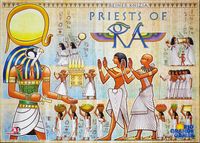
hi i'm adam porter and this is my top 100 board game mechanisms of all time so last year i did my top 100 board games of all time and this year i thought why not lift that box lid and have a look in those rule books and work out how these games work so that's what this list is all about hopefully it'll give you some ideas of games that you might want to pick up yourself or if you're a designer some ideas of the different mechanisms that you could piece together in some unique way to create the experience that you want for your players so today we're looking at numbers 80 to 71 and number 80 on the list is auctions now my favorite auction games tend to come from rhino knitsia i love priests of ra which is a reworking of rar i believe i haven't played ra but priest ra is pretty much the same thing i really like high society and and i like modern art as well now modern art features all sorts of different types of auctions in it so every round you'll be playing a different mechanism it's kind of a master class in using auctions whereas high society is a very simple card game where you're auctioning off cards which are worth points some of them are worth penalties so you're you're auctioning to not take the card and it's really really satisfying i really love the game for sale by stefan dora which has two different types of auctions to it but is really light much lighter than some of those nitzier games the challenging thing in an auction of course is recognizing the relative values of the different things
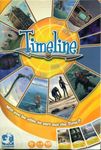
that you're that you're auctioning so certain games will um lend themselves to repeated plays you know the more you play it the more you get familiar with the different sort of values and how much you should be bidding how much you shouldn't so it's a bit of a learning curve to an auction game a game like power grid really benefits if you've played it multiple times and you start to get a feel for how much those different power stations are worth but a game like for sale is really simple it's obvious how much these things are worth because they've just got a great big number on the front of those cards that's their value and then in the second half of the game of for sale those properties that you've bought in the first half you're actually going to be playing them in a blind auction placing them face down in in order to bid for checks money uh that's that's going to ultimately win you the game so auctions challenging mechanism for new players sometimes people don't particularly like them i think for that reason but actually once you get stuck into those games and you get a feel for them it's really really satisfying and exciting number 79 is trivia games now trivia is something which modern board gamers don't necessarily sort of lean towards it's something a little bit more mass-market i suppose we think of games like trivial pursuit and and things like that quiz shows on the tv um but actually it can be utilized really effectively in a board game i really like timeline and wits and wages and fauna and its related game terror and the reason i like these games is
because you don't have to know the answers you've just got to have a rough feel okay nobody knows how long that animal's tail is that we're supposed to be talking about in fauna nobody knows exactly when the pencil sharpener was invented or whatever but we might have a rough feel and be able to make an educated guess and that's enough in these games you've just got to be close and in some of these games you can even kind of tail off the back of what some other players placed you know in fauna if somebody's placed a cube in a certain country you might think well okay they're sort of thinking it's roughly in africa this animal originates from so i'll go next door okay and you'll even get some points for being close so i do love a trivia game as long as it recognizes that not everybody is going to have totally accurate general knowledge and it welcomes players in to just have a go have a shot at it number 78 is i split you choose which is a drafting mechanism whereby you have a pool of usually cards so a bunch of cards on the table or tiles on the table in the case of animals on board and then each player will take turns to either split that group into two groups and then or and so these groups keep on getting broken down into smaller and smaller groups so you can either split a group or you can take the entire group now often that entire group will have a mixture of things that you want and things that you don't want so there is a benefit to breaking it down and having smaller groups but in doing so you make
it more valuable for the other players so there's a bit of a push your luck sort of feeling about these games you know if i break that down it does create exactly the set of stuff that i want but maybe somebody else wants it too and that's where the delicious tension and stress exists in these games it's a fairly underutilized mechanism it's something which comes up from time to time but i think more games could afford to use the i split you choose mechanism number 77 on my list is asymmetric play so this is where each player is working by a different set of rules okay it's it's perhaps something a little bit bigger than just having their own special abilities they've actually got a different set of rules the game works in a different way for them so often this is where you've got one versus many so you've got one player who's playing the baddies and and all the other players are playing individual heroes so that team of heroes is working against the baddie but the baddie they use totally different um uh rules you know a totally different rule set maybe they're using cards where the other players are rolling dice or something like this um there's quite a lot of games that use asymmetric play now which i find quite daunting so games like uh root and vast which have totally different styles of play for the different players space cadets is a cooperative game where every player is doing a slightly different thing i find it's quite daunting because there's a lot of rules to learn there you've got
to learn just not one game you've got to learn multiple games because you've got to understand what everybody at the table is able to do the stuff that they're able to do that you're not but in a simple two-player game like for example the game raptor where one player is playing as scientists and they're trying to capture some dinosaurs to take them back to the lab meanwhile the dinosaur player that's a they've got a mother dinosaur and the mother dinosaur is trying to protect their babies from these scientists and both sides have a completely different set of powers and abilities and it's really really satisfying it's not overwhelming because there's just two players and it's a relatively simple system so when done in a streamlined fashion i really like asymmetric play number 76 is upgrades it's really fun when you've got stuff and that stuff gets better throughout the game so in taverns of tief and tile i've got my nice little in and then every now and then i can flip over a bit of that in to give myself more tables or more staff or more storage and things just get better and better for me throughout the game it's really nice when a game has those options some games have cards with special abilities or and when you flip them a certain way or when you put a token on them it demonstrates that that thing has now been upgraded and those abilities have got better so that sense of momentum throughout again that sense of progression the sense of narrative really really helps me to engage in the game number 75 is speed perception games and i really like these games because
they get my heart racing they get my brain going they're a really good warm up for playing other games or just a time filler um it's always competitive it's always funny so in double for example we reveal a card into the center of the table every other player has a card in front of them and there'll always be one matching image on my card that matches the image in the middle we just got to race to spot which is the one item and it's ridiculously difficult and sometimes it's ridiculously easy and there's no rhyme or reason why it's difficult or easy you're just looking at it think why can't i see the thing and i find it really satisfying playing those games really challenging another good example is the game pick a pig which is also available in pick a dog pick a polar bear and pick a seal versions but in these games you're looking for a sort of a pattern where you have a card and you've got to look for a card with one difference from your card so maybe the animal was big now it's small maybe it had warm up one arm now it's got two arms maybe it had some popcorn uh now it doesn't you know maybe it had some glasses now it doesn't maybe it's changed color so each card that you pick up has to have one difference from the cards that you've picked up previously and so you race through the round and and you're racing against the other players to gather as many cards from that central display as possible so i find these really invigorating they're very slight games they're not going to make up the the bulk of your collection i suspect they're not going to be the meat of a games evening but as a nice way to pass a small amount of time i find them really satisfying number 74 is
action selection and i've made a whole video about accent action selection it's a massive topic and there's all sorts of different things that could fall under this category um but i suppose i'm thinking of things like rondels okay i've not really explored rondels as much as i'd like to i think they're a really nice mechanism that's where you've got a circle of different possible actions and as the player advances around that circle they can't go back so so in order to get to the action that they want they might have to take a few steps to get there before but they can't go back to a previous one without going all the way around that circle i haven't got many rondelle games in my collection i really enjoy them but they tend to be quite dry sort of historical themes and things like that i'd really like to see a few more light-hearted style rondelle games maybe that's something that i i need to start working on myself but other games with unique action selection mechanisms things like luna i really enjoy luna by stephen feld stephen feld is great at creating these action selection systems so in luna you've got these um little druids i suppose or whatever they are and they're on they're on different islands around this central temple and when you take the druid off the island then you get to use the action of the island and then a lot of the actions are about moving the druid from one island to another by boats and waves and things like this so that you can get into the right spot for the next round where you might want to take that action and so i really like these often quite convoluted and weird little systems that
that designers have come up with in quite big strategic games to give us the option of using lots of different types of actions number 73 is teamwork it's quite nice change of pace when you're used to playing games for the vast majority of games i play on my own right unless it's a cooperative game i'm playing alone but some games a few games have us working in teams an example would be code names where one player is the clue giver and then the other players work together as a team to try and work out what that clue that the clue giver is is telling us is all about another example would be team three by brain games so in team three you're stacking these different blocks to create shapes but one player can't look another player can't speak and has to use symbols and so on so you've got all these different limitations on how you can communicate in order to try and build this structure so it is nice working with other people from time to time as a bit of a change of pace number 72 is games which give you the option to select the start player as one of your available actions so i might forego some great benefit in a worker placement game for example i don't want to go for that fantastic benefit over there that i could have what i'm going to do instead is use my turn to take the start player marker so that on the next round i'm going to be the first person to pick and i'm going to get the best stuff okay so that's a really satisfying decision do i go for the stuff that i want now or do i go for the start player marker to ensure i get
even better stuff in the next round i think it's a neat mechanism it's uh it it changes the the way the game flows frequently in these games when you do that the player to the left of the person with the start player marker will be next to play so you'll continue to go in a clockwise direction and perhaps that's one of the downsides of this mechanism is that if i take the start player marker i'm actually benefiting the player to my left who's also getting you know a much better selection than they would have done previously but they haven't had to actually claim that start player marker um so it's a little bit odd that that people get these these passive benefits um just because of something that you've done uh that it doesn't benefit all the other players equally if you see what i'm getting at nonetheless i think it's a clever mechanism and it's it's one that's frequently employed in heavy sort of strategy games but also in lighter games like dream home dream home gives a really it's a really satisfying decision in there you can either when you're drafting cards to take to build up your lovely house you can either take two cards a single column from the row of cards or you could just take one card and the start player marker which means next turn i'm going to be able to take two cards but i can probably take the best two cards that are on the display and then finally number 71 is pick and pass drafting another sort of drafting and probably the most common type of card drafting probably the first thing you'd think of when we talk about card drafting this is where you have a hand of cards you select one card which you're going to keep for yourself and
then you pass the rest on so they get passed around the table with people gradually depleting that pool of cards it's it's a lovely mechanism because you often the same cards will come back to you if the hand was big enough so you've got a feel for what's in that hand of cards you've got a feel for what the other players are taking there are opportunities to take a card to benefit yourself or maybe take a card to punish somebody else you take the card that they wanted sushi go is a really really good version of this probably that for me it's the poster child of this mechanism it used to be seven wonders seven wonders is a really good game but it's got a degree more complexity than sushi go which really simplifies it down to its absolute core i love the game bunny kingdom it's one of my favorite games and it's certainly my favorite card drafting game in this game we're taking a card which references some sort of grid coordinate and then i can place one of my playing pieces which is a bunny onto that grid coordinate and try and claim areas of the board in order to score points the reason that pick and pass drafting is quite low in my top 100 i suppose is that it's become so um commonplace it's just it's just everywhere in the hobby lots and lots of games use pick and pass drafting and so i don't tend to get excited about it anymore it's a bit like you know rolling a dice or drawing a card it's just one of those mechanisms that's always there always present in so many different games nonetheless that's because it's a wonderful mechanism and it creates fantastic moments so perhaps i'm being a little bit unfair and it should be much
higher on my list i don't know what do you think so as with my previous videos in this list we're going to finish with one mechanism my number eight mechanism which i don't particularly enjoy and so what i've chosen for this particular entry is games where you get to use somebody else's power so i've got a card which says i can use a power belonging to somebody else on this turn now at first glance that seems really exciting because i might have lots of options maybe they've been using that brilliant power all game and now i get the benefit of using it too so i see why designers use this in their games why they incorporate it but for me what it does is it means i've got to keep track of what everyone else has got in front of them and if we're playing a game with you know several other players that's quite a lot for me to keep track of or somebody else needs to keep track of it and they're constantly asking all the time what was that power you had again what can i see your powers what powers have you got they're leaning over the table to try and see them it's slowing the game down you've got to constantly keep track of what's going on in front of every other player not just in front of yourself i just feel like it makes the game drag and it's it's added complexity and as lovely a little system as it is and it might work well in a two-player game for example i find in a multi-player game it's a bit of a drag and never quite as exciting as it first appears maybe that's controversial i don't know i wonder what what you think about that let me know in the comments if you enjoyed the video please keep coming
back for more there'll be more entries in this as we go down through that top 100 i'll be trying to do a video every couple of days i would imagine i really enjoy the comments the interactions so please keep that coming subscribe to the channel if you haven't done so already that really really helps me and i look forward to speaking to you in the next video all the best