May 2026 Board Game Vlog








Transcript
Hello everyone. This is Phil and I'm a doctor who likes to talk about and play board games. And I play a bunch of board games in the month of May and I wanted to talk about some of them that I did not dedicate a script and special time to to their own video in this format. I've done this before on the podcast. It wasn't the and the and the YouTube channel as well. It wasn't the most high yield type of video, but I I think I I just kind of want to do it because they I played a lot of new games or games that I haven't played in the past for that I haven't played for a while that I played in the past. And so, let's I'm just going to give this a shot and see how it goes. But anyway, so in May, I had the chance to play Kahora. I played this as a three or yeah, three-player game and in in person. This was a release back in 2023, which was about the last time I played this game. And so it depicts the old city of Kunahora and how as a mining city where we would mine things like silver, we would use it to uh build, you know, they used the silver and the economy thereof to build out the city.
And this game features tile placement and you know resource management and building up of the city of Kunahora and features, you know, a lot of these things that are pretty familiar mechanically. But the aspect of building out this town and gaining more, you know, uh, mines available and everything like that really changes up the economy of how much resources cost or or how much they're worth when you collect income from having, you know, as many fingers in the pie that is these resources, if that makes sense. And so this is probably the most innovative portion of the game is how this card and slide mechanism depicts the kind of supply and demand, which was really cool. Overall, I thought the flow of this game was really nice. It looks really nice on the table as well. There isn't the biggest amount of variability, I would say, in this game. And so my overall rating is a 7.2 2 out of 10. It was a little bit down from my initial first impression of 7.5. I think it's a good enough game. I think and you know on average it did have it does have a rating of 7.8 and I think that's about right. Really good game. I think it's well balanced and everything but I think only after a couple of plays you kind of see what it all has to offer. There's no
major divergences into different uh areas of play. Like, you know, there are so many intertwined ways to score in this game that I feel like you kind of just do everything. You have you participate in a little bit of everything. Uh it's it's an interesting way and method to score this game as well. I don't know if there's a good im image of it here, but right here where you have these nobles, I believe is that they're called. Uh these these are essentially intermittent scoring opportunities near the end of the game, the last few rounds of the game where if you um focus in on certain areas of the game, such as building out all of your buildings onto these tiles or having, you know, a row or a column in the mines, for example, then if you are able to do that during the game, not essentially by the end of the game you get a lot of scoring opportunities. This is where I missed out a lot on a lot of points was not understanding this portion of the game. And so this could differ a little bit from game to game where some of these focuses come into play, but we were basically able to fill out all of these opportunities by the end of the game. And so it essentially is a more tactical experience going with the flow with what everyone else is doing and trying to get
to the same destination but perhaps in slightly different ways which I normally enjoy but I think it it didn't quite have the the variability the individualized powers I would say like if these buildings gave you certain uh asymmetric abilities throughout the game or something like that maybe that would be a little bit more interesting to me. But uh yeah, I really enjoyed my play, but don't think it has a lot of replay-ability for my tastes. So that was my experience with Kunohora. Next is Pandabane Traditional Farmers Bread. So this game is in alpha right now on board game arena and Pandam was a game that I was really interested about when I first learned about it many years ago. So, I'm glad this has an opportunity to be in board game arena for more people to see. Now, it's got a a complexity of 3.5, but I I feel like that's a little high for what it is. But essentially, what you're doing is you are utilizing worker placement to gather resources to bake bread and to deliver that bread to different sellers. And you gain money from that. You use that money to gain more resources, more ingredients. You have a couple of different tracks that you can advance on, and that's essentially the game. There is, you know, more nuance to it, of course, but that's yeah, that's kind of the game.
So, it wasn't as I guess unique of an experience as I thought it was going to be. I think I think it's got an interesting flow to it. Uh I there is a little bit of variability with some of these baker cards or these bakers that you can draft and they give you some asymmetric abilities as well throughout the game. And so I think there is a little bit more to search out through this game. My initial rating though is going to be a six. Uh yeah, I I feel like it didn't quite catch me. It feels like a lot of other games of this ilk, right? Um kind of a mediumw weight worker placement style of game. And I mean, if you've got games like Viticulture, which kind of utilizes this space, this this complexity with a ton of different cards and a lot of different ways to make the game feel different and unique every time you play it. uh and utilizing a similar fame like this. Other baking bread types type of games too like beer and bread also features a lot of variability with the multi-use cards. Uh none of that none of those mechanisms are present in this game. And so yeah, I I I feel like it unfortunately wasn't as interesting of a play to me, but time will tell. it's easy to play
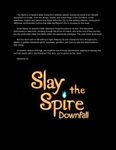
and and find out for yourself if it is a unique enough experience. I've been playing a little bit more just so I can help get this to beta. And so yeah, but it'd be interesting to see if there is something that I'm missing from this game that makes it stand out. So those are my thoughts on Pandam traditional farmers bread. Now I'm going to talk about Slay the Spire Downfall. So, this is a an expansion to Slay the Spire, the board game, which is, let's see where it's at on the list, 17 overall, which is crazy. So, Slay the Spire is the ver, you know, very famous rogue like bore or deck card game video game that I've been playing a lot of. Actually, uh, the Slay the Spire 2 came out not too long ago for, I think, beta testing or or something like that, early access. I've been playing this with my family. And so, as a break from Slay the Spire 2, we went ahead and played this on tabletop simulator.
And the I mean there are additional uh players that you can play as in this game, but it's kind of the reverse of the original Slay the Spire where you play as some of the dungeons villains or you know uh enemies that you fight against in the regular game and the bosses at the end of each act are going to be the heroes that you play as in the original game. So, this is more pretty much more of the same. Uh, in particular, I was this slime guy, which summons these little slimes to do additional attacks, uh, in addition to your turn, which was quite fun. Uh, you know, it's a solid game. Obviously, this was on Kickstarter, I believe, earlier this year. Uh, and, you know, quite a popular game. I still am of the thought that I would rather play this game online. Uh, with Slay the Spire 2, you can play that cooperatively without any mods or modifications added to the original game. So, it it's just a quicker experience having that be online versus playing this actual game. And we actually struggled a little bit. I I know my I think my brother or my my cousin played this a little bit more on his own and said that he was able to get, you know, through pretty much all of the three acts, but together we were having trouble even getting through act
one. We did it once. Uh we played this a couple of times. We we made it to act two, I think once. And so it was maybe maybe we we were missing some rules or something like that, but it seemed like a harder experience than it should have been. So maybe this ups the difficulty from the original board game. But yeah, I mean it's more of the same was just a slight twist on the theme of it, but uh additional mechanisms to play around with. And so if you're a fan of the game, both the video game and the board game. And if you play the board game, I think you probably already know that you like this and have backed it. And so yeah, it was fun to at least try out. So, uh, yeah, that was Slay the Spire Downfall. Next, I played a game of Barrage, which I hadn't played in a long time. I played with some friends that I know here locally that but we played online. So, Barrage is a classic worker placement game that features a cutthroat worker placement and a very interactive board where you are building out dams to block water and utilize that water for gaining power, which allows you to gain the bonuses from the this top row here. And the higher or the farther you get, you're expected to generate more and more power as you go along. uh to get more points and not miss out on that. A big portion of this game that I realized from this playthrough was the power of these
contracts. I one of these uh players that I play against is just really good at games in general. So, and I was kind of watching closely, you know, what he was doing. And I think a big portion of this game strategically not only is planning ahead and making sure that you have a good source of of water and you know power plants and links to those that aren't able to be stolen from other players. Uh you know, as long as you have a good plan to perhaps you know start the base here and work your way up to better power plants. Sure. you know, you're able to keep track of the points that you would get from generating enough electricity. But I think if you're able to do that while utilizing the strong benefits from these contracts, I think that's where a lot of the points are going to come from that make up a good score. And so, it was really fun to uh play this again and kind of rehash the strategies for this.
I I was seriously considering having this in my physical collection, but I remember that this game is and and I was reminded of this because of the recent Kickstarter for some expansion material and I backed away from it uh from having this in my collection because the solo mode is some I remember it being arduous to handle. However, the board game arena version does allow you to use the auto even playing up to three. Uh, having a full four-person game against automated opponents is possible here. And I think the leeway expansion is available here on board game arena as well. And so it it's one of those situations that I think, you know, I would love to own it and play it solo on the table, but it doesn't really work well for me to remember how to do that. And I've already got this wellplaced system in digital format that, you know, I'm paying for, right, with with a premium membership of Board Game Arena.
So, I think that's why I, you know, it's worth it for me just to play it online when I want to. And I'll leave, you know, I'll leave it at that. It's still a highly rated game for me. I really enjoy this game. Uh, but, uh, to the point where I would rather just play it online and am happy to have that. Other games I have supported after playing it on board Game Arena. I recently talked about this in a in a previous episode on a Kickstarter game where, you know, the benefits and and uh I guess challenges of having a game online to play versus just having it being a physical version. I think really successful games do benefit a lot from having a online presence afterwards to initiate more like uh you know a competitive scene or have a fan base that is open to expansions and and things like that. And so it makes sense for that for really popular games. And I see it does it doesn't make sense for games that might pose a certain risk of like maybe people wouldn't like or wouldn't buy into a certain game if it's uh not online. Like if you know if you can only buy it in person then that's how they're going to make money whoever is publishing the game. So all that I don't know makes I it kind of makes sense to me but it's it's a complex issue. Um so parts of it probably don't
make sense to me. you know, the whole business behind it. But in any case, enough about that. I really enjoy Barrage and it's it's one of my favorite games. I mean, it's probably in the top 30 of my favorite games. Uh I think partially because the solo mode is a little challenging for me and it's a really challenging game in particular, but I look forward to playing this again and hopefully I play it again sooner rather than later. Next on my list is Monumental. This is a 2020 game by Matthew Dunston. And this game has been on my want to play list for so long. I had always like had it on my watch list and also like on like an Amazon list when it was available, but never really got a chance to get it until now.
Someone was selling it for a reasonable price and I thought I would go ahead and try to get it. I've really enjoyed some of other Dunston's works such as The Guild of Merchant Explorers, uh, Next Station London, uh, you know, things like that. And so with Monumental, uh, yeah, I was just really interested to see how this game worked. So, this game is a kind of a hybrid game between like an area control experience mixed with a deck building uh process where the action selection is really interesting. What you do is you lay down a 3x3 grid. You activate one row and one column that intersect and you gain the resources from those cards to either purchase cards from a market which include cards that you can put into your deck to use. You put them on top of your deck as well so you can play them, you know, sooner rather than later. Or you can use resource like military points to move around and conquer this area. Uh the map that you either have a pre-built version of this map or you can build your own. And so this game, you might have noticed, is on the lighter side.
It's a pretty much a mediumwe game. And it does feel that way. There are some modules that are added to this game to increase the variability, such as placing different monsters on the board, like centaur, things like that. Uh, from mythology, you have heroes uh, in addition to your own culture hero. You have like figures from history like Al Albert Einstein is a card in this game that you could acquire. I think they're added to the market of cards that are drawn from the deck. Uh, things like that. Uh, an additional Renaissance period as well as you progress through the three ages of of civilization. Uh, so like from antiquity to to present. So yeah, it's it's a quick quickish game and I feel like it it does play around 90 to 120 minutes. Uh closer to an hour for solo. And yeah, it it was great.
Like I I give it a 7.5. It it isn't as complex of a game as some of the others that I have enjoyed recently. I feel like if I did play this back in 2020, it would definitely be higher or, you know, I would have a higher rating for it than I do now. when I started playing more games that were around this complexity rating and since then I've skewed more towards the higher complexity uh surface. But yeah, this game, you know, features an a modest amount of variability with the cards. You you definitely see all the cards throughout the period of the game, but you might not see them in the same order. They they flow through pretty fast as well. And so, uh, but yeah, so you kind of see everything, it's definitely I feel like it's a game that, you know, despite all the different cards, the the the biggest challenge is figuring out how to activate your tableau of nine cards, uh, and move them around, like the the map portion of it isn't crazy. It's not like arcs, right? Like I'm thinking of games with a shared map that you're trying to move over and conquer. And there's another game that I'm going to talk about soon as well that is definitely a lot more complex and a lot more therefore interesting to me. But I I really thought the the 3x3 grid challenge of taking your turn was interesting and it's a lighter game that
I would love to just pull out and enjoy when I'm in the mood for a lighter game. So yeah, I really enjoyed it and glad I finally had a chance to uh play it and add it to my collection. So that's Monumental. So I think I'll talk about that game now that I referred to in in uh the Monumental part of this video. So Epoch. So it was crazy. I So one day I this month I went golfing and on my way back there was a certain game store that I had never been to and I went inside. They had a great used section of great uh section of used games and I found epox of cultures the final version of the game. I did not know if I would ever find this part of the game. If you notice, the artwork for the cover is different than what it appeared on the uh kickst version of the game on tabletop simulator and from the version that I did a somewhat recent playthrough with. But Epoch is a game, a civilization based game kind of 4XC type of experience that utilizes a tech tree, a government tech tree and card place uh based off of Age of Civilization by Jeffrey CCH, who is the same author and designer of this game.
And so what this game and the final version did differently was really neat. I there's a couple of mechanisms that are added to this game. Let's see if I can find some images representing some of those changes. So, the biggest difference was the market of cards that you play. And in this market, instead of I don't know if this is right, but anyway. So instead of having all of your cards like this, this is the previous version where they were all kind of mixed together. You would have like your main units and your artillery or ranged units kind of mixed together.
Sometimes you would have a you know a uh a lopsided representation of said units and so that that could affect the military uh score that you would have in your game. This was separated into two separate columns. So you have three and also to include the wonders which may or may not have been inter uh interjoined with the military market cards as well. And so it made it a lot easier to have a balanced choice of different military types to add to your uh tableau. And so I really enjoyed that uh that aspect of it. Yeah, this is a prototype version of all of these. I don't know if I would be able to find a more recent I I guess I could have taken a picture of of uh the game that I played, but I don't think I did. Anyway, so the in addition to that, there is a change with I think diplomacy that that I did not utilize when I did my playthrough where you can uh declare war on someone and you have like time to prepare for war rather than just being a wararmonger and declaring war that way or you know like an all or nothing thing. That that may have been in the prototype version the more I think about it. In any case, there are smaller uh details that are a little different from the finalized version, which I like in general. And of course, the product that
I picked up also included the I think the Kickstarted expansion with some additional civilizations, which was awesome. And so, in our game, it was it was very interesting, too, where I I played with my friend Alex, who was the opponent that I played against with Andromeda's Edge on the channel. Uh, I think it was this month or it might have been late last month, but he went on a very heavy wonder strategy, picking up as many of these wonders as possible and being a more peaceful uh opponent where as I try to expand greatly with uh really strong military and in the last age try to utilize that strength against him, he was able to bolster his defense. is up enough. Uh the the different types of units that we had were really interesting. I had like the fighter and the tank which gave me a lot of strength, but he had like the national or it might have been the national guard or like um turrets or something like that, but they were very defensive in in nature. And so he had a lot of advantages against an attack from units that I had. So, it was it was really cool to see it balance out that way and have a very interesting set of uh different military units that you can grab and that had different uh abilities throughout the terrains and things like that. You were even like defending cities which I was gunning for. And in
the end, I also like I was able to place out all of my cities by the end of the game, but I forgot that you had to feed them all. And so, I lost a lot of my gold for feeding uh those military units. So it yeah, it was it was a really fun game. I lost, but it was such a fun experience and it was a more polished and finalized version of that. And so, you know, uh so I I think the time in between the prototype that was on Tabletop Simulator and the final product was really good. And I I I've just really enjoy playing this game. and I enjoy it more now that I have it in person and have played a more updated form of rules. I may or may not return to this in an unofficial solo or even multiplayer capacity on the channel. Let me know if you want to see a runthrough of this game. But yeah, it was it was really fun, really good. I hope that this game gets more publicity and an opportunity for other copies to be made for other people to enjoy. I think it does the kind of a Euro hybrid with a 4x civilization experience justice. I think it does that. It does it really well in about a 2hour play time. Uh which is fantastic. You can do it on a week night if if possible. So yeah, really enjoyed my return and this uh very fortunate opportunity to own and
play the latest and uh greatest version of Epoch. So next the game I want to talk about which was actually probably my biggest surprise uh was Scarre. So Scarre was a game that came out last year uh by Shem Phillips who does a lot of the architects of the West Kingdom. You know the West Kingdom and the South Tigris games. So this game was uh you know it kind of depicts the what is it the ancient Scottish uh yeah northern scotland uh group of farmers and hunters. U it's mostly you know wallpaper for this game. But essentially it's a resource conversion game with a ton of different resources in this game. What you do is you have a couple of turns where you draft one of a few different cards that give you uh ever increasing abilities to gather certain resources from this bottom row, but also some oneoff abilities either to gain resources or to convert some to others. And using some of these resources, you do a few things.
You can craft your action cards to make them better and give you points at the end of the game. You can clean. Oh, and the the fun thing about this game is you do have to feed your workers to keep these villagers around. And so you gather some resources that can be used to cook, be cooked, and feed your people. But when you do so, they do produce waste. And so one action is to clean the waste that you have from the uh resource, you know, piles that you have here. And so part of this game is, you know, gathering the the right resources to feed your people to convert to uh doing other things as well, but also getting rid of the waste to not lose out on a lot of points throughout the game.
And then at the start of the each game, you select one of two asymmetric actions that you can utilize through your game to kind of steer your uh efforts in a certain direction. There are other cards that you can uh uh gather to for additional points kind of in a set collection type of manner. So overall, you know, I'm I'm a fan of resource conversion. I play Rosenberg games a lot which uh you know if you think about or at labor laav who which feature a lot of conversion and different types of resources. This game kind of had the trappings of one of those games albeit at a a lighter complexity level but it was still satisfying to to play this game. It made relatively good sense to learn. uh it wasn't that deep of a game uh to understand and you know perhaps strategy-wise it's not the deepest game.
It's not as deep perhaps as a lot of the Rosenberg games are but it was still a lot of fun. I wasn't suspect suspecting to have as much fun as I did with this game. I give it an eight out of 10 with my rating uh scale here. Yeah, easy to learn. It's uh you pretty pretty good for what it is. Like as as far as the depth of turns, the agonizing turns and decisions that you make from turn to turn, planning ahead, there is an element of that. And uh yeah, it was just plain fun. So I really I really enjoyed this game. I think this is worth a shot. It's on obviously on Board Game Arena. It had been on that tab which is like, "Hey, this game is recommended for you." and I had never I had thought about playing it but never picked it up until this month and so I'm glad I did and experienced this game and uh yeah I thought it was it was great and it might be worth a shot for you to try. So that is Scar Bray. The last game that I want to talk about and it's actually a group of games. It's food chain magnate and splatter games in general. So, I had the opportunity just last night as of the time of this recording to play this particular version of Food Chain Magny.
This is only I think the third time that I've played it. Uh the other times I've played it online and first of all, I think this game definitely is something that you should play in person or at least in real time. It's a very complicated game. At least it was to me when I first uh tried to learn it in terms of, you know, this game being very similar to a lot of other Splatter games where you are building up your own uh food chain magnate, right? you you are a magnate and you own a restaurant and you're trying to uh try to you're trying to um promote your products to these different houses and it's a very cutthroat game where based off of distance and pricing and the types of food that you advertise to them, those are the ways that you eventually get the money that gets you victory at the end of the game. In addition to that, there is a quite robust system of different cards that you can draw from and a a tech tree aspect of the different employees that you have available to choose from all the way from chefs and errand boys to get drinks to uh you know VPs and managers things like that. And in addition to that, there are milestones that you can try to achieve as well, which also dictate uh not only special abilities that you have
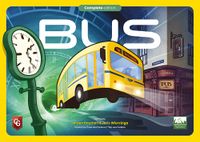
asymmetrically throughout the game that no one else can have if you reach those milestones first, but ultimately they kind of direct what kind of pathway you take your tech tree in or your employee chain. And so there are a couple of viable ways to uh make this game work. It's very chesslike in the fact that there are a limited amount of moves that you can play at first, but then it really diverges based off of what other players do and of course what the map looks like. And so this game obviously is highly rated among Splatter games. It is um I don't know, it's in the top 100 for sure. I don't know where it is exactly, but it is the near culmination of a bunch of Splatter games that I played throughout May. So, I'm not going to talk about them now. I will dive deeper into Fu Chain Magnate later when I eventually make a video on ranking all of the Splatter games that I've played recently. And these are all based off of a website. I'm actually going to pull this up real quick. Here is the website that you can play splatter games on online board gamers. It's been a great way to at least get a sense of what some of these games uh play like, right? So, in person, for example, I played Bus Indonesia and Food Chain Magnate now.
And as you can see, Roads and Boats is going to be live in less than or in just about one minute. So, I'm very excited to see how this I mean, I've been really anticipating this game, wanting to play it again, and now having a, you know, an official way to play it because online board gamers is, uh, permission is provided by Splatter to use this online format to enjoy their games. And so, uh, so my goal is to make a big video comparing and talking about all of these games and ranking them in order from my least prefer preferred to most. I think I've I've played enough of these to finally have some thoughts on them and want to, you know, uh, rank them and give them some ratings. So, I'm very excited to do so. There is one game here that I haven't played which is cans or canis and web. Uh so that uh let me know if you want me to play those games too to add to the listing.
It's not amongst the upper echelon of splatter games like the rest of these are. And so you know just let me know if that's something that I should add to the list or not. But in any case, uh yeah, as we wait for this timer to time, you know, uh countdown, I am super excited to talk about these because the month of May has definitely been a splatterheavy month for me. I've played multiple games of each of these except for Bus uh since I've already played that. And so I'm super excited to Oh, still coming still coming soon. um to have a chance to uh really dive into these games further and uh play them.
So, well, looks like Roads and Boats will still be coming soon. Hopefully, it comes very soon to the point where I can play it and talk about it. So, anyway, uh thank you for watching. Let me know what you think about any of these games and uh if there's are any other games that you think I should play like on board game Marine or something like that that you want me to talk about in a vlog format. I I really enjoyed this format. I've missed doing this giving some games that might not have enough for me to say or have the viewership that I think would would necessitate like its own video, but I still want to talk about them and talk about my experiences. And so I think this collection format of of talking about a few games in the month was something that I enjoyed doing despite the lower view ratings. But you know, it's I'm I'm doing this for fun and if I have fun doing it and I get to talk about more games than I would normally, then I think that's a win. So anyway, let me know uh what you think.
Let uh thank you for watching and I will catch you on the next