5 Levels of Difficulty for Deckbuilders
Games in This Video
10 games are featured in this video — they unlock as you watch.


Transcript
Some viewers may find the following video disturbing. Viewer discretion is advised.
Hey everyone, welcome back to Board Games Unlocked. And today I'm going to be doing something a little bit different. Uh, this is going to be the five levels of difficulty for deck builders. Uh, so this is actually the first time I'm doing any kind of video like this. uh meant to be hopefully more informative if you're someone who is coming to the hobby and you hear about deck builders uh but you're not quite sure where to start. This is meant to hopefully help you in what kind of uh you know what what level of difficulty you're at. So I have five levels obviously and I have two games per level. And the way I'm planning on I don't have names for these levels. I literally just have level one, two, three, four, and five. But I have them as level one being your gateway. These are going to be the ones I'd recommend starting with to even see if you like deck building. Then level two is kind of, you know, the obviously the next step in that it's a little bit more complex, uh, I think. And then level three is kind of where the middle ground that these games have a little bit more going on to them. They can be more complex. It's kind of up to you depending on how much you want to add to it. Level four uh goes into uh not necessarily the expert level, which none of these I would say are expert level. I think all of these could easily be taught and played. Uh, but level four is
there's a lot more going on. And then level five are to me what I have as the most complex deck builders. Uh, other caveats are these are all games I've personally played. So if you're thinking, "Oh, this game is definitely like this game should be level one for sure and I don't bring it up." Well, one, I limited myself to two games per level. And two, uh, I haven't played every game in the world. So, I'm I run a very small YouTube channel. So, I'm not Dice Tower where I or whoever where I get every game sent to me and I have to it's my job because it's definitely not. Uh, all right. So, with that being said, I have Board Game Geek pulled up where I can just pull the game in. uh instead of actually do I own all these games? I own most of them. And another caveat is not every single one of these games is pure deck building. Uh it has I'd say all of them focus on deck building or that's the main uh mechanic that you're interacting with, but these are not all just straight deck builders. uh mainly because that doesn't really exist anymore. So, let's get started with level one. And for my first game uh I have for level one is going to be uh
legendary Marvel. I have specifically Marvel here uh because that's the one I've played the most of. Uh, I have played the alien ones, but the legendary system overall by Upper Deck, they I mean they have alien, they have predator, they have Nar, they have uh tons of IPs that are kind of in the system and you can actually mix and match all of them together. So, if you want to have Naruto fighting someone in legendary, you can. Uh, but I'm sticking specifically with this one. And this one is a pure deck builder. It is one where you have I mean there's tons of expansions for this. I I when Marvel Champions came to the picture I kind of got rid of everything but at the time I had everything for this but they have released so much. If you're a Marvel fan at all this game more than any other Marvel game has uh has whoever you are wanting. Uh, but the whole gimmick is like with most deck builders, I guess I should mention if you're not familiar with deck building, the standard is that everyone starts with a similar deck of cards and you build the deck throughout the game, which is different than games like Magic the Gathering where you build a deck pre, you know, uh, you construct the deck before you are playing the game and then you play the game with your deck and nothing changes about it. In Marvel
Legendary, you pick a variety of heroes you want. So, in this case, they have Hawkeye, they have Wolverine, they have Spider-Man. I can't remember how many you pick, and you pick a mastermind and a certain number of schemes. These schemes are essentially events that'll pop in, but your entire goal is to defeat the mastermind. And you do that through, you know, you draw a hand of five cards and you'll play them all. Uh, this is one of those deck builders where you can't keep your hand from round to round. who have to play everything or you know not use it, but it still will go into your discard pile. And this one uh you are using currency to be able to buy cards into uh that go into your deck uh or you're using attack to attack uh villains that are coming throughout the top market. I have this at level one because it it does follow that similar trope of, you know, OG deck builders.
You have a starting hand and you have two things to manage, your attack and your um and your money. And when you're playing base legendary, the masterminds aren't that complex. The schemes are extremely straightforward. Um, and I I feel like this is easily one that is probably going to appeal to a lot of people. I would argue that most people are into Marvel than not. Uh, I have zero data to actually go off of with that. But even if you're not into Marvel, I'd say this is still a very solid deck builder to wet your whistle. So, that's one that's the first game I have for Marvel Legendary. Uh, and you can also if you go into the expansions is how many pages are there? Uh, five.
There are five pages. And in my experience, the the expansions never really added complexity. It added variety. Uh you I'd probably argue you could even say that the expansions I mean you know apart from a few I know the World War Hulk one they had bigger boxes for some of these expansions. Uh Secret Wars I think one and two had uh had bigger boxes. The X-Men one is a bigger box, but a lot of them were smaller boxes. Uh and they added rules. you know, of course they add keywords, but the way I'm looking at it as from a level one perspective is you start at the core game and then yeah, I could see Marvel Legendary going into a higher difficulty if you throw in a bunch of expansions, but the thing is with this one is you never be able to play with every expansion uh all at once anyway.
So uh so yeah, that's uh this is where I'd put this one. And I mean, they're still they're still pumping out expansions for it. Uh, and now that I think about it, it's like I kind of now it's probably be difficult to find everything. Do they are they still making expansions? I'm pretty sure they are. Let's see. 2024. Maybe not. Maybe not. At least nothing nothing is pulling up right here. All right. So, that was my first one in level one. My second one is a newer game that came out oh, I'm going to say 2023 and actually just uh crowdfunded its first expansion and that is Chemical Overload 2025. Wow. I clearly have no idea what time is. I absolutely love this game. I think this game has uh a ton of charm to it, but this is also one that I think is very straightforward. It does it does kind of put a twist on its head with the standard deck building rules because most of that is going to be you buy a card and it goes it goes straight to your discard pile and then you know you eventually will run out of cards in your deck. You reshuffle and then you uh and then you just draw five and you keep going from there. [snorts] Chemical Overload
doesn't do that. Uh there are cards that you buy and they'll actually tell you deck or table and that whenever you buy them, they will actually go on top of your deck and whenever you play them, sometimes they'll just go into your discard pile, but other times they will actually go out onto a table in front of you. And for every single one that does that, it's mainly a set collection element. So, uh there's one where okay, the first one you have is one point, but the second one is three points, third one is five points, and it's exponential like that. Uh the only major difference with this game is when you because you're crafting potions in this, and you need flasks to be able to craft them. And
excuse me. The cool thing about this game is that you might be thinking, "Okay, well, I need another I need an extra thing to be able to buy a card." You do. However, the flasks again stay out in front of you. And depending on your strategy, you could see the shape of the flask uh in the picture and what size flask you need. So, you could easily be like, "Okay, I need this triangle. I want to make the amethyst potion." Well, there's a triangle-shaped bottle. There's one right there. So, I need this available to me to craft the amethyst. Now, the only thing you're managing in this game are these three resources, red, blue, and green. And it tells you what you need. Okay. To make a blue, like a double blue, I need three single blues.
To make a d to make a triple blue, I need five. So, I could either have one double blue and three uh you know, any combination of what you would need to be able to craft this five blue. And you basically just need different versions of this to make not that to make different versions of these. So, for example, if you want to craft the amethyst potion, you need a three a three blue and a one um a one green. So, you're only managing three different resources. And I just think that yes, there's a lot of potions and that's what's going to make out the market. But you one, there's recommendations in the back of the rule book that tell you what kind of game do you want. Do you want a high money game? Put these out. But none of the potions are insanely complex.
There's not, it's not like that there's texts of uh rules you have to manage or different keywords. There's no keywords in this game. [snorts] So, I like Chemical Overload a lot. I after playing a lot of deck builders, I think this one is very easy to get into. And I think the art and how colorful it is and the unique kind of the potion crafting uh theme I've always just enjoyed. So, those are my two level uh level ones for deck building. Level two. So, again, level two is okay. You've you've played a little bit of deck builders. Now, you're ready to try and maybe make it a little bit more complex. Level two I wrestled with because for me, some of these games were very difficult. I actually moved some of them around quite a bit. I think I had Marvel Legendary higher at one point. Uh but then as I was relooking at the lists, I was thinking, well, no, there's there's more going on than this game. So, this was not necessarily an easy list to make. But level two, I think I'm going to go with Clank Catacomb specifically, mainly because this is the only version of Clank I actually like. I am not a fan of any of the other Clanks. I despise Clank Legacy. I don't really No, Clank in Space. I did like Clank in Space because it fixed a few things, but I wanted to go with Catacombs because this definitely seems to be the most popular
one. Anyway, I feel like a lot of people who played original Clank have, you know, have realized Clank Catacombs just does things better. Um, and you might be thinking that this this feels a little bit more complex because you have a modular board. In original Clank, it was a flat board and the paths were always going to be the same. So, I could see someone saying this could be a level three, but I think overall the deck building portion of this game is very simple. You have a market of cards. You have your standard cards that you can that you can buy, you know, your mercenary, your explorer, things like that. Basically, ways to give you because you have three things to manage. You have movement now because you have a uh mele or a miniature. I don't think you have actually a miniature. I think it's just a mele uh moving around. So, you have movement.
Then you have attack. So, if there are monsters in the market row, they have a certain number of swords you need to be able to defeat them. And they have a defeat condition that rewards you. And then you have uh currency skill, I think, is what it's called, to be able to buy all the other cards that are in the market. So, instead of just the the two or three resources you have demandable, you have the three resources, but you use them differently. It's not just different denominations of currency. It's they're all used different. you if you have a lot of move, if you have a lot of boots, you can move a lot. If you have a lot of currency, you can buy a lot. If you have a lot of swords, you can fight a lot. But overall, the goal of Clank Catacombs and Clank in general is to get the highest value artifact you you feel comfortable getting and making it back out before you generate enough Clank.
That's the the gimmick to Clank overall is there are cards that you can acquire or cards in your opening hand that will provide you with Clank. And Clank is bad. It is essentially a cube of your color that goes into this pool here. And when a dragon symbol shows up in the market, all those cubes go into a bag and those bag and uh eventually cubes will get drawn from the bag. And if your cube gets drawn, then that's damage to you. So you will have some health. And if you die, then if your health track fills up, you basically will score no points. Uh and that's it. That's really the game. So it's kind of a push your luck. You might, if you're making a a ton of noise, you might just grab the cheapest artifact you can find and leave because as soon as someone leaves, that bag is getting drawn more and more frequently.
But Clank Catacombs makes it a lot more versatile with this. Here's the health track right here. Um, makes it way more versatile with the the different tiles. And this game does have expansions that does increase the complexity, but I feel comfortable at a level two for this one. Especially if you've played, you know, the two level one games that I've mentioned, I think this is a decent amount of adjustment. So, that's my level two. My second game in the level two is actually a cooperative game. Uh, which I feel like some people might think is well, if it's cooperative, it's going to be level one. And I I don't think so because because it's cooperative, I think it's it makes it more difficult of a game overall. And that is Aon's End.
I You know, it's so stupid. You have to put the apostrophe in here. I wish BGG wasn't so case-sensitive. I also wish that whenever you search, it wasn't tied to board games. It was just a blanket search so I could put like VA in here and it wouldn't be like, "Oh no, there's nothing." Anyway, that's a side tangent. Aons, like I mentioned, is a cooperative boss battler uh game uh disguised as a deck builder. I remember for years people would be like, uh is not a boss battler. It 100% is. That's all you do. But this game I think has a decent amount of complexity. So again, this one could I could see people saying is a level three. I don't I think I'd cap it at level three. The reason why I have it at level two though is because of the cooperative nature because there there is a decent amount going on. But again, it kind of is your st well not your standard deck builder because they do a really unique thing that no other game has done. But when you're playing the game, you're playing as a mage who has a special ability, but you also have 10 health. And you have these little portals that you spend your currency on to open. But you actually prep your spells on these open portals to be able to uh spend them to deal damage to the boss. In this case, this is OG Aon's End. So they uh
so this is the like the first boss you ever fight and you have your market of nine cards really in any combination of what you choose. The standard and the one I pretty much typically play is you have three gems that are going to be your currency. You have relics that are powerful ability and you have your spells. And so all of these there's at this point there's just thousands of combinations with all the expansions they've done for this game. Uh but OG Aonzen keeps it pretty tame. A you start with a spark in your deck. Uh now you can get the spectral echo that deals two damage instead upon cast. You can get wildfire whip that says while it's prep during your main phase you may spend two either to cast any player's prep spell. So, it has something special while it's sitting in one of your portals. And then when you cast it, you deal four damage.
So, they have tons of different ways for you to interact with the other players. Um, and depending on the market is going to allow you to strategize differently. I think the probably the biggest complexity is with the way that the the Nameless, the boss you're fighting, the way they interact because they will have essentially three different types of cards where it's powers that have a timer. You have sometimes you have ways to just actually get rid of them. Other times you don't. So, every time the boss goes, it's going to remove a counter and then when it runs out of counters, it will lose it'll it'll do the ability. You have the purple cards that are instance. So, as soon as you draw them, they do something. And then third is minions where they will do something as well, but you you could, you know, should kill them unless you're really close to just defeating the boss. But yeah, uh, so you also have to manage Gravehold's health.
And the more I'm explaining this, the more I'm feeling like it is complex, but the way that they actually explain this game, it really is straightforward. Now, the biggest hurdle with Aon's End is that you do not shuffle your deck. Every other deck builder is gonna um is gonna have you pretty much shuffle your deck when you run out of cards. Aon's End does not do that. Uh whenever you run out of cards in your deck, you take your discard pile and you flip it. So when you are playing cards and they're ready to be discarded, you can organize them in the way that you want.
So you have an element of kind of uh strategy in just how you are playing your cards. Uh so that it's never necessarily all that random which is one of my favorite things about Aon's End. So I think this game does have a decent amount going on. However, I think that with it being a cooperative game, that alleviates the burden of a lot of things. Naturally, when you're playing cooperatively, you you just have someone who's remembering rules, who is strategizing with you, who is helping manage the boss. Uh, you know, trying to, you know, oh man, okay, hey, if you put your if you put your cards this way in your discard pod when you flip it, you know, you have all that kind of stuff that alleviates the burden of the overhead of, oh man, I have to remember what every single one of these cards do.
I have to remember that I flip my deck. I have to remember the initiative deck. I have to remember the boss. You know, it's not just you having to do that and then compete against another player. So, that's kind of why I put Aonzen here. And to be honest, this could be because I've played so much Aonzen, it's kind of second nature to me. So, I'm curious uh what other people think on where this one would go. But I have it at level two right now. My level three is going to be this one was originally I think level one but then I moved it to level three. Uh mainly because I think it it combines with another another mechanism and that is Lost Ruins of Arnac.
another game that I absolutely love. And what's interesting is I mean, I'm not going to lie, I think for some of these games I took into consideration um expansions. Uh because I know I didn't with Legendary and Marvel. Well, I kind of did, but in my experience when I played that game, it was the expansions didn't really do all that much. It didn't all of a sudden make a comp a a simple deck building game into the most complex one I've ever played. It was just more content. Uh, Chemical Overload doesn't have an expansion. Clank Catacombs does, but I honestly don't think it really adds that much uh to the expansions. It makes them good, but and then Aon's End has a million, but they're all pretty much standalone expansions, so it doesn't necessarily matter which one you buy for Aon's End.
However, uh, with Lost Ruins of Arinac, this one combines worker placement and deck building. And while it does a lot of neat things with the deck building element, for example, you have two types of cards that you can buy from. And over the course of the game, you will have less of these uh, expedition cards and more of these relic cards. And so you have to manage actually you manage quite a bit of resources here. You manage gold, compasses, uh, rubies, sapphire, not sapphires, arrowheads, and tablets. And all of these mainly matter, well, the rubies, all the resources actually matter for going up on this track. And with expansions, this track changes and therefore adds rules to what the track does.
So, uh, but mainly you need gold to buy cards on, uh, on this on the this side of the the market. Uh, and what's cool is all the relics, not the relics, all of the resources are thematically tied. You need money to buy human stuff. You need compasses to discover the relics. And but whenever you actually buy a relic, you get to pop off its effect immediately and then it goes to your your uh actually there's no discord pile. They go to the bottom of your deck. But when you get them again, you need a tablet right here to spend to be able to trigger the card again. But the cards are also multi-use in that they have an airplane, they have a a car, and they have a boot that will determine where you can send your workers. That's a car.
No. Yeah, a car. Is there a car? Yeah. And a boat. That's That's what it is. So, if you want to send a worker to this area here, well, not only do you need compasses, uh, three compasses to send a worker, you need to discard a car that has a boat and or a plane. Not a boat. Wagon car. God, I'm stupid. Uh, I don't know what that is. I work from home, so I haven't seen a car in years. Uh, anyway, so they kind It's like boots at the bottom, then boat, car are the same, and then plane is at the top. So if you have a plane, you can go anywhere. Um, so these are discoverable sites that you send workers on. You could fight guardians, which you need resources uh to defeat them. And then now it's a new worker placement spot. You could send a worker to get the effect. Draw a card, get a coin, get a tablet.
All of this is mainly so that you can go up on this track. And there's two types of you have your magnifying glass and you have your journal. And you're rewarded with stuff when you uh move one of these up, but you can't move them up at the same time. You well, sorry, you can't move the journal um higher than the magnifying glass. Again, thematically, it's the magnifying glass is what you are seeing and discovering, and then the journal is you documenting all that down. So, you can get a bunch of points by going up on uh on these tracks. And like I said with the expansion, it adds like way more tracks uh so that it's not you have you have ver uh variety with them.
But I think this one is a perfect spot as a level three because of the the card the deck building element which I haven't even really talked about. I mainly talked about the resources you have to manage. So, the deck building is really cool because there's some cards that give you free actions which has a lightning bolt on it and other cards is a it's an action to just play it. Um, but what's also cool is that you don't have a discard pile. It's just everything that you play will go at the bottom of your deck. But yeah, I mean, you have different cards that you're going to be trying to go for deck building. And when you add in the expedition leaders expansion, that gives everyone a a different player power and that will also have you start with different cards. So you have some asymmetry with how each of the characters are going to be reacting to what is on the board.
though it I mean I would honestly probably say this is uh well I was going to say 6040 on on worker placement to deck builder but you you need your deck to be able to do anything on the board. So because you can't just place workers like in standard worker placements uh you need cards to be able to do that and but you might want to play your cards for their effects. So, the dual purpose nature of the cards, the fact that you need a variety of resources to be able to buy cards and then use some cards and then use those cards for various effects of free actions to combos to gaining resources to move up on this track. It all synergizes extremely well. Um, that I think that this is kind of a very solid spot for level three. That's my uh first pick for level three.
My other game for level three, which you might be you might think, well, this is pretty similar to Marvel Legendary. Uh I personally don't think so. Hence why I have it here at level three. However, I also think this game has while not as many expansions, it gets way more complex than I think Marvel Legendary does. And that is Dominion. Dom dominino Dominion. Uh I'll do is second edition. So I absolutely love Dominion. Uh, and the reason why I kind of have it as a three as your more average kind of middle-of the road deck builder is while yes, what you are doing is very standard for a deck builder in the sense that you play everything in your hand and you uh and then you if you don't, they go straight to a discard pile. All the cards you acquire go into your discard pile. It is your true blue deck builder.
However, this game h is so expansive with all of its options, with all the different um I clicked update pack. When did I click update pack minion second edition? I don't know what happened. uh with all of its different expansions that all have just as much content and a theme around them as the core game, it can get extremely overwhelming. You know, there's cards that uh that are side events that you can that you can invest into. There are guilds you can be a part of. There's different ways that the cards stay out and interact with stuff.
There's curses. There's there's a ton of different things. I mean, I don't know if this this looks just like a guy documenting uh his cards, but whenever you're trying to scheme up a strategy, it depends on how the market is looking because you have this element of okay, on my turn, yes, I naturally I have one buy action or I have one buy and one action. And basically what that means is okay I can play a card. I can only play one card that says action on it. But then there is, you know, when you're getting using currency, you are buying cards and those go straight to your uh your discard pile. However, if you play a card like village, for example, well, that now gives you two actions. So you played you used your one action to play village, but that gave you two actions.
And so you will combo into this that I think kind of makes it a little bit more overwhelming than say another game like I mean I'll compare it to the other ones Aon's End that as I was explaining I was like you know there's kind of a lot going on but I mean in in Aon's End you don't ever combo into a bunch of stuff. you. Oh, here's what I I can prep this spell and I can spend my aether on this card. Goes into my discard pile and I'm done. In Dominion, you can be like, okay, I'm going to use my action to play village. That gives me two actions. I'm going to use one of those two actions to play smithy. That's going to let me draw three cards. Oh, I drew into another village. So, that's my second action for to use for village. That gives me two more actions and a card. So, I'm going to draw another card. Okay. And now I'm going to use this card to play seller.
That gives me another action and lets me do this. Then I'm going to use my second of my second actions to play market. That lets me draw a card and that lets me play gives me another action and a second buy. I haven't even done my buy phase yet. And money. And then with that action I got from market, I'm going to play merchant. You know, it it balloons into kind of this complexity. And this is just base Dominion. So while yes, uh with Dominion it feels like okay the overall goal is to you know have the most points and you get the most points by uh buying the duchies or the provinces or with later expansions there's a ton of ways to get different types of victory points.
And at the end of the game, everyone counts up their points uh from their their own deck and whoever has the most wins. But there's so many just different ways that the market can come together uh that create just a different play style every single time. And that's kind of why I put Dominion at level three, even with its core game, honestly. Like yes, again what you are doing on your turn sounds very straightforward, but I can see the analysis paralysis of having 10 different cards in a market every single time you play. Yeah, you're going to get more familiar with how cards work on repeat play, but that goes without saying for every single game on this list. The more you play it, the less complex it is. And then there's also cards that allow you to attack other players.
Like the militia card is each other player discards down to three cards in hand. But you might have a moat in your hand that's an attack reaction card that if it's in your hand you can show it to ignore the effect of an attack card. So things like that. Um, and that's just with Dominion Second Edition, as I mentioned, with all these expansions, which is kind of why I threw Dominion at level three, is it it covers both aspects of, okay, it's it's pretty it's kind of complex, uh, but not so complex that you're just in way over your head. But you can play these expansions by themselves, or you can combine them all. And if you combine them all, unlike Marvel Legendary, for example, you get some real wacky wacky things. You have Plunder is, you know, has a ton of ways of of having money and using money in different ways. There's adventures which add in kind of like roles of hey, I'm a knight, I'm a thief, things like that.
There is hinterlands which add in which is or no not hinterlands prosperity. One of them adds in just tons of ways that value how many cards you have making you abundant and a bunch of stuff. So I think Dominion out of all the games has the ability to kind of just blow out of proportion. And that's why I have it at number three. My number four is an interesting take on deck building and it's probably not necessarily one I would have considered initially for its deck building um because there's a lot of stuff going on in it. However, it did pull up whenever I searched Board Gamegeeek for deck builders and I as looking back on it, it's like okay, it is an important part. It's kind of the crux of you being able to do anything.
And that is revive. So, revive I have as a level four. Um, mainly because I think two of the other games are just a little bit more uh involved. like the two games at level five um embody deck building a little bit stronger than revive, but this does have a decent amount of deck building in it. So, I mean, one, you have a market of cards that you can buy from, but these cards are all multiuse. And not only are they multi-use and these are just the standard ones, they are kind of a part of a set collection element in that what you are doing in revive uh for the deck building is you are playing these cards for their top half or their bottom half. Okay, you want to you want to get food or you want to activate your your tribe special ability. Well, to activate the top, you take it and you slot it into one of you these two spots. That's if you want to activate the top. If you want to activate the bottom, you slot it into one of these two slots. Not only that, but the cards are colorcoded with, you know, yellow, gray, uh, green that if you have
these little tokens here. So, this is we'll just use this one as a food right here. If you have that slotted into these spots, well then if you play a card in that section that matches that color, you also get that. So, if I had this food one in this rightmost spot and then I played my yellow one for its top effect, well, I'm getting the two food from the card, but because it's yellow and it matches the yellow here, I'm also going to get another food. And then with the deck building element, and this is kind of the cool cool part, is that there are cards you can acquire that have these roots. I don't really know what they are. These uh beams across because normally it's one card per slot. However, if you play this card in it and it has a has that bar across, you can play another card on top of it.
And if you play a card on top of it uh that matches this color, you trigger it all again. So, for example, if I played this one, I would get a food. And if we still have this here as an example, I'd get another food. Then if I played this card above it, I'd get the two food from this one, the one food from this one, and then the one food from this because it also matches the color. So you have to manage all the color coordination, the multiple. And you could just keep doing that. If you if you played another card that had a beam or a bar across it, you could just keep keep stacking it. All of these resources are of course used to spend on discovering tiles, on spending for various effects, on going up on these different uh tech tracks. Um but you're managing technically four resources, gears, books, and food, and then uh gems, and the gems are wild.
So, you're developing this uh this engine with the different types of cards. And that's just with the with the top effect. And the cards get more complex as in the market. These are just the starting cards. But what's interesting about this game is it's not just you don't necessarily have a deck. You are still acquiring cards and you want them to be used. And your turn is dictated by how many cards are in your hand. When you run out of cards, you can't really do anything. So you have to pass. And when you pass, what you do is you take all the cards you played and you put them over here in this side pile. And these cards now become your hand. So I guess it's kind of deck/hand building. Um, but it does do a different twist on deck building. It's not all compiled to one deck. You have kind of two decks that you're managing. Because if you have cards that synergize really well together, but you've accidentally split them from one another, well then they're obviously not going to synergize. So you have to make sure that okay, this this hand right here, the one I'm I currently have, this is my resource management hand, and the other hand is my, you know, tech tree uh management hand. And okay, I'm pass. So now you've kind of swapped them.
So, it is a really cool gimmick and I like the fact that they do have just tons of different ways for you to manage both sides. But uh again, this one just to me feels like that you are comboing off a lot with the deck building portion and also the fact that all of that is combined into managing three different tracks and these you will be able to unlock different energy effects. these uh tokens here you slot into uh into these uh spe uh spaces here when you've unlocked them, which you only unlock them when you move the colored pegs up to their spots. So the green one here, you unlock this spot when you get it to two. And then when you get it to three, you also need gray to get to seven to unlock this spot. And when you do that, you can acquire one of these uh abilities and slot it into that spot.
And now you can spend energy as a free action to be able to pop it onto those to trigger those effects. So as a deck builder, kind of like with Lost Ruins of Arnac at level three, this one I think is easily more complex than Lost Ruins of Arnac. And that's why I put it at four. So, it's a pseudo worker placement and a pseudo deck builder, and that's why it's at number four. The second game I have at number four, um, which probably could have been put at number three now that I was talking about Dominion a little bit more. Um, and especially cuz this one is also cooperative and that's slay the spire.
So with Slay the Spire, the reason I have it at number four, so Slay the Spire is actually, if anyone was checking this out, they they have probably played Slay the Spire on uh as a video game, and they might be experimenting with deck builders as a a board game medium. So it's kind of like, well, which one should I start with? Well, Slay the Spire has a lot going on into it that I think is a lot more behind the scenes. The reason why I have it as at number four is because there are so many different ways that you can build your deck for all four of the characters. Uh even as a board game, there's a ton of content for it and the fact that it is a very difficult cooperative game.
Uh, hence why it, you know, I that I can see the argument of it being a three because it's cooperative, but the complexities of being able to build your deck and the fact that this is a rog light make it to where you can easily just get overwhelmed or build your deck poorly that it just kind of means you're got you're setting yourself up for failure. And then on top of the fact that you have multiple paths that you can take that allow you to either, okay, we're going to generate a bunch of fights, we're going to need some money, so we can actually go to the market. You have to manage potions and relics. And the relics in this game, there's no limit to the number of you can that you can have.
So, if you have tons of ways to acquire them, you have a bunch of different triggers uh each combat on top of Okay. Well, you have to manage energy um and a bunch of different not necessarily keywords, but well, no, I guess they are keywords, but and they're not resource statuses is what they're called. So, you have to manage vulnerability and weakened and strengthened and thorns and whatever it might be, poison, stuff like that. And each of the four characters play radically different from one another. If we're comparing this to the other cooperative game I have on this list, yeah, the mages have a special ability to them, but that doesn't necessarily dictate how they play. They might have one or two cards that are different from the rest of the other mages, but ultimately you're buying and building your deck from the same market pool. In Slay the Spire, you are not doing that.
There is nothing you are sharing between between the other players. Like here are just a few cards for the uh the silent which is my favorite character to play. Um, and every single card besides your standard deck of strikes and defends, every single card you are getting is completely different from all the other players. Whether it's from their standard deck or I had this fly, this fly was like asking to die. It just kept flying and I was like, "Okay, I'll get rid of it." And then it didn't fly away. It's just like, "Please kill me." Anyway, uh so not only is it from your standard deck of upgraded cards, every single character has a golden ticket deck, which are kind of like their very powerful ones that are very rare to get. You need to draw a golden ticket from the basic deck to have an option to buy from the special golden deck. And then I'm glad I actually just thought of this. Not only are all of your all the all the characters completely different from one another and their entire decks that they pull from are different, every single card can be upgraded. So, the game comes with sleeves that are actually terrible. Um, but when you go to a rest site, you could potentially do a blacksmith.
Um, and the blacksmith lets you take any card in your deck and reverse it and, you know, flip it over in its sleeve as an upgraded. Now, these upgrades aren't insane. It's not as if it it takes, you know, a strike and turns it into some god tier different different completely different effect. It basically will take a strike that does three damage and you flip it, now it deals five. Um, things like that. However, that's just the bare minimum. There are a and that these are all the cards that you can apply to your own character. If you're playing the ironclad, what's going to be upgraded might be different. It might take a card that has an exhaust effect. That means that once you play it once, it goes away and it might remove the exhaust effect.
And all these changes are minor, but they are hugely impactful when you are trying to do a build. Um, so I feel relatively comfortable putting Slay of Spire at level four because it's a very difficult rogike game. And the biggest difference is the fact that whenever you lose in Slay the Spire, that's that's it. That was the run. So you have to completely reset it. If you were in act three and you lost to the final act three boss, well, restart all the way from act one. Rebuild your decks. Um, and then you know, you have potions you have to manage, you have relics you have to manage, you have boss relics you have to manage, and it it just I mean it it flows extremely well, and it's such a fun game to actually play, but I would say that it it manages to do a lot with less because this game does not have a million expansions like Dominion. Um, so I kind of have have this in I I can see someone saying no, Slay the Spire is probably a level three game, but I don't know. I think I kind of might have taken Slay the Spire as a concept uh you know as a rogike to make it a higher difficulty because it's so difficult to win. Um, and not only if you do win, the game unlocks ascensions, which are kind of difficulty modifiers that the more you win, uh, the the more
ascensions you I mean, you don't have to add, but you you could add to make the game even more difficult. And there's also cards you can unlock. So, it kind of is a pseudo legacy game without the permanent destruction. You just unlock stuff as the game goes on. So that is my number four, Slay the Spire. And last, my number five. I have two games again for level five. And these felt pretty standard. I imagine if anyone is watching this, they're going to know one of them. So I'm going to start with that one. And that's Mage Knight. Uh Mage Knight 100%. I'll do Ultimate Edition because it's the one that includes all the expansions. Uh, this is the quintessential game that people bring up when they're talking about overly complex deck builders specifically. Um, mainly because it's scenario-based and you have to manage a ton of stuff outside of just your own deck. You have to manage uh different locations on the map. You have to manage different terrain. You have to manage the mana that's available to you. You have to manage different icons that are on the monsters you can fight. You have to manage, you know, when in the day it is.
You have to manage your reputation. You have to manage uh the scenario rules. All of that. And this is also coming from someone who hasn't played as much Mage Knight. But, you know, they threw tons of stuff into this game and the fact that there are tons of different cards that you can acquire. Um, let's see if I can find a better picture that showcases the cards because the cards kind of like revive have multiple effects. And here we go. And so the effects I can't zoom in that much are determined based off of how much mana is available and what kind of mana because when you roll these dice it's going to determine what is kind of in the ether for you to spend. You have red, white, and black right now.
Although I don't think black is available because it's daytime. Uh but for example, if you want to do this intimidate action naturally, you can just do the top one when you play it. you can just do the top one. However, if you want to do the bottom one, there needs to be a red mana. But you can also acquire crystals that you could seed onto cards and those mean you just have that available to you. You don't have to rely on the luck of a dice roll to be available. Um, and sometimes it completely changes the effect. It's not just, you know, in Slay the Spire where if you were upgrading cards and it just said, "Oh, it's a strike three to a strike five." Some games, some games, some cards completely change what they do. If you want swiftness that gives you a move too, well, if it you can just move two, but if you have a a white mana available, well, that turns it into a ranged attack.
So, you would just think, oh, my swiftness naturally lets me move two, but if I empower it, it lets me move five or move four. Nope. It turns it into a ranged attack now. And you either do you're doing one or the other. Rage is an attack or block two, but if you empower it, it's now only an attack four. So, the game like revive, except that this is an actual deck builder where you are playing cards, they have a discard pile, you will reshuffle your deck. When you take damage, they go into your deck as wound cards, which inherently it's not like you have life to manage. Although, I think if your entire hand is wounded, you die and you do lose. Uh, don't quote me on that, but it uh really wounds just kind of clog up your deck.
Uh, so whenever you're drawing your new hand and you draw a lot of wounds where you don't have a lot of options to you, so when you're healing, you're removing wounds. But so unlike revive and slay the spire, you have a deck you're managing and you're having resources on top of that to manage. And this is all without including any of the expansions. you have these are the market cards you can buy. Um it just has so much overhead that the deck building I mean it is not only complimentary to what you are doing because that's how you do anything. You don't have any inherent moves. You don't have any inherent anything like that. It's what did I what do I have in my hand that's going to allow me to do the stuff that I'm wanting.
And not only that, the different types of terrain matters because depending on what day it is, certain types of terrain is easier to move into. What time of day it is determines, hey, there might be a weakness or a strength to these enemies. Um, I don't even remember what these are. So, and then you know the different multitude of icons that are on the enemies. And the enemies are just chits. They're not like Clank Legacy where they have or Clank Catacombs where they're just sword icons you use to defeat. They have defense and health and status effects that they can put on you. And you know, hey, this enemy can only be hit by ranged attacks. This enemy can only uh has blocks the first instance of damage, whatever it might be. And then you have different keeps you have to manage. So, this game has a lot going on into it in such a way that it to me just felt like it was the natural number five to go into or level five.
And I unfortunately can't speak to any of the expansions, so I don't I don't know what they add. I imagine it's [snorts] more content, more scenarios, but someone and hopefully clarify in the comments what the expansions to Maid Night bring. Although they did announce a ver a brand new one that comes out either they I think it is this year. I think it's already out that adds Tiamat. I don't think it is Tiiamat. Um oh yeah, Fearsome Apocalypse Dragon. It looks like Tiamat to me, but I think also that some of the expansions add in playable characters versus just your generic deck builder. Uh kind of like Lost Ruins of Arnac, you have unique characters you can play as. So that was uh one the first game I thought of for level five for sure. And the last game that I think at level five might also not be that much of a surprise, but uh this one is actually kind of your pure deck builder. Unlike Mage Knight, Lost Runes Varnac, Clank Catacombs, uh Revive, those were all games that had other mechanisms in it. This one doesn't, and that is Imperium.
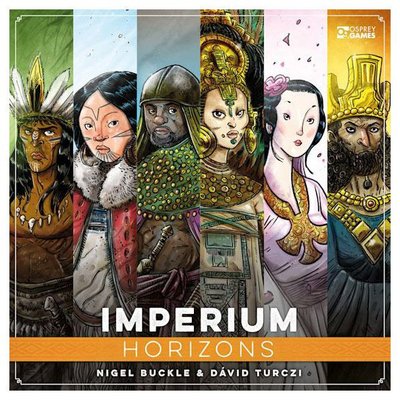
I'll go with Horizons because that's the newest one, but originally it was Imperium Classics and Imperium Legends. Imperium Horizons comes with God, how many was it? If for uh one, two, three, four, five, 6, 7, 8, 9, 10, 11, 12, 13, 14. And I think that rounds it out. If you have classics and legends, 30 overall civil, this is a civilization game as a deck builder. And uh every single civilization plays radically different from one another. Kind of like with your civ games, you have to manage uh resources. And in this game, so your two resources are uh resources and population. And [snorts] you need both of those to be able to trigger effects on certain cards.
But what's kind of fascinating about this game is there there will come a point so most of the time every single um civilization starts in a barbaric state and once you get to a certain point you then become civilized and that will make old cards certain cards not usable anymore. They were only be you can only use them as when you were in the barbaric state, but then now you can't use them whenever you civilize. Some games or some factions don't even ever become civilized. They might just stay barbaric the entire time. Some games or god, I keep saying games. Some civilizations may never be barbaric and only can never be civilized. So, not only do you have your draw your your actual deck, you have your draw deck, uh you have your discard pile, but then you have this ascension card. So, these are cards that are again specific to your your civilization. But the interesting thing is that whenever you run out of cards in your deck and you have to reshuffle, you then get to take cards from your ascension pile and add them into your deck. It's kind of a pseudo level up system.
And depending on which cards you get, that's going to determine uh the strategy that you are aiming for. On top of that, you have this you have the market out there for diff different types of cards um that other effects will be requiring. So you have like land cards and uh I don't remember what these icons mean. Um, but you have multiple different decks that are only tied to that specific type. Um, so that whenever you're playing cards like permanent settlement, you pay a a resource and put a, you know, this icon um, underneath another card or you get to play it out in front of you for its effect. Whatever it might be, this is okay. acquire a river and exile a card from the market or trade or pay three population to flip this card. Um, so there are certain cards that you will you will need to be able to acquire the ones out in front of you uh in the market. On top of the fact that not only is it not just a standard deck builder, but you have various actions that you have, you have a certain number of actions that you can trigger. That's what this token is is. That's your action token. And these are your exhaust tokens.
And you can have more or less of them if you uh depending on how you've done your build. I think this game has this solo mode. The solo mode for this game is impeccable. It does such a great job of making every civilization play like their civilizations in a very clever way. So, I hate that picture. Let's go to Imperium Legends. There we go. There we go. So, yeah, I think this one, unlike all the other true deck builders that I that I mentioned with Dominion or Chemical Overload, uh, or Legendary Marvel, this one has so many effects that are out in front of you. Um, and the fact that your civilization is playing different from all the other ones that are in the game, and the fact that they actually kind of level up as you are. uh developing them. This is as close to a civ game as as it could possibly get with the the different effects of or with the effects of being a deck builder. So, [snorts] I I feel very comfortable putting this one at level five. Um,
and I can't really think of any other deck builder that is, you know, pure deck building that is more complex than this one. Uh, because it's not just a matter of learning what the market is. It's learning what the market is and it's learning how your civilization functions, the nuances of what you need to make your civilization prosper and play effectively. on top of the fact that, okay, now I'm going to be doing a deck build and that's going to affect what I'm able to do. And you have to manage whether you're in barbaric state or uh civilization and when to go into that step so that you can comfortably not be struggling for resources, the resource management that is incredibly important. the population management. It It has a decent amount going on, even though it doesn't look as expansive as some of the other games I've had on here. I I have definitely played this game enough to kind of feel, oh, these civilizations actually run pretty deep.
So, that is my second level five deck builder, Imperium. And that's it, everyone. Those are my five levels of difficulty for deck builders. I am very curious to know what games do you think you you know what what levels of of games you would put in for deck builders. I am also curious to know where you would rank these in terms of uh difficulty level. And if you like this video, also let me know in the comments because there's a ton of mechanisms out there that could warrant a video like this. So, if you want to see my thoughts on worker placement or area control or push your luck, whatever it might be, um, I can definitely do that. You just got to let me know.
Anyway, that's it everyone. I hope you enjoyed. Like, comment, share, and subscribe. And have a wonderful whatever time of day it is for you.