Top 12 Favorite Games with Card Pool Refreshing







Transcript
Hey, I'm Jimmy from Stonem Games and today I'm going to talk about 12 different games, actually 13, maybe even 14 um games where they they use different ways to keep the central card pool or tile pool or whatever the central pool is to keep it fresh but not too fresh.
Uh just a general broad example of this is any game that has a few cards in the middle of the table that on your turn you can potentially gain those cards or or gain one one of those cards a card pool or a a pool of components. Um how do you keep that fresh? How do you how often time how often do you let players refresh that whole pool or refresh part of it? Um and how often is too often? Uh that's something that we always face in play testing where uh you know if you refresh that pool too often then by the time it gets around to my turn I can't really plan ahead at all for the type of card that I want. I can't even yearn for a card that's in the central pool because I don't I genuinely don't think it'll be ready there. It'll be available when by the time it gets back to me. And so I wanted to dig into the different ways that games do this, that they keep this central pool fresh while not refreshing it so often that players can't plan around the cards or hope to get a certain card or component from that pool. The first game I'm going to talk about today is the one that I haven't played yet, and that's why it isn't officially on the um on the list, and this is Flip Tunes. I I intend to play Flip Tunes soon, but I haven't played it quite yet. But fortunately, our solo panelist, Aaron, has played it.
And Aaron says this about Flip Tunes. In this deck builder, you're trying to hire characters, the tunes, for your cartoon. If you're able to get 30 fame before the market deck runs out, you win. Each round, you can hire tunes from the market. The market is sorted by rank, lowest to highest. And that's what we're seeing here. These cards, these numerical cards are the rank um or the the they're the cost, but they're the cards are sorted by rank based on the value of these cost cards. Um so the market is sorted by rank low lowest to highest. At the end of a round, you replace the cards that you've purchased. Then you sort the market by rank from lowest to highest. In the solo game, you go a step further. You then remove the lowest ranked card and the highest ranked card from the market, replace them, and sort the market again. So, a couple different ways to keep the the card pool fresh because you're refreshing cards that you've bought.
That that makes sense. But also that you are re-ranking the cards based on the value of the remaining cards. And that means if you have a card that is uh maybe cost a lot and no one's buying it, that a more valuable card might happen to come out and then you can shift it down um and it could be it can cost less. I believe this number right here is the the the fame or the the rank of the card. So yeah, that's flip tunes. I need to play it to talk a little bit more uh to be more informed about how it works. But that is the first example here. Let's move on to the top 12 though. And these I have mostly numbered in terms of how much I enjoy these games. These are all games that I enjoyed something about the game and largely a lot of things about these games. um rather than a ranking of these card pool refreshing mechanisms because the different versions of these mechanis mechanisms work in different games. So the first game I have is Clank Legacy 2.
So in this game there there's a lot going on in this Clank Legacy. I would say almost even too much. But uh the one mechanism that it introduced at a certain point in the in the campaign that isn't it isn't I wouldn't say this is a big spoiler but feel free to skip ahead um if you about a minute if you if you want to avoid a very minor spoiler. There are cards that come out in the card row that eat other cards in the card row and um they eat kind of the the oldest card in the card row. So this is the mechanism of removing the oldest card in the card row but doing it in a way that's determined by the game itself. the game is saying uh now is the time to do it at the end at the end of the turn. If this card is remaining, the card that's if the oldest card is still remaining, remove that card. If however, you've purchased that card and that card is usually this card in in the far right slot. If you have purchased that card during your turn, then there's nothing to eat there and no card is eaten. And so you prevent this this uh this this enemy in the card row from from eating that card. You can also defeat the enemy and that removes that enemy from defeating from removing a card as well. So you have a the card row is constantly doing something. It's constantly changing whether it's motivated by the the enemy that's eating the cards or by your decision to buy these cards. Um but it is it is staying fresh as a result of having this entity this living entity in the card row that is eating the cards. That is Clank Legacy. Number 12. At number 11 we have
the Fox Experiment. And this is kind of a a a general mechanism for refreshing the card the the card pool, which is at the end of the round, refresh the card pool. This game is a a round based game. Um, so if a game has rounds, you can just say at the end of the round, get rid of all the cards in the card row and refresh them and put more cards in there. But I wanted to use this one as the example here as suggested by Skyler because uh in the fox experiment, part of the fun of the game is that some of the cards that are entering the market or the cards that are entering the market are cards or wolves that were or foxes, they're foxes that were uh created by the players during the previous round. And so the exact cards that you created become the card pool in the next round, which is really cool. I would say that's a a really special way and unique way um that's fairly unique to this game, but I think it might, you know, it gets me thinking when I see something like this uh to uh to refresh the card pool with cards that were created or where something happened to those cards, those specific cards during the previous round. That's the fox experiment at number 11. At number 10, we have a fairly recent play for me.
This is Ancient Knowledge. And this I think this game has a really cool card refresh mechanism um in that when only so you have these three rows of cards. Um and the the types of cards in the rows ch change over the course of the game. There's kind of era one cards and then era two cards uh two different pools of cards. And this middle section here at a certain point of the game it goes from being an era one uh tile to an era two tile. Uh that that's cool in itself. That isn't about really refreshing the cards all that much. But the basically for each of these rows, whenever one only one of the cards in the row remains, that card goes away and the row refreshes with three new cards. So, this isn't a game. You can see it right now.
There's a blank space for this card there. This isn't a game where this card is replaced after you buy it or replaced at the end of the round. That doesn't happen. Instead, it's simply when one of these other two remaining cards is purchased, then the last card, I guess the least desirable one, that card goes away and three new cards come out. Really elegant, really simple. It it means that you're refreshing the card organically throughout the game, but you're not constantly doing that, which I think is key for these games. You're not just constantly shifting cards around and moving them and and refreshing them and reshuffling. Um, I I like the balance that ancient knowledge adds to that mechanism. So, that's ancient knowledge at number 10. At number nine is a modern classic, Ticket to Ride. So in Ticket to Ride, this is suggested by our panelist Caitlyn. Um, in Ticket to Ride, if some of the if certain cards are identical, then you refresh all the cards. And I believe the rule is in Tickets to Ride that if three and so it's very specific in Ticket to Ride, but it could be in different games. It's just like if there's three identical cards or a certain number of identical cards, refresh the whole market. And this this works in games where there are not a lot of unique cards, uh, more repeated cards. And that is the case here in Ticket to Ride. If three of the wild cards, the rainbow cards, if three of them are in the market at any given time, you refresh the entire market. There might also be a rule about identical versions of the other cards, but I believe the focus is on the wild cards. Three of them are in the market, you refresh the entire market. Um, so yeah, I think that works well for Ticket to Ride and can work
well for similar games where there are a lot of repeated cards throughout the game. That is Ticket to Ride at number nine. At number eight, we have uh Red Rising. So, this is suggested by Skyler as well. So, this is a player impacted uh card refresh mechanism where it isn't so much that the cards are being like wiped and replaced with other cards, but rather in Red Rising on your turn on almost every turn of the game. You are deploying a card to one of these four rows or four columns. Uh and then you are gaining a card from a different column or from the top card of the deck. So players are constantly changing which cards are available in the card market uh by based on the cards that they are choosing to deploy, the cards they are choosing to get out of their hand. Um so yeah, I think that is uh I I think it works really well in Red Rising to keep it fresh. It also adds this nice element of interaction. Which card am I willing to give up knowing that uh that other players can then gain that card and I can't just gain it right back because I have to gain a card from a different row or the top of the deck. That is Red Rising at number eight, player impacted card refresh, keeping the cards fresh thanks to what players are doing.
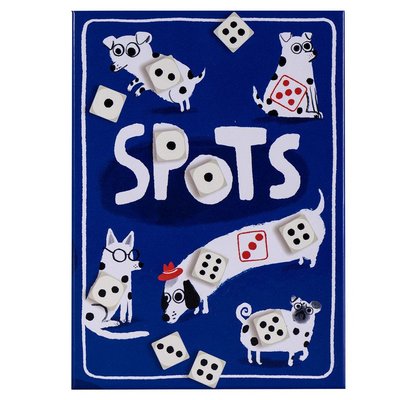
And number seven is, or is this number seven? Yeah, number seven is spots. So spots is a little different take on this. Um, in spots, you have six different actions. They're largely randomized during the game, uh, at the during setup of the game. and player on on your turn, you were choosing one of the available actions, these colorful ones. I'm choosing to howl or fetch or walk. And I'm doing the thing that that car that tile says. And then I'm flipping it over to the other side, the gray side, indicating that I can't use it at that moment. Uh those those aren't available to me. And the timing of when these refresh is when there is and this I guess this is a little similar to ancient knowledge. when there is only at on my turn, at the beginning of my turn, when there's only one face up tile remaining, that is when I uh when when I need to choose when I get to refresh everything, when I get to refresh all the tiles. So, I'm waiting for that moment when there's only one face up tile and that's the moment they all refresh. Um, so it doesn't make you use all actions, but five of the six actions will be used by players before uh before they all refresh. So in spots, I think that is a a good version of this card refresh or tile action refresh mechanism when only one unused item is available.
Next up, we have two examples here for um players taking a specific action that refreshes the card row. So when players have the the control to like I said, I I've seen it in worker placement. The two examples I have here are worker placement when they take a specific worker placement action to refresh the available cards. The first example is in Galactic Cruise, which I think does it really well. I've still only played this once, so I hope I can speak about this still as I did uh in my previous video about the game, but you have these four cards over here. And there's an action that you can go to to gain two of those cards um or to refresh the cards that are there. And uh one of the really cool things about this refresh action in particular is that when you refresh, you gain the benefits revealed by the cards that have been taken. So even with four cards there, I believe that you can still refresh that market, but you don't gain any bonuses. If two have been selected, there are benefits, and they're really small here. They're bigger once the card is revealed, but they're they're over here, these little tabs. Um you gain those benefits if these two cards are gone. You gain those benefits. if all four cards have been selected by other players before you take this mechanism, you get all four of the benefits that have been revealed.
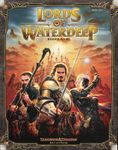
So, it's actually a really exciting moment in the game to take a refresh action because you're gaining four potentially four different benefits. I think that's really cool. The other example here, that's Galactic Cruise. The other example is Lords of Water Deep. It's a little upside down in this image here, but these three actions are the actions where you can go to gain new quest cards. And is it one of them? Um, it's one of them I believe is the one that lets you also refresh the card market. I believe it's written right here. Um, so there's a specific action where you can go to that action to refresh the quest cards and be I I believe it's before you gain a a quest card, but I like that it is so specific to one single action here. So, it's it's there. It's a choice, but you can't do it so often that the qu that players don't have time to plan around some of the quest cards or hope that they can get some of the quest cards that are in the market. I really like that approach in the worker placement game Lords of Water Deep. Number six. At number five, we have Century Gollum Edition. Century Century Spice Road. This one keeps the market fresh in a slightly different way. I have a whole video about this, but this uses accumulating accumulating costs for the cards. Basically, it's this card row up here. Actually, even the the uh the orders that you're trying to complete, the goals, they also have a a slight refresh mechanism or a way to incentivize players to choose some over the others. They have these coins associated with them. But the focus that I'm that I'm on right now is on these
other cards, these engine building cards, and you gain them from left to right using uh resources that you're spending. And if you don't want the card that is to the far the farthest to the left, then you can put a resource on it from your supply to choose instead the next card in the market. So it doesn't actually refresh the market. But as these different cards accumulate, actually accumulate cost isn't the right word. It's accumulating benefits is a better way to put it. As these cards accumulate more and more gems, a card that initially isn't all that attractive might become a huge target because it has three, four, or five gems on it. You just want to get all those gems and you'll make the card work as you can in your engine. I think that's a viable way to keep players keep the value of the cards fluctuating so that players are taking cards that they that they weren't originally interested in or aren't as strong as the other cards in the market.
That's Century Gollum Edition as this example at number five. At number four, this is our game Apiary. Apiary uses a fairly classic version of this, but with a little twist. So, the mechanism is just sliding from left to right. Uh, so whenever you gain a tile, you know, the farm, recruit, and development tiles in AP place, it's a worker placement game. You place a a worker um and you g you gain one of these tiles and you place it uh in your in your hive. Um the other tiles at the end of the turn they I I believe it's the end of the turn they slide from left to right and they refill from the top of the stack. So they're they're refreshing there. There are a few actual refresh benefits in the game that refresh an entire market. They're very rare, but we do have them on the in the hibernation comb. But uh this idea of choosing a tile and having them slide uh that's it's a fairly common mechanism I would say in games. The twist in Apiary, the slight twist is that they're actually different cost to each of these columns. And so, and that cost or the the tiles that you have access to are based on the total sum of the the uh the strength of all workers on that action.
So, right now, when the yellow player placed this this yellow worker, 1 plus two is three. So, that player has access to either the two strength tiles or the three strength tiles. I can choose one tile in total from either the first column or the second column. So, uh, similar to some of the other examples I mentioned earlier, these tiles that initially come out from the top of the top of the the tile stacks and are only good for five strength, you can kind of bet on them being there for a little bit until players start to choose the cheaper tiles and then they'll slide over and then you gain access to them. That is apiary at number four using the slide from left to right mechanism with a little twist. Another Stomyer game here. I know I have a few Stommyer examples today, but we do use this mechanism fairly often. This is Wingspan. Wingspan has a few different ways that the card market uh is refreshed. At the end of the round, the car the the bird tray is refreshed. Um there's certain mechanisms in Wingspan Asia that refresh them. And most notably, there are card powers that you can use that refresh the market. They refresh all or part of the market. Um, wingspan also notably says that you don't refresh this uh the the bird tray until the end of your turn. So even if you have a turn where you're gaining say three face up birds, uh that's it for the bird tray after that you're gaining from the card tray instead. So it means that you are not refreshing them quite as often and not getting that information in the middle of your turn when it might really slow down your turn. Um, but yeah, just to have a
variety. This I guess the focus for Wingspan is more on having a variety of options, but specifically here having certain cards that you're playing or certain abilities that you can use in the game uh that say you can refresh the card market, but they aren't too common. They definitely aren't too common in Wingspan. That's Wingspan number three. And number two, we have Arc Nova, specifically Arc Nova Marine World, the expansion. In standard ArcNova, at the end of the round, you have this big card row and uh two of the cards, the the oldest cards in that market are refreshed out of the card row at the end of the round. This is similar to something I I mentioned earlier, the the oldest uh Clank Legacy has kind of removing the oldest card. The twist in Arnova Marine Worlds is that there are these cards that come out with uh the uh what it's a wave icon. I put this image up on the screen to show you the wave. Where is the wave?
Oh, here it is. It's right here on the card. This wave icon. Whenever a this wave right here, whenever you add a card to the card market with the wave icon, it says right now remove the oldest card from the card market and add a new card. So, there's a lot, in fact, I would say there's almost too much of sliding cards of this. You're constantly sliding cards in this game. But when it works well, it works great. Which is you uh you have a card that's been lingering in the market. You move it move it away. Uh because this this card this card that has been revealed from the deck has come out to change the state of the card market. The oldest card goes away and then you uh slide the cards and reveal another card. And sometimes it can result in another wave. And that's when it gets a little bit annoying. But for the most part, I like that you were looking at the card that you are revealing um from the top of the deck rather than some other some other action, some other card that another player has played. It's it you're looking your focus is on that card row and the cards coming from the top of the deck. That is Arnov Arnova Marine Worlds. Um looking at revealed cards specifically. And finally, at number one, we have forest shuffle, which I think has a delightful card refresh mechanism, which is that the the forest in this game is used for a lot of different things, but for the most part, when you play a card, so for example, when I play this Lynden tree, I have to discard a card from my hand to the
forest. It's a it's a big t long tile board in the middle of the table. The card that I discard goes to the forest. often whenever I also whenever I play a tree I have to reveal a card from the deck and add it to the forest. Uh however, so you have this forest of cards that you can select from too. Instead of playing a card on my turn, I can choose multiple cards from the forest or from the deck. Um the twist being that whenever this forest has 10 or more cards in it, it immediately refreshes. All those cards go away. So, you actually have a fairly large number of cards that you can focus on uh where you can think about the cards and and think about uh okay, kind of plan ahead or hope that a card that that another player has discarded will still be there when it's your turn. Um because it can fit a lot of cards. It fit up the up, you know, nine cards before it refreshes. But then there you start to get that tension when a player uh plays a card that maybe costs three cards like the brown bear here and suddenly the card market is almost full and you you don't know not only is there tension of whether or not another player will choose a card that you want there but there's the tension of will this entire forest of cards get wiped clean and we have to start over again. um that I think is a wonderful delicious tension in this game and uh yeah I think that's I think it's a a really clever mechanism in forest shuffle at number one on my on my sheet. So having a a certain threshold um of just total cards or you're looking for a certain icon on the cards and at that point that's the point where the card market refreshes or the card pool I said card pool I guess it
could be card market as well. I'd love to hear your examples of games that either your favorite games that use these mechanisms or if you can think of another card market, card pool refresh system, a way of keeping the card market fresh u that you'd like to share in the comments. I'd love to hear about it there. Let me know. We'll talk about it there. Thanks.