The Definitive Top 10 High Interactive Board Games
Games in This Video
10 games are featured in this video — they unlock as you watch.




Transcript
It's time for you to move on with your life. I found someone new. D U N E, that spells Dune. Yay!
And we start this list with the fantastic semi-cooperative game, Nemesis Retaliation. Nemesis Retaliation sees one to five players taking on the roles of elite marines dropping into an alien infested installation with advanced gear and a shared goal of survival and an alien obliteration. Players explore a modular map, collect items, fight alien hordes, all while wondering if the marine next to them is secretly working against them. I just had to choose a semi-cooperative trader game because they always feature some fantastic interaction and player engagement that goes far beyond the traditional cooperative game. And today, I went with Retaliation. Though I love original Nemesis probably just as much. Retaliation is like the sequel to Alien. Far less cautious, tiptoeing, and brooding, and more more action and alien bloodshed. But, although you're better equipped to deal with the aliens, you're still woefully ill-prepared to handle the hyper-paranoia of constant mistrust of those sitting at the table with you.
Because Retaliation has a publicly shared objective, as well as two personal objectives, which creates the incentive to work together as a squad to destroy the looming threat, but there is still some individual agency that allows players to decide to pursue their own selfish goals. The game perfectly captures that cinematic experience as you and your friends' plans completely derail into an absolute [ __ ] show. And yet each chaotic moment feels as though it was deliberately written into your script because the game lures you into a false sense of confidence as the pacing slowly escalates. The table talk slowly shifts from logical and well-articulated strategizing to to shouting, blame, and various words that if said aloud would get me demonetized on YouTube. But, even when games felt completely un-winnable and some a swing in luck just obliterated us, we we couldn't stop laughing and enjoying the process as we interacted in ways that no other board game is capable of replicating. And it's because of that shared camaraderie and engagement that the betrayal in this game just feels far more real than in earlier versions. Throughout the entire cooperative experience, I generally feel like I'm part of a hardworking team of heavily armed marines engaging with my brothers at the table with legitimate tactical cooperation, helping down friends, trading items, uh providing combat support, using abilities to assist others. Everything brings us closer together in this shared struggle.
And then James lures me into a room asking for help and and then close the blast doors and leaves me in the room to die with a horde of aliens. Nemesis: Retaliation is a brilliant game providing one hell of a unique interaction and experience.
And at number nine is Brass: Birmingham. According to BGG, one of the greatest games of all time. Brass is set during Britain's Industrial Revolution, and it sees two to four rival industrialists race to build the most profitable network of coal mines, ironworks, cotton mills, and breweries across Birmingham. Spanning two eras, players develop industries, consume each others resources, and outmaneuver competitors in one of the most celebrated economic strategy games ever made. Brass's entire economic system runs on three shared resources: coal, iron, and beer. None of them belonging exclusively to any one player. So, I could build a coal mine, and someone else could come along and burn through my supply to build their very own rails. There is some fantastic symbiotic cooperation within Brass's system, as my resources help shape their infrastructure. And as compensation, once my coal building is empty, I get to flip it and score points, rewarding me for my obvious philanthropic endeavor.
But, when I seek to assist my comrade in entrepreneurship and use his beer that he just built last turn, thereby strengthening my infrastructure, he acts as if I just stabbed him in the back and freaks out. Now, did I know that he needed it for his next action because I was paying close attention to his turn? Yeah, of course. But still, he didn't have to be so mean. Only I get to be mean. Brass's duality of interaction even extends into the route building portion of the game. In the canal era, you want to build as few links as possible because their actions are inefficient. So, you you want to do your best to leverage the hard work of others. Whereas in the rail era, those links become far more valuable. So, players build their entire strategy on grabbing specific key links early, and route blocking here goes far deeper than something like Ticket to Ride. Here, you can lay links on high-value cities of your opponents to score points, piggybacking off their lavish spending, because route building in Brass isn't just about coverage. It's about deciding whose labor you want to profit from and whose you want to deny. Hell, even turn order adds layers of interaction. The player who spent the least, well, they get to go first next round, which means you can deliberately hold back financially to go first or spend aggressively if necessary. So, now you're surveying the table, looking at what your opponents have spent to
determine if it's possible to take four actions in a row, and when you pull that off at just the right moment, it feels really damn good. And then you sort of like look around the table expecting acknowledgement, and and and just high-fives. But, they never come. They never come.
That's the shadowy streets of LA. The chiseled nose and war
And number eight is Dominant Species, the most vicious game you'll ever find featuring cones, aside from Cones of Dunshire. Dominant Species, the game I like so much I'm covering it two videos in a row. It's a heavy strategic game set in the end of the ice age, where two to six players each control an animal species competing for survival as the planet freezes over. Players secretly queue up actions each round, spending them to adapt their species, spread across the map, and dominate terrain tiles. Dominant Species is a game that is in a constant state of flux that can sometimes make the game feel completely chaotic and a little random, but that chaos is completely player controlled and beautifully thematic. Your actions can feel so purposefully and carefully planned, but the actions of others, if you're not paying attention, will feel they'll feel insane and will completely ruin you. You'll think you'll get temporary dominance in one area only for the table to erupt in laughter as one player obliterates you under tundra.
But, that's okay because you'll get even when you melt their species in lava from the volcano you just erupted. Every element of this game is built to emulate the unforgiving nature of adaptation and evolution, complete with some of the most unforgiving brutality. You're using abundance to place food in places where it will hurt others and benefit yourself. You're migrating to abandon an unwinnable area to go somewhere to bully a weaker opponent. You're placing glaciers to kill everyone. Even taking an action to rearrange turn order is done to put yourself in a better position to destroy someone else later. I didn't want to put a bunch of war games on this list, but Dominant Species, like life, found a way. Because this is a Euro style war game, and the faster you realize that, the more fun you'll have with your friends at the table.
This game won't be for everyone. In fact, there will be a large percentage of you who absolutely despise this game. It is long, completely savage, consisting of a large variety of take that type interactions. But, for me, nothing painful feels necessarily spiteful or malicious. Every destructive event pushed upon me by other players, it feels purposeful and meaningful and fits the theme so beautifully that it elevates this game to an absolute masterpiece. Since you'll have absolutely no room for error.
And at number seven is Root, a game with one of the most dedicated fan bases you'll ever find online. Root is an asymmetric woodland war game where players control factions of forest creatures, each with completely different rules, goals, and play styles, but all competing for dominance over the same shared map and racing to get the most victory points. Root is an insane game with an insane community. Not even Scythe at its peak was as big and thriving as Root, and I'm willing to bet part of Root's popularity is its deep and fascinating interaction. Every faction feels like it's fighting its own personalized war in conflict with everyone else at the table, like some living political ecosystem where the game's threat change depending on who is at the table, and maintaining some semblance of a chance to win requires constant opponent reading and an incredibly deep understanding of the game. The Eyrie use decrees, which act as a sort of mandatory growing queue of actions, which creates a really cool interaction as well, since every player has to pay close attention to them because everything they do is right here for the viewing. Allowing good players to determine their own actions based on what the Eyrie is going to do for the round. The Marquise is outspreading warriors and buildings in its own economic engine. They start super strong, but sprawled out all across the map, and their early dominance means it's the responsibility of everyone else at the table to keep them on a leash. If players ignore them, the Marquise walk away with the win.
But, if one player pushes too hard on the cats, that player might sacrifice their own chance to win. The Alliance is cool and extremely because they're not interacting through armies. They're accumulating support off the board while placing sympathy tokens across the clearings, which act as traps for other players. When they're removed, the player owes the Alliance a card, which feeds the revolt machine. Revolts can wipe everything from a clearing and plant a base, which is obviously greatly beneficial to the Alliance. They too, like every other faction, needs to be closely monitored. Finally, there's the Vagabond, the symbiotic cooperation interaction this game, running around and doing errands, and building relationships, and helping other factions. They score through their positive interactions. And as an added bit of interaction, they can even form a coalition with another player and win jointly, adding a mechanically enforced diplomacy to the game and even more interactive depth. Every faction creates this awesome dance at the table. Well, like many games on this list, the game itself feels more under the control of players and less like a prison of mechanics. No faction feels like it can win on its own by ignoring other factions or benefiting from a shared temporary lines against someone who is growing too fast. Everyone is paranoid of everyone else at the table, which adds this really interesting dynamic and feeling that you don't get in most other games. While Root isn't for everyone, you would have to be a fool not to see it as a fantastic, highly interactive strategy game.
And welcome back, board game fans, to another exciting tournament battle between the greatest heavy strategy games.
At a number six is Barrage, a wonderfully deceptive, savage game. Barrage is a brutal resource management and engine building game for one to four players filled with careful planning and aggressive disruption that sees players racing to power a nation using a network of hydroelectric dams across a contested mountain range. My first game of Barrage went horribly. We had no idea what we were getting ourselves into. People were building in the wrong spots, and everyone was treating the game like the typical worker placement fair, each of us playing in our own little corner. I walked away from the game when it finished wondering wondering what we did wrong. How could we have played differently to make the game more enjoyable? And then it dawned on me. This isn't your typical worker placement game. This is an economic brawl, and to have fun, you need to get a little dirty. And that is because Barrage is surprisingly cutthroat. And that competition goes far beyond the tight worker placement. Instead of building your little happy dam wherever is good, you're building your dam higher upstream from someone else's to prevent water from flowing into theirs. Now you're watching your enemy's resource wheels to anticipate their upcoming turns, so you can cut them off and take spaces pivotal to their strategy. Now you're making sure to build where they can't to snatch those highly contested spaces on the board. These people at the table are not your friends. They are rival corporations, and they need to be brought to heel.
So I could use my opponent's conduit, but do I really want to give them points? You want to be a little mean in this game, but it never lets you go fully savage since there are often turns where using someone else's infrastructure is generally the better play. Although you could utilize that fact to your advantage and build in a high-demand spot to get people paying you. See, now you're thinking like a 1930s dystopian businessman. Barrage is a callback to all the older Eurogame designs in the best possible way by using exactly what I mean when I said in the board game interaction is stupid video that Eurogames used to be highly interactive. But somewhere along the line interaction was ceded to American style games. Thankfully, Barrage easily goes toe-to-toe with any dice and miniatures game for a highly competitive and interactive gameplay experience.
But then she ripped that pretty painting right off the wall. So what's the point of all this? What's our goal? She asked. I laughed at her naivety. To get the most victory points, of course.
And at number five is Black Rose War Rebirth, the game you whip out when you want to punch your friends repeatedly in the face with magic fists. Black Rose Rebirth is a competitive combat deck building game where players strive to destroy their opponents in the arena using well-played magic spells, traps, and summon otherworldly monsters, all to become the crown holder of the lodge and the Black Rose champion. This game is perfect for a four-player brawl because the action is almost constant as players are doing their best to build and program the perfect deck of spells. Every turn, I'm analyzing my opponents, trying to figure out what they'll be doing during the programming stage to make sure the actions and spells I lay down can counter theirs. And these spells are deeply strategic and creative. Some are straight-up damage, some lay traps, while others enchant your mage or hex another mage. Some push, pull, or teleport enemies. There is just so much here that you simultaneously feel like a tactical genius when you pull off the like the perfect combination and just a kid bashing action figures around with your buddies.
But obviously, the best interaction here is the combat. Mages run around the lodge attacking one another through spells, trying to deal as much damage as possible to eliminate their opponents. And what's cool is that the damage you deal acts as sort of area majority since whoever dealt the most damage receives more points and a trophy if they delivered the killing blow. And I know that might turn some of you off who are, for for example, not huge fans of aggression in their games. But death here isn't permanent, and so it doesn't sting much when you get blown apart by a by a giant fireball. But it's not just face-punching magic. You also have to gain control of the rooms in the lodge. And each room grants a special power to whoever activates it, adding another layer of depth and interaction.
If enough magic is cast within these rooms, they flip and provide different and more powerful abilities. So, you're doing your best to keep some players out of certain rooms while adding as many of your cubes to the room so you can get the most points for when it flips. The whole damn experience really does feel It feels a little juvenile at times, but in the best possible way. Black Rose Wars does its best to recapture the days you played Quake against your buddies over the modem on your family computer, and I think it does a great job.
Now for everybody's favorite game show, are you smarter than a Wingspan player?
And at number four is Food Chain Magnet, the most bloodthirsty, savage game on this list. Food Chain Magnet is a brutal, cutthroat board game for two to five players, where you build a fast food empire from the ground up. Hire and train staff, develop your menu, flood neighborhoods with advertising, and undercut your rivals on price, all while managing a ruthless, efficient corporate hierarchy to become the most profitable business in town. Every turn begins with my favorite portion of the game, the hiring process. You're perfectly curating your employment hierarchy, always paying close attention to the hiring of your opponents, and the milestones that are up for grabs that sort of act as a silent timer and highly interactive tension point throughout the entire game, because the milestones provide amazing player powers. You have to adapt to those playing around you, building your own plans while reacting to and anticipating theirs. Do you advertise now to try to snag the ad milestone you need, or do you delay to train up your employees to go for more powerful milestone? Every decision demands constant interaction and engagement with the other restauranteurs around the table, because those other owners are out for their own gain, and will stop you when the opportunity presents itself. Food Chain is notoriously savage, and it can leave players doomed if they make the wrong decisions in the early game. This isn't a bad design. This is the entire point of the game. The game allows a sort of sandbox to play in, where each is required to balance and police the other. Do you engage in an advertising
war with rivals to scoop potential customers from local businesses, or do you undercut the cost of your competitors to steal their business and leave everyone penniless at the end of the round? Or do you do what I do and make sure to advertise product they can't provide regardless of whether or not you can, because some of us entrepreneurs just want to see the fast food world burn. However you choose to play, you are constantly in the faces of those at the table with you in ways that more aggressive and cutthroat games, like Wargames for example, could never fathom. Food Chain Magnate's interaction is relentless and just so damn fun. Undercutting a competitor's price by a single dollar can drain an entire neighborhood of customers. Poaching key employees can ruin another player's strategy for the round. Flooding the quiet neighborhood streets with ads can make your opponent's food go unsold and then spoil, making all their actions completely redundant. It is a viciously competitive game and yet it all feels fair and balanced because all that is a calculated savagery completely under control of the players at the table.
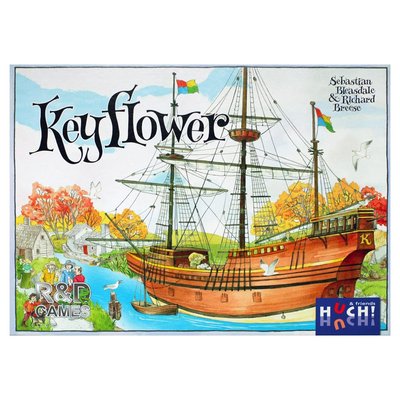
Asking the hardest questions I have ever reflected on. Why shouldn't I play with myself? And then number three is Keyflower, one of my favorite games of all time. Keyflower is a Eurogame for two to six players blending auctions, worker placement, and tile drafting across four seasonal rounds. Players bid on village tiles using colored workers, the same workers that will occupy their villages for actions, all to build the most efficient and welcoming village at the table by the end of the year. When people think high interaction, they typically gravitate towards destructive gameplay. And yet Keyflower stands as the perfect example of a game that provides high interaction through both contentious and symbiotic gameplay that far exceeds what you typically see in today's European style board games. You're slowly building this charming little village with the tiles you won during the bidding phase. And once built, other players visit your town to use the actions provided by your buildings, creating this awesome incentive to have people not only pay attention to everyone else's turn, but interact with what players have built on their tableau. And I think it really amplifies the theme, too, as you start feeling like you're running an actual village when out-of-town individuals start visiting your buildings.
Although, in this game, at the end of the round, whatever is on your tiles, you get to keep. So, you know, I suppose kidnapping can be charming in its own way, too. Now, quaint and cozy felonies aside, the bidding in Keyflower is a fantastic way to interact. Anytime during the round, you bid for various buildings that are on display. And whoever bids first gets to set the color of villagers that must be used to bid for the tile, adding this sort of extra layer of strategy as you agonize what colors you'll need to perform actions and what ones you'll be fine spending for the bid. Because what's cool is that the bidding occurs while you're performing actions, and you can place workers on the tiles people are bidding for, providing those villagers to the winning bidder.
Keyflower just gives you so much to consider on every single turn. And there is so much going on on other people's turns that I'm actively engaged the entire time. Keyflower is a game that has easily stood the test of time, and is not only one of the most interactive euro games out there, it is honestly one of the best board games ever made. The fact that there are so many paths to victory, and it plays at such a wide range of player counts, there's just It's no surprising that there's no getting bored of this one. And it is easy entry on this list because the interaction here, it's meaningful without being mean. Although, I wouldn't mind attacking someone's quiet little village if it were possible. Future expansions, maybe? You know, like a pillaging and and looting expansion. Richard Breese, hit me up.
I think everyone at home really wants to know what went wrong tonight.
Well, you know, I gave it my best, and my best just wasn't good enough. And at number two is Pax Pamir, yet another Wehrle game. Pax Pamir second edition sees one to five players in 19th century Afghanistan playing as tribal leaders navigating the brutal politics of the Great Game, the imperial struggle between Britain and Russia for control of the Central Asia. Build a tableau of cards, place armies, and spread influence to align yourself with whichever coalition gives you the best shot at victory. The entire game of Pax Pamir rests on the idea that your fate is intrinsically tied to everyone else at the table. The second you stop paying attention to other players, you've lost. So, throughout the game, you're doing your best to influence these coalitions and build your armies, expand your roads, and buy them gifts to increase your strengths and standing.
And what's cool is that that multiple players can back those same coalitions, creating this really fascinating and uneasy temporary alliance where you're kind of, but also competing to be the most valuable partner when scoring occurs. And like many games, Pax Pamir features an open card market where you'll constantly be worried that the card you really want gets snatched by an opponent or you'll be taking a card just to make sure someone else doesn't get it. And that's facilitated by the fact that these cards are very powerful. They give you actions, build up your tableau, and completely define your strategy. So, watching what your opponents are doing and choosing the right card for yourself is pivotal to giving you an advantage to win the game. And then certainty of other players really is what makes the game fun. So, no one player ever feels like he's running away with it. And plus the Great Reset that occurs after Dominus check is triggered forces players to renegotiate and start all over from a new position. It makes the game feel, I don't know, it makes it feel more interactive and a bit more organic. But my favorite interactive mechanic in Pax Pamir has got to be the spies. You place your little cylinder disc onto someone else's cards in their tableau, which sets up a betray action that eliminates the card entirely, completely screwing up whatever engine your opponent was creating. And anytime I'm able to throw a wrench into someone's tableau, which is often a component you can never interact with in other games, I am a happy gamer. Or I could use the spy to simply hold your card hostage until you pay a bribe. They
just do a really fantastic job of creating tension and interaction throughout the game. Since no card in your space ever feels safe and there is this constant pressure to watch how many of your opponent's cylinders are slowly creeping into your core. The game is just filled with exciting and really creative mechanics and that excitement is entirely dependent on the behavior of other people sitting at the table with you.
before they dropped the Settlers portion of the title. This could be worth a lot of money.
interactive board game is the one that has no rivals in its genre, Twilight Imperium. I only have third edition because I'm poor, so join my patron and help me purchase fourth edition. You you don't need groceries next week, just help me buy a big expensive board game that I don't need. Twilight Imperium is a legendary game where three to six players take command of unique alien civilizations locked in an epic struggle for galactic dominance. Players compete through fleet combat, diplomacy, trade and technological advancement to claim the imperial throne on Mecatol Rex. Twilight Imperium is a race to 10 victory points that is certainly more of a marathon than a sprint given its notorious length. But despite that length, the entire thing is exciting because almost every point you score, every war fought, every disaster of a trade deal all filters through the art of negotiation. So you need to pay close attention to every turn and find ways to make the actions of others work in your favor. Every round opens with the strategy phase, where each player drafts one of eight strategy cards, each possessing its own powerful ability and weaker secondary ability that others can have access to, sort of similar to Puerto Rico. You're not only denying a card to someone else, you're paying close attention to what others are picking, so you can predict the actions people may be performing on their turn, and tactically adjusting your strategy accordingly.
But maybe intuitive interaction is a little too subtle, and you'd rather something a bit more direct and symbiotic, like trading. Whether for votes, commodities, safety, inevitable false promises, or military alliances, people are continually making deals at our table throughout the entire course of the game. This is just one of those games that requires you to know quite a bit about the game to understand its systems. You'll know exactly what other factions have, and what's unique, and you know exactly what they might be lacking, providing the perfect leverage in every trade, and just just a lot more nuanced interaction. But of course, all of that is baby stuff when it comes to the real interaction of the game, military conflict. Beating down an opponent who wronged you in a trade, or voted against you in an important election, is immensely satisfying. And I'm not just saying that because I'm a vengeful person, although I am. Hell, sometimes even the threat of direct military conflict is interaction all on its own, as cold wars develop from players amassing armies on loosely drawn borders. I have never had a game of this where one person wasn't sweating and getting very upset with another person encroaching way too close to the borders with a bunch of war suns and various other ships. Twilight Imperium never allows a moment where you can focus entirely on your own actions without fully accounting for the aspirations and actions of others at the table. It's a game where players have to police one another to ensure no one runs away with the victory. And while the system isn't perfect, the power the game provides players over their own races
and the galaxy itself, it is deeply satisfying and a big reason why it's above all other games in terms of interaction. It really does feel like I'm building and engaging in this world collectively with everyone else at the table. When it comes to interaction, Twilight Imperium is the undisputed king and I'm I'm not really sure it'll ever be dethroned. And that is my top 10 most interactive board games. I hope you enjoyed the presentation of this list. I know it was a little unorthodox in comparison to to other content creators, but we like to do things a little big here. And I apologize of course for my atrocious singing voice. I had these lyrics in my mind that I wanted to introduce the top 10 list with and I was just like, okay, I'm just going to hire artists and musicians to like to give me a hand and bring it all to fruition. And then I was like, I should probably get somebody else to sing this, but the karaoke enthusiast in me was just like, no, you got to do it yourself. So, I apologize.
But I hope I hope I hope you liked it at least somewhat. Let me know in the comment section if you uh disagree or if you agree with anything on this list or if you think there's anything that's just like a tragedy that it wasn't put on this list. There'll be lots more of this stuff to come in the future, so be sure to like, comment, and subscribe. It helps the algorithm and all that stuff and it and it helps me. So, I will see you in the next video. Bye. Okay, that was good. I'm I'm [ __ ] hungry.
[snorts]
I'm going to get I'm going to get some cookies. Give me the board game interaction. Give me that friendship satisfaction. It's time for board game top 10 interactive game Oh, Fagio.