Best Solo Board Games OF ALL TIME (surprising..)
Games in This Video
10 games are featured in this video — they unlock as you watch.





Transcript
Hey everyone, I wanted to do best solo board games of all time and then I kept sliding it down the list because I would rather play with people. That is not a bit. If there is a group, I am at the group. Solo is what I do when nobody can come over or when I borrowed a box and I just need to see if the thing actually works. So, yes, it took some time to make this video. I borrowed most of these to try them. I am not going to pretend I have a 10-year solo shelf and a little thrown in the corner. The filter is simple. When it is just me, does this still feel like a game or does it feel like homework I am doing until my friends show up? No particular order.
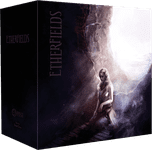
I am starting with the newest one I tried and ending on a dice monster from 2017. 20 strong ether fields. This is a 2026 deck that sits on top of the 20 strong system. One player about 40 to 60 minutes once you know the rhythm. The base idea of 20 strong is that pile of dice. Three track your stats. The rest are the pool you roll. Etherfields drops you into a dream map. You are a hero with health, strategy, recovery. You walk room to room. Some edges are walls. Some are borders you can cross. Rooms have little actions and the map keeps shifting under you. Influence cards are how you bend the dream. You spend them to change what your dice can do and to fire room actions when you actually want them. Enemies have health and a damage number. Some rooms spawn more when you step in. Cards flip during play and stay flipped for future sessions. Your hero can flip lucid and stay that way. Next week's deck is partly the one you already dented. To start the real ending, you have to find the map card whose unique action lets you activate the boss. And you can only do that when that boss's condition is actually met.
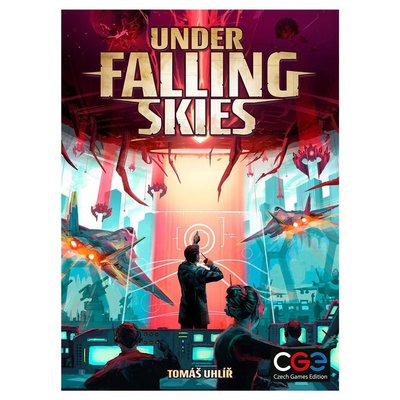
Then rounds keep going. You win if you defeat the boss and you are still alive at the end of that same round. You lose if health drops under one. You can also fall out of the dream if the map card under you gets discarded and the dream entrance is gone. I like that it does not reset its brain every time you open the box. The dream remembers you. That sounds pretentious when I say it out loud. And then you flip a card and leave it that way for next week and it is just practical and kind of haunting. Most solo systems want a clean slate. This one wants a trail. You are leaving fingerprints under falling skies. Tiny box. One player on purpose. 20 to 40 minutes. You are one city. Aliens come down in lanes.
You roll five dice and place one per column. Each time you park a dieice, the ships in that column drop that many spaces, the full number. White dice make you re-roll whatever is still in your hand. Rooms do research, energy, guns, the work. Ships hitting the city chew the damage track. Research is the actual weapon. The mother ship is the clock. You win if the research track hits the top. You lose if the mother ship crawls onto the skull row or if the damage marker on the base hits the skull. I like how fast the threat is. There is no 20inut setup tax before you feel the problem. You look at the dice and you already hate one of the numbers. A lot of solo games want an evening. This one wants the gap between dinner and whatever you were going to watch, and it still has a real puzzle in it. I borrowed it, played a scenario, and understood why people call it best at exactly one player. There is nobody to pass the bad role to. Then I went the opposite direction and borrowed Voidfall. Okay, this is a lot of game. I am 2 years into the hobby and this box looked at me like I had shown up to the wrong class. Heavy space empire stuff.
Sectors, fleets, civics, that whole stack of boards. You are trying to hold the doine together while the void press in. Almost no luck. You are not hoping a die saves you. You are staring at a puzzle that will happily let you ruin yourself in slow motion. You pick a cycle of actions and live with the order. Develop worlds, push fleets, keep crises from stacking. The void does not take a cute little turn like a person. Crises fire. Rifts sit open. You can see the number if you look. Solo, you finish three cycles and try to have more influence than the voidorn. It starts with a chunk of points from the difficulty. Then it scores open rifts, unfinished safe havens, catastrophes, all that mess. A fourth catastrophe, and you just lose. There is no fog to hide in. I like it because it does not pretend to be company. It is a silent argument with a system.
What feels different is how little the game shrugs. Other heavies throw a random event at you so you can blame the deck. Voidfall just leaves you alone with your plan. Honest and exhausting. For me, it was both. Aon's End I have talked about before on the deck builder video. Cooperative fight against a nemesis. One to four on the box. I still think it plays best at two. Alone. It is still sharp. You are a breach mage. You have those little gates in front of you and you are trying to open them so the expensive spells can actually land. You buy gems and relics and spells from a row. You turn the engine on and you do not shuffle your discard. I need that to land. The order you dump cards is the order you will see them again. If you panic spend your whole hand, you have written next turn's problem on a sticky note. There is a shared turn order deck.
You and the nemesis are in that mix. The nemesis can sneak extra turns alone. You feel those in your ribs. You win if the nemesis hits zero life or if the nemesis deck empties and nothing of theirs is still in play. You lose if graveold, the city life pile is gone or if your mage is gone, depending how the beating went. I like the no shuffle thing more than I expected. It makes the market feel like a real choice instead of a lottery ticket. Most deck builders wash the sink after every hand. This one leaves the dishes out and makes you live with the pile. That is why it survived onto a solo list, even though I will still grab a second player first. Legacy of you, one player only, Shem Phillips.
You are you the great trying to build canals before the yellow river wrecks the village and barbarians keep showing up like they have a calendar invite. Workers and towns folk cards are your people and also your buffer. You send labor out for the ugly resources canals actually want. The flood token creeps when you empty the ready pile and reshuffle. Barbarians stack along the top. You can fight them, you can bribe them, you can ignore them until there are seven and the game just ends, which is a very rude way to learn a rule. A single session, you win by building all six canal sections and surviving that round. You lose if the flood hits an unfinished stretch, if seven barbarians are sitting there, or if you have to destroy a town's folk card and there are none left. Then the campaign just keeps going. You flip a win card or a lose card. You read a storybook entry. New cards slide in. If you have been winning, it gets meaner. If you have been drowning, it gets a little kinder.
Seven results and you hit the gold card. I like that it is allowed to beat you and still want you back tomorrow. A lot of campaigns punish a loss by making you feel stupid. This one adjusts the knobs and it resets. You can put the whole story back in the box, which I did not expect to care about, and then I cared about it a lot. Borrowing a campaign is less scary when it can forget you. Ark Nova, zoo building with a long row of cards. You have five action cards in a row. You play one, it flips to a weaker side, and the whole row shifts. So using your best action now means you are staring at the sad version later unless you spend time recovering it. Appeal and conservation both matter. You cannot just juice tickets and ignore the science. Those two counters crawl toward each other. Solo is six rounds on that little tile. Then you score. You win if you are at zero points or better, which only happens if appeal and conservation actually met or passed. Miss that crossing and the quiet night is a loss.
I like the flip. That cost is clean. A lot of euros let you do your favorite thing every turn if you plan right. This one makes your favorite thing leave the room. unique for me is that it still feels like a big modern euro when nobody else is there. I did not think I would say that about a zoo and I still prefer a noisy table. This is the version for the quiet night. This war of mine, this one sat different in my chest. You are civilians in a shelter during a siege. Hunger, misery, wounds, illness, all of those can pile up at the same time.
Daytime, you assign who cooks, who reinforces the door, who sits down because they cannot stand. Nighttime. Somebody goes out to a location on a map, a supermarket, a gas station, a house that might still have people in it, and you decide whether you are going to be decent. You open a door, you read a number. The game tells you what you find and what it costs. Sometimes you take food from people who needed it. The misery token does the lecturing. You grind through days until the ceasefire card. Then you check whatever final objective that game actually dealt you. Sometimes that is just someone from the start still breathing. It changes. The book of scripts is doing the storytelling. The tokens are doing the damage. I like that winning does not feel cool. You are not a hero. You are trying to keep three tired people from breaking. The stories are the thing.
Other solo games give you a boss. This one gives you a kettle and a neighbor and a choice you will think about while you put the bits away. I did not want to start it over the same night. Spirit island. You are a spirit on an island and colonizers are landing. Not a cute spirit, a slow, angry piece of the island with a hand of powers. Each spirit grows in its own way. Energy, card plays, presence on the map. Every round, the invader deck says where they explore, build, ravage. Towns become cities. Blight shows up when you fail to defend a land. Fear is its own track.
Early on, terror level one, you win only if there are no invaders left at all. Then no towns or cities, then no cities. If you rip through every fear card, you hit terror level four and they just leave. Instant win. The island is still ugly. They are just done. You lose if the blight card says you lose or a spirit has no presence left on the island or you need to explore and the invader deck is empty. I like running one spirit and feeling the hole in your kit. The game is famous for two spirits at once. And yeah, that is juicier. Alone, you feel how specific your powers are. Unique piece is that the invaders have a schedule. They are not a dungeon.
They are a machine and you are trying to break the machine before it paves the beach. The island does not need another person to be a problem. Slay the Spire, the board game. I loved the video game first. I have said that already. The board game had every reason to be a lazy cash grab and it is not. You pick a character and climb axe on a path of rooms. Combats, elites, rest sites, shops, unknowns. You play cards from a hand. Energy is tight. Some cards exhaust and leave. Some stay and clog you. Relics sit in a row and make the next three fights weird. You draft rewards after a win and you can feel the deck getting greedy. If you are on a team and anyone hits zero health, the table loses. The game does not let you drag a friend. You win by surviving the climb and putting the act boss on the floor. And if you are going all the way, that last fight at the top, you lose when the hit points are gone, which happens faster than your brain wants to admit, usually because you got greedy alone. You are just one character walking that hallway. I still think two is the sweeter count. I am not walking that back. But the decisions stay. The relics still make your next fight weird.
The exhaust pile still tells on you. What I keep coming back to is how little they sanded the game down. It still feels like that stingy, greedy climb, not a board game wearing a hoodie with a video game logo on it. I already knew the video game. I needed the table version to have teeth. Arkham Horror, the card game. Living card game. You pick an investigator with a deck that is half skill and half personality disorder. You walk into a scenario laid out as locations. Clues sit on those locations. Doom ticks up on an agenda. When doom fills, the agenda flips and the day gets worse. Your turn is a handful of actions. Move, investigate, fight, evade, play a card. Then the mythost deck draws and the house tries to kill the mood and also you. You advance the act by doing what that act asked for. Clues, survive, get out. When doom fills the agenda, it flips. That is usually a worse resolution. Not always an instant table flip. Campaigns string those scenarios together. Trauma stays.
Cards stay. A weakness you earned last week is still in your shuffle. If your investigator takes enough damage or horror, they are out of that scenario. Campaign is a different bruise. Sometimes the scenario text just says you failed and you read the ugly paragraph. I like the weakness stuffed in your own deck. The horror is not only out there, you brought some of it with you. solo that feels personal in a way a shared table can joke off. Unique is the campaign residue. A lot of solo nights wipe the table clean. This one lets last Tuesday follow you into this Tuesday, which is either delicious or rude, depending how the last scenario went.
The box you borrowed is a core. The hobby around it is a second job. And then too many bones. 2017 chips. Dice. So many dice. The name is not a bit. You pick a gear lock. They come with a mat of skill slots and a pile of custom dice that do things no normal die is qualified to do. You pick a tyrant. That tyrant sets the day limit, the progress you need, the extra encounter cards that belong to that particular menace. Days are encounters. Fights on a small grid, locks, training. You buy skills, collect loot. Try not to spend a whole day just standing back up.
Solo has its own encounter cards. The box is not just handing you the four player deck and saying, "Good luck." True. Solo is one gear lock. You can also run two hands if you want a party and nobody else showed up. You win if you gather enough progress to challenge the tyrant and you actually kill it before the day counter runs out. You do not even have to clear every baddy in that last fight. The tyrant has to go. You lose if the days are gone or if you wipe on that fight and you have no time left to try again. I like how loud it is for a game with nobody else at the table. The chips hit. The dice want attention. It does not feel like a spreadsheet. Ending on this one because it is the opposite of a quiet euro puzzle. You are still alone. The box just refuses to act like it. Also, it is called too many bones, which is the correct amount of bones. That is the list. I am 2 years into this hobby. I do not have a sacred solo ranking carved into a stone. These are the ones that still felt like games when I borrowed them and sat down by myself. I would rather have people. I will keep saying that interaction is still the thing I chase. This video exists because Tuesdays exist and Tuesdays are
sometimes empty chairs. If your Tuesday looks like mine sometimes, one lamp, a borrowed box, no one on the way over, these are the ones I would tell you to try. Thanks for waiting on this one. See you in the next