Common Board Game Rule MISTAKES I Have Made...
Games in This Video
10 games are featured in this video — they unlock as you watch.






Transcript
When it comes to teaching board games, I often feel a great sense of pressure to try and convey all of the game's rules effectively and clearly to the new players at the table to ensure that the game experience is enjoyable and runs smoothly. But occasionally, we always tend to overlook some rules and make some board game mistakes. And in this video, we're going to look at the 10 mistakes that I've made in some of the most popular board games I've played.
Wrapping your head around the rules of a brand new board game can be as onerous as unwrapping a brand new roll of toilet paper. Some games come with not just one rule book, but two or maybe three. And sometimes, I even write my own handwritten rules to get my head around the rules from the rule book. Mistakes in games can really change the experience and your opinion about the game itself, especially if you've been playing that rule wrong for a really long time. I've discovered that when you make a mistake, it's often good to just play out that mistake for the rest of that game and then restart the next game with the correction. Often, mistakes can really hinder our experiences or sometimes enhance the experience and make the game better. And because most modern board games these days come with rule books that span 20 pages long, it's quite easy and innocent to make a couple of rule errors here or there. It's how we overcome those mistakes and get through them, which is really valuable and important.
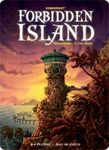
So, let my board game embarrassment begin. My first board game blunder comes from an incredibly simple cooperative game that I thought was absolutely super easy to beat. And it wasn't until a recent play that I discovered that I'd been playing one of the rules wrong. And now it makes so much sense to me. Funny that when you play a game correctly, and the game I'm referring to is Forbidden Island. In Forbidden Island, players are trying to find four relics, and they're trying to escape the island before it sinks into the abyss. The rule that I played incorrectly is that in the island, when a tile is flooded, it flips over to its blue side. And then if that same tile is flooded again, it gets removed from the game. That aspect I'd been playing correctly. The rule that I didn't play correctly was I didn't remove the card that corresponds with it from the deck. Whenever a tile disappears into the abyss, you also need to remove that card as well. It makes sense, doesn't it? I feel so silly cuz by removing the location card from the deck means that the other locations are going to be drawn far more frequently, making the game so much more challenging. When it comes to introductory gateway modern board games, you think that we'd have all of the most common rules covered. However, there was one rule in the game Settlers of Catan that still surprises me to this day. And I think I've been playing it wrong for years and years. And that is in the setup phase, after players have placed their second settlement onto the map
before they start the game, players only get the resources that surrounds their second settlement, not for both settlements that they've placed out. And that to me just absolutely shocked me. And I still can't believe that that was one rule that was overlooked. But it does make the game feel more restricted, and it does give you that sense of progression that you're expanding your civilization throughout the game. So, yes, don't forget that one. When you're teaching one of your favorite board games, you really want to get it right. It's the pitch that's going to really sell the game to whoever you're introducing it to, whether it's the theme or the flavor of the game, or how the mechanics are going to be, but missing the mark on that pitch is really going to determine whether the other players are going to really get the game or not. And in Wingspan, I made a very big blunder. So embarrassing, I can't even believe I'm saying this on camera on my channel, but when I played my first few games of Wingspan, I was so engrossed with how beautiful the game was with all the different bird card abilities and how they all worked and synergized together that I overlooked one of the most basic rules in Wingspan.
Whenever you play a card into one of the three environments, you'll notice at the top that there are little egg symbols. By placing a card in this column, one is required to pay one egg. By placing card in this column, one is required to pay two eggs. Do you think I would have to do that in any of my first five games? Uh no. And you know what? No one even realized that I didn't do it. I was too busy placing the eggs on, putting all the cards in, looking at the synergy. Totally Totally didn't even see that. And it's Now I play it properly, I promise. It's hilarious to think back on that very small rule oversight. Have you ever played a modern cooperative board game where you thought this game is so incredibly hard that it is absolutely impossible to win or defeat it. And that game for me was Pandemic. And one of the rules that I played incorrectly in the game Pandemic is in regards to when an outbreak occurs. Basically, when a city has three or more disease cubes of the same color, that's when an outbreak occurs and those cubes, an additional cube gets placed in each of the adjacent connecting cities. We had been playing it where if there were three cubes of any disease color, that would cause an outbreak, meaning that our games were incredibly hard, incredibly challenging, and we almost never won.
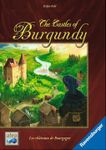
And I noticed that's not even listed in this commonly overlooked rules section of the rulebook. Uh with this game, I think pretty much every single rule, every single game, every single dungeon, every single character, um every single campaign. I think I've really absolutely played this game completely wrong. I love it to bits, love the story, love the figurines, love the theme, but the rules are so overly complicated for such a gorgeous game. I still love this game. It has a really close place in my heart. It's one of the first board games I ever purchased, but the rules, I don't think I've ever played this right, to be honest. Do you know when you play a Eurogame and there's a lot of components that come with it? There's a booklet of rules that you have to wrap your head around, lots of different scoring conditions, tiles you have to place out, and sometimes the breadth of those components can really overshadow some of the most common and simple rules. And there is one rule that I overlooked when I played The Castles of Burgundy, and I realized recently that it's probably the most ridiculous rule to um get wrong, but I did it anyway. So, the rule that I made a mistake with in Castles of Burgundy is that whenever you place a ship tile out, you get to move your little marker along the turn order track. And the mark on the turn order track decides who is going to pick first each and every round. And I thought that it was uh resolved from left to right. So,
basically, if you were behind everybody on the ship turn order track, you got to go first. And I thought it was like some sort of catch-up mechanism to allow the uh players coming last to try and equalize the game a little bit, but in fact you resolve it from right to left with the player who's furthest in front getting to choose their tile each and every round. And that to me now makes so much thematic sense because I kind of found a little bit strange when the people I was playing with didn't ever really move their ship forward. They were just kind of hoping other people would move in front of them and I don't know, I think it's because when we read things we often read them from left and so visually that's probably how I made that mistake.
I love board games that are centered around food. It really warms the soul and makes you feel really great inside and that is until you realize that one of the rules you've been playing all this time has completely changed it for you. The game that I'm referring to is Viticulture Essential Edition. In Viticulture, players play owners of a vineyard as they're trying to harvest and grow grapes on their vines, turn it into wine, and then hopefully fulfill orders to earn the most victory points. The rule that I really stuffed up in this game was relating to harvesting the grapes off your personal player boards from your fields. When you plant a vine in your field, every time I harvested those grapes, I would discard the vine card from my field meaning that it would get removed from the game.
When you harvest particular wine species from your fields, those green vine cards stay there. And if you really want to get rid of them, you have to use another action that's on your player board that helps to uproot those vines. And now that I think about it, that makes so much sense why that action is actually on your player board. And a lot of these rules that I've messed up feel like they make sense at the time, but then when you think about the mechanics of the game and the actual true nature of how they actually work, it does change the game dynamic heaps. And then this next board game blunder comes from probably one of my top five favorite Euro games of all time, and it is Great Western Trail. This is a beautiful deck-building rondel game where players are moving around and around the trail and placing out properties to gain particular actions as they stop by to I guess sift through their deck to find the best quality cattle possible and then deliver them to Kansas City to move their train along the track to gain points. One of the biggest blunders that I made when it came to playing this game was filling up the market row with builders, engineers, and cowboys.
Basically, wherever the market token is on this little vertical track, you fill up that complete row with those new tokens that appear from up above. And what I was doing was filling in all of the gaps above it, and that meant that we exhausted a lot of the tokens, and I realized that that really slowed the game down and made players fill up their boards so much more quickly and made you think, "You know what? Wow, this game really gives you a lot of time to fill up your board and do everything that you really want to do." So it just really made the game feel a lot of a lot less tight, whereas by playing it the correct way and by pushing the little market token down meant that the game really limits your choices a lot more, makes it feel more constrained, and makes the game feel a lot tighter and crunchier. I love it when a rule book comes in sections, especially when it's color-coded and each of the things are highlighted in bold text and there's some really great examples that appear in the book itself. Spirit Island is a board game that does exactly that. I like to describe this as the anti-Catan version of the modern board gaming world where the spirits of the island are trying to chase away the early colonizers. There's one rule that I oversaw and it all comes down to a conjunction, the word and. And in a book that spans about 31 32 pages in fact, it's an easy word to
overlook. So much so that now I've actually highlighted my version of the rule book. So every time I play this game, I'll know not to make that mistake again. And it all comes down to the invader actions where they do damage to the land and the Dahan. Now I thought that when invaders did damage to the land and the Dahan, I thought they did the damage to the Dahan and any extra would kind of overflow into the land itself. For some reason it reminds me of trample from Magic the Gathering if you if you've ever played that game. But in fact, what the intent of the rule is, damage is all done to the land and separately it's all done to the Dahan. And for some reason that didn't really come through to me on the first five readings of this rule book. To me, that is a game-changing rule cuz whenever you do damage to the land in Spirit Island, you basically add blight to it which comes from this blight pool. And if you add too much of it, it kind of has this cascading effect where all of a sudden the blight spreads across the land and you lose the game.
Spirit Island is a game where it feels like the game gets easier as you become more successful. And I think that little rule mistake and rule oversight on my part meant that the game was always won each and every time. But now that I understand how to play it properly, um I think that that be different from here on out. Sometimes there's a game that comes along that you really, really love, but the explanation of how a particular aspect of that game is explained in the rule book doesn't matter how many times you read it, uh it still doesn't make any sense. And for me, that game is Inish. And Inish is basically an area control game where players are drafting cards, they're moving clans around the board, building sanctuaries and citadels. They're trying to become chieftains of different territories in order to gain special powers that are related to those territories. Players are drafting action cards which they can use each round to maneuver their clans across the map either by expanding and exploring or adding more troops and initiating clashes. Now, it is the clash aspect of this game that I still have not been able to comprehend and fully wrap my head around, no matter how many times I've read the rule book, no matter how many times I've watched a video.
I've even written a little card of the steps that come from the rule book. So, basically, when a clash is triggered, any uh players whose clans are in that clash territory, based on the turn order, move their clan into a citadel to protect one of their clan groups. However, if there's no spaces in the citadels or if there no citadels in that territory, then all the exposed clans are engaged in this clash. Then, starting with the instigator, each player with an exposed clan can perform one maneuver. And that is, they can attack a player, they can play an epic tales card, which are these beautifully illustrated unique cards that come with the game, or they can withdraw uh by moving at least one of their troops into a neighboring territory where they are chieftain at.
Now, as you can see from that little step-by-step overview, there's already so much going on. I think the bit that really confuses me is that when you attack a player, the attack actually resolves. And if the player that's being attacked decides to withdraw, they have to wait for the attack to resolve before they withdraw. And if a player is attacked, they either have to lose one of their clans or they have to lose a green action card that they drafted from the round from their hand. Meaning that the rest of the round they're going to be faced with limited options to be able to maneuver and change the board game state. This, to this day, still is probably one of the deterring factors that prevents me from engaging in this game fully. So if anyone out there has a useful way of explaining this to me in a very simple way, I would greatly appreciate it if you write in the comment section below.
Please do that now. So I think I probably ate enough board game rule mistake content enough for a while now, and I'm sure I'll probably have a whole list of other board game rule mistakes I've made in all my other board games I could include in a future video. Thank you once again for making it so far to this video. And if you really like this video, please don't forget to give me a like and consider subscribing to my channel for more amazing cool board game reviews and content like this one. I really appreciate your support. If you really want to go one step further, please consider heading over to my Patreon page and checking out the cool awesome behind the scenes content over there. Otherwise, if you have some board game mistakes that you have made in your board gaming group or that you've taught to players incorrectly, I'd love to hear them in the comment section below. So please feel free to share them and write your stories. I would love to read them.
Otherwise, this is Danny from down under saying good day and signing out. Hoping that your next board game experience is an amazing one. Goodbye.