Top 10 Games for 2 Players (Revisited) #sponsored by Game Changer: Home Edition
Games in This Video
14 games are featured in this video — they unlock as you watch.







Transcript
Oh boy, y'all. It's time to get serious. Serious about which two-player games are my favorites. About three years ago, I put out a top 10 games for two players list. But, you know, since board gamers are all about what's new, what's next, what's now, I thought maybe it was time to go back and revisit that list. The people demand to know, have my preferences changed? Have I played anything new that I would put on the list now? The answer is yes and no and yes. Okay, caveat. I do think the first list is still worth watching. It has got a lot of great two-player games on it, and you might find some of them interesting. Some of them are going to reappear on this list, but not all of them. Some of them also are still on the list, but in a different ranking, cuz I do what I want. But there's a lot of new stuff here. So, what I'm saying is watch this one and that one, but mostly watch this one cuz this is the new one.
This is my mug. you can buy it. Okay. And one more important point of order. The games on this list are designed for just two players. Two players and only two players. I am going to later in the year do a list that talks about games that can be played with more than two, but that I prefer or just really enjoy at just two. So stay tuned for that. But that's not this list. This is games designed specifically for just two people to play. I never said my name. I'm Paula. Hi. Welcome if you're new here. I have a little bit of a cold. Can you tell? It's great. It's good. It's fine. So, now let's do some quickfire honorable mentions. I'm going to throw out some keywords, some short descriptors at you, and if anything piques your interest, you should check these games out. Seven Wonders Duel.
This is the two-player only version of a classic multiplayer game, aka play Seven Wonders, even if you only have one friend. It is full of tense tugof-war moments and there are multiple paths to victory. Nishi, a quick tableau building card game with beautiful art. It's got a mix of open information and hidden information which provides you with plenty of opportunities to bluff or outsmart your opponent. Sky Team work together as pilot and co-pilot to roll dice in an attempt to safely land an airplane. It's got a bunch of different airport scenarios, so there's a lot of replayability. Plus, it won the 2024 Shield Dejar, a pretty prestigious German board game award. Sail work together to sail across the ocean using trick taking has a bunch of different ocean scenarios. So, there's a lot of replayability. This is for, I would say, more experienced trick takers who are looking for something new and who enjoy a challenge. Sail is not for the faint of heart. I wouldn't recommend it as your first trick- takingaking game. But before we get into the real list, the meat and potatoes of this video, I want to change things up for a minute and talk about a game made for more than two players. I'm going to change the game, you might say. Or maybe you'd swap those words around and say, I'm doing a game changer. Yes, that game changer from Dropout, who are sponsoring this video. If you're a fan of this channel, I'm willing to bet you like at
least a little bit of silliness in your life. And now you can have more of that because on Kickstarter right now is the new game, Game Changer Home Edition Prototype. Everything you see here is subject to change. You, yes you, can play in your very own episode of Game Changer at the comfort of your own gaming table or couch or wherever you play games. I know you've been dreaming about how good you'd be on the show. I do. So, let me show you a little bit about how it works. This is a game that loves to throw something wild at you, and you've got to just roll with it, knowing that no two games are the same, and the rules always change. There are three games in this one box of Game Changer Home Edition, and each miniame is based off of an episode of the show. Name a number, bingo, and Sam says. Let's play a little bit of the Sam says mini game where we get a rule from Sam that we have to follow while trying to get our team to guess one of the words on the thing cards. Ready? Sam says you must take a selfie before you can give hints.
Okay, so this is something that has teeth and it sucks blood and it lives forever. And um Dracula is an example or Lat is an example. Right, you got it. Okay, next new rule. Sam says, "Choose an opponent to arm wrestle. Your team must guess the correct answer before the match concludes." Okay, this is a thing. Can I arm wrestle myself? This is a thing where um there's different colors and uh it happens um after the sun comes out when there's been weather and there's Did you get it? I'm just arm wrestling myself here for the ad. That was pure chaos. Sam says, "This hint must be a haiku." Oh my gosh. Okay. Ready? Can I get you guys to guess? Okay.
I like to wake up. Do not call me a night owl. Not sleepy. No way. Can you guess it was morning person? I've made a giant mess of cards here. Check out the Kickstarter linked in the description right now. It runs from May 5th to June 5th. Backers can help shape the Kickstarter expansion by completing communitydriven challenges and get access to the ultimate home edition, expansion decks, and more. Thank you so much to Game Changer Home Edition for sponsoring this video and these shenanigans where I play a party game by myself. Now, let's get back to talking about my favorite games for just two players. My framing changed a little because I had to move the camera. I don't know if you can tell. Um, can you tell? I don't know how obvious it is.
Anyway, you don't care about that. What you care about is game number 10 on this list. And that game is Codenames Duet. This is a two-player cooperative version of a super popular party game. I'm willing to bet that most of you, even if you don't know as many games as as I do, that sounded weird. Even if you don't know as many games as I do, that's not how I meant it, but even if you're not like super deep into the board gaming hobby, you've probably heard of the party game code names. Well, this is the two-player version of that. So, thematically, you're spies trying to use code names to identify other operatives at an event. Mechanically, you're giving each other one-word clues to help your partner correctly identify specific words on the board without them guessing the assassin word, which will cause you to instantly lose. So, in the party version, the original version of this game, you have two teams and you're giving clues to your team and you're trying to guess all the words before the other team. But in the duet version, the two of you have different words with actually some overlap and you're trying to get each other to guess your words before the timer runs out. And the timer is represented by like it's not real time. It's not like flip a sand timer and hurry up and do it really fast. You have like a certain number of guesses you can do and get wrong before the game ends. Cenames duet lets you feel really clever by putting together like a really genius clue that connects words in a way
that your partner you're playing with can understand. Like saying cheesy three, meaning the word cheesy should lead them to three different clues. And then they correctly guess pizza, moon, and camp. Or you could be furious that they guessed astronaut when your clue was clearly pointing them toward puppy. This game is super fun. But I will say uh it can how do I put this? It can test your relationships. You might think you understand the way your best friend or your romantic partner's brain works and then you play this and realize y'all are not on the same page at all. So just be aware of that going into going into things. The code names duet is a super fun way to take a party game and make it really fun and playable for just two people. Game nine is pagan fate of Rowanoke.
This is an asymmetric card-driven deduction game. And that is a lot of technical board gamey words which mean one of you is playing a witch and one of you is playing a witch hunter. and you're playing with different sets of cards that all work differently depending on which of those two characters you are and you win in different ways. That's the asymmetric part. This game has a bit of like Salem Witch Trials vibes. And so you have these different villager characters in the game. And one of them is the true witch. And the witch player, of course, knows who that is. And they're going to play cards from their special deck to brew potions, put villagers under spells, and gain enough power to perform a game ending ritual, which is what wins them the game. Meanwhile, the hunter is playing their special cards to claim allies, gain control of different locations on the board, and gather up the resources they need to investigate the villagers. They're trying to deduce the identity of the witch, ruling people out before the actual witch player can do their final ritual. Deduction games are really hard to pull off with just two players, and it's a genre of game that I really like. If you've watched any of my other top 10 list, you have heard me talk about this before. I really like deduction games. This one does it really well with the witch player having hidden information and all kinds of powerful ways to bluff and trick the hunter while the hunter has lots of abilities that keep the witch constantly on their toes and like
scrambling to hide. Plus, it doesn't hurt that this game is incredible to look at. I love this unique art style. The game also combines other technical board gamey words like action economy, hand management, and area majority. Now, if you know what those words mean and they sound good to you, you should check this game out. And if you don't know what those words mean, you could check out my how to speak like a board gamer video series. So, remember how just a second ago I said I really like deduction games? I'm going to talk about another one now. Our game number eight. Oh my gosh, every airplane in the world is taking off right now. This next game though is a little tricky to talk about because it was a Kickstarter game that I believe fulfilled in January of 2025 and I think it might have had a bit of a bumpy fulfillment with some delays, but it did, as far as I know, it did fulfill and it is in people's hands. I don't know if it's available in retail, so it might be hard for you to actually get this game, but I have seen some eBay listings for it for a reasonable price.
I'm talking like 40 bucks and some other like online stores selling copies. So anyway, look, this is on the list at number eight because I like it so much and if it sounds good to you and you see it out in the wild, I think you should snatch it up. So, Awkward Guests 2: The Bareric Cases is another deduction game made for just two players. This is a followup to the excellent Awkward Guests, my favorite hobby version of a clue style game. And while Awkward Guest does have a two-player mode, Awkward Guest 2, the Barrett cases, is specifically designed for just two people. Okay, so you're both competing to solve a mystery, again, in the style of clue before the other player solves the mystery. But you aren't solving the same case. You're creating the case that the other player will solve. The game walks you through plotting the untimely demise of one of the Bareric sisters. Bareric. Barwick. Berwick.
You tell me. Your opponent plots against the other sister. So, I'm planning for sister A and you're planning the untimely demise of Sister B. Then we take turns investigating each other's case, trying to be the first to find a solution. You must determine the who, the how, the why, rolling dice to gain access to actions that will give you the clues you need to make your deductions. I'm always looking for games that make me feel like how Clue made me feel growing up. It was my favorite game as a kid, and this one does that so well, and I only need one other person to be willing to play it with me. I love that you get to both solve a case and create a case. And if you like solving mysteries or watching the Knives Out movies and you want a game that makes you feel like you're in one of those stories, I really recommend Awkward Guest 2 if you can find it. Game number seven on the list is Zenith, which is one of my favorite games that came out in 2025. And though you can technically play it at four, making me a bit of a liar in the intro, um, it's done in teams of two, I have never played it that way, and I feel like the game it it's truly intended for two players to go head-to-head. So, it's on the list here in the number seven spot. The board game geek listing describes Zenith this way.
In the far-off future, the solar system is inhabited by three races: humans, robots, and animods. Civilization runs off zenithium, a clean and renewable energy resource. But coexistence is a struggle. Your goal, unite the planets to gain control of the Senate. Does that theme come through in how the game looks? I am not convinced it does, but it is really fun and I do like the way it looks. To win the game, you need to get influence discs from either three of the same planet, four different planets, or five from any planet if you couldn't manage one of the first two. You get those discs by playing cards to the different lanes that represent those planets. The cards have a cost and an effect that moves the disc toward your side of the lane and might let you do some other cool comboy things like moving other discs towards you or gaining credits or stealing cards from your opponent, etc. One cool thing is the cost of the cards you played is discounted by the number of cards already in that lane. So, a powerful card that should cost you eight credits is actually only going to cost you four if you already have four other cards played in that lane. Plus, you have a cool tech track that gets you bonuses that you can make combos with and a diplomacy track that I find less interesting, but it does give you some helpful things if you have nothing else to do on your turn. The game makes for a
tense and super fun back and forth tugofwar where you can sometimes have a really big turn that wins you the game and it feels really good. It's important to hydrate. We're almost halfway there. That time you killed me is a wonderful two-player abstract strategy game that has a theme. Illegal maybe, but we're time travelers, so who cares? where we're going. We don't need rules. Actually, yes. Yes, we do. We definitely need rules. Otherwise, it isn't a game. It's anarchy. You and your opponent are rival time travelers trying to erase each other from history. How's that for some direct conflict against one other person, probably someone you love and care about. There are three boards, each with a copy of your pawn on them, representing you in the past, the present, and the future. On your turn, you pick one of the boards and you take two actions with your copy on that board. One of those actions might be moving to a different time board next to the one you've activated, making copies of yourself as you bounce around the space-time continuum, moving through the time stream, leaving yourself behind, yada yada. Time travel. Look, we're not going to try and explain it too much because time travel does tend to start to fall apart the more you try and logic it out. At the end of your turn, you have to lock in your choice for which time board, past, present, or future, you're going to activate the next turn.
So, it's all about planning and setting yourself up for cool moves and trying to predict where you think your opponent might be choosing to go for their next turn, but you have to choose before they do, and it becomes a whole mind game. Your goal is to force your opponent's pawns to move into walls or off the board or into themselves, creating a paradox and getting erased. If all your opponent's copies are erased from the boards, you win. As you move through the chapters of the game, different pieces with different movement rules are introduced, adding layers of strategy to the game that ramps up as you play it again and again and again. If you like the idea of a game of chess but with a modern twist and a sense of humor, I think you should check out this game.
Truly, a lot of rule books, maybe not a lot, but there are many rule books that try to tell jokes in how they've written their rules, and very few of them pull it off. And I think this is one that does. As someone who spent many years looking at abstract games like checkers or chess or ginch or that little peg game you play in a Cracker Barrel while you wait for your food to come and thinking that no theme meant they were boring. Games like that time you killed me and and the next game on this list spoilers have been great gateways to introducing me to some wonderful abstract themeless games. So, if you're looking to add more of that kind of thing into your life or trying to convince someone to play that kind of game with you, I think that time you killed me is a great starting point.
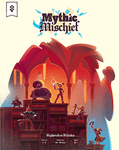
It's backto-back abstract strategy games with themes. It's an abstract board. It's a mythic mischief. That's the game. Mythic Mischief game number five. Goodness, this is a good game. Ivy Studios, who publishes Mythic Mischief, always makes such beautiful games. I'm very visually driven as a person, so I appreciate games that put a lot of effort into creating a lovely visual experience for the player. And not only does Mythic Mischief do that, it also has the engaging gameplay mechanics to back it up. It's not just a pretty face with no substance. It's got it all, baby, full package. Come here. Do you have the full package? Oh, Luna.
So, this is another move your pieces around a board, kind of like chess, to force your opponent to give you points game. The theme here is that you are a different click in a fantasy high school trying to pull pranks on the librarian called here the tomekeeper for fantasy reasons or the groundskeeper if you're playing volume 2. They're both good. The clicks or factions are things like vampires, witches, monsters, zombies, ghosts, and they're all designed like high school stereotypes. So, the monsters are the athletes, the witches are the popular girls, the wizards are the nerds, so forth and so on. Each faction has different abilities that you can power up and activate to move yourself around the board or force your opponent to move or even move the walls of the room around. all in service of trying to force the toonekeeper to walk into the path of your opponent. If that happens, they've been caught trying to pull a prank and you earn points. Each faction has a different play style, super fun, powerful abilities, and the game is just full of setting up clever moves that make you feel really smart when you get them to work. And y'all, I love feeling smart.
I'd probably be in the wizard faction. There is a drama kid faction in the game as well. So, I'm one of those. Again, if you like a game kind of like chess, has chesslike vibes, but the people in your life don't want to play with you because a game like chess looks too dry or complicated, this game is a great way to trick them to play that style of game while feeling like there's something interesting going on thematically. It's the spoonful of sugar for the abstract strategy medicine. Game number four is Jaipore. And this is a game that has been in my collection for years, and I genuinely I can't think of anything that would convince me to get rid of it. It's a quick push your luck kind of card game about collecting sets of cards and selling them for the best price before your opponent sells them and gets all that money for themselves. But the more of that type of good you can collect and sell in one go, the more of a bonus you'll get when you sell it. But if you hold out for too long, it'll be too late and all the highest value chips when you sell will be gone. What a wonderful push and pull this game has. On the table is a market of cards representing, you know, like grain, spices, cloth, rubies, diamonds, car alarms, gold, you know, stuff. And then there's a pile of tokens representing each type of good that can be sold stacked from
highest value to lowest value. You also have camel cards which aren't worth any points themselves, but whoever is the most camels at the end of the round will get bonus points. On your turn, you can take a card from the market to add to your hand. Or you can trade good cards from your hand or camel cards for the same number of cards from the market. So maybe in the market suddenly there's two uh silver cards and I want both of them. So I'll take a camel and a spices card for my hand, put them in the market, and then I can take the two silver cards I want. Or you can sell goods you have in your hand for their current value, which goes down every time that good is sold. So the first time I sell spices, I'm maybe going to get a chip worth four points and three points and two points.
And then from then on, every chip is only worth one point, for example. Are you going to sell your three rubies this turn? Or will you wait and see if you can get a fourth one for a higher bonus, hoping beyond hope that your opponent won't sell rubies and take all the highv value chips in the meantime. Also, you can only have a hand limit of seven, not counting your camels. So, you can't just hoard cards all day long. At some point, you're going to have to make a concession and sell those rubies to make room. And as soon as you do, that fourth one is probably going to come out. That's just Murphy's law. This game is so great. It's quick. It's that good kind of stress. It doesn't take up too much room on the table. And the box is not too big, so you could travel with it. I truly I cannot recommend Jaipore highly enough. I've told this story about game three before, so bear with me if you've heard it. I was at a gathering of gamers and board game designers uh in Los Angeles and someone came up and was like, "Hey, I have this two-player game.
Would you try it out? Um, it's not out yet. Would you would you play our prototype?" And I was like, "Okay." I mean, sure, whatever. But then he was like, "It's got tile laying." And I was like, "Oo, I like that." And it's got some auctioning stuff. And I was like, "Okay, that could be fine." But I went in not having the highest expectations of like I was like, "I'm sure it will be fine." I sat down with Shay Parker of RTFM and Roto Runs through and we played this game and when I tell you this game was so fun. We got done with it and I immediately went, "Can we play this again?" And I played it, we played it like twice back to back and that game is Florestry.
I cannot believe how fun this simple little game is. All you're doing is bidding on flower tiles and then placing the tiles you win each turn into your display window to make like the nicest display window in your flower shop. At the end of the game, you score based on the group size of each flower type in your window. So, if I've managed to get six roses grouped together, I'm going to get three points. And my grouping of nine tulips all next to each other is going to get me six points. But what really makes this special is how you bid on these tiles. This is done through a Dutch auction using an app that runs the auction for you. You start the auction and every 15 seconds the price of the tiles goes down. Whoever hits the bid button on the app first wins the three tiles of their choice and the loser pays nothing and gets one single tile. So, you're trying to bid before your opponent does for something you both really want. Or play a game of chicken and seeing how low you'll let the price go before one of you pulls the trigger.
Or bluff the other person into spending way too much on something you don't even want by butching your finger and making it seem like you're about to bid until they go, "Ha!" and and then they pay six coins and you're like, "Ha, I didn't even want that. You could have let that run all the way down to one coin and I wouldn't have cared." And on top of that, if you spend way more money than your opponent, they get extra points at the end of the game. So, you're constantly trying to balance how much you've spent compared to them, which is what stops you from just like hitting bid immediately every time. There are consequences to spending significantly more money than the other person. It makes for some incredibly exciting moments. And the reason I think that this game is so dang fun. And again, it's another game that it doesn't take too long to play. It's like 20 minutes and it fits on this cafesized table, so you can take it like anywhere. There's just almost no barrier to getting someone to try this with you. You have no excuse. So go out to Barnes & Noble and pick up a copy of Florestry. It's so fun. I slept on game number two for so long. This is a bit of a classic. It came out in 1999.
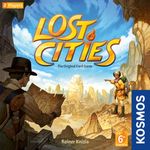
So, it's almost 30 years old. 30 years. It's almost 30 years since 1999. That's wild. When I first got into the hobby, I heard people talking about this game. And I I just thought I thought it sounded boring, dry, and boring. And I was like, whatever. Okay. Well, shame on me because Lost Cities game number two is so ding dang incredibly good. It is one of my most played games of all times now. All times. It is one of my most played games of all time. Now, in some ways, this is a similar vibe to Jaipore where you're drawing cards and playing cards and pushing your luck to try to get just the right ones in your hand so you can play them at just the right time to earn the most points. And sometimes you're gonna have to compromise. play a card and then immediately draw the card you had been holding out for and had given up on.
Murphy's law strikes again. In Lost Cities, you are going out on archaeological expeditions looking for lost cities like Atlantis. Each expedition is represented by a different colored lane on the board. And you explore these locations by playing your cards to their matching lanes on your side. The cards have to be played in ascending order, though you can skip numbers. So, your lane might look like the one card, two, five, and then eight. And then if you draw the four, it's too late, bud. That card is trash now, cuz you can't go back. At the end of the round, when all the cards in the deck are gone, you count up the value of every card you played to each lane, each expedition you went on. But don't forget that going on adventures is not cheap.
Just playing a card to a lane will cost you 20 points. That's your investment. So, if you don't think you can make that back in the value of the card you play there, maybe don't. Maybe don't play any of your white cards cuz you only have the two and the three because that's going to give you negative points, my dude. You can push your luck even more by playing handshake cards to a lane. Now, these have to go before you play any numbers there. So, a handshake card has to go down before you play a one or a two or whatever number. If you've already put down your six, you cannot play a handshake card. And what these do is they act as a multiplier for your score, positive or negative. So if your red lane has 16 points of cards on it minus the 20 investment, that is -4 points. If there's also a handshake card, that one handshake card gives you a times two multiplier. So that's actually eight points. But if you scored six points after meeting the investment cost and you have a handshake, that's a total of 12 points.
That's pretty tempting. The thing that makes this super juicy, which admittedly is a weird way to describe a game made out of the driest materials known to man, paper and cardboard. The thing that makes this real good is that on your turn, you must first play a card and then draw a card. The card can be played to one of your lanes or can be discarded into a section in the middle because you don't want to actually play it down, but you got to get something out of your hand every turn. when then at the end of your turn you draw a card, you can draw from one of those piles in the middle instead of the deck that is acting as the timer for the round. Maybe on their last turn, your opponent discarded the very exact card that you've been waiting on. Snatch that baby up. Or maybe you need to prolong the game a little because you have four turns because there's eight cards left in the deck and you need to play five cards down to get your points up. So you start drawing from the middle to keep the number of cards in the deck from going down so that the game lasts longer. Those kinds of strategic decisions of when and what card you're playing or drawing is what makes this game just so interesting to me. I just really really love it. And that feeling
of as soon as I played something down, I get the thing I had been waiting for. Like it never fails. And it's just like a delightful kind of anger when it happens. I mean, honestly, talking about the game right now just makes me want to stop filming and go play it. Lost Cities, don't be like me. Do not sleep on this 30-year-old game. Go pick it up. It's good. We did it. We made it to game number one. Thanks for watching the whole video. Did you skip ahead to this one? Are you a kind of person who like reads the last page of a book before you've read the rest of the book? You're a monster. The number one game on my list is another one that has been around for a good old chunk of time. It's Tari. And it was originally released in 2012.
And look, not every game from 2012 holds up, but for me, this one does in a big big way. This game has such a unique version of worker placement and is full of opportunities to block what your opponent is trying to do. Though doing that might come at a cost to you, or you might end up blocking them without even meaning to. It's just that's the best move for you. And so, it's got that thing I keep mentioning that makes a competitive two-player game especially good. tension. Are you going to get what you need this turn, or is the other player going to stop you somehow? Which move should you prioritize to try to make the best thing happen for you? In the game, you play as a target, going out into the desert, collecting goods and coins that you will turn in for tribe cards. When you pay for a tribe card, you place it in a 4x3 tableau, scoring at the end of the game for filled rows that have either all the same kind of tribe card in the row or all different tribe cards in the row. Each card also has points listed on it you'll score as well, and some give you special abilities as you play. Now, resources like coins are scarce while also being super important for paying for a lot of the tribe cards.
So, when those come out on the grid, they are hotly contested. To gain your resources and your tribe cards, you place a pawn on one of the cards along the outside of the grid. Then your opponent goes placing one of their pawns and then you back and forth until you've both placed three pawns. You get whatever is on the card under your pawn and also whatever the cards are at the two intersections of your pawns. The cards in the center of the grid change every round because you're actually drawing those and either turning in the goods cards or playing down the tribe cards in your tableau. The ones on the perimeter will always stay the same, but a robber moves around the perimeter blocking one of those cards every round. Target just feels so unique. And again, it's tense and you're trying to collect just the right set of tribe cards. But what if the one you invested in early, like you're like, "Oo, two well cards.
I'm gonna make this row all well cards." But then the wells never come out again. And now you're stuck with a row of three wells and one camel. That's not going to score you anything at the end of the game other than the points on the cards. And that sucks. I think I love this one so much because the rules are so simple, but it really is a different puzzle every time because the cards are going to come out differently every time. and is full of these moments of gambling just a little hoping that the random goods card that you pulled from the deck blindly. Maybe it will be exactly what you need. Otherwise, you're going to have to discard that tribe card because you can't pay for it this turn. It just feels different from anything else I own. And I just love it. I love Tari and that's what makes it my number one game.
There you go. That's my updated top 10 games for two players as of May 2026. Thank you so much to Dropout and Game Changer Home Edition for sponsoring this video. Go check out their Kickstarter, which is live from May 5th to June 5th, and it is linked in the description below. Y'all, let me know what your favorite two-player games are, and if you think there is anything I missed or should try that I haven't tried that you think maybe I would add to my list if I remake this in another 3 years. If you've tried any of these games I've recommended for the first time, I would absolutely love to know about that. Let me know in the comments below how it goes. And a big thank you to my patrons whose names are scrolling by right now. If you would like to support what I'm doing here and in all the places across the internet where I make content about games and TTRPGs, consider checking out the Patreon. And if you're not subscribed already, go on and subscribe to the channel. And if you enjoyed the video, give it a thumbs up. That helps helps more people see the video, which helps me. And um yeah, I appreciate it.
Okay, I'm done trying to awkwardly close out the video, so I'm just going to go now.