Shelfside’s Top 10 Most Important Games






Transcript
This list is for me. These are the games that really changed my perception of what the board gaming hobby is about, which in turn changes how I think of games as a reviewer. So, this video is kind of like a resource if you want to ever get more of an insight on how I think about games. And for games on this list, I've spent a lot of time with, uh, anywhere from 10 plus hours to maybe even 1,000 plus hours. And yeah, so these games were really right place, right time, especially in my formative years as a human being. If you've been anywhere around the channel, well, first, thanks for sticking around. But two, you've seen these games mentioned in many of our videos. This list shouldn't surprise anyone who's been following the channel. Again, I must stress that this list is all about personal importance. I'd imagine if I was a really big Euro gamer, then something on my list would be Puerto Rico or Agricola or maybe Trajan. For my list, these are not games that are necessarily my favorites right now.
There's some I didn't think aged that well. There's also some I don't really like that much, but really changed how I think. This list will be increasing in importance for me, so as we get closer to number one, the more I thought it shaped me as a board gamer. To make this retrospective fun, each game will have a specific question that it posed for me to answer in my enjoyment and thinking of games. And of course, honorable mentions and final thoughts are included, so let's go. This video is brought to you by the JRPG board game, Boken. Boken harkens back to old school JRPG video gaming with a unique magnetic save system. It has fluidity and accessibility in mind with great card holders. Setup ends up being actually just 1 to 2 minutes despite it being a 15 to 30 hour long adventure. It really did feel like, "Okay, I could quickly be the JRPG warrior hero to fight alongside Alexander's mage." We got new abilities, fought different monsters, and got to talk to NPCs to give us quests. Also, for all the art, they have a no AI policy that just strikes me with a strong nostalgia everywhere I look.
Pokémon plus Final Fantasy vibes everywhere. You can check the link in the description below as the campaign is now live. Now, back to the video. Number 10. This game was the first game that I played that had so little components. But it was actually super fun and super deep. We could play it a lot and there's a lot of different strategy. See, at the time we played a lot of smaller games like The Resistance, Love Letter, and Bang, and playing card games. And those were all really fun for a bit, but either they were really simple with no theme or had like a big team element to them like The Resistance. Now, in Coup with everyone having two lives and it's the last man standing, there's not only politics we have to deal with, but also a lot of bluffing, which our group always likes.
And then these role cards, the five role cards in the game for the 15 card deck, it's so perfectly tuned. And I've played this game at every single player count tons and tons of times, and I still think this game is a masterpiece. 10 out of 10, for sure. Like I remember there being entire nights we just played this, and it didn't get old for a long time. Okay, so why is it so important? Well, when micro games, I often think, is it better than Coup? And of course, they aren't. But are they approaching that level of elegance and player interaction while being true to their short and small identity? Do they also have an amazing player aid that is still one of the best player aids to this day? Of course, helped by the rules having so much resonance. Assassin kills for cheap. Ambassador lets you trade with the deck. Duke steals three. And I Duke, I steal three is a very memorable meme for some of my friends and I. So, this was the first game to ask how few components and rules do you need for your game to actually be super good and deep? Admittedly, I actually thought this would be higher. It's only number 10, and it's probably because we just don't play that many small box games that much here anymore. I actually lent out this copy for about two years to someone, and then I just got it back because I had to make another video, and that video never got made. So, now I just have it, and I don't know, I don't think I'd ever want to get rid of this.
It's just such a nice game to have in my collection. But I will happily lend this out. I think as many people as possible should experience this. Like, if you take anything from this video, it's you should try Coup. It's so short to play and learn. Oh yeah, as a quick funny aside, I still remember that in college in the dining commons, there was one group that would always play Coup every single day with their meal. Anywhere from two to five players. And they were having a blast, whether or not they were eating food while playing or just playing the game after they finished their meal. Like, I don't know, if that's not a huge endorsement for a game, I don't know what is. Number nine. Tainted Grail: The Fall of Avalon and its successors, but mostly Tainted Grail: The Fall of Avalon. Yeah, okay, so I debated for a long time whether or not this would be higher than Coup. Cuz this game's actually a masterpiece. The Fall of Avalon franchise, not as much, but it's still cool. The reason why this gets the edge over Coup is because there's just so many darn big box campaign games coming out. So, I've personally not finished The Fall of Avalon, but played through many hours and I know how the story ends. And of course, I finished the prototype of chapters one through five of The King's Ruin prototype. So, for Tainted Grail: The Fall of Avalon, it was the first board game I played that felt like a sprawling connected world in a video game. In just how darn big it felt. It didn't have a GM, it was just a bunch of flavor text and cool arts. And at the time, that was so novel. And the game took itself extremely seriously.
Like, this was not Descent Second Edition. Characters were fleshed out, the world was dark, the game felt huge, and there was a lot of mysteries and just overall moral conundrums to think over. Yes, there were other games with lots of text that I've played before this, but they were all just mysteries, like Detective and Arkham Investigator, which is just Sherlock Holmes: Consulting Detective. Of course, they're board games, but they don't have that huge sense of world building and character progression, like you go fight things in Tainted Grail. Obviously, Tainted Grail: The Fall of Avalon had a lot of mechanical issues, and with so many campaign games out now, I don't really have an interest in playing it more, but hey, when you're first, you mean a lot. And the knowledge of this game informs so many videos on campaigns and in legacy games like Pandemic Legacy. And of course all the Awaken Realms games which you guys just love to see videos about. So I guess we're going to keep making them. Now that I think about it, if Awaken Realms wasn't so prevalent in releasing games that have a campaign in a big box, maybe this would be number 10 on our list. Maybe. So Tainted Grail: The Fall of Avalon was the first to ask me how much world building can there actually be in a board game with compelling NPCs and a huge world to romp around in in open world. And then it showed that open world is not a good fit for a board game, but hey, now we know.
Number eight, Pandemic. I don't really have too many notes on this one. It was just the first cooperative game that I ever played. Yeah, I was 17 years old and never played a cooperative board game ever before this one. I just immediately fell in love with the idea of cooperating with your friends and you had the asymmetrical powers and then the grand scale of saving the world. Chaining together four actions in a single turn was cool as usually games we played before either have two actions to do or unlimited. But four was a slightly new thing for me. It felt a little bit more puzzling. But I also very quickly got tired and bored of Pandemic. So we began the lower enjoyment of games even when it wasn't that honeymoon phase for me because it was the first game that also introduced me to quarterbacking and how I don't really like it. Or should I say introduced me to the fear of quarterbacking in any co-op game. So as I dive into our reviewing every Pandemic Legacy ever video, yeah, stay tuned for that one.
It's a bit of a doozy. We already made a quick video on season one on the channel, but the thoughts don't feel complete without covering all of them, right? So we're going to get to that eventually. But anyways, my main takeaway from Pandemic is how do you make a game co-op without it being prone to quarterbacking? Like you can do that by making the game so complex like maybe Spirit Island where you just can't keep track of other people's player boards all the time. Or you could make goals possibly misaligned by having different agendas or have hidden information in between players. And then there's a non-mechanical way to reduce quarterbacking which is you just make the game so thematically immersive that people just end up doing things that they feel are interesting in the world like a Mansions of Madness second edition. Because oh, maybe it's the right play to attack this monster, but I really want to see what's behind that door, right? That just sounds more fun. Seven. Yep, this is the first real board game that I ever played ever like back in second grade. I mean, I started with Junior Monopoly.
So, I guess that that would be the first Monopoly I ever played and I sometimes play that solo and yeah, sure maybe there was like Chinese Chess or something I played before this, but this is like the real first modernish board game that wasn't like super old. But this this is old, too. Sometime in late elementary school or middle school, a bunch of buddies and I treated this pretty seriously. Yeah, like we're playing Monopoly like pretty much every two weeks any player account I could get my hands on. Of course, not including all the solo sessions I had cuz I'm an animal. I kid you not, I went on a cruise in early middle school where we played this game every single day and there were countless house rules that came up. So, Monopoly was the first game that I ever house ruled. There were teleporting between railroads, landing on go to collect $400, and even using a deck of playing cards instead of dice. I had a printed out PDF at some point of how to convert these playing cards into dice, but I can't find it anymore. Okay, so what about the actual mechanics?
Well, it was the first roll and move game that I played and it was the first longer multiplayer game that I've played. I didn't play Risk until far later and Monopoly had a lot of resource management compared to most games because you could hold money and actually leverage it for later deals. And then as the uncle comes around to give you some sage Monopoly advice, you start thinking, "Whoa, this game is like really deep. It's really smart." As I got older, I definitely realized, yeah, this game doesn't have that much agency, but except for a couple of huge trades. And so, actually in this game you could just make like a big deal at some point and then just kind of play a couple more turns and then whoever lands on someone's expensive property first just ends up losing. Then you just kind of clean it up. So, yeah, there were a lot of hours I just spent like rolling dice for really no reason, but young kids also like to just roll dice and see pieces go around a board. I I mean, it is kind of cool. There were a lot of questions that arose for this. Like, how do you make roll and move fun when the turns are so simple? Well, maybe make the board progress over time and give benefits to rolling high. So, maybe you can get another turn by rolling doubles, or you can cross go to get free money.
How do you make money meaningful? Give lots agency on how to trade, how to build houses, and auction over properties. How do you make a game very interactive and have a lot of family memories associated with it despite being really simple? Well, make global trading super easy to do. Number six. Okay, so you know how I said a lot of these games I view very favorably? Well, this one is going to be the first real exception here. Like, it's something that leaves a negative taste in my mouth still for enjoyment, even though I heavily respect the game and all the games after it. So, coming into Gloomhaven in early shelf side days, I liked dungeon crawlers, but I didn't love them as much as maybe in high school when I was younger because we spammed so much of Descent second edition. And Gloomhaven dropped that enjoyment even more. And really solidified that I don't like dry, purely cooperative dungeon crawlers. It doesn't matter how balanced or crunchy game is if there's too much cognitive dissonance in what I'm doing. Despite me trying to be more analytical about games, to a certain degree, if I don't like the art and theme in a dungeon crawler, it's kind of game over for my brain. Balance plays second fiddle to that. This was also really important to me to know that I don't like programming in a board game, especially programming when you're heavily tied to the card you just put down. That just really takes me out of the game, and it makes sense because I always enjoyed building things, but the moment I had to program LEGO robotics, my eyes started glazing over. Of course, I didn't finish base Gloomhaven. I'm not going to put in that much time, but I actually did finish all of Jaws of the Lion. I played every single scenario, so even more than finished the game. And then now, whenever I think of this
Gloomhaven initiative system, I just can't help but think about how cheesy it becomes. Like, you say, "Oh, well, I'm going slow or really fast. I'm going super fast. And so while you're not strictly saying the number of what you're playing, well, you're going to memorize your allies cards in their hand after a couple of sessions and then so you just always know what speed they're going to. This also just heavily burned me out of long co-op games that aren't so story-based. I need something to thematically latch onto and I don't vibe with the whole group puzzle thing. But I totally get why people like them. For example, I know a lot of people like escape rooms and I just don't really like escape rooms that much. The question Gloomhaven made me ask was, how much can I play a board game, much more so a campaign board game, if mechanically I have little objective complaints, but the theme irritates me and the mechanics are not enjoyable to run through? Number five.
Wow, yeah, I'm actually really surprised this game made it this high. Especially thinking that I never got past the second scenario of the game despite it living rent-free in my head. I printed out so many of these supplementary things and I've played the game for dozens of hours. But then I also think about how I got to play through a couple more scenarios of the reprints and this game is just not very good. But it was very impactful on me. Without knowing it, HeroQuest was the first Ameritrash game that I ever played and the first dungeon crawler. It wasn't the first TTRPG adjacent thing I played. I was doing that just verbally in middle school,
but this being on a board with minis really evoked something in my fantasy-loving brain. Maybe high fantasy-loving brain is a better way to put it. Go Lord of the Rings. I didn't actually think about this $5 garage sale pickup as a normal board game. It was just an experience with friends. The idea of one verse all gameplay, the Dungeons & Dragons or Lord of the Rings-like theme without any real setup or prep. You made the map as you went. Yeah, it it kind of just blew so many people's minds. Of course, the gameplay is not very good. Even back then we knew that and as Zargon, I was constantly bending the rules and constantly adding in more things. So HeroQuest has insane insane nostalgia with brownie points. It gets many benefits from being first, so it's more impactful for me. I mean, I got it as a pure coincidence, like a stroke of magic, that it came upon my hands. And if I didn't stumble upon this game, my perception of a lot of dungeon crawlers and even D&D would be different.
I don't know, I just can't shake this visual of like the barbarian, and he just goes in and slashes orcs and goblins and maybe death knights. Nowadays, I'm using a little bit more logic to know that it's the first game to really ask me, "How can Ameritrash deal with the issue of someone just standing a place and attacking twice for their two actions?" just too good. How do you prevent enemy turns from devolving to just sit there and chuck dice, especially abusing corridors? Number four. The 4X that I keep comparing all other 4X games to. This is Sid Meier's Civilization the board game plus Fame and Fortune expansion plus Wisdom and Warfare expansion. 2010. Yeah, this is a real 4X game with all the X's, even without expansions. But expansions make it cooler. This plus TI4 is what makes people think that I just only like super heavy and long games all the time, but that's not actually that true. But there's so many golden nuggets in Civ's design, I can't help but talk about it in other reviews. Also, with so many games pretending to be 4X, every time I think of city progression, I think of how Civ does its sprawling city of just adding men more symbols. Every time I think of alternate win conditions, I think of the four in this game. Every time I think of funny general {slash} assistant unlocks, I think of getting the great people in this game.
Every time I think of tech progression, I think of the tech pyramid and how it explodes your military and economy. And those are really interlinked. Every time I think of rock, paper, scissors combat, I think of the three types of units in this game with the wild card plane you can research. Fun fact, I ended up playing this game because I had a friend and we were getting into the hobby together and he said, "Whoa, dude, Civilization, man, we got to play it." We're at Barnes & Noble's. "Whoa, dude, we got to play this game." And I said, "Oh, yeah, it looks really cool." I looked at the back of the box and I went, "Dude, this is so complicated. This is so long. And if you buy it, you're just going to make me learn the rules, so don't buy it. There's like a ton of other games you can play like Splendor or Mansion of Madness 1. Then the next day he shot me a text saying, "Oh, he bought the game. He wants to drop it off at my place so I can learn the rules." So, I ended up learning the rules, and we played the game, and it was great. It was so fun, and then later on he's like, "Yeah, you can just have the game." So, this is how I have this copy. And then I bought these two expansions later. And man, yeah, this game is just so good, but I don't get to play it a lot, but it lives rent-free in my head.
Like all the other ones, but this one maybe more so. Civ made me realize it was possible to actually port giant video games into a board game form, and made me have a lot more faith in long board games as a senior in high school when I was just emerging into the hobby. At the time, we were mostly doing more social games for the experience, and waved hardcore gaming for video games. It also has a really fun question of how much can you emulate an emulation of a thing? Let me explain. So, Civ the video game is emulating the experience of running a civilization. Civ the board game is emulating the video game. So, we went from hundreds of years of a civilization condensed to maybe, I don't know, 8 to 12 hours, and then that is now condensed now down to like 4 to 5 hours depending on people's slowness. We already talked about so many mechanics, but something I can't ignore is how delicate the gang up on the loser mechanic is. Because while in this game it can make the game length sometimes pretty fast by someone getting blown up, maybe that guy doesn't feel good, but the game ends with a bang for everyone else. Or you can have situations where the guy beat to the ground is able to survive, but is kind of miserable because they can't win. So, maybe they end up king making. I mean, emotions can get more heated in a board game where you see your pieces getting wiped on the board. Also, we don't really see this gang up on the loser mechanic much anymore. So, yeah, Civ is the 4X / city builder comparison and video game comparison. It's doing a lot here. I originally had it number three, but uh you'll see how important number three is. Three.
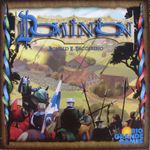
This game actually blew my mind the first time I played it. Dominion. Yeah, it took me so long to actually conceptualize that Wait, wait, hold on. I'm building the deck as part of the game? I'm putting cards that are actually bad for my deck into my deck, but those give me points. What? This really just stemmed from how much I did deck building constantly for Yu-Gi-Oh! But, that was always outside of the game as once you had your deck for the match, that was it. So, the main importance of Dominion is that there's just so so many games that are so similar to it. Like, think of how many deck builders there are that have you draw five cards, play the cards, buy cards from a central area, then discard your hand, and draw back up afterwards. I mean, once you see the comparison, you can't unsee it. And the core idea is genius. Sure, the ways these other games do interaction or point scoring or even action economy are different. See Dune Imperium by having cards interact with workers, but it really still has that Dominion inspired feel for me. Nowadays, Dominion is one of those experiences that I'm always just so down to play. Like, I don't think I'd ever get rid of this box. But, it does feel a little bit solitaire and maybe bare-bones mechanically for me after playing so many other games. And to that extent, it's almost like junk food where it's so easy to set up and get going. While you're playing it, you're satisfied enough. Afterwards, it's like, "Huh, maybe uh something was missing." But then hey, I'm always down to play more to eat more junk food. It's the first game to ask me, "Whoa, why the heck wasn't I playing with deck building as a mechanic in a game before?" And I guess it's also a bit of a personal observation of how many times can we slightly change deck building and still have it feel like Dominion? What are the
best elements we're taking from Dominion and putting in these other games? Are the points going in your deck? Are you drawing maybe four cards instead of five cards? Number two. I'm a very time-sensitive person, and today to this day, I'm still shocked on how much I'm willing to play this 7 to 8 hour long board game. I like I'm not really even sure still how to explain my love. Like yeah, we're dedicating so many full days to just play this game. Like yes, I love how it looks. I love the faction asymmetry. I love fighting over Megalith Rex. I like the deal making. I love the command token mechanic. I love the progression. But to play this game so much is still startling to me. It's actually really hard to compare this to any other board game directly. STI is just letting you interact with your friends in all these grand space opera ways across the table. Like yes, it's an area control, but it doesn't feel anything like Eclipse. It's a deal making game, but still doesn't feel like other 4X's. In fact, it's not even a true 4X space game. Up until I tried Twilight Imperium 3 in high school, most games would lose steam after like 2 to 4 hours. Even BSG could drag at times. And long area controls are pretty much never helped by being long. But this game was exception to somehow hold my attention for 8+ hours.
Like for one activity of sitting down to hold a teenager's brain for 8+ hours all the way to him being a young adult is pretty insane. Me liking this game so much also counter to of the made me realize how much I don't really like pure negotiation games like Chinatown or even Bonanza that much. Or Sidereal Confluence is a better comparison. Rather, I think negotiation is best for me when it's done in a grander scope of things. For example, a civilization that needs resources to build and defend their empire. Or you can even trade to prevent someone from attacking you. Anyways, I have to give TI the huge shoutout for being the easy favorite game of all time mention even though it is long. And the first game to ask me why the hell am I nitpicking about some game's price if I'm going to play them for countless hours. Yeah, just buy the expansions. Why the heck not? It's going to be fun. And it was fun. There's just so much I've said about this game already on the channel. I'm sure we'll talk about it even more. We post so many TI4 videos that people complain that this is a TI4 channel, but it's not. We have other stuff. But okay, let's just get on to honorable mentions before number one. Honorable mentions.
Battlestar Galactica for having some awesome social deduction moments, but also had some not so good social deduction moments. So, I always think about that when thinking of long social deduction games. Thing is, long social deduction games are not really that classy anymore. Like, people don't really play them that much. And if we were to talk about social deduction games, well, probably The Resistance is a more applicable uh frame of reference for games. And then, okay, so then maybe this is also another honorable mention. Because this is the one that actually got me into social deduct. Then, Catan. I mean, this was kind of in a weird place because pretty much everyone in my group already played this game a lot before meeting me. And so, I was like late to the party. And when I played it, I thought it was pretty fun, but it lost steam fast. And now, no one wants to play Catan anymore besides my super non-board gamer friends. It's also kind of hard to compare this game to really any game being released nowadays because, as we said in previous videos, Catan is kind of like a sampler of a lot of Eurogame mechanics with some trading thrown in. Then lastly, Splendor. For being the first pure peer Euro that I ever played outside of Catan. This was the best impulse buy I ever did and was satisfying tableau building with all the buy discounts and rushing over nobles. I have to start comparing short Eurogames within that 30 to 45 minute range to Splendor. Splendor.
One. So, now, the number one, the most important board game for me and my board gaming journey and my board game reviewing mindset is actually a little Japanese card game, children's card game called Yu-Gi-Oh! This trading card game. Without being so into this game, I probably would have never picked up board gaming seriously, at least in high school or college. So, this channel probably wouldn't exist. And since I've always casually liked games, I probably play party games once in a while and stick to video games most of the time. But, since I was already in the mindset of researching so many things about deck construction, ban lists, what are good strategies, then getting into the board gaming hobby was a very smooth fit for me. The amount of time I poured into this game was just incredible. It was basically a part-time job for many, many years. I used to read this book like a Bible.
I probably read this book I don't know, front to back 10 times. And then going through each page, I don't know, dozens more times if I'm being
light on it. I used to self-play test my decks online. I had this Game Boy Advance game I beat and got to the end game and just wanted to hang out in the end game for a long time. I would think about card prices pretty regularly. I would organize tournaments. I played digitally in different formats.
And then I would even go back to watch some of the show. I've tried other TCGs like MTG, Vanguard, even the LCG Android: Netrunner at some point. And they were all fun and mostly cheaper except for MTG. But I don't mention them at all on this list because they didn't really click for me and I didn't really go much further than a starter deck and maybe a bit more boxes. Maybe Android: Netrunner review coming at some point though. So being so deep into a card game allowed me to get all these fundamentals of thinking critically about a game system. I have fundamentals I used from preparing from tournament play, playing games at tournament play. So deck construction, side decking, meta research, and even organizing events with friends, and talking to friends constantly about what decks are fun, what makes a deck fun, what makes a card cool, what makes something broken, what makes it not broken, what's a good counter. And so I take all these ideas and put them into reviews for you guys and it seems to be working out. Like you know how ban lists are a thing in competitive card games? Well you can kind of use those ways of thinking about what cards should be restricted or unrestricted to card pools in board games. But you might also say, "Wait, this is a children's card game. Like what? There's no There's no boards.
There's just cards jumping around. Like what the heck?" Well it turns out that a lot of board games have cards played to the board or stay in your hand. Or you spend cards as a resource somehow. And Yu-Gi-Oh! really got me in tune with the idea of card advantage and using resources from unconventional locations. Like many decks in Yu-Gi-Oh! like you play from the grave. So when that happens in board games from the discard, I have that comparison. You're watching a board game channel now as part of my career, but I also used to run a Yu-Gi-Oh! channel. I'll put it on screen over here. Yes, this was way back when. This was also a good foundation to start making content. So, extra extra brownie points for Yu-Gi-Oh! there. Right now, I have my Chaos Dragon deck. So, yeah, this looks like a pretty fun deck deck to play. So, if you mill it, you will be able to banish stuff with it. So, yeah. Back to mechanics. Well, much like any CCG, Yu-Gi-Oh! goes above and beyond most board games because you're effectively playing two games.
The deck building aspect outside of a match, then the actual match. And so, this also made me ask myself a lot of questions that are often translated over to talking about any board game. How much time should I dedicate to studying the meta and so I'm ready for the tournament? Or in the case of making content, having a solid opinion. How much money should I continue to pour into this game? How deep into the rabbit hole of competitive decks do I want to go? Or should I just have fun and play my Ojama one-turn kill deck with friends? Okay, it's not really a one-turn kill deck, but it can do like 7,000 damage in one turn, and it's just really funny. These guys are so funny. Because maybe the ultimate question is, yes, I can have the most deep fun with tournament-level decks like Chaos Dragons or Blackwings because of the mastery and achievement was deeply rewarding. But, how much is too much for competition? And when should I get back to the roots of playing the game to have a chill silly time with friends playing a children's card game? Final thoughts?
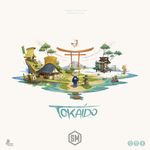
I will retroactively give the top five games on this list shelf-size certified. These games are just so rent-free in my head living rent-free in my head. And also, Tokaido because we made that review like when we first started the channel and the game is a masterpiece. It's still a masterpiece, so Tokaido, you you deserve it. You deserve it. Just Take take your shelf-size certified. This game is so good. But, for my other final thoughts, well, the question that will surely come up in the comments is, wait, where the heck are your Euros, right? Like, where is the Euros on this list? It's all Ameritrash games. What's going on? Are you an only an Ameritrash lover? Well, the thing is is that Euros, despite being usually pretty mechanically sound from what we've played, they tend to not have as many memorable experiences to latch onto. And so, while I found games like Gaia Project to be good, but maybe something's missing for it to be great, or even Brass: Birmingham to be a 10 out of 10 for me, well, it's not as memorable to talk about, I I guess for me, but I love that game. I love Brass: Birmingham. I just admittedly don't think about it that much. And then there's also some games that I dislike and don't have respect for that are important to me, but I don't really want to bring it up because that's too dour of a list. Maybe it's for another video.
And of course, you're going to go, "Wait, these games are so old, man. Like, almost every single game on this list is 10-plus years old. Like, Gloomhaven is 9 years old. That's the newest one on this list." And it's because of, well, with anything, like any hobby, too, the more you get into it, the more you see that maybe it's cool, and then it impresses you, but it doesn't really like shock you. It doesn't faze you that much. So, I think this list is going to be pretty concrete, especially like top five, unless there's going to be some radical new mechanic that happens in like the next coming years, but I kind of I don't know. We'll see, right? It's hard to know. That's it. Yeah. Thank you to our patrons for making videos like this possible. And uh I think that's it. Yeah. Our man, that's cardboard over here. That was a fun top 10 list. I guess you guys like them. Um let me know if you have any top 10 list requests, but that'll be it. Okay.
Bye-bye.