5 Popular Board Games You Should Avoid (And What to Buy Instead)
Games in This Video
11 games are featured in this video — they unlock as you watch.







Transcript
Okay, so we've been playing a bunch of really popular games back to back with the stuff that totally replaces them. And this episode is basically an intervention. Yeah, this is the please stop buying these episode. We've put in a lot of table time on both sides. And some of these sacred cows really did not survive actually being played side by side with their replacements. And what's funny is that a couple of these are the games everyone recommends as must buys. But once we actually compared them in real sessions, it got very clear which boxes deserve shelf space and which one should quietly disappear. Also, fair warning, if one of these is your all-time favorite, you might want to take a deep breath before we get to it. So, let's set the stage a bit. We didn't just rant about these in a vacuum. We actually played each avoid game and its replacement in the same window of time, sometimes literally on the same night.
Then we asked if we could only own one of these two, which one feels like it earns its spot? Exactly. And these aren't theoretical comparisons. In our sessions, we were watching for the same stuff we always care about. How the turns feel, how much control we have, who's miserable, who's smiling, who's tuned out, and whether the game still feels good on the third or fourth play that week. And it was surprising how often the popular one was the thing dragging the night down. We'd play it first, everyone would be a little flat, then we'd switch to the better game, and suddenly the table wakes up. It's honestly brutal when the contrast is that obvious. So, yeah, in this episode, we're talking about five hits that just didn't hold up once we put them next to the games that do the same job so much better. Let's start with Wingspan versus Race for the Galaxy because that one was probably the harshest reality check. Yeah, that match up really exposed what's actually going on in both games once you stop being blinded by birds. So, Wingspan first. On paper, it's an engine builder. You play bird cards into one of three rows, and those rows represent actions, getting food, laying eggs, or drawing more cards. You put birds down, the row gets stronger, and when you trigger that row, you run effects from left to right.
Right. And in our games, the core loop was always the same. You spend the first half of the game installing these cute little bird powers, and then the game ends basically right when it would finally be satisfying to use them. Exactly. We kept bumping into that hard four-round structure. Every time we'd get to that last round, it felt like, "Okay, now my engine is actually decent." And then, boom, we're done. It's like the design is terrified of letting you actually enjoy what you built.
And the worst part is the egg scoring. In our playthroughs, eggs became this big, boring, obvious scoring sink. Once you understand how the point system works, you realize so many of the interesting bird powers just don't matter as much as spamming eggs in the right habitat.
Yeah, you look at this huge deck of birds and all the thematic powers, but in practice, we kept coming back to, "Does this help me vomit out more eggs? No? Then it's probably wrong." And that's before you even get into the food dice and the card market being way swingier than they look.
The food feeder was a mess in our games. You can absolutely get stuck needing a specific food type for multiple turns, and the mitigation is just hope someone else resets it for you. It feels cute at first, then you realize it's just random friction on top of an already slow engine. And the private goals with the public card market, that combination was pure frustration. We had sessions where someone's hidden objective depended on a specific bird type or nest, and the table, without even knowing, was nuking those cards off the row just by playing normally.
The whole thing slowly turned into multiplayer solitaire with occasional passive-aggressive card sniping. Nobody was really building around each other. We were just hoping the market and the dice didn't screw us harder than they screwed everyone else. Now, contrast that with Race for the Galaxy. The first time we played it right after Wingspan, it was almost shocking how much more game there was in half the time. Yeah, Race actually feels like an engine builder that trusts you. You're building a tableau of planets and developments, but every card can be used as payment, as part of your engine, or as a good to convert later. Every turn feels like a decision, not an autopilot activation. The role selection is what completely killed us for Wingspan. In Race, everyone secretly picks a phase, and the phases that get picked all happen. Suddenly, you're thinking about what you need, what you think the others need, and how you piggyback off of them. That alone gives you more interaction than Wingspan has in the entire box.
And the wild thing is that Race lets you actually enjoy your engine. In our plays, those last few turns are explosive. You're producing, consuming, drawing a bunch, and pulling off these big swings because you set them up over several rounds. We had games where a whole strategy came together in the last couple of rounds and felt earned, instead of, "Oh, if I had one more turn in Wingspan, this would finally be good." Race is ruthless but fair that way. You see the payoff. Also, the variety. Military, consumption, development-heavy, weird hybrid engines, those felt like fundamentally different arcs, not just, "This time, the bird art is different." So, from our table, Wingspan just can't compete mechanically once you've played Race for the Galaxy.
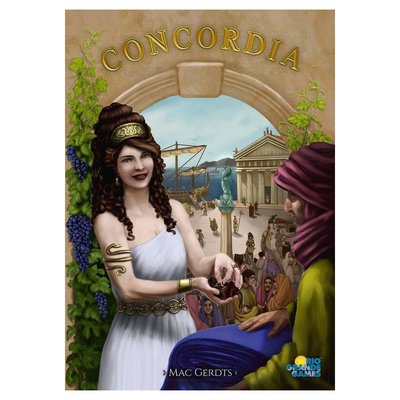
Race is tighter, faster, has more interaction, and actually lets your engine do something. Yeah, and if you're looking at which one deserves to be on your shelf as the core card-driven engine builder, it's Race. Wingspan is the one you should avoid if you what you actually want is depth instead of bird wallpaper. All right, let's move to the next sacred cow. Catan versus Concordia. This one hurt a bit at first because so many people started with Catan, but man, playing it back to back with Concordia really showed its age. So, Catan in our plays was exactly what people warned you about, but way worse side by side. You're rolling two dice, collecting resources from hexes where your settlements sit, then trying to trade and build roads, more settlements, and cities to race to 10 points. The problem we kept running into is that the entire game hinges on those dice and early placements. We had sessions where one person basically didn't play for huge chunks of time because their numbers just didn't come up. Not, "Oh, that's a little unlucky." More, "You've had one resource in 20 minutes." And when that happens, there's no real comeback. The person who got lucky early snowballs.
More income, more builds, even more income. Meanwhile, the table pretends the robber is a meaningful catch-up tool while it just drags everyone down and makes the leader slightly annoyed. Then we put Concordia on the table, and it was like, "Oh, this is what Catan has been trying to be, but with actual design behind it." In Concordia, you're still expanding across a map, building in cities, and producing resources. But instead of dice, everything runs off a hand of cards. You play one card a turn to do something. Move traders, build, produce, trade, or buy new cards. Then, when you play the Tribune, you take your cards back. The difference is that every turn matters. There's no, "I rolled a two, nothing happens." In our plays, every card choice shaped your economy.
You build in a city because you know you're going to trigger production later, and you can see exactly what that'll give you. And the scoring system is brilliant. The gods printed on the cards mean that the cards you buy also define your end-game scoring. We had games where one person leaned hard into provinces, another into diversification of goods, and someone else went deep on building lots of houses. It felt like planning, not pleading with dice.
What really killed Catan for us was the combo of no randomness and no trading drama in Concordia. You want resources? You play the card that gives them to you. You want better actions? You buy them. You're not stuck hoping the table agrees to give you grain because they feel nice. So, when we looked at both side by side, Catan felt like an old prototype of a game that maybe made sense decades ago. Concordia felt like the polished version of that idea that respects your time and your decisions. If you want that trading and expanding across a map feeling, Concordia absolutely replaces Catan. Catan becomes the one you leave on the store shelf. All right, now we need to talk about Munchkin versus Cosmic Encounter because that's where the knives really come out. Munchkin was genuinely painful in our sessions. On paper, you're leveling up your character, kicking down doors, fighting monsters, and getting loot. In practice, it's flipping a card, doing some basic arithmetic, and waiting for someone to throw a nope card at you.
The biggest issue we kept hitting was just how little game there is. Your choices boil down to, "Do I play the biggest numbers I have now or later?" You're not crafting interesting builds, you're not navigating meaningful tradeoffs, you're just applying whatever bonuses you happen to draw. And end game was always the same miserable pattern. Someone hits level eight or nine, and the entire table turns into a hate machine. Every nasty card gets hoarded and dropped on whoever is about to win over and over. It doesn't feel clever or tense. It feels like extended spite. Then we played Cosmic Encounter with the same chaotic backstab expectation, and suddenly all the things Munchkin pretends to offer actually worked.
Cosmic still has ridiculous powers and swingy moments, but the chaos is structured. Every alien breaks the rules in a different way, and that means your decisions change based on who's at the table. We had games where your alien completely changed how fights worked, and everyone had to adjust. And the negotiation is real. In our plays, alliances, promises, and betrayals actually mattered more than just card values. You're constantly deciding who to help, who to hinder, and whether giving someone a colony now will come back to bite you later. So, for that silly, chaotic, screw-your-friends niche, Cosmic Encounter just obliterates Munchkin. It keeps the backstabbing, but ties it to real decisions instead of pure spite and randomness. Next up, Cards Against Humanity versus party games that actually let people be funny, like Wavelength or Just One. Cards Against Humanity in our plays barely felt like a game. One person reads a prompt, everyone throws in the most shocking or gross punchline they've got, and the judge picks something. That's not play, that's selecting from a pre-written joke bank. And because the deck is doing all the writing, you don't build anything. We had rounds where the table laughed, sure, but it was always because of the card text itself, not anything we did. After a couple of sessions, the shock factor just died, and we were left with a pile of edgy phrases. Then, we swapped in games like Wavelength and Just One with the same group, and the energy could not have been more different. In Wavelength, suddenly people were arguing
passionately about where pineapple on pizza sits on a weird spectrum. In Just One, people were trying to come up with clues that were unique, but not too obscure. The humor came from us, not from pre-written shock value. After that, Cards Against Humanity felt like dead weight. If you want a game that encourages creativity and still gets people laughing hard, Wavelength or Just One just crush it at the table. Finally, let's hit Betrayal at House on the Hill versus Mansions of Madness. Betrayal was one of those games we really wanted to love. You're exploring this haunted house, placing tiles, picking up items, and building tension until the haunt triggers and someone turns traitor. But in our sessions, that second half almost always fell apart. The haunt rules were either lopsided, unclear, or both. We had games where the traitor had basically already lost before they even read their scenario. And others where the heroes had no chance from the moment the haunt started. Then we put in Mansions of Madness on the table, and it was like seeing the same concept but fully realized. In our Mansions games, the app quietly handled all of the scenario scripting and bookkeeping. No one had to disappear or read a separate rulebook, and we weren't constantly arguing over weird edge cases. The game just flowed. And the actual missions felt like investigations, not just run around until a twist happens. We were following leads, solving puzzles, and making meaningful choices about where to go and what to risk. So, for that
explore a haunted place and tell a story itch, Mansions of Madness very clearly replaces Betrayal. Every session made Betrayal look more like a broken prototype. All right, so where does that leave us overall? If someone's listening and thinking, "Okay, but what should I actually buy?" For engine building, buy Race for the Galaxy, not Wingspan. Race gives you tight decisions, real interaction, and engines that actually fire. Wingspan gives you birds and the feeling that your best turns never quite happen. For that classic expand on a map and manage an economy slot, buy Concordia, not Catan. Concordia cuts the luck, fixes the pacing, and makes every card you play matter. Catan mostly reminds you how much dice can ruin a night. For chaotic take that nonsense with actual gameplay attached, buy Cosmic Encounter, not Munchkin.
Cosmic embraces wild powers, but still lets you outplay people. Munchkin just stretches a thin joke over a very long runtime. For party nights, buy something like Wavelength or Just One, not Cards Against Humanity. Those games invite people to create jokes together instead of outsourcing humor to a deck of cards that gets old fast. And for spooky storytelling with tiles and minis, buy Mansions of Madness, not Betrayal at House on the Hill. Mansions gives you atmosphere, clarity, and real tension. Betrayal mostly gives you broken scenarios and rulebook arguments. The pattern across all of these was pretty consistent in our plays. The popular box was usually the one coasting on theme, nostalgia, or table presence. The replacement was the one that actually felt good to play over and over. So, if you're building or pruning a collection, don't be afraid to skip the usual everyone owns this titles. The alternatives we've talked about tonight aren't just sidegrades. At our table, they flat-out replaced the big names they're paired with. We'll be back with more comparisons and more ruthless honesty. Until next time, go play something that actually deserves the hype.