10 Amazing Games from Which We've Learned the Most
Games in This Video
13 games are featured in this video — they unlock as you watch.








Transcript
Hello, I'm Jamie from Stonemire Games and I'm joined today by a special guest, Connie Voggelman. Connie, thank you so much for joining me today for today's discussion about games that we learned the most from.
Yeah, thanks for having me. I'm excited to talk about this.
Yeah. Um, it the timing works out well because we're recording this actually on the reveal day of Worms Dragon Academy, the expansion that Connie has been working on for quite some time that we revealed. And uh, so we'll see if it comes up today. I don't know if it'll come up in today's discussion, but uh, we're timing it relatively uh, around that. Um, Connie, for people who don't know who you are, do you want to do a quick introduction?
Yeah, sure. So, I'm a board game uh, designer based in Washington DC. Uh, and I'm the designer of Apiary and Wormspan. Um, yeah, that's my that's my background.
Awesome. Um, well, yeah, so today I think we're taking different approaches to this topic uh about games that we learn the most from or slightly different. We'll see how we how we jump in before we get into our five. Um, do you have any other games not on the five that you wanted to bring up?
Yeah, so I had one that just barely missed the list and that's uh Gloom Haven or you could use Frost Haven as well. Um, for a very long time I was very skeptical of cooperative games, you know, especially coming from something like Pandemic. Um, I don't like quarterbacking, but I also don't like watching people making mistakes. And so, there was just kind of this always this kind of tension whenever I tried to play a cooperative game that I was a little bit uncomfortable with. And so, I had sort of written off cooperative games as being like, okay, these just aren't for me. I understand why people like them. I don't like them. Then, I and a group of three other people started playing Gloom Haven, and I absolutely fell in love with it. And so I think it was just really interesting for me to see that I had written off this entire category of board games kind of for one specific reason that not all of them um you know for a flaw that not all of them have. And so for me at least something like Loom Haven you're really making your own decisions and you're very responsible for making your own decisions but still have to really work with a group. And so for me that was a really good mix um you know of factors that I hadn't really considered before.
I like I also like a specific part of what you said there that you had written off all games in the category for something that you perceived to be a flaw in all of them even though that maybe not wasn't necessarily true. And I I've come to that same realization over the years even like types of games where I thought okay this I'm not a I'm not a party game type of guy person. And so I wrote off all party games and then I started discovering hey there are some party games or social games that I rather enjoy. I I wish I'd given more of them a chance a little bit earlier.
Yep. Yeah. And I I wish absolutely the same thing.
I have a few honorable mentions, quick ones here. Um so most of my list I have tied games that I played and that I um applied the lessons from those games to specific games that I ended up designing. And some quick examples there are Quacks of Quinnlandberg or now just called Quax. the uh the tiles in that game, I used similar tiles in our version of Libertalia. Um uh for my most recent game, Vantage, it was heavily influenced by Zelda Breath of the Wild. So that was a a game that I learned a lot from mostly watching people other play other people play Zelda Breath of the Wild than me playing it. Fantasy Realms was a direct inspiration for Red Rising. And then Ark Nova in general has just been um really inspiring to me in a number of ways, but it hasn't in it's fairly recent and so it hasn't inspired a specific game that I've designed since then.
Yeah. No, that makes a lot of sense. Um and I'll just say too, I think my list might be a little bit more broad in the sense that I'm talking about sort of concepts that I learned, but I didn't think more directly to relate it to the games that I've designed, but all of these are very kind of fundamental in how I think about designs, both in um terms of playing games and then also designing them.
Awesome. Yeah. Well, I look forward to hearing uh why you chose these games. Do you want to start off with your uh how you numbered your list and what your number five pick is?
Sure. So, I know this this is going to sound a little bit odd, but I actually organized my list chronologically. So, basically by in order of when I discovered the game um particularly how it sort of shaped my game design journey and then how I think about games. Um so, we're sort of starting with older games and going to uh not newer games necessarily, but newer experiences.
Cool. Awesome. So, what's your what's your first game to talk about?
Yeah, so my first game is The Resistance. Um, and particularly the version either um through this version here or the Avalon version that has sort of some special characters. This was probably the first game that I ever got hyper hyperinvested in. It's a social deduction game where you have two teams. You have basically a larger team that sort of the good team that doesn't know very much information and then you have a smaller team of kind of evil players that you that know each other and have a little bit more information. you know, we used to play for six to eight hours every Friday night. Um, there was always a question of whether we wanted to go home before the metro closed or wait until the metro opened up again. So, it was a very like nostalgic time. Um, in my my early gaming, um, you know, I wrote a 40page Avalon guide. It's still on BG. Uh, it's very wordy. I wouldn't necessarily recommend uh reading it, but it but it's still out there, you know.
And the question is sort of why, you know, why did this game catch me and also everyone else in my group? And I think the the key for me at least was that the on the table game versus the above the table game were both very good and they were both drawing in different people. So I remember once um a friend saying that the being evil and doing the lying and the deceit and etc was the price that he had to pay to play the deduction game the rest of the time.
But other players were sort of just living for this absolute, you know, the chaos and the deceit and all of that. And so I think it was just really interesting to sort of see these two different halves of the game come together and that made me kind of think about start to think about like who is playing these games, why are they playing them, and then what is specifically appealing to them. So that was sort of the lesson the lesson that I picked up from that game.
That's really neat to hear and impressive that you wrote a 40page guide about it. Resistance
I was just going to say realistically it should probably be half the length. I actually in prepping for this I went back and looked at it a little bit and I was like, "Oh, okay." I was just being very very very wordy. There's a lot of like throat clearing. Um, but I think there's also still a lot of good strategy advice in there.
Cool. I'm glad it's still available on boarding geek. I played this game as I was designing Euphoria, which I'll talk about on my list a little bit. Um, and it it actually influenced the uh the concept in Euphoria that you don't know who you are, who who other players who had the same um recruits um as you, you don't know who they are until maybe midway through the game. Um I'm I'm often influenced by the games I'm playing as I'm designing some other games. And so this one came along at the right time for me.
Yeah, absolutely.
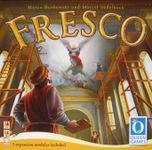
Uh all right, I'll pull up my number five. So I rank mine. All of mine are games that influenced other games that I designed. And I'll mine are also roughly chronological, but also just how much they influence maybe multiple games or had a had a big impact on on a certain game that I played or that I designed. And my first one is the game Fresco. I'll pull that up on my other screen here. So Fresco is one of the earliest worker placement games that I designed or I'm sorry that I played and it influenced my that my first game design, Vidiculture. my first published game design specifically in terms of the um the the the the worker wake up times which are are shown in the kind of the upper left of the of the screen here where one of the the first thing that you do in each round in Fresco is you choose how early you want your workers to wake up and if you have them wake up really late you don't have to pay them as much um uh but if you have them wake up really early you have to pay them more but you get your first choice for each of the different actions in the game. Um, and I just I I I I was delighted by that. It ended up directly influencing the wake up track in Vidic Culture, even though it actually makes a little bit less sense there than in than in fresco. Uh, and really I I I think subconsciously this game has impacted me in a lot of other ways and that you are kind of building something together with other players and restoring this fresco.
Um, there's a little bit of tension in terms of the things that you get, but it's still a fairly rewarding game as you're playing fresco. Uh, and yeah, it's it's been one that I haven't played in a while, but it it just influenced me so much at a time where uh my game design was very pliable because I hadn't played a lot of modern tabletop games. Have you played uh Fresco?
Yeah, I have. And I I think the wake up se uh system of it is definitely the standout. Um because I think it's a really interesting sort of almost a twist on an auction system in a way that's a little bit easier to understand or a little bit more accessible. So instead of just sort of bidding points or bidding strict money, you're sort of you have this kind of very interesting trade-off that I think is conceptually very easy to understand. you get up earlier, it's going to cost more, but you, you know, you get first action, but maybe you get less stuff because you're tired. You know, that's very easy to understand. And so, I love I absolutely love the games that incorporate um that mechanism because I do think turn order can be a real problem in games, particularly if people are being very serious about it. And so, giving people some kind of control over that turn order, I think, is is often is often wonderful in games.
That's neat that you tied it to an auction. had never thought of it as an auction because it's so uh it's so thematic um in in terms of what it what it means but uh but you're absolutely right that it's a it's an example of a really thematic auction in the game.
Yeah.
So that is fresco which directly influenced viticulture for me.
Yeah.
What about you? What's your uh number fourth pick?
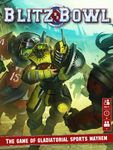
Yeah. So my next game, this is an odd one. Um but this is Blood Bowl. Um there was a time where I was massively into Blood Bowl. Um, it's basically it's ostensibly an American football game kind of. You're playing with elves and dwarves and other fantasy races and they're running a ball down the field and then that's about the end of the similarities to any kind of like American football. Um, but you know, I played in leagues, I did tournaments and all of that stuff. This is probably the game that got me studying games in game design more than just about any other game. I mean, I watch YouTube videos. I read strategy guides. And some of that is that the rule set is incredibly complicated. I mean, this is a a living game that has been in existence for decades, and a lot of it's been really fan supported, too, because it's gotten kind of very marginal publisher support over the years or over the decades. And in some ways, that means it's an incredibly inelegant game. I mean, the rule book is page after page after page after page of exceptions and weird rules and things that you have to look up. Um, but there's also an incredible depth of play. I mean, of all of the games that I've played, like I would say this is probably up with like Magic the Gathering or something like that in terms of the strategic depth. there's just an incredible amount of strategic depth. And so there are sort of two things that I learned from this one. Um, and this is the first time I think I really crystallized this concept in my mind is that luck and skill are two very different things. They're not two sides of the same line. It's not like you have a luck game or you have a skill game.
It's like no, these are different axes. You can have a high luck high skill game. And that's exactly what Blood Bowl is. Everything is based on a d6 system essentially. So no matter how well you set yourself up, if you roll a one, you're going to fail. No. uh if you no matter how poorly you set yourself up, if you roll a six, you're going to succeed. There's a huge amount of luck there, but there's also an incredible subtlety to where you position your individual pieces, what order you move your players in, etc. So, I think that was kind of a really kind of key concept for me. And then the other thing that I'll mention, too, is that, you know, with modern game design and Euro games and stuff like that, we're trying to be, you know, elegant. You want the streamlined, elegant rule set. But I think there's also maybe a place at least in certain games for something that's just very much the opposite because the wildness and the ziness of Blood Bowl just creates better stories than just about any other game that I've ever played. I mean, here you have a weird weather event and somebody gets pushed into the crowd and they get beat up by the crowd, but then the ball gets thrown to the other side of the field where all of a sudden you're a tree player who can't ever pick up a ball suddenly manages to do it and they can't even move, but somehow they've managed to run it into the end zone. And so you just have this incredible story that's just a really really unique experience.
Um, so in a lot of ways it was just a very influential game to me because it's in some ways it's everything opposite of what I do as like a Euro game designer. But I think there's just some really good really good lessons there.
This is what that I I either have only played once or I've never played. Maybe it was on the table at one point. I saw some people play. So I I have very little context for it, but um it's really interesting interesting to me that uh that it's a both a high luck and a high skill game. And there is something about complex complicated rules. I don't know if I the exceptions part I I don't that's a tough one for me to to think that could make a game better. But there is something about um something satisfying about learning a complex complicated rule set and embracing it and going deep into it that there's something really satisfying to be like oh wow I I know a 30 or 40 page rule book in my head somehow. I know all this. Yeah. Yeah.
Yeah.
Well, I think Bloodpull got got a little At one point, I think Games Workshop published some minis of these little ratmanmen and they had daggers in their hands and they weren't supposed to have daggers and Games Workshop was like, "Oh no, why do they have daggers? Let's create a rule just for these miniatures essentially." So, like there there is definitely some some inelegance there that could really be streamlined down, but as you said, I think the real there's a real depth of learning and depth of experience in some of these kind of more lifestyle games. Um, that's just really really rewarding once you get there. That's great. I'll have to give that one a try. So, it's Bloodb uh Bloodbull Team Manager. Do you say the whole thing when you say Blood Bowl or you just say
Yeah, I think I said I was thinking the 2016 edition. There's a bunch of different editions with slightly different rule sets. I think the team manager version is a slight lighter card game. I haven't actually played that version. Um but there's a number of different versions on the market at this point.
Cool. My number four, I mentioned Euphoria earlier and a game I played two games when I was designing Euphoria specifically. I played uh uh the Resistance like you already mentioned and I also played Sulken. Still one of my favorite games. People don't want to play it with me as much anymore, but I I really really love this game uh for a multitude of reasons. I I love the the the dials where you're placing workers on these dials. Um every round the dial the central dial is going to move so that all the other dials advance, making the benefits better when you decide to pull the workers off the dials. That part didn't influence um euphoria, although I really like that and still come back to it for that. Um, the part that influenced Euphoria was uh the the various ways to upgrade what you're doing. Specifically, the tech tracks. The buildings do a little bit of it. The uh the uh I guess uh temple tracks, they feel good to advance on, but the tech tracks specifically over here where you are improving different categories of things. you're improving how good you are at gathering resources or gathering corn or uh or or constructing buildings or um using the the the blue uh crystal skull track. Um I was I was fairly new to this idea of the idea of tech tracks and the idea of engine building at the time when I played Sulken. And so this just had it kind of blew my mind that oh wow I could be taking the same action but because I advanced on this one track that action can be so much better in this one game than this other game. And there isn't time to advance on all the all the tracks. So, every time I play, I have to probably choose one or two of these tracks to really focus on. Um,
this certainly is not as novel in 2025 as it was in 2013, but I it kind of blew my mind when I played it back then, and I think it had it has continued to have a pretty big impact on my design ever since then.
Have you played Token?
I have. Yeah. And I was actually just thinking about that as you were you were talking that I can't think of to mean I mean now it's so I mean, there's tech tracks in just about every game it feels like. Yeah. And you know, I think any kind of a heavier Euro game that doesn't have some kind of a way to boost or buff your actions over the course of the game would be really, you know, it would feel really outdated. Um, but I'm sort of trying to think back of like what games that existed before that had that element in it because I do think it was it was really kind of revolutionary at the time.
I agree. Yeah. Yeah. There there weren't many games I think that that that did it in such a a simple streamlined way. Uh there's one other game that I think you and I will both talk about that has maybe a little touch of that but um not in the same way that that Sulken did and I still I still want to return to it every now and then.
Yep. Absolutely.
Yeah. So that is Sulken at my number four pick. What is your number three pick?
Yeah. So my next deck game is Five Tribes. This is a manala style Euro game. You have a grid of square tiles with meeples on them. Yep. And then you basically pick up all the meuples from one of the squares. you drop them off and you have to drop them off in a way that they land on a square that has at least one color of that mele. And one of the things that I think is really interesting um is the sort of levels of depth of this game. And I think for me and and maybe this was because it was a little bit earlier in my board gaming experience. I sort of went through these different phases of experience and skill level with the game in kind of very concrete phases which was just sort of interesting um for me to experience. So you know when you first learn the game it's like okay how do I make a move? How do I make a legal move? How do I see it on the board? you know, if I want to get to this particular square so I can pick up some yellows, how do I get there? Then the next level is, okay, well, how do I make my move without giving somebody else a good move? You know, how do I make sure that whatever I do, I don't leave a single mele on a really valuable tile so that they can take over that tile. How do I avoid that? Then the next level is how do I make my move and then also close down the board? How do I make my move while also destroying all of the other moves on the board? Um, and then finally, there's this sort of really interesting bidding process in the game where you bid for turn order each round. The kind of fourth level is how do I manipulate the board and the bidding process to my own advantage?
Because you basically have to bid money or bid bid victory points is the same thing um in the game to go earlier in the turn order. And so if I'm the last player and I leave a giant move open, that creates just massive chaos in the bidding process for the next round. And because I'm the last player to go, I'm the last player to bid in the next round, too, which gives me an incredible amount of control over the game. And so I think there's a couple of different lessons here. And one is that every player who plays your game is going to experience it very differently. You know, an early like if you're new to Five Tribes, it's probably about a 45minute game. It's pretty light. The rule set's pretty easy. If you're playing in a tournament final, it is going to take you three hours. I mean, it just is because everyone is going to be evaluating every single move on the board, every single potential move that somebody else could be making. Then of course, you know, one of the sort of quirks of five tribes, it could could definitely be considered to be a disadvantage is that the board state changes after every single player's turn. And so if you're really doing a full evaluation of the board, it can get very very slow. But I think it's just a good kind of reminder as a designer that games can play out incredibly differently at different skill levels to the point where they're almost not even the same game anymore. And so like you as a designer can't necessarily control how people are going to play. Um, so sort of keeping that that in mind both in terms of depth and different strategies and also game length I think is really is really really important.
One of those things you talked about would is my greatest takeaway from this game as well. And that the player interaction, as amazing as it as it can be, can also mean that you can't plan ahead for your turn.
Yep.
And I generally gravitate toward I'm an I'm an impatient player and so I I really like to plan ahead for my turn. And if someone else hasn't done that, I get a little impatient. And this game just doesn't allow you to do that. You can try a little bit and maybe have a backup plan, but because picking up any group of meeples can change so much of the board state, it is really really difficult to do that. So, I think there's always when people ask for more player interaction in any game that I'm working on, I tend to think more of the downsides than the upsides, but I I I need to think about both. And this game, I think, is a good example of the downsides and the upsides of that.
Yeah. Yeah. And I think I'm definitely the same way at this point where if you have a game, again, five tribes, I think, is a very extreme example, but you can do almost no planning on your turn. Um, which again, if people are willing to play very casually is fine. You just you assess the board state, you find a move that's good enough, you take the move, and that's fine. But again, you are telling people that they have to win, you have to win by getting points, etc., etc. So, you're sort of your incentives there are basically telling people, no, no, no, slow down. Make sure you you fully evaluate the entire board. And that can be a real problem.
Yeah. Well, that's a great pick. I'm I'm glad you brought up Five Tribes. That's one that I don't bring up often on this channel. Um, my number three pick is Magic the Gathering. Magic has had a huge impact on me. I've played it since I was like 13. Uh, I I don't play competitively. I I just I like learning about new sets and then every now and then I'll draft a set. You mentioned it briefly when you were talking about Bloodbull as a game that people go deep into. Um, and like Bloodpull, it's also a game that if I don't know how big the actual rule book is, but I if there is an actual rulebook out there somewhere, I'm sure it's massive. But the thing that I've learned the most about it is this concept of card cycles where uh you can design a specific type of card and then um design a version of that card for each uh in Magic it's each color, but it could be each suit. It could be each uh whatever category that that I have in any given game. Um, and I I love designing cards around cycles because I love thinking of a a unique type of card and then finding variants on that that fit in different categories or different colors in the game. And the game that came to mind specifically that I think this has influenced even though Magic has influenced a lot of my designs is Expeditions because Expeditions happens to have five different colors in the game or maybe six. Uh, no, it's five.
It's five colors. And there there are a bunch of card cycles um in in uh in expeditions as a result uh as a direct result of of the the cycles of cards in Magic.
Um yeah.
Yeah. No, I was going to say that I think that makes a lot of sense. I think it's a really great way to to create different sort of vibes and different uh sort of theme and flavor too um with something like that because I mean I know and I don't know that much about Magic. I've played it I've played it a few times. I generally get my butt totally kicked um but I'm not very good at it at all. But I do get the sense that there each type of deck in each combination of different colors has a very distinct um flavor and a very distinct sort of feel of the game that if you want like to be a control player or more aggro player or something like that, you'll be building very different decks. And so I kind of love that mental shortcut in a way of like, okay, well, if I want an aggressive deck, you know, I'm going to build a red deck or something like that.
Yeah. And it it gives that a little bit of personality to different types of of colors or suits, whatever whatever the category is in the game. And that that that I've used that a lot as well to to make different things feel different by leaning into a certain color and making that the color that does X Y and Z and then yeah the other color does ABC. Yeah, Magic the Gathering definitely and we'll will I'm sure continue will will continue to have an influence on me as a designer. What about your number two Connie? Yeah. So my next one, this is a little bit of a cheat because I wanted to talk about two games. Um, but I wanted to talk about them particularly contrasting in particular one particular element and this is a Greek which is obviously one of the kind of classic Euro games and then also Lowlands which is a lesserk known game that came a few years later and both of them are sort of similar in the sense that they're you know worker placement games. You're building a farm. It's very very agrarian. They have a very sort of similar um you know view and everything.
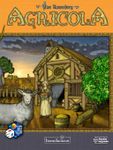
Um but one of the things and this is low lens that's up right now. Um, but one of the things that's really interesting is that they have a very different approach to resource generation and then resource costs on the players. So, obviously a Grio is a very sort of tight game. I mean, when I first played it, it absolutely blew my mind. I went to a board game meetup and I had my little bag and I had settlers with Kintan and Pandemic in it. I was so excited and the people at the meetup group sort of turned up their nose and they're like, "Oh, I see you brought the classics. You know, you have to." And so I and I played a great first of all, as an aside, please don't do that if anyone shows up to your meetup group. I never went back even though I did play a gria and had a wonderful experience with it. But you know the everpresent need to feed your people in a gria is just so kind of fundamental and almost transformative in the industry.
Lowlands does the ex exact opposite. So in Lowlands you have sheep and your sheep farmers. And there's this whole sort of dyke building mechanism that's a very interesting semi- co-op puzzle that's this entirely different. But the core uh part of the game with the sheep is that your sheep grow exponentially. Every two sheep you have at the end of every round produce another sheep. And if you don't have a place to put that sheep, the sheep, you know, runs off into the fields to never be seen if again. And I think it's really interesting because in in a certain sense, you know, if I fail to feed my people in a gricola, you know, I lose a few points. Everyone else essentially is at zero. If I fail to contain my sheep in lowlands, I'm at zero and everyone else is at plus 2, three, four, or five sheep. And in some ways, that's exactly the same thing. I mean, or at least it's very close or you could make make it mathematically similar. But from a feel standpoint, it's almost entirely opposite. You know, if you miss out on extra sheep in low lands, you're like, "Oh, darn." You know, too bad. Whereas, if you miss out on extra, you know, you miss out on your feeding in a griot, it's like, "Oh, no. I have I have destroyed my game. I have failed." And so, I just think it's really interesting there how you can have a very similar mathematical puzzle that has a very different outcome. And I will say this one does actually very directly relate to aviary in the sense that, you know, aviary is a very giving game. You can always you don't have to feed your people or your bees. You always have um plenty of resources to do things. But I think there really are still consequences to not, you know, playing well or playing efficiently. Um, and so I just I think that's just a really kind of fascinating um principle that I wanted to wanted to flag in this discussion.
And it's I'm glad you're tying it to a gricola, which happens to be my number two pick. So, we'll talk about that in a second. But uh in a grica, I I when I started playing it, I stumbled over this idea that if I I it felt like if I had two sheep in a gricola that those two sheep would produce one sheep or or if I had uh six sheep that they would produce uh three sheep. No. So yeah. Uh and so it's it's I don't I don't think that I played Lolan. So it's neat that they he Rosenberg I think took this concept of uh animal husbandry and and um
offered him different ways in different games. Yeah. Well, and like this actually isn't designed. So UI Rosenberg consulted on this game, but this is actually designed by I think a husband and wife couple who I don't think is designed anything else, but it was very strongly influenced by and sort of mentored by UI Rosenberg.
Okay. Well, let me give them proper credit then because that is a mistake on my part. Uh you're right. Yeah, Claudia Partinheimr and Ralph Partinheimr are are the designers for this game. Okay. Yeah. And I haven't played that. Okay. I definitely need to play Lowlands then.
Yeah. I I think it's definitely worth it. It's also just as I I didn't really focus on this, but the semico-op dyke building aspect of the game is also just very very interesting that basically the more you contribute to the dyke, the less points it's worth. The less you contribute to the dyke, the more likely your sheep are to get washed away, but then each surviving sheep is worth more. So, it's it's just it's a very interesting sort of semi- co-op puzzle layered layered over the game. So, it's it's a very very unique feeling game in a lot of ways.
I'm glad you brought it up that it's been off my radar and I that sounds like one that would really resonate with me. Let's talk about a Gria for a minute. You were going to talk about this. I This was uh I I had a very similar experience to yours. Fortunately, it wasn't a inherently negative one. People weren't turning up their nose at me, but I was playing katan for a long time. That was like the game that we played for a long time. And then a friend happened to buy a Gricola, was willing to learn the rules for it, which was very complex at the time or seemed complex at the time. And that was the game that we played for like three years. We'd get together almost once a month. That person ended up being um Allan Stone, my my co-founder for Snowmire Games. And uh it just had a huge influence on me from the worker placement perspective. Um, and in particular, I would say because I had played Stone Age, I had played um, Fresco, or maybe I had, maybe those came afterward, but the the idea that I had my own little player mat that I could build up however I wanted, um, and no one else could change that and no one else could come and and and storm my my castle or or, you know, take away anything that I had built, even though there was still there was still plenty of player interaction in terms of the the worker placement, the accumulation of resources, so many clever things going on there. But, uh, it was just really satisfying for me to have that that space for interaction, but also the space that was just my own that I could work on, that I could build up differently every game, every game that I played. That had a direct influence on uh on Vidiculture as well, where where players have their own little vineyard mat that you can build up however you want. Uh,
I I'm sure a Gria has influenced me in many other ways, but those that was the the the most direct correlation to one of the games that I designed. What are what are your thoughts on a Griffa? Yeah, I mean it's it's again I mean when I first played it, it absolutely blew my mind. I mean I had just never experienced anything I think nearly that to that level of depth and I think it's a real testament to the game that it's still it's still as popular and known as it is. I mean there's a new edition coming out I think sometime later this year or next year. Um and you know I I do really think about in terms of like from a historical perspective has got to be one of the games that's influenced the hobby the most. I mean, it's you mentioned that how new it felt to have a little tableau or a little private space in front of you and now it seems like every game does that. Um, but you know, sort of going to this kind of player interaction and zones of control piece of it. You know, I think I'm a lot like you in the sense that I really like having at least one piece of the game where no one can really mess with, right? It's just, okay, as soon as I get this onto my board, it's safe. Um, you know, and and okay, everything in the middle, sure, that's going to be dicey and and terrifying and dangerous and and very very interactive, but like as soon as I get it to my little board, that's kind of my own thing. And and also I think too there's a big piece of at the end of the game you can look down and be like look look what I built like this is this is cool. This is my farm. This is my home, you know, etc. So yeah. Yeah.
And that I'm glad you ended on that note because that is that idea of having the satisfaction of building something no matter if I won or lost has heavily influenced me as both a designer and a gamer. I I think I discovered that that is the type of gamer I am. um where I I don't really care that much about winning or losing as long as I built something cool along the way.
Yeah. Well, and one thing that I'm always I always try to think of with every every single design that I work on is that the majority of people who ever are going to play your game are going to lose your game. Um you know, and so it's it's losing has to be fun for it to be a game that anyone's going to come back to or particularly enjoy.
And I think another podcast, too, and I really really like that idea.
Yeah. I mean, I just keep coming back to it because it's just like I feel like if I have a single guiding design principle, it's probably that just that like people are going to lose. So, it has to be fun to lose. And I do think that building your own private Tableau is a big is a big part of that or or can be.
Well, let's see if that concept ties into your final pick. I don't know if it does. We'll see. Uh what is your
I think it does actually.
Yeah. Yeah.
Yeah. So, my number one game, and this is a little bit, this is this one's a little bit tongue-in-cheek, but I think it's a very very good point. And my last game is T2. I played T2 for the first time a few months ago, and it was basically two people who really knew the game very very well, and then two new players. So obviously each it's a it's a game that's played in pairs. So each team was a pair of one person who knew what they were doing and then one new person and and T2 is you know the rule book is couple pages. It's pretty simple. It's ostensibly like it looks like a normal card shedding game. And and I I sort of go in I'm like okay played a million trick ticking games. I grew up playing Puckle. I've played Scout. I know I know my way around a deck of cards. I mean this is essentially a deck of cards with a few special cards and a few variations. And I and I was like, "Okay, I'm going to be the new player who like I, you know, I do well. I'm not going to let my partner down."
We played one hand and I have never been so overwhelmed in my life. Like it was And it was funny, too, because both the other new player and I were both people who' played lots and lots of games before, but we were just so overwhelmed with the strategy because this is again one of these games that you have incredibly subtle. I mean, again, it's it's almost like bridge in the sense of you have this sort of level of depth of communication between your partners, or at least you should, but then also incredibly subtle decisions about which card to play when have huge impacts for the hand that basically once you kind of take control of the play or once your team takes control of the play, you should basically never lose control again. If you do, you're probably in a lot of trouble. And I think for me the the biggest lesson here is like just not to get too cocky. You know, I think by this point I've played an awful lot of games. of design games and it's very easy to fall into this like oh I know that like this is just some little card game. It's it's easy and and I was incredibly incredibly wrong and so it was a very humbling experience and I will say that boy do I want to just keep playing this game again and again and again and I haven't been able to find people who are willing to invest the time and effort um because I I do think that like some of the other games that we've talked about this is a little bit more of a lifestyle game and so I think to get good you need to play with very consistent people and the same partner again and again and again. Um, but it's just sort of a good good lesson like stay humble, you know?
I really like that. I'm curious if anyone in the comments has any games that humbled them when they thought they were a master of a certain type of game and then they were completely humbled by by a game. I'll try to think of an example. I'm I'm generally not winning games anyway, so I I I go into the most games without without that. Um, although I do approach game design from that a little bit. I'm like, okay, I've been doing this for for years and years now. And I go into every new design thinking, okay, this one will be the one where the first prototype is actually pretty solid and it never is. Like the first prototype still never really works for me.
Well, there's there's still that no matter and you know, I always think that I've designed this prototype in my head and it's going to be wonderful, right? And it it plays out perfectly in your head. You're envisioning all these turns and then it falls apart in like a turn and a half and I'm like, how am I not better at this? Like, how do I not how can I not envision at least the first three turns in my head, but it just doesn't, as you said, it never works that way,
right? Uh well that that ties over into my final game as well because this game has influenced a lot of my designs and uh you would think that I' I'd be better at designing this specific element of of of games by now given how much this game has uh has helped me as a designer. This game is uh Terrammystica. Um I bring up Terrammystica a lot on this channel and there are many iterations of it now. But uh we we talked about player mats a little bit earlier with the Gricola. this game. Uh, I have the image up right here of the player mat. The idea that the the things that I am placing on the map are being are being pulled from my player mat and that doing so uh unlocks better income in the game. that really changed the way that I looked at um at both player mats and also just the idea of um what can what else can I do with components because I I think if I hadn't played this and I wanted to make a game about putting things on the map, I just would have had them off to the side in a little player supply like those tokens would just be in a in a bag or in a little tray and I would have put them on the board from there. But this game shows you or showed me that uh that those components can be doing they can be they have a job even when they are not being placed on the on the core game board itself. Um this had a direct impact on Scythe. It has impacted uh tapestry. Tapestry also has player mats that you're you're pulling things off.
And when really whenever I'm designing a game now where I have loose components off to off to the side, I think back to Terrammyca and I think okay where can I can I put these somewhere else? whether they're in my own on my own player mat, maybe in a common supply where they mean something until I've done something else with those components. I don't it doesn't always end up happening, but I I like that this game always comes to mind when when I'm thinking about that aspect of games.
Yeah. No, I think that makes a lot of sense. I I was it's sort of funny you talked about this from Terrammystica, but in a lot of the games that I play and and when I've talked with other designers, it's it's oh, that's the scythe system, you know, of pulling the pieces off the mat and generating the income. But one thing that I I do think it's really it's really an interesting concept because it it really kind of ties two things together. So, it's basically you're getting two actions for the price of one. And I think that there's been a lot of games that have used that really successfully lately. I remember listening to a lecture from Randy Flynn who designed Cascadia um talking about how the combined joined uh drafting of drafting both the animal and the habitat tile together which I think is a really key part of that game came actually very late in the process that it was supposed to be kind of one or the other um and that as soon as they combined that together and made it a joint decision all of a sudden it got it got a lot more interesting and I think that sort of a much simpler version of maybe the same concept here where you're both influencing the central board but then you're also kind of changing your own income at the same time.
That is really interesting. The idea of uh of paired benefits or double benefits, double rewards. Um I found that I definitely I personally gravitate towards games that are fairly rewarding. You talked about this in terms of lowlands a little bit. Um and this is this is one of the first games where I I felt like I was getting multiple things by doing one action in the game. Um well, Cotti, it's been wonderful to talk about with this with you, especially from very different perspectives. I I tied everything to my games. you talked about uh the really just a variety of ways that you've you've learned from these games that you played. So, thanks for putting together this list and joining me for um this chat.
Yeah. No, thanks for having me. It was a lot of fun. Thank you.
I look forward to hearing the thoughts if anyone is a game designer and you want to talk about your uh a game that that you learned the most from or just that taught you something as a gamer um or taught you a bunch of things as a gamer, maybe open a new category of games for you after you played this one game. Let me know about that in the comments below. Thanks. Take care, Connie.
Bye.