Conflict in Board Games - TCbH Podcast
Games in This Video
13 games are featured in this video — they unlock as you watch.






Transcript
Hello and welcome to the Cardboard Herald podcast. My name is Eric, joined this week by my uh uh techsavvy co-host Jack.
That's me on every single uh I guess uh espionage team. I'm always assigned the the tech hacker role. M are you frequently on espionage teams? I feel like I shouldn't asked that. I feel like that defeats the purpose of you being on the espionage team if if you're frequently known for being on the espionage team. You know, I I was watching uh Project Lazarus earlier, which is the latest anime that is um by the creator of Cowboy Bebop and Samurai Champloo. Um, and uh, the character announces to uh, a member of the public, I'm a secret agent. And the person actually believes them, but then says, well, if if you're a secret agent, aren't we supposed to keep that secret? And he says, no, no, no. We're all about transparency. And I thought it was so funny the idea of you're still referring to yourself as a secret agent, but you're like, we're into transparency these days. So, um I guess the same is true here. I'm all about that transparency when I'm on my secret espionage groups. Um
and uh yeah, you know, I'm I'm a bit of a black hat. Uh is that what what they call them? Is that is that the term? Uh one of the hackers or No, that's that's like an evil hacker, I think. Um
you're a red team. You're a red team.
Yeah, I know nothing about computers, honestly. No, as much as I learned from like doing the CompTIA A+ uh first the number one uh LinkedIn learning section.
Perfect. Um
which I know red team they're the they hack to teach you what is wrong and then there's blue team who works to do your defenses.
They didn't get too deep into it. I have not learned how to hack yet.
Okay. Well, I know about as much on computers as I need to to perform any of the things that I'm trying to do. Uh, and sometimes that has been fairly technically savvy. Um, like I I have no formal training whatsoever in video editing, in audio engineering. Those were all things where I I'd been interested in the end product of music, of creating videos, and just figuring it out. And I don't think I have like a natural aptitude to computers, but I have a natural aptitude to, I guess, mechanics, logic, and so I can generally kind of figure things out. Uh but no uh I I'm I'm not getting called on those espionage crews.
Well, welcome in, uh Jack, who might be a little less techsavvy than first pronounced at the start of the podcast. Uh and also to our listeners, thanks for tuning in. Um
yeah,
what have you played this week, Jack?
Oh man, I have played a banger. I've played some other games, too. So, let let's start with uh some of the uh maybe not chuff, but I played Sniper Elite. That was pretty good. It's a hidden movement game. Um David Thompson co-designed it, which uh David Thompson does some really amazing stuff. Uh I also played a game that he co-designed with um his most notable partner, Trevor Benjamin. Uh Mura. Uh, and then Trevor Benjamin and Brett J. Gilbert did Azure. And both of those are um kind of head-to-head duelers that Bitewing is uh coming out with. um following up in the line of Iliot and IOR, which those are both cool um different uh and I I recommend that anyone interested check out the video that I did on those because they both came out different than I
We did.
We did. That's true. Very true.
Um in focus, camera.
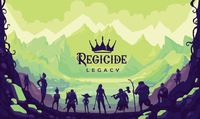
Yeah, you got to get in focus. Um, but uh the the most notable thing that I got to play this week was uh Reicside Legacy. And uh I have kind of an obsession with minimalistic things that do a job extremely well. Uh and Reicside to me was kind of a a revelation. Um, it represented using every part of the deck for the most interesting ways that you can use it. Um, and it deserves the accolades that it got. It is legitimately one of my favorite cooperative games. Not just for being a game that uses a standard deck of playing cards, but it's just one of my favorite cooperative games, period.
And then Regisside Legacy has come out, which I'm kind of going into with some degree of optimism, but this this trepidation that it's going to muck with the formula too much, right? You know, like you want that purity
and then you're bringing the baggage of
the rest of the game world. Uh, and at least in the couple of games that we played, which only played us through one successful uh, goaround of the first mission, um, it was great. It it I am so excited about what's coming in that box. Um, the box itself is beautifully crafted. Uh, and it kind of has the same minimalistic ethos. I think that the original game has just expanded to this much larger scope. Uh, and I'm feeling really good about it. Um, I'm excited to play. My wife and son are in on it. Uh, and it's fortunate that Syrian, my son, was
way into Reicside, uh, as we traveled in Germany. Um, so we played a ton of it there and he's he's amped. He's ready to play it.
Yeah. Cool. Yeah. And I feel like that's a perfect game for like his age. I mean, Reicide is I think like it hails back to like a lot of old classic card games which I feel like anybody can learn. Uh I would also be worried a little bit like I was excited when it was announced but there was I agree a little bit of trepidation of oh this is like one of the reasons Reicide is so great is it is so clean. There's no bath. Like there's there's no extra material there that you're like, "Oh, well that part of the game I kind of don't like." But that's okay because there's a lot of stuff I do like. Like all of it works because it's a tight system that you're playing in. Uh
and I think that even with this expanded scope, they're they're using every part of the buffalo, so to speak. I I've already had to dive into. So each scenario has its own box and you have to complete the scenario before you can go on to the next one. Um there's something that happens the first time that you lose a scenario. And the the rule book, like this isn't a spoiler or anything. The rule book specifically says as part of the conclusion of a game, the first time that you lose a scenario, open this box. And the rule book has a bunch of sections where you can put stickers that will uh update uh the rules. And I believe everything can be reset um upon completion except for the rule book.
That's where I think the permanent changes are going to be with the stickers that get added.
But I don't know that there's um permanent changes in the way of like tearing up cards or permanent ramifications to specific cards, but there are ways that the game plays with replacing things, changing things. um and the the results of losing the first mission, what that introduced and then succeeding on the first mission and seeing the outcome of that both uh in terms of the the uh light story that they're trying to go with and how that plays with um the things that you're working with in your deck. uh gives me a lot more confidence that this is going to be a really smart um continuation of the ideas that are just hinted at in the original Reicide. Um fortunately, the original game is free to anyone who has a deck of cards, so that's always going to be there.
Yeah. Um, but if the the next several scenarios are as good as my experience has been in the first couple of plays so far,
I I think this has a strong contender um essence of uh being one of the the favorite games of the year for me.
Brad, awesome. Yeah, I I mean I love to hear that. I also I mean Reicside as a game is just very much loved uh on this channel. So I think uh
happy happy that the publisher gets another way to make money considering Reicside is as a whole like you know anybody who has a deck of cards can play it. So I hope that they get something out of it uh because it is a great game. Um
the the badgers from ours team all about it and art aesthetic. Perfect.
Oh yeah, totally.
What you been playing?
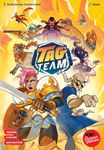
Uh let's see. I have gotten more. So I'll start with uh I'll start with a high. Uh I got to play more tag team. It's It's so good.
I got to play it so many times.
Uh it's so good.
I don't like that name. I'm going to tell you right up. Every time that you say tag team, I imagine like a game of tag being played on a playground, which is cool and fun, but then I just think of some game that I'm going to be dismisses of just based off of the scope being playing tag on a jungle gym.
It is not immediately coming to mind, you know, cool battles of different legendary superhero guys. I, you know, I really thought that it would be like wrestling themed, like wrestling themed with like these things where it's like all of these I happen to have the rule book here with like all of these fighters were like actually just like WWE style wrestlers, which is not the case. They're superheroes. Um, regardless, very fun. That one's definitely a high. Uh, I think
Who are these?
Go ahead. Who are these scorpion mask people uh from Quebec that are putting out Sky Team and Tag Team? Um which now I'm realizing uh there's the the continuation of the the name there. Is that is this a part of that line?
Um I think it's name only. It's in name only. It is nothing to do with
it. Yeah. Yeah. But I is is the box dimension the same? Is it something where it looks like maybe they're coming up with various team games and some of them are co-op, some of them are not, but you know,
yeah, they're they're they're making a line of games. This is the next entry in the team
and is really good. Um, I I wrote out the script for the review for that today and it is it is it is glowing and I will probably be recording it tomorrow because I think I'm getting uh an upgraded camera for my phone tomorrow.
Excellent. Well, bring that one to PAX because I want to play it. I I need to play.
Absolutely. Oh, it's coming. Uh, I'm hoping that they there there's expansions hinted at. I I I am fairly positive there's an expansion on the way next year.
Okay. Okay, let let's do it this way. I convinced everyone I could at PAX last year to pick up a copy of Sky Team and everyone ended up with a copy of Sky Team. So, if Tag Team is as much of a banger as you say it is, then that will be a game that on good faith I can just, you know what, I'm just going to buy it at Packs Unplugged so that way we can play it together.
Done.
Yeah, absolutely. Well, I'm still bringing mine. Uh, that's separate. Okay.
Um, I'm still going to bring mine.
Well, cuz I in the review do point out it's great for me. I love this game. I think there are a lot of reasons why people might not like it. I I don't think that's necessarily going to be for everybody.
Um, and I have I I put that in the review. I'm putting it out there that the reason it's I'm speaking so highly of it is because the things work for me and the things that I think might push people away don't push me away. There's going to be a full review on it. So, we'll you'll get like the full thoughts there in a way that's going to be a little bit more succinct. Um, but I got that played. Um, I got a play test done of a game that I'm working on. Uh, a honeymoon wis lane battler. Honeymoon wis
I don't even know what what you are describing now. I mean lane battler I kind of have some concept of that but what's going on here?
Honeymoon W is a twoplayer trickt taking card game. Like it's just this is this it's a classic game. Uh, it definitely is a not not like widely played like in the style of spades or hearts, but it's a two-player trick taking uh normal deck of cards. Shuffle it. Each player, it's two players only. Uh, each player gets 13 cards. The first go uh you take a card from the top of the deck. from the top of just the the leftover cards and flip it over. And whatever suit that is establishes what the trump suit is for this current hand that you are or this trick that you're just about to play. Um, and then you uh you play to either win that card into your hand for next round or if you lose this trick, you get whatever the random card is next, like whatever that other card is.
Uh, so basically, you play out the first 13 cards. Each player ends up with a hand of 13 that they've assembled either from winning cards or or winning tricks and gaining the card shown or losing tricks and gaining a random card from the deck. And then you play out a second round using the hand you just built. And now there's no trump cards. You there's no trump suits. You just if you if you win the suit, you win. If you win the trick, you win the trick. And you only count the points you win in the second go round. Um I am working on a game where it is a lane battler. So you you do that where you you have the card that flips over. That is the trump suit for this current trick. When you win that trick, that card goes into whatever lane it's supposed to do and has a little effect.
Uh and if you've lost the trick, you draw you just draw a card from the deck and add it to your hand. So players slowly are their hand shrinks down. Uh and then once one player runs out, the other player just puts all the cards they have in their hand into play
without getting.
And so you're just populating the lanes based off of the trick. So that's informing how you want to approach whether you're winning or losing a trick. Yeah,
because also like if you have like if the card that comes up is like a two or a three or it's like really low, you're like I don't want to win this because that is now one fewer card that I will have in my hand. like this very much. This is old hat at this point in trick taking games, but I I usually find that the ones that I gravitate to the most are the ones that give you some interesting uh I guess levers to pull with why you may or may not want to win a certain trick or a type suit, a certain number of tricks. something that gives you motivation external to just I want more points and I want to win as many tricks as I can. So, it's uh that sounds like it'd be right up my alley.
It's there were there were some bumps. I mean, it's play testing a game. That was the that was also the first play test I had with another player. Trick- taking games very difficult to play test on your own. uh you can do it, but it just is it requires uh a mental
a mental strength that is much easier to just have another player who doesn't. Uh so I got that blade,
which is fine. Uh and then I got a couple other but I do I do see this box in frame on your screen and I was wondering
what's in the box.
Okay, what's in the box? Well, uh, we thought we might have like a a cardboard corner here, um, break out, uh, the razor blades, but, uh, I just happened to come into the door, um, in preparation for, uh, recording this podcast and boom, there were a couple boxes sitting here for me. So, I think I know what some of these are, but we're like, hey, why not open these on camera? So, uh, first thing I have here, I have something from Key Master Games. Um, very dense box. Uh, so either very nicely packed or uh, some substantial contents in there.
Couldn't be me.
Nicely packed.
I think we um can anticipate because Key Master doesn't have like a bajillion of releases what this could be,
especially in a box that small.
Especially in a box this small. Um yeah.
Oo.
Oh.
Uh
thank
what's up. You got the promos. Are these the promos?
Yeah, those are the promos I got.
The promos.
Yeah.
So now we have a spare set of promos flying floating around.
Well, maybe we'll have to do a giveaway on some promos. Uh we have here
uh character promos. Uh looks uh interesting. Harvest score markers. Keeping score could be hard to uh a hard row to hoe. Uh but these new scoring markers will keep you plowing ahead. And a fix it pack. Huh. Uh I haven't really been following the Kickstarter uh that much. These are review copies uh of this stuff, but um I wasn't aware of fixes that needed to happen. Maybe those are like balance changes uh for harvest.
They're replacements.
And then this Yeah. Uh this here is fall harvest, the kind of mini uh expansion for harvest that uh adds kind of like a new layer of preparation. I was kind of hoping with Harvest that there would be like extra vegetation integrated into the game, and I don't think that's what this does, but it does look cool in that there's like a a cooking or a preparation element with like pies and flowers. There's a pie set scoring thing that could have been a fun thing where you know you have to
grow the crops that become the pies.
Yeah. Well, I was thinking like some extra berry bushes would be kind of cool. Um like different types of berries. Okay, so fix it pack. Um these are interesting. These aren't stickers or anything. This is uh Barry the Bison, which isn't part of the base game.
Uh and then I have a smithy and a library. Um here, which I do think those are in the original, but I'll have to take a look. Um what is actually the difference here? the library. It gives you a harvest at the end of the game, which I know there is something that has that effect in the last one, but I don't know. Okay, so there's there's that. And then this other box, this is a little bit more nebulous. I think I know what this is. Uh but it's from Check Games. Uh so uh I have some thoughts. I have some suspicions. I have been in contact with check games but bigger box nonetheless. Trying not to show uh all the details of like my address.
Please don't dox yourself.
I'll add like a little blurring blurring information. If I if I can pause a frame and read your address, I'll blur it out for you.
See, you're the hacker. All right.
Galaxy Trucker do what? uh is an expansion and then lo and behold, Galaxy Trucker itself. So again, review copies. This is actually the new Galaxy Trucker. Um I've played Galaxy Trucker before. Uh but I was kind of hoping to do like a a retrospective uh on Galaxy Trucker anyway. Uh and so it was good timing with them looking for some coverage of their new expansion uh which I'll fold into that. Um Have you ever seen Space Trucker Bruce, the movie uh fully a featurelength film uh made here in Juno, Alaska?
No, I have not. I've not heard of this.
You could buy a DVD. Uh you could buy a digital copy of Space Trucker Bruce. And Galaxy Trucker the game makes a cameo appearance in Space Trucker Bruce, a sci-fi film feature length, fully filmed here in Juno, Alaska, uh with some notable people that you might recognize as someone who has lived here. I went to the world premiere of the Nickelodeon Gold Town
with a a presentation uh by the director of the film. Um very fun experience. highly recommend people check out Space Trucker Bruce if you like a little bit of absurdest comedy lowbudget film uh business and uh yeah, Galaxy Trucker. Um I'm excited to see if there's any differences in this one, but it's a good time. Galaxy Trucker is a a classic.
It is. I've I've played it once and and enjoyed it quite thoroughly.
Uh
yeah,
let's see. The last thing that I played this week that I'm just I I just finished I put together an unboxing short that will go up at some point or another for it. Uh
Mhm. was Dice Realms. I actually was just playing that before this podcast recording and so I'm coming in with very hot emotions from playing it. Uh really strong opinions. Um, for a game that costs $100
is is a pretty big let down is my big take.
That that is too bad. Yeah.
Um, is it is it just like it's all filler, no killer, you know, like is it the the cost differential, you know, like
so
I'll I'll put out that I I played I played the solo mode, which is not necessarily the way that you want to experience this game. I think that it probably is going to play a lot better with more players. Um, but I was playing it solo to kind of learn how the game feels and flows so that I can put together a table and teach them how the game plays.
Yeah.
Um, but it was very much a So, the game you start with you start with dice that have like all the same starter faces. as you build or as you as you play through the game, you'll upgrade those die faces to be better die faces. Uh
the game felt like it went it it felt very wide.
Like there were a lot of things you could do
without being deep. It was very shallow is kind of what I felt like because you you don't have like you can start making plans where you're like, "Okay, well, I'm going to I see that this is a thing that's happening
where like I can see that I have there's a die face that I can put in that lets me just upgrade my green face dyes or my green die faces all the way up to the top one without having to spend any upgrades. So, I should get a green dice face,
but then you just never you you put it on a die and then then you hope you get it. There's no guarantee you do.
Uh, and the game just kind of happens and then it's done. And it was like, oh, I feel like I put in a lot of strategy and like set myself up to do some cool things and just because they're die faces, I never rolled them or I rolled them in ways that were not very helpful. Uh
yeah,
I think I maybe need to go at it with
f first of all, I should maybe go at it multiplayer. That feels like that's probably going to be the best way to play this game.
But even with multiplayer, it feels like it's
the setup and tear down took longer than the game itself.
How much do you think that it's, you know, like all in service of the gimmick? like if the game is relying entirely on the gimmick
like that that comes up from time to time. I mean, Dice Forge uh was a game where that that ultimately was my feeling was like there's an okay game here with a really interesting but unfulfilled promise uh out of the gimmick. Um that's how I felt about early um Mystic Veil. Uh, one of the first reviews that I ever did for the Cardboard Herald was like I like Mystic Veil in principle. Um, but it it feels like overall it's kind of a shallow experience. I think expansions ultimately uh mitigated some of that and I still have the like legendary edition of Mystic Veil on my shelf and I enjoy that game now. But
it did have this smacking of like this was a good concept uh for a a gimmick, a toy that a game was then built around. And that game itself was like, well, we just need something serviceable to really wow someone with the, you know, kind of gimmicky nature of sle. Um I in this case does it feel like the game is using that as a crutch? Like it's just like eh the the audience is going to be so excited by the idea of building their dice that they don't need to feel like they're actually making other meaningful decisions as you're playing the game.
Maybe. I mean I think that there's a the core concept is interesting. Like again, in principle, I'm a fan of the idea of, oh, you know, you're building these dice that are yours that are going to help you kind of adapt to situations as as you play the game. Um,
right.
But it still feels like they they left a lot on the table, unfortunately. they like left a lot of oh there there felt like there were more levers they could give the player to pull
and like obviously you know it's a you they didn't want it to be like you can always roll the dieice face that you would like because then it's like why what's the point of the randomness of the die like that's part of that's part of the core game but it did just feel like the first like three or four turns was just, "Oh, I rolled an upgrade. I'm going to do an upgrade and
Mhm.
hopefully I get what I want." And then you don't get what you want. And then you roll your dieice again. And then you're like, "Oh, I didn't get what I wanted with my one free roll I get each turn." Um, I guess I'm going to upgrade again. And then it's just like, I upgraded every single turn functionally, which I think that is part of what you're supposed to do. You are supposed to upgrade frequently. That is like part of part of the core game because that's the you're popping out the die faces which also don't pop out very easily. There were a number of times where I was like I don't want to I got you get like this little tool and I feel like I'm chipping the tool.
Yeah. Yeah. Yeah. Um well any number of our favorite games and gamers favorite games involve dice and it's interesting decisions that you build around the uh responses to those dice. And I I think the hope is that you're making these decisions, you're accounting for the probabilities, but you're still empowered to do uh kind of interesting things regardless of what those roles yield. Um, and that can be really frustrating when the the game just doesn't have the I I I guess the substance to really act upon that. I mean, every game you want to be full of interesting moments, and that's a super subjective thing. That's why some games resonate with some people and it doesn't. But if the only interesting moment that you have is the excitement of putting something on your dice and you're not fulfilling enough
exciting moments of what you're doing once that is put on your dice and once you're rolling those dice, then there it doesn't matter if the game's $100 or $1. uh it's just a flat experience and you could find any number of other better games to play with or without dice. And the thing that I feel like is maybe most I it's hard to judge from doing the solo mode, but my gut feeling after playing through the solo mode is uh the way that players interact is not very engaging or or fun or thoughtful. It's it's only negative because it's like the things are, oh, you have to set aside a a die a dice.
You have to set aside a die and you can't use it this turn. Like you don't get any of its benefits or you have to destroy one of your die phases. Like just replace it with a destroyed thing and it'll be it's gone. Um or you lose grain. But it's not like thoughtful. It's just, oh, I rolled this attack. Now everybody at the table has to resolve this attack.
Like everybody in the table needs to lose two grain because I rolled the dice face that makes everybody lose two grain.
Well, that's fitting and maybe a good transition point for our topic today, if you don't mind me. Uh, there you go. You you just uh you just gave me a nice underhand pitch and we're going to talk about
it's called a layup,
Jack. a a layup. I don't know anything about sports. I know less about sports than I do technology.
Uh yeah, I posted you that layup. Go right ahead. Uh
uh I was thinking baseball. Is it a layup in baseball as well?
Um probably not baseball. It's it's a layup in in basketball, but I thought you were trying to say an underhand pitch.
No, an underhanded pitch in baseball. like a nice, you know, when I'm pitching to my son, so that way he can hit the ball with the bat, you know, I'm not going to give him as fast of a pitch as possible.
You should learn.
Yeah. And when I think of layups, I think of an easy basket that's happening. And so, I've never really understood the metaphor because, you know, a layup to me is not a pass whereas you were giving me a pass. you were you were sending something for me to then hit. Whereas a layup, that's where you go up and then you go against the backboard. Whatever. Whatever. Eric, conflict. This conflict that we're having right now is exactly what we want to talk about in games. Yes.
Um Eric, are you a conflict uh oriented person?
No, I'm conflict adverse at all at all at all opportunities.
Right. Except in safe scenarios, right? you know, like
board games. I actually am surprisingly pretty conflict conflict oriented.
And I think you and I share some similarities in that. I I think I can be a little bit more of a uh maybe conflict oriented person. Uh but I'm for the most part I think someone who seeks resolution through conflict. Um at work I don't have any issues with uh dealing with like some really uh tough uh topics. Um I don't mind engaging with tough topics with friends or with people who I heavily disagree with. And I enjoy and often seek that debate mainly because I know that that's how I'm going to get resolution. But it does make me uncomfortable a lot of the time. And I think that board games facilitate a level of safe conflict and you know like uh
uh being a aggressive in certain ways. Um when we were talking about uh possible topics the when we talked about conflict, I was thinking about what are the different forms and like how are these leveraged into games? Um and just some of the favorite games that I have, some of the favorite games that you have and um also I we both at this point talked to a lot of game designers. You design games. Um I I figured we had some thoughts on it. So like
in broad strokes, you know, like when I say what are the ways that a game can be uh can implement conflict or leverage conflict to make a better game. What are some of your thoughts? So for me, I mean, I think that the thoughts go to like war games or something like that where there's I am rolling an attack against you, Jack,
and I I'm hoping to inflicted inflict a specific negative outcome to you, such as like removing your pieces from the board or
like in in arcs just cuz it's over my shoulder, like stealing resources from you. Uh, sure. Like a very direct this is an attack against you specifically.
Uh, there's also like I'm doing an attack to everybody at the table such as in Dice Realms which I just played where it is everybody at the table loses two grain except for me. I don't cuz I'm the one doing the attack.
Uh, where it's
it's still like directly affecting you but it's not directed at you. is directed to everybody at the table.
And then there's the the whole cavalry of I'm doing something on the board which doesn't like directly take resources away from you or give resources to well it might give resources to poem but doesn't like take something away from you but it puts you in a worse spot to achieve your goals. uh which is like a roundabout way of a conflict with you.
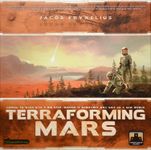
Yeah, I I think conflict ultimately comes down to some sort of negative impact uh for uh someone else at the table. Um and it's not necessarily uh an attack or taking away even uh pressure I think is a really interesting form of conflict. Like if there's uh like um Ark Nova would be a great example of this or or Terraforming Mars has this. A lot of people think about uh some of these Euro type of games as being low conflict, but if you make the crux of a lot of points or momentum in a game in the way that Arc Nova wraps the the uh the the point system into a lot of different bonuses that then reap mechanical benefits. um having the things that you compete over and publicly compete over uh can be a great sense of conflict. The moment that I see that something that I've minorly invested in that you begin to uh invest in as well suddenly changes up the entire decision matrix. you know, all of my choices are now going to have to factor in.
Am I going to compete with you or am I just going to let that one go? Um, that can be done poorly and that could be done great just like any other implementation of, you know, game design. But the point is that I think competition is inherently an interesting way to drive conflict in a game except when it's just a competition for whoever has the most points at the end
uh in a completely multiplayer solitary type of game.
Yeah. Well, I think that there's a conflict is a really valuable tool that a game designer can use because it I think inherently rises the tension in a game
where it's like you're building a tension between you and me. I'm attacking you. I'm giving you more more things you have to consider when you are choosing how to use your resources or I'm giving you fewer choices because you have fewer resources to use towards your decisions. And it is it both I think heightens the tension inherently. It also gives a way for people to kind of balance the game themselves a bit. uh you don't want it to necessarily be so full that the conflict can be be just like a kingmaker where it's just somebody chooses who wins because that's the person who has gotten beaten up on the least. But
right,
conflict is a really valuable tool for game designers to throw into their designs. Uh, and I think any game unless it is a like multiplayer solitaire has to consider what conflict looks like in their game. Um, so like Cascadia has a lot of low player interaction. There's not a lot of player interaction in that game at all. The only things that you actually affect between one person from another is what tokens and cards you have on the board. And
as far as I'm concerned, there's little interaction period, you know, brain interaction with the game.
Cascadia is a bad game.
That's not fitness, Jack.
I'm going to die on that hill.
I knew you
that very very tall peak.
You're allowed. You're allowed to.
Yeah, I I guess so. But I I get what you're saying. Um but you know, like I don't I don't know. Like when you think about Cascadia, uh do you see it as a no conflict game? Do you see that as a low conflict game? Just different type of conflict.
I think that for me that is the lowest amount of player interaction or like lowest amount of conflict there can be in a game because it's not direct. You're frequently not going to take a piece off the board. Like you're not going to take an animal token or a card.
Sorry. Tile. Tile. Yeah, that's what they are. The little the little
They're tiles.
Tiles. I keep calling them cards. They're tiles. Um but you're not going to take a animal token or a tile out of spite usually. Um probably.
Yeah. you're not doing a lot of hate drafting in that game unless
it becomes like an incredibly important thing, you know, like there there are going to be some people
uh who will calculate is it better for me to get,
you know, two points with what I do as opposed to
that bear that's going to give him five points. So it's possible,
but for the most part that is a
functionally in my mind that's a no conflict game.
I I am not playing against other players in a way that means that I need to inflict negative things to them.
Um
so that for me is like the that's the that's the bottom line. That is the bottom.
Okay.
In tiers of what what does conflict look like in board games?
Why do you think that there's a substantial portion of our um hobby that cringes at the idea of a high conflict game? Not necessarily like examining the psychology of, you know, like why people avoid conflict in general, but like
why what's creating this negative disposition to what should essentially be a safe environment for people to have fun and explore game mechanics. You know, like a game is a game and is a game. I understand that's hyperbolic, but I I don't know like why why is there a resistance to high conflict games for a big portion of the audience?
Well, I think that there's you can always talk about how the conflict of loss aversion where losing something feels worse than gaining something.
So, yeah, you know, if there's a if there's conflict in your game where somebody can lose resources, that is going to be a negative emotion that they feel. uh which can be good. It's good to have those in games every now and then to just balance out your gameplay, but I think realistically it's just a thing of people who like high conflict games are typically going to be uh looking for heavier games. It gives them more levers to deal with. and heavier games are just not as popular as mediumweight games. Like they just sell fewer copies. Um,
with that, I think high conflict games just provide a much different experience that sometimes is only good with certain people. Like I
I think we had a really good group for all the times that we played arcs, which arcs I think is a high interaction medium conflict game. It dep depends on who you're playing as. Sometimes those leaders are just like it doesn't like my my goal right now does not really concern you. like that time that I had the uh people who were trying to leave through a wormhole at the end of the game kind of didn't matter what you were doing. I was gonna kind of ignoring you at the end. Uh
right.
But it's like a thing of you can have these games where it's you have you can have these games of arcs where it's very high conflict where you are constantly battling each other and moving your spaceships and maneuvering them to to win the battles. Or you can just be a person who is trying to collect all of the resources so you that you can win the uh trophies every round.
Uh
yeah,
so there's more variance, but it also is just like I need you want a group of players who are going to be okay with this conflict and approach it in a way that is you acknowledge that you're in a safe space and you know that you're not like actively hurting this person. I I think ultimately like anything it's you know like meeting the game on its terms and finding the right audience for a game you know like generally people know whether they tend to like or dislike conflict and how much of it or the types that they like. So, you know, like making sure people know what type of game they're getting into is going to likely result in um better outcomes. And I hope that more people, even if you feel like you're conflict adverse, if you go into a game with the mindset that it is a safe space, that people are, you know, meeting the game in the way that it's designed and not like just picking on you if they take something of yours, um, that you you maybe might feel more free to not take that personally or to not feel so defeated, uh, and to just enjoy that game. Um, but I I think like anything, like I said earlier, it can be implemented um well or implemented poorly. And I'm I'm most interested in like what are some of the
things that are done to represent like good instances of conflict uh and um even if there are varying degrees. So the the examples I I just gave um are uh terraforming Mars and Ark Nova
um which have very similar systems. You have these um milestones essentially achievements that you can uh obtain
and in terraforming Mars they're fulfilled by certain conditions. You pay for them as part of actions and they become very contentious things to uh be able to get a substantial amount of points. Whereas in Arc Nova, there's a very similar system. Um, however, uh, those uh, one can change from game to game, which drive different uh, ways that you might approach the game, accessing different systems, which is cool. Um, but like I said, it has more in-game ramifications as to what you're going to be able to do as the game goes on. it it impacts your ramp. So, it's not just the uh contention that you have with other players, but it's also how soon you want to dive into that. It might not be a race to having the most primeate tags. It might be a race to who can just get the first set of primate tags. So that way uh you um have uh just enough of a nudge to be able to start getting your advanced cards and then you can worry about the the other things at the table. Uh I find that in these type of indirect conflict games where it's a race to certain capabilities, if that race is certain intervals in the game and not uh simply um endgame
acquisition, it becomes so much more interesting.
Yeah. Well, and I think that there's Arc Nova and Terraforming Mars are a good set of examples for this because they are pretty much low conflict.
Mhm. There's there's a lot of interaction between players where you're like, you know, you're putting your your mele on a space where somebody might want to go in Aran Noa and you also like, you know, you're claiming the five,
which means nobody else can claim the five primate tags. Uh,
right.
But like that's the level of conflict you have there, which is very much
it's like soft conflict where it's, you know, I'm not directly affecting you. It is a I'm changing the game state
in a way that is worse for you, but I'm not taking resources away from you,
right?
And Terraforming Mars does actually have a you can take resources away from another player. There are in there
there are cards in there that say I'm taking four plants from you
or just simply destroying those plants.
There those cards exist. They're not frequent. Uh but it is a thing that you can do. Um
right.
But I do think
and some people hate them. Some people like absolutely will not play with those. Uh one of the most common house rules that I've seen in gaming in general uh is like uh with Terraforming Mars. Uh we don't play with the any of the red outlined boxes. Um I I've seen house rules for people where they're like, "Oh yeah, we love Lords of Water Deep, but we hate those mandatory quests, so we removed all the mandatory quests from the game." Um because of those uh um uh direct conflict moments, wanting to do away with them. Uh but I I don't know like I think people have too many negative experiences with players using um external to the game subjective reasoning to inflict pain on someone else. You know, everyone has that experience of like an older sibling who's like, "Oh, I'm just going to go after you and risk even though mom is the person who's actually winning, but I just want to punish you because you're the younger sibling." If if my wife and I are playing board games with other people, it is on site with her.
We everything that you can possibly do to ruin somebody's day, me and her back and forth all all on site.
I tell you,
if I'm getting a somebody loses four plants, I don't care if somebody else actually has four plants and my wife has one. I'm taking that one plant from her. See, you're you're why conflict gets a bad rap here, you know,
because I'll say there there's also some metagaming of typically in these games. My wife and I have played them before.
We're going against people who have not played the game before.
And so, it's easier for us to be like, "Okay, I'm gonna take it. I'm gonna take the four plants from you because I know I know that for you it's you'll be okay. You'll be able to turn this around if you lose this one plant.
Uh but yes, that is a thing that happens. Well, and I think that goes back to I think the ability for kingmaking typically typically just on rip is a thing that I don't think should be like as much as possible should be avoided in in game design.
Yeah. I mean again I think kingmaking is uh there can be good instances and there can be bad instances.
You know like kingm in the most blunt terms of well someone who is not winning no matter what then has to make a decision that is going to impact who is winning. That sucks. Um, but I think games that rely on um nuanced player interaction and a degree of politicking that is external to the game mechanics itself um can be really interesting. and uh you know like players altering strategies based off of game state and uh who they think might be winning and you know adjusting strategy that to me is just dynamic gameplay.
I agree with that. Well, and I I think for me it's it's that first example you gave that I just find really unfortunate in games because it frequently puts it on it puts the the deciding factor of who wins the game on somebody that is not involved
in in position. Whereas if it's you know like Root I think is a game that occasionally gets accused of kingmaking where it's like well we just don't nobody attacked him and therefore he won. But it's like that is that is the game is
gauging how strong somebody is at this moment and trying to figure out who do you which other faction do you need to be popping and stopping their progress. Um, and then I think it also goes back to it can be done poorly where it's like there there are a number of times in Route where it's like somebody is the Woodland Alliance and everybody just hits them because they know the Woodland Alliance ramps up really quickly and it's like, okay, well now whoever is playing as Woodland Alliance just has a terrible time.
Yeah. Um, also if you're having that problem, maybe you need to play the Woodland Alliance better because you maybe are the most flexible
player at the table. Uh, but um, yeah, listen, anytime that I'm playing Root, especially with new players, I always tell them be cognizant of the Woodland Alliance. They will get most of their points at the end. So, don't look at the early game points of the the birds and the cats
or else the woodland alliance is going to stomp you. Um, so I I guess when I think about heavy conflict games, so you know, talking about Root Arcs, uh, Game of Thrones, uh, lots of dudes on a map games, uh, I just played Blood Rage recently. I think
Sorry.
When it feels
Spicy Vikings. Oh, spicy Vikings. Oh, that's the game.
That's the game. Um, I think that for me and for the majority of the audience, uh, who like conflict heavy games, uh, but have a distaste for some of them, the best way that I can articulate it is I I like games that when you are, uh, defeating you your fellow players, when you're attacking, when you're destroying, when you're conquering, you're not taking away their capacity to still interact with the game in a meaningful way. Um, and I I think that's the negative experience that a lot of people have is that there can be tactical moments that are so punitive without um uh having the leadup of significant series of defeats that um if it's done it's just like oh well I am so crippled that my game is over now. M I think that's a testament to root is that the woodland alliance is so flexibly designed that they can essentially restart their infrastructure anywhere. Um and uh even if you have a bad start to your game, um there are ways that you can overcome uh and uh utilize that table dynamic and the
infighting of the rest of the players who hopefully are now uh a misfighting each other because they've seen you've been crippled that you can come back from that. Um, and games where, you know, like production are really hampered by like some early game conflict, uh, that can really suck. Um, but games that you still have those capabilities or even some rubber banding catch-up mechanics, um, that allow you to still be in the fight, to still be a threat, um, to not feel like a singular defeat can be the end all beall of the entire game.
Um, that's when conflict's actually uh, smartly implemented into these combative games.
Yeah. Yeah. And I think that there's again, I think that's the thing I said at the start, conflict can be a really great tool. Like conflict can be a means for players to balance the game as it's being played or if somebody is running away with it, giving them an opportunity to hinder them and stop them in a way that allows for them to win. And I think that high conflict games can do this really well. Like I think that that is kind of like the core gameplay of Root is examining the board and figuring out who do you need to bop. I think that that's the core gameplay of a lot of dudes on a map games where it's like your your goal here is to analyze the board and figure out where what conflicts should I be initiating right now.
It's and you you're going to be initiating conflicts. That is part of the game, but it is like a tool that you have as a player to give yourself a chance at winning.
Um, how do you feel about um it's a type of heavy conflict, but how do you feel about zeroome games? um you know games where there's like a finite resource and any gain for one player is directly inverse to the loss to another player. Um it it doesn't happen as often. you know, you you you tend to see like resource generation and everything, but like uh an instance where I think this is actually uh really cool in a conflict heavy game is PAX Premiere has um
it it has dudes on a map conflict, right?
Uh but the the economy in the game is essentially a zero sum game. Not fully. There's a couple cards which might influence that, but otherwise
the amount of money that's
in the game is the amount of money that will be floating around. And getting a chokeold on that money is as violent and as uh merciless as anything that you could do with your spies or with your um with your units at the table.
Well, and I think of that's a great example because I think you are like that's functionally a zero sum game. Like there's
outliers but functionally and it's that is just another lever of conflict. Like it just it it is still high conflict. It just looks different. like you're you still have all the other avenues of conflict that are available to you in that game, but it you just need to start thinking about the money as as another route of conflict that is another resource to be gained and lost much like the dudes on the map.
Uh
yeah,
and it's I think there are a number of games where it is also good because it incentivizes you to go through conflict in other ways. So like in just because we've been chatting about it in ARCs, if somebody has a lot of a resource that you need, you can go take that from them and you will can choose to do that instead of attacking the ships they have on the map. But in a similar way, it is a you are you are taking a resource away from him. That resource happens to be an actual resource as opposed to the resource being a ship on the map. But it is very much a it is still a conflict that you are doing. And I think arcs it's much more clear because you are rolling a dice too.
You're rolling a dieice sometimes several die to take that resource away.
We normally think of conflict in terms of aggression between players uh or some sort of uh denial, some sort of negative effect. Um, can a cooperative game have conflict?
Um, yes. But I think it is the the conflict typically is so like if we're going to go let's go back to let's go back to this is basic storytelling. There is there is
I said let's go back and then I immediately said oh wait let me actually look up the actual I know there
in the epic of Gilgamesh uh you know we're going to go back to the first fantasy story
man versus man which involves characters directly opposing each other man versus nature which is a struggle between a character and the world itself uh
to me that is the you know you're struggling against the world as opposed to each other. The conflict is you versus the world. So like in I'm trying to think of of a good example here a little bit like in Molly House at the start everybody and we're just doing the Cole whirly uh extravaganza even though that one's designed by Joe Kelly but he's co is involved. Uh that one it's you versus the police to start. You are everybody is on the same team.
You're all against each other as well because that one is more semi-ooperative than than true cooperative. But it is everybody against the the police. You're just trying to find joy without having any of the Molly houses being raided. Now turn traitor that can happen and then everybody is against it.
Um but like Spirit Island too that's everybody is cooperative but you are fighting the invaders and that's a that's to me a conflict
as much as me taking your resources in arcs,
right? And I I think some games will um will allow you to prioritize yourself over others. Um, I mean, in theory, Spirit Island, uh, for example, you're trying to cooperatively make the best decision that will yield a victory for the team. But there is a degree of like, oh, God, you know, I could go over and help you, but also I need to work on my ramp. And, you know, like the there's the emotional heartstrings, you know, like what is the joy in the game? The joy is actually seeing your spirit grow to rise uh and then to see the the interaction of the highle spirits. That to me is peak spirit island. Even better than a win is seeing that growth and employing it in really interesting ways.
And there is a degree of conflict. Um it's the heart in conflict with itself as George Martin might uh say. um that uh there's things that are uh maybe more instant uh instant gratification as opposed to long-term gains and the speculation of what that may yield. But um as far as player interactive conflict, I think that only really comes up that um much in like semi-ooperative games. Yeah. um where there where there is the opportunity of like the prisoners dilemma. We can both secure a victory uh or we can both betray each other and that sucks or I can guarantee the victory if I know that I'm the only one betraying you. Yeah.
Um and because I'm always suspicious that you could also take that outcome of defecting. uh then I'm now worried that if I work towards a mutual victory that I'm the chump who's going to get betrayed because the moment that you can secure a victory, you're just going to uh betray me. You're going to defect. Um, which if you want a great exploration of game theory and uh the prisoners dilemma, look no further than reading eight uh entries into the expanse uh series. Um, I mean, there's nine books in the series, but eight uh to get to really where the meat of the the game theory exploration is. But um yeah uh I think cooperative games there is some conflict but is more roundabout. But I don't know. Uh I I think this is one of those things where uh we could have a part two on this and maybe uh some more in-depth analysis of uh actual examples of similar levels of conflict but poor acceptable and great implementation of that conflict. And I I invite our audience to to actually let us know like what what are key examples of where it
works well and where it works poorly for you. Um and maybe we can revisit this after we have some audience uh input. And um
especially with uh Moa and Azure on my mind, which I I could get into a whole discussion on those. Uh, I've reached out to uh Trevor Benjamin um to uh actually talk about how he approaches uh conflict in games and hopefully should have him on the channel here relatively soon.
Yeah, great. I think that would be great. I
obviously he's he's a really cool designer. Uh so hopefully hopefully you get to chat with him. I I am putting together a shorts review of uh witchcraft right now. So, uh, I've been playing playing some of his stuff. Uh, and yeah, I mean, just I'm also just looking at my shelf. I think that they're the games that incorporate conflict the best for me at least are games that incorporate them at all levels where it is the there's a little bit of direct conflict. There's a little bit of indirect conflict and there's a little bit of just you're changing the board state in a way that
might put them in a worse position just via via they now have a different resource that they can actually pull from. Um, which is one of the reasons why I think Imperium works really well even in the solo mode where you are playing against a bot because there are attack cards that do attack your opponents. It's a very it's a it's an attack. That one is maybe a little bit worse because it goes back to the you know it is everybody uh what was he going to say? Everybody everybody at the table is affected. So it's not like I'm specifically attacking you. That's a direct decision that I'm making. But it has that it has indirect conflict as you are like racing for resources or racing to get cards onto the board.
uh that will hopefully protect you from raids or also just give you better access to resources. And then there's also the the just you're changing the board states in a way that might negatively affect them as you take cards that are really good off the board. Um
Mhm.
And I think that a lot of games do this well where there are a lot of games where you are either in direct conflict, indirect conflict, and soft conflict with one another. Uh, but I think games that manage to tie the three of them together in ways that all of them feel really powerful to you as a player work really well. Like do an Imperium as well. There's direct conflict, indirect conflict as you are like battling over which spaces to go to and then also just sometimes you take a card they wanted. I I think what we're always looking for is for our choices to be challenged uh to have that pressure up against us so that way uh we feel the consequences of our actions that it gives meaning to the choices that we make. Uh, and it adds a degree of risk um, a degree of of social uh, convention into our games when there's a competitive uh, element or or some conflict element. Um and uh you know like it it is so ingrained in the very fabric of this hobby that um we use it as a touchstone such as this is a low conflict game or this is a high conflict game. It's one of the first things that we uh use to describe a game for whether
or not someone would like them. So I think this is a a a great discussion. Um, and uh, I'm looking forward to hearing what our audience has to say about it.
Absolutely. And the best place to do that is going to be down in the comments below. Uh, here or on Spotify, which there might be a video on Spotify now. Uh, Spotify is telling me that I should start uploading the video to because then they can do that or the audio.
I think I did it already once. Um, I might do it again. I'll see. It didn't change didn't change viewership at all. So, I don't think that it changed it too much. I don't think that matters too too terribly much. But, if you are on Spotify and want to
want to have the video, I guess let us know.
Uh, it cuz the video is made like it would take the only thing it would take is just a longer upload time, but the video is here on YouTube as well. Um, or just wherever you have a way of sending us uh your thoughts, please do that. Uh, one way is, uh, emailing us at cardboard herald@gmail.com. Um, or I think on cardboard herald.com or squarespace.com.
You can do it on the website.
Just cardboard herald.com. And then you can also find us on uh, Blue Sky. I've been posting a little bit more on Instagram. And before we wrap, I just want to give a huge uh shout out to a couple new patrons that we have. Uh want to thank um John Kohler uh a new patron uh that just uh joined the channel. Uh and then uh we have a returning patron uh coming to the channel which is very exciting. uh for me because um this this uh person has uh has supported in in different ways over the years. Uh but I want to thank Hawk and Jones uh for being a very uh generous uh patron and supporting us throughout the years and uh after a period of time uh coming back and supporting um quite a bit. So, thank you both uh for
Welcome, welcome in. Welcome to the Cardboard Hero family.
That's right.
And I think that's going to do it, don't you, Eric?
I think so. I think it's a pretty good spot to uh wrap this podcast up on. Uh thank you again to the community for being great and tuning into this podcast. If you have any ideas for future podcasts, comments are also a great place to leave them or wherever you want to get in touch with us, you can go right ahead and do that. Uh, thank you for tuning in. Uh, I have been Eric with the Cardboard Herald joined by Jack later.