/pic3564143.jpg)
/pic7009391.jpg)
/pic2453810.jpg)
/pic7203269.jpg)
In Blood Bound, a deduction game played in 15-30 minutes, players assume the roles of members of two clans – the brutal, animalistic warriors of the Clan of the Beast and the graceful, deadly members of the Clan of the Rose – and (with an odd number of players) the human inquisition. Disguised by a secret identity, they try to kidnap the Elder of the opposing clan or give their lives for the benefit of their own Elder. Malicious attacks, aimed indiscretions, and assistance from others will slowly uncover the truth: Who fights for whom? And who is the Elder?
At the start of the game, each player knows three things:
Who they are and to which clan they belong
That a few other players are allies, while everyone else is the enemy of both themselves and their clan
The clan to which one of their neighbors belongs – although some characters can lie about their clan identity
Now the players have to figure out who the Elder of the opposing team is (if there is one) and capture him. To do this, players need to attack, negotiate and deduce, with an attacked player being required to reveal information, such as his rank or clan affiliation. Each player has an ability unique to his character, and this ability can be used only at the moment that he reveals his rank. The Assassin forces players to suffer wounds, for example, while the Guardian protects a player of the character's choice.
In the end, if you capture your rival clan's Elder, you win – but if you capture the wrong vampire, you've fallen into the enemy's trap and lose the game.
Part of the Werewolf / Mafia family — see Blood on the Clocktower for the combined view.
/pic1215982.jpg)
/pic1849390.jpg)
/pic2576459.jpg)
/pic7203303.jpg)
/pic876255.jpg)
/pic1398895.jpg)
/pic3564143.jpg)
/pic3972142.jpg)
/pic8783294.png)
/pic3033330.jpg)
/pic2225958.jpg)

/pic2519675.jpg)
/pic2604284.png)
/pic3021686.jpg)
/pic5164305.jpg)
/pic3493866.jpg)
/pic4415135.jpg)
/pic3662950.jpg)
/pic3966906.jpg)
/pic4233915.jpg)
/pic6951766.jpg)
/pic6746296.png)
/pic5578189.jpg)
/pic5735695.jpg)
/pic7037062.png)
/pic7181914.jpg)
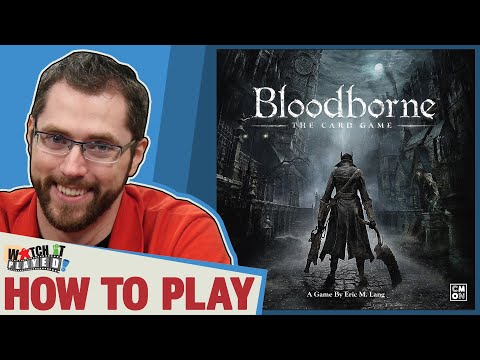
Bloodborne: The Card Game - How To Play

- Expands the player count to 2-4 compared to its predecessor's 1v1
- Uses a loved core mechanism with new twists
- Beautiful illustrations
- Potentially easier to find than its predecessor
- Might not be different enough from its predecessor
- vampires thirsty for blood
- city districts
- Dracula vs Van Helsing
- Saucy Sea Salt and Paper
Mechanics (from transcript analysis)
- area control/majority — When a district has four or more cards, they are revealed, and the player with the highest card 'can suck the blood off of the of the cities' to get points.
- Card drafting/play — Players draw a card and can discard it for an effect, keep it, or place it in one of the city districts.
Video topics + discussion points
Quotes (from this video)
- It's time for yet another episode of the Hype Factor.
- Yeah. But instead, [laughter] you you're going to be playing a board game, which this man also will be.
- This is uh Kubernet which is a reimplementation as this is the year of the reimplementation of a game called Cuba from 2007.
- Uh so I'm I'm really curious to understand what is he going to do with this one because his potentials are high.
- Yeah. A little bit of shot and fo.
References (from this video)

- Players collectively trying to defeat monsters
Mechanics (from transcript analysis)
- Collecting tokens — Players collect their own blood tokens as they do damage.
- Risk/Reward — There's a tension about stashing collected blood because if you die before you do, you lose what you had.
Video topics + discussion points
Quotes (from this video)
- The Expo is basically a small convention there was around 300 people in attendance lots of special guests and several activities
- I don't like to offer opinions and reviews on games that we feature here on the channel but I will say after playing this game pep and I both said okay we need to play this again before the weekend is over and we did
- The monsters in the game are actually six-sided dice
- It was just pandemonium
- This is very much a party game if you want to play it serious I'm sure it loses a lot of its fun but these guys in my opinion were doing it right
- You'll hear some comparisons to bejweled and games like that because you have this contraption with all these marbles in it
- This one has that in Spades as well
- So over the course of the game you're deploying your thugs to shake down businesses for goods to complete jobs and gain influence over various city blocks
- And unsurprisingly it adds pets to the game
- Certainly a game because of the length and well how far apart we live from each other we would not normally get to play and it was fantastic
- Essentially you'll have one player who knows from this grid of 12 suspects who the guilty person is and they will have to give Clues saying yes or no to questions about the suspects however the only thing you have to go by are the looks of the suspects themselves
- Well pretty much everyone talks about when they come back from a convention sure the games are fun and everyone has a good time playing them but one of the things that you really take with you are the memories of the people that you play the games with
- These cons really have become little mini camps for adults
- So a big thanks to him
- And this popcorn stuck around and honestly it was really good still so don't judge us too harshly for eating it
References (from this video)

- Interest in playing it again to consider for the show
- Host generally avoids playing older games at conventions
- Based on the Bloodborne video game.
Mechanics (from transcript analysis)
Video topics + discussion points
Quotes (from this video)
- Pap, you still haven't received your Tekkaido that you backed at a pretty high amount because you got your own character in the game.
- It's funny. We we talked about that at some point. Just like the humor, like the humor of doing something like a pep talks where I would talk about, you know, like some advice for particular games and it's something I like that. I like that. I love that idea of a pep talk.
- Rebel Mage here uh, left a message just said, "Pep, just want to say you're a great co-host for watching play. Keep up the good work."
- For me, it's probably going to be Star Realms. Star Realms is very high on here as well for me. Um, but I kind of want to skip that just because of how repeatable Star Realms is anyway. And I'm going to go to Sheriff of Nottingham.
- Uh, this is self- serving, but I would dress up as a Mounty and be my character from the Dead of Winter promo that's in the fundraiser.
- I'd want to find something I already look like and kind of like I wouldn't just go as my favorite character. I'd go as a character that I think I that I could that I could best look even kind of naturally almost, right?
- Yes, we talk about it somewhat frequently actually. Like, oh, we should probably cover some of the old older classics. Yeah, cuz there are still people today who pick up those games and and want to uh learn how to play them, right?
- Every game. But the one that always comes to mind for me is uh Pathfinder and any game that's kind of trying to do what the Pathfinder adventure card game is doing because in that game whenever you level up and complete missions, you get like draw a random item out of the box or do this or do that.
- Like Seall has something similar to that. They have an emnity thing. If you attack someone then they remember that other players remember that in in the game's mechanics and then that comes back to haunt you later or whatever.
- The whole idea of under Mountain is like it's constantly shifting and like it's the surroundings are changing. So every time you go down, things will be a little different anyway. So it' be really cool to make like a legacy style dungeon exploring thing around the end of that naturally.
References (from this video)

- Had a blast playing
- Excellent game
- Brutal and hard
- Elegant and simple mechanics
- Changes gameplay enough to keep it fresh
- Right level of brutality for a co-op
- Can seem gamey
- A little bit on the harder side
- A little bit too random sometimes to make it achievable to win
- Recommend trying before buying
- Blood Bowl
Mechanics (from transcript analysis)
- action selection — upgrade your equipment and your abilities and stuff like that and the sort of cycle of that it's kind of like the video game cycle the video game loop
- cooperative play — for a co-op it's probably even i think for most people just as a caveat a little bit on the harder side
- Deck Building — push your luck try to get it out there try to get your deck tuned in a way to kind of you know go and figure out this little puzzle that's been presented to you
- Resource Management — have to sort of resource manage as you sort of you know push in a little bit further try to kill these different bosses
Video topics + discussion points
Quotes (from this video)
- Man that really makes it sing
- All the other parts of the game just really make it a fun fun play
- This one boy Ankh is really good man
- This is one of my favorite games of all time now by far
- The solo app is freaking amazing
- It's like a subversion of about what power is
- The way that those all those things kind of swirl together is really really cool
- Don't sleep on this one if you can get it
- Heroquest is great
- The solo mode is really cool though
- The solo mode is really really well done
- Third edition has been great mostly like mostly great
- The narrative stuff is what sucks it and pulls it all the way at the top of the list again
- This is basically the same game as clash of cultures it's just way better
- Clash of cultures is definitely in my top 10 games of all time
- Which is totally new game but also kind of just Frostgrave in space
- I've had a really a lot of fun playing Stargrave
- The solo stuff is much better I think in Stargrave than it is in Frostgrave
References (from this video)

- It was actually fine
- can be played pretty quickly
- new cover is definitely better than the original cover
- first cover looks so much like the CW network
- such a terrible a terrible game
- don't think the new cover is great
Mechanics (from transcript analysis)
- Social Deduction — It's a one of those um you know, social deduction games that can be played pretty quickly.
Video topics + discussion points
Quotes (from this video)
- So, we have a game here called Sequoia. This is from 2022.
- It's It's fine. I'm giving it a six. Uh Beasty Bars is is is a fun style game where you're playing these different type of animals, and I think each additional expansion made it more complex and less fun.
- Trias is an old dinosaur game that originally came with cubes, and eventually they had little dinosaurs in it instead. And it's kind of grow out to different things. This is a very I have this ranked as a seven. Probably now, the next time I go through my rankings, I'll probably rank it as a six because it's fine, but it's showing its age.
- All righty, of all the games we talked about today, my favorite here is clearly David Goliath, although Hooky is a very close second.
- Either way, it's always good to talk to you all.
References (from this video)
- strong moment-to-moment combat feel
- combat feels engaging and thematic
- timer mechanism feels artificial and not faithful to the video game's approach
- the game ends via timer rather than an organic in-game defeat
- hunt-driven exploration of eldritch horrors and cosmic dread
- Gothic horror-inspired dark city setting drawn from the Bloodborne video game aesthetic
- campaign-like, with multiple modes and evolving challenges
Mechanics (from transcript analysis)
- campaign modes — different campaign configurations or modes that alter setup and goals
- combat resolution — combat interactions driven by a card/dice system with moment-to-moment decisions
- constrained progression with an artificial end — a game end condition tied to the timer rather than a narrative game-over state
- Timer-based progression — a clock/timer mechanism that advances and influences game state and pacing
Video topics + discussion points
Quotes (from this video)
- five games that I want to either get to the table or get back to the table
- there is no game over until the player just decides to stop playing
- I'm going to reevaluate the game reapproach it see if I can approach the game more on its terms
- very difficult to learn
- looks beautiful on the table I love the way it looks I love the way it feels
References (from this video)

- Players work together to defeat monsters.
- Unique theme of Hunters banding together.
- Strategic depth in choosing action cards and managing resources.
- Risk of not all hunters leaving alive.
- Potential for loss of collected blood echoes if a player dies before banking them.
- Hunters banding together to defeat monsters, collect trophies, and exit the dungeon.
- Chalice dungeons
Mechanics (from transcript analysis)
- cooperative play — Players work together to defeat monsters.
- Hand Management — Players select action cards from their hand secretly and simultaneously.
- Modular Board — Boss cards and monster cards are shuffled into a dungeon deck, and a final boss is placed in the center.
- Press Your Luck — Players can take half damage by playing the Hunter's Dream card, but this also affects their actions and health reset.
- Set Collection — Players collect trophies by adjusting tracks on their player boards when a monster is defeated.
- Variable player powers — Each player takes a hunter board and starts with specific cards and tokens.
Video topics + discussion points
Quotes (from this video)
- hello and welcome to watch it played
- and that's everything you need to know to play bloodborne
References (from this video)
- Strong theme and atmospheric artwork
- Challenging, satisfying co-op puzzles
- Enjoyable scenarios when playing with a partner
- Can be overwhelming to run, especially in solo play
- Rules complexity and balance can hinder new players
- Two-handed solo play can be punishing without reliable teammates
- Hunt monsters, manage resources and scavenge for tools in a foreboding nightmarish arc
- Gothic, Lovecraftian horror-infused fantasy world inspired by Bloodborne video game
- Cooperative exploration and boss encounters with puzzle-like card-driven progression
- Dark Matter (custom campaign project mentioned with Beard)
Mechanics (from transcript analysis)
- boss encounters and puzzle-like progression — Challenging encounters that require strategic planning and collaboration
- Campaign-style progression — Retained progress across sessions with character/tool development
- cooperative play — Players work together to overcome scenarios and shared threats
- story/encounter card system — Encounter decks drive exploration, combat, and narrative twists
Video topics + discussion points
Quotes (from this video)
- I don't view resolutions as something that if I don't do, I failed the resolution. I look at them as learning experiences or growth opportunities.
- I should make content that I like to make, I should make content that makes me happy and I shouldn't stress so much about views and engagement.
- If your deck does what you set it out to do, that's a good deck in Arkham Horror the Card Game.
References (from this video)
- tight, responsive combat
- rich atmosphere
- inventive boss design
- strong worldbuilding
- steep learning curve
- punishing checkpoints
- Cosmic horror, transformation, and the danger of knowledge
- Gothic, Lovecraft-inspired Yharnam during a nightmarish plague
- Dark, atmospheric, lore-rich
- Dark Souls
- Bloodborne Remake (speculative)
Mechanics (from transcript analysis)
- Action-focused combat — Fast, agile melee with weapon forms and dodging
- Exploration with risk-reward — Hidden areas and shortcuts that reward exploration and risk
Video topics + discussion points
Quotes (from this video)
- but if I were to say which one stayed in my heart the most it's bloodborne it's the one that marked me the most I believe I did it my way the way way I wanted
- bloodborne 2 unfortunately it's not up to me
- bloodborne remake early next year in 2024 to reinvest audiences for bloodborne 2