



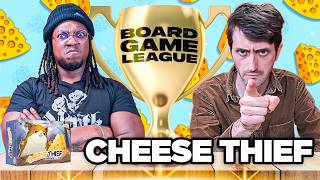

Cheese Thief Deep Dive
What the Community Thinks About Cheese Thief
Cheese Thief is a light social deduction game for four to eight players, and the reviewers who covered it agree most clearly on where it sits in the genre. Meeple University, a channel run by Tyron and Stella, approached it as a bridge between heavier hidden-role games and the simpler party titles. The hosts described it as a natural entry point for players who enjoy the flavor of One Night Ultimate Werewolf but want less to track. They were candid that the game gives experienced social deduction fans very little to work with, because each player receives only a sliver of information. Their assessment was that the game sits near the low-information end of the spectrum, which makes it a comfortable fit for casual groups and a frustrating one for players who like to build detailed cases.
No Rolls Barred took a very different approach by filming a full table of players who were mostly new to this kind of game. The resulting session is loud, funny, and full of confident accusations that collapse under scrutiny. The hosts treated the outcome as a comedy of errors, but they also came away convinced that the design rewards careful listening, and their closing verdict was openly enthusiastic. That video is the clearest demonstration that the game can produce memorable table talk even among people with little background in the genre.
The Dice Tower offered a brief and far more dismissive take. Tom Vassel mentioned the game in a roundup of lower-ranked titles, describing it as a little kids game set in a fantasy world about stealing cheese. That framing matters because it reflects how the title can read to hobbyists who focus on heavier fare. It also explains why the enthusiasm from the other two channels stands out, since they found the same simplicity to be the source of the game's appeal.
Core Mechanics That Define Cheese Thief
Hidden Roles and the Cheese Thief
Hidden roles drive the entire experience. Meeple University walked through the setup in detail: one player becomes the cheese thief, the rest are sleepy heads, and each player secretly rolls a die and covers it with a cup. Over six rounds of night, players wake at the time shown on their die and take actions in order. The thief takes the cheese when they wake, and anyone who wakes later sees that it is gone. A sleepy head who wakes alongside the thief becomes a follower, a role that works much like the minion in One Night Ultimate Werewolf. A variant for six to eight players adds a full mouse, a role that never steals the cheese but wins only if the group votes it out as the thief. The hosts explained that the information each player receives is minimal, which is exactly why the game produces so much argument afterward.
No Rolls Barred demonstrated how quickly those identities turn into accusations. Players who woke at different times made competing claims about the state of the cheese, and every claim had to be defended or abandoned as the timeline grew more tangled. The hosts often ended up arguing about who had been awake when, which shows that the real game is reconstructing the night from fragments of testimony.
Voting as the Final Verdict
Voting closes each round and carries the entire outcome. Once the night phase ends, the group talks, points at suspects, and then casts a single decisive vote. In the No Rolls Barred session, the hosts counted down and called for votes simultaneously, which produced sudden shifts and near-misses. Votes were sometimes changed at the last moment, ties created confusion about who had been caught, and players who believed they were safe discovered that their own alibis had helped convict someone else. Because a single vote determines the result, the phase rewards decisive reads and punishes hesitation, which is a large part of why the game feels so theatrical.
The Cheese Thief Experience
Social Tension at the Table
Cheese Thief is at its best when the table is talking. The night phase is brief, but the discussion afterward is where the game lives, with players comparing times, reading tone, and deciding who sounds sincere. Meeple University described the experience as a middle ground, with enough information to argue about but not enough to build an airtight case. The hosts singled out the presence of a few extra clues as the feature that keeps the discussion grounded, and they suggested that larger groups tend to produce more overlapping evidence, which gives the conversation more to hold onto.
The hosts of Meeple University also praised the randomness of the dice, describing it as a feature rather than a flaw. That randomness shapes what each player learns, and it means no two nights produce the same story.
Chaotic Swings and Playful Mayhem
The tone of Cheese Thief leans toward chaos, and No Rolls Barred leaned into it fully. Special power cards, a deliberately disruptive full mouse role, and the constant reshuffling of incentives meant that a confident plan could fall apart in a single round. The hosts laughed at their own misreads and enjoyed the moments when the group seemed to have solved the mystery only to be proven wrong. The surprise is part of the appeal, and the game rewards players who can handle losing gracefully.
What Makes Cheese Thief Stand Out
Table Talk That Writes Itself
No Rolls Barred's session is the clearest evidence of the game's core appeal: a table of players mostly new to hidden-role games produced loud, confident accusations that collapsed under scrutiny within minutes. The hosts treated the result as comedy, but they also came away convinced the design rewards careful listening, and their closing verdict was openly enthusiastic. Few light social deduction titles generate that much spontaneous conversation from a group with no prior experience in the genre.
A Design That Scales With the Group
Meeple University pointed to group size as a real lever on the experience. Larger tables of six to eight players bring the full mouse variant into play, a role that never steals the cheese but wins only if the group votes it out as the thief. More players also means more overlapping testimony, which gives the post-round discussion more threads to pull on and makes bigger groups the strongest setting for the game rather than a compromise.
Potential Drawbacks
Too Little Information for Deduction Veterans
Meeple University was candid that the game gives experienced social deduction fans very little to work with, since each player receives only a sliver of information. The hosts placed it near the low-information end of the genre, which makes it comfortable for casual groups but frustrating for players who like to build a detailed case before accusing anyone.
Easy to Underestimate
The Dice Tower's brief, dismissive framing shows how the game can read to hobbyists focused on heavier fare: a passing mention in a roundup of lower-ranked titles rather than a considered review. That reception stands in contrast to the enthusiasm of the other channels and suggests the game's simplicity can work against it with audiences expecting more complexity.
If You Enjoy Cheese Thief
Cheese Thief suits groups that want a quick, social game with a low barrier to entry. It works well as an opener for players who have never tried a hidden-role title, and it can serve as a lighter companion for experienced players who want a brisk round before a heavier game. The short playtime, about ten minutes per round, makes it easy to play several rounds in a single sitting. Players who enjoy One Night Ultimate Werewolf but want less to track will find Cheese Thief a comfortable next step, since Meeple University frames it as a bridge between that style of hidden-role game and simpler party titles. Players who thrive on dense deduction and detailed case-building will likely find the information too thin. Families, casual gatherings, and larger groups of six to eight tend to get the most out of it, since the extra players create more overlapping testimony and more opportunities for surprising reveals.
What Reviewers Are Saying
"Cheese Thief, a little kids game where you are in a fantasy world where you're stealing cheese."
— The Dice Tower
"I do like the randomness of a little bit of randomness of the dice rolls."
— Meeple University
"It's a good game. It's like what werewolf would be like if there was information."
— No Rolls Barred