/pic163749.jpg)
/pic2411639.jpg)
/pic163749.jpg)
















































Magic: The Gathering Deep Dive
What the Community Thinks About Magic: The Gathering
Retailers, designers, and longtime players line up on a shared core idea: the card pool is deep enough to reward decades of study, and the community around it is still enormous. Stonemaier Games, whose founder has played the game since childhood, calls it endlessly impressive that thousands of cards built on the same rule set can each feel unique. The panel on Rolling Dice & Taking Names, made up of Main Deck Dan and a local game store owner, traces that scale back to organized play eras when a single Fargo, North Dakota store ran sixty-player Friday Night Magic events and midnight releases packed with over a hundred players.
Where the channels split is on cost, pace, and where Magic sits next to its newer competitors. The same Rolling Dice & Taking Names panel argues that Wizards of the Coast now leans on Commander players who buy every set regardless of rotation, and criticizes the current release schedule as too fast even after promises to slow down. 3 Minute Board Games enjoys the dueling puzzle but says its own preference actually leans toward Netrunner for head-to-head play, while JestaThaRogue frames the card pool and format variety as a strength that keeps the game feeling fresh despite the ongoing cost of staying competitive.
Core Mechanics That Define Magic: The Gathering
Deck Building and the Five-Color Mana System
Board Game Sanctuary walks new players through the foundation of every match: assembling a deck ahead of time and opening with a strong hand. Its hosts stress not being afraid to mulligan a weak opening hand, and recommend keeping at least two lands along with access to whichever colors the deck needs. 3 Minute Board Games lays out the five distinct card colors, plus colorless and multicolor cards, and explains that a deck needs the right mix of lands and spells before a single game begins. Stonemaier Games adds that this same color-pie structure is what later collectible games have tried to learn from and differentiate themselves against, since Magic's mana system created problems that competitors like Disney Lorcana designed around.
Turns, Triggers, and the Stack
Once a deck is built, Board Game Sanctuary highlights two habits that separate strong players from beginners: not missing a trigger, and understanding the stack, the order in which players pass priority to respond to each other's actions. Its hosts describe using glass beads or colored cubes as physical reminders so a triggered ability, like drawing a card when a land enters play, does not get missed. 3 Minute Board Games walks through the turn structure itself, from untapping and drawing through main phases, combat, and the second main phase, noting that creatures cannot attack the turn they are summoned and that damage equal to a creature's toughness sends it to the graveyard.
The Magic: The Gathering Experience
A Puzzle Worth Solving Between Games
3 Minute Board Games describes Magic as an amazing puzzle to solve, since only a fraction of a much larger card pool can go into any single library, which means players can spend hours thinking about strategies and plans before a game even starts. Stonemaier Games points to the same depth from a design perspective, admiring how a card pool this large keeps producing pieces that still feel distinct from one another.
Social Tables and Organized Play
Rolling Dice & Taking Names remembers a period when a single store's Friday Night Magic pulled sixty players a week and a midnight set release packed the floor with well over a hundred people staying up to open the new cards. JestaThaRogue frames the modern version of that social experience around format choice, from one-on-one duels to chaotic multiplayer Commander, and says collecting cards and building decks stays rewarding across whichever format a table picks.
What Makes Magic: The Gathering Stand Out
Decades of Cards That Still Feel Unique
Stonemaier Games singles out the sheer difficulty of what Magic has pulled off as a designer: building even a set of twenty or thirty cards is hard, but Magic has designed thousands of cards and made them all feel unique and special. It also praises how the game's long history now feeds back into new releases, calling back to older cards and reprinting them with new art in a way that gives the game a sense of history few newer releases can fake.
Format Variety for Every Table
Stonemaier Games loves the draft format specifically, passing cards around a table and building a deck on the spot, while also appreciating that Commander turned Magic into more of a group tabletop game for four players rather than a strictly head-to-head duel. JestaThaRogue points to the same range of formats, from competitive tournaments to casual Commander, as what keeps the collecting and deck-building loop rewarding long after a player's first few games.
Potential Drawbacks
The Cost of Keeping Up
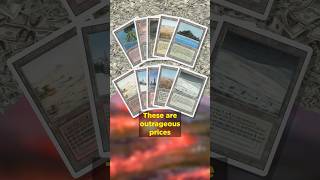
JestaThaRogue is direct about the price of staying current: keeping up with meta decks can burn a hole in a budget, and some rare cards cost more than an entire board game. 3 Minute Board Games agrees that while casual, affordable play is possible, many players have spent a fortune chasing the competitive side of the game, and losing to a run of bad land draws can sting regardless of skill.
Release Pace and Rules Overhead
Rolling Dice & Taking Names criticizes how many sets Wizards of the Coast now releases in a single year, arguing that the company promised to slow down and then announced an even larger slate the following year, which strains both retailers and players trying to keep up. Board Game Sanctuary's tip list is itself evidence of how much rules overhead a new player has to track, since missing a trigger or misreading the stack can quietly cost a game before a player even realizes what happened.
If You Enjoy Magic: The Gathering
3 Minute Board Games personally prefers Netrunner as a dueling card game, and separately recommends Dice Throne for players who want the feel of casual Magic built around dice instead of a card pool. Rolling Dice & Taking Names points to Flesh and Blood as the game that recaptured what competitive Magic used to feel like for players who drifted away from organized play. Stonemaier Games appreciates how Disney Lorcana designed its own mana system specifically to avoid problems it saw in Magic's.
What Reviewers Are Saying
"I remember the release of Zendicar. I remember people playing on the floor cuz we had at midnight 115 120 players in there just to play the new set."
— Rolling Dice & Taking Names
"As a game designer, I know how hard it is to design even a set of 20 or 30 cards, but they've designed thousands of Magic cards and they've made them all feel unique and special. I think that is truly incredible."
— Stonemaier Games
"Magic is an amazing puzzle to solve. There is this massive pool of cards you can draw from, but only so many can go into your library, so you can spend hours and hours thinking about strategies and plans before you even play."
— 3 Minute Board Games