
In SET, each card contains 1-3 objects, with all of the objects on a card having the same color, shape and shading, e.g., two purple shaded ovals. Colors, shapes, and shadings come in three different types: green, purple and red; oval, diamond and squiggle; and solid, shaded and outlined.
All players compete simultaneously and try to claim sets of cards in a single pass through the deck. A set consists of three cards that are either all alike or all different in each attribute. For example, if all three cards have the same number of objects, but three different shapes, shadings, and colors, then those cards are a set; if two of the cards have a common attribute that is not shared by the third, they are not a set.
To play, one person takes the deck and lays out twelve cards face up. The first person to spot a set collects those three cards; if the player was mistaken, then this player cannot claim a set until after another player has done so. After someone has claimed a set, the cardholder lays out three more cards. (If all players agree that no sets can be claimed, then the cardholder lays out three more cards. These cards aren't replaced after someone claims a set.) Whoever claims the most sets wins!

Games Explained – Rules Teach

Images


- Engaging and clever card play.
- The shifting board mechanic is interesting and adds dynamic changes.
- Strong theme integration with the sci-fi setting.
- Excellent table presence.
- Satisfying engine building and strategic depth.
- Polished design.
- Area majority mechanic felt weak and often ignored.
- Game is rather long (around 3 hours per play).
- After a few plays, the host felt they had experienced all the game has to offer.
- Not unique enough compared to other epic euros like Colosseum or Barrage.
- Launching probes into space and landing on different planets.
- space
- Underwater Cities
- Ark Nova
- Colosseum
- Barrage
Mechanics (from transcript analysis)
- Area Majority — Players compete for majorities in different segments on the board, which is used for scanning and gaining data, though the host found this element a bit weak.
- card-driven — Cards have multiple uses, including paying for benefits, engine building, one-off effects, and endgame objectives.
- Engine Building — Players build up their player board to improve action efficiency and develop an income engine based on tucked cards.
- Multi-Use Cards — Cards can be used for their main ability, discarded for a corner ability boost, or used for income engine development.
- Set Collection — Players aim to collect three different types of DNA to unlock alien races.
- Variable board — The board rotates passively as the game progresses, changing planet orientations and distances.
Video topics + discussion points
Quotes (from this video)
- And finally, at number one, I have Seti.
- So, what you're trying to do is that you are launching these probes into space, landing on these different planets on this based on this really cool kind of universe system where as the game goes on, just passively the board is going to rotate, which means the orientation of these planets is going to change and line up differently.
- So, there's a lot of moving parts on to this game, but um it's actually pretty simple to play because all you're doing is you're either kind of launching a probe, landing, orbiting, or or scanning essentially.
- So, again, lots of moving parts here, tons of strategies you can go for.
- So, I don't really have many negative things to say about it other than I thought the competing for the majorities was a little bit weak. Um, and most importantly, the game is rather long.
- For me, the main issue is that I simply wouldn't play it.
- Objectively, a fantastic design. Again, love the card play.
- So, this game is probably more suited for a review when you can actually see everything and um a more in-depth star review, but I just wanted to share my overall overarching thoughts on the game where it's a solid game.
References (from this video)

- setup is quick and easy to teach
- great table presence and experience
- retro/nostalgic vibe that appeals to families and fans of classic games
- feels like a card game with strategic depth
- short playtime (20-25 minutes) and replayability
- if you're behind, catching up can be difficult due to lack of a dedicated catch-up mechanic
- luck factor from random tile draws can affect outcomes
- board changes quickly, making advanced planning harder
- limited personal control (only two tiles under full control) can reduce agency
- Shifting Stones
- Scout
Mechanics (from transcript analysis)
- bonus squares interaction — using tiles on other players' bonus squares grants one point per tile used
- center vs. personal control — only two tiles are fully controlled by the player and two placement spots, with the central four tiles changing during play
- Compound Scoring — score one point per tile placed and one point for each tile that interacts with the tiles you placed
- directional and multi-set creation — you can form sets in any direction and can create multiple sets in the same turn
- End condition — the game ends when a playing piece crosses the finish line; if multiple cross in the same turn, the lead ahead wins
- hand and board setup — each player starts with a tile holder containing four tiles and a scoring marker placed on the board
- luck element — tile draws from the bag introduce variability and luck into the game
- scoring rules — score one point per tile placed and one point for each tile that interacts with the tiles you placed
- swap action — if you cannot or do not want to make a set, you can swap tiles from your hand for the same number of tiles from the bag
- Tile Placement — on your turn you place tiles to form sets that are either the same number or consecutive numbers of the same suit
- tile placement to form sets — on your turn you place tiles to form sets that are either the same number or consecutive numbers of the same suit
- use of board and hand tiles — tiles placed can use tiles already on the board to build or enhance the set
Video topics + discussion points
Quotes (from this video)
- it's retro yeah board game vibe, like is this game from the 80s
- nostalgia and really just like good feelings right off the bat
- looks like Mahjong
- it's a race to finish not necessarily how many points you're gonna have at the end; it's the person that finishes
References (from this video)
- Adds more cards, increasing variety.
- Introduces engaging player powers and asymmetric starts.
- The quick start cards and player powers help new players by directing them into strategies.
- Cutting out round one makes the game faster and more manageable.
- The new aliens (Arcos, Ameeba, Glyphtis) add variety and interesting mechanics.
- The expansion provides more of the 'good stuff' from the base game.
- Corporations are a great addition and the host would like to see more.
- The signal tokens could have more impact and their availability is unreliable.
- The scanning part of the base game is a weak link, and signal tokens only offer a partial solution.
- Some quick start cards that give victory points at the start are considered less impactful than resource gains.
- The Arcos alien's exploration deck draws bonuses randomly, which is a negative for determinism.
- The Arcos alien's gameplay is described as 'finicky' or 'fiddly'.
- card play
- Marine Worlds
- Arrakis
- Terraforming Mars
- Underwater Cities
- Stone Age
- Anak
Mechanics (from transcript analysis)
- action selection — Signal tokens allow players to bin a card from the display to get another data token, enabling more 'bang for your buck'.
- Area Control — The Arcos alien involves breaching security to access levels and gain control of lower levels.
- Card Play — The host enjoys the card play and the options it provides.
- Deck Building — The expansion adds more cards to the deck.
- Resource Management — The player powers affect starting credits and income.
- Set Collection — The Glyphid alien mechanic involves collecting unique tokens in a pyramid structure.
- Technology research — The Turing System corporation grants publicity when researching computer tech. Deep Sky Survey involves analyzing data. Glyphids reward researching uninvented technologies.
- Variable player powers — The expansion introduces player powers and asymmetry through corporations.
Video topics + discussion points
Quotes (from this video)
- I gave it a 10 out of 10 when it came out.
- It's no secret that Sette is one of my favorite games.
- I really love its mechanics. I love its theme. I like the card play. I like all the options I've got.
- So of course, naturally, I was somewhat excited to be getting an expansion that could make one of my favorite games even better.
- It directs new players into what to do. I find these pretty cool.
- The whole idea of these two in combination is to remove round one. You only play a four-round game now.
- They help but it's not going to fix the problem entirely and I would have liked these to have had a bit more impact.
- It's a simple expansion. If you love the game, you're going to want to get this. If you don't like the game, this isn't going to suddenly fix it for you.
- Shut up and take my money.
- For me, it's still a 10 out of 10 now. I think it's more comfortably in the 10 category for me. I absolutely love this game,
References (from this video)
- Cleverly done with modularity discovered during play.
- Leads to variability with impactful combinations of alien species.
- Adds a dose of sci-fi/fantasy to a science-based game.
- Science-based world with a sci-fi/fantasy element unlocked later
Mechanics (from transcript analysis)
- Modular Species — Two different alien species are plugged into the game, chosen from five in the core game, discovered during play.
Video topics + discussion points
Quotes (from this video)
- I'm referring to games where the core experience involves plugging in one or more modules that are part of the core game that have a significant impact on gameplay.
- I'm not just talking about variable setups where maybe you have a few tokens or tiles that are slightly different than in a previous game.
- I'm also not talking about player asymmetry where each player is a different character or different faction, things like that.
- I'm also not including expansion modules.
- I'm talking about the where the core game is designed around the idea where modules shape the core game experience.
- This game is essentially infinitely modular.
- this is perhaps the the best example that I'll have on this entire list of a truly modular game where the core experience of Shackleton base depends on you plugging in these three modules that have a significant impact on the game.
- To say this is a large game is an understatement, but with these different region modules comes a ton of variety.
- you are plugging in different elements to create a new unique experience rather than a scenario where it says like this is the scenario that you're playing.
- all modular setup that all that all modular setup does take some work to put together and reset.
- I think the takedown is almost worse because you're like, "Oh, we finished playing the game. Now we get and you have to sort out all of these different components."
- I think that is a great space for modularity in a game like this.
- You can really play the same temple track over and over again in Lost Arms Vernac and get plenty of replayability out of it.
- I think Clank I think is my favorite modular game where just with the map modularity uh just flipping over which side of the board you're going to play on um can add can really make each game feel quite different every time you play.
- We are talking about big modules that you are plugging into the game in from that are built into the core experience and they are making the game feel different or unique or harder or easier um or shorter or longer.
References (from this video)

- the game sucked ass
Mechanics (from transcript analysis)
Video topics + discussion points
Quotes (from this video)
- the I think it was Atari made this game called ET and they made so many copies of it that they thought that was good timing with the movie. They They thought it was going to be amazing. The game sucked ass, yeah.
References (from this video)
- 3D printed tokens for resources
- tech tile holder improves storage and accessibility
- LED light accessory makes planets glow, adding thematic enhancement
- CGE is doing their own deluxe tokens
- planets
Mechanics (from transcript analysis)
- Resource tokens — 3D printed tokens are available to improve the experience of managing various resources in the game.
- tech tile storage — A holder is available to store tech tiles (ones, twos, threes, fours) in a stacked and easily accessible manner, improving upon storing them in plastic baggies.
Video topics + discussion points
Quotes (from this video)
- This is Board Game Upgrades. Board Game Upgrades and Luxifications. I haven't done one of these videos in like a year.
- This channel is sponsored by All Play.
- These are deluxe Castles of Burgundy pieces. Uh they are 3D printed from a Etsy shop that is currently not actually open. That's the sad part.
- If you are a Bomb Busters fan, these are absolutely the way to go relative to these where they are falling all over the place.
- This is a nice quality of life upgrade. I didn't know I needed this until I got it and played with it.
- It makes playing Marvel Champions when I infrequently get to it a better experience as far as trackability of things.
- I absolutely love Marvel Champions, but I don't play it nearly enough, which makes me think Seti over here is the upgrade that I am most excited about.
- See what I did there with that Seti flying over here? And now you actually have a glowing planet over here.
- I have been using their prototype playmat holder, meaning it's actively It's on the shelf right behind me over there.
- I am happy to have more of these.
References (from this video)
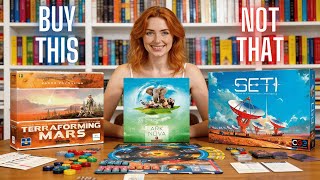
- Highly thematic with integrated space exploration workflow
- Rotating board and data-driven sector rewards
- Good scalability and enjoyable solo play
- Publisher/designer details not explicit in transcript; potential data gaps
- Early game can feel restrained until techs unlock
- space exploration; alien discovery; data analysis; tech upgrades
- Space exploration with modular subsystems and rotating board
- Array
- Terraforming Mars
- Ark Nova
Mechanics (from transcript analysis)
Video topics + discussion points
Quotes (from this video)
- The complexity emerges from thousands of card interaction permutations.
- The game's end condition creates fascinating tension.
- There's almost no downtime because everyone's always planning ahead.
- The rotation system adds dynamic, strategic depth.
References (from this video)

- cool concept that uses time as a resource
- accessible for new players
- compact design with unique hook
- randomness can influence outcome unpredictably
- time travel mechanics via an airship path
- Time/clock-themed micro-game
- clockwork and whimsical
Mechanics (from transcript analysis)
- Time Track — Move an airship around a clock, landing on times to gain cards.
- time-track movement — Move an airship around a clock, landing on times to gain cards.
- timing-based drafting — Take tiles based on time already elapsed; efficiency matters.
Video topics + discussion points
Quotes (from this video)
- eight full board games in this one little pouch
- this set is absolutely brilliant absolutely genius
- we were blown away with how much you can do in such a little package
- the cards are two-sided one is positive one is negative feel upside down
- in Sly you're drafting these cards face down into the hen house
- this is a horse racing game
References (from this video)
Mechanics (from transcript analysis)
Video topics + discussion points
Quotes (from this video)
- The podcast life chooses you.
- The content gods that making all the content.
- Pub Meeple is a website that you can link your board game collection.
- Return to Dark Tower is uh I want to play this game more often than we do.
References (from this video)
- Easy to teach, accessible for families and kids
- Unique card design with visually appealing fish motifs
- Engaging take-that tension without overpowering interaction
- Replayability through variable displays and player counts
- Affordable price point (generally under $10)
- Slippery cards can be challenging to shuffle and handle
- End-game optimization can require careful planning; some nuance may be subtle for casual players
- Pattern fulfillment, visibility scoring, and light competitive interaction through take-that elements
- Abstract aquatic puzzle displays used for pattern scoring and visibility at the end of the game
- Procedural abstract puzzle with scoring emphasis on end-state display patterns
Mechanics (from transcript analysis)
- Card placement — Players choose one of three cards from their hand and place it into any display, influencing patterns and opponents.
- Component flavor and balance — Fish cards have color patterns and cutouts that impact handling and visual scoring dynamics.
- Display management and locking — Displays become full and locked, constraining future placements and shaping risk/reward decisions.
- End-game scoring by displays — At game end, each display's configuration yields points based on the visible fish and completed patterns.
- Hand Management — On a turn, a player holds three cards and selects one to play, guiding pacing and strategy.
- Pattern Building — Completing objective cards in a display yields points when the display is scored.
- pattern fulfillment — Completing objective cards in a display yields points when the display is scored.
- Shuffling difficulty — The physical cards are slippery due to cutouts, which can complicate shuffling and handling.
- Take-that interaction — A player can place to hinder or block another player's patterns by altering displays.
- variable player counts — The number of active displays changes with player count, affecting strategy and space.
- Variable Set-Up: Player — The number of active displays changes with player count, affecting strategy and space.
Video topics + discussion points
Quotes (from this video)
- This is from Synapsis's games and I really enjoy their pyramido games.
- So, in this game you are trying to fulfill patterns and have the most of your fish visible in different displays at the end of the game.
- there definitely is take that.
- On your turn, you will have three in your hand at any given time.
- It's the puzzle to figure out where can I place my fish to maximize things.
- I am really enjoying this one.
- It generally goes for under $10, so that's also a great option.
References (from this video)

- strong integration of real science concepts
- tight resource systems with interesting integration points
- theme may feel abstract to some players
- potentially heavy for newcomers
Mechanics (from transcript analysis)
- alien interactions shifting gameplay — alien discoveries alter strategy and timing in later stages.
- Resource Management — focus on the search for extraterrestrial intelligence through probes, signals, and alien encounters.
- science-driven resource management — focus on the search for extraterrestrial intelligence through probes, signals, and alien encounters.
Video topics + discussion points
Quotes (from this video)
- it's a pretty simple game cuz you're just drafting a thing a card or a tile and then you're adding that to your tableau, but every time you add something it kind of triggers a bunch of other little things and turns are super quick
- there are so many dice that are used and so many different things that you can do with those dice that it never feels like a wasted turn
- this is one of those games that feels like you feel like you've played something, it's like an event
- the mechanism where you've got a bunch of different cards that are your action cards when you play them everyone else gets to do that action but you get to do a slightly better version of that action
- it's based on the novel Red Planet apparently
- these Transformer Dice... it's such a clever mechanism
- Gaia Project is one of my all-time favorite games
References (from this video)

- Better player interaction than Arnak
- Flexible deck with multi-use cards enabling varied strategies
- Persistent tech upgrades and asymmetry; sense of progression
- Three modules encourage different paths
- Complexity from multiple interacting modules
- Potential rule-reading friction with aliens' behaviors
- Early game scaling can be uneven if not optimized
- Resource management, engine-building, alien tracks
- Space exploration, alien discovery, data analysis
- Sandbox with modular expansion via aliens
- Lost Ruins of Arnak
Mechanics (from transcript analysis)
- Area Control — Controlling spaces and managing data to score points and advance alien traces.
- Area control / planet scoring — Controlling spaces and managing data to score points and advance alien traces.
- Data scanning and data tokens — Scanning action produces data tokens that feed your computer for points and resources.
- deck-building / multi-use cards — Cards can be discarded for free actions, tucked to invest in engine, or played as core actions with credits.
- Engine Building — Permanent upgrades on your board to improve actions and scoring.
- Engine-building via tech tiles — Permanent upgrades on your board to improve actions and scoring.
Video topics + discussion points
Quotes (from this video)
- it's spectacular
- this is an incredible upgrade over base arnac
- the aliens for me are icing on the cake
- one of my favorite games of all time
References (from this video)

Mechanics (from transcript analysis)
Video topics + discussion points
Quotes (from this video)
- Bollocks.
- This is a Splatter game that got a reprint a few years ago.
- I'll probably jump off a [ __ ] bridge or something.
- Stop [ __ ] lying.
- I'll personally come around your house with a slapstick and whack you around the head.
References (from this video)

- Rotating board mechanic
- Smooth integration of mechanics
- Can be table-heavy
- terra-forming and scoring dynamics
- economic drafting and resource interplay
- Euro-style
- Terraforming Mars: Ares Expedition
Mechanics (from transcript analysis)
- Compound Scoring — cards drive scoring decisions
- Drafting — draft from a center with rotating board
- scoring_card_constraints — cards drive scoring decisions
- token_drafting — draft from a center with rotating board
Video topics + discussion points
Quotes (from this video)
- Two sides of the map for two different types of gamer.
- This is one of the strongest games this year, especially for its simplicity with innovative twists.
- Ethical production again Mighty Boards.
References (from this video)
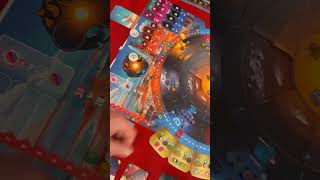
- exceptionally strong thematic tie-ins
- high player tension
- requires players to pivot strategically when aliens enter
- potential complexity from orbital mechanics and alien-entry rules
- possible longer play times or downtime
- scientific discovery, life traces, alien contact
- Space exploration and search for intelligent life; planets orbit the sun
- thematic, data-driven discovery with evolving rules via alien entrants
- Terraforming Mars
- Everdell
Mechanics (from transcript analysis)
- action_selection — Players choose one action per turn and continue until all players pass, triggering a new round
- Compound Scoring — In-game scoring combines various sources of points, including alien presence
- event-driven rule changes — Two aliens enter play twice during the game, bringing new cards and new rules
- orbit-based planning — Planets orbit the sun, causing shifting distances and requiring trajectory planning
- scoring via data, cards, objectives, and aliens — In-game scoring combines various sources of points, including alien presence
Video topics + discussion points
Quotes (from this video)
- In SETI, players are space agencies that
- This is a Euro game with exceptionally strong thematic tie-ins, a great deal of player tension, and requires players to pivot strategically as aliens enter the
References (from this video)
- Rich and expansive decision space that rewards forward planning
- Brain-burning challenge described as highly appealing for groups with patience
- Strong sense of intellectual stimulation and group engagement
- Clear enthusiasm from the speaker, signaling a compelling experience for the right audience
- Perceived depth that invites long-term play and discussion among players
- High cognitive demand may alienate casual players or impatient groups
- Potential for analysis paralysis if players overthink multiple options
- Requires a patient group dynamic to fully appreciate the complexity
- Decision-making under high cognitive load, strategic planning, and collaboration within a space-science frame
- Outer space exploration environment focused on signal detection and resource management
- Analytical and evaluative discussion of design elegance and intellectual challenge
Mechanics (from transcript analysis)
Video topics + discussion points
Quotes (from this video)
- The beauty in SETI lies in its decision space.
- space. You have so many ways to stretch out your turn.
- It's a brain burner in the best way.
- If you can handle that, or if your group has the patience for it, then go for it.
- STI is incredible. I have very much been enjoying my time with this game.
References (from this video)
- Clear teaching of the galaxy mechanics
- Engaging and challenging complexity
- Aliens explained well
- Aliens can be confusing
- Scoring rules can be hard to parse
- Complexity may deter new players
- space exploration and alien contact
- A galactic exploration setting with rotating galaxy tiles and alien encounters
- abstract strategy with system-level interactions
Mechanics (from transcript analysis)
- Alien interaction and scoring modifiers — Alien tiles introduce special rules that affect scoring and flow of play.
- End-of-game scoring with cards — Points are awarded via some cards while others do not score, creating scoring decisions.
- expansion content — Potential expansions introduce new elements such as alien ships or combat mechanics.
- Prep/teaching phase — A short instructional round helps players learn core concepts without pressure.
- Rotating galaxy layout — The galaxy or its sectors rotate to influence available actions and positioning.
- Tile-based actions and abilities — Tiles grant actions and abilities; players interact with a modular board/tiles.
- Tutorial — A short instructional round helps players learn core concepts without pressure.
Video topics + discussion points
Quotes (from this video)
- it's probably going to enter my top 10 games of all time once I try out that expansion
- I liked it a lot. I liked it a lot, too.
- How you score points at the end with some cards scoring and other cards not scoring?
- the aliens definitely throw some crinkles into it
- I think you explained how the galaxy works
References (from this video)

- Strong sci‑fi theme with crisp, thematic action choices
- Engaging engine-building feel through tech upgrades
- Different routes to score give meaningful choices
- Steep learning curve for first-time players
- Can be heavy for casual players or shorter game nights
- Observation, technology development, and mission-based point scoring.
- Space exploration setting focused on astronomical observation and alien discovery.
- Scientific, data-driven progression with a focus on maximizing probes and discoveries.
- Lost Runes of Arnac (ICG)
Mechanics (from transcript analysis)
- action_selection — Players choose a limited set of actions each round to drive their probes, research, and probe deployment.
- card_driven_missions — Cards provide missions and scoring bonuses, shaping how players optimize routes and actions.
- probe_and_planet_scoring — Sending probes, landing on planets, or entering orbit yields scoring opportunities via missions and bonuses.
- Resource Management — Scarce resources are allocated to technology development, probes, landing, and orbital actions.
- resource_management — Scarce resources are allocated to technology development, probes, landing, and orbital actions.
- tech_development — Technologies boost actions and enable more efficient scoring and capabilities.
Video topics + discussion points
Quotes (from this video)
- It's very cool to have kind of a BG Hall of Fame.
- The cover is striking. It's very beautiful.
- This is going to be one of those classic Euro games by Uwe and their DNA is there.
- Man, I love the cover of Thessaloniki.
- Dewan looks real pretty.
- What the heck is in this box? What the heck this game is?
References (from this video)
- Strong science grounding with real-world inspiration
- Rich card library with unique illustrations and flavor text
- Rotating multi-layer board adds tactical depth and novelty
- Good replay potential due to different aliens and card combos
- Expansion potential (new aliens, new cards)
- Heavy game with a significant learning curve
- First sessions may run long as players learn mechanics
- Complex setup due to multiple components
- Investigation and discovery of intelligent life using authentic science-inspired projects and multiple alien strains
- Near-future space exploration focused on scientific research into extraterrestrial life
- Abstract, data-driven exploration with rotating board mechanics and asymmetric alien species
Mechanics (from transcript analysis)
- Asymmetric aliens — Two of five extraterrestrial species are selected per session, each introducing unique mechanics and options.
- Asymmetric Player Powers — Two of five extraterrestrial species are selected per session, each introducing unique mechanics and options.
- Card-driven actions — Cards depict real science projects; each card provides a main effect and is used in multiple ways.
- Data collection & observation — Observe signals via a telescope, collect data, and trace extraterrestrial signatures.
- Multi-Use Cards — Each card has four distinct uses, enabling flexible strategy.
- Probes & planet interaction — Move probes, launch, and land on planets to gain rewards and advance research.
- Rotating board — The board rotates during play based on technology actions, affecting placement and traversal.
Video topics + discussion points
Quotes (from this video)
- The thing that me and Matt really liked about this was the fact that it does use real science concepts in it as well.
- This is such a fabulous concept— a multi-use, rotating board game and it rotates when you play technology.
- There are 200 plus cards and all cards are unique; every single card has a unique main effect, illustration, and flavor text.
- The cards represent real projects from science, space research, and past to future.
- It blends real science with the potential future for the search of extraterrestrial intelligence.
References (from this video)

- Juicy combos from a big central card pool
- Engaging tech upgrades and alien factions
- Beautiful components and moving rings
- Clear player aid to reduce setup burden
- Heavy setup and table space requirements
- Learning curve and downtime as players wait for others
- Expense of the game
- search for extraterrestrial intelligence and planetary exploration
- space, solar system exploration, alien contact
- procedural, resource-management with exploration theme
- Terraforming Mars
Mechanics (from transcript analysis)
- Area Majority — Probes/satellites create area majority bonuses and exploration tension
- area majority / exploration — Probes/satellites create area majority bonuses and exploration tension
- Engine Building — Player boards with orange/pink/blue technology upgrades and a growth track
- Multi-Use Cards — A large stack of cards can be used in multiple ways to create combos
- one main action per turn — You perform a single main action per turn, plus unlimited free actions
- Player Board | Main Board — Each player has personal boards with satellites and income markers
- Race — Selected features and alien tiles award VP in a racing style to main targets
- Race to victory points — Selected features and alien tiles award VP in a racing style to main targets
- tech upgrades / engine-building — Player boards with orange/pink/blue technology upgrades and a growth track
- variable-player boards / fleet management — Each player has personal boards with satellites and income markers
Video topics + discussion points
Quotes (from this video)
- Here are the main actions. You can do one action on your turn and then you can do as many free actions as you want
- This is a big game. It's heavy as I already stated
- Enjoy the theme. Enjoy the juiciness of SETI
- I love race features. It gives me an objective. It gives me a goal to go for
- There are tons of things to come for when you're out here
- so, it's well worth a learn game and then you get to play a game game and boy is it fun
References (from this video)

- Outstanding thematic integration; cards and components feel purposeful and space-themed
- The central rotating board adds dynamic tension and pushes interaction
- High replayability via a large deck of cards and varied aliens/endgame goals
- Well-implemented solo mode that mirrors multiplayer gameplay
- Strong sense of progression and race for milestones, data, and taxes
- Engaging interaction for area control around stars and competitive scoring
- Lengthy play sessions can lead to downtime, especially with higher player counts
- Resource constraints can be tight, causing occasional perceived imbalance
- First-time learning curve is steeper than some comparable games
- Not as tight a skill ceiling as Ark Nova or Terraforming Mars; a few players may crave deeper optimization
- Aliens in the base game could be expanded for greater variety (future content would help)
- Space exploration, alien discovery, data-driven science
- Solar System exploration and data gathering to search for signs of life
- Open-ended, data-driven exploration with rotating central board and alien encounters
- Lost Runes of arnac
- Arc Nova
- Terraforming Mars
- Newford
Mechanics (from transcript analysis)
- action selection — A wide array of actions per turn (8–plus variants) plus several free actions; players optimize sequences to maximize efficiency.
- Alien boards / endgame bonuses — Flipping alien boards mid-game adds endgame bonuses and scoring opportunities.
- Card play / hand management — Cards provide multi-use capabilities and synergize with tech and actions to enable efficient progression.
- Data/scan points — Scanning the sky yields data points that can be placed on your board to score points later.
- End Game Bonuses — Flipping alien boards mid-game adds endgame bonuses and scoring opportunities.
- Player Board | Main Board — Probes move around a solar system board with competition for planets, moons, stars, and data spots.
- Probes and area interaction — Probes move around a solar system board with competition for planets, moons, stars, and data spots.
- Rotating central board — As the game progresses, the central board rotates, altering probe positions and action outcomes.
- tech development — Technologies are acquired to ease actions and unlock stronger combinations.
Video topics + discussion points
Quotes (from this video)
- The central board is fantastic and one of my favorite parts of the game.
- SETI is very thematic; it reminds me of Terraforming Mars in how it captures space exploration vibes.
- The game is very replayable with a large deck of cards and the alien content.
- The solo mode is well implemented and simulates the multiplayer experience nicely.
- The decisions you have on each turn are very variable and open-ended.
References (from this video)

- expansion content adds variety and new aliens
- strong thematic fidelity to space exploration
- expansion complexity can grow quickly
- family-friendly weight may not suit everyone
- alien signals, exploration, discovery
- space exploration to discover aliens across planets
- science-meets-asterisk expansion with card-driven randomness
Mechanics (from transcript analysis)
- Card Drafting — collect/choose cards to drive actions and encounters
- card_collection / drafting — collect/choose cards to drive actions and encounters
- faction_special_abilities — each player starts with a unique faction with its own rules
- set_collection / variability — new aliens and cards add replayability and variety
- Unique Player Powers — each player starts with a unique faction with its own rules
Video topics + discussion points
Quotes (from this video)
- The coolest thing about this game is the looks.
- Time is key.
- This game is very political. You will make deals. You will roll dice and hope for the best.
- I'm excited to play SETI with the expansion.
- In forestry, you're playing a forest steward who's growing trees, cutting those trees to fulfill contracts.
References (from this video)

- huge deck of cards with high variability
- balanced scoring that accommodates multiple strategies
- high thematic integration for a space exploration treatment
- noted complexity and learning curve
- scientific discovery and interstellar expansion
- space exploration and alien civilizations
- deck-driven, scalable engine with diverse routes
- Ark Nova
- Terraforming Mars
- Wingspan
Mechanics (from transcript analysis)
- Deck Building — players build and optimize a large deck of cards to drive actions and scoring.
- deck-building — players build and optimize a large deck of cards to drive actions and scoring.
- Engine Building — card-driven engine with multiple branching paths and synergies.
- engine-building — card-driven engine with multiple branching paths and synergies.
- variable scoring and route diversity — players can pursue different win conditions based on card and route choices.
Video topics + discussion points
Quotes (from this video)
- Rise and Fall has risen for me and not fallen.
- This is a very strong year of games.
- I would rather play Rise and Fall over Black Forest.
- I remember one of the last games I played where everyone was taking a completely different route.
References (from this video)

- Intricate gameplay
- Multiple award-winning
- Unique alien discovery mechanism
- Complicated setup
- Alien discovery
- Space exploration
- Euro game
Mechanics (from transcript analysis)
- Hidden Victory Points — Scoring points through alien research
- Probe Launching — Exploring planets and gathering information
- Victory Point Collection — Scoring points through alien research
Video topics + discussion points
Quotes (from this video)
- Let's talk about the hottest and most popular board games right now.
- We're going to rank them in two categories: how well we liked the game or how badly we want to play it.
References (from this video)

- satisfying base game
- potential with expansion
- desire for more aliens/variety in expansions
- probing QUADRANTS, alien encounters
- space exploration and alien contact
- procedural discovery and exploration
- Terraforming Mars: Prelude (expansion analogy)
Mechanics (from transcript analysis)
- Area Control — probing and exploring quadrants with exploration-driven scoring
- exploration/area control — probing and exploring quadrants with exploration-driven scoring
- Hand Management — managing probes and events to optimize outcomes
- set/hand management — managing probes and events to optimize outcomes
Video topics + discussion points
Quotes (from this video)
- Itto is one of the best party games ever made. It is a Dice Tower essential.
- Message from the Stars is such a great deduction game. I got a chance to teach it again recently and it just blows people's minds every time.
- I love this theme of the psychotherapists... it's so good, so rewarding.
- Rainbow has this fantastic mix of For Sale where you're trying to win different trenches of cards in the middle of the table—the depth is remarkable for such a tiny box.
References (from this video)

- brain-burning, interesting sandbox for exploration
- highly engaging in solo and two-player modes
- requires more play to finalize verdict
- sandbox-style space of puzzle and exploration
Mechanics (from transcript analysis)
- puzzle-driven sandbox — Encourages exploring multiple approaches with minimal constraints.
Video topics + discussion points
Quotes (from this video)
- "this is the completely biased unadulterated Jack's personal top 10 list of 2024"
- "it's a wonderful year to be a gamer with the partner gamer in your life"
- "Leviathan Wilds is a midweight game that doesn't take a lot to get to the table"
- "Harvest is a game that got me into gaming in the first place"
- "this year has been bonkers... I'll remember forever"
References (from this video)

- Huge deck adds depth and variety
- Engaging alien reveal reshapes strategy
- Deck size can feel unwieldy
- Some players may crave more divergent mechanics
- Extraterrestrial discovery and alien life with a massive card deck
- Solar system exploration with probes and planets
- Story-driven with evolving state from a big reveal
Mechanics (from transcript analysis)
- Card deck management — Huge deck with diverse interactions and resources
- Planet landing and alien reveal — Land probes to score; a major late-game reveal alters state
- Resource trading and movement — Trade cards to gain resources and move probes
Video topics + discussion points
Quotes (from this video)
- two action wheels and they interact together
- the best racing game that's been released this year
- hands down the best game that we have played in 2024
References (from this video)

- Engaging space exploration theme
- Accessible to learn and play
Mechanics (from transcript analysis)
Video topics + discussion points
Quotes (from this video)
- SETI, I learned it, loved it. My type of game.
- This is by the creators of Terraforming Mars, and it’s a castle defense game set within a Viking theme.
- Parks is a fantastic game.
- It's a basic worker placement, right? That's the base feel of Russian Railroads.
- I absolutely love Tissue. It’s a richly thematic game with different modules that carry the theme.
- Galactic Cruise is my number two. I am so in love with this game.
- Heat Pedal to the Metal is my number one. It’s a quick, fast card-driven race that just sings.
- In the Footsteps of Marie Curie is based upon Marie Curie's lifetime and the research she did.
References (from this video)

- strong thematic integration with SETI / space research
- mid-game twists that expand the game without breaking base rules
- depth via tech tree and evolving components
- long playtime at higher player counts
- downtime on some turns with four players
- space science and discovery
- extraterrestrial intelligence research
- thematic, scientific
Mechanics (from transcript analysis)
- data collection / clue gathering — gather clues from probes and scans to identify alien life
- modular / evolving game state — new alien types and components appear mid-game, reshaping strategy
- publicity / funding mechanic — publicity track influences funding and capabilities
- resource management & tech development — spend resources to probe, scan, and upgrade tech
- variable scoring / twist cards — discovering clues can unlock new scoring avenues and twists
Video topics + discussion points
Quotes (from this video)
- it's like a summer camp where I get to play lots of games
- this is one of the coolest things about this game
- the turns are so Snappy; you're always ready to go
- it's a bigger game where you are building out and visiting villages in the Black Forest
- two things that I love in games: dice placement and engine building
- the art is fascinating; some people really did not like the art and some people really did
References (from this video)
- Clever integration of alien encounters into core mechanics
- High replay variability due to alien combinations
- Rules learning woven into gameplay rather than as a separate tutorial
- Learning curve can be steep for new players
- Asymmetry adds complexity that may slow down first plays
- astrobiology, exploration, discovery
- Science-focused alien life exploration
- mechanism-driven surprise with asymmetry
- Star Wars: The Deck-Building Game
Mechanics (from transcript analysis)
- Asymmetric aliens — Two aliens hidden in the game influence rules and interactions, changing each playthrough.
- On-the-fly rule discovery — Aliens require players to learn/adapt new rules mid-game as they are encountered.
Video topics + discussion points
Quotes (from this video)
- Metal Gear Solid, without getting into spoilers, those who have played the original Metal Gear Solid on PlayStation 1 back in the '9s may be asking, how did they adapt that particular boss encounter from the video game to a tabletop experience? Isn't that impossible?
- I wear a huge grin on my face every time I think of that encounter.
- Meadow is a sweet game of set collection with a really interesting action selection system. The thing that really surprised me about it is the extra envelopes with additional cards to open at specific moments.
- There are lots of hidden clues on unexpected components in Unlock. I think escape room games in general do surprises really, really well in a non-campaign format.
- Jar says, 'When you purchase or play Jar Binks, you may spend two resources to gain one force and place him in your opponent's discard pile.'
References (from this video)
- Multi-use cards with great mechanics
- Beautiful cover art with bright blue background
- Easy to learn rules with large text and pictorial examples
- Good reference sheet
- Great theme exploring space from NASA perspective
- Decent solo mode
- Variety from different alien factions
- Clean simple actions
- Game is one round too long (5 rounds instead of 4)
- Can run long with four players
- Some people unlucky with certain demo experiences
- Peaceful space exploration and scientific discovery
- Space exploration and NASA research
- Thematic space exploration
- Shackleton Base
Mechanics (from transcript analysis)
- Alien factions — Five aliens to choose from with variable game effects
- Card Cycling — Pan out the deck with card selection
- Multi-Use Cards — Cards can be used for multiple purposes
- Opportunistic tactical moves — Players can make tactical moves for points
Video topics + discussion points
Quotes (from this video)
- 2024 was not my favorite year ever not just in board gaming but kind of just in life in general
- it's nice that there's actually a game that says no how about we stop War for a change
- you want to stick Miyazaki from studio Ghibli and shove it into a board game it's just like that
- silky smooth silky smooth like the river itself
- I suspect this list is going to be very different to a few of yours
- this is the ultimate balance like you need a balance of complexity versus depth
References (from this video)
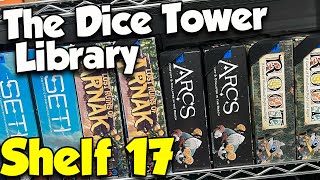
- very popular
- two copies kept
Mechanics (from transcript analysis)
Video topics + discussion points
Quotes (from this video)
- Welcome back to the Dice Tours. We take a look at another shelf in the Dice Tower Library.
- if you like games about delivering the mail, this is it
- Just a solid game of quick, snappy turns
- AIA, what a great game about shipping. This is a fantastic, terrific game.
- You like Dominion, but you want it for dice. This is your game.
- Very very popular games all them. That's why there's two of each.
- Although, frankly, you should always play with the expansion.
- I just really am loving SETI. Fantastic game.
- I do like this game. I have a soft spot for it.
- Vast, not as popular as its successor, root
- My favorite game here is The Great Museum Caper. Nope. I forgot Magical Athletes there. Magical Athlete is amazing.
- I just love Tumbling Dice.
References (from this video)

- Excellent theme integration
- Beautiful artwork and cover design
- Multiple viable strategies
- Interesting card mechanics with delayed effects
- Unique alien species add variety
- Great demo presentation
- Combines theme and mechanics effectively
- space exploration
- outer space
- planetary probes
- alien communication
- space race
- Lost Ruins of Arnak
Mechanics (from transcript analysis)
Video topics + discussion points
Quotes (from this video)
- I just acquire a couple of games that I was interested in a couple of review copies here and there
- the Expo was still good fun but they do need to work on utilizing the space and getting those costs down
- a game that I kind of have a hit and miss relationship with you know some of it I like
- I immediately decided it was the first one I was going to gun for on the Friday
- when it gets released later in the year at Essen I believe oh man do I want this game fast
- Shut Up And Take My Money
- it's kind of on the levels of something like lost ruines of arac for me
References (from this video)

- strong asymmetry adds replayability
- expansion content broadens options
- complex for new players
- steeper setup for multiple players
- space exploration and data-driven discovery
- scientific institutions scanning the cosmos for alien signals
- asymmetrical organization with real-world inspirations
- Terraforming Mars
- Gaia Project
Mechanics (from transcript analysis)
- Asymmetric Teams — distinct starting conditions and abilities for each faction
- asymmetrical organizations — distinct starting conditions and abilities for each faction
- exploration / data gathering — discovering exoplanets and alien life through actions
- project cards — a large pool of projects inspires varied strategies
Video topics + discussion points
Quotes (from this video)
- hours of epic exploration and a world waiting to be discovered from the comfort of our own home planet
- cooperative fight against superpowered villains
- This is currently the number one ranked game on Board Game Geek
References (from this video)

Mechanics (from transcript analysis)
Video topics + discussion points
Quotes (from this video)
- We inflate our numbers.
- Day One was a game I bought because of the designers
- I knew it was a light game
- From Vital Sura, which is a a game that melts cinema's brain
- I'm happy if I never have to play it again.
References (from this video)

- engaging premise
- thematic cohesion
- unclear ownership in transcript
- space exploration and scientific discovery
- extraterrestrial intelligence search
Mechanics (from transcript analysis)
- card-driven — cards trigger actions and research progress
- resource/space tracking — managing discovery points and probes
Video topics + discussion points
Quotes (from this video)
- board games are the most accessible form of gaming
- no screen if you want to play a video game what do you need a screen
- Should you sleeve your board games? yes, it depends
References (from this video)
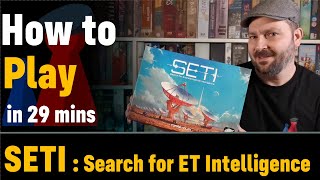
- Innovative gameplay
- Complex exploration mechanics
- Rotating solar system board
- Multiple strategic paths
- Search for extraterrestrial intelligence
- Solar system and nearby stars
- Scientific exploration
Mechanics (from transcript analysis)
- Probe navigation — Players launch and move probes through a rotating solar system
- Resource Management — Managing credits, energy, and data tokens
- Technology advancement — Players can research and acquire technology tiles
Video topics + discussion points
Quotes (from this video)
- players are trying to find signs of extraterrestrial life forms
- resources are very valuable but also limited
- playing cards efficiently is a key element to the player strategy
References (from this video)
- Great Euro with multi-use cards
- Nice variety in aliens and tactical puzzle
Mechanics (from transcript analysis)
Video topics + discussion points
Quotes (from this video)
- The boss battling was pretty interesting.
- The story was pretty cool.
- It's not my favorite boss battler or adventure games by any means this year, but still pretty fun.
- I love the stealth in this one. I'm a big fan of the IP, and I think this is an amazing video game adaptation.
- Adventure Done right.
References (from this video)

- Strong decisions and theme synergy
- Expansion improves pacing and asymmetry
- May be heavy for casual players
- Some rule complexity due to asymmetry
- scientific discovery and discovery of alien species
- Space exploration with alien encounters
- euros with juicy decisions and asymmetric abilities (expansion)
Mechanics (from transcript analysis)
- Engine/area-control through clever actions — Decision-rich turns with asymmetrical powers via expansion.
Video topics + discussion points
Quotes (from this video)
- "This is my go-to game to take and I love it because I think we put it on our icebreaker list. It really is a great game to play with people who you don't know very well because you're trying talking about how you rank different things and it brings just some really unintentional hilarity when people will put the things in order that they do. I like this party game a lot. I really recommend this is one of those games I think everybody should own."
- "A Message from the Stars, a cooperative deduction game... I really like the aspect of working together trying to figure out this alien language of sorts and I think it and it's just done through math and I really like it."
- "Bombbusters is an absolutely fantastic game... one of the best cooperative games that with little interaction between the players."
- "Endeavor Deep Sea. What a fantastic game. I hadn't played it in 2024. Other people played it, and I love the concept of going down into the ocean."
- "Star Wars Unlimited... I enjoy them all. I get them when they come out. I sort out the cards. Have fun building decks. Still really loving this game."